
Reviewed · KYOTO TEA CEREMONIES
Kyoto: Kimono Tea Ceremony with Matcha and Sweet
A kimono and matcha in Kyoto sounds great. You’ll get a guided, hands-on tea ceremony with full English support, plus kimono dressing in a real traditional setting.
I especially like the way the session pairs matcha practice with clear instruction, not just watching from the sidelines. I also like that the sweets come as seasonal wagashi, so the whole hour-and-a-bit feels tied to Japan, not a generic demo.
One thing to consider: the experience starts with dressing time, and you’ll be seated during the ritual. If tatami-style sitting bothers you, request a bamboo chair in advance—or plan to sit in whatever setup feels most comfortable for you.
In This Review
- Key reasons this Kyoto tea ceremony hits the mark
- Kimono Fitting in Kyoto: getting dressed right (and staying comfortable)
- Inside the tea room: tatami, chairs, and the rhythm of the ritual
- Learning the steps: history, etiquette, and the Zen behind Wa Kei Sei Jaku
- Your hands-on matcha lesson: making a bowl you can be proud of
- Wagashi by the season: sweetness with meaning, not just dessert
- What the 90 minutes feel like: a realistic mini-itinerary
- Price and value: why $66 can make sense in Kyoto
- Who should book this Kyoto kimono and matcha session
- Quick booking tips that actually help
- Should you book this tea ceremony?
- FAQ
- How long is the Kyoto Kimono Tea Ceremony experience?
- What’s included in the price?
- Is transportation included?
- Is there an option to avoid sitting on tatami mats?
- Is the ceremony taught in English?
- Are children allowed?
- How big is the group?
- Can I cancel if my plans change?
- What do I get to eat and make during the ceremony?
Key reasons this Kyoto tea ceremony hits the mark
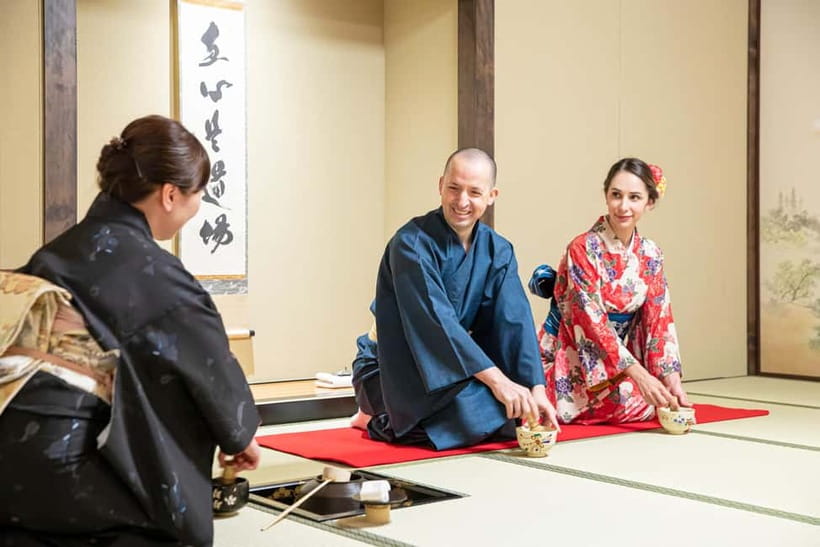
- Kimono dressing with real help, not a quick costume swap
- Small-group feel (about 12–14 people), with time to follow along
- Tea master-led etiquette lessons plus Zen values (Wa, Kei, Sei, Jaku)
- Hands-on matcha making using premium matcha powder
- Seasonal wagashi that change in flavor, color, and design
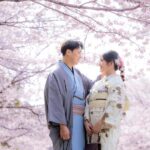
- Photo-friendly moments before and after, because you’ll actually look the part
Kimono Fitting in Kyoto: getting dressed right (and staying comfortable)
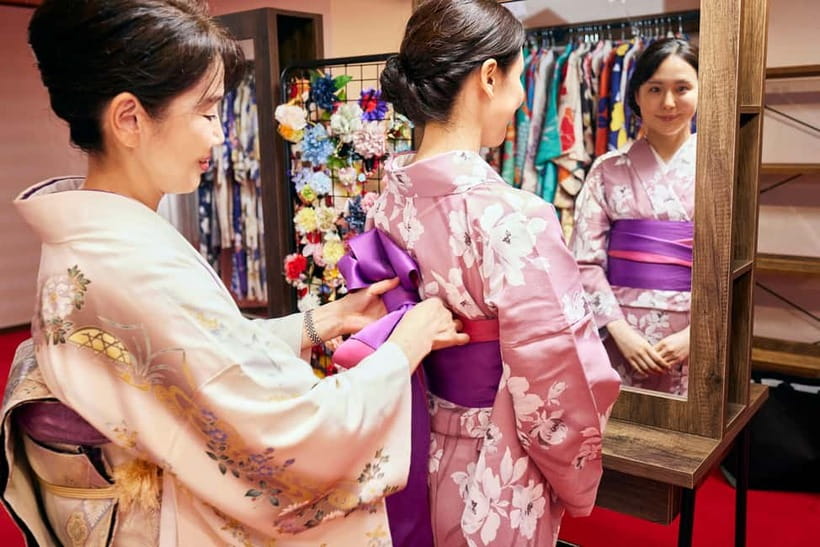
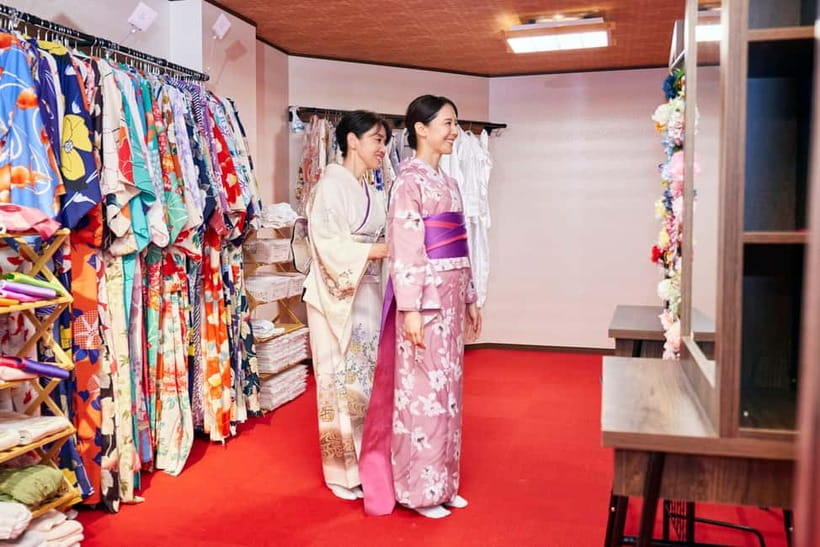
In Kyoto, a tea ceremony isn’t just about tea. It’s about switching modes. The best way to do that is with a kimono, and this experience starts there: you choose a kimono first, then staff help you into it. Expect patient, detailed dressing—exactly the kind of care that helps you look good and feel okay during the ceremony.
Women with long hair can also get hair styling included. A few details vary by session, but the overall approach is consistent: you’re not thrown into the outfit and told good luck. You get assistance so the fit looks right and stays comfortable while you sit and move through the ritual.
One small practical tip: if you care about photos, do a little stretching before you start the ritual part. When you’re in a kimono, you’ll move more slowly. That’s normal. It also makes the whole thing feel more ceremonial.
Sit for another bowl of matcha in a Kyoto tea house


Inside the tea room: tatami, chairs, and the rhythm of the ritual
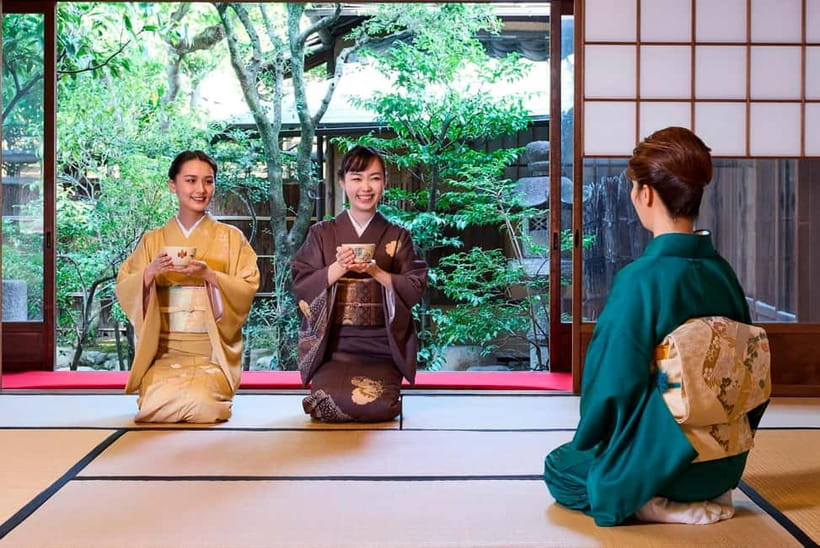
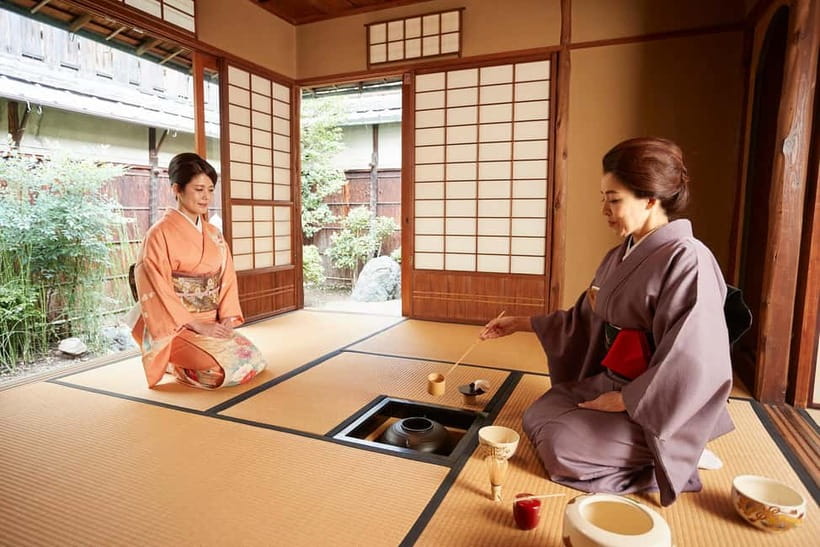
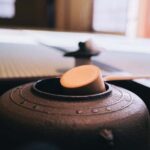
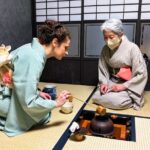
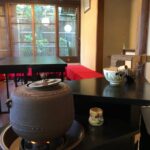
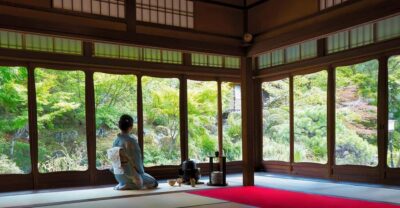
After you’re dressed, you’ll step into a traditional tea room where the tools are arranged for the ceremony. You’ll sit on tatami mats in the customary setup, but you don’t have to suffer for authenticity. Bamboo chairs are available if you request them in advance, and the experience is designed with comfort in mind.
The session itself runs about 90 minutes (though it may stretch to roughly 90–120 minutes). That timing matters because a tea ceremony is paced. You’re not watching a speed-run. You’re learning movements, etiquette, and the reasons behind them—so the tempo stays calm.
If you’ve only experienced Japanese culture through restaurants and temples, this part can feel like a switch from “tour mode” to “presence mode.” The room, the posture, and the order of steps push you to slow down.
Learning the steps: history, etiquette, and the Zen behind Wa Kei Sei Jaku
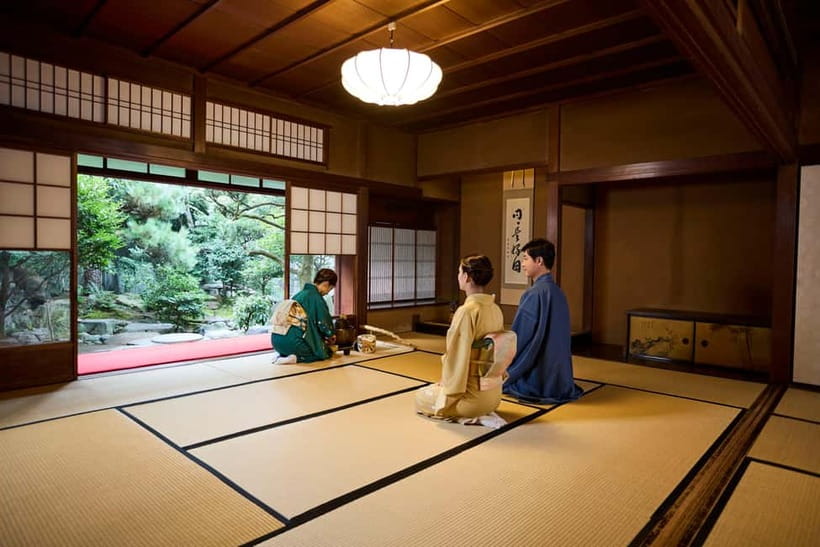
Your tea master leads the ceremony with full English guidance, and you’ll get more than a list of actions. You’ll learn the history, tools, and etiquette of the tea ceremony—plus the Zen principles that shape it: Wa (harmony), Kei (respect), Sei (purity), and Jaku (tranquility).
Those four ideas aren’t presented like a philosophy lecture. They show up in practical ways. For example, respect (Kei) affects how you handle utensils and how you move. Harmony (Wa) shows up in how the room and the guests share attention. Purity (Sei) connects to careful cleanliness and intention. Tranquility (Jaku) is the calm tone of the whole process.
You may also hear your tea master use specific guiding phrases tied to the mindset of the ceremony. In the experience, the staff communicate warmth and patience—names like Maki and Megumi have come up in past sessions as examples of hosts who keep the mood relaxed while still teaching you properly.
Your hands-on matcha lesson: making a bowl you can be proud of
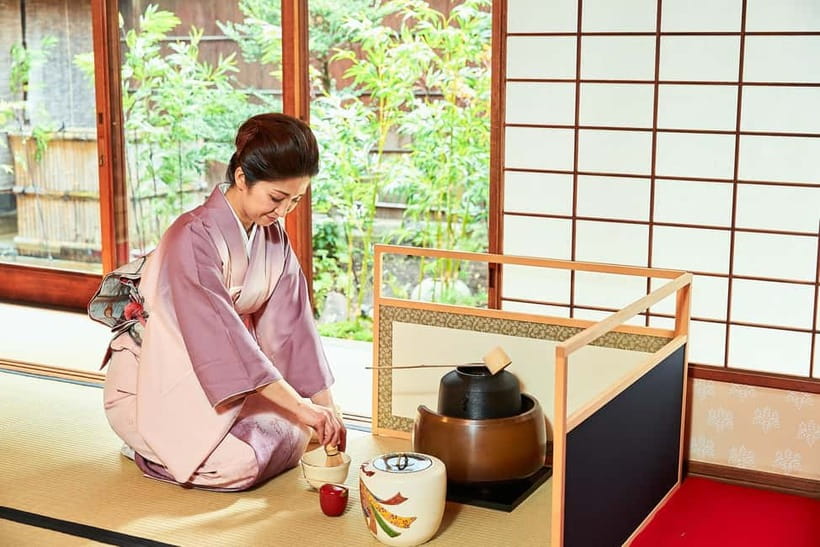
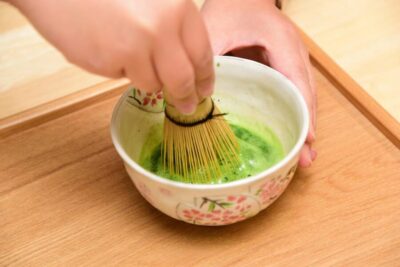
This is one of the most valuable parts of the experience. You don’t just sip. You make your own bowl of matcha using premium matcha powder, and the tea master guides you through the technique.
Matcha is one of those things people think they understand—until someone teaches you how it’s supposed to look and feel. The goal is that smooth texture and good foam, not weak powdery disappointment. During the lesson, you’ll learn how to assemble and prepare properly, following the steps in order so the result makes sense.
And yes, it becomes personal. When you do the whisking and pay attention to the process, you start noticing what affects the texture. That’s what makes this more memorable than a “watch and move on” activity.
Wagashi by the season: sweetness with meaning, not just dessert
You’ll also be served traditional Japanese sweets called wagashi. These change with the seasons—different flavors, colors, and designs depending on timing. That seasonal swapping matters because wagashi often mirrors what’s happening in the natural world, and the tea ceremony is built around noticing.
The wagashi isn’t just a snack. It’s part of the pause in the ceremony, giving you a moment to taste something carefully while you slow your whole pace down.
One reason this combo works so well for value: you get both the craft (matcha) and the sensory contrast (wagashi). If you love food that has a story behind it, this will click quickly.
Wander Kyoto in kimono a little longer
What the 90 minutes feel like: a realistic mini-itinerary
Here’s how the flow usually lands, in plain terms:
1) Kimono selection + dressing
Staff help you get into your kimono. If you’re getting hair styling, this happens here. Expect patience and detail.
2) Tea room setup and etiquette briefing
You’ll step into the tea room and learn how the tools are used, where things go, and how guests should behave.
3) Tea master demonstration
You watch the steps first, with explanations in English so you’re not guessing.
4) Your turn: matcha preparation
You practice the process yourself using premium matcha powder, guided as needed.
5) Wagashi tasting
Traditional sweets are served during the session, and you’ll experience them as part of the ritual timing.
6) Final moments and photos
You’ll have opportunities for photos around the kimono experience—some sessions include time for pictures before and after the ceremony.
If you’re worried you’ll feel rushed, most of the design here works against that. The calm pace is part of the point.
Price and value: why $66 can make sense in Kyoto
At $66 per person, this isn’t a cheap souvenir activity. But the value isn’t just “tea plus a photo.” You’re getting multiple included pieces:
- Kimono dressing (and hair styling for women with long hair)
- A tea ceremony led by a tea master with English instruction
- Hands-on matcha preparation
- Seasonal wagashi
- Bilingual staff assistance
If you’ve ever priced kimono rentals in Kyoto, you know how fast costs add up—especially when you factor in real staff help and time in a traditional setting. Here, you’re not just renting a costume. You’re learning the culture in a structured, guided way while wearing it.
Also, the group size is kept to about 12–14 participants. That doesn’t mean it’s a private ceremony, but it usually helps your attention stay focused and makes questions easier.
Who should book this Kyoto kimono and matcha session
This is a great fit if you want cultural learning that doesn’t require homework. It’s also ideal if you:
- Enjoy interactive experiences over passive tours
- Want a calm, mindful break from Kyoto’s heavier sightseeing days
- Care about food details, especially matcha and wagashi
- Want an English-guided ceremony with proper etiquette taught step-by-step
It may feel less ideal if you’re expecting a fast, entertainment-style activity. The point is slow craft and correct movements. Also, seating matters. If you know you struggle on tatami mats, plan ahead and request the bamboo chair.
Age note: children under 7 are not allowed, so it’s really geared for adults and older kids.
Quick booking tips that actually help
- If sitting on tatami is a concern, request the bamboo chair in advance.
- Wear comfortable clothing under your kimono prep routine—layers can help your first minutes go smoother.
- Bring patience for timing. Kimono dressing alone can take real care, and that’s part of the quality.
- If photos matter, plan to take them before you get fully settled into the ceremony so you’re not rushing later.
And if you’re weighing it against other Kyoto priorities, remember: this is one of those experiences where the learning is the activity. The kimono is the doorway, but the teaching is the payoff.
Should you book this tea ceremony?
I’d book it if you want a calm, structured Kyoto cultural experience that includes real instruction, real hands-on matcha, and the full kimono setting. The combination of kimono dressing, English guidance, matcha you make yourself, and seasonal wagashi gives you more than a one-note “activity.”
Skip it if you’re mainly chasing a short photo stop or you’re very uncomfortable with traditional seating. Also, if you only want to watch and never participate, your matcha-making involvement might feel like work rather than relaxation.
For most people, though, this lands as a high-value, memorable Kyoto moment: you leave with a better understanding of what tea ceremony etiquette is trying to do to the human brain—slow the day down and pay attention.
FAQ
How long is the Kyoto Kimono Tea Ceremony experience?
The experience is listed as 90 minutes, and the tea ceremony itself lasts approximately 90 to 120 minutes.
What’s included in the price?
Kimono dressing, a traditional tea ceremony led by a tea master, hands-on matcha tea preparation, Japanese sweets (wagashi), bilingual staff assistance, and hair styling for women with long hair are included.
Is transportation included?
No. Transportation to and from the venue is not included.
Is there an option to avoid sitting on tatami mats?
Yes. Bamboo chairs are available if you request them in advance.
Is the ceremony taught in English?
Yes. The instructor and guidance are in English.
Are children allowed?
Children under 7 are not allowed.
How big is the group?
Sessions typically include about 12–14 participants.
Can I cancel if my plans change?
Yes. Free cancellation is available up to 24 hours in advance for a full refund.
What do I get to eat and make during the ceremony?
You’ll be served seasonal wagashi sweets, and you’ll make your own bowl of matcha using premium matcha powder.
More Tour Reviews in Kyoto




More Kimono Days in Kyoto
One More Bowl of Matcha

Just added: more Kyoto tours to browse








Kyoto Tea Ceremonies, compared.
 ★ 4.9Tea Ceremony in a Traditional Tea House in KiyomizuFrom $493,519 reviews
 ★ 4.9Tea Ceremony Ju-An at Jotokuji TempleFrom $293,207 reviews
 ★ 4.345-Minute Tea Ceremony Lesson ExperienceFrom $222,378 reviews
 ★ 4.9Table-Style Tea Ceremony at a Kyo-MachiyaFrom $451,211 reviews
 ★ 5.0Kimono Tea Ceremony at Kyoto Maikoya, NISHIKIFrom $65911 reviews
 ★ 5.0Arashiyama Bamboo Forest, Monkeys, Matcha & Temple TourFrom $53759 reviews
 ★ 4.9Tea Museum Tickets and Matcha Grinding ExperienceFrom $23739 reviews
 ★ 4.9Kimono Tea Ceremony at Orizuruya GionFrom $49618 reviews
Browse the lists this tour appears in