
Kyoto can feel like a maze. This tour gives you a structured way to hit the big icons without spending your whole day figuring out transit. I especially like the air-conditioned bus and the Kyoto-style buffet lunch, both of which help when you’re juggling temples, crowds, and walking.
You’ll also move through two of Kyoto’s most famous spiritual and scenic stops—Fushimi Inari with its thousands of torii gates and Kiyomizu-dera with its famous wooden stage views. One thing to consider: this is a walking-heavy route, and the tour is not wheelchair accessible (so you’ll want good mobility before you book).
In This Review
- Key things to know before you go
- The big idea: a bus-driven Golden Route with a built-in rhythm
- Meeting at Kyoto Station: start simple, start on time
- Kiyomizu-dera: the stage views you’ll remember
- Fushimi Inari Taisha: torii gates as a moving staircase
- Between temples: the bus ride that keeps your day sane
- Lunch: a scheduled Kyoto-style buffet break
- Arashiyama: Bamboo Grove and a calmer pace in the gardens
- Bamboo Grove: the sound you can’t fake
- Tenryuji Temple: UNESCO gardens and Zen quiet
- Kinkaku-ji (Golden Pavilion): architecture with a reflecting pond
- Visitor center time: practical way to learn what you’re seeing
- Kyoto Handicraft Center: souvenirs with context
- Price and logistics: does $70 make sense?
- Who should book this bus tour (and who should skip it)
- Should you book the Kyoto Golden Route bus tour?
- FAQ
- How long is the Kyoto Golden Route bus tour with lunch?
- Where do I meet the tour?
- What’s included in the price?
- Is lunch included, and can I bring my own food?
- Is the guide English-speaking?
- Is this a private tour?
- Can I cancel for a full refund?
- Is the tour wheelchair accessible?
- What activities or items are not allowed?
Key things to know before you go
- English-speaking guide who keeps the day moving in a logical order
- Kyoto-style buffet lunch included, so you’re not hunting for food mid-tour
- Major Kyoto hits: Fushimi Inari, Kiyomizu-dera, Arashiyama, Kinkaku-ji
- Garden time in Arashiyama at Tenryuji, a UNESCO World Heritage Site
- Handicraft Center stop to learn about traditional Japanese crafts and shop
- Group tour format, so you’ll follow the pace of other participants
The big idea: a bus-driven Golden Route with a built-in rhythm
This isn’t a “wander wherever you want” day. It’s a guided, bus-based route built around Kyoto’s top sights—so you spend your energy on what you came for, not on route planning.
The rhythm matters. Temples and shrines can eat up time fast, and Arashiyama in particular can be slow going because you’re basically walking a loop of sight and photo points. With an English guide and a scheduled lunch, you get fewer stressful gaps where you wonder what to do next.
Also, you’ll appreciate the air-conditioned bus if you’re visiting in warmer months. Between walking stretches and waiting near entrances, a cool ride can feel like a reset button.
Other Kyoto tours and experiences to compare

Meeting at Kyoto Station: start simple, start on time
You meet at Kyoto Station – Hachijo Exit Tourist Bus Parking Area (in front of KYOTO AVANTI). Your exact meeting instructions are sent by email about 7 days ahead, so keep an eye out.
Why this matters: Kyoto station is a travel hub, but it’s also huge. Meeting at a clear bus parking area means you don’t have to play “which door is it?” with a group. Once you’re aboard, you’ll follow the day’s flow from the station into the first temple area.
Kiyomizu-dera: the stage views you’ll remember
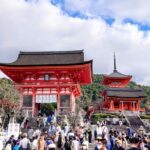
Kiyomizudera is one of those places where the main structure is only part of the appeal. You’re there for the views from the wooden stage area and the sense of perspective looking out over the city.
In your visit time, you’ll be able to move through the temple grounds, take in the layout from the stage level, and time your photos for when the lighting works. The tour description also flags that the views are especially striking during cherry blossom and autumn leaf seasons—so if your dates line up with those periods, plan your photo pacing carefully. Those seasons tend to bring extra crowds and photo lines.
Practical note: Kiyomizu-dera involves stairs and uneven temple approaches. Wear shoes you can trust, and don’t rush the first few minutes—settle in and get your bearings.
Fushimi Inari Taisha: torii gates as a moving staircase
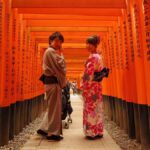
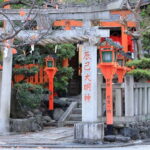
Then comes Fushimi Inari Taisha, the shrine most people picture instantly: thousands of vermilion torii gates marching up a mountain path.
This stop is special because the torii aren’t just decoration. They create a repeating visual rhythm as you climb—so every turn feels like a new frame. The path can be longer than you think depending on how far you choose to go, but even a partial route gives you that iconic tunnel effect of gates narrowing toward the hillside.
Here’s how to make the time work: go with a flexible goal. If you’re feeling energetic, keep climbing for more perspective. If you’re trying to conserve energy for Arashiyama later, you can still enjoy the atmosphere and key gate sections without going all the way to the top.
Between temples: the bus ride that keeps your day sane
After the early shrine-and-temple sequence, you’ll take a bus/coach ride (about 50 minutes in the provided schedule flow). This is where the tour earns its value for many people.
Kyoto transit can be straightforward, but transfers plus walking time can add up. A bus ride means your feet stay fresher for the longer sightseeing block ahead.
Also, this is a good moment to use your time for logistics: refill water if you need it (note that bringing your own food into the restaurant isn’t allowed, but water needs aren’t specified), and double-check where you want to focus during lunch and Arashiyama.
Lunch: a scheduled Kyoto-style buffet break
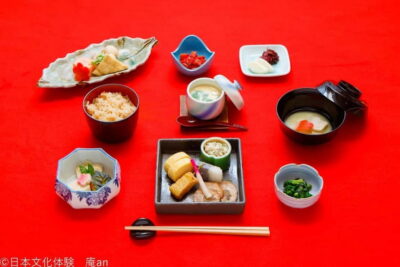
Lunch is a Kyoto-style buffet lunch, included in the tour. You’ll have about 50 minutes for it.
This is one of the most underrated parts of a group tour. When you skip a packed lunch hunt, you can spend more of the day actually looking at Kyoto instead of lining up for meals between stops. A buffet also helps you adapt to what’s available—so you’re not stuck ordering one fixed thing and hoping it suits your taste.
Two practical tips:
- Arrive hungry enough to make the most of the buffet time.
- The tour instructions say please refrain from bringing your own food and drinks into the restaurant, so plan to eat the provided lunch there.
Arashiyama: Bamboo Grove and a calmer pace in the gardens
Arashiyama is where your tour shifts from “icon sightseeing” to “slow-down sightseeing.” You get around 2 hours there, and the emphasis is on atmosphere as much as landmarks.
Bamboo Grove: the sound you can’t fake
The Bamboo Grove in Arashiyama is the kind of place where you stop talking and start listening. Even without knowing anything about bamboo cultivation, you’ll likely notice how the leaves rustle and how the path feels cooler than the surrounding streets.
It’s famous, yes. But there’s a reason it stays famous: the setting changes your pace. Try not to sprint through it as a checklist. Walk a bit, pause a bit, and let the space reset your attention before the next stop.
Tenryuji Temple: UNESCO gardens and Zen quiet
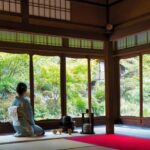
Next is Tenryuji, a historic Zen temple and a UNESCO World Heritage Site. You’re going for its beautifully landscaped gardens and the calmer atmosphere that comes with that kind of space.
Garden time can be deceptively hard to schedule because you want photos, but you also want to actually feel the place. Use the time to notice the angles: how paths guide your sightlines, how garden design shapes what you see from different corners.
If you’re the type who likes to read a little and absorb slowly, this is the stop that gives you that chance—more than the photo-first shrines.
Kinkaku-ji (Golden Pavilion): architecture with a reflecting pond
Then you’ll move to Kinkakuji, the Golden Pavilion—a gold-leaf architectural masterpiece surrounded by gardens and known for its reflecting pond views.
This is one of Kyoto’s easiest “wow” moments. The pavilion doesn’t require extra context to appreciate. It’s visually intense from multiple angles, and it rewards arriving with a little patience: take a few minutes to look from different points rather than grabbing one quick photo and moving on.
Plan your time with realistic expectations. Even with a guided schedule, Kinkaku-ji can get crowded, and people linger for reflections. If your goal is the signature pond/pavilion view, aim to arrive and settle in quickly after your group arrives.
Visitor center time: practical way to learn what you’re seeing
The day includes time at a visitor center (about 30 minutes in the schedule). Even if you’re not a museum person, this is useful.
You can use it to understand what design elements you’re looking at around the pavilion and grounds, which makes your later photos feel more meaningful. It’s also a handy break for your feet before you wrap up.
Kyoto Handicraft Center: souvenirs with context
The tour also includes a stop at the Kyoto Handicraft Center. This is where the trip connects the sightseeing to Kyoto’s real-life creative culture.
You’ll get to learn about traditional Japanese crafts and then shop for souvenirs that reflect Kyoto’s artistic heritage. This is a different kind of shopping stop than “big department store” tourism. You’re more likely to find items that feel connected to technique rather than just mass-made souvenirs.
If you care about buying something you’ll actually use at home, this is the place to slow down. Check materials, ask questions if staff are available, and focus on items that match your own style rather than buying the first thing you see.
Price and logistics: does $70 make sense?
At about $70 per person, the value depends on what you’re trying to avoid.
You’re paying for:
- English guide
- Air-conditioned bus
- Lunch (Kyoto-style buffet)
- Entrance fees for Kiyomizudera, Kinkaku-ji, and Tenryuji
Those entrance fees alone add up fast when you price them individually. The included lunch is also a major cost saver, because Kyoto meals can vary widely in price and waiting time. The bus saves you from transit planning and transfers during a day that includes a lot of walking.
Where the cost may not feel great: if you already have the energy and skills to self-guide every stop and you don’t care about a scheduled lunch. But if you want structure, comfort, and someone to keep timing under control, $70 can be a fair deal for a first-time Kyoto “greatest hits” day.
Who should book this bus tour (and who should skip it)
This tour makes the most sense if you:
- Want a guided route through Kyoto’s best-known sights
- Like having time windows for each stop instead of planning every leg
- Prefer a comfortable ride in an air-conditioned bus
- Appreciate a lunch plan that’s built into the schedule
You may want to skip it if you:
- Have trouble walking (the tour involves a lot of it)
- Use a wheelchair or need wheelchair accessibility (it’s not accessible)
- Are pregnant (it’s listed as not suitable)
Group tour format also means you’ll share pace and timing with other participants. If you love solo wandering, you might feel slightly constrained. If you love not thinking about logistics, you’ll likely feel relieved.
Should you book the Kyoto Golden Route bus tour?
I’d book it if you’re trying to see Fushimi Inari, Kiyomizu-dera, Arashiyama Bamboo Grove, Tenryuji, and Kinkaku-ji in one guided day, while also getting lunch and key entrance fees covered. The combo of bus comfort, English guidance, and a real schedule gives you a lot of return on time.
I’d think twice if you know you’ll struggle with stairs and long walking stretches. In that case, you’ll probably enjoy the places more if you can go slower on your own terms.
If you can handle walking, and you want a structured, high-value Kyoto day, this tour is a solid way to do the Golden Route without turning your trip into a logistics project.
FAQ
How long is the Kyoto Golden Route bus tour with lunch?
The duration is listed as 260 to 570 minutes, depending on the starting time and schedule.
Where do I meet the tour?
You meet at Kyoto Station – Hachijo Exit Tourist Bus Parking Area, in front of KYOTO AVANTI. Your meeting point details are sent by email about 7 days before the activity date.
What’s included in the price?
The tour includes an English guide, an air-conditioned bus, lunch (Kyoto-style buffet lunch), and entrance fees for Kiyomizudera Temple, Kinakukuji (Kinkaku-ji) Temple, and Tenryuji Temple.
Is lunch included, and can I bring my own food?
Lunch is included as a Kyoto-style buffet. You are asked not to bring your own food and drinks into the restaurant.
Is the guide English-speaking?
Yes. The tour has a live English tour guide.
Is this a private tour?
No. This is not a private tour, and you’ll join other guests.
Can I cancel for a full refund?
Yes. You can cancel up to 24 hours in advance for a full refund.
Is the tour wheelchair accessible?
No. Wheelchair access is listed as not available.
What activities or items are not allowed?
Smoking in the vehicle is not allowed. Alcohol and drugs are also not allowed. Large luggage is not allowed during the tour.
More Lunch Experiences in Kyoto
More Tours in Kyoto
More Tour Reviews in Kyoto
Just added: more Kyoto tours to browse




Lunch Experiences, compared.
 ★ 5.0Bike Tour Exploring North Kyoto plus LunchFrom $1061,087 reviews
 ★ 4.4Osaka/Kyoto: Arashiyama, Nara & Fushimi Inari Shrine w/LunchFrom $61754 reviews
 ★ 5.0Kyoto Zen Meditation & Garden Tour at a Zen Temple with LunchFrom $110441 reviews
 ★ 5.04.5-Hour Kyoto Bike Tour with Lunch and UNESCO Zen TemplesFrom $99122 reviews
 ★ 4.8From Kyoto: Nara History Guided Half Day Bus Tour with LunchFrom $77114 reviews
 ★ 4.9Zen Meditation and Garden Tour at a Temple with LunchFrom $10786 reviews
 ★ 5.0Full-Day City Highlights Bike Tour with Light LunchFrom $16752 reviews
 ★ 4.2Lunch or Dinner with MaikoFrom $6352 reviews
Browse the lists this tour appears in