
Reviewed · GION & GEISHA DISTRICT TOURS
Kyoto Gion Walking Tour for First Time Visitors
Gion can feel like a maze on day one. This small-group walk turns the famous geisha district into something you can actually navigate, with clear guidance and cultural context as you pass landmarks. I love that the group stays small (max 15), so questions don’t get swallowed up, and I love the guide-style that uses stories and visuals to explain what you’re seeing. One thing to consider: the route is weather-dependent, so you’ll want to plan for rain or heat.
The stops are packed into about 2 hours, from Gion’s preserved streets to Zen at Kennin-ji and the big finish at Yasaka Shrine. You’ll also get a mobile ticket, and all the site admissions on the itinerary are free, which keeps the cost simple. If you’re expecting long temple time or lots of indoor sightseeing, this isn’t that kind of tour—but it’s a smart way to get your bearings fast.
If it’s your first day in Kyoto, I think this is a practical “set the map in your head” experience. It’s also a good match if you like walking at a comfortable pace and want explanations that go beyond postcard facts. The only real drawback is that you move through a lot of iconic spots fairly quickly, so wear shoes you trust.
In This Review
- Key highlights worth knowing before you go
- How this Kyoto Gion tour makes first-day planning easier
- Price: why $20 is a fair value here
- Small-group comfort and the guide style that keeps you engaged
- Stop 1: Gion streets andmachiya townhouses near Yasaka Shrine
- Stop 2: Kennin-ji and the Zen story that connects to tea culture
- Stop 3: Yasui-Konpiragu and the enmusubi stone tradition
- Stop 4: Hōkan-ji (Yasaka Pagoda) for iconic street-level views
- Stop 5: Ninenzaka slope and the Higashiyama street vibe
- Stop 6: Yasaka Shrine finish near Gion’s heart
- Who this tour is best for
- A few smart tips for enjoying the walk more
- Should you book this Kyoto Gion Walking Tour?
- FAQ
- How long is the Kyoto Gion walking tour?
- What does the tour cost?
- How big is the group?
- Do I need to pay for admission to the stops?
- Is a guide included?
- Do I need to bring snacks?
- Will I receive a ticket on my phone?
- Where does the tour start and end?
- What if the weather is bad?
- Is service for people with service animals allowed?
Key highlights worth knowing before you go
- Small group cap of 15 for easier questions and a calmer pace through Gion’s lanes
- Mobile ticket for a smooth start at the meeting point near Gion
- Six landmark stops with free admissions, including Kennin-ji and Yasaka Shrine
- Temples plus Shinto stops so you see how Kyoto’s belief sites sit side by side
- Zen history with tea-culture roots at Kennin-ji
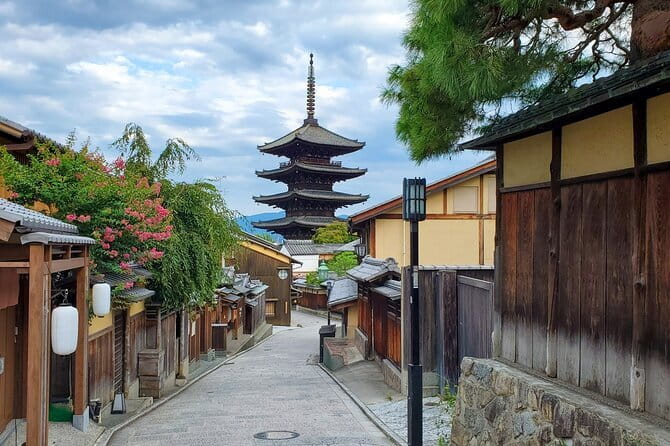
- Classic photo views of Hōkan-ji Temple’s Yasaka Pagoda from street level
How this Kyoto Gion tour makes first-day planning easier
On your first visit to Kyoto, Gion can be oddly hard to master. You’ll see famous things, but you still won’t know where you are in relation to everything else. That’s where a guided route helps: it gives you a mental framework, not just a list of sights.
This tour is built for orientation. You get a guided walk through the area’s preserved streets and major landmarks, with explanations that connect the dots—why these places are here, how they relate to the neighborhood, and what to look for as you pass. With a max group size of 15, you’re not fighting for hearing space, and you’re not doing that slow, stop-and-go shuffle you sometimes get when a crowd forms.
I also like the balance of stops. You move between geisha-district streets and quieter religious sites—Zen at Kennin-ji, Shinto shrines like Yasui-Konpiragu, and the landmark pagoda area connected to Hōkan-ji. That mix makes the walk feel like Kyoto, not just a museum run.
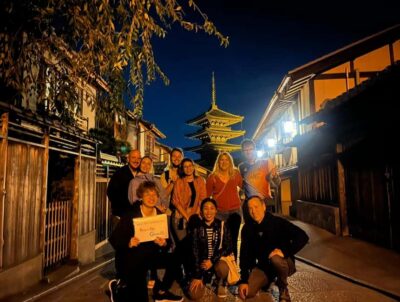
More evenings along the lantern-lit lanes of Gion


Price: why $20 is a fair value here
At $20 per person for about 2 hours, you’re paying primarily for navigation plus a real guide. The tour includes all fees and taxes and provides an in-person guide, which matters in Kyoto. A walking route can look easy on paper, but in practice you need local context to understand what you’re seeing.
Here’s the value angle that stands out: several of the stops have free admission tickets on the itinerary. That means your money goes toward interpretation and timing—where to pause, what details matter, and how to connect the sights into a coherent walk—rather than covering entrance costs.
Is it a budget deal? It’s not the cheapest option in Kyoto, but it’s also not inflated. If you’ve got only one day to get your bearings in Gion and Higashiyama, paying for a guide can save you time, confusion, and wasted backtracking.
Small-group comfort and the guide style that keeps you engaged
The tour’s comfort comes down to the size: up to 15 travelers. That may not sound dramatic, but it makes a difference on narrow streets. You can move as a group without turning every corner into a traffic jam, and you can ask questions without the guide repeating the same answer to a dozen different people.
One guide approach I especially appreciate is the use of visuals. In one recent group experience, Jay (the guide) used interesting pictures alongside his explanations. That kind of support helps when you’re standing in a small alley with wood buildings and trying to picture how the district has changed over time.
You also get real context, not just names. The guide points out what you’d likely miss if you were wandering solo—details in the streetscape, little cues in the area around major shrines and temples, and practical tips for how to interpret what you see.
Stop 1: Gion streets andmachiya townhouses near Yasaka Shrine
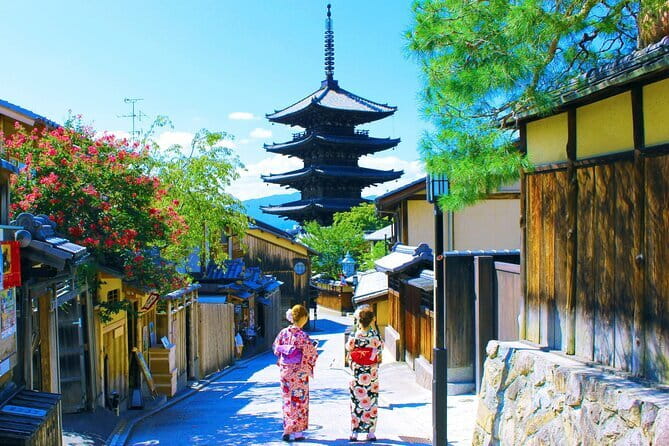
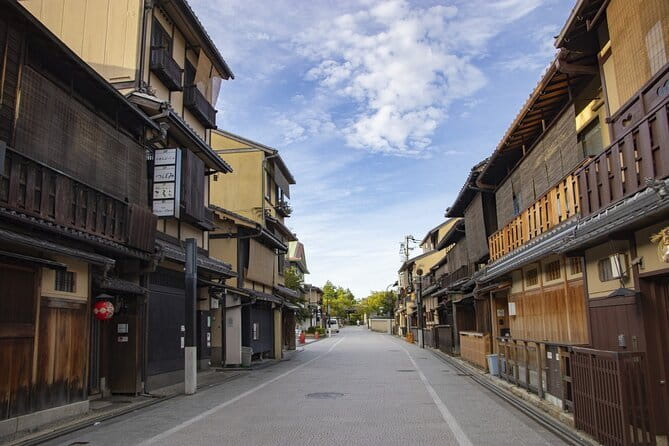
You start in Gion, Kyoto’s best-known geisha district, famous for preserved wooden machiya townhouses, traditional teahouses, and cobblestone streets. Even if you know the “famous” version of Gion, the guided walk helps you understand the shape of the neighborhood—where the key lanes run and how the area connects to nearby landmark sites.
This is where you’ll learn to look. Instead of only scanning for the most obvious photo spots, you’ll get cues on what makes these streets historically significant. The goal isn’t to turn you into an architectural expert in 20 minutes. It’s to help you notice patterns: the streets, the frontage, the way the district is organized around cultural sites like Yasaka Shrine.
Possible drawback here: you’re starting with a famous neighborhood, so if you’re expecting quiet or off-the-beaten-path in the first minutes, you might feel the contrast. But that’s exactly why the guide helps—Gion’s fame can be overwhelming unless someone gives it structure.
Stop 2: Kennin-ji and the Zen story that connects to tea culture
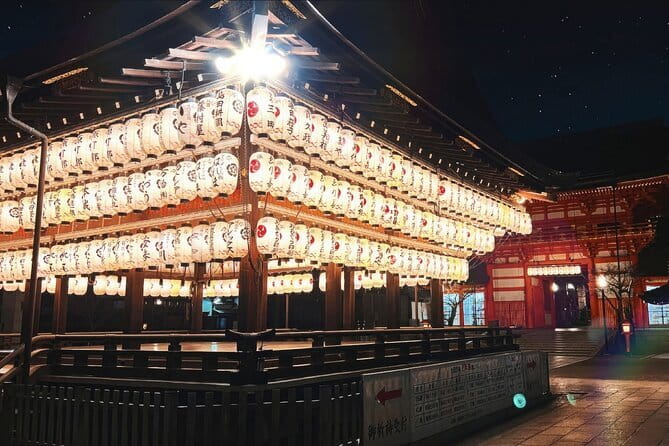
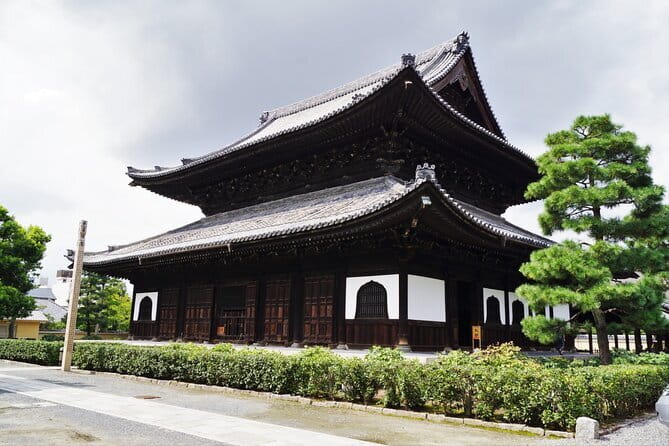
Next up is Kennin-ji Temple, one of Kyoto’s oldest Zen Buddhist temples. It was founded in 1202 by the monk Eisai, who introduced Zen Buddhism and tea culture to Japan. That one fact is more than trivia. It gives you a lens for why Zen and tea culture are linked in Japanese history.
Kennin-ji is a chance to slow down. Even if your tour pace stays steady, the mood shift from street-level Gion lanes to a temple setting makes the walk feel balanced. This stop is short on paper, but the value is in interpretation—understanding what Zen represents and how this temple fits into Kyoto’s religious landscape.
What to watch for: you’ll be standing in an environment that feels like a pause from the street. If you’re the type who likes to take a minute and notice the sound changes when you step into temple grounds, you’ll appreciate this stop more than someone who just wants to check boxes.
Other Kyoto tours and experiences to compare





Stop 3: Yasui-Konpiragu and the enmusubi stone tradition
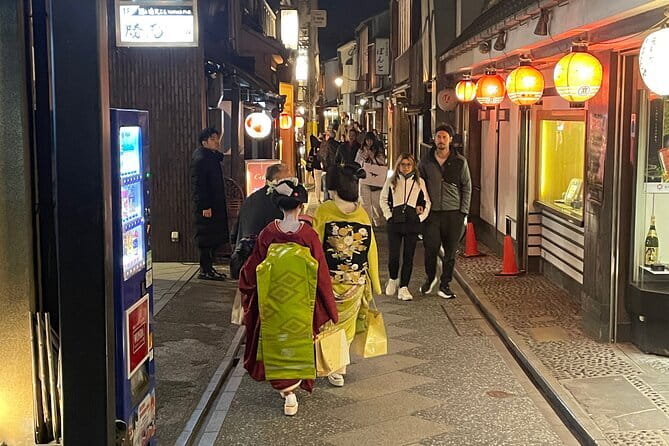
Then you head to Yasui-Konpiragu, a small but meaningful Shinto shrine near the busier streets of Gion. This shrine is known for its enkiri/enmusubi stones—stones connected to cutting ties and forming ties (the shrine’s reputation centers on the stone tradition).
Even if you don’t plan to interpret every custom, this stop is great because it shows Kyoto’s layered religious geography. In Kyoto, you often find different faith traditions within walking distance. The guide’s context helps you see why that matters, instead of treating each shrine like an isolated attraction.
Practical tip: bring a moment of patience. Shrines attract people for reasons that can be personal and specific, so you’ll want to keep your pace respectful while you look and listen.
Stop 4: Hōkan-ji (Yasaka Pagoda) for iconic street-level views
The itinerary takes you to Hōkan-ji Temple, also known for the Yasaka Pagoda. This is one of Kyoto’s most recognizable landmarks, and the key word here is rise. The five-story pagoda lifts above the surrounding traditional streets in the Higashiyama area.
This stop is short (about 10 minutes), but it’s useful in a very practical way. You’ll learn where the pagoda sits relative to the lanes around it, so later, if you’re wandering on your own, you’ll be able to spot it faster and orient yourself more easily.
Drawback to consider: because this is an iconic view, it can be popular at times. The tour’s small-group size helps you navigate the area without turning it into a slow, crowded bottleneck—but don’t expect empty streets at the most famous sight.
Stop 5: Ninenzaka slope and the Higashiyama street vibe

After the pagoda, you’ll walk to Ninenzaka, a historic slope in the Higashiyama district known for preserved traditional architecture and a lively atmosphere along the stone-paved street.
Ninenzaka is the kind of street that looks like a postcard until you’re actually walking it. Up close, you start noticing details: the preserved storefront feel, the way the street curves, and how the slope shapes foot traffic. You’ll also likely appreciate how this connects to the bigger landmarks around it.
Why this matters for first-timers: slopes and lanes are where most visitors lose their sense of direction. A guided walk helps you remember the geography, so your later self-guided wandering feels less like aimless wandering and more like you’re moving through zones.
Stop 6: Yasaka Shrine finish near Gion’s heart
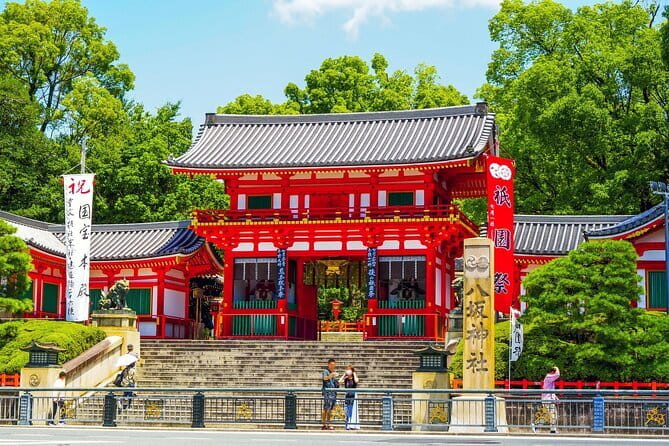
The tour concludes at Yasaka Shrine, also known as Gion Shrine. It’s one of Kyoto’s most important Shinto shrines, and it’s famous for its vermilion gates and lanterns. Finishing here makes sense because it’s a core visual anchor for the whole Gion area.
As you reach the shrine, you’ll have the advantage of having already visited several religious sites and learned what to look for. So instead of only feeling the “wow gate + lanterns” moment, you’ll have context for why this shrine sits at the center of the Gion neighborhood.
What I like about the finish: you end at a place that’s easy to build on. From Yasaka Shrine, you can continue exploring nearby streets without needing another guide to point you the right way.
Who this tour is best for
This is a strong choice if you:
- are visiting Kyoto for the first time and want your bearings in Gion without stress
- prefer a small-group walking pace and the ability to ask questions
- want a route that mixes geisha-district streets with temples and shrines
- like cultural context more than “just take photos” sightseeing
It might be less ideal if you:
- want lots of free time at each location
- hate walking (this is a walking tour through several stops in about 2 hours)
- are hoping to avoid crowds entirely at the most famous sights
A few smart tips for enjoying the walk more
- Wear shoes built for stone streets and slopes. Ninenzaka is a slope, and Gion has plenty of uneven ground.
- Bring a light layer. Temple and shrine areas can feel cooler or still in a way that surprises you.
- Keep your phone handy for quick reference. The tour uses a mobile ticket, and it also helps you remember what you saw after you leave.
- If weather looks questionable, be ready to adapt. The experience requires good weather, and you’ll be offered another date or a full refund if it’s canceled due to poor weather.
Should you book this Kyoto Gion Walking Tour?
If it’s your first time in Kyoto and you want to understand Gion without getting lost, I’d book it. For $20, you get a small-group guide-led route, free-admission stops on the itinerary, and a logical sequence that connects street scenes to temples and shrines.
Skip it only if you already know your way around Higashiyama and you don’t want a guided explanation. Otherwise, this is the kind of tour that makes your self-guided time afterward feel smoother.
FAQ
How long is the Kyoto Gion walking tour?
The tour lasts about 2 hours (approx.).
What does the tour cost?
It costs $20.00 per person.
How big is the group?
The tour has a maximum of 15 travelers.
Do I need to pay for admission to the stops?
The itinerary lists free admission for the stops mentioned.
Is a guide included?
Yes. The experience includes an in-person guide and all fees and taxes.
Do I need to bring snacks?
Snacks are not included.
Will I receive a ticket on my phone?
Yes, you’ll have a mobile ticket.
Where does the tour start and end?
It starts at Kyoto Tourist Lounge Gion (557-4 Komatsu Cho area) and ends at Yasaka Shrine (625 Gionmachi Kitagawa, Higashiyama Ward).
What if the weather is bad?
The experience requires good weather. If it’s canceled due to poor weather, you’ll be offered another date or a full refund.
Is service for people with service animals allowed?
Yes, service animals are allowed.
More Tours in Kyoto

More Tour Reviews in Kyoto


Still in Gion? Keep Going


Just added: more Kyoto tours to browse








Gion & Geisha District Tours, compared.
 ★ 4.7Kyoto Geisha Walking Tour: Gion District & Hidden GemsFrom $253,273 reviews
 ★ 4.9Gion Magical Night Walking Tour with Geisha TriviaFrom $242,393 reviews
 ★ 4.7Gion Geisha District Walking Tour – Stories of GeishaFrom $202,187 reviews
 ★ 4.9Best of Kyoto: Gion, Geisha, Pagodas & CobblestonesFrom $242,058 reviews
 ★ 4.5Night Walk in Gion: Kyoto’s Geisha DistrictFrom $212,003 reviews
 ★ 5.0Kyoto Night Foodie Tour in Gion (9+ dishes + 6 Sake tastings)From $1631,762 reviews
 ★ 5.0Kyoto Gion Geisha District Walking Tour – The Stories of GeishaFrom $251,441 reviews
 ★ 5.0Kyoto Gion: 2-Hour Geisha Culture & History Walking TourFrom $231,186 reviews
Browse the lists this tour appears in