
Reviewed · GION & GEISHA DISTRICT TOURS
Kyoto: Gion Sunset Walking Tour with Local Guide
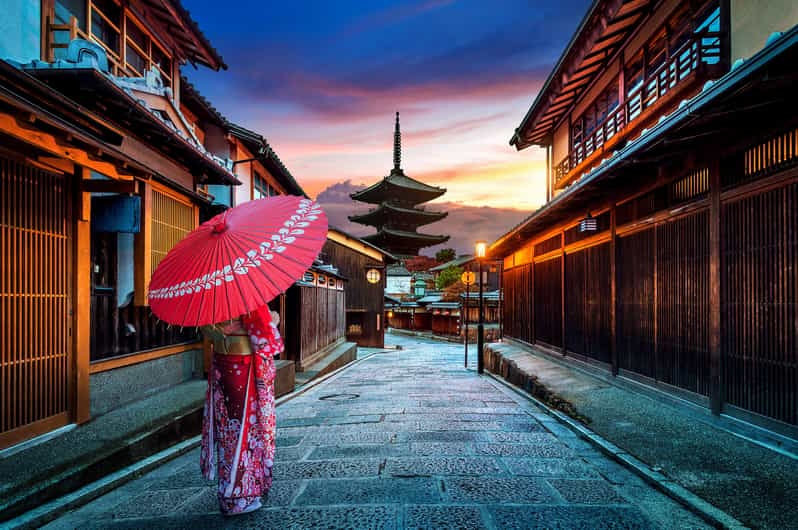
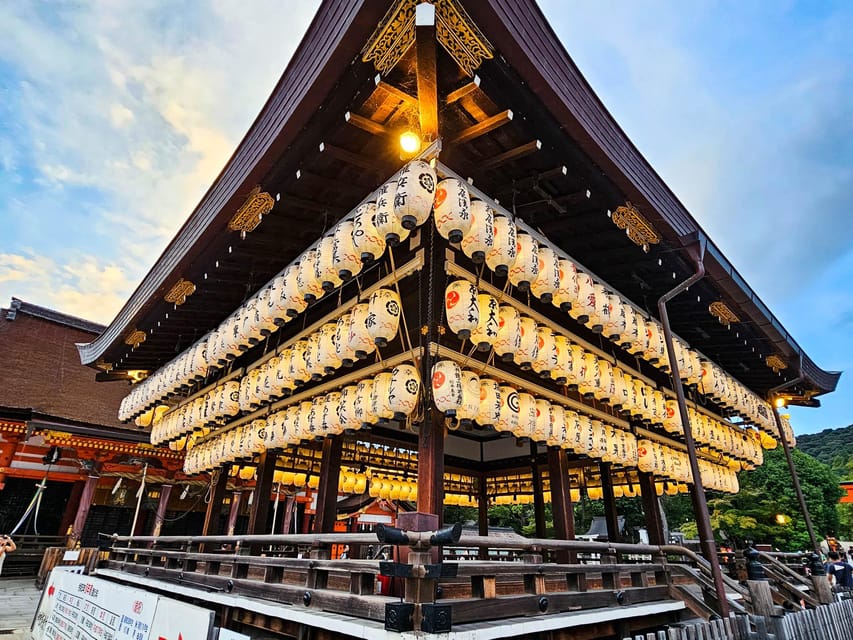
Lanterns in Gion turn a walk into a story. On this Gion sunset stroll, you catch the district as it shifts from daylight bustle to night-time calm, with Hanamikoji Street as your main character. It’s short, guided, and built for people who don’t want to spend their whole evening guessing which lane leads where.
I really like the small group size (kept to nine or fewer). You also get a guide who connects the dots between places like Yasaka Shrine and the culture you see on the street—plus a better chance of spotting a geiko or maiko in passing.
One caution: this is still a walking tour on old streets and uneven sidewalks, and the pace is not designed for mobility needs (plus, the guide only waits 10 minutes at the start).
In This Review
- Key things I’d clock before you go
- Finding Gion at Kyoto Kawaramachi Garden (and starting on time)
- Passing Kyoto Minami-za: the theater energy before the lanes get quiet
- Hanamikoji Street after sunset: the photo moment with etiquette built in
- Maruyama Park: a breather and a view angle as the night settles
- Yasaka Shrine at night: where the atmosphere turns reflective
- The scenic segments between stops: why the walk is the whole point
- A local snack stop: the break that actually helps
- Pontocho at night to Sanjō Bridge: the finish that makes sense
- Price and value: why $22 can work (if you want guidance)
- Who this tour suits best (and who should skip it)
- Simple checklist so the evening feels smooth
- Should you book this Kyoto Gion sunset walking tour?
- FAQ
- How long is the Kyoto Gion sunset walking tour?
- Where do I meet the guide?
- Is the guide available in English?
- Is a snack included?
- Is it a small group tour?
- Can I expect to see geiko or maiko during the tour?
Key things I’d clock before you go
- Small group size (max 9) keeps the experience feeling personal, not like a school trip.
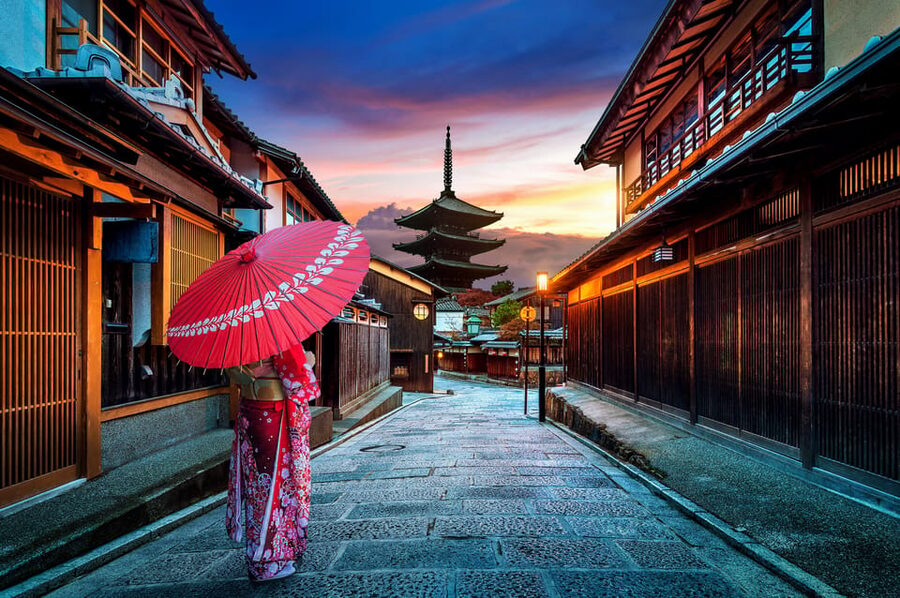
- Night timing in Gion means lanterns, teahouses, and restaurants show their best side.
- Hanamikoji Street + Yasaka Shrine gives you the classic Gion core with a clearer story.
- Maruyama Park stop offers a breather and a view angle as the light changes.
- Geiko/maiko sightings are possible but not guaranteed, so treat that as a bonus, not a promise.
- Snack included gives you a real moment off your feet, not just picture stops.
Finding Gion at Kyoto Kawaramachi Garden (and starting on time)
Your evening begins at Kyoto Kawaramachi Garden, at the corner in front of the big black world map. This matters more than it sounds: Gion is close to a lot of nightlife spots, and it’s easy to wander the wrong direction when you’re tired and hungry.
The guide is wearing a TripGuru shirt or holding a TripGuru sign, so you can spot them quickly. I’d show up at least 10 minutes early because the group moves to the next stop and the guide only waits a short window. If you’re the type who likes to do one last coffee run before a tour, do that first—once you’re meeting, commit.
Practical tip: bring cash and comfortable shoes. The route is paced for walking, and Kyoto’s charm often comes with slightly awkward footing.
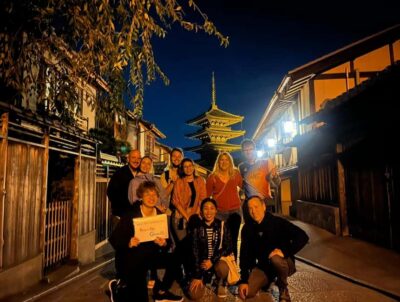
More evenings along the lantern-lit lanes of Gion


Passing Kyoto Minami-za: the theater energy before the lanes get quiet
Along the way you’ll pass Kyōto Minami-za, a nod to Kyoto’s performance culture. Even if you’re not heading inside, the theater area helps you understand something important about Gion: this district isn’t just “pretty streets.” It’s part of a whole world where art, ceremonies, and hospitality overlap.
At sunset, the lighting starts doing what it does best—softening contrast and turning storefronts into warm glows. This is also when your guide’s explanations start to feel more practical. When you know why a place exists, you stop treating it like a postcard.
Don’t expect a long stop here. Think of it as a thematic warm-up before you get deeper into the lanes where the atmosphere thickens.
Hanamikoji Street after sunset: the photo moment with etiquette built in
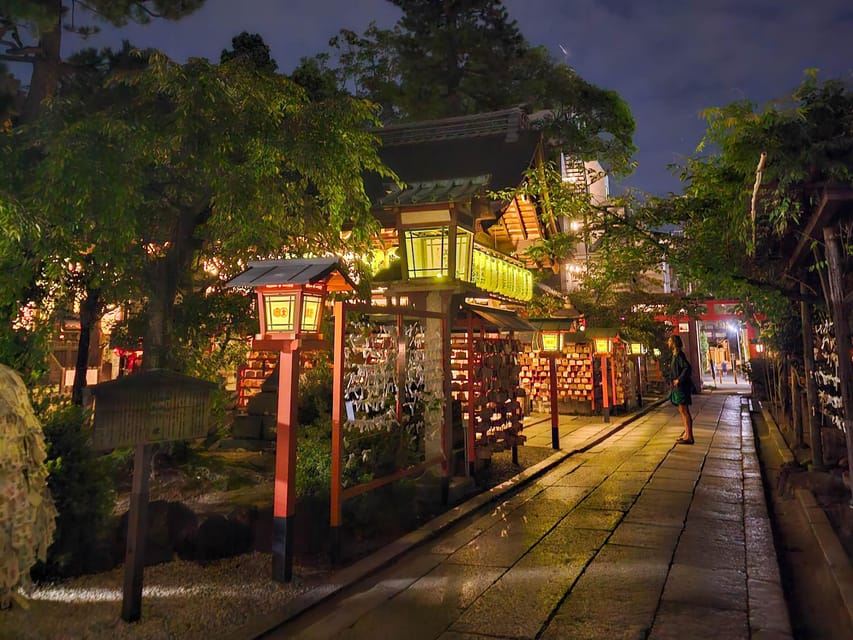
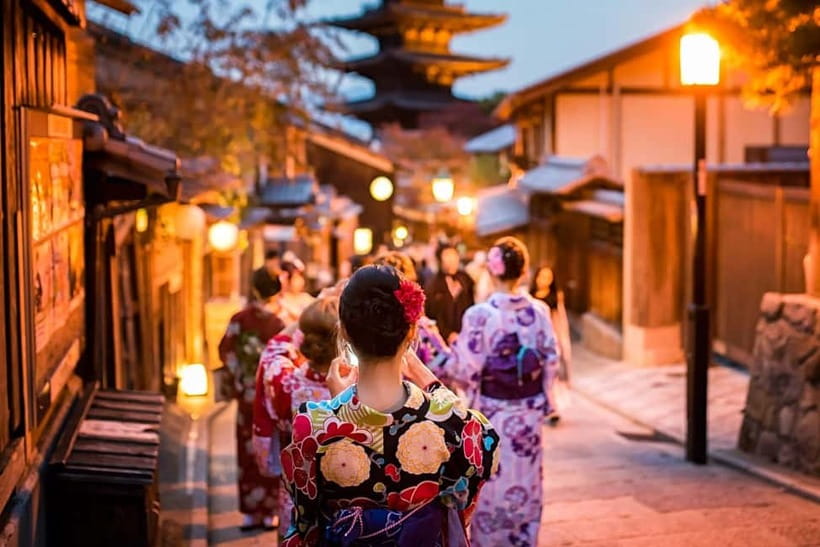
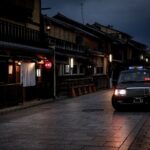
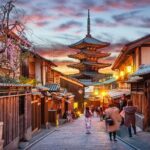
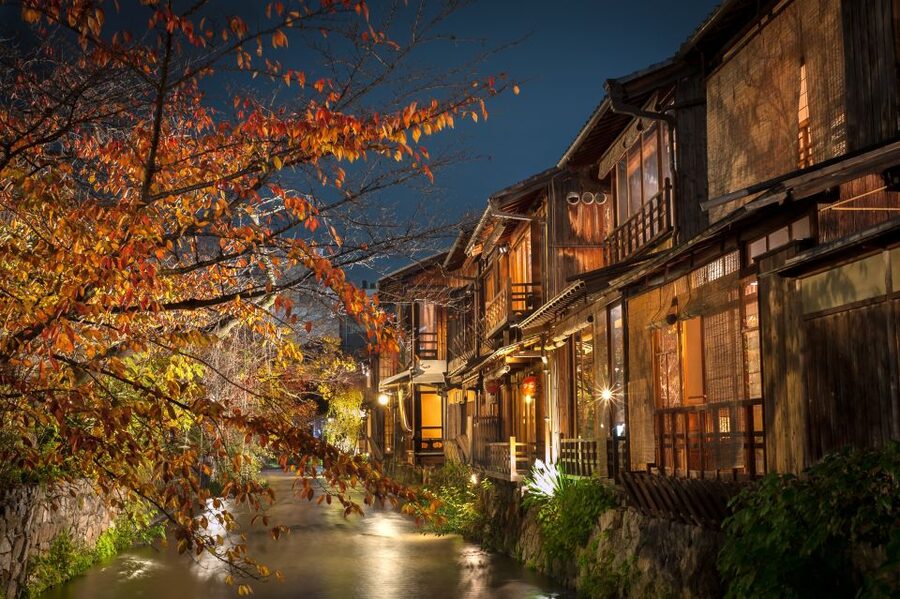
Hanamikoji Street is one of the best-preserved historic streets in the area, and the timing is exactly why this tour works. By the time you walk here, lanterns and traditional storefront light up the stone-and-wood vibe. You get the classic Gion scene—but with guidance, so you’re not just walking and hoping.
Here’s what I’d focus on while you’re on Hanamikoji:
- Look up and notice signage, rooflines, and the way the street narrows the farther you go.
- Watch how people move. Gion is a neighborhood, not a theme park.
- Take photos, but do it with restraint.
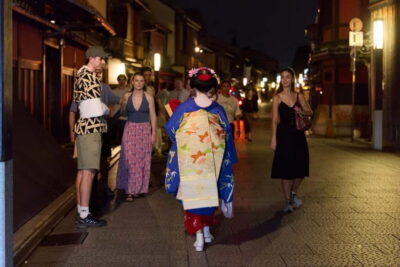
If you encounter geiko and maiko, be respectful. Use a longer lens, don’t block pathways, and don’t call out or crowd for a closer shot. The tour guidance also recommends stepping out of the path if someone approaches, then offering a quick smile, a short bow, and a thank-you. It’s the difference between seeing something and becoming part of someone’s workday.
This is also where a good guide earns their fee. Multiple groups mention guides like Jasmine, Raphael, Naoki, Alex, Vincent, and Gustavo for spotting good angles and keeping the group moving at a comfortable speed. You’ll feel the difference when the photo spots don’t turn into chaos.
Maruyama Park: a breather and a view angle as the night settles
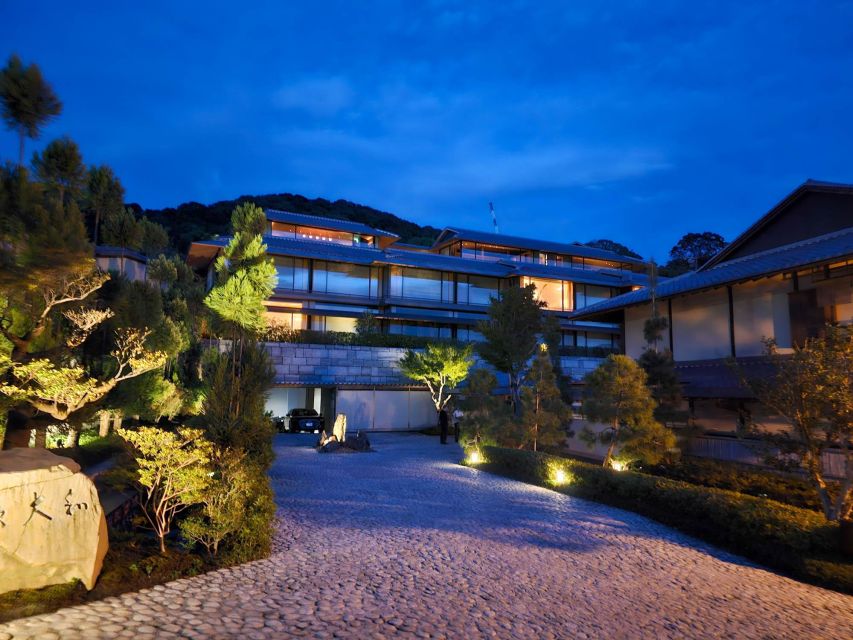
You’ll spend time at Maruyama Park, which gives your legs a short rest without breaking the flow of the evening. At night, this area can feel like a small pause between the formal shrine moments and the more lane-and-restaurant energy of Gion.
This is also a smart place to reset your senses. Earlier you’re absorbing architecture and signs. Here, you can look around and feel the district’s rhythm. The park stop isn’t just time-filler—it’s a transition point, and it helps you avoid the tour feeling like nothing but walking in a straight line.
Yasaka Shrine at night: where the atmosphere turns reflective
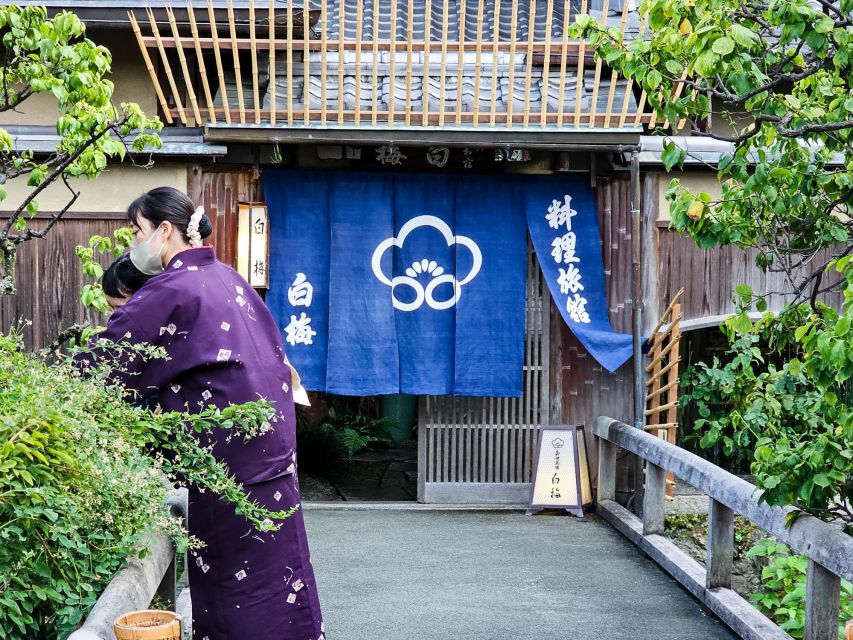
Yasaka Shrine is a big deal in Kyoto, and seeing it after dark changes the whole mood. Daytime often feels like crowds and lines. Night brings a softer pace and a more contemplative vibe.
With a guide, you’re not just looking at buildings—you’re learning what you’re actually seeing and why it matters. Guides from past groups (including Alex/Alejandro, Vicent, and Nobumasa Miyake—names that come up often) are praised for tying together history, architecture, and everyday cultural customs. Even if you only catch part of the story, the shrine makes more sense once someone explains the context.
One practical note: keep your expectations flexible. Some evenings will have more visible street activity than others, and shrine areas can feel different depending on light, weather, and crowds. That’s Kyoto. The tour’s strength is that it keeps you oriented even when the scene shifts.
Other Kyoto tours and experiences to compare
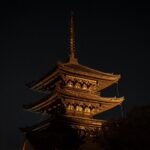
The scenic segments between stops: why the walk is the whole point
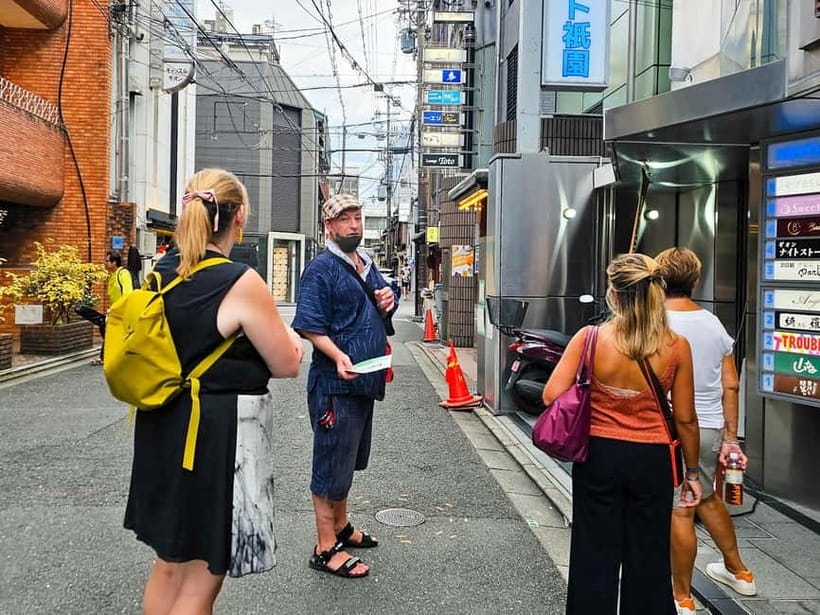
Between the main anchors—Hanamikoji, Maruyama Park, Yasaka Shrine, and the evening lanes—you’ll also get scenic views on the way. This is where the tour starts feeling like a real neighborhood walk rather than a checklist.
These in-between stretches are valuable for two reasons:
- You notice smaller landmarks you’d skip on your own.
- The guide’s stories land better when the scenery is actually around you, not back in a guidebook.
I like that this tour is set up so you’re not constantly waiting in one spot. You keep moving, then you stop at the moments that matter. With a small group, it stays manageable.
A local snack stop: the break that actually helps
You get a snack included during the walk, and it’s more useful than it sounds. First, it prevents the classic “three hours walking means I’m grumpy and slow” problem. Second, it gives you a small taste of how people actually handle breaks in Kyoto—quick, calm, and part of the rhythm of the evening.
Some groups describe the snack stop as a matcha dessert or tea-type break, which makes sense given the area and the seasonality of what’s available. Other write-ups mention a more flexible pick-your-snack feel at the place you stop. Either way, you’re not just getting a random bite—you’re getting a pause with a local flavor.
Practical tip: this is not a full meal, so if you’re arriving hungry, eat lightly beforehand or plan a dinner after. (The tour ends back in the central area, so you’re set up for an easy next step.)
Pontocho at night to Sanjō Bridge: the finish that makes sense
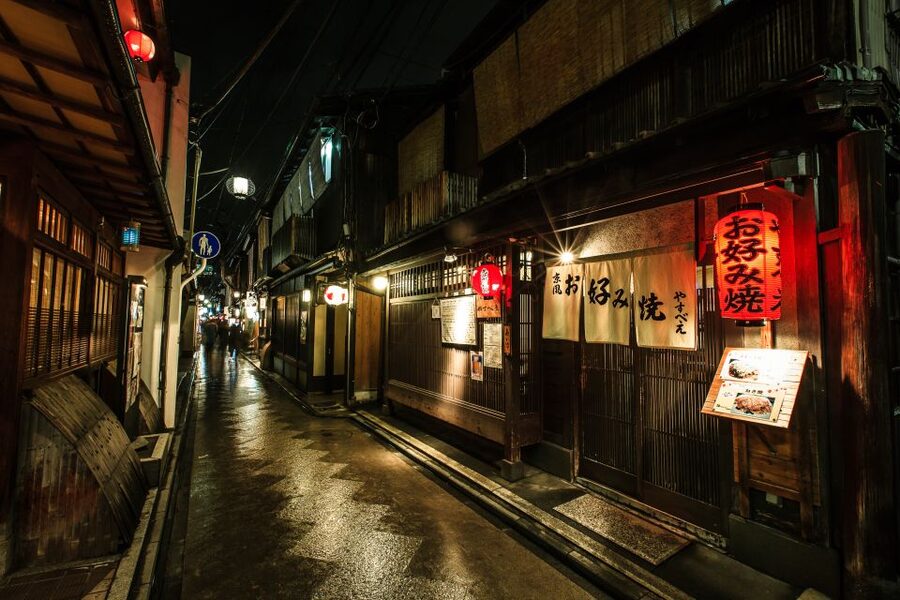
The last stretch heads to Pontocho, then finishes at Sanjō Bridge. Pontocho is the kind of place where the street itself feels like it’s part of the entertainment—lights reflecting, restaurants glowing, and the night air doing its thing.
With guidance, you’ll also learn how Pontocho fits into the wider Gion world. It’s not just scenic. It’s connected to the same culture of dining and hospitality that shapes Gion’s identity.
The timing also helps. By the time you reach the finish area, you’re ready to keep exploring without feeling like you have to start from scratch. Sanjō Bridge is a clean landing point because you can reorient quickly and choose where to go next.
Price and value: why $22 can work (if you want guidance)
At $22 per person for about three hours, this tour can be excellent value—especially because the cost includes:
- an English-speaking guide
- the walk itself
- a snack
You’re not paying for transportation or a long itinerary. You’re paying for someone to guide your eyes and your understanding through a district that’s easy to see wrong if you wander on your own. If you want Gion at night with context—why things look the way they do, what you might be seeing, and how to behave respectfully—this price often feels fair.
Where value can drop is if you’re expecting a guaranteed geiko or maiko sighting, or if you hate walking. The tour explicitly can’t promise those encounters, and it’s still an active stroll.
Who this tour suits best (and who should skip it)
This one fits best if you:
- have limited evening time and want a tight route
- like walking with structure (but still want room to look around)
- want cultural context for Gion, including geiko/maiko etiquette
- prefer a small group experience
Skip it if you:
- have mobility impairments, are pregnant, or have heart or respiratory issues (the route is not designed for these needs)
- want a ride-based tour with stops every few minutes
Also, bring patience for the human side of Gion. You’re not the only one walking those lanes at night, and weather can change the vibe fast.
Simple checklist so the evening feels smooth
Bring:
- Comfortable shoes
- Camera
- Cash
Do:
- be at the meeting point at least 10 minutes early
- keep respectful distance if you see geiko or maiko
- think of the snack as a break, not dinner
Weather note: Kyoto nights can be cool, and rain can make stone surfaces slippery. If your shoes aren’t comfortable on wet ground, you’ll notice it fast.
Should you book this Kyoto Gion sunset walking tour?
I’d book it if you want a guided, small-group way to experience Gion after dark without spending hours planning your route. The big win is how the tour stitches together the night atmosphere with culture: lantern streets, Yasaka Shrine at night, a smart park pause, and a finish near Pontocho and Sanjō Bridge.
I wouldn’t book it if you need a fully accessible route, dislike walking, or you’re only interested in a guaranteed geiko/maiko encounter. Treat those sightings as luck, not the main event.
If you’re flexible, wear good shoes, and show up on time, this tour is a very solid way to start your Kyoto evenings with confidence.
FAQ
How long is the Kyoto Gion sunset walking tour?
It lasts about 3 hours.
Where do I meet the guide?
Meet at the Kyoto Kawaramachi Garden corner, in front of the big black world map. Your guide will be there wearing a TripGuru shirt or holding a TripGuru sign.
Is the guide available in English?
Yes. The live tour guide is available in English (and also Spanish and French).
Is a snack included?
Yes. A local snack is included during the tour.
Is it a small group tour?
Yes. It’s a small group with no more than 9 people.
Can I expect to see geiko or maiko during the tour?
You might get a chance to see geiko or maiko, but it is not guaranteed. If you do encounter them, the tour recommends respectful photo behavior and keeping distance.
More Tours in Kyoto


More Tour Reviews in Kyoto


Still in Gion? Keep Going

Just added: more Kyoto tours to browse








Gion & Geisha District Tours, compared.
 ★ 4.7Kyoto Geisha Walking Tour: Gion District & Hidden GemsFrom $253,273 reviews
 ★ 4.9Gion Magical Night Walking Tour with Geisha TriviaFrom $242,393 reviews
 ★ 4.7Gion Geisha District Walking Tour – Stories of GeishaFrom $202,187 reviews
 ★ 4.9Best of Kyoto: Gion, Geisha, Pagodas & CobblestonesFrom $242,058 reviews
 ★ 4.5Night Walk in Gion: Kyoto’s Geisha DistrictFrom $212,003 reviews
 ★ 5.0Kyoto Night Foodie Tour in Gion (9+ dishes + 6 Sake tastings)From $1631,762 reviews
 ★ 5.0Kyoto Gion Geisha District Walking Tour – The Stories of GeishaFrom $251,441 reviews
 ★ 5.0Kyoto Gion: 2-Hour Geisha Culture & History Walking TourFrom $231,186 reviews
Browse the lists this tour appears in