
Reviewed · GION & GEISHA DISTRICT TOURS
Kyoto: Gion & Geisha District Night Time Walking Tour
Kyoto at night has a different heartbeat. On this Gion walk, you trace Kyoto’s famed lanes and shrines while a guide explains how festivals and geiko culture shaped the neighborhood, from Yasaka Shrine to Hanamikoji Street. I especially like that the tour is guided by friendly, English-speaking pros such as Pedro and Majo, who turn Kyoto’s tiny details into real stories.
Two hours sounds short, but you get a lot of payoff: you walk iconic places you’d miss on your own (stone-paved lanes, a shrine with a ritual arch, and the famous street lined with preserved wooden buildings), and you can ask questions without feeling rushed. One thing to plan around: it’s not for wheelchair users, and night streets can include uneven paving and slopes, so wear grippy shoes and dress warm.
In This Review
- Key highlights worth your attention
- Gion after dark: why this route feels different
- Meeting point at Starbucks Kyoto Gion Hotel: get oriented fast
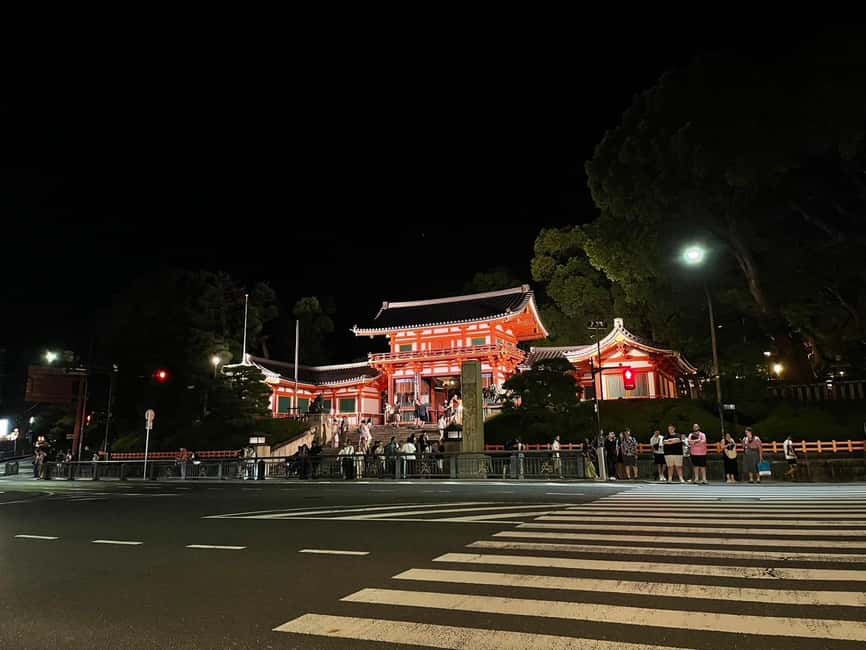
- Yasaka Shrine at night: festival ties and spiritual meaning
- Maruyama Park: a pause that makes the streets feel even older
- Nene no Michi: a stone-paved lane with a named story
- Ninenzaka slope: Kyoto’s historic streetscape at eye level
- Yasui-Konpiragu and the Power Stone archway ritual
- Hanamikoji Street: geiko culture explained on the geisha district’s main stage
- Price and value for a 2-hour Kyoto night walk
- Who should book this Kyoto Gion night tour
- Should you book this tour or skip it?
- FAQ
- How long is the Kyoto Gion night walking tour?
- Where do I meet the guide?
- What stops are included on the tour?
- Is the guide available in English?
- Does the tour include photos?
- Is it wheelchair accessible?
- Is there free cancellation?
- Should I expect to see geisha or geiko during the walk?
Key highlights worth your attention
- A night route with fewer daytime crowds, so photos and slow looking feel easier
- Yasaka Shrine context tied to festivals and why this area mattered
- Nene no Michi and Ninenzaka give you that old-street Kyoto feel fast
- Yasui-Konpiragu Shrine’s Power Stone archway ritual, with meaning behind the tradition
- Hanamikoji Street geiko insight, including training and artistry
- Guides help with photos, and answers feel personal (names like Pedro, Majo, Nay, Wilber, Yuvia, and Bell show up often)
Gion after dark: why this route feels different
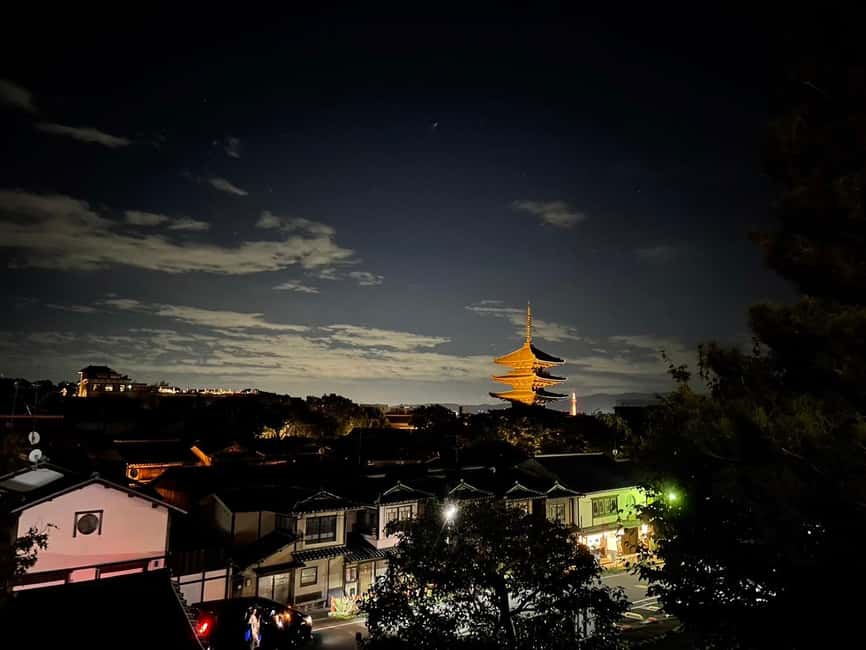
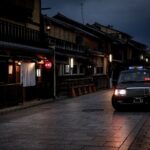
Gion is famous in daylight, sure. But at night, it changes texture. The lantern glow, the quieter side streets, and the way the buildings hold onto cool air makes everything feel less like a postcard and more like a lived-in neighborhood.
This tour leans hard into that advantage. You’re not just ticking off sights. You’re walking the same kinds of lanes locals use to connect daily life with tradition: shrines, lanes named for historical figures, and the preserved street where geiko perform. And because it’s a guided walk, the small stuff actually makes sense. Many street corners in this area don’t come with helpful signage, so a guide who knows the stories helps you notice what matters.
I also like that the tour format is built for focus. Two hours is long enough to get the meaning, but short enough that you’re not marching for half the night. Reviews consistently mention friendly, engaging guides who answer questions and make it feel personal.
The one trade-off is simple: you’ll be walking on Kyoto’s kind of surfaces—stone lanes and sloped streets. Add chilly night air, and you’ll be glad you planned for comfort.
More evenings along the lantern-lit lanes of Gion


Meeting point at Starbucks Kyoto Gion Hotel: get oriented fast
You meet in front of Starbucks Coffee in the Kyoto Gion Hotel area, next to the hotel. It’s an easy landmark, and the coordinates are 35.0036732, 135.7760837, which helps if you’re using maps.
From there, the tour moves into the older heart of the district. I like starting with a clear meetup spot because Kyoto’s street maze can be tricky if you’re arriving from another neighborhood. When a meeting point is reliable, you spend less time hunting and more time looking.
You’ll also want your phone camera handy. Photos are included, and several guides (including ones named in feedback such as Majo, Pedro, and Wilber) are described as helping with picture-taking. That matters if you’re traveling solo and tired of asking strangers to snap your group shots—or your own selfies that nobody asked for.
Yasaka Shrine at night: festival ties and spiritual meaning
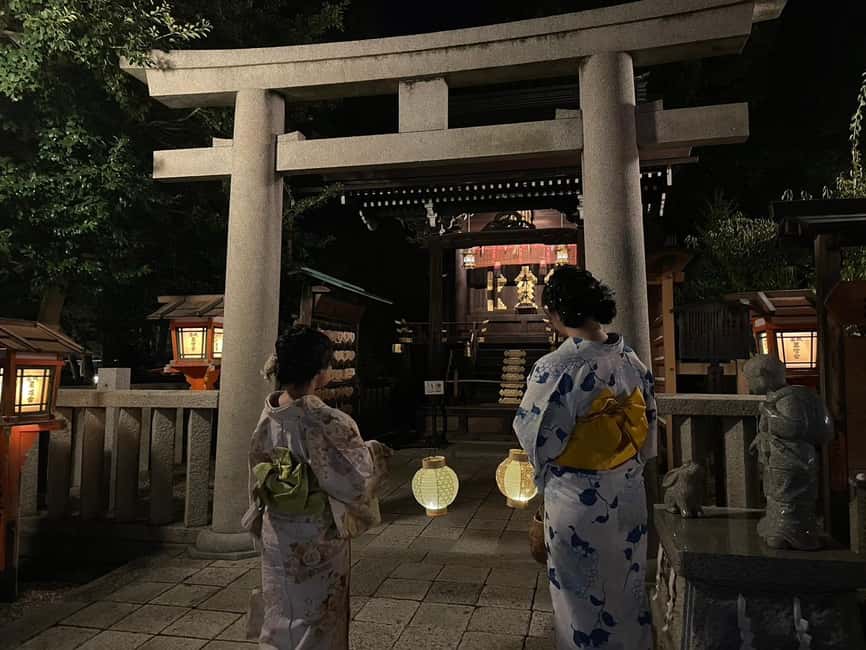
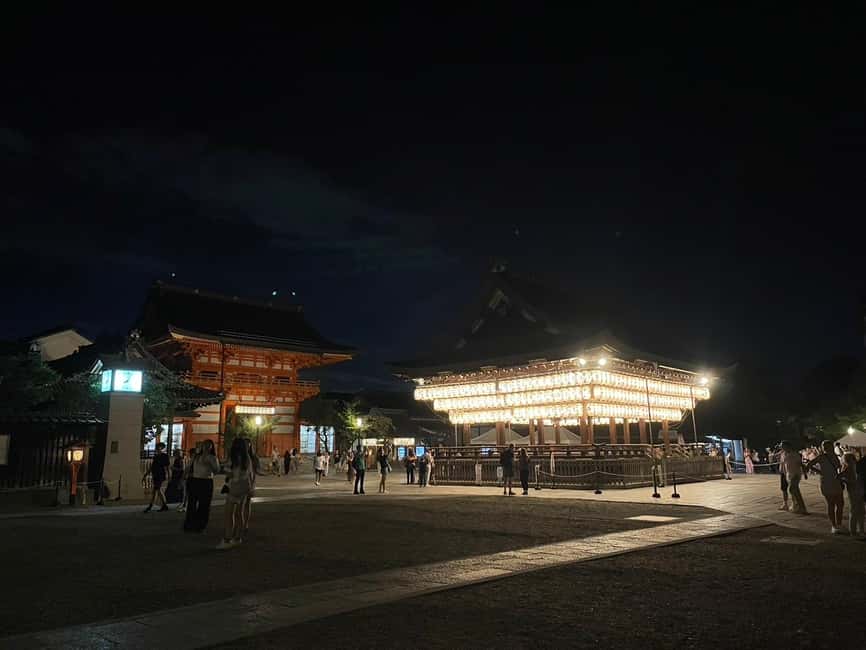
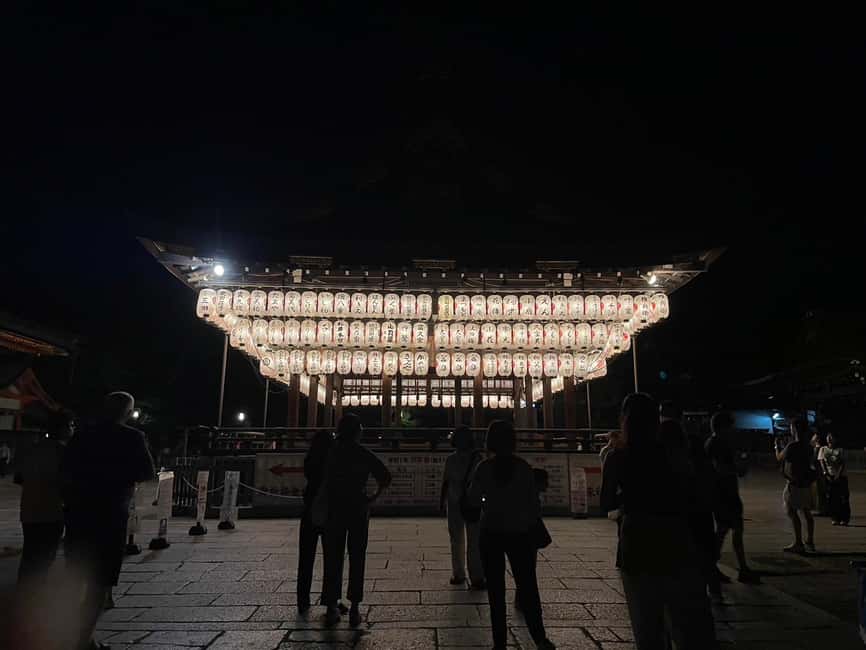
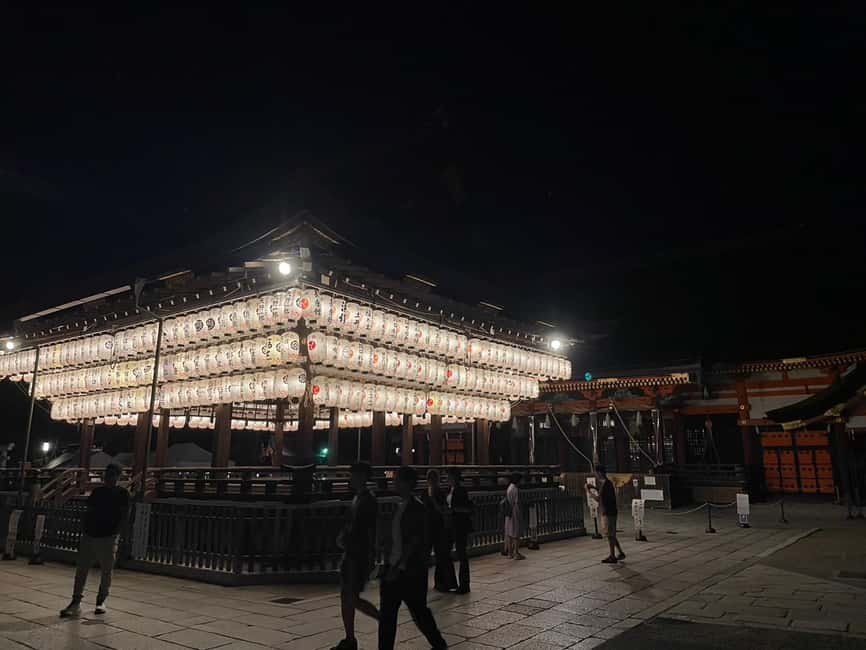
The tour centers you around Yasaka Shrine, one of Kyoto’s best-known spiritual landmarks. You’ll spend about 20 minutes there, which is long enough to get your bearings and short enough to keep the mood peaceful.
What makes this stop useful is context. Yasaka isn’t just a pretty shrine to pass by. The guide explains its ties to Kyoto’s festivals and how that seasonal energy connects to what you’ll see later in Gion. You start to understand why this neighborhood doesn’t feel like a museum. It still runs on tradition, timing, and community.
At night, the shrine experience feels calmer. You get a chance to slow down without the daytime crush. That’s a big reason this tour is worth choosing over a daytime walk: the stories land better when the place isn’t packed.
Practical tip: keep your voice low and your pace steady near the grounds. Kyoto’s shrine spaces aren’t built for speed-walking and loud conversation.
Maruyama Park: a pause that makes the streets feel even older
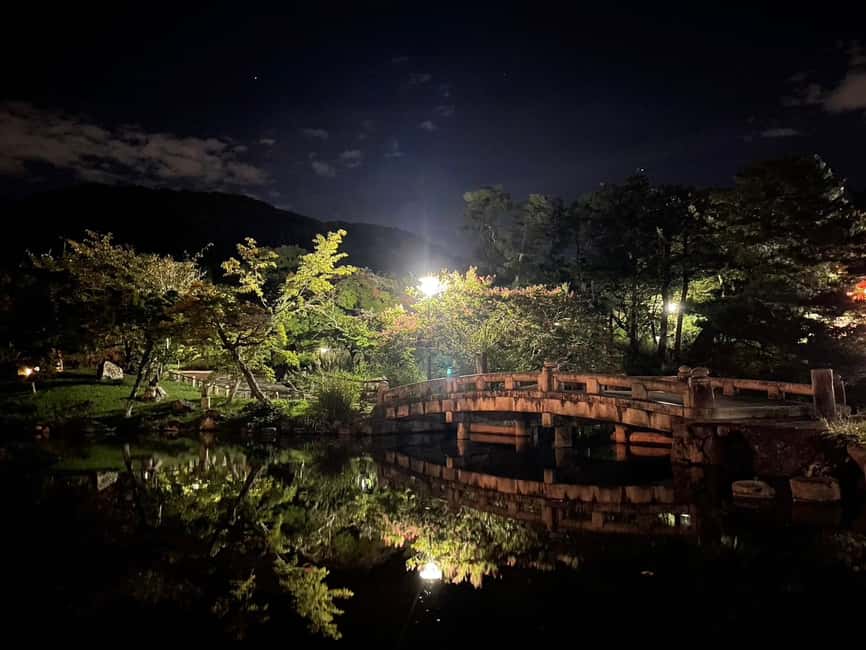
After Yasaka, the route includes Maruyama Park, Kyoto’s oldest public garden. This is a smart break in the evening plan. Gardens like this work like a breather between concentrated sightseeing.
Here’s what the park gives you: perspective. You see that Gion’s cultural story isn’t just stone lanes and wooden buildings. Kyoto is also about gardens, seasonal atmosphere, and the rhythm of outdoor space.
This stop also helps you build a mental map. Once you walk from the green calm of Maruyama Park toward the stone streets and historic slopes, everything feels connected instead of random.
Nene no Michi: a stone-paved lane with a named story
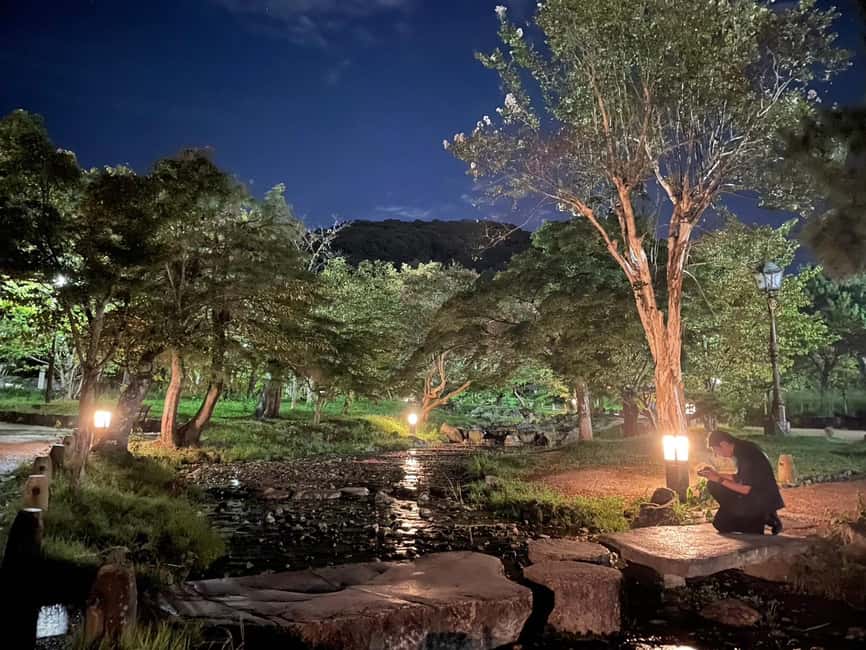
Nene no Michi is where the tour starts feeling like a real Kyoto stroll. The lane is stone-paved and famous for its name—tied to Nene, associated with samurai leader Toyotomi Hideyoshi. The guide points out why that matters, and you walk past the kinds of traditional structures that make Higashiyama feel like the past is still working overtime.
I like this segment because it’s visual and informational. You’ll see the lane as a place to move through, but also as a historical thread. Guides also tend to connect the street’s layout to how people traveled and gathered, which makes the walking feel purposeful.
This is also one of the best sections for photos. Night lighting softens the hard edges of stone and wood, and the lane creates natural leading lines for your camera.
Other Kyoto tours and experiences to compare

Ninenzaka slope: Kyoto’s historic streetscape at eye level
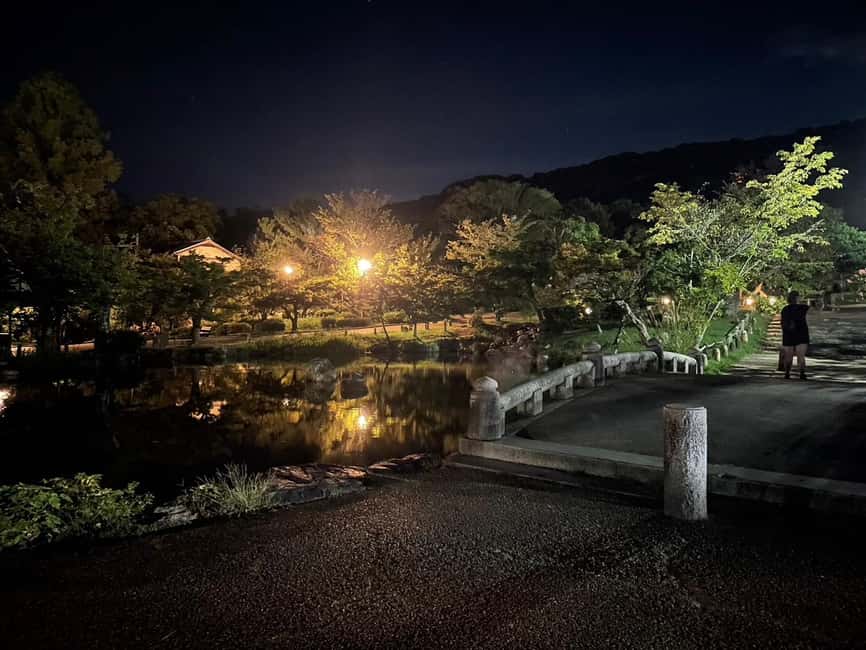
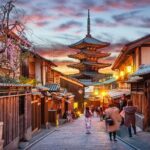
Next comes Ninenzaka, the photogenic slope known for preserved wooden buildings and old-style storefronts. Expect a bit more exertion here, because slopes change your pace. It’s not dramatic, but you’ll feel it, especially if it’s cold outside.
Still, this stop is valuable because it’s one of the places where Kyoto’s character shows up immediately. You can look left and right and understand why artists, writers, and filmmakers love this city. The best part with a guide is that you’re not just admiring the vibe. You learn what the neighborhood represents and what you’re seeing when you look at those facades.
Practical tip: wear shoes that grip. Even if the street isn’t slippery, slopes at night mean you’ll want stability, not fashion-forward sandals.
Yasui-Konpiragu and the Power Stone archway ritual
The tour also visits Yasui-Konpiragu Shrine, highlighted for its symbolic Power Stone archway. The experience here is different from the big, obvious shrine moments. This is a ritual space where people crawl through an arch as a way to pray for strong bonds—or to leave unwanted ties behind.
That meaning is what makes the stop memorable. You’re not just seeing an arch and moving on. You’re learning how local people use small, physical actions as symbolic acts of hope and release. Guides can explain the ritual in a way that feels respectful rather than touristy.
One more reason this stop works on a night walk: it’s calmer than daytime sightseeing hubs. You’ll still want to move carefully and follow the flow of worshippers. If you’re unsure what to do, watch others at a respectful distance first.
Hanamikoji Street: geiko culture explained on the geisha district’s main stage
The tour ends in the Gion core with Hanamikoji Street, where preserved wooden teahouses still host geiko (Kyoto geisha). This is the “what you came for” segment—but it’s also the most easily misunderstood if you don’t know the basics.
This tour’s value is that the guide shares insights about the lives, training, and artistry of geiko and maiko. You’ll hear how this world works and why it has rules around appearance, timing, and etiquette. It’s not about gossip or shock value. It’s about understanding the craft and the discipline behind it.
One thing to set expectations: you might spot geisha or geiko briefly, and sometimes it happens—some feedback mentions that seeing one can be unusual. But this is not a guaranteed photo parade. Treat any sighting like a bonus, not a requirement.
The good news is that even without a sighting, Hanamikoji still delivers. At night, the street reads like a story written in wood, stone, and shadows.
Price and value for a 2-hour Kyoto night walk
The price is about $20 per person for a 2-hour guided experience. That’s strong value for Kyoto, especially because you’re not just walking past attractions—you’re getting a guide who can connect the dots between shrine meaning, named streets, and geiko culture.
Here’s what you’re really paying for:
- A knowledgeable English-speaking guide (several guides are praised by name in feedback)
- Time saved on figuring out what you’re looking at
- Photo support during the walk
- A route chosen for night atmosphere, not just convenience
And there’s another value signal: the feedback repeatedly mentions a personal feel. One write-up describes a tour turning into a private-style experience for two people. Even when it’s not private, a smaller-feeling tour can make it easier to ask questions and get clear answers.
If you’re deciding between doing Gion on your own or taking a guide, the question isn’t whether you’ll see the streets. You will. The question is whether you’ll understand what those places mean. For this price, you’re buying meaning.
Who should book this Kyoto Gion night tour
This is a great fit if you want:
- A night walk in Gion with traditional stops and cultural context
- An English guide to explain what you’d otherwise miss
- Better photo odds at night, with help taking pictures
- A short, focused tour that doesn’t chew up your whole evening
I’d think twice if:
- You need wheelchair accessibility, because it’s not suitable
- You dislike walking on uneven paths or slopes
- You’re not comfortable with cold night air (feedback notes it can be cold, so plan warm layers)
Solo travelers often like this kind of format because the guide adds direction and photo help. Couples also tend to enjoy it because it creates a shared storyline for the evening.
Should you book this tour or skip it?
If your goal is to see Gion at night and understand what makes it more than a famous street, I think this tour is worth booking. For $20 and 2 hours, you get multiple iconic stops—Yasaka Shrine, Nene no Michi, Ninenzaka, Yasui-Konpiragu’s Power Stone, and Hanamikoji Street—with English guidance and photo support.
Book it if you like small-group pacing, asking questions, and learning why places exist the way they do. Consider it less if you can’t handle slopes and uneven pavement or you’re expecting a guaranteed geiko sighting. If geisha or geiko appear briefly, treat it as a bonus to an already strong cultural walk.
FAQ
How long is the Kyoto Gion night walking tour?
The tour lasts 2 hours.
Where do I meet the guide?
You meet in front of Starbucks Coffee next to Kyoto Gion Hotel. The coordinates are 35.0036732, 135.7760837.
What stops are included on the tour?
The route includes Yasaka Shrine, Maruyama Park, Nene no Michi, Ninenzaka, Yasui-Konpiragu Shrine, and Hanamikoji Street.
Is the guide available in English?
Yes. The tour is listed as having an English-speaking guide.
Does the tour include photos?
Yes, photos during the tour are included.
Is it wheelchair accessible?
No. The activity is not suitable for wheelchair users.
Is there free cancellation?
Yes. You can cancel up to 24 hours in advance for a full refund.
Should I expect to see geisha or geiko during the walk?
You’ll learn about geiko and maiko and experience the Gion atmosphere at night. Some people may see geisha briefly, but sightings are not guaranteed based on the information provided.
If you want, tell me your travel month and whether you’re staying near Kyoto Station or the Gion area, and I’ll suggest the best time to start the walk and how to pair it with dinner nearby.
More Tours in Kyoto


More Tour Reviews in Kyoto


Still in Gion? Keep Going

Just added: more Kyoto tours to browse








Gion & Geisha District Tours, compared.
 ★ 4.7Kyoto Geisha Walking Tour: Gion District & Hidden GemsFrom $253,273 reviews
 ★ 4.9Gion Magical Night Walking Tour with Geisha TriviaFrom $242,393 reviews
 ★ 4.7Gion Geisha District Walking Tour – Stories of GeishaFrom $202,187 reviews
 ★ 4.9Best of Kyoto: Gion, Geisha, Pagodas & CobblestonesFrom $242,058 reviews
 ★ 4.5Night Walk in Gion: Kyoto’s Geisha DistrictFrom $212,003 reviews
 ★ 5.0Kyoto Night Foodie Tour in Gion (9+ dishes + 6 Sake tastings)From $1631,762 reviews
 ★ 5.0Kyoto Gion Geisha District Walking Tour – The Stories of GeishaFrom $251,441 reviews
 ★ 5.0Kyoto Gion: 2-Hour Geisha Culture & History Walking TourFrom $231,186 reviews
Browse the lists this tour appears in