
Reviewed · GION & GEISHA DISTRICT TOURS
Kyoto Geisha District Walking Tour in Gion
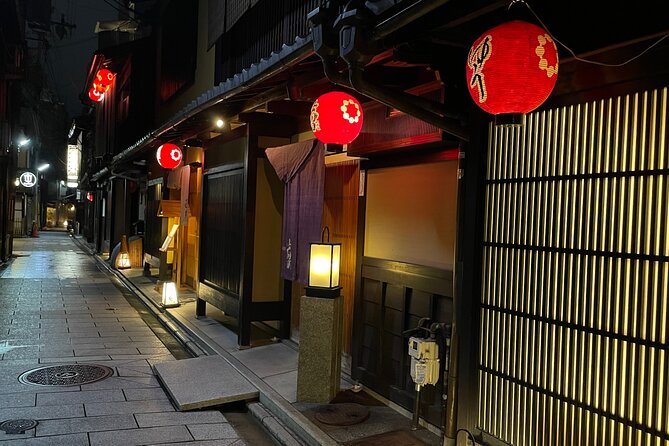
If Gion has felt like a movie set, this helps it click. This Kyoto geisha district walking tour is a guided loop through Yasaka Shrine lanes and classic photo corners, with stories about geisha culture that explain what you’re seeing.
Two things I especially like: you get context fast (so you’re not just clicking photos), and the route hits visually rewarding Shinto spots and Kyoto waterways without wasting time getting lost. One consideration: geisha/maiko sightings are luck-based, and like any small-group tour, the experience depends on your guide’s communication style and pacing.
In This Review
- Quick hits in Gion with a small group (max 10)
- Gion at walking speed: what this 2-hour loop really shows you
- Where you meet: Gion Kōbu Kaburenjō and the value of not getting lost
- Yasaka Shrine: the 40-minute stop that sets the tone
- Gion’s main lanes: why you get two looks at the district
- Tatsumi Daimyojin: a short stop with a big theme
- Tatsumi Bridge and the quiet alleys: where your photos start feeling real
- Shirakawa Canal: the slow moment that balances the crowds
- Gion Corner: traditional performances as a short cultural bridge
- The guide commentary: what makes the tour worth $29.85
- Photo strategy: how to get great shots without turning the walk into chaos
- Price and value: what you’re paying for at $29.85
- Practical tips for a smooth Gion walk (and when to skip)
- Kimono option: the one detail you must not forget
- So, should you book this Kyoto Geisha District walking tour?
- FAQ
- How long is the Kyoto Gion Geisha District Walking Tour?
- What does the tour cost?
- What is the group size limit?
- Where does the tour meet?
- Do I need a paper ticket?
- Does the tour run in bad weather?
- Is it possible to see a geisha during the tour?
- Is the tour suitable for people who use wheelchairs or can’t handle stairs?
- Can children join the tour?
- If I choose the kimono plan, where do I go after changing?
Quick hits in Gion with a small group (max 10)
- Guide-led Gion so you don’t spend your short Kyoto time map-guessing
- Yasaka Shrine (free) with a full 40 minutes to slow down and look
- Shirakawa Canal and Hanamikoji Street for the classic Kyoto streetscape vibe
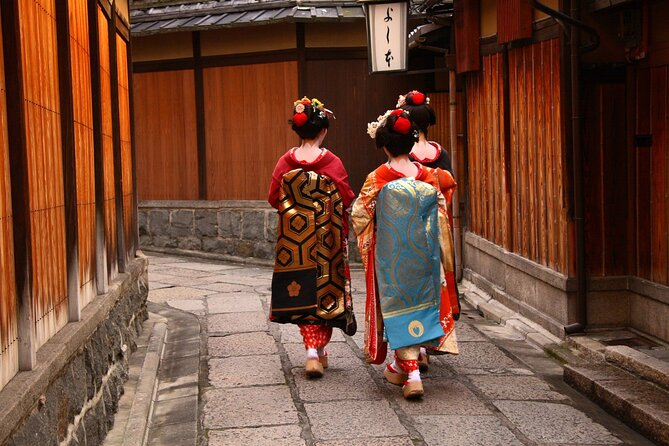
- Shinto-to-geiko connections that make the district make more sense
- Photo-friendly corners like Tatsumi Bridge and canal-side machiya areas
Gion at walking speed: what this 2-hour loop really shows you
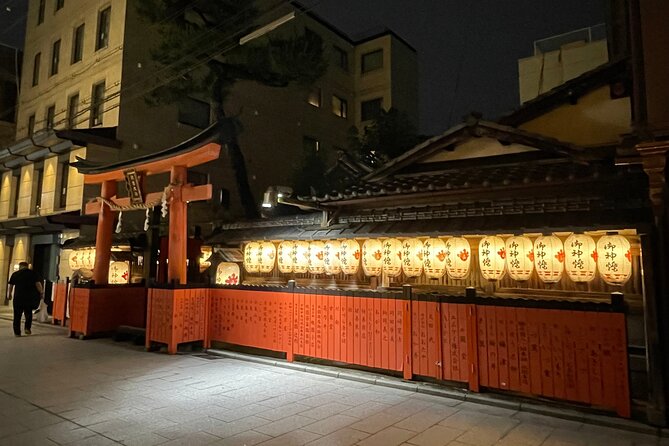
Gion is famous for a reason. Narrow lanes, old wooden machiya houses, paper lanterns, and shrines all mix together in a way that can feel confusing when you’re wandering alone. With a guide, the same streets become a story you can follow—where you stand matters, and why it matters gets explained as you walk.
This tour is about a 2-hour loop, capped at 10 people, which keeps the pace calm and the group easier to manage. It’s also built for short attention spans in a good way: you get bite-size stops rather than one giant museum marathon.
You’ll also get the “Kyoto at lower light” effect. Even the tour description leans into the idea that lanterns and the evening mood change the whole district. If you can choose a later slot, that’s when the streets feel most cinematic.
More evenings along the lantern-lit lanes of Gion


Where you meet: Gion Kōbu Kaburenjō and the value of not getting lost
The meeting point is Gion Kōbu Kaburenjō, at 570-2 Gionmachi Minamigawa in Higashiyama Ward. This matters more than it sounds: in Kyoto, the difference between “I think I’m close” and “I’m in the right lane” can be a 10-minute detour—time you don’t have in a city that’s constantly pulling you in five directions.
A guide also helps with getting oriented and how to get back from the starting area. That’s a small detail, but it’s one less thing you have to solve right after the tour ends.
And because you’ll have a mobile ticket, you’re not fumbling with printed paperwork in crowded lanes. It’s a simple convenience that keeps the first 10 minutes from turning into logistics.
Yasaka Shrine: the 40-minute stop that sets the tone
Yasaka Shrine is one of Gion’s best-known Shinto landmarks, and this tour gives it the time it deserves. You’ll spend about 40 minutes there, and entrance is free.
What I like about starting here is that it anchors the district beyond aesthetics. Geiko culture lives alongside Shinto life in Kyoto, and the shrine visit gives you a baseline for how religious space, tradition, and everyday neighborhood rhythms overlap.
Practical note: plan to slow down. Yasaka’s architecture, lanterns, and the calm around the grounds are exactly the kind of things your eyes rush past when you’re trying to “do Kyoto” quickly.
Gion’s main lanes: why you get two looks at the district
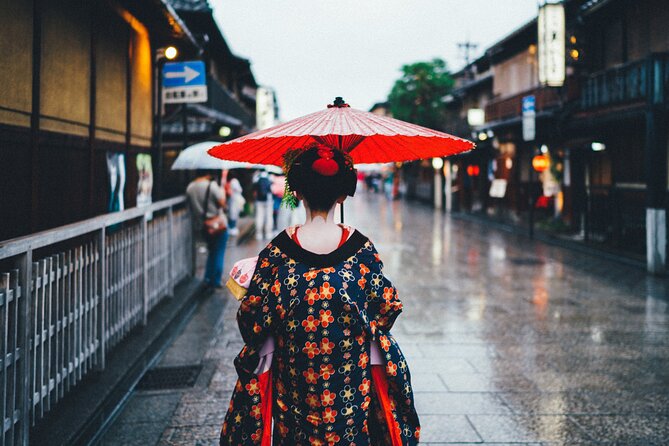
After Yasaka, you head into Gion itself for about 20 minutes. This first pass is basically orientation—wooden houses, narrow streets, and the rhythm of the area as it shifts with the light.
Then the itinerary returns to “another area of Gion” for another 20 minutes. That second look is smart. If you only see one pocket, Gion can feel like one repeating postcard. Two different segments help you notice how the streetscape changes by block—what feels open, what feels tucked away, and where the most iconic views appear.
You’ll also get time along Hanamikoji Street (about 10 minutes), which is the classic main drag lined with machiya houses, teahouses, shops, and restaurants. It’s a great place for photos, but it can also be the busiest. A guide helps you time what you shoot and where you step so you’re not turning into traffic in the middle of a crowd.
Tatsumi Daimyojin: a short stop with a big theme
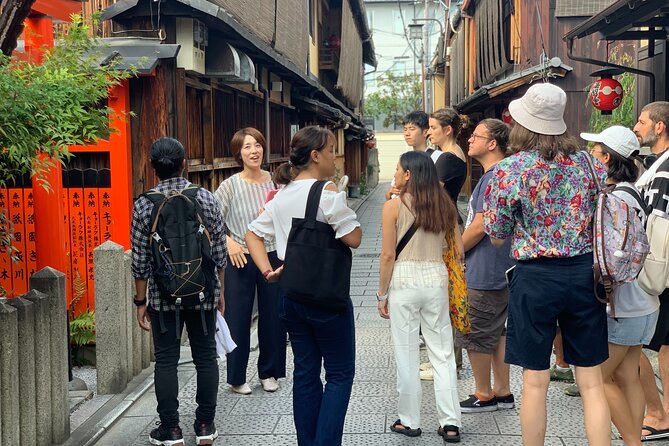
Next is Tatsumi Daimyojin Shrine, a smaller stop at about 5 minutes, and entrance is free. The key point here isn’t scale—it’s meaning. The shrine is dedicated to themes like protection, good fortune, and safety, with a strong pull toward visitors and travelers.
This is the kind of stop that works best when a guide ties it to the district. You’ll start seeing how shrines and everyday life connect in Kyoto, and why the old neighborhoods don’t treat religion as a separate “tourist add-on.”
Other Kyoto tours and experiences to compare



Tatsumi Bridge and the quiet alleys: where your photos start feeling real
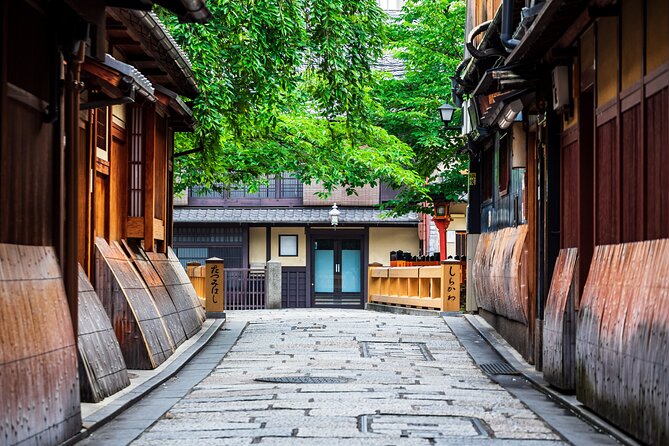
Then you reach Tatsumi Bridge (about 10 minutes). This is a small traditional bridge in a corner of Gion that feels like a set scene: wooden machiya houses close to the walkway, a narrow view line, and a calm that’s different from the main streets.
This stop is also useful for photography strategy. Bridges and canal-adjacent corners are where the perspective lines help your pictures look like Kyoto, not just like you standing in Kyoto. If you’re the kind of person who takes photos while walking, this is where you’ll want to slow down for five seconds and let the guide finish pointing out what to look at.
Shirakawa Canal: the slow moment that balances the crowds
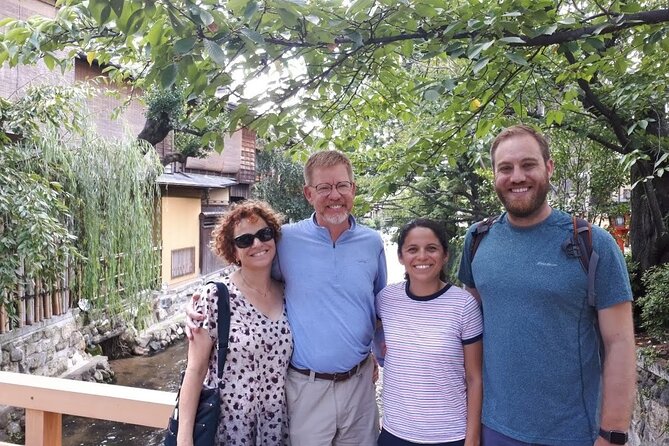
Gion Shirakawa (the Shirakawa Canal area) is where the pace usually softens. The tour description frames it as a tranquil waterway lined with well-preserved traditional machiya houses, plus weeping cherry trees. Even if you aren’t there during cherry season, the canal layout tends to create that same “pause” feeling.
This stop is why I like the tour being a walking experience instead of a bus ride. Water + old wooden streets make the district feel less like a checklist and more like a lived-in place. It’s also one of the better segments for photos without feeling like you’re fighting the crowd.
Gion Corner: traditional performances as a short cultural bridge
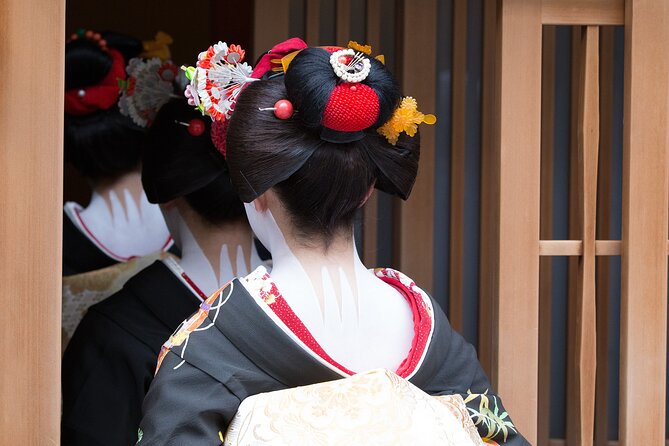
You’ll also stop at Gion Corner, a cultural venue that presents traditional art performances and acts like an introduction to Kyoto’s performance traditions. The tour data doesn’t list specific shows in this segment, but the purpose is clear: it’s a bridge between what you see on the street and the arts that historically supported and surrounded that world.
If you’re curious but don’t want to commit to a full evening theater plan, this can be a nice “taste and context” moment inside a shorter tour.
The guide commentary: what makes the tour worth $29.85
The biggest value here is not the shrines. It’s the commentary that puts the district into focus.
Your guide explains geisha culture and traditions as you walk, connecting what you’re seeing—shrines, houses, streets, and the layout of Gion—to why they matter. This is where the tour can turn from “pretty streets” into “I finally understand what I’m looking at.”
In the guide-led stories, I’d pay special attention to how they explain the people of the district using the correct terms and daily rhythms. From past participants’ experiences, guides like Yuko, Takuma, Yuji, Hide, Tom, Harry, and Eric have been praised for turning the area into something you can feel. Some guides have even used extra language help (one account noted a little Spanish), which can be a comfort if your Japanese is still in survival mode.
One drawback to keep in mind: a small number of experiences can vary. One lower-rating account complained about unclear English, a less informative style, and a tour that felt more selfie-driven than story-driven. If you strongly need deep, well-paced explanation in your language, I’d look closely at how the tour description promises commentary and then choose the best time slot available to match your comfort level.
Photo strategy: how to get great shots without turning the walk into chaos
You’ll naturally want photos—Gion is built for them. Paper lanterns, shrine lanterns, canal reflections, and machiya-lined streets give you angles almost anywhere you stop.
But keep the tour flow in mind. In one less-loved experience, the guide’s focus on selfies and group photo moments was mentioned as a distraction from information. That’s fixable on your end even if the pacing isn’t perfect: step slightly to the side when you’re shooting, don’t block walkways, and let the guide finish the explanation before you sprint to the next corner.
Also, plan your camera habits. If you’re moving fast with a phone in your hand, it’s easy to miss the detail the guide points out—like why a particular lane or bridge matters. Treat photos as part of listening, not a replacement for it.
Price and value: what you’re paying for at $29.85
At $29.85 per person for about 2 hours, you’re paying for a focused guide-led walking experience, not a museum entry fee. The route includes multiple free admission stops (including Yasaka Shrine and Tatsumi Daimyojin Shrine), so your money goes into interpretation and time efficiency.
This is a good value if:
- you only have a short window in Kyoto and want to reduce “where do we go next?” stress
- you care about cultural context, not just photos
- you like small-group dynamics (max 10) that keep the pace manageable
It’s not the best value if you’d rather freestyle Gion on your own with zero structure. Also note what isn’t included: there’s no hotel pickup or transportation from the meeting point, and you’re not getting food or extra add-ons built into the price.
Practical tips for a smooth Gion walk (and when to skip)
This is a walking tour, and the operator specifically recommends comfortable walking shoes. That’s not just boilerplate; Gion lanes can be uneven, and you’ll be moving often enough that sore feet can ruin your photos.
It’s also rain or shine, so bring a small umbrella or light rain layer. Kyoto weather changes quickly, and you don’t want to cut the tour short because you’re uncomfortable.
Accessibility is a real consideration. The tour isn’t suitable for people who can’t handle stairs (it notes trouble with going up and down stairs). If that’s you, check for an alternative format.
Finally, if you’re traveling as a parent, children must be accompanied by an adult. The walking pace and cultural sites work best with adult supervision.
Kimono option: the one detail you must not forget
If you’re doing a kimono plan, you’ll change outfits and then go by yourself to the Japan Kanji Museum & Library. The note says it’s about a 5-minute walk from the kimono rental store.
After the tour, you also need to return the kimono by 5:30pm. This is the kind of timing detail that can sneak up on you, so I’d plan the day around it rather than treating it as a last-minute afterthought.
So, should you book this Kyoto Geisha District walking tour?
If you want Gion without the guesswork, this is an easy yes. The combination of small-group pacing, a guide-led route through major Shinto landmarks, and commentary about geiko/geisha culture makes it a strong first look at the district. It’s also a decent value for the time you save, especially if you’re short on hours in Kyoto.
Skip it or at least be cautious if:
- you need highly detailed explanation in a specific language and are sensitive to communication issues
- you have limited mobility and can’t manage stairs
- you’re hoping for a guaranteed geisha sighting (you may spot one, but luck and timing play a role)
If you do book, give yourself a little extra time at the start, wear shoes you can walk in all day, and use the guide’s stories as your “extra” souvenir. Free cancellation is available up to 24 hours in advance, which gives you room to adjust if your Kyoto schedule shifts.
FAQ
How long is the Kyoto Gion Geisha District Walking Tour?
The tour takes about 2 hours.
What does the tour cost?
It costs $29.85 per person.
What is the group size limit?
The tour caps the group at a maximum of 10 travelers.
Where does the tour meet?
You meet at Gion Kōbu Kaburenjō, 570-2 Gionmachi Minamigawa, Higashiyama Ward, Kyoto, 605-0074, Japan.
Do I need a paper ticket?
No. You receive a mobile ticket.
Does the tour run in bad weather?
Yes. The tour runs rain or shine.
Is it possible to see a geisha during the tour?
The tour notes that if you are lucky, you may spot a geisha during the walk.
Is the tour suitable for people who use wheelchairs or can’t handle stairs?
No. It specifically says it is not suitable for people with disabilities to go up and down stairs.
Can children join the tour?
Yes, but children must be accompanied by an adult.
If I choose the kimono plan, where do I go after changing?
After changing into kimono, you go on your own to the Japan Kanji Museum & Library, about a 5-minute walk from the kimono rental store. After the tour, return the kimono by 5:30pm.
More Tours in Kyoto


More Tour Reviews in Kyoto


Still in Gion? Keep Going

Just added: more Kyoto tours to browse








Gion & Geisha District Tours, compared.
 ★ 4.7Kyoto Geisha Walking Tour: Gion District & Hidden GemsFrom $253,273 reviews
 ★ 4.9Gion Magical Night Walking Tour with Geisha TriviaFrom $242,393 reviews
 ★ 4.7Gion Geisha District Walking Tour – Stories of GeishaFrom $202,187 reviews
 ★ 4.9Best of Kyoto: Gion, Geisha, Pagodas & CobblestonesFrom $242,058 reviews
 ★ 4.5Night Walk in Gion: Kyoto’s Geisha DistrictFrom $212,003 reviews
 ★ 5.0Kyoto Night Foodie Tour in Gion (9+ dishes + 6 Sake tastings)From $1631,762 reviews
 ★ 5.0Kyoto Gion Geisha District Walking Tour – The Stories of GeishaFrom $251,441 reviews
 ★ 5.0Kyoto Gion: 2-Hour Geisha Culture & History Walking TourFrom $231,186 reviews
Browse the lists this tour appears in