
Reviewed · WORKSHOPS
Hanakoushi Shibori Cotton Scarf Class
Shibori looks hard. Then it becomes teachable in minutes. This Kyoto Shibori Museum workshop has you make your own cotton scarf using the resist-dye technique, and while your fabric sets, you get time to watch the museum’s shibori examples and exhibition. I especially like how the staff work with beginners, and I like that you’re not just learning at a table—you also get context from the museum tools and samples. One possible drawback: the class window is short, so you’ll need to stay focused and trust the process while your scarf dries.
The location helps too. The museum sits about a 5-minute walk from Nijo Castle, so it fits cleanly into a day of sightseeing. If you’re coming in expecting a fast souvenir factory, keep your expectations human-sized: it’s small group learning, not an assembly line. I think that’s part of the value.
You’re guided in English and Japanese in a small group of up to 8. You’ll finish with a scarf that’s been celebrated by the artists and wrapped for you to take home, which makes the whole thing feel complete. The flip side is timing: dye work takes its own pace, so you’ll spend part of the hour waiting in the museum while your piece develops.
In This Review
- Key things to know before you go
- Inside the Kyoto Shibori Museum workshop experience
- Where it is: easy access from Nijo Castle
- The shibori lesson: folding, plate sandwiching, and the petal pattern
- While your scarf dries: museum exhibition and shop browsing
- Your takeaway: how the finished scarf becomes a souvenir
- Price and value: $42 for a class plus museum admission
- Group size, language, and support you can count on
- Who should book this shibori scarf class
- Tips to make your hour feel smoother
- Should you book this Hanakoushi Shibori scarf class?
- FAQ
- How long is the shibori scarf class?
- Where is the Kyoto Shibori Museum located?
- What will I make in this class?
- What is the shibori method taught in this workshop?
- How many people are in the group?
- What languages are available for the instructor?
- What is included with the class price?
- Is there a cancellation option?
- Can I reserve without paying right away?
Key things to know before you go
- Small group (up to 8): enough attention to get unstuck without feeling rushed.
- Dye-resist technique practice: folding and sandwiching fabric between plates to create clear patterns.
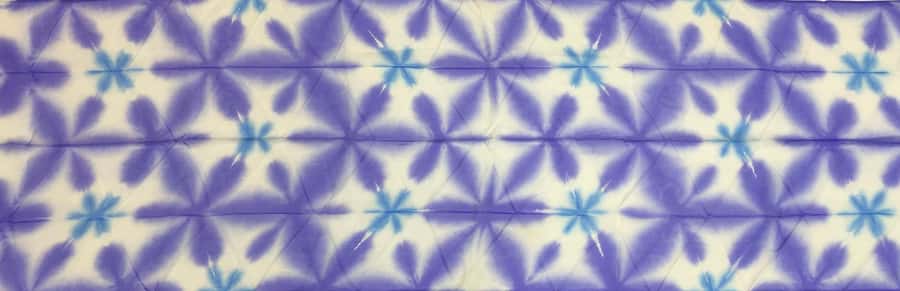
- Petal-like results: the resist pattern is simple and crisp, like petals.
- Museum time while it dries: you can browse shibori masterpieces, tools, and an exhibition.
- Shop finds included in the vibe: you’ll see original items, fabrics, and souvenirs in the museum store.
- Scarf gets wrapped for takeaway: a satisfying finish beyond just leaving with raw materials.
Inside the Kyoto Shibori Museum workshop experience

Shibori is one of those crafts that can look like magic from far away—fold fabric, apply dye, and somehow a pattern appears that you didn’t draw. Up close, it’s methodical. In this class, you learn the core logic: resisting dye by folding the cloth and sandwiching it between two plates, so the dyed areas and undyed areas form a clean design.
What makes this workshop work for real life is that it doesn’t require you to be artistic. You’re doing a craft step-by-step, and if you get nervous, the staff are the kind of supportive that helps you succeed anyway. Danielle, who booked the class, said the team was kind and helpful and made sure she would succeed even after pushing past her comfort zone. That matters, because shibori can intimidate people who think they need a steady hand.
Also, you’re not stuck watching paint dry with nothing to do. The class includes time to explore shibori pieces and a special exhibition while your scarf dries. That turns waiting into part of the experience, not just idle time.
Other Kyoto Prefecture tours and experiences to compare
Where it is: easy access from Nijo Castle
One practical reason I like this workshop plan: the museum is easy to reach. The Kyoto Shibori Museum is about a 5-minute walk from Nijo Castle. That’s a big deal when you’re traveling, because you can chain it with one of Kyoto’s classic sights without losing half your day to transit.
Even if you’re already in the Nijo Castle area, think of this as a different kind of visit. Nijo Castle is architecture and history you can walk through. The shibori museum is craft logic you can see—tools displayed, sample works up close, and plenty of examples that show what different folds and resist methods do.
The shibori lesson: folding, plate sandwiching, and the petal pattern
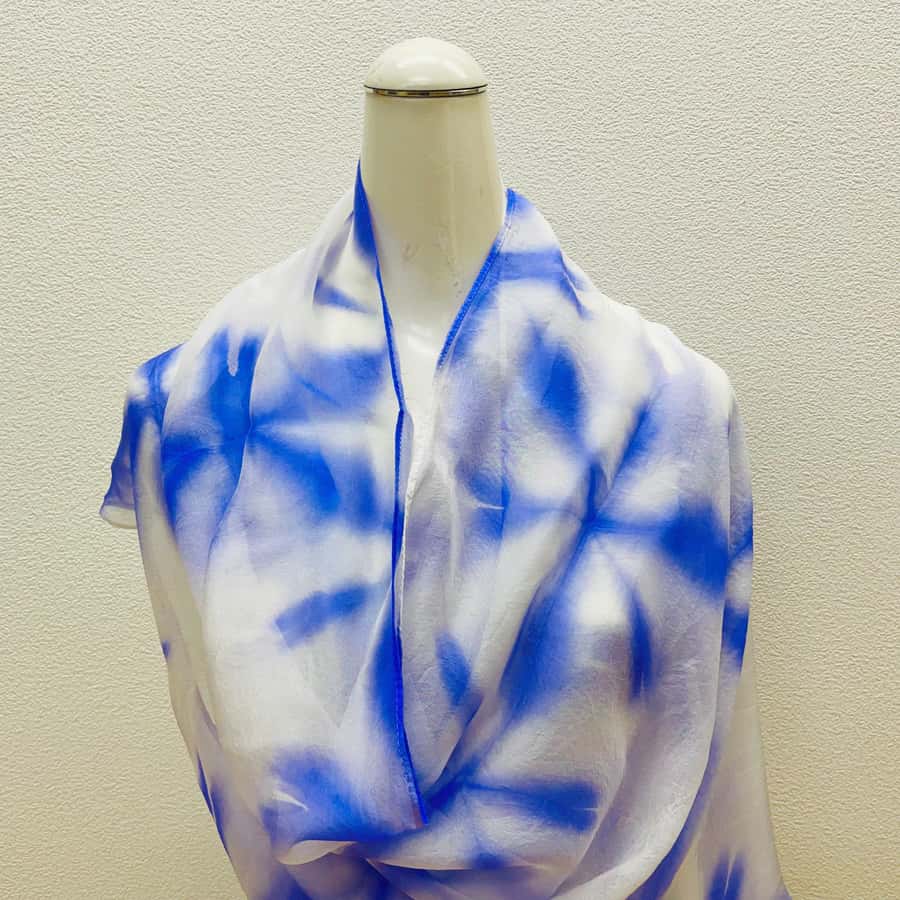
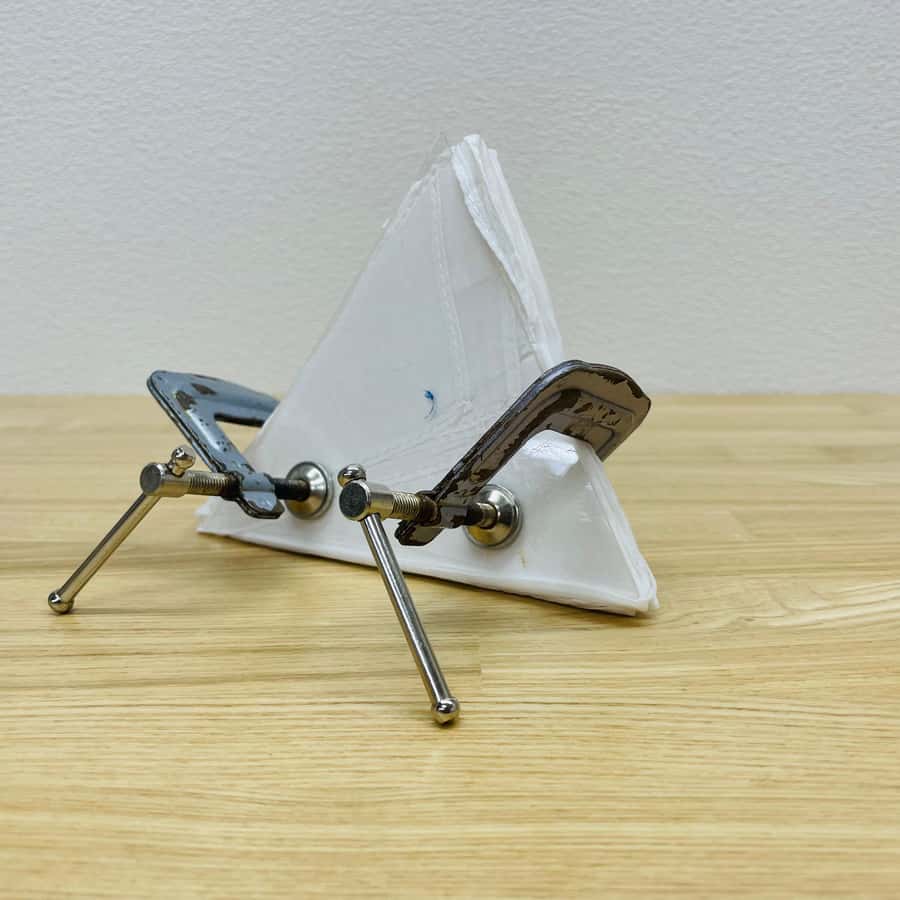
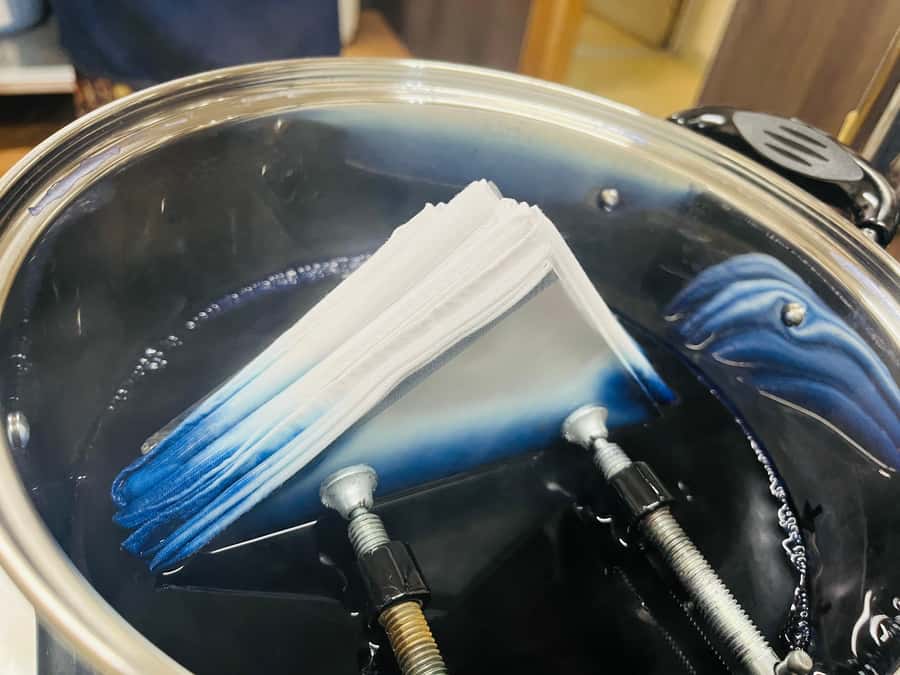
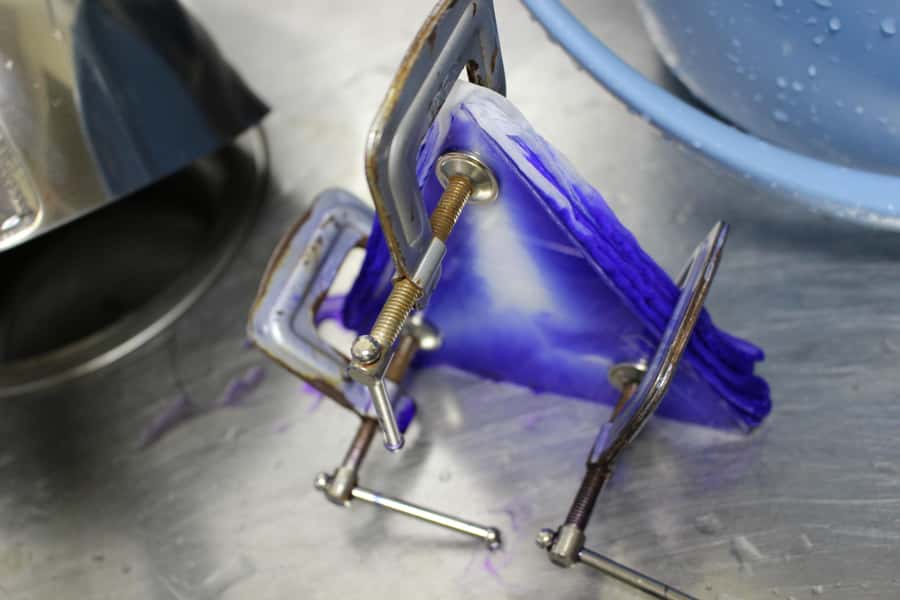
The class centers on a specific shibori method: folding the fabric and sandwiching it between two plates. This is the resist-dye principle in action. The folds create protected zones; when dye goes in, those zones resist staining, so the final pattern emerges where the fabric was shielded.
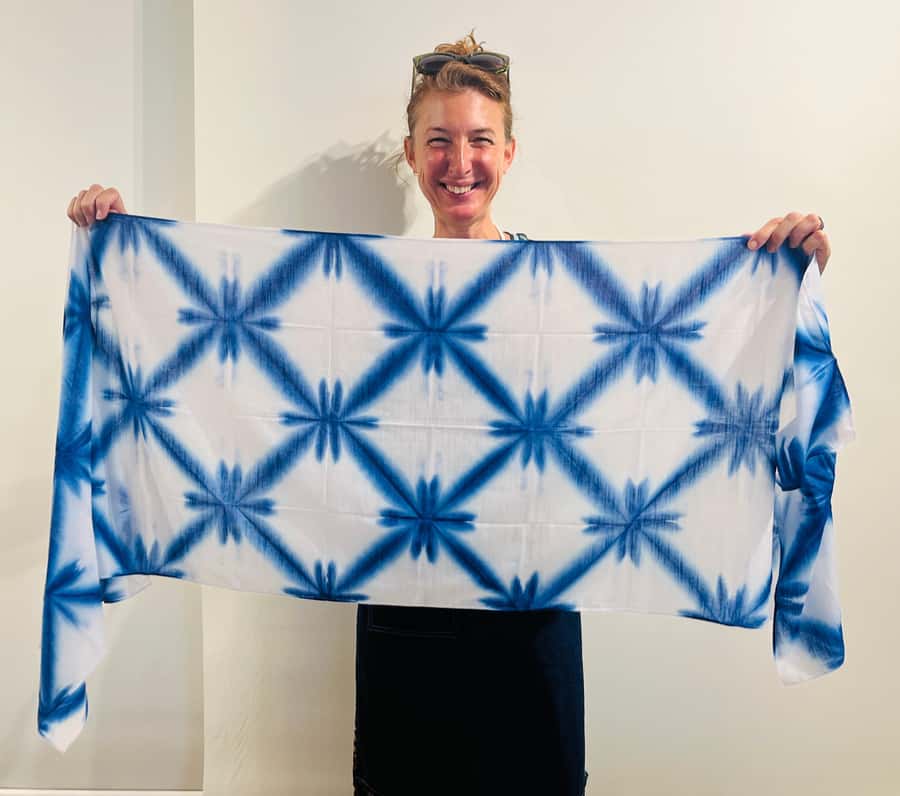
The workshop description notes that the result can look like clear, simple petal-like shapes. That’s a good detail for expectations. You’re not trying to create a complex, crowded design in one session. You’re learning how shibori produces crisp structure from controlled folding.
You also get examples. Art pieces and samples are displayed, and you can explore them while your piece dries. That’s helpful because it connects the step you’re doing to the kinds of finished patterns you’ll see in the museum store and exhibition.
And yes, part of the challenge is patience. You’ll set your fabric, follow the process, and then wait for dye work to finish. The good news: your time waiting isn’t wasted.
While your scarf dries: museum exhibition and shop browsing

Shibori dyeing takes time, and the workshop handles that by building museum exploration into your schedule. As your fabric dries, you can look around at shibori masterpieces and samples. The museum is designed specifically for shibori, so it’s not random decor. You’ll see works made with shibori, valuable tools used in the shibori process, and an exhibition that adds depth to what you’re making.
The museum opened in 2001, and the mission is to spread shibori to the world through shibori works in different forms. That matters because it explains why you’re seeing so many examples beyond one scarf pattern. You’re getting the craft in context, not just instructions.
Then there’s the museum shop. This is not an afterthought. The store has original items, souvenirs, and fabrics, and it’s a smart way to understand what people buy when they love the craft. I like to use the shop like a cheat sheet: you can compare what you made to what’s available, so you spot what you might want to collect later if you catch the shibori bug.
Your takeaway: how the finished scarf becomes a souvenir

At the end, you take home a scarf you made. The experience is designed to feel ceremonial, not just transactional. One review notes that the scarf was celebrated by the artists and then wrapped for takeaway. That kind of wrap-and-go finish is practical in Kyoto, where you’ll likely keep moving after the workshop.
It also gives you a clean emotional ending. You spent time folding and setting your resist pattern; the scarf becoming a finished item makes that effort feel real.
One more detail worth noting: the workshop focuses on creating works similar to those sold in the store. That link between class results and the museum’s commercial offerings helps you judge what you’ll likely produce—this is a hands-on souvenir you can use, not something you might keep stored forever because you don’t know what to do with it.





Price and value: $42 for a class plus museum admission
Let’s talk value without hand-waving. The class costs $42 per person for about 1 hour of scheduled time. On top of that, workshop participants receive free admission to the Kyoto Shibori Museum, which is normally 1,000 yen.
So you’re paying for:
- a small-group shibori class (up to 8),
- instructor support in English and Japanese,
- your scarf-making session,
- and museum admission so you can use the time while your fabric dries.
Even if you don’t buy anything from the shop, the museum access turns this into more than a single activity. You’re buying a craft lesson and a guided craft environment in one block of time.
Is $42 cheap? Not in the bargain-souvenir sense. But it’s fair for a structured hands-on class where you actually make a finished cotton scarf and don’t just watch from the sidelines.
Group size, language, and support you can count on
The class is limited to 8 participants, which keeps it manageable. That’s important for shibori, because the craft isn’t just theoretical—you’re folding and arranging fabric. When people ask for help, you want the instructor to actually have time to respond.
Language support is also clearly stated: English and Japanese. If you’re not fluent, you can still follow steps and ask questions. Danielle’s note about the team making sure she would succeed is a good sign that the instructors and staff are used to mixed comfort levels.
Another review highlighted friendly, welcoming staff and said the museum and video were worth the visit. The mention of a video suggests you get some visual explanation beyond hands-on steps, which helps if you learn better by watching.
Who should book this shibori scarf class
This workshop is a strong fit if:
- you want a short, focused 1-hour craft experience in Kyoto,
- you like learning by doing (not just looking),
- you want to understand shibori through a museum dedicated to the technique,
- you’re the type who likes bringing home something you made with your own hands.
You might not love it if:
- you’re hoping for a long-form art class where you have lots of time to refine details,
- you get annoyed by waiting while dye develops,
- you only want the museum highlights but not the hands-on component.
The best part is that even if you’re nervous at the start, the tone is supportive and practical.
Tips to make your hour feel smoother
I’d plan your day so you’re not rushing right before class. The museum is close to Nijo Castle, so you can schedule this as a skill-focused stop rather than a last-minute sprint.
Also, arrive with a mindset that shibori is method-driven. You don’t need to overthink your outcome. Follow the folding and plate steps, then let the process work while you explore the exhibition and museum shop.
If you want photos, keep an eye on where it makes sense. In a workshop setting, you’ll likely be moving between doing and looking. Try to use the museum time while your fabric dries for your photos and questions.
Finally, if you’re a shopper, give yourself a quick pass through the store. Seeing items in the shop after you’ve learned the resist logic makes shopping feel smarter. You’ll spot fabrics and items with a better sense of why they look the way they do.
Should you book this Hanakoushi Shibori scarf class?
Book it if you want a real shibori lesson in Kyoto, with museum context and a finished scarf you can actually take home. The combination of a small group, structured resist-dye technique (folding and plate sandwiching), and dedicated museum time while your fabric dries gives you value in both the making and the understanding.
Skip it only if your priority is strictly sightseeing and you don’t want to spend part of your hour actively working with fabric. Otherwise, it’s one of those experiences that feels short on the calendar but satisfying in the hand.
FAQ
How long is the shibori scarf class?
The class is scheduled for 1 hour.
Where is the Kyoto Shibori Museum located?
It is located a 5-minute walk from Nijo Castle in Honshu, Japan.
What will I make in this class?
You’ll make your own shibori scarf using a folding and dye-resist technique.
What is the shibori method taught in this workshop?
The technique involves folding the fabric and sandwiching it between two plates to resist dyeing and form a petal-like pattern.
How many people are in the group?
It is a small group limited to 8 participants.
What languages are available for the instructor?
The instructor supports English and Japanese.
What is included with the class price?
Workshop participants receive free admission to the Kyoto Shibori Museum, which is normally 1,000 yen.
Is there a cancellation option?
Yes. You can cancel up to 24 hours in advance for a full refund.
Can I reserve without paying right away?
Yes. You can reserve now and pay later.
More Workshops in Kyoto Prefecture
More Tour Reviews in Kyoto Prefecture
Just added: more Kyoto Prefecture tours to browse





Workshops, compared.
 ★ 4.345-Minute Tea Ceremony Lesson ExperienceFrom $222,378 reviews
 ★ 5.0Ramen Cooking Class at Ramen Factory in KyotoFrom $1311,937 reviews
 ★ 5.0Chopsticks Making Workshop in Gion with Engraving OptionFrom $15958 reviews
 ★ 4.9Samurai Sword Class by Experts in Traditional ArtsFrom $64657 reviews
 ★ 4.9Ramen Cooking Class at a Ramen Factory with SouvenirFrom $127532 reviews
 ★ 5.0Ninja 1-hour Hands-on Lesson by Japanese master in Kyoto -EntryFrom $80489 reviews
 ★ 5.0Ramen, Gyoza, and Onigiri Cooking ClassFrom $90445 reviews
 ★ 5.0The Original Small-Group Sushi Making Class in KyotoFrom $69436 reviews
Browse the lists this tour appears in