
Reviewed · KURAMA, KIBUNE & KYOTO COUNTRYSIDE
Kyoto: Hike and Hot Springs in Kurama
Kyoto’s north mountains have a way of slowing you down. This half-day hike pairs a serious climb (stairs and all) with calm, old-world temple stops—then finishes with an optional hot spring that feels like a reward, not an afterthought.
I like the balance here: you get the nature work (cedars, river valley views, crisp air) and also the quiet rituals at Kurama Temple and Kibune shrine. I also appreciate that the guides bring the place to life, with English and French tour leaders like Philippe, Kevin, Salome, and Chris repeatedly praised for history, legends, and route know-how.
One consideration: the uphill steps are real, and this tour is not aimed at kids under 11 or anyone needing mobility help. If your fitness is more “easy stroll” than “30–40 minutes of climbing,” you’ll feel it—especially in heat or humidity.
In This Review
- Key highlights
- Where Kurama and Kibune feel like a Kyoto reset
- Getting There: the mountain train ride from Demachiyanangi
- Starting with a shrine: setting the tone before the climb
- The hike up Kurama: cedar shade, stone steps, and smart pacing
- Kurama Temple on the peak: power-spot views and what to expect inside
- Kibune shrine: the good-relationship prayer stop
- Kurama village finish: lunch choices and the optional second wind
- Kurama hot spring: why this soak is the smart wrap-up
- Price and what you really get for around $80
- Who this tour suits (and who should skip it)
- Should you book Kyoto: Hike and Hot Springs in Kurama?
- FAQ
- How long is the Kyoto hike and hot springs tour in Kurama?
- Where is the meeting point?
- Is lunch included?
- Is the hot spring bath included in the price?
- What’s included in the tour price?
- What should I bring?
- What fitness level do I need?
- What languages are the guides?
- Who is this tour not suitable for?
Key highlights
- Train ride through the gorge: start the day by leaving the city and heading into the mountains by train
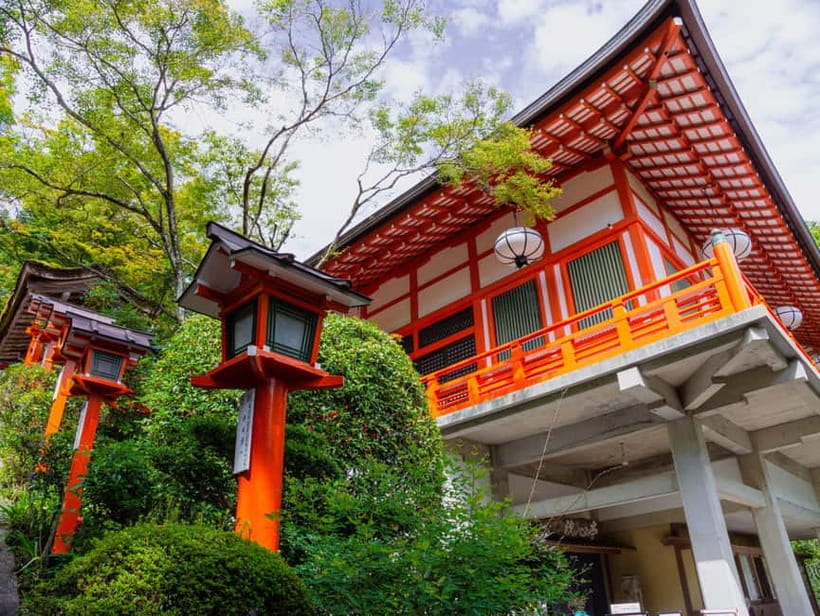
- Kibune shrine prayer stop: make a wish for good relationships during the visit
- 30–40 minutes to the top: reach Kurama Temple within a moderate climb, with plenty of scenic stopping points
- Kurama Temple on a power spot: take in the valley views from the mountaintop setting
- Kurama village as your finish line: choose lunch, strolling, or head straight to the hot spring
- Onsen with outdoor views: end with a soak option that’s strongly recommended after the hike
Where Kurama and Kibune feel like a Kyoto reset
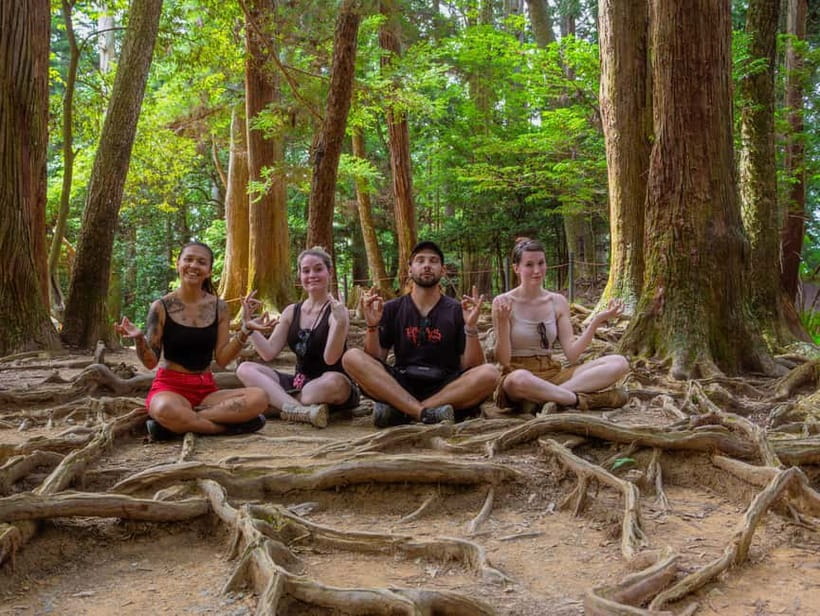
Kyoto can be intense—crowds, lines, and constant “where do we go next?” This hike flips the script. You’re trading city blocks for a mountain route with cedar shade and river-valley air, plus a couple of temple moments that feel grounded instead of rushed.
The vibe also helps explain why guides are such a big deal on this tour. People highlight leaders like Philippe for tying legends to what you’re actually seeing, and for steering you toward less-crowded spots on the mountain path.
This is also a tour where the “spiritual” part is practical. You’re not just checking boxes—you’re making prayers at a shrine, then physically climbing toward a temple that locals treat as a power spot. That mix of body + mind is the whole point.
Still mapping out your days? A few more Kyoto Prefecture tours worth a look.


Getting There: the mountain train ride from Demachiyanangi
Your meeting point is Demachiyanangi Station exit 7, in front of the Eizan railway. From there, the experience kicks off with a train ride that takes you out toward the mountains and through the area’s dramatic terrain.
Why that matters: the train segment gives you a warm-up to the day’s rhythm. You arrive in the region already feeling like you’re “on the route,” not still mentally stuck in Kyoto city center.
The tour includes transportation during the guided portion, but it does not include getting you back to the meeting point. At the end, you’ll be in Kurama village with options for lunch and then travel back to town on your own.
Starting with a shrine: setting the tone before the climb
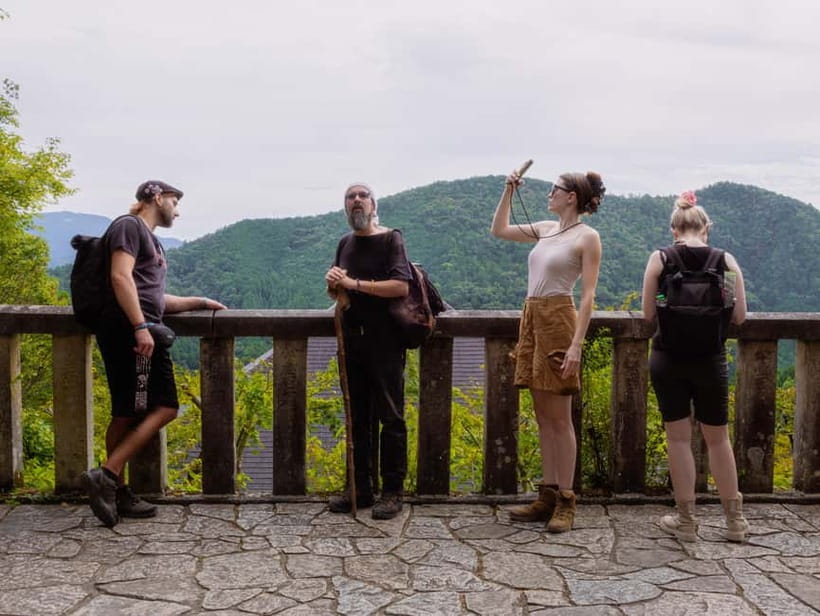
The hike begins at a sacred shrine. The start matters because it shifts your focus from sightseeing mode to “walk with intention.” Even if you’re not sure about the religious details, the atmosphere gives you a quiet runway before the steps begin.
This is also where the day’s cultural context starts. Guides like Kevin and Philippe are praised for explaining temples, deities, and local legends in clear, down-to-earth ways—so you can understand what you’re looking at instead of just guessing.
If you’re sensitive to bug bites, think ahead. The tour recommends long pants for avoiding bites. It’s not just a comfort tip—it can make the entire climb less distracting.
The hike up Kurama: cedar shade, stone steps, and smart pacing
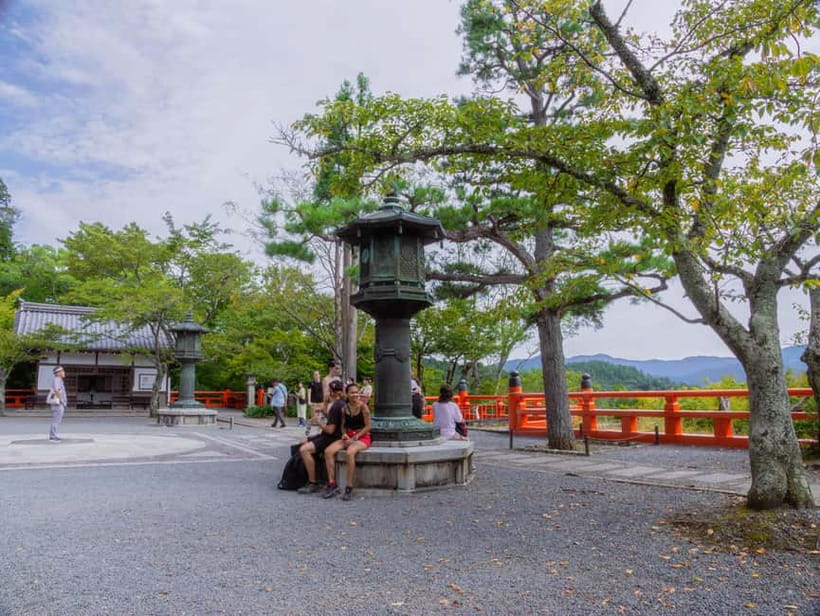
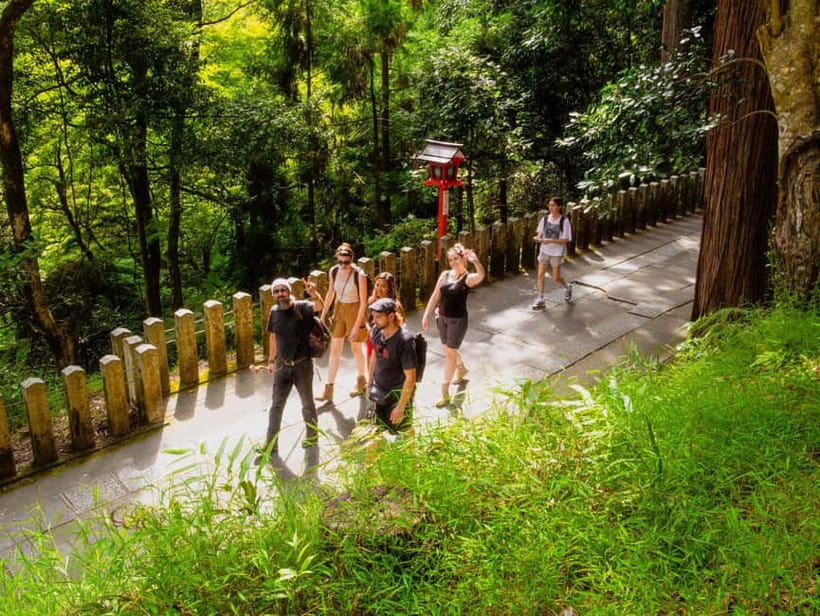
The climb to the mountaintop temple is rated moderate, but the key detail is the time at effort level: you can reach the peak in about 30–40 minutes, with stops along the way. That means you’re not doing a long slog across miles and miles of trail. You’re doing a steady uphill push, then getting the payoff.
What you’re walking through is the classic Kurama feeling: towering cedars, a forested atmosphere, and viewpoints over the valley below when you’re higher up. On some days, conditions add a bit of magic—one review mentions light snow on a sunny day, and another mentions deer sightings during the climb. You might not plan on that, but it’s a reminder the area can feel alive.
Practical tips that actually matter:
- Wear comfortable shoes with real grip. You’ll be on steps and mountain paths.
- Bring water. The tour explicitly asks for it, and the climb is the reason.
- Plan for effort. The route is not described as gentle, and it’s not built for people who want a low-impact walk.
Also, don’t treat this like “just a workout.” The best energy on this hike comes from stopping. Guides typically build in pauses to enjoy scenery and trail features, and those pauses are when you’ll get the best stories.
Kurama Temple on the peak: power-spot views and what to expect inside
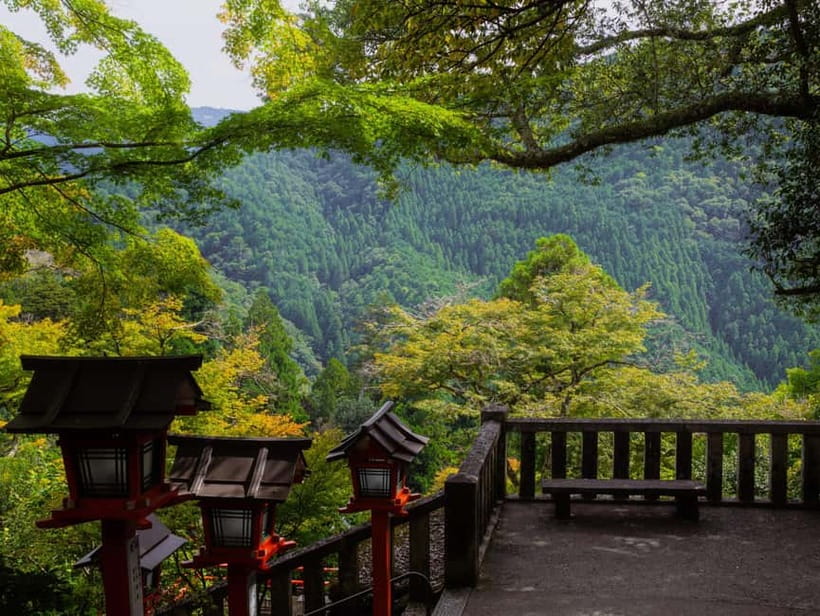
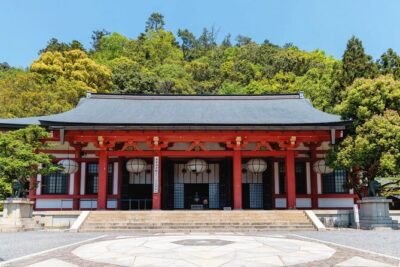
Once you reach the top, you visit Kurama Temple in a mountaintop setting treated by locals as a power spot. From this height, the views over the valley are a big part of the reward—so bring your camera, but also bring your patience. Temple time is quieter time.
What I think is especially valuable here is the mix of physical effort and spiritual payoff. You climb, you arrive, you get to slow down. It doesn’t feel like a quick photo sprint.
About the temple experience: most of what you should expect is temple admission included in the tour price. Some reviews mention extra areas, like seeing a crypt or maze-like areas underneath the temple, depending on what’s accessible. So if you don’t see every behind-the-scenes space, that’s still normal for how historic sites can work.
One reality check: maintenance can happen. One review mentioned Kurama Temple being covered by scaffolding, so the visual view of the temple exterior wasn’t perfect. If that happens, the route still includes temple access and key cultural moments like ringing a large bell (mentioned in that same review).



Kibune shrine: the good-relationship prayer stop
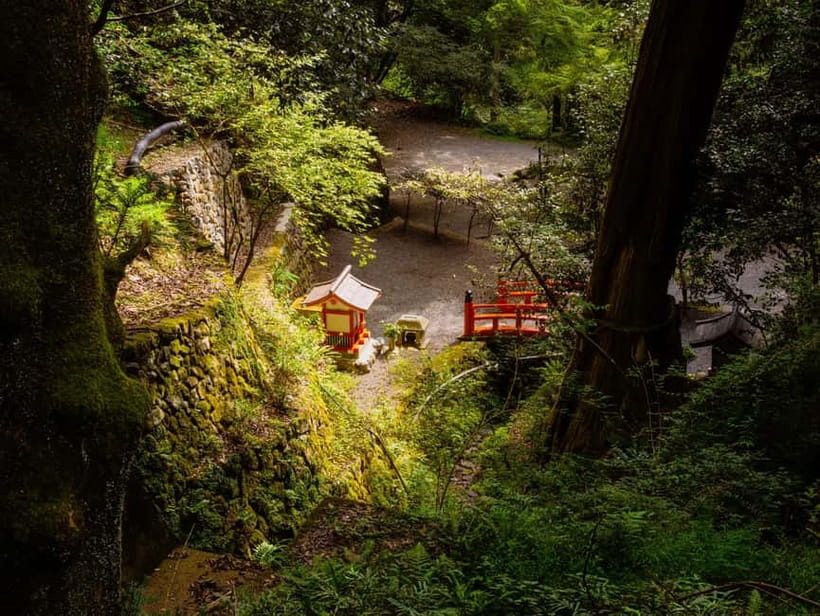
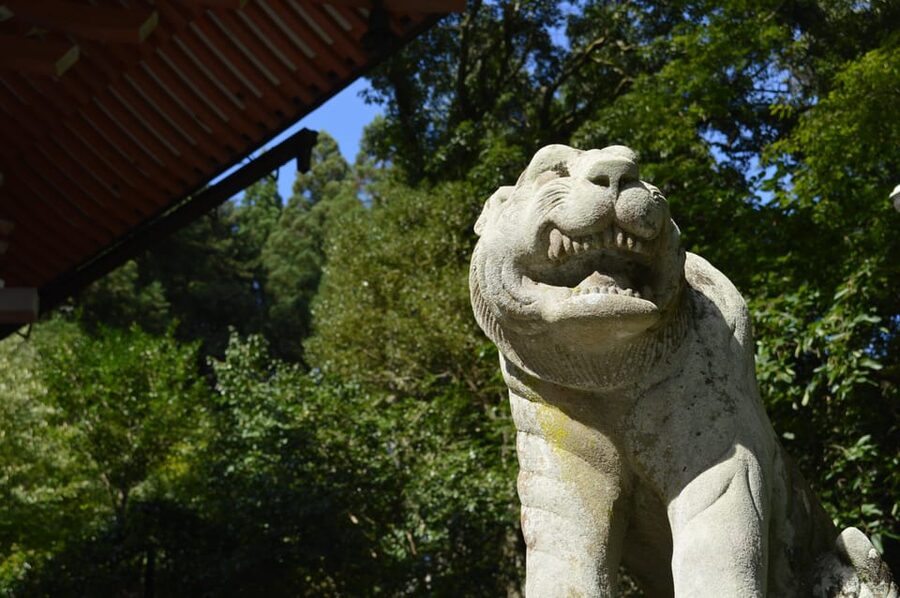
A highlight on this tour is a stop at Kibune shrine, with time to make a prayer—specifically for good relationships. Even if you’re not deeply religious, it’s a meaningful cultural act because it gives you a clear “reason” for the visit.
This is also where the day’s pacing stays balanced. You’ve climbed uphill, then you’re offered a calmer moment. That keeps the experience from turning into pure hiking fatigue.
And because guides are consistently praised for context, you’re less likely to feel like you’re standing in front of symbols with no idea what they mean. People mention that leaders explain history, legends, and temple and shrine significance in a grounded way.
Kurama village finish: lunch choices and the optional second wind
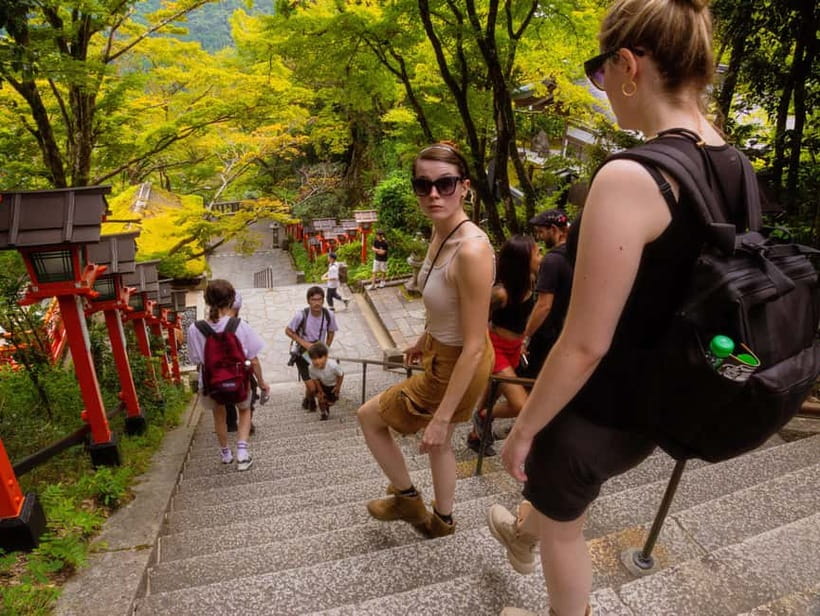
After temple time, you descend back down the steps to Kurama village. This is the natural “release valve” of the tour. The goal isn’t to rush you through; it’s to land you in a small town where you can decide how you want the rest of the half day to feel.
The tour guidance includes options at the end:
- Have lunch (not included in the price)
- Stroll the village
- Take the Kurama hot spring option (onsen fee not included, but discounted tickets may be offered)
This matters because it protects your energy. Some hikers want to keep moving; others want to sit and eat. The village setting makes both options easy without needing another hop on a train immediately.
Kurama hot spring: why this soak is the smart wrap-up
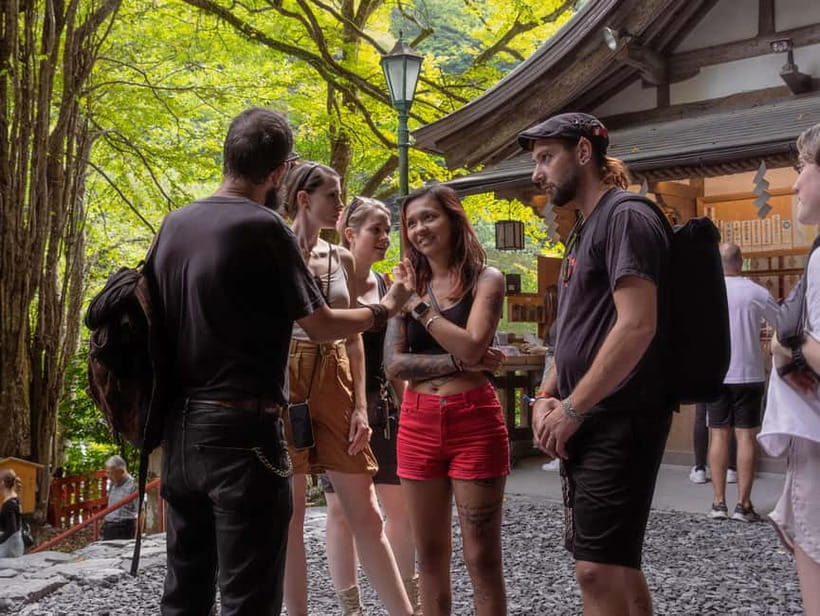
If you choose the hot spring, plan for the full post-hike reset. The bath is known for stunning outdoor views, which is exactly what you want after being in the mountains and among cedars and steps.
The onsen fee is not included, but the tour can offer a discounted ticket. That turns a costly “maybe later” plan into a clearer decision: if you came to hike, you came to recover.
One review calls the onsen glorious and strongly recommends not skipping it. That fits the logic of the whole experience: you get your effort on the way up, and you get your recovery on the way down—literally and figuratively.
If you’re sensitive to crowds at popular baths, you’ll still be in a smaller mountain village rather than a central Kyoto location, which can make the vibe feel calmer (though the tour data doesn’t promise crowd levels).
Price and what you really get for around $80
The price is listed at $80 per person for a 4-hour experience. What makes it feel reasonable is that your base includes the stuff that’s hard to assemble alone:
- Guide fee (English or French)
- Temple admission
- Transportation as part of the guided portion
What’s not included:
- Transportation back to the meeting point
- Lunch
- Hot spring fee
So for value, I’d frame it like this: you’re paying to have a guide handle the mountain-route rhythm and the cultural stops, and you’re paying for admission and the guided transport segment. If you already like self-guided hikes, you could probably recreate part of the route on your own. But if you want your time to feel smooth—especially with temple context—the guide does real work.
One more value point: the tour runs as private or small groups (when you choose that option). Several reviews mention the guide customizing the flow when the group was tiny, which can make the hike feel more personal without feeling chaotic.
Who this tour suits (and who should skip it)
This is a good match if you want an energizing half day outside Kyoto city center. It’s also ideal if you like hikes that mix nature + temples and you want a guide to explain what you’re seeing, including legends and shrine history.
It’s not suitable for:
- Children under 11
- People with mobility impairments
- Wheelchair users
- People without hiking experience
You’ll also want a decent fitness level. The route includes a meaningful climb up to the temple area, even if it’s time-limited.
If you’re already comfortable on moderate trails and steps, you’ll likely enjoy the pace. If you’re only used to flat walking, it may feel more challenging than you hoped—especially in summer heat.
Should you book Kyoto: Hike and Hot Springs in Kurama?
Book this tour if you want a real break from central Kyoto. The combination of mountain train ride, cedar-forest hiking, Kurama Temple on a mountaintop, and an optional hot spring creates a satisfying arc: effort, meaning, then recovery.
I’d also book it if you care about context. Reviews consistently praise guides like Philippe, Kevin, Salome, and Chris for making history and legends understandable. That kind of storytelling is the difference between walking through temples and actually feeling you learned something.
Skip it if you want an easy, low-step stroll. This is a hike-first experience, and the steps matter. Also, if you don’t want to pay extra for lunch and the onsen fee, plan to treat those as optional add-ons rather than included perks.
If your body is ready for a moderate climb and you want a half day that feels both calm and active, this one is worth your time.
FAQ
How long is the Kyoto hike and hot springs tour in Kurama?
The tour duration is 4 hours.
Where is the meeting point?
Meet at Demachiyanangi Station exit 7, in front of the Eizan railway, Kyoto.
Is lunch included?
No. Lunch is not included.
Is the hot spring bath included in the price?
No. The hot spring fee is not included, though the tour may offer a discounted ticket.
What’s included in the tour price?
Included are the guide fee, temple admission, and transportation (during the guided portion).
What should I bring?
Bring comfortable shoes and water. The tour also recommends wearing long pants to help avoid bug bites.
What fitness level do I need?
You should have a decent level of fitness. The climb to the top is described as moderate, and the peak can be reached in about 30–40 minutes, depending on pace and stops.
What languages are the guides?
The live tour guide is available in English and French.
Who is this tour not suitable for?
It’s not suitable for children under 11, people with mobility impairments, wheelchair users, or people without hiking experience.
More Tour Reviews in Kyoto Prefecture
Just added: more Kyoto Prefecture tours to browse




Kurama, Kibune & Kyoto Countryside, compared.
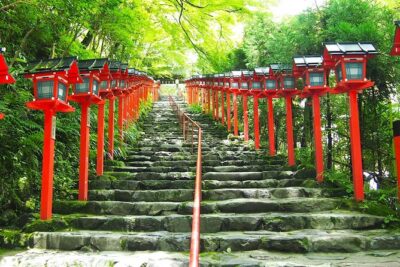 ★ 5.0Kyoto Hiking Tour: The Nature and Legends of Kurama and KibuneFrom $19175 reviews
 ★ 4.5Amanohashidate & Miyama 1-Day Bus Tour: From Osaka/Kyoto w/ LunchFrom $9718 reviews
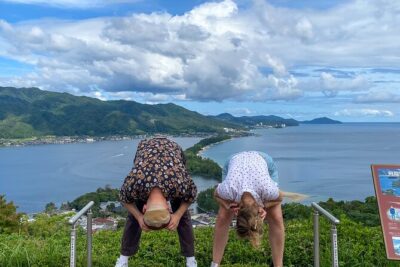 ★ 5.0All-Inclusive Kyoto Day Tour: Amanohashidate, Miyama or OharaFrom $5204 reviews
 ★ 5.0Hike and explore the Kurama and Kibune ancient PathsFrom $1653 reviews
Browse the lists this tour appears in