
Reviewed · GUIDED
Guide tour of Japanese bathing culture at Funaoka Onsen
A real onsen tutorial beats guessing. This Kyoto tour teaches Japanese bathing etiquette and then lets you try it at the historic Funaoka Onsen. Two things I love: the warm, practical instruction before you get in, and the way the experience connects bathing rules to real health and comfort.
One thing to consider: it’s nude, gender-segregated, so you need to be okay with traditional onsen rules. If you want mixed-gender bathing or you’re uncomfortable with separating in different bathing areas, this may not feel like the right match.
In This Review
- Key points that matter before you go
- Sarasa Nishijin: start where the story began
- Funaoka Onsen: a lesson that prevents awkward mistakes
- The actual soaking: following the steps, not the hype
- The historical angle: why this onsen feels like more than a stop
- Practical Matters: what to expect in timing, ticketing, and group size
- Cost and Value: is $45.72 a fair deal?
- Who should book this onsen culture tour
- Skip if you have health restrictions or you feel unwell
- The nudity and gender separation reality check
- How to get ready: small things that make a big difference
- Should you book this Funaoka Onsen bathing culture tour?
- FAQ
- How long is the tour?
- Where does the tour start?
- Do I get tickets included for both stops?
- What kind of ticket do I receive?
- How big is the group?
- Is this tour suitable for first-timers?
- Is there any health reason I should not join?
- Will there be nude bathing?
- Is the guide fluent in English?
- Do couples bathe together?
Key points that matter before you go
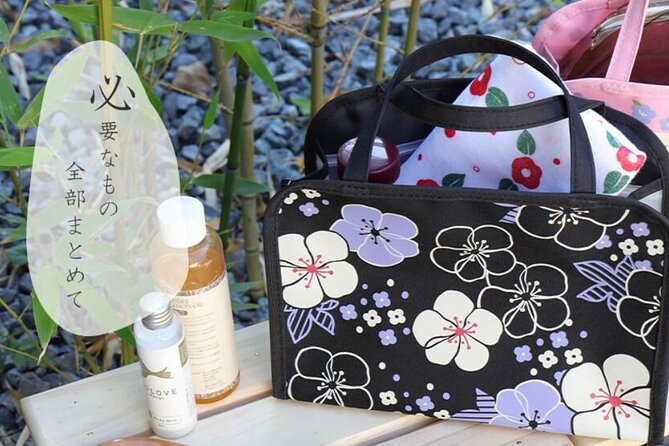
- Sarasa Nishijin is a cafe renovated from a public bathhouse, so you start in the right mindset.
- Atsuki guides you through the ritual steps and stays with you so you don’t feel lost.
- A take-home guide helps you remember the proper order and technique after your soak.
- Funaoka Onsen experience is structured: learn methods, then try them yourself right away.
- Small group size (max 5) means more calm attention than a big bus tour.
- Nude bathing and gender separation are part of the facility’s culture, even with a guided setting.
Sarasa Nishijin: start where the story began
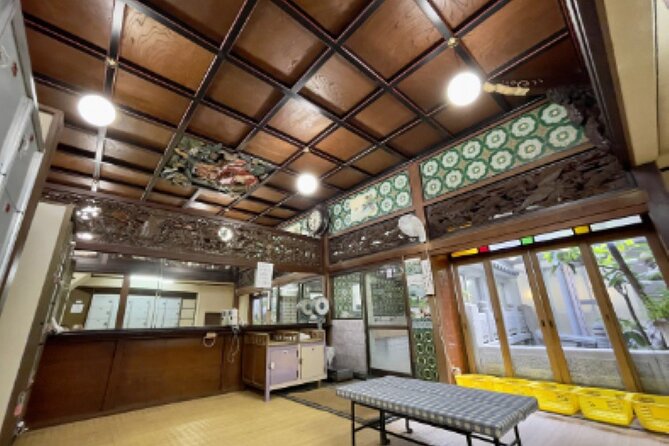
Your tour begins at Sarasa Nishijin, a small cafe that used to be a public bathhouse. That choice matters more than you might expect. Instead of getting thrown into an onsen with no context, you get a quick history-and-practice setup in a space that already carries the old-world rhythm of sento life.
You’ll have about 15 minutes here with an admission ticket included. The format is simple: you drink something and learn how public baths work in Japan, including what people do and why they do it. For a first-timer, it’s a relief. You stop worrying about what order to rinse, what’s rude, and what’s normal.
I also like that the instruction doesn’t feel like museum talk. The point is usable knowledge. It’s the kind of info that helps you relax faster when you arrive at the bath.
Other Kyoto tours and experiences to compare
Funaoka Onsen: a lesson that prevents awkward mistakes
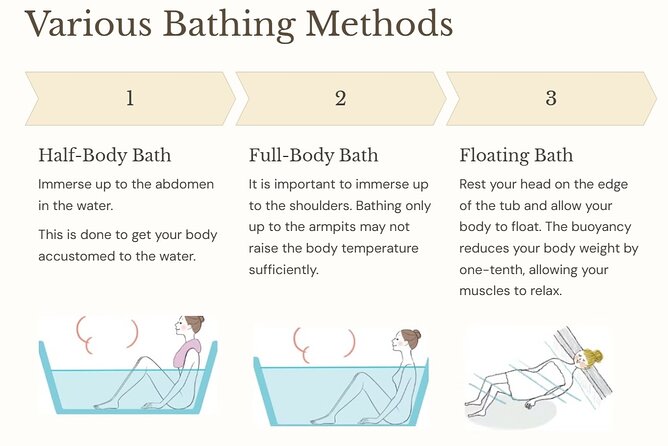
Funaoka Onsen is the highlight, and you get there ready. Before you bathe, your guide uses materials to explain unique bathing methods and the steps you should follow. This pre-soak lecture is the difference between an onsen you enjoy and an onsen you constantly think about.
The guide is Atsuki, a local Japanese guide who isn’t very good at English. That sounds scary on paper, but the reviews and the tour style suggest the teaching stays clear through demonstration and focused explanation. Still, plan to rely more on visuals and simple guidance than on detailed conversation. If your Japanese is limited, that’s okay. You’re there to learn the process, not to hold a long debate about bath philosophy.
In the group setting, you learn what to do before you do it. That means fewer nervous stumbles. It also means you’re better able to follow what the onsen staff and local bathers expect. And yes, you’ll feel more relaxed, because you’re not guessing.
The actual soaking: following the steps, not the hype
After the lecture, you try the bathing method yourself. This is where the tour earns its price. You don’t just get information from a distance. You get coached right through the moment where most people feel unsure.
Japanese bathing culture has a clear logic: you prepare yourself properly, you move through the steps in the right order, and you treat the bathing area with respect. When you get instruction first, those rules stop feeling mysterious. They start feeling like good design for comfort and hygiene.
Funaoka Onsen also has a reputation with Kyoto residents. That local love shows up in the vibe: it’s not the feeling of a theme park. It’s a real bathhouse experience where you follow the established routine.
One more practical note: this is nude bathing, and facilities are strictly separated by gender. The tour doesn’t change that. Your best strategy is to go in mentally ready for traditional onsen culture, not modern “spa” expectations.
The historical angle: why this onsen feels like more than a stop
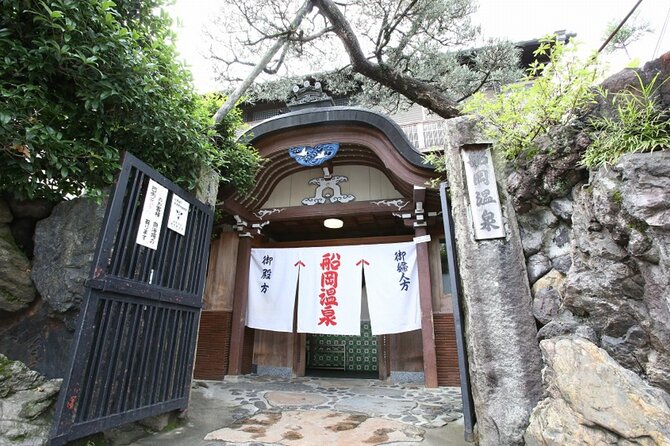
Funaoka Onsen isn’t just a place to soak. It comes with an interesting history tied to how it developed and how its founders competed with traditional geothermal onsen options. That kind of detail matters because it explains the character of the bathhouse.
When you know a bit of the backstory, you tend to notice more: the preservation of the facility, the sense of continuity, and the fact that people in Kyoto keep choosing this kind of bathing. You’re not just doing a wellness activity after shrine hopping. You’re stepping into a local ritual that has been practiced for generations.
If you like cultural context—especially the kind you can apply in real life—this tour hits a sweet spot.
Practical Matters: what to expect in timing, ticketing, and group size
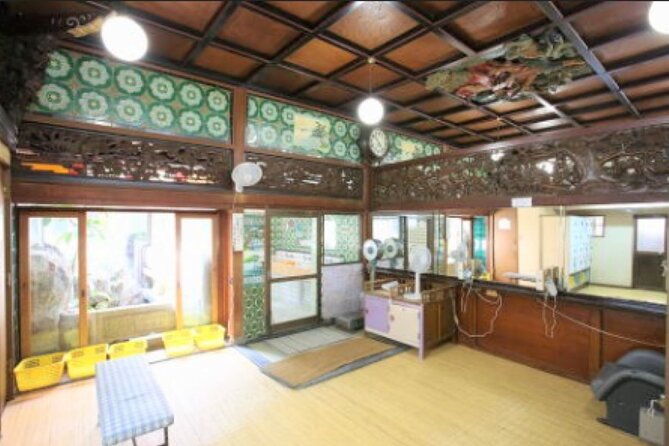
This is a 1 hour 30 minutes experience in total, with two parts. Sarasa Nishijin takes about 15 minutes. Then you spend around 1 hour at Funaoka Onsen.
The tour uses a mobile ticket. That’s handy in Kyoto where you’ll likely be juggling train times, walking directions, and maps. It also reduces the friction of figuring out where your actual entry stuff is stored.
Group size is capped at 5 travelers, which keeps things calm. You’re not squeezed into a crowd, and the guide can help you stay oriented. If you’re traveling solo, that small-group setup helps a lot.
The meeting point is at Funaoka Onsen (82-1 Murasakino Minamifunaokachō, Kita Ward, Kyoto, 603-8225, Japan). The tour ends back at the same meeting point. That means you don’t have to build extra transportation into your schedule.
Also, it’s near public transportation. That’s useful because this is the kind of tour you’ll likely fit between other Kyoto plans, not as a standalone all-day mission.
Other Kyoto tours and experiences to compare
Cost and Value: is $45.72 a fair deal?
At $45.72 per person, this tour isn’t bargain-basement. But it also isn’t just paying for entry.
You’re paying for:
- instruction at Sarasa Nishijin (admission included),
- a guided etiquette and method lecture at Funaoka Onsen (admission included),
- and real-time coaching so you can follow the bathing process correctly.
If you’ve ever tried to figure out onsen etiquette on your own, you know how quickly uncertainty can kill relaxation. This tour front-loads the learning so your time in the bath is mostly about comfort.
Is it still a bit pricey compared to grabbing a bath ticket yourself? Yes. But for first-timers, solo travelers, and anyone who wants the “local rhythm” without doing homework, the guidance turns that price into practical value.
Who should book this onsen culture tour
I think this experience is best for people who want more than a photo stop. You’ll get the most out of it if you care about:
- wellness and mindfulness through a real routine,
- learning etiquette you can actually use next time,
- and understanding why Japanese public bathing culture works the way it does.
It’s also a strong choice if you’re traveling alone. The format reduces guesswork and gives you a natural way to participate without feeling like you’re intruding.
That said, it’s not for everyone.
Skip if you have health restrictions or you feel unwell
The tour has clear contraindications. You should not join if you have severe heart or lung diseases, recent gastrointestinal bleeding, advanced malignant tumors, or severe anemia. You also shouldn’t go if you feel unwell that day, have a fever, or have consumed alcohol. If a doctor advises against participation, you must refrain.
This is not one of those activities to “tough out.” The whole point is health and safety.
The nudity and gender separation reality check
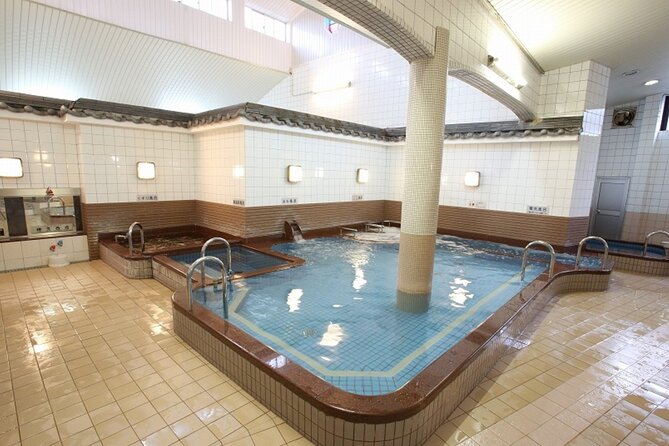
Let’s be direct. Funaoka Onsen requires nude bathing, with gender-segregated facilities. That means you should not expect to bathe together as a couple, and your bathing experience will be separated by gender.
One review note specifically warned that couples can be separated. So if you’re planning a romantic, shared ritual, this may not match that fantasy.
If you’re okay with traditional onsen rules and you’re more focused on the cultural and relaxation aspects, you’ll likely feel grateful you had a guide to handle the awkward parts before you get in.
How to get ready: small things that make a big difference
The tour includes the learning, but you still control your comfort level. Here’s how to show up so you get the best experience.
- Plan to arrive ready to follow instructions quickly. When the lecture starts, listen like you’re learning a simple routine.
- Bring a mindset that this is about hygiene and etiquette, not about comfort theater.
- If you’re nervous, remember the tour is built to reduce mistakes: you learn the steps first, then you try them.
And if your Japanese is limited, don’t panic. You’re not relying on fluent conversation. You’re relying on clear guidance, demonstrations, and the shared structure of the routine.
Should you book this Funaoka Onsen bathing culture tour?
If you want an onsen experience that feels understandable and respectful from the first minute, yes, I’d book it. The best part is the instruction before you soak. It lowers anxiety fast and helps you enjoy the bath itself instead of worrying about doing it wrong.
Book it especially if:
- you’re new to Japanese sento/onsen etiquette,
- you want local context tied to real practice,
- you prefer small groups and guided pacing.
Skip it if:
- nude bathing and gender separation would make you uncomfortable,
- you need a mixed-gender bathing experience,
- or you have health conditions that fall under the tour’s hot-spring contraindications.
FAQ
How long is the tour?
It runs about 1 hour 30 minutes total. You’ll spend roughly 15 minutes at Sarasa Nishijin and about 1 hour at Funaoka Onsen.
Where does the tour start?
The meeting point is at Funaoka Onsen, 82-1 Murasakino Minamifunaokachō, Kita Ward, Kyoto, 603-8225, Japan.
Do I get tickets included for both stops?
Yes. Admission tickets are included for Sarasa Nishijin and for Funaoka Onsen.
What kind of ticket do I receive?
You’ll use a mobile ticket.
How big is the group?
This experience has a maximum of 5 travelers.
Is this tour suitable for first-timers?
Most travelers can participate. The guide provides etiquette and method explanations before you enter the bath, which is especially helpful for first visits.
Is there any health reason I should not join?
Yes. The tour lists contraindications such as severe heart or lung diseases, recent gastrointestinal bleeding, advanced malignant tumors, or severe anemia. You should also refrain if you feel unwell, have a fever, or have consumed alcohol, or if a doctor advises against participation.
Will there be nude bathing?
Yes. The experience requires nude bathing, and facilities are gender-segregated.
Is the guide fluent in English?
The guide is a local Japanese guide and is not very good at English.
Do couples bathe together?
No. The facilities are strictly separated by gender, so bathing together as a couple is not how the setup works.
More Guided in Kyoto
More Tours in Kyoto


More Tour Reviews in Kyoto


Just added: more Kyoto tours to browse








Guided, compared.
 ★ 5.0Kyoto Early Morning Tour with English-Speaking GuideFrom $681,427 reviews
 ★ 5.0Kyoto 6hr Private Tour with Government-Licensed GuideFrom $1551,369 reviews
★ 4.9Early Morning Tour with English-Speaking GuideFrom $1011,128 reviews
★ 5.0Kyoto 6hr Private Tour with Government-Licensed GuideFrom $1551,369 reviews
★ 4.9Early Morning Tour with English-Speaking GuideFrom $1011,128 reviews
 ★ 4.7Nijo-jo Castle and Ninomaru Palace Guided TourFrom $161,020 reviews
 ★ 4.9Izakaya Bars Guided Walking TourFrom $25815 reviews
 ★ 5.0Kyoto Gion Night Walk & Geisha District Guided TourFrom $18786 reviews
 ★ 4.7Nijo Castle, Kiyomizu & Fushimi Inari Guided TourFrom $54700 reviews
 ★ 5.0Kyoto 4hr Private Tour with Government-Licensed GuideFrom $109629 reviews