
Reviewed · KYOTO BIKE & E-BIKE TOURS
Explore Hidden Kyoto by E-Bike: Private, Scenic & Fun
Kyoto can be loud, hot, and crowded. This private e-bike ride is a calmer way to see the city, with an English-speaking guide shaping the route around what you care about. You’ll move efficiently between temples and shrines, then slow down where the stories and photo moments deserve it.
Two things I like a lot: the guide-led storytelling (including clear explanations of Buddhist and Shinto traditions), and the way the pace stays comfortable for real bodies and real schedules. The itinerary mixes big-name sights like Kiyomizudera with lesser-expected stops such as Demachi Futaba and the Somei Well area.
One thing to consider: admission fees and anything you choose to buy for snacks are not included. Also, since the tour depends on good weather, plan a bit of flexibility if conditions look rough.
In This Review
- Key highlights that make this ride worth your time
- Why Kyoto by e-bike feels like a smart shortcut
- The ride begins with Kiyomizudera’s viewpoint energy
- Chion-in and Nanzen-ji: big structures, more breathing room
- Heian Jingu’s torii and Hanamikoji: a quick culture hit in Gion
- Kamogawa stepping stones to Shimogamo: shifting Kyoto moods
- Wagashi and Edo-period water: Demachi Futaba and Somei Well
- Kyoto Gyoen National Garden: a calm finish near the Imperial Palace
- What the guide really changes (and how that shows up on your day)
- Price and value: what $123.57 really buys you
- Best fit: who will love this Hidden Kyoto e-bike day
- Final call: should you book this tour?
- FAQ
- How long is the Hidden Kyoto e-bike tour?
- Is this a private tour?
- What’s included in the price?
- Are temple and shrine entrance fees included?
- Are meals and drinks included?
- Where does the tour go?
- What ticket format do I receive?
- How far in advance do people usually book?
- What happens if weather is bad?
- Is parking or tipping included?
- Should you book this Hidden Kyoto by E-Bike experience?
Key highlights that make this ride worth your time
- Private, route-tailored experience so the stops feel chosen, not forced
- E-bike rental + insurance included, making temple-hopping easier on your legs
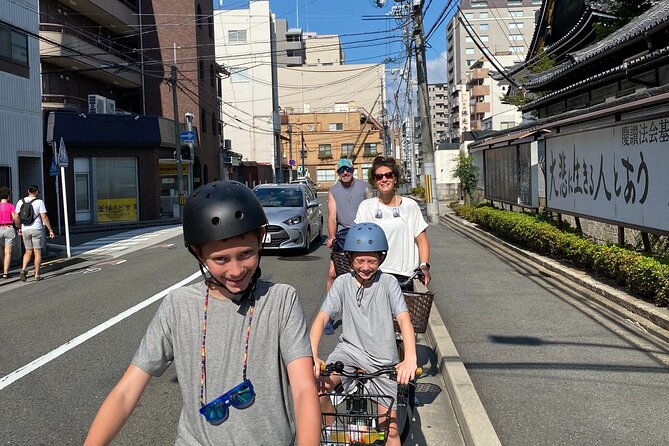
- A guide who slows down for families and hot days, not just a strict timeline
- Quiet shrine forest time at Shimogamo Jinja, a different Kyoto mood than Gion
- Photo-friendly pacing at viewpoints, torii gates, and riverside stepping stones
- Food culture stop near Demachi Futaba for traditional wagashi (if you opt to buy)
Why Kyoto by e-bike feels like a smart shortcut
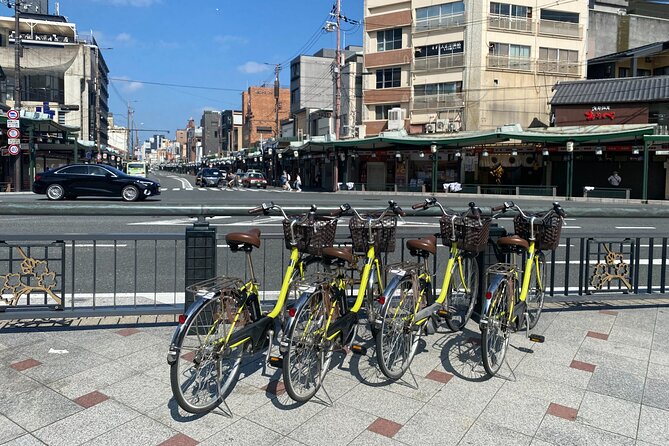
Kyoto spreads out, and the gaps between sights can eat up your day—especially when you’re walking uphill or zigzagging to avoid crowds. An e-bike turns that problem into the solution. You still get the Kyoto atmosphere up close, but you’re not paying for it with sore calves by late morning.
This tour is also built for a smoother experience because it’s private. You don’t have to match someone else’s speed, interest level, or attention span. That matters on a temple route where the time you spend looking and listening can change everything.
The other practical win: the tour is designed for people who want both structure and freedom. You’ll hit key areas, but the guide can tailor the route to things like photography, history, or local culture. One review specifically highlighted that the guide adjusted the plan to keep kids comfortable, and that kind of pacing is exactly what you want if you’re visiting with family.
More of Kyoto at handlebar pace

The ride begins with Kiyomizudera’s viewpoint energy
Kiyomizudera is one of Kyoto’s headline sights, so you’ll understand why everyone knows it. Here, the value isn’t rushing through. You start with a stop near the temple, giving you a strong viewpoint first, then hearing the temple’s background and what makes the famous wooden stage such a big deal.
Expect a “pause and look” moment. This is where photos make sense, and it’s also where your guide’s explanation can help you read what you’re seeing. If you choose to enter the temple area, you’ll pay admission separately—this stop is listed as 45 minutes with admission not included.
Potential drawback: since Kiyomizudera is famous, you can still hit busy conditions in the surrounding area. The tour’s trick is that you’re not trying to see everything alone while dodging crowds—you’re arriving with a guide and moving on thoughtfully afterward.
Chion-in and Nanzen-ji: big structures, more breathing room
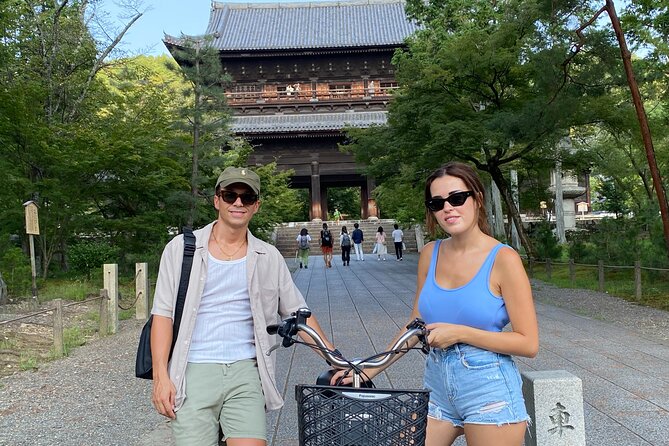
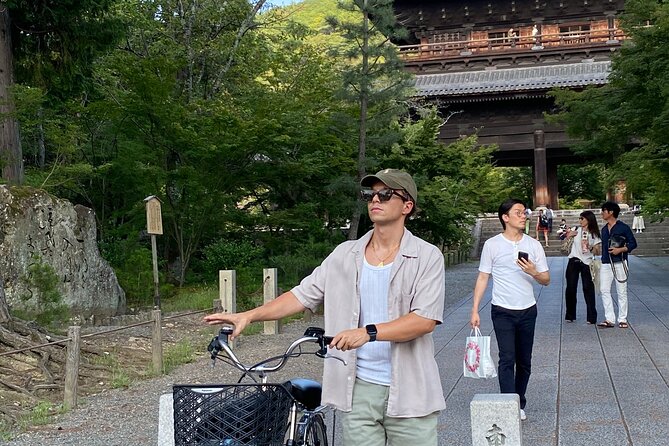
Next up is Chion-in Temple, centered on the towering Sanmon Gate, described as the largest wooden gate in Japan. Even if you don’t go inside for long, a gate that size changes how you experience the space. You’ll step through the grand entrance and get a short look into the main hall area, with a guided orientation about the Jodo Pure Land Buddhist sect.
This stop is short—about 15 minutes—and admission is listed as free. That makes it ideal as a reset: see something monumental, get the context, then keep moving.
Then you head to Nanzen-ji. Here the tour focuses on the outer grounds, starting with the massive Sanmon Gate again—this time with a chance for views from its upper level. Nanzen-ji is also known for feeling spacious, and that openness is one reason it’s such a good match for an e-bike day. You’re not stuck in a narrow corridor of people.
Nanzen-ji is listed as about 30 minutes, and the admission for the included part is free. So you’re getting iconic Kyoto architecture without the extra ticket math.
Heian Jingu’s torii and Hanamikoji: a quick culture hit in Gion
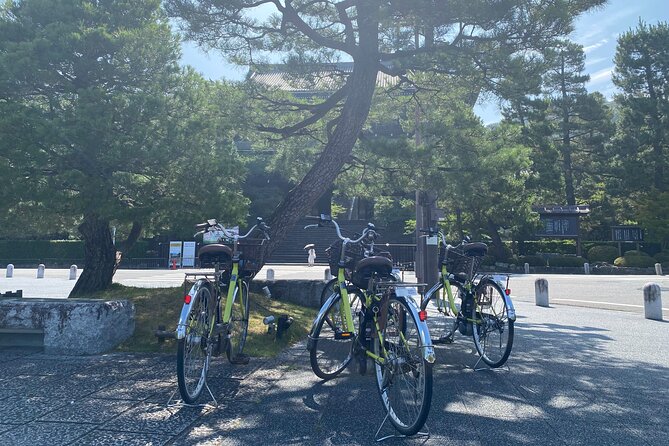
After the big temple gates, you shift into shrine-and-street Kyoto with Heian Jingu. The star moment here is the Grand Torii, a large vermilion gateway marking the entrance to a shrine connected to Kyoto’s imperial era. It’s the kind of stop where you can take a photo, catch the scale, and feel how Kyoto uses dramatic markers in the landscape.
This stop is listed as 10 minutes and free. That short timing is intentional: it keeps you from spending the whole day waiting for the “perfect” light, while still giving you the landmark moment.
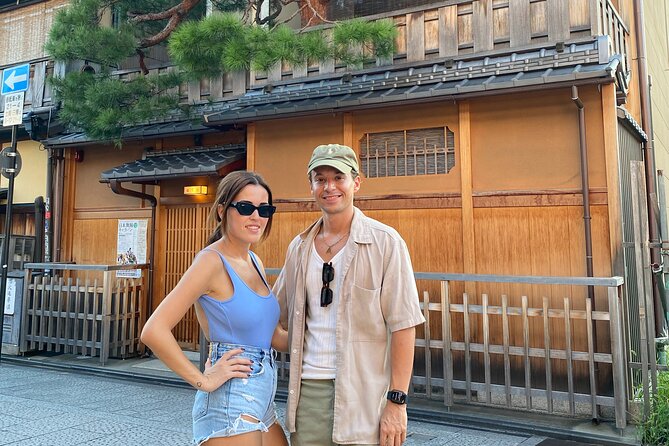
Then the tour pauses on Hanamikoji Street, the historic cobblestone avenue in Gion. This is where your guide’s storytelling helps you connect the dots—traditional wooden townhouses, the cultural role of geiko and maiko traditions, and what you’re seeing beyond the Instagram angle. The stop is also about 10 minutes and free.
How to make this stop work for you: treat it like a short slow-walk. Don’t try to cram in shopping or long wandering here. If you want to browse, save that for a return visit when you’re not on a timed ride.
Kamogawa stepping stones to Shimogamo: shifting Kyoto moods
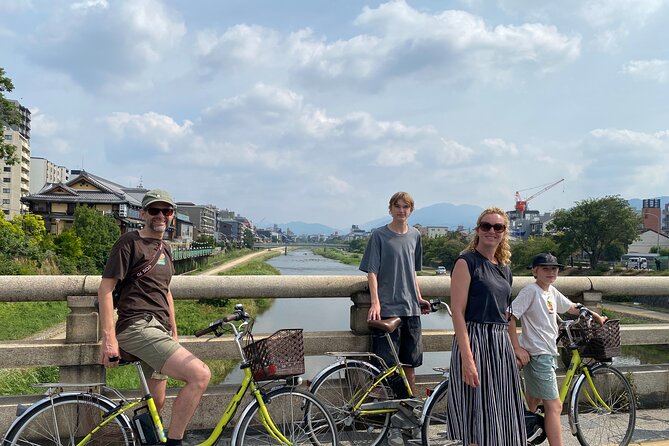
One of the most fun parts of this kind of tour is the change of scenery without changing your day. The guide takes you to the Kamogawa River’s famous stepping stones, where locals and visitors cross by hopping carefully from stone to stone. Even if you don’t want to hop, the experience of standing there and watching how the crossings work is surprisingly memorable.
The itinerary doesn’t list admission for this stop, and it’s guided for roughly a short pause. It’s a great moment to cool down, reset, and let your eyes adjust from temple gate scale to river-level calm.
Then you go to Shimogamo Jinja, one of Kyoto’s oldest and most important Shinto shrines. What makes this stop feel different is the surrounding ancient forest vibe, which gives you the feeling of stepping into a quieter, older Kyoto. Shimogamo is also listed as a UNESCO World Heritage site.
This is one of the longer pauses at about 45 minutes, and it’s free for the included time. If you want an e-bike day that feels more than sightseeing, this is where you get it.
Other Kyoto tours and experiences to compare

Wagashi and Edo-period water: Demachi Futaba and Somei Well
Kyoto isn’t only temples. It’s also snacks, everyday traditions, and small cultural landmarks that don’t require a ticket booth.
The tour includes a stop at Demachi Futaba, a historic wagashi shop near the Kamogawa area. The listed time is 30 minutes, and the admission is not included, which usually means you pay for anything you choose to buy. This is a practical stop: wagashi can be a real energy boost during a bike day, and buying something small gives you a better reason to slow down and taste rather than just window-shop.
After that, you’ll visit Somei Well, a historic water source near Kyoto Gyoen National Garden dating back to the early Edo period (around the 1600s). It’s listed as about 10 minutes and free. This is the kind of stop I enjoy because it’s specific and local. You’re not just seeing a generic “pretty place,” you’re learning what that water source meant to the area.
Tip for photos: these water-and-shop stops often work best in the softer light later in the day, but you’ll still get plenty of chances depending on your pace and the season.
Kyoto Gyoen National Garden: a calm finish near the Imperial Palace
The final leg is through Kyoto Gyoen National Garden, the spacious park area surrounding the Kyoto Imperial Palace. The itinerary lists about 30 minutes here, and the included part is free.
In a day packed with temples, gates, streets, and river moments, this park time helps the whole route land. It gives you space to breathe and lets your eyes rest. Your guide can share insights about how this area functions and why it matters, which is often where your understanding of Kyoto’s layout becomes clearer.
If you’re prone to travel fatigue, this is the “good ending.” You don’t have to sprint back to catch the last train with shaky legs—you’ll end in a calmer zone.
What the guide really changes (and how that shows up on your day)
The biggest quality difference between a basic bike ride and this one is the guiding. You’re not just following a track on a map. The guide builds the route around interests like photography, history, or local culture, and the pacing can shift in response to your group.
In real-world terms, that can mean you get more time where you want it. One review highlighted that the guide did careful explanations while keeping the experience fun for kids. Another praised how the route helped them see a lot of temples and quiet streets without feeling like they were racing.
Also, the guide support is multilingual—English, Indonesian, and Malay. That matters if you’re traveling with a group that prefers a specific language. And even if you’re English-first, the ability to communicate clearly tends to make stories stick.
One small note from the itinerary: not every stop is about entering a building. Some are about viewpoints, gates, and outer grounds. That’s actually a plus on an e-bike day because you get the meaning of a place without losing time to ticket lines you didn’t plan for.
Price and value: what $123.57 really buys you
At about $123.57 per person, this is not a budget “grab a bike and go” deal. You’re paying for the guide, the private setup, and the e-bike rental with insurance included.
That insurance and the guided format add value in a city where navigating streets on a bike can be stressful if you’re on your own. You’re also covering multiple major stops and several free-entry areas. Temple and shrine admission costs are where the money can add up quickly if you do it independently without planning.
What’s not included:
- Meals, snacks, or drinks
- Entrance fees (for example, Kiyomizudera admission is not included if you choose to enter)
- Parking fees if no free parking is available
- Gratuities (optional)
So, the true cost depends on what you personally choose. If you enter Kiyomizudera and add a wagashi purchase at Demachi Futaba, you’ll pay extra—but that’s typical. The value is that your ride is built around these moments, so you’re not turning your day into a complicated logistics puzzle.
Best fit: who will love this Hidden Kyoto e-bike day
This tour is a good match if you want:
- A private Kyoto experience without the stress of constant transfers
- A mix of major highlights and calmer back-street moments
- A day that includes both spiritual sites and everyday culture stops (wagashi, a historic well, Gion street texture)
It’s especially sensible for families. Reviews mention doing the shorter option with kids and keeping everyone comfortable, and the guide’s ability to adjust pace on a hot day shows you’re not trapped in a rigid schedule.
It may be less ideal if you only want to spend time strictly inside ticketed monuments. A lot of the included time is structured around gates, outer grounds, viewpoints, and guided pauses, not long indoor museum-style visits.
Final call: should you book this tour?
If you want Kyoto without the full-day grind—too many buses, too much walking, too much “where are we going next?”—this is a smart way to see more while staying comfortable. I’d book it if you like a guided plan but still want breathing room, and if you’re okay with paying individual entrance fees and choosing your own snack purchases.
If your goal is only to check off the biggest temples with no room for storytelling or river-and-street moments, you might prefer a more standard walking or transit itinerary. But for a fun, scenic, guided Kyoto day on an e-bike, this one is built for exactly that.
FAQ
How long is the Hidden Kyoto e-bike tour?
The tour runs about 3 to 5 hours.
Is this a private tour?
Yes. It’s private, and only your group participates.
What’s included in the price?
You get an English, Indonesian, and Malay speaking guide, plus e-bike rental with insurance.
Are temple and shrine entrance fees included?
Not fully. Kiyomizudera admission is not included (if you choose to enter), and other stops are listed as free for the included visit. Entrance fees are still not included in general, so if you enter any paid areas, you’ll pay separately.
Are meals and drinks included?
No. Meals, snacks, and drinks are not provided.
Where does the tour go?
It covers key stops around Kyoto such as Kiyomizu-dera, Chion-in, Nanzen-ji, Heian Jingu torii, Hanamikoji Street, Kamogawa stepping stones, Shimogamo Jinja, Demachi Futaba, Somei Well, and Kyoto Gyoen National Garden.
What ticket format do I receive?
You get a mobile ticket.
How far in advance do people usually book?
On average, this is booked about 21 days in advance.
What happens if weather is bad?
The experience requires good weather. If it’s canceled due to poor weather, you’ll be offered a different date or a full refund.
Is parking or tipping included?
Parking fees are not included if free parking isn’t available. Gratuities are optional and not included.
Should you book this Hidden Kyoto by E-Bike experience?
If you want to see temple gates, shrine forests, and classic Kyoto streets in one ride without burning your day walking, this is a strong pick. Just budget a bit extra for entrance fees you choose (like Kiyomizudera) and whatever you want to eat at Demachi Futaba.
More Cycling Tours in Kyoto

More Tour Reviews in Kyoto




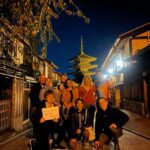
More of Kyoto by Bike
Just added: more Kyoto tours to browse








Kyoto Bike & E-Bike Tours, compared.
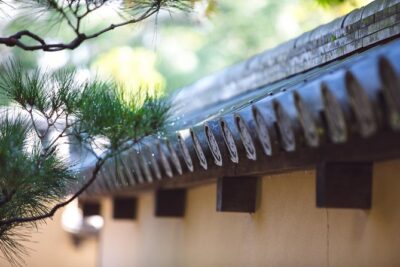 ★ 5.0Hidden Kyoto E-Biking tourFrom $1161,843 reviews
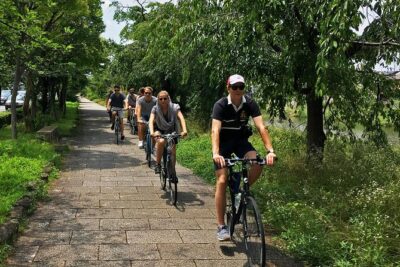 ★ 5.0Bike Tour Exploring North Kyoto plus LunchFrom $1061,087 reviews
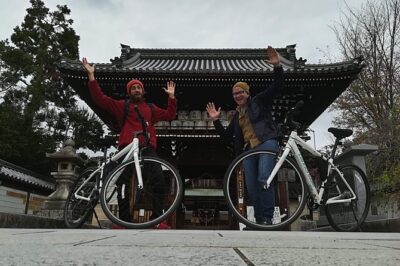 ★ 5.0Arashiyama Bamboo Forest & Hidden Gems Bike Tour (Early Bird)From $106613 reviews
 ★ 5.05 Top Highlights of Kyoto Full Day Bike Tour (E-bike option)From $172511 reviews
 ★ 5.0Full Day Biking Tour Exploring the Best of KyotoFrom $119498 reviews
 ★ 4.8Memory Kyoto E-Bike TourFrom $91297 reviews
 ★ 5.0E-Bike Tours of the highlights of Kyoto!!!From $109291 reviews
 ★ 5.0Afternoon Kyoto Bike Tour: Bamboo Forest, Monkeys & Hidden SpotsFrom $106283 reviews
Browse the lists this tour appears in