
Reviewed · KYOTO BIKE & E-BIKE TOURS
Early Bird E-biking through East Kyoto
Early-start biking beats Kyoto traffic. I love the small-group cap of eight (the ride feels personal, not like cattle) and the lunch included plan that keeps you from hunting for food mid-temple. One consideration: you do need moderate biking comfort, because parts of the route can mean busy streets, slight uneven ground, and a few uphill moments.
This is an efficient, fun way to string together East Kyoto classics without burning your day on trains and detours. You get an e-bike and helmet, you start at 8:00 am, and you cover a lot of ground: Fushimi Inari, Philosopher’s Path, Nanzen-ji, Gion backstreets, plus a stroll through Heian Jingu and more.
In This Review
- Key highlights worth planning around
- Why an 8:00 AM e-bike start matters in East Kyoto
- Price and value: what $138.74 really buys you
- The small-group ride style that makes the day feel human
- Stop-by-stop: from Fushimi Inari to Gion backstreets
- Stop 1: Fushimi Inari-taisha Shrine
- Stop 2: Tofuku-ji Temple
- Stop 3: Kamogawa River ride
- Stop 4: Ginkakuji Temple + lunch
- Stop 5: Philosopher’s Path (Tetsugaku no Michi)
- Stop 6: Nanzen-ji Temple
- Stop 7: Heian Shrine
- Stop 8: Gion backstreets
- Stop 9: Higashi Hongan-ji Temple + cafe stop
- Pedal power rules: what moderate fitness actually means
- Safety and traffic: how to enjoy without feeling tense
- Lunch and cafe breaks that keep you fueled
- Who this East Kyoto e-bike tour is best for
- Should you book Early Bird E-biking through East Kyoto?
- FAQ
- How long is the Early Bird E-biking through East Kyoto tour?
- What time does the tour start?
- Is lunch included?
- Are the e-bike and helmet provided?
- How many people are in the group?
- Where is the meeting point?
- Are temple admissions included?
- What fitness level is required?
- What are the age and height requirements?
- What if the weather is bad?
Key highlights worth planning around
- 8:00 am start to beat crowds and keep the day moving smoothly
- E-bike and helmet provided, so you show up ready to ride
- Small group of eight for easier pacing and fewer headaches at temples
- Lunch included, timed into the temple rhythm so you don’t lose the flow
- Temple-to-temple route in East Kyoto, with river and neighborhood backstreets too
Why an 8:00 AM e-bike start matters in East Kyoto
Kyoto can feel simple until you hit the crowds. A morning start changes the whole tone of the day. When you begin early, Fushimi Inari is still getting its footing. Later, other famous spots will be busy, but you’ve already set yourself up with a strong first win.
Also, an e-bike means you’re not paying for Kyoto with sore legs. You’re using motor assist to cover the distances between major landmarks, then switching to walking where it makes sense—like at Fushimi Inari’s shrine paths and Nanzen-ji’s grounds.
And because the ride is structured, you’re not stuck asking how to get from one place to the next. The route moves you logically through the south and eastern sides of Kyoto, starting with the big iconic moment and then building out into quieter streets and paths.
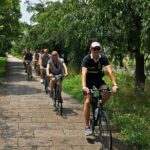
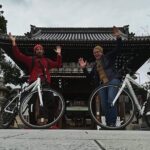
More of Kyoto at handlebar pace
Price and value: what $138.74 really buys you
$138.74 is not cheap, but this one has several built-in savings that add up.
You’re paying for:
- A guided route that links multiple top sights in one day
- E-bike + helmet, so no rental search or sizing problems on your own
- Lunch included, which is often the most annoying meal to plan during a temple-heavy day
- Temples with free or included admission across the schedule (many listed stops are free, and Ginkaku-ji has admission included)
In plain terms, you’re buying time and simplicity. If you tried to copy this day on your own—temples, transfers, bike logistics, and food—costs and stress would likely creep up fast.
One honest note: lunch is included, but it’s scheduled as part of the day’s timing near the temple sequence rather than being a random walk-in spot you discover by luck. If you care a lot about where you eat, plan to treat lunch as a solid refuel, not a major dining quest.
The small-group ride style that makes the day feel human
This tour caps at 8 travelers, and it shows in how the day works. Smaller groups usually mean:
- less waiting at each stop
- more space to regroup after rides
- easier bike traffic management (especially on tight lanes)
Pacing is also part of the value. The itinerary breaks the day into ride blocks and on-foot blocks. For example, you’ll ride to Fushimi Inari along the river, spend time exploring on foot, then switch back to the bike for the next leg. That rhythm keeps you from feeling like you’re sprinting through stops, but it also prevents the day from dragging.
One detail from how the day runs: there’s enough structure that you can enjoy the scenery without constantly checking your phone for directions. The guide is there to keep you moving and pointed in the right direction at each key site.
Stop-by-stop: from Fushimi Inari to Gion backstreets
Here’s how the route plays out, and what each piece is best for.
Stop 1: Fushimi Inari-taisha Shrine
You start with a ride of about 25 minutes to reach the shrine. Then you get roughly 30 minutes to explore on foot. Fushimi Inari is famous for a reason. The long, repeating torii gates can turn your brain into a calm camera sweep.
What I like about this placement: it’s early. If you’re doing Kyoto for the first time, getting your big wow moment done early helps the rest of the day feel lighter.
A practical tip: wear comfortable shoes you can walk in. Even if you’re on an e-bike all morning, Fushimi Inari still asks for real steps.
Other Kyoto tours and experiences to compare
Stop 2: Tofuku-ji Temple
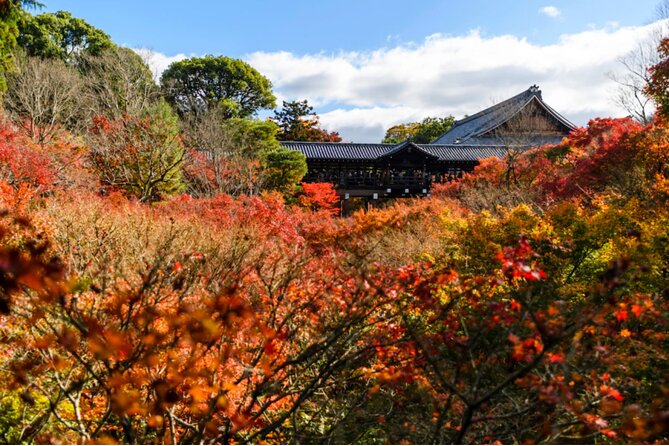
From Fushimi Inari, it’s about 15 minutes to get to Tofuku-ji. You’ll pause briefly on a picturesque bridge, then spend around 30 minutes at the temple.
Tofuku-ji works well as a contrast to the shrine crowds. It’s a different vibe—more temple grounds, more space to slow your eyes down and read details as you pass.
This stop is a good reset: you’ll ride, walk a bit, then ride again. It keeps the day from becoming one long temple marathon.
Stop 3: Kamogawa River ride
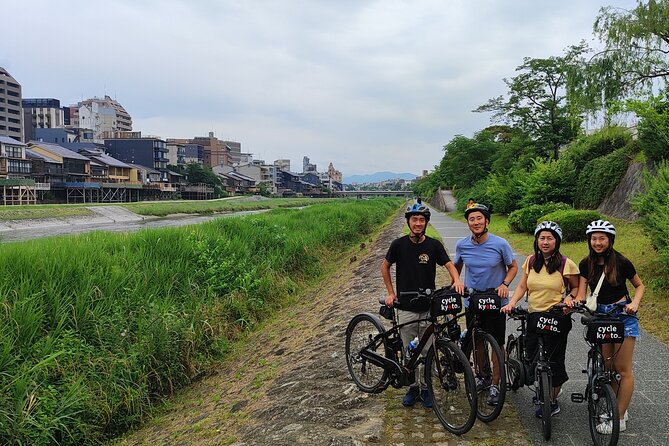
Next is an extended ride along the Kamogawa River for about 30 minutes.
This is where the e-bike shines. The ride gives you a breather between major landmarks, and the river stretch helps you appreciate Kyoto’s layout beyond the postcard spots.
Also, it’s a nice moment to feel the cycling as part of the experience, not just the transport between temples.
Stop 4: Ginkakuji Temple + lunch
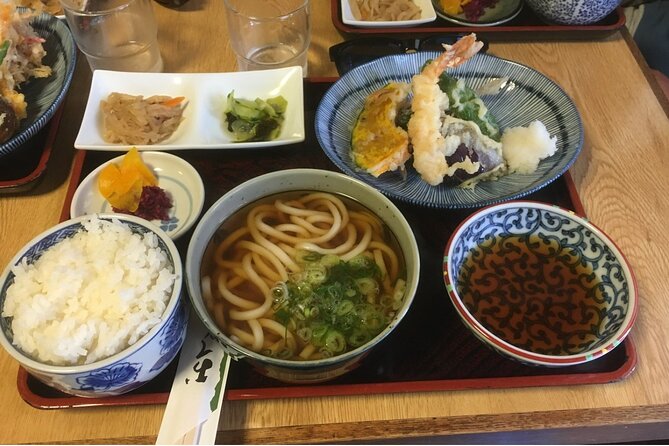
You’ll spend about 45 minutes at Ginkaku-ji, and the time includes a lunch stop in a nearby restaurant. Admission is listed as included for this stop.
Ginkaku-ji pairs well with the next segment later in the day (the Philosopher’s Path). Doing them back-to-back makes the whole eastern temple zone feel like one connected walk-through.
My advice: go hungry. Lunch is planned into your schedule here, so treat it as fuel for the next set of walking and scenic riding. If you’re picky about food, you’ll want to share dietary requirements ahead of time.
Stop 5: Philosopher’s Path (Tetsugaku no Michi)
This section is about 45 minutes of cycling along the Philosopher’s Path.
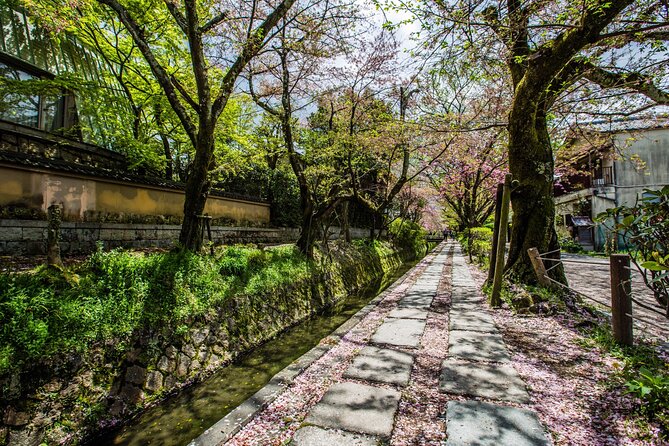
Even if you’ve seen photos, the path is better in motion. It’s one of those Kyoto scenes where your brain keeps grabbing details: water, stones, trees, and the gentle pace of a place that attracts walkers.
A seasonal note: one past group experience included strong cherry blossom timing here. If you’re visiting in that season, expect a photo-friendly crowd. That doesn’t ruin it, but it changes how slowly you’ll move and how much space you’ll need.
Stop 6: Nanzen-ji Temple
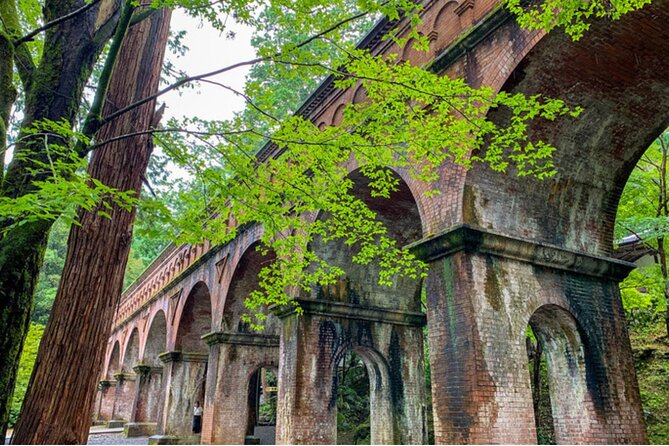
You’ll spend about 45 minutes at Nanzen-ji, and you’ll walk the grounds.
Nanzen-ji gives you the classic temple grandeur feeling, with a slower pace than the earlier shrine area. It’s a good stop when you want to step away from the bike and just absorb the space.
From a practical angle, this is also a good spot to catch your breath—your legs will likely appreciate it after riding segments.
Stop 7: Heian Shrine
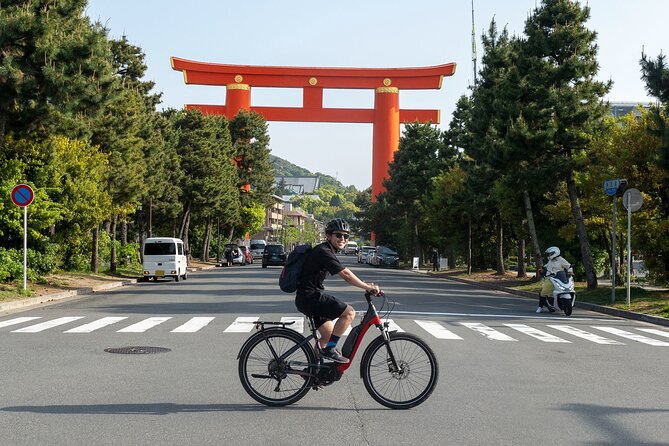
Around 35 minutes here, including a stroll through the courtyard of Heian Jingu.
Heian Shrine is a nice change of scenery: more open courtyard feel and a clear sense of the shrine’s layout. It also helps break up the denser temple moments in the morning.
Stop 8: Gion backstreets
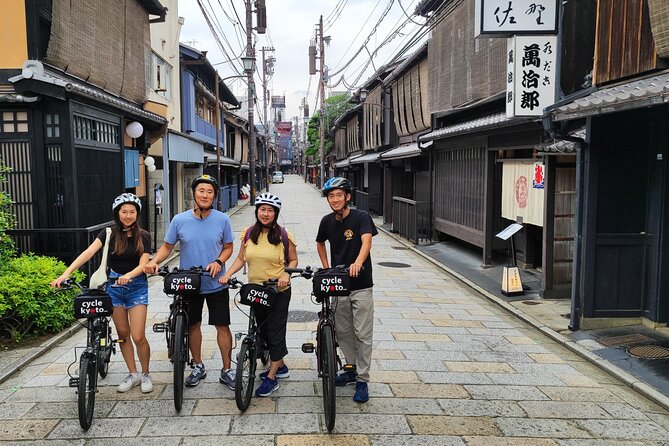
Then it’s back onto the bike for about 45 minutes of riding through Gion. This is described as backstreets in Kyoto’s entertainment district, with a chance of glimpsing Maiko or Geiko along the way.
Two things to know:
- This is more about the atmosphere and the route through the neighborhood than a guaranteed show.
- You’ll likely cycle through areas where people are out and about, so stay alert.
I like this stop late morning into the day because you get a peek at Kyoto’s everyday texture, not just temple landmarks.
Stop 9: Higashi Hongan-ji Temple + cafe stop
You’ll spend about 15 minutes strolling the wooden prayer halls of Higashi Hongan-ji. That time also includes a stop at the guide’s favorite cafe.
Fifteen minutes sounds short, but it’s enough for a focused stop—walk, look up, and move on with the day.
This cafe stop is one of the smart touches: it gives you something to look forward to toward the end, especially after a long day of riding and temple walking.
Pedal power rules: what moderate fitness actually means
The tour calls for moderate physical fitness. With an e-bike, you’re not doing hardcore climbs, but you’re still riding a bike for long stretches.
From a rider perspective, I’d think of it like this:
- You should be comfortable mounting and stopping a bicycle confidently
- You should be able to maintain a steady pace for hours
- You might feel a few uphill moments even with assist
One real-world caution from past experiences: bikes may not fit everyone perfectly. If you have a height mismatch, or you’re bringing teens, ask for a quick bike size check before you start. It can save stress fast.
Also, keep in mind that some portions go through busy areas. That means you’ll need situational awareness while you’re also trying to enjoy the views.
Safety and traffic: how to enjoy without feeling tense
Kyoto has lots of narrow lanes, mix-and-match street sections, and pedestrians stepping into your path without always warning you. Add bicycles and you have to stay switched on.
Here’s how to make it enjoyable:
- Ride with your guide’s pace, not your own
- Keep both hands ready and avoid fiddling with your phone while moving
- Leave a little gap between you and the rider ahead
The tour’s structure helps, but you’re still cycling in a living city. If you get nervous in crowds, pick the day you feel most rested and don’t show up exhausted.
If you’re new to biking, consider asking the guide at the start about which sections feel most crowded or uneven. You’ll get a practical heads-up, and you’ll feel more in control.
Lunch and cafe breaks that keep you fueled
Food planning is a big part of why this tour works. You’re not left to scramble for a meal between temples.
Lunch is included during the Ginkaku-ji timing, and there’s also a cafe stop later in the day at the end of the route near Higashi Hongan-ji. That gives you:
- one proper meal in the middle
- a later coffee or snack style break to close out the day
Dietary requirements need to be known ahead of time. If you have restrictions, send them before you arrive. You’ll thank yourself later when the day is moving and you’re not trying to figure it out on the fly.
Who this East Kyoto e-bike tour is best for
This tour is a great fit if you want:
- a first-time orientation to East Kyoto’s key sights
- lots of temple boxes checked without spending your day on public transit
- a day that mixes famous stops with backstreets and a river ride
It’s especially good for couples and small groups who want to travel at a human pace. The cap of eight helps everyone stay together, and it’s easier to hear the guide when you’re not packed shoulder-to-shoulder.
If you hate bike riding or feel shaky around traffic, you might not love it. The tour depends on you being comfortable cycling through real streets and crowded areas.
Should you book Early Bird E-biking through East Kyoto?
Book it if you want a structured, efficient, first-day-in-Kyoto kind of experience—with e-bikes, helmet included, lunch built in, and a route that connects famous temples like Fushimi Inari and Nanzen-ji with scenic cycling along the Philosopher’s Path and the Kamogawa River.
Skip it (or choose a different day plan) if:
- you’re not comfortable cycling in busy areas
- you’re expecting a slow, quiet, walking-only temple day
- your group needs special food handling and you haven’t shared dietary needs ahead of time
- you’re uncertain about bike fit for your height (ask before rolling)
If you’re the kind of traveler who likes to mix iconic sights with real neighborhood texture, this is one of the best ways to do East Kyoto in a single day without turning it into a logistics project.
FAQ
How long is the Early Bird E-biking through East Kyoto tour?
It runs about 6 to 7 hours.
What time does the tour start?
The start time is 8:00 am.
Is lunch included?
Yes. Lunch is included as part of the scheduled stops.
Are the e-bike and helmet provided?
Yes. You do not need to source equipment; an e-bike and helmet are provided.
How many people are in the group?
The tour has a maximum of 8 travelers.
Where is the meeting point?
You meet at Cycle Kyoto7 in Higashikujō Nishisannōchō, Minami Ward, Kyoto, 601-8003, Japan. The activity ends back at the meeting point.
Are temple admissions included?
Many stops list admission as free. Ginkakuji has admission listed as included, and other listed stops are free on the schedule.
What fitness level is required?
You should have moderate physical fitness. The ride involves cycling for parts of the day, with some uphill moments possible.
What are the age and height requirements?
Minimum age is 13 years old, and minimum height is 145 cm.
What if the weather is bad?
The tour requires good weather. If it’s canceled due to poor weather, you’ll be offered a different date or a full refund.
More Cycling Tours in Kyoto
More Tour Reviews in Kyoto






More of Kyoto by Bike
Just added: more Kyoto tours to browse








Kyoto Bike & E-Bike Tours, compared.
 ★ 5.0Hidden Kyoto E-Biking tourFrom $1161,843 reviews
 ★ 5.0Bike Tour Exploring North Kyoto plus LunchFrom $1061,087 reviews
 ★ 5.0Arashiyama Bamboo Forest & Hidden Gems Bike Tour (Early Bird)From $106613 reviews
 ★ 5.05 Top Highlights of Kyoto Full Day Bike Tour (E-bike option)From $172511 reviews
 ★ 5.0Full Day Biking Tour Exploring the Best of KyotoFrom $119498 reviews
 ★ 4.8Memory Kyoto E-Bike TourFrom $91297 reviews
 ★ 5.0E-Bike Tours of the highlights of Kyoto!!!From $109291 reviews
 ★ 5.0Afternoon Kyoto Bike Tour: Bamboo Forest, Monkeys & Hidden SpotsFrom $106283 reviews
Browse the lists this tour appears in