
Reviewed · KYOTO BIKE & E-BIKE TOURS
Discover Kyoto by Bike Full Day Tour
Riding a bike through Kyoto feels like a cheat code for the city’s rhythm. This full-day Kyoto bike tour strings together big-name sights like Toji and Ginkaku-ji, plus quieter stops such as Honen-in and the calmer alleys near Miyagawacho. You’ll get a small-group, private feel with plenty of photo breaks and local context from Jaime.
I especially like two things: the way the route mixes famous landmarks with less-fussed roads, and the fact you’re on an e-bike, which makes a 32 km day feel far more realistic than a standard bike. The only real catch is the effort: the day runs 7 to 8 hours and asks for moderate fitness, plus careful riding on narrow paths.
In This Review
- Key Highlights You’ll Actually Care About
- Why Kyoto Works So Well on an E-Bike
- Toji: The Start Point That Sets the Tone
- Umekoji Park and Ryukoku University: Where Local Kyoto Happens
- Nishi Honganji: Big Temple Courtyards, Calm Explanations
- The Kamo River Ride: A Real Breather Between Monuments
- Miyagawacho and Gion Area Alleys: Traditional Lanes, Less Performance
- Heian Shrine: Big Gate, Palace-Style Layout
- Lake Biwa Canal and the Biwa Aqueduct Museum: The Practical Kyoto Stop
- Nanzen-ji: Zen Power, the Aqueduct, and Red Brick Drama
- The Philosopher’s Path: A Stone Walk With a Namesake
- Honen-in: Quiet Temple Time Before the Silver Pavilion Crowd
- Ginkaku-ji (Silver Pavilion): The One Ticketed Stop You’ll Want
- Gion Ride: Machiya Houses, Lanes, and Geiko/Maiko Culture
- Ending Back at the Start: A Full Day That Finishes Cleanly
- Price and Value: Is $128.48 Worth It?
- What to Expect on the Road: 32 km, Narrow Paths, and Real Riding Time
- Who Should Book This Tour, and Who Might Skip It
- Should You Book Discover Kyoto by Bike Full Day Tour?
- FAQ
- FAQ
- How long is the Discover Kyoto by Bike full day tour?
- How far will I ride?
- What kind of bike is included?
- Are temple and sightseeing admissions included?
- Is lunch included?
- Where do I meet the tour?
- What happens if weather is bad?
Key Highlights You’ll Actually Care About
- UNESCO Toji first: start with the five-story pagoda at Toji, one of Kyoto’s most distinctive silhouettes
- E-bike for a long day: you’ll cover about 32 km and still have energy for the walking parts
- Temple-to-temple flow: Nishi Honganji, Nanzen-ji, Honen-in, then Ginkaku-ji without backtracking chaos
- Kamo River cycling time: a real breather on two wheels, away from the densest streets
- Gion by bike, not just on foot: you get moving views of machiya houses and lantern-lit lanes
- Jaime’s on-the-ground perspective: guided stops where architecture and culture get explained clearly
Why Kyoto Works So Well on an E-Bike
Kyoto is full of short distances that feel longer than they are. On foot, you can waste time zigzagging to avoid traffic. On a bike, you get the middle ground: you can cover ground without giving up the close-up details.
This tour leans into that. You’ll ride an e-bike, which matters because the day isn’t a quick loop. You’re looking at 7 to 8 hours total, including sightseeing time, and you’ll need to pedal and maneuver safely on narrow paths. If you like temples and neighborhoods but hate slow transportation shuffle, this format fits.
More of Kyoto at handlebar pace
Toji: The Start Point That Sets the Tone
You begin the day at a 7-Eleven (Higashikujō Kamitonodachō), right around 9:00 am, and you’ll work your way into Kyoto’s spiritual spine fast. The first stop is Toji, a UNESCO site famous for its five-story pagoda. It’s the tallest wooden tower in Japan, and seeing it early helps you appreciate the scale before the rest of the day builds momentum.
What you’ll do here is simple: stroll the temple grounds and get orientation about why Toji matters in Kyoto. The tour lists this as free time with about 15 minutes at the stop. That short window is a plus if you don’t want your morning dragged out, but it also means you won’t have hours to wander—so keep your eyes open for viewpoints and don’t try to read every sign.
Umekoji Park and Ryukoku University: Where Local Kyoto Happens
After the temple start, the tour shifts gears to everyday life. One stop is at Umekoji Park, described as a local escape with greenery, seasonal flowers, shade, and a pond where you can pause. This is the kind of break that keeps a full-day itinerary from feeling like a nonstop checklist.
Then you pass by Ryukoku University Omiya Campus, tied to Buddhism and described as one of Kyoto’s oldest private universities. This isn’t there to feel academic for the sake of it. It’s a chance to notice what Kyoto looks like when it’s not performing for visitors—students, daily routines, and buildings that feel lived-in.
Both parts are quick—think 10 minutes—and that’s intentional. The route keeps moving so you can cover more neighborhoods without burning the whole day in one place.
Nishi Honganji: Big Temple Courtyards, Calm Explanations
Next comes Nishi Honganji, a major Jodo Shinshu temple and another UNESCO site. You’ll spend about 30 minutes here, and the focus is on the wooden architecture and how it shaped Buddhist practice over time.
This is one of those stops where the difference between a rushed visit and a guided one is huge. With a guide like Jaime, you’ll get practical context for what you’re looking at—courtyard layout, the role of the temple, and why the site’s influence matters. The data lists admission as free, so you can treat this as a high-value stop without spending extra.
Quick caution: this is a popular UNESCO-class temple. Even with a guide keeping the timing smooth, you should expect other visitors, especially around photo angles and main walkways.
The Kamo River Ride: A Real Breather Between Monuments
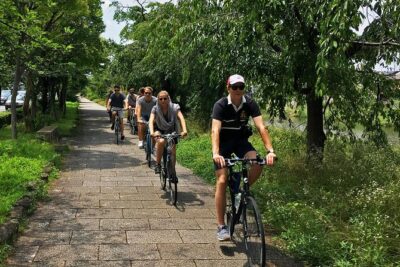
After multiple temple stops, you’ll cycle along the Kamo River. This section is a favorite kind of travel hack: you get motion, views, and a sense of Kyoto’s outdoor life without the brainwork of reading shrine signs.
The tour frames this as a balance between urban Kyoto and nature—people relaxing, jogging, and hanging out near the water. Even if you’re not a “river person,” this stretch helps break up the day and makes later stops feel fresher.
If you’re sensitive to traffic noise, the good news is that a river ride often feels calmer than main roads. Still, remember the tour runs on bike time: keep your attention on your path and don’t let a scenic moment make you drift into other riders.
Other Kyoto tours and experiences to compare
Miyagawacho and Gion Area Alleys: Traditional Lanes, Less Performance
From the river, the itinerary includes a geisha district area near Gion, referenced as Miyagawacho. The ride focuses on quiet alleys where older Kyoto traditions still feel present.
This is where biking earns its keep. On foot, you end up threading through crowds. On a bike, you glide along side streets and get a better sense of how these neighborhoods are actually arranged—machiya houses, narrow lanes, and the “in-between” spaces that make the area feel real.
You’ll likely face one tradeoff: Kyoto’s famous districts can be busy. The tour’s strategy is to ride through and time things to spend more attention on the alley atmosphere than on standing still. Go with a flexible mindset and let your guide steer you around the trickier crowd moments.
Heian Shrine: Big Gate, Palace-Style Layout
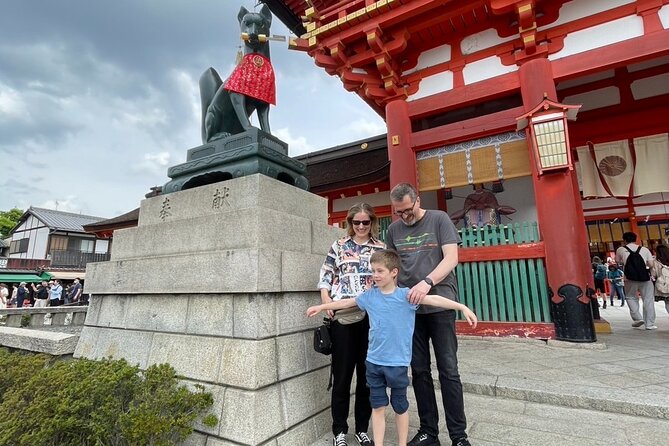
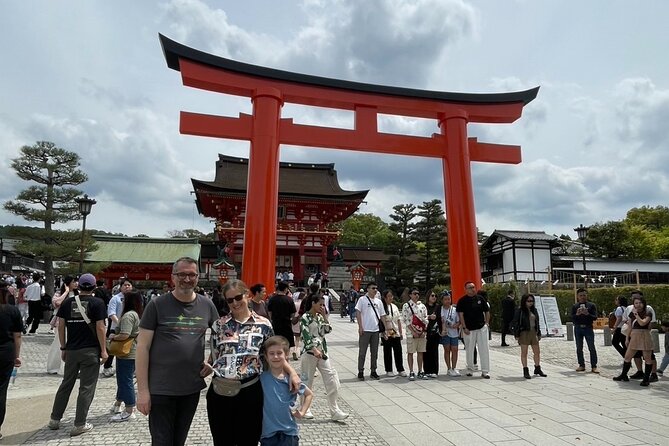
Next is Heian Shrine, built in 1895 to mark Kyoto’s 1,100th anniversary. What stands out is the vermilion gate and the layout modeled after the ancient Imperial Palace.
The time here is listed as about 10 minutes, which is short, but it matches the overall pace of the day. You’re getting a quick hit of visual structure and symbolism, then moving on. If you’re the type who loves architecture details, you’ll want to pause for a couple of photos—especially near the gate—because that’s the “poster moment” for this stop.
Lake Biwa Canal and the Biwa Aqueduct Museum: The Practical Kyoto Stop
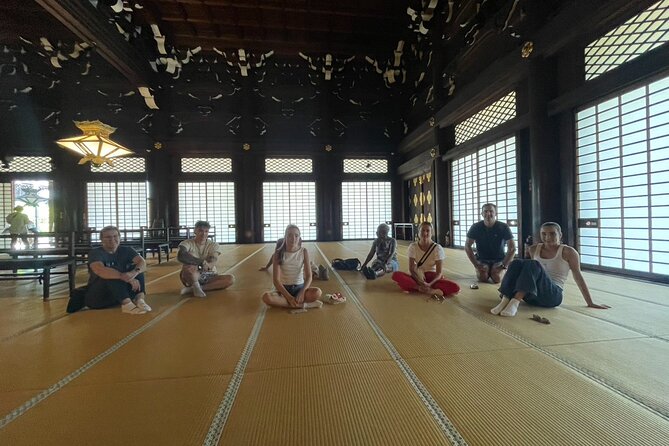
Then you hit something different: Lake Biwa Canal and the Biwa Aqueduct Museum. This small museum tells the story of a 1890s engineering project that brought water and power, improving life in Kyoto after major disruptions.
Why this stop is worth your time: it turns Kyoto from a “pretty place” into a city with problem-solving behind the scenes. You’ll get a lesson in how infrastructure shaped everyday existence—less romantic, more useful, and surprisingly interesting if you like how cities work.
The tour lists this as about 10 minutes and admission as free. Don’t expect a deep seminar, but do expect your understanding of Kyoto to shift slightly toward the practical side.
Nanzen-ji: Zen Power, the Aqueduct, and Red Brick Drama
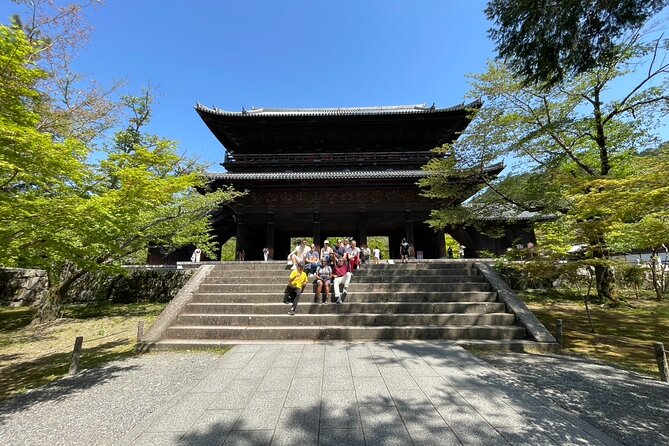
After the engineering story, you’ll go to Nanzen-ji, one of Kyoto’s important Zen temples founded in the 13th century. This is a longer stop, around 25 minutes, with a focus on the massive Sanmon gate, peaceful Zen gardens, and the red brick aqueduct that runs right through the temple area.
This is a stop where photos really help because the structures are so distinctive. The gate creates scale; the garden areas create stillness; and the aqueduct adds an unexpected industrial texture to a spiritual setting. Admission is listed as free, so it’s a strong stop for value.
Potential drawback: if you’re trying to see everything in a strict order, the temple space can make you want to slow down. You’re on a bike tour schedule, so you’ll need to pick your angles and keep moving.
The Philosopher’s Path: A Stone Walk With a Namesake
From Nanzen-ji you’ll reach the Philosopher’s Path, described as a stone walkway following a canal lined with cherry trees. It’s named after Kyoto University professor Nishida Kitaro, who walked there while meditating.
The tour doesn’t give a specific ticket time for this segment, but it’s included as part of the Nanzen-ji to Honen-in stretch. Here’s the practical advice: treat it as a quiet in-between. Even when it’s not cherry season, the canal edge and the rhythm of the walkway make it a nice reset.
If you’re traveling in peak cherry time (not specified in your info), it’s likely to feel crowded—so keep to the pace your guide sets and don’t expect a totally empty path.
Honen-in: Quiet Temple Time Before the Silver Pavilion Crowd
Then comes Honen-in, a quieter temple in the hills founded in the 1600s to honor the priest Honen and his Pure Land teachings. You’re scheduled for about 20 minutes, and the description points to a mossy gate and white sand patterns.
This stop is important because it acts like a pressure valve. After heavier, more famous temples, Honen-in gives you a calmer pace. You’ll likely feel like the tour is slowing down just enough for you to actually take things in.
Admission is listed as free, which makes it a strong “time well spent” stop.
Ginkaku-ji (Silver Pavilion): The One Ticketed Stop You’ll Want
Next you reach Ginkaku-ji, the Silver Pavilion. The tour description notes it was never actually covered in silver, but it’s still one of Kyoto’s most iconic sights. You’ll get about 25 minutes here, and importantly, the itinerary lists admission as included.
This is one of the best uses of your ticket money that day because you don’t have to think about paying another fee on arrival. Also, since the time is limited, having it guided helps you hit the key views without burning time.
Crowds can be real at the Silver Pavilion area, so plan to move with the group, take your best photos quickly, and then use any remaining minutes for close-looking at the garden details and the pavilion surroundings.
Gion Ride: Machiya Houses, Lanes, and Geiko/Maiko Culture
The final major neighborhood stop is Gion, Kyoto’s famous geisha district. The tour includes about 15 minutes to ride through lantern-lit lanes and learn about geiko and maiko culture.
Again, the “by bike” format matters. You see the rhythm of the lanes and the architecture of machiya houses without spending the whole time stuck at the edges of big crowds. You’ll likely get a few classic look-aways from the saddle and then enough explanation from the guide to understand what you’re seeing.
Admission here is listed as free, and the stop is fairly short. That can feel like a lot less time than the district deserves, but it’s also what keeps the day from becoming only one neighborhood.
Ending Back at the Start: A Full Day That Finishes Cleanly
The tour ends back at the meeting point. That’s a big practical plus. You don’t have to figure out a separate ride back to your starting area. And because you finish where you began, your day feels like a complete circuit: you start at a UNESCO temple, you work your way through rivers, gardens, and districts, and then you’re done.
This is especially helpful if you’re using the rest of your evening for dinner plans. Kyoto nights can be busy, so having a dependable endpoint reduces stress.
Price and Value: Is $128.48 Worth It?
At $128.48 per person, the price sits in the “midrange for Kyoto” zone. You’re not only paying for access to temples. You’re paying for an organized route, an e-bike, and a guide who helps you connect what you see.
Here’s the value math that’s actually useful:
- E-bike included: that alone saves you from renting, finding, and troubleshooting your own ride setup
- Multiple stops with free admissions: the itinerary lists admission as free for several temple visits and sights, which keeps your add-on costs down
- Ginkaku-ji admission included: that’s the one paid admission explicitly covered in the plan
- Time-saving routing: the route links neighborhoods that would take a lot of public transit hopping
The one cost you should budget for is lunch. It isn’t included. Plan for food breaks so the day doesn’t turn into a last-minute scramble.
If you want Kyoto highlights without spending your entire vacation navigating bikes, trains, and walking fatigue, this price can feel fair.
What to Expect on the Road: 32 km, Narrow Paths, and Real Riding Time
This tour clearly states a fitness requirement. You should be fit enough to ride 32 kilometers and maneuver safely on narrow paths.
A “moderate physical fitness” level is the key phrase. If you can handle a long day of sightseeing, this likely works. If you usually prefer slow museum pacing and minimal walking, the riding component may feel like too much.
Also consider weather. The tour notes it depends on good weather. If conditions are poor, you may be offered another date or a refund. That matters in Kyoto because sudden rain can change how comfortable bike riding feels.
Who Should Book This Tour, and Who Might Skip It
This is a great match if you:
- want a full-day Kyoto plan that mixes temples and neighborhoods
- like the idea of getting off the main traffic roads onto side streets
- are comfortable riding and staying alert on narrow paths
- appreciate a guide’s explanations, especially for temple architecture and cultural meaning
You might skip or choose a different format if you:
- don’t want a long day on a bike seat
- struggle with biking for 32 km, even with an e-bike assist
- prefer that all major stops be long walking visits rather than timed photo-and-walk windows
Should You Book Discover Kyoto by Bike Full Day Tour?
Yes, if your goal is to see Kyoto in a way that feels efficient but not rushed. The route hits iconic sites like Toji and Ginkaku-ji, then balances them with quieter stops like Honen-in and the calmer lanes near Gion and Miyagawacho. I like that the day isn’t only about big names—it includes river riding and even an engineering-focused museum stop at the Lake Biwa Canal.
Book it if you’re comfortable with 7 to 8 hours, 32 km of biking, and narrow-path navigation. Skip it if you want a purely relaxed walking itinerary or you’re worried about riding in the middle of a long sightseeing day.
FAQ
FAQ
How long is the Discover Kyoto by Bike full day tour?
It runs about 7 to 8 hours total.
How far will I ride?
The tour requires you to be fit enough to ride 32 kilometers.
What kind of bike is included?
You’ll use an e-bike.
Are temple and sightseeing admissions included?
The itinerary lists admission as free for many stops, and Ginkaku-ji admission is included.
Is lunch included?
Lunch is not included.
Where do I meet the tour?
You meet at the 7-Eleven at 44-1 Higashikujō Kamitonodachō, Minami Ward, Kyoto, 601-8002.
What happens if weather is bad?
The experience requires good weather. If it’s canceled due to poor weather, you’ll be offered a different date or a full refund.
More Tours in Kyoto
More Tour Reviews in Kyoto
More of Kyoto by Bike

Just added: more Kyoto tours to browse





Kyoto Bike & E-Bike Tours, compared.
 ★ 5.0Hidden Kyoto E-Biking tourFrom $1161,843 reviews
 ★ 5.0Bike Tour Exploring North Kyoto plus LunchFrom $1061,087 reviews
 ★ 5.0Arashiyama Bamboo Forest & Hidden Gems Bike Tour (Early Bird)From $106613 reviews
 ★ 5.05 Top Highlights of Kyoto Full Day Bike Tour (E-bike option)From $172511 reviews
 ★ 5.0Full Day Biking Tour Exploring the Best of KyotoFrom $119498 reviews
 ★ 4.8Memory Kyoto E-Bike TourFrom $91297 reviews
 ★ 5.0E-Bike Tours of the highlights of Kyoto!!!From $109291 reviews
 ★ 5.0Afternoon Kyoto Bike Tour: Bamboo Forest, Monkeys & Hidden SpotsFrom $106283 reviews
Browse the lists this tour appears in