
Reviewed · KYOTO SAMURAI & NINJA EXPERIENCES
Authentic Ninja Weapon Forging Experience in Kyoto
Forget movie ninjas; you forge one. This hands-on Kyoto workshop lets you heat, hammer, and shape real steel into a take-home ninja weapon, then personalize it with kanji. It’s part craft class, part ninja history lesson, and part “wait, I made that?” moment.
I particularly love how no experience is needed—the craftsmen guide you step by step, even on the hardest-looking tasks. I also like the end result: you don’t just watch a demo; you leave with a finished weapon in a clean storage box and bag.
One possible drawback: the workshop is off the beaten path, and while staff are helpful, the directions can feel a bit light at times, so go in ready to ask questions when you’re unsure.
In This Review
- Key things to know before you go
- Kyoto Ninja Weapon Forging: What You’re Really Signing Up For
- Suiting Up as a Craftsman: Samue, Tenugui, and the Ninja Training Mood
- Choosing Your Weapon: Shuriken Styles and the Kunai Option
- The Furnace Step: Where Your Ninja Weapon Starts to Look Real
- Refining and Sharpening: Belt Sander Work (Yes, It’s Satisfying)
- Kanji Engraving: Making It Yours, Not Just Handmade
- The Ninja Knowledge Session: History With Context, Not Trivia
- Blackening and Final Polish: The Authentic Dark Finish
- What You Take Home: Storage Box, Bag, and Checked-Baggage Friendly Craft
- Price and Value in Kyoto: Is $151.92 Worth It?
- Getting There: Off the Beaten Path Means Plan Your Route
- Who This Is Best For (and Who Might Hesitate)
- Should You Book the Ninja Weapon Forging Workshop?
- FAQ
- Do I need any prior experience to make a ninja weapon?
- How long is the ninja weapon forging experience in Kyoto?
- Where is the meeting point, and where does the tour end?
- Is transportation included?
- What do I receive to take the weapon home?
- Can I cancel for a full refund?
Key things to know before you go
- You choose your weapon: shuriken (3 styles) or a kunai (based on what’s offered)
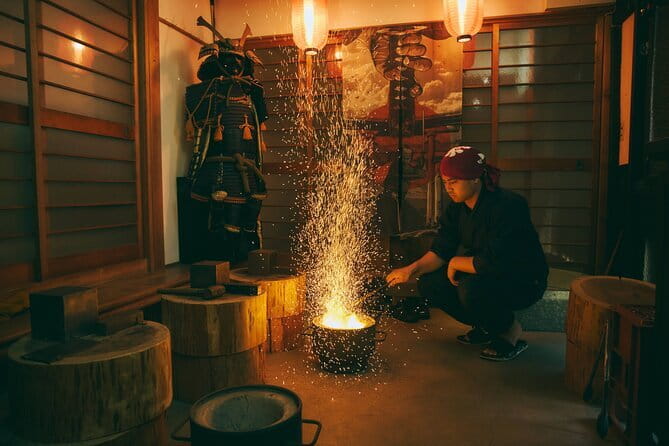
- Actual hot-forging is part of the process: the steel goes into an ~800°C furnace, then gets hammered
- You refine with real tools: including a professional belt sander to sharpen and finish the metal
- Personalization is built in: you pick a kanji character for the engraving
- You finish it like a tool: blackening solution for a dark look, then a final polish
- Small-group feel: limited to a maximum of 25 people
Kyoto Ninja Weapon Forging: What You’re Really Signing Up For
This isn’t a quick souvenir stop where you stamp your name and call it a day. You’re doing a compact craft journey where each step changes the metal in a way you can see. From the moment you suit up, the pace nudges you into “apprentice mode,” not “tour mode.”
You’ll start with the ninja-craft look—samue (traditional blacksmith/workwear), plus a tenugui head wrap. Then comes the fun part: choosing a weapon shape and forging it through the key phases that metalworkers actually care about. Heat, impact, shaping, sharpening, engraving, blackening, polish. The group stays organized, and the staff keep the energy up (and yes, you’ll likely end up taking your photo at several points along the way).
At about 2.5 hours total, you get a full experience arc without it eating half your day. And because it’s Kyoto, this fits nicely alongside morning temples or an afternoon stroll—just plan your schedule so you don’t rush afterward. You’ll be tired in a satisfying way, not the “I sat on a bus all morning” kind of tired.
Pick up the blade again with these Kyoto sessions
Suiting Up as a Craftsman: Samue, Tenugui, and the Ninja Training Mood
The workshop starts with dressing the part. You change into samue, the traditional blacksmith uniform, and wrap a tenugui around your head. It’s simple, but it matters. The moment you’re in uniform, you stop thinking of it as a casual class and start treating it like an apprenticeship.
This also helps with safety and flow. Staff can guide everyone more easily when everyone is dressed consistently, and you’re less likely to fidget with clothes or sleeves near tools.
One practical note: plan to arrive a little early so you can change without stress. If you show up at the exact minute, your timeline will feel tight. Also, bring a neutral mindset. You’re not supposed to already know what you’re doing—and you don’t need to.
Choosing Your Weapon: Shuriken Styles and the Kunai Option
You’ll pick what you’re making from the available shapes—three shuriken styles, or one kunai. The workshop design is good here: you get a choice, but the process stays coherent for the group.
If you’re the kind of traveler who loves variety, shuriken is the obvious choice because it’s instantly recognizable as “ninja.” If you want something with a more personal, tool-like feel, the kunai is a great pick. Either way, you’ll end up with a custom engraved piece at the end, so your weapon won’t feel mass-produced.
Pricing can vary depending on which option you choose. One guest specifically mentioned paying an extra 3,000 yen for choosing the kunai. So if you’re comparing costs, confirm what’s included for your exact weapon choice when you book.
The Furnace Step: Where Your Ninja Weapon Starts to Look Real
This is the core moment. You heat your piece in an ~800°C furnace, then hammer the glowing steel. You’ll see the sparks, you’ll feel the heat, and you’ll understand why forging is more than “smashing metal.” It’s shaping structure, not just changing a form.
Even if you’re not “a hands-on person,” this step is usually the highlight for a reason: it turns the workshop from a craft activity into a story you can tell later. You’ll also get direct guidance while you work, so you’re not left figuring it out alone.
Safety matters here. The staff are actively instructing and keeping things under control. And because the class is designed for beginners, the workflow doesn’t assume you’re already comfortable with metal tools.
Refining and Sharpening: Belt Sander Work (Yes, It’s Satisfying)

After forging, the piece still isn’t “finished.” You’ll shape and sharpen it using a professional belt sander. This is where the weapon starts looking like the one you imagined when you pictured ninja tools.
This part is also where you’ll feel the difference between doing it and admiring it. The metal removal is quick, and the result is visible fast. It’s the step where you can really personalize your feel—how smooth you want it, how crisp you want the edges to appear.
If you’re someone who likes clear instructions, this is a good moment to speak up if something feels unclear. One critique from a small number of people is that some directions can feel vague at times. When that happens, ask the instructor to confirm what “good” looks like on your specific piece.






Kanji Engraving: Making It Yours, Not Just Handmade
Once the metal shape is set, you choose a kanji character for engraving. The staff engrave it with precision, and this is a big part of why the finished souvenir feels special.
It’s personal in a way that a pre-printed “ninja” keychain can’t touch. Even if the weapon is for display, your name/character choice makes it yours. And since this is part of the guided workflow, you’re not worrying about tools you don’t have or mistakes that ruin the project.
This is also one of the best “memory anchors” during the experience. People tend to remember the engraving moment because it happens close to the finish line.
The Ninja Knowledge Session: History With Context, Not Trivia
Between craft steps, you’ll get a ninja knowledge session. Expect history and explanations tied to ninja weapons and their purposes, plus hints about secret techniques.
The value here is that it connects the physical process to the story. You’re not making a shuriken just because it’s cool—you’re hearing why certain shapes mattered and what they were used for (at least in the broad historical sense the workshop covers). It makes your finished object feel less random and more meaningful.
Blackening and Final Polish: The Authentic Dark Finish
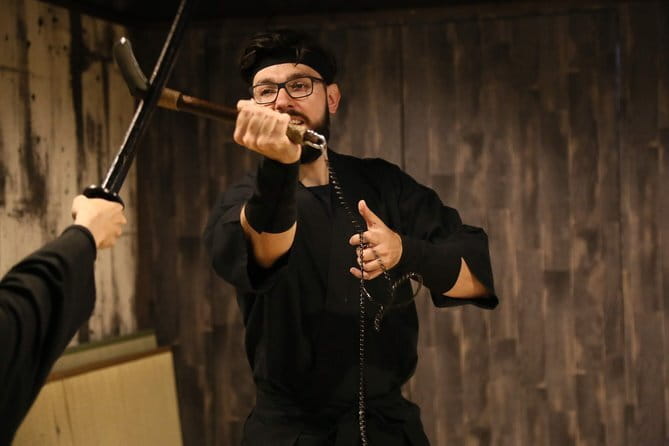
When your shape and engraving are done, you’ll apply a special solution to protect the metal and give it a dark, authentic finish. Then there’s final polishing to bring back shine.
This sequence matters. Without blackening, the piece can look unfinished or raw. With blackening, you get that “tool look” that feels closer to what people expect from a proper ninja weapon display.
Finally, the polish adds contrast. It’s the step that makes your souvenir look intentional, not like a project still drying in the background.
What You Take Home: Storage Box, Bag, and Checked-Baggage Friendly Craft
You get prep for travel: the included clean box and bag are made so your weapon can travel with you afterward. One guest specifically mentioned packing their kunai in checked baggage and bringing it home safely.
That’s a big practical win. A lot of workshops create souvenirs that are awkward to carry. Here, you’re leaving with packaging designed for the object.
Also, remember this is not a flimsy craft. You’re taking home metal you made through heat and shaping. Treat it like a real keepsake, and consider wrapping the box bag carefully inside your luggage so nothing scrapes against it.
Price and Value in Kyoto: Is $151.92 Worth It?
At $151.92 per person (with a mobile ticket), the price isn’t bargain-bin. But value comes from the fact that you truly do the core work: forging in an ~800°C furnace, hammering, shaping, sharpening, engraving, blackening, and polishing. You’re also leaving with a finished weapon, not just a photo.
The small-group cap (up to 25) matters for value too. It’s not guaranteed to feel private, but it reduces the “factory line” feeling. Still, one review raised a concern that the experience felt pricey for what it was, with limited explanation and minimal hands-on time. That’s the only real red flag in the feedback you provided.
My practical take: if you want a hands-on craft souvenir plus a short history story, this is a strong buy. If you mainly want something watch-and-leave, look elsewhere. This workshop rewards people who like doing the work and asking questions.
Getting There: Off the Beaten Path Means Plan Your Route
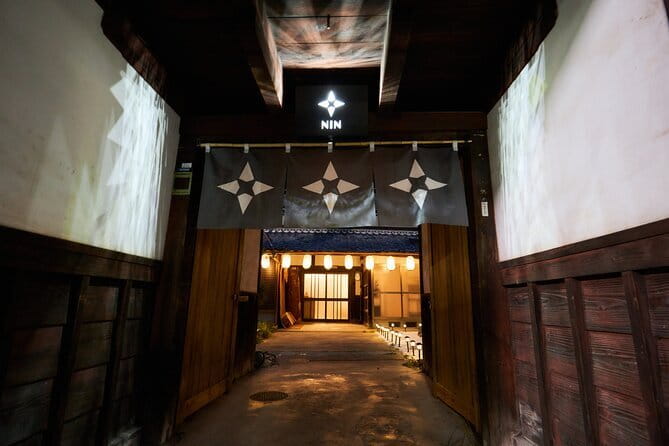
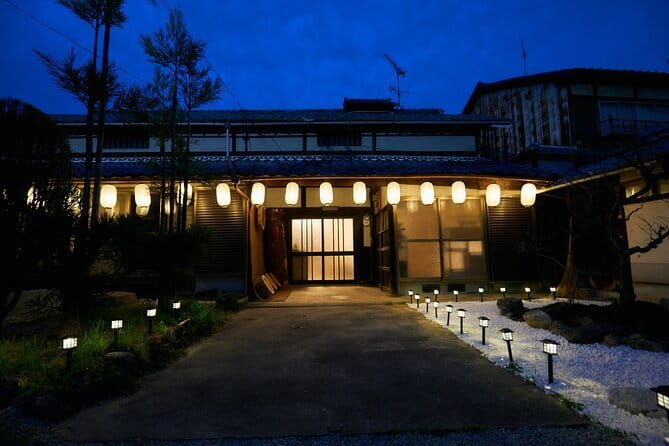
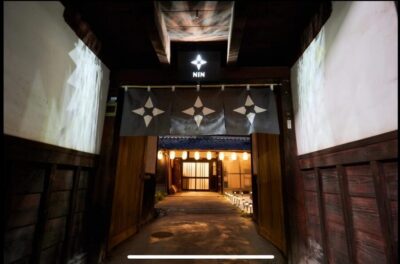
The meeting point is studio NIN at:
Studio NIN, 八瀬168-1 Yasenosechō, Sakyo Ward, Kyoto, 601-1254, Japan
It’s near public transportation, but it’s also described as off the beaten path. I’d treat that as a gentle warning: give yourself extra time. One guest recommended being ready with a taxi app if you don’t want to navigate last-mile routes.
If your plan involves multiple Kyoto stops that day, don’t schedule this like a last-minute hop. Instead, anchor it. Arrive early enough to settle in, suit up, and start strong.
Who This Is Best For (and Who Might Hesitate)
This experience fits well if you:
- want a real handmade metal souvenir you can actually display
- enjoy active workshops more than passive sightseeing
- like Japanese culture tied to specific objects and techniques
- are traveling with teens or adults who enjoy learning by doing
You should be comfortable with a moderate level of physical activity since you’ll be working with tools and standing for most of the session.
It may be less ideal if:
- you hate any physical work, even guided work
- you need very detailed step-by-step directions at every second
- you want a long, deep historical tour rather than a craft-focused session
Should You Book the Ninja Weapon Forging Workshop?
If you’re in Kyoto and you want one memorable “I made that” activity, I’d book it. The best part is the combination: real forging steps, a chance to shape and sharpen, and personalization through kanji engraving—then blackening and polish to finish it like a tool. Add the energetic, friendly staff and the small-group size, and you’ve got a high-success workshop.
My advice: come curious, show up a bit early for the off-the-beaten-path location, and don’t be shy about asking when instructions feel unclear. For the right traveler, it’s one of the most distinctive souvenirs you’ll ever bring home from Kyoto.
FAQ
Do I need any prior experience to make a ninja weapon?
No experience is required. Skilled craftsmen teach you step by step, including how to heat and hammer the steel and how to shape, sharpen, engrave, blacken, and polish the finished piece.
How long is the ninja weapon forging experience in Kyoto?
It runs about 2 hours 30 minutes (approximately).
Where is the meeting point, and where does the tour end?
You meet at studio NIN, 八瀬168-1 Yasenosechō, Sakyo Ward, Kyoto, 601-1254, Japan. The experience ends back at the meeting point.
Is transportation included?
No. Private transportation is not included.
What do I receive to take the weapon home?
You’ll have a clean box and bag provided for your weapon. Specialized tools are rented during the workshop, and you also receive craftsmen uniforms to wear during the experience.
Can I cancel for a full refund?
Yes. Free cancellation is offered up to 24 hours in advance for a full refund. If you cancel less than 24 hours before the experience starts, the amount paid is not refunded.
More Tour Reviews in Kyoto
More Samurai and Ninja Sessions

Just added: more Kyoto tours to browse








Kyoto Samurai & Ninja Experiences, compared.
 ★ 5.0Kyoto Samurai ExperienceFrom $1191,294 reviews
 ★ 4.9Kendo and Samurai Experience with Uniform and GearFrom $103815 reviews
 ★ 4.9Samurai Sword Class by Experts in Traditional ArtsFrom $64657 reviews
 ★ 4.5Skip the lines Basic Ticket at SAMURAI NINJA MUSEUM KYOTOFrom $28632 reviews
 ★ 5.0Ninja 1-hour Hands-on Lesson by Japanese master in Kyoto -EntryFrom $80489 reviews
 ★ 4.8Ninja Weapon Forging ExperienceFrom $148478 reviews
 ★ 4.5Samurai Kenbu Traditional Sword Dancing ShowFrom $32426 reviews
 ★ 5.0Samurai Training with Modern day Musashi in KyotoFrom $132256 reviews
Browse the lists this tour appears in