
Reviewed · KYOTO COOKING CLASSES
Authentic Japanese Cooking Experience at Izakaya restaurant
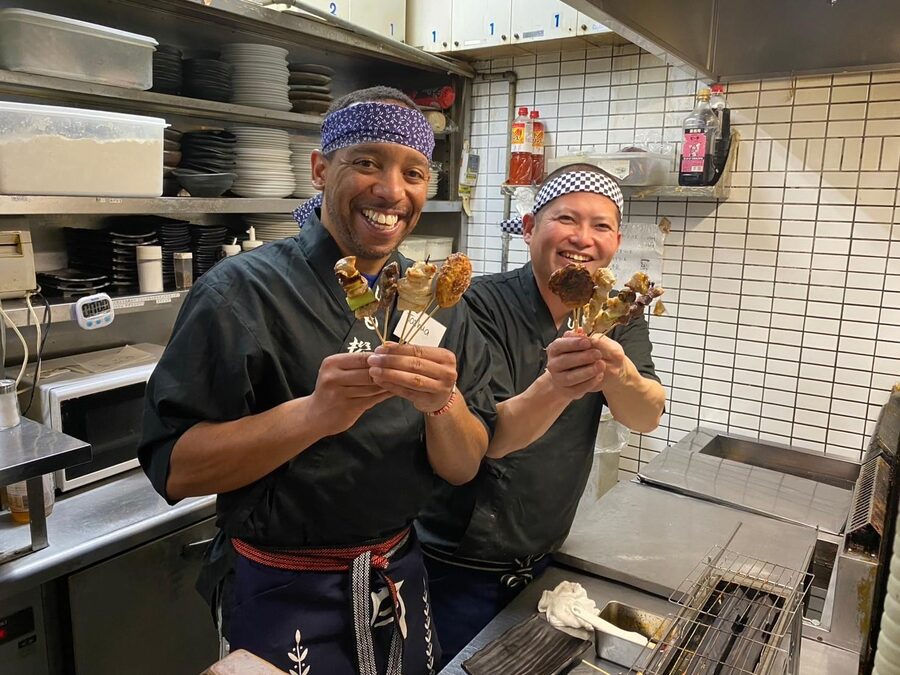
Kyoto smells like grilled chicken and omelet. This hands-on izakaya-style cooking class is fun because you shape onigiri and grill yakitori yourself. I also like that you leave with a practical set of skills, not just a plate of food, but the one-and-a-half-hour format means you won’t turn into a full-time Japanese home cook by the end.
What makes it a good value is the setup: an English-capable instructor guides you through the dishes, and the group stays small (up to 8), so you can actually ask questions and get help while you’re cooking. One practical consideration: transportation isn’t included, so you’ll want to budget time to get to the Kyoto Kiyamachi area near Sanjo Station.
In This Review
- Key points to know before you book
- A Kyoto izakaya class, built for doing—not watching
- Why the small group matters
- Where you’ll meet in Kyoto (and why it’s convenient)
- Part 1: Getting started with the hands-on “izakaya” rhythm
- The languages you’ll rely on
- Part 2: Dashi-maki tamago (rolled omelet) and the real skill behind it
- What you’re actually learning
- A note to consider
- Part 3: Yakitori grilling—skewers, sauce, and control
- Why yakitori is a smart choice for a class
- Dietary fit
- Part 4: Onigiri shaping with fillings (the tactile part)
- What I like about learning onigiri in a class
- The meal: eat what you made
- What’s included (and where you might spend extra)
- Price and value: is $139 per person worth it?
- Who this course is best for
- Dietary options: vegetarian, vegan, and Muslim-friendly
- Practical tips to enjoy the class more
- Should you book Izakaya Factory in Kyoto?
- FAQ
- Where is the meeting point for this cooking experience?
- How long is the class?
- What dishes will I learn to make?
- Is the class suitable for beginners?
- What’s included in the price?
- Are there dietary-friendly options?
Key points to know before you book
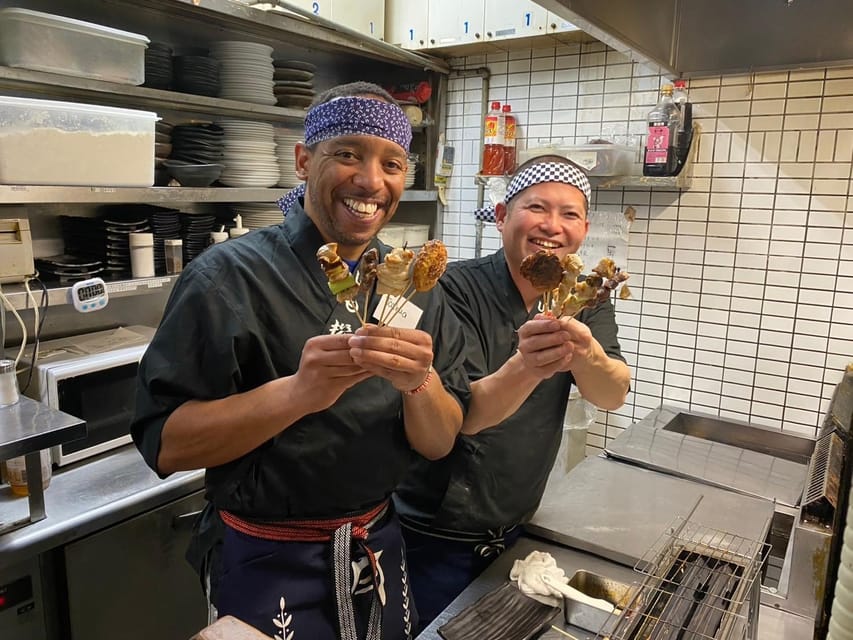
- Small group (max 8) for more hands-on coaching while you cook.
- Three classic skills: yakitori grilling, onigiri shaping with fillings, and dashi-maki tamago rolled omelet.
- Dietary-friendly course options including vegetarian, vegan, and Muslim-friendly formats (no pork, no alcohol, and halal meat handling per the course).
- One soft drink and a take-home bandana included with the class.
- English/Japanese instruction so you’re not stuck guessing what to do with your hands on a hot station.
- One meeting point in Kyoto with a short walk from Sanjo-area stations.
A Kyoto izakaya class, built for doing—not watching
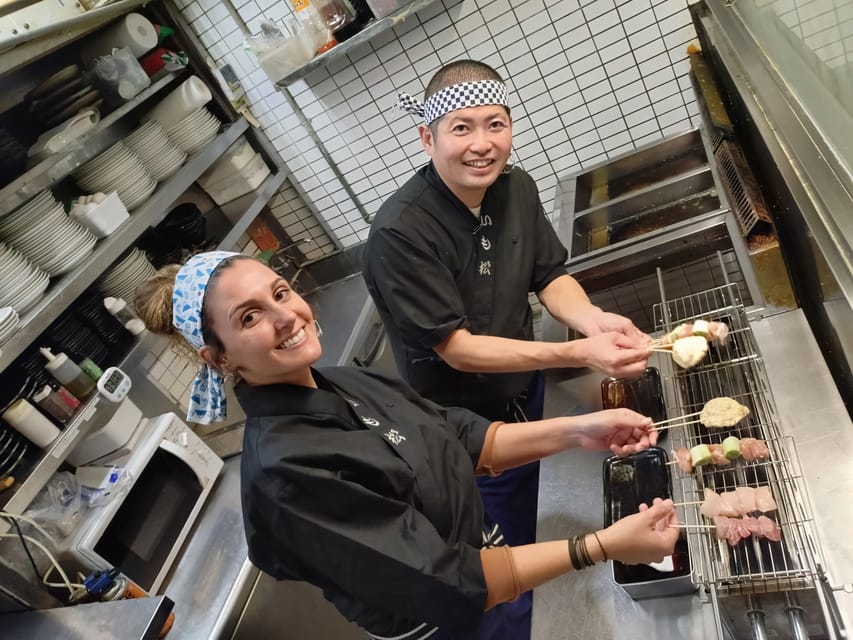
This experience is set up like a working izakaya session, with a focus on technique you can repeat at home. The big payoff is that you’re not just sampling Japanese food—you’re making three crowd-pleasers that show up in real izakaya meals: yakitori, onigiri, and dashi-maki tamago.
If you like food where the details matter—rice texture, omelet doneness, skewer grilling—this class fits your style. And if you’re brand new in the kitchen, it still works because the format is hands-on and guided, not show-and-tell.
One more round in Kyoto's izakaya and back lanes



Why the small group matters
The class is limited to 8 participants. That’s a sweet spot: big enough that it feels lively, small enough that you’re not waiting your turn for every question. In at least one case, a couple had the class nearly to themselves, which helped with more direct attention and time to practice.
Where you’ll meet in Kyoto (and why it’s convenient)
The meeting point is at Imomatsu – Kyoto Kiyamachi, in the Dai Roku Kanko Biru B1F area (address listed as Imomatsu – Kyoto Kiyamachi). It’s a short walk from:
- Keihan Sanjo Station (about 5 minutes)
- Hankyu Kawaramachi Station (about 7 minutes)
- And it’s described as about 234 meters from Sanjo Station
What this means for you: you can pair this with other nearby Kyoto plans without hauling across town. You’ll want to build in a few minutes to locate the building entrance before class time, since it’s a basement level and easy to miss if you’re moving quickly.
Part 1: Getting started with the hands-on “izakaya” rhythm
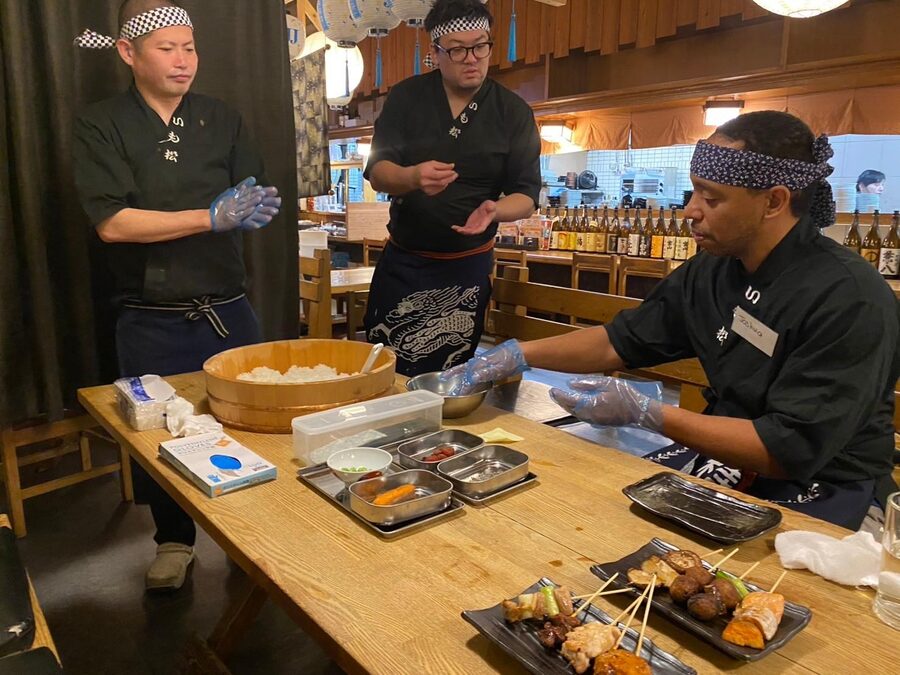
At the start, you’ll be working in a guided environment with cooking tools, ingredients, and an English-capable instructor. The important detail here is that the class is designed for multiple skill levels, so you don’t need any special background to feel comfortable.
You’ll also be given a bandana souvenir included in the experience. It’s a small thing, but it matches the theme and makes it feel like more than a standard cooking class.
The languages you’ll rely on
Instruction is available in English and Japanese. That matters when you’re learning technique you can’t fully “read” off a screen—like how to shape onigiri firmly enough to hold together, or how to manage heat for omelet rolling.
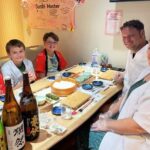
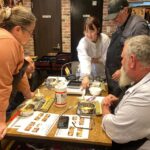
Roll up your sleeves for another Kyoto cooking class


Part 2: Dashi-maki tamago (rolled omelet) and the real skill behind it
One of the highlights is making dashi-maki tamago, a classic rolled omelet flavored with dashi. This dish looks simple when it’s done well. The training wheels part is the method: you learn how to get a fluffy, sliceable roll using the right approach while you cook.
A helpful detail from the experience’s feedback: an instructor (referred to as Izakaya Master in one account) made the process look easy. That’s exactly what you want from a class like this—clear cues that help you stop overthinking the technique.
What you’re actually learning
Even without fancy equipment at home, dashi-maki tamago teaches you three practical kitchen lessons:
- Heat control so the omelet sets rather than toughens
- A repeatable rolling rhythm
- Timing for consistent layers so the slices look clean
You’ll feel proud when you cut it, because this is the kind of dish where small mistakes are obvious.
A note to consider
One participant mentioned hoping a special frying pan came with the experience. The class listing says all tools are provided, but it doesn’t confirm whether a specific pan type is included. If you’re the type who likes to recreate dishes exactly, it’s worth asking your instructor what equipment you’ll be using and what (if anything) is special about it.
Part 3: Yakitori grilling—skewers, sauce, and control
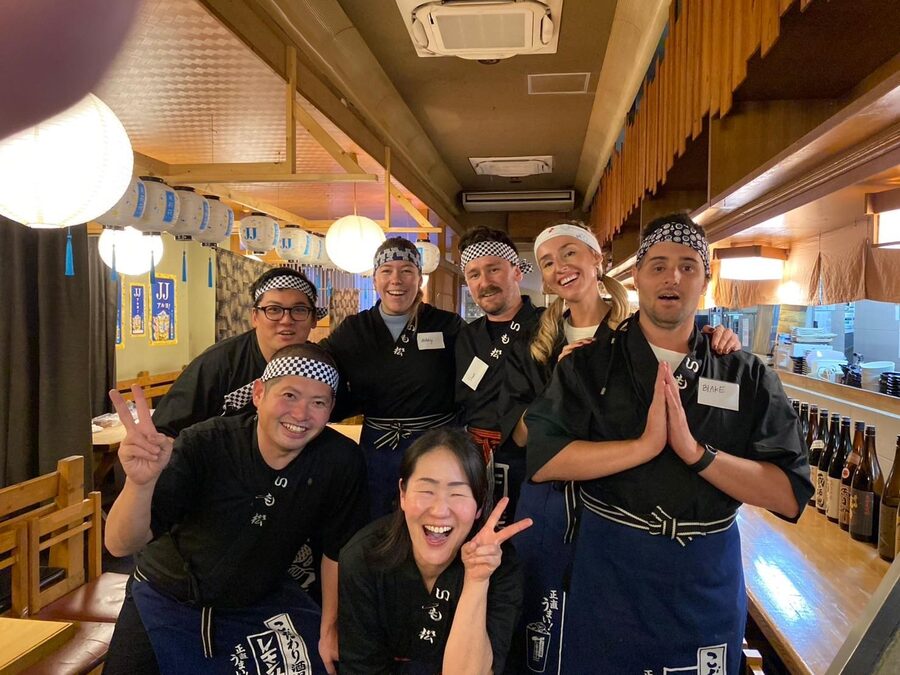
Next up is grilling yakitori, savory skewered chicken done in an izakaya style. This is one of the dishes that feels instantly familiar even if you’ve never cooked Japanese before. You’ll be working directly with skewers and grilling technique, which is where the class turns into real skill.
Why yakitori is a smart choice for a class
Yakitori is forgiving compared to dishes that depend on complex sauces or strict temperatures. You can learn a lot quickly: how to handle the skewer, how to watch doneness, and how grilling timing changes as the surface browns.
If you’ve ever eaten yakitori and thought, I want to understand why it tastes like that, this is your answer. You’ll get hands-on with the part you can’t fake at home: heat, timing, and turning/handling.
Dietary fit
If you’re taking a vegetarian or vegan course, you should pick the option that matches your needs. The experience notes that vegetarian, vegan, and Muslim-friendly courses are available, designed to avoid pork and alcohol. The core point: you shouldn’t have to sit out because the theme is “izakaya.”
Part 4: Onigiri shaping with fillings (the tactile part)
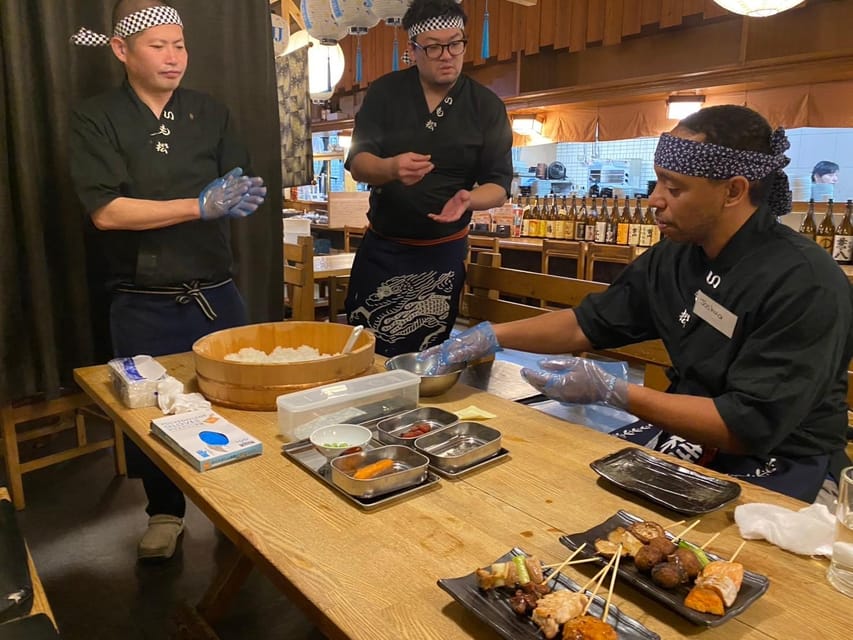
The onigiri station is where Japanese home cooking becomes physical. You’ll learn to shape onigiri—rice balls with fillings—using the right pressure and form.
This is more than a cute craft activity. Proper onigiri shaping affects everything:
- How it holds together
- How the rice texture feels when you bite into it
- How much filling you can manage without spilling
What I like about learning onigiri in a class
Onigiri is easy to mess up alone at home. Too much pressure makes it dense. Too little and it falls apart. A guided class gives you a chance to learn the “middle” that works with the rice texture you’re using that day.
Also, having different filling options matters. It gives you ideas for customizing at home—like using flavors that match what you already enjoy in Japanese cuisine.
The meal: eat what you made
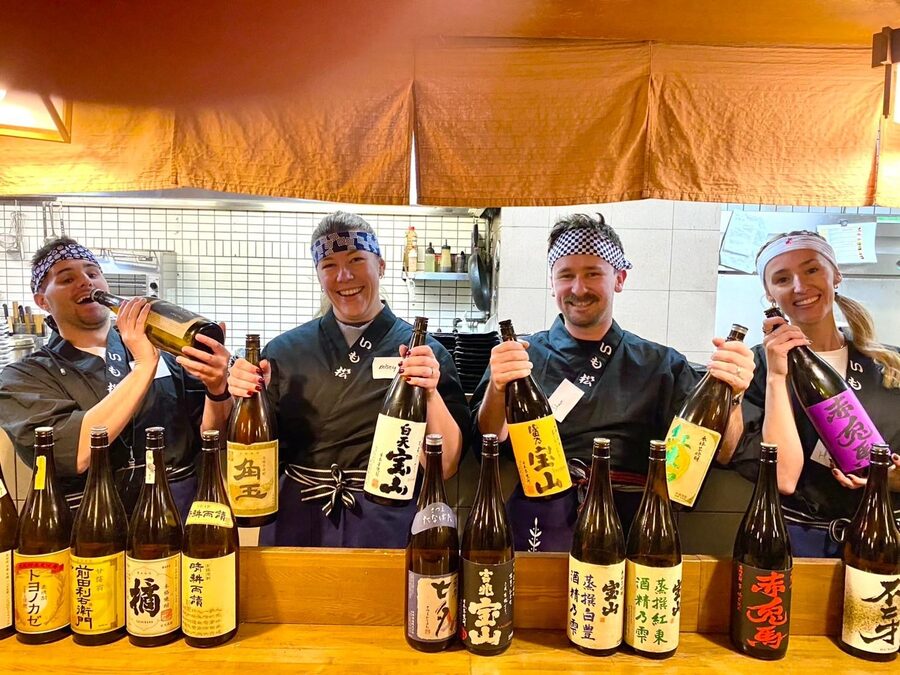
After you prepare your dishes, you get to sit down and enjoy the meal. For me, the best cooking classes end with tasting your own work while it’s still fresh and you can connect the steps to the flavor.
The class includes one soft drink, so you can cool down and enjoy the results without worrying about finding a beverage.
What’s included (and where you might spend extra)
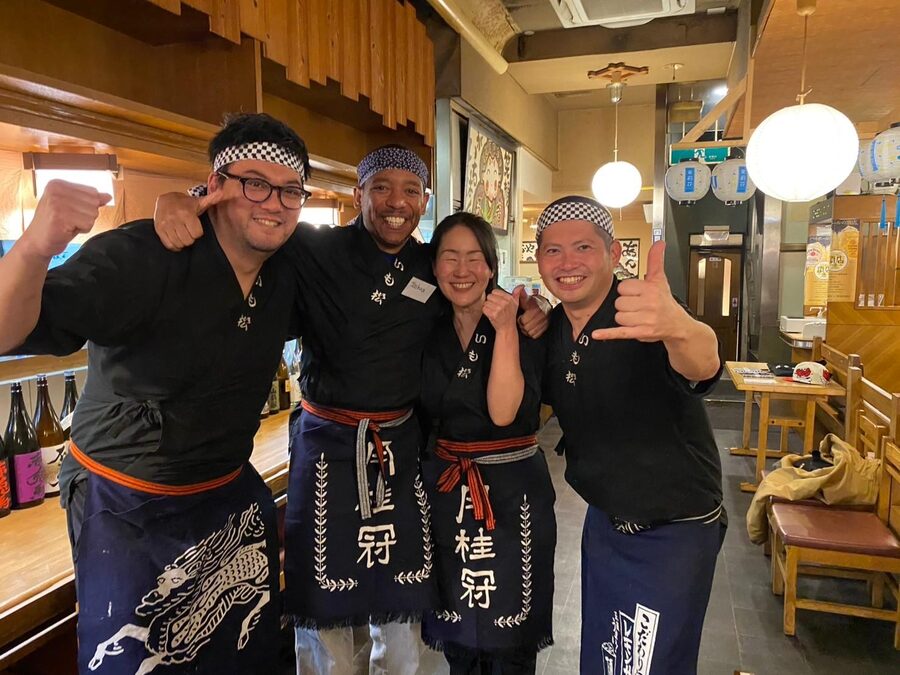
Included in the price:
- All ingredients and cooking tools
- One soft drink
- Bandana souvenir
- English-speaking instructor
Not included:
- Transportation expenses to and from the venue
That last point sounds obvious, but in Kyoto it changes the math. If you’re staying near Sanjo/Kawaramachi, you’re in good shape. If you’re farther out, factor in your ride time and transit cost so the total stays fair.
Price and value: is $139 per person worth it?
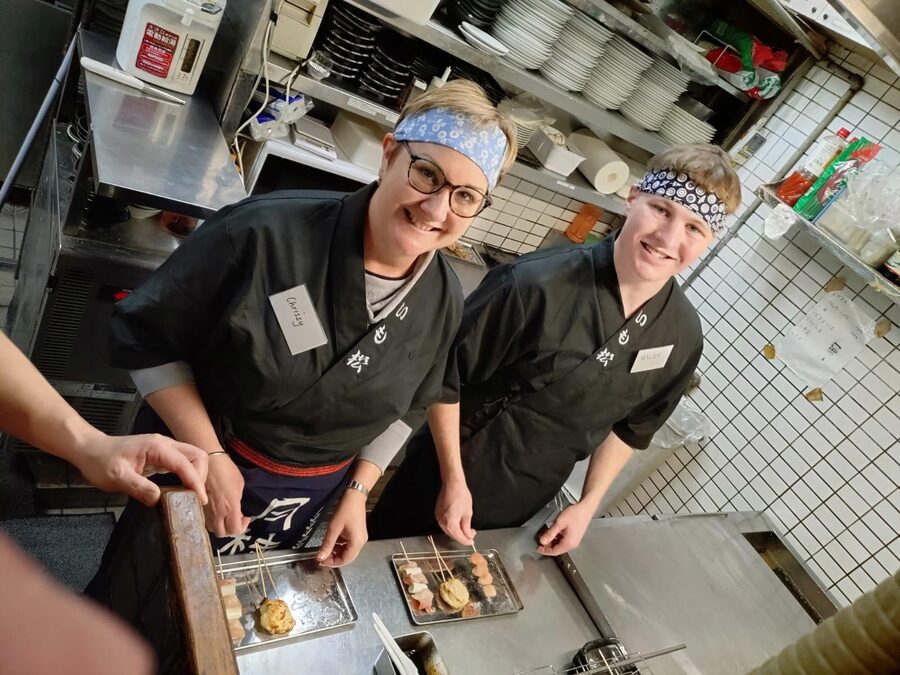
At $139 per person, this isn’t a bargain-basement activity. But it also isn’t just a meal. You’re paying for:
- A small-group hands-on class (max 8)
- Cooking tools and ingredients provided
- English/Japanese instruction
- Three skill-focused dishes, followed by a meal
- A take-home souvenir (the bandana)
- A soft drink included
For many people, the value comes from skill transfer. If you like Japanese cooking and will try making any of these at home again, the cost starts to feel more reasonable than it would for a simple tasting.
If you’re the type who wants lots of time per dish, you might find 1.5 hours a bit tight. Still, that duration also helps keep it approachable for beginners and fits easily into a busy Kyoto day.
Who this course is best for
This is a good match if you:
- Want hands-on instruction rather than a food tour where you only watch
- Like izakaya-style comfort food and want to recreate it
- Enjoy learning rice and omelet techniques, not only noodles and sushi
- Travel with a partner or small group and want a shared activity
It may be less ideal if you:
- Want a long, in-depth cooking workshop over half a day
- Expect a lot of sightseeing beyond the meeting point area (this is focused on cooking)
Dietary options: vegetarian, vegan, and Muslim-friendly
One standout practical benefit is that there are vegetarian, vegan, and Muslim-friendly courses. The course information says the setups ensure no pork, no alcohol, and halal meat is handled per the course terms.
Why this matters in real life: it removes a lot of the guesswork. You can book with more confidence that your meal won’t get derailed by hidden ingredients or alcohol-based cooking steps.
If you have dietary needs, choose the correct course option when you reserve, and make sure the dietary requirement is clearly selected for your booking.
Practical tips to enjoy the class more
- Go a few minutes early so you can settle in without stress. It’s a short walk, but it’s a basement venue.
- Dress comfortably. You’ll be working with hands-on cooking stations for the full 1.5 hours.
- If you’re curious about equipment (like the frying setup used for omelets), ask your instructor during the class. One participant specifically wondered about a special pan, which tells me people care about replicating results.
- If you’re coming from a day of walking, plan a calmer evening afterward. Cooking takes energy, even when it’s fun.
Should you book Izakaya Factory in Kyoto?
Book it if you want a hands-on Kyoto experience that teaches you three dishes you’ll actually eat again at home: rolled omelet, onigiri, and yakitori. The small group size (up to 8), English/Japanese instruction, and clear dietary-friendly options make it easier to feel comfortable and included.
Skip it if you’re expecting a big, full-day cooking immersion or a tour that doubles as sightseeing. This is purpose-built for cooking and eating, in about 1.5 hours, with a meet-up point near Sanjo/Kawaramachi.
If your goal is practical skills, good guidance, and a take-home memory (bandana included), this is the kind of class that earns a spot on your Kyoto list.
FAQ
Where is the meeting point for this cooking experience?
The activity meets at Imomatsu – Kyoto Kiyamachi, Japan, in the Dai Roku Kanko Biru B1F (KYoto, Nakagyo Ward). It’s about a 5-minute walk from Keihan Sanjo Station and about a 7-minute walk from Hankyu Kawaramachi Station.
How long is the class?
The duration is 1.5 hours. Starting times depend on availability.
What dishes will I learn to make?
You’ll learn to grill yakitori, shape onigiri with fillings, and make dashi-maki tamago (rolled omelet).
Is the class suitable for beginners?
Yes. The experience is described as suitable for all skill levels.
What’s included in the price?
Included are all ingredients and cooking tools, one soft drink, a bandana souvenir, and an English-speaking instructor.
Are there dietary-friendly options?
Yes. Vegetarian, vegan, and Muslim-friendly courses are available, designed to ensure no pork, alcohol, or halal meat is used according to the course terms.
More Tour Reviews in Kyoto


More Kyoto Cooking Classes
More Kyoto Nights Out

Just added: more Kyoto tours to browse



Kyoto Cooking Classes, compared.
 ★ 5.0Ramen Cooking Class at Ramen Factory in KyotoFrom $1311,937 reviews
 ★ 5.0Sushi Making in Kyoto! Same-day bookings welcome!From $53713 reviews
 ★ 4.9Ramen Cooking Class at a Ramen Factory with SouvenirFrom $127532 reviews
 ★ 5.0Ramen, Gyoza, and Onigiri Cooking ClassFrom $90445 reviews
 ★ 5.0The Original Small-Group Sushi Making Class in KyotoFrom $69436 reviews
 ★ 5.0Japanese Washoku Bento Small Group Cooking ClassFrom $58380 reviews
 ★ 5.0Kyoto Ramen and Gyoza Cooking Class with Professional ChefsFrom $86282 reviews
 ★ 4.9Afternoon Japanese Izakaya Cooking ClassFrom $67241 reviews
Browse the lists this tour appears in