
Reviewed · KYOTO SAMURAI & NINJA EXPERIENCES
Ancient Katana Training in Kyoto with Local Students
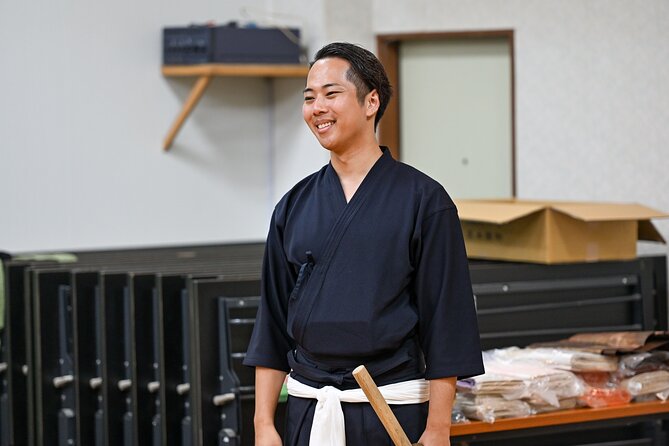
A real katana lesson in Kyoto. This is a working class in the Kyoto Branch of Asayama Ichiden Ryu Hyōhō, a 400-year-old kobudo tradition, taught by Shogo sensei with actual dojo members. I like that the focus is on Iaijutsu quick-draw fundamentals and Reihō etiquette, not performance swordplay.
One important catch: this is not a tourist class. There’s a general rule that they don’t take participants with no prior budo experience, though you can contact them for a consultation if you’re determined.
In This Review
- Key things to know before you train
- Entering the Kyoto dojo: what this training is really like
- What you actually train: Reihō, Iaijutsu, Kenjutsu
- Reihō etiquette: the unseen half of sword skill
- Iaijutsu: quick-draw fundamentals with bokutō
- Kenjutsu: swordsmanship work after the draw
- The tradition behind it: Asayama Ichiden Ryū Hyōhō, 400 years later
- Your instructor, Shogo sensei: how instruction works in a mixed-language setting
- Equipment and comfort: bokutō, and what to do if you have nothing
- Where to meet at 6:30 pm in Honmachi, Higashiyama
- Price and value: $45.61 for 3 hours of real instruction
- Who should book this (and who should think twice)
- Perfect fit if you…
- Think twice (or contact them first) if you…
- Practical expectations: what to do with zero experience nerves
- Quick self-check: should you book this training in Kyoto?
- FAQ
- How long is the Ancient Katana Training session?
- What time does the class start in Kyoto?
- Where is the meeting point?
- What is the price per person?
- Do I need prior budo experience?
- What do you practice during the session?
- What is the group size?
Key things to know before you train
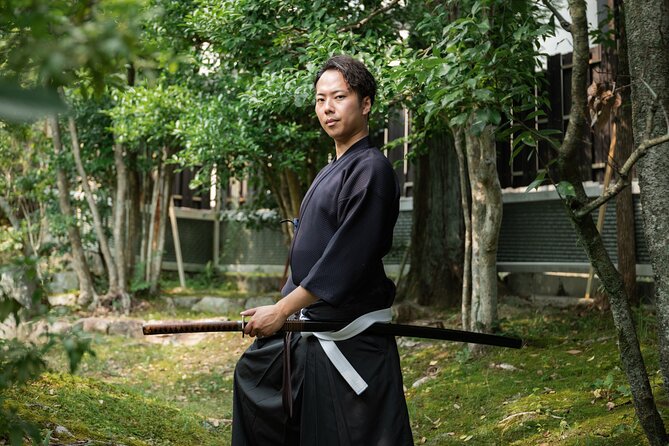
- Real dojo setting in Kyoto: You practice with Shogo sensei and regular local students, not solo photos-with-a-sword.
- Iaijutsu and Kenjutsu basics: Expect structured work on quick-draw and swordsmanship using bokutō.
- Small group size: Maximum of 4 travelers, which helps the instructor tailor cues to your level.
- Multi-weapon tradition, sword-first training: The system includes other arts, but your session centers on katana work.
- English and Japanese instruction: Shogo sensei is comfortable teaching in both languages.
Entering the Kyoto dojo: what this training is really like
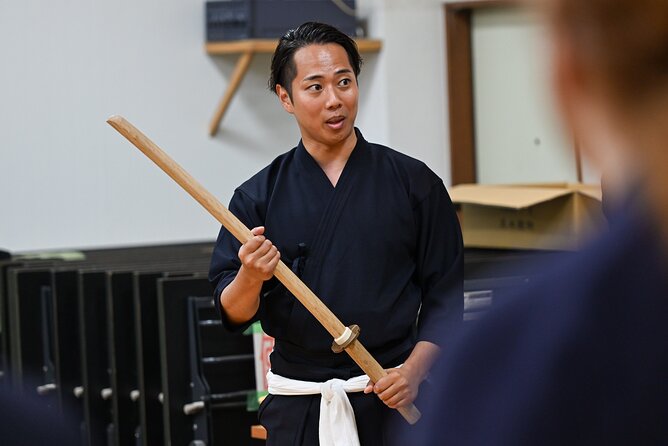
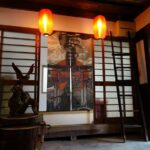
Kyoto has plenty of “samurai experiences.” This one is different because it’s built like training, not like a show. You’re joining the regular practice of a kobudo branch connected to Asayama Ichiden Ryu Hyōhō, a classical tradition that’s still active today.
The vibe matters here. A genuine martial arts class has routines: how you enter, how you hold yourself, how you pay attention when you’re not the one demonstrating. That’s why Reihō etiquette is a named part of the session, not a side note. You’ll quickly see that discipline is the product. The sword is just the tool.
Also, the class is small. Maximum group size is 4 travelers, so you’re less likely to feel like you’re being rushed through. In a small setting, corrections land better, and you can ask questions without losing your spot.
Pick up the blade again with these Kyoto sessions
What you actually train: Reihō, Iaijutsu, Kenjutsu
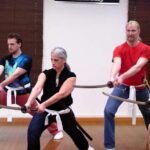
Your session centers on three big blocks: Reihō etiquette, then Iaijutsu, then Kenjutsu. They’re connected, but each one has a different purpose.
Reihō etiquette: the unseen half of sword skill
This isn’t about manners for show. Reihō is about readiness—how you behave before movement, how you transition, how you respect the space and timing of the dojo. Even if you don’t know the terminology yet, you’ll feel the logic: when everyone’s posture and attention match, technique becomes cleaner.
In practice, this can also change how safe you feel. You’re not learning “fight scenes.” You’re learning a controlled system with rules you can understand and follow.
Iaijutsu: quick-draw fundamentals with bokutō
Iaijutsu is quick-draw technique. In plain terms, it’s the art of moving from stillness to action with precision. The session uses bokutō (wooden swords), which is exactly what you want for learning mechanics without worrying about blade contact.
If you’re used to “sword demos,” you might expect fireworks. Instead, focus is on crisp movements and clean starts. This is where small corrections matter a lot, because a tiny delay can throw off everything.
Kenjutsu: swordsmanship work after the draw
Once you’ve practiced the draw mechanics, you move into Kenjutsu, the broader Japanese swordsmanship approach. Here, the class tone shifts from “start perfectly” to “act well through the technique.” You’ll spend time working the sword skills in the dojo rhythm alongside Shogo sensei and other students.
One reason I like this sequence: it respects the learning curve. You start with the transition from calm to action, then you apply it in swordsmanship patterns.





The tradition behind it: Asayama Ichiden Ryū Hyōhō, 400 years later
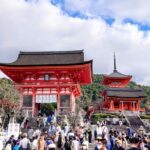
This tradition traces back over 400 years and comes from the world of kobudo practiced in eras when samurai fought in armor. That context isn’t just romantic history; it’s part of why the techniques emphasize discipline, control, and repeatability.
From the system side, this isn’t only a sword-only art. The broader tradition includes kama-jutsu (sickle techniques), bōjutsu (staff), jōjutsu (short staff), tanbōjutsu (short stick), kusarifundōjutsu (chain and weight), and shurikenjutsu (throwing darts). Your specific class is mainly about sword arts, but knowing the system is larger helps you see the seriousness behind the dojo training.
If you’re a katana fan, that’s a bonus. You’re not just getting a single skill. You’re stepping into a living martial culture with a structured curriculum and standards.
Your instructor, Shogo sensei: how instruction works in a mixed-language setting
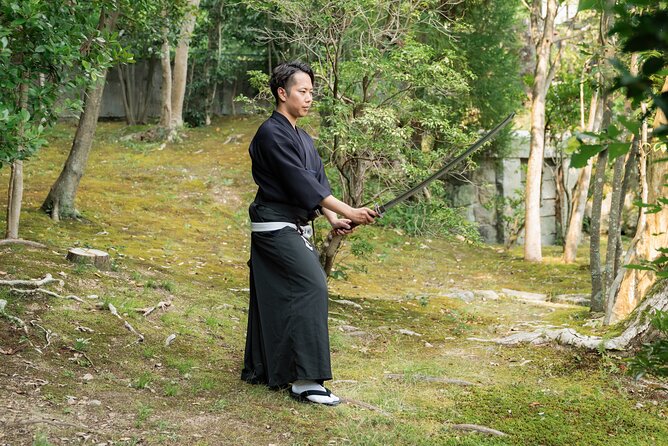
Shogo sensei is the teacher for this Kyoto class, and a big deal is how he communicates. The instruction is available in both English and Japanese, which removes one of the biggest barriers for many foreign students.
The teaching style also seems practical. In past sessions, people described the pacing as well handled and the guidance as clear, with the instructor adjusting when things don’t go right. That matters more than people think. When you’re learning something physical and unfamiliar—especially a traditional sword art—you don’t need “mystique.” You need corrections you can apply immediately.
The class also runs with regular students alongside you. That creates a strong learning environment because you’re not learning in isolation. You’ll likely notice how other members handle posture, timing, and attention in a way that makes your own practice feel less random.
Equipment and comfort: bokutō, and what to do if you have nothing
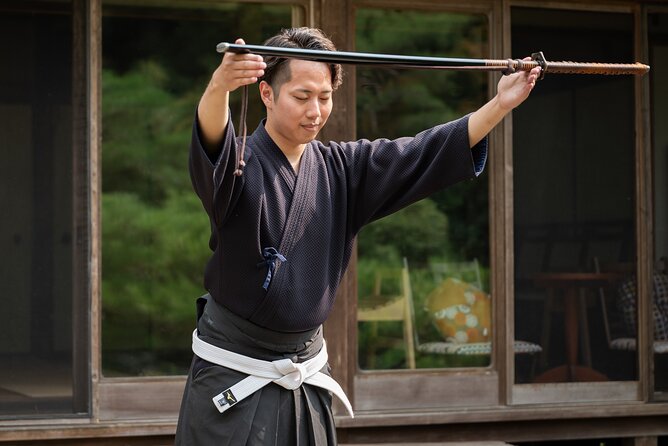
You’ll train with bokutō. That’s explicitly part of the experience, and it’s also the safest and most realistic way to learn mechanics without blade risk.
Even if you don’t bring a sword, the class is set up so you can still participate—Shogo sensei has provided a wooden katana for people who didn’t come with one. So you’re not stuck in the awkward situation of wondering whether you forgot the one essential thing.
What you should plan for is more about your body than your gear. The activity calls for moderate physical fitness. You’ll be doing controlled movements for a few hours, and your legs, core, and shoulders will get attention. Wear clothes that let you move comfortably, and keep your energy steady. The class is at 6:30 pm, so your day can matter—don’t show up wiped out.
Where to meet at 6:30 pm in Honmachi, Higashiyama
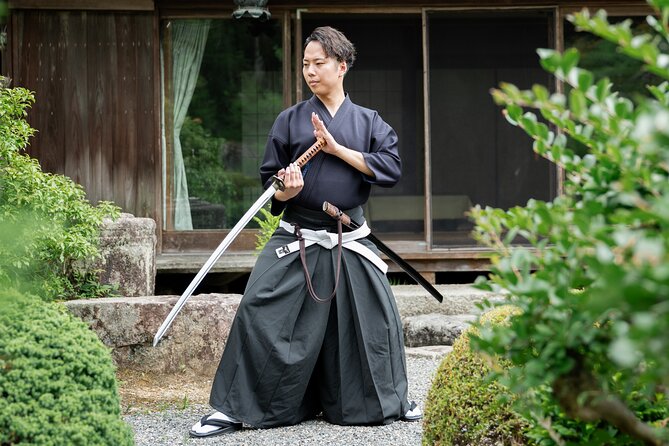
The meeting point is:
7-chōme-27-1 Honmachi, Higashiyama Ward, Kyoto, 605-0981, Japan
Start time: 6:30 pm
The activity ends back at the meeting point.
The good news: it’s near public transportation. That helps because evening sessions in Kyoto can be easier when you’re not relying on long walks.
Your best move is to arrive a bit early. Not because you’re hunting time slots, but because dojo etiquette often starts before you think it does. Get yourself settled, take a breath, and be ready to pay attention.
The ticket is mobile, so you won’t need paper. Still, have your phone charged. Kyoto is great, but low battery turns “simple” into “annoying.”
Price and value: $45.61 for 3 hours of real instruction
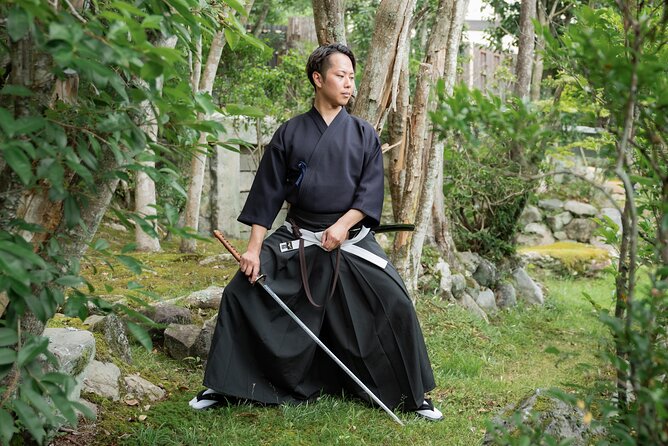
At $45.61 per person for about 3 hours, this can feel like a steal if your goal is authentic training. You’re not just paying for time in a location. You’re paying for guided practice in a dojo setting, with Shogo sensei and regular students.
Value here comes from three things:
- Small group size (max 4), which usually means more attention.
- Actual dojo training with Reihō, Iaijutsu, and Kenjutsu, not a one-off demonstration.
- Equipment and structure around bokutō use and a real tradition.
Could it be pricier than a basic “try a katana” slot? Maybe. But that’s the point. If you want the real mechanics and the discipline side—this is the more satisfying route.
Who should book this (and who should think twice)
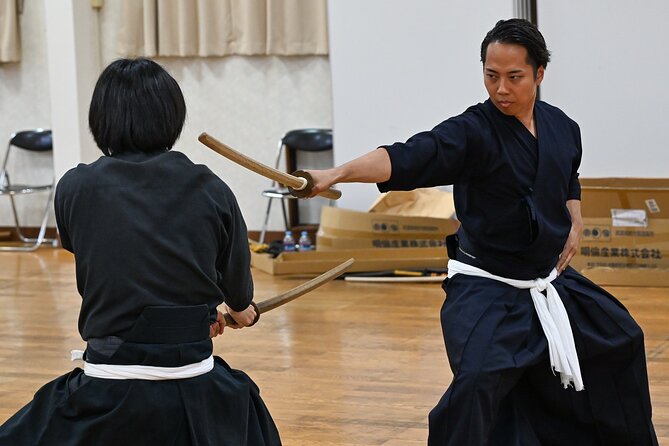
This class is best for people who want more than novelty.
Perfect fit if you…
- Are genuinely interested in iaijutsu or kenjutsu fundamentals
- Like structured practice with feedback
- Prefer learning from someone who can explain in English and Japanese
- Want a smaller, more personal session rather than a big group activity
Think twice (or contact them first) if you…
- Have no prior budo experience. The class has a general rule against taking complete beginners, but they suggest reaching out for consultation if you’re very eager.
- Expect a casual tourist-style sword experience. This is a training session with standards and routines.
That “not a tourist activity” note is really the decision filter. If you’re okay with that, you’ll likely enjoy it more than you expect.
Practical expectations: what to do with zero experience nerves
Even if you’re not a trained budoka, you can prepare your mindset.
First: treat it like class, not like entertainment. The more you follow instructions quickly and with good attention, the more benefit you get. Second: don’t worry about being bad at first. In a traditional martial art, early mistakes are part of the process. You’re not being judged for not knowing. You’re being corrected for not yet knowing.
If you’re concerned about cultural fit, you’ll feel the difference in a welcoming dojo environment with a teacher who communicates clearly. People have described the session as welcoming even for foreign students, and the instruction as forgiving enough to keep you moving forward.
Just bring respect. That alone makes a big difference in dojo settings.
Quick self-check: should you book this training in Kyoto?
Book it if you want to learn real katana basics inside a living tradition, with Shogo sensei guiding you and local students helping set the pace. The small group size and the focus on Reihō, Iaijutsu, and Kenjutsu are the big wins, and the price is sensible for true instruction.
Skip it or contact them first if you’re starting from scratch in budo and you were hoping for a relaxed, first-day-everything experience. The class is serious about readiness. If you match that seriousness, you’ll probably leave with more than cool photos—you’ll leave with a clearer sense of how disciplined sword training actually works.
FAQ
How long is the Ancient Katana Training session?
The training lasts about 3 hours.
What time does the class start in Kyoto?
The session starts at 6:30 pm.
Where is the meeting point?
Meet at 7-chōme-27-1 Honmachi, Higashiyama Ward, Kyoto, 605-0981, Japan. The activity ends back at the meeting point.
What is the price per person?
The price is $45.61 per person.
Do I need prior budo experience?
There is a general rule that they do not accept participants with no prior budo experience. If you are very eager, you can contact them for a consultation.
What do you practice during the session?
You practice Reihō etiquette, Iaijutsu, and Kenjutsu using bokutō (wooden swords).
What is the group size?
The class has a maximum of 4 travelers.
More Tour Reviews in Kyoto
More Samurai and Ninja Sessions

Just added: more Kyoto tours to browse








Kyoto Samurai & Ninja Experiences, compared.
 ★ 5.0Kyoto Samurai ExperienceFrom $1191,294 reviews
 ★ 4.9Kendo and Samurai Experience with Uniform and GearFrom $103815 reviews
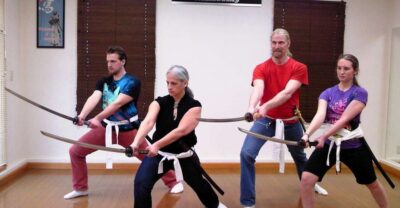 ★ 4.9Samurai Sword Class by Experts in Traditional ArtsFrom $64657 reviews
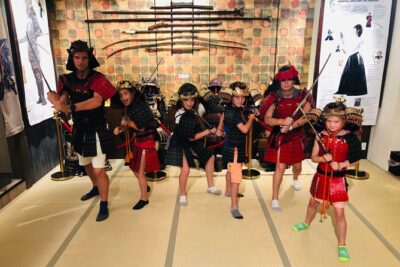 ★ 4.5Skip the lines Basic Ticket at SAMURAI NINJA MUSEUM KYOTOFrom $28632 reviews
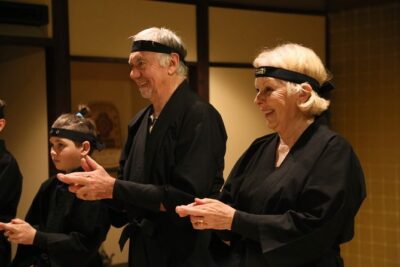 ★ 5.0Ninja 1-hour Hands-on Lesson by Japanese master in Kyoto -EntryFrom $80489 reviews
 ★ 4.8Ninja Weapon Forging ExperienceFrom $148478 reviews
 ★ 4.5Samurai Kenbu Traditional Sword Dancing ShowFrom $32426 reviews
 ★ 5.0Samurai Training with Modern day Musashi in KyotoFrom $132256 reviews
Browse the lists this tour appears in