
Reviewed · KYOTO CRAFT & CALLIGRAPHY WORKSHOPS
Let’s make only one original onigawara in the world
A demon-faced roof tile is a pretty fun souvenir idea. In this small Kyoto workshop, you shape your own onigawara from clay, then have it fired and delivered home.
What I like most: the process is hands-on and step-by-step, and the result has real meaning tied to Japanese architecture. The other big win is small-group attention with an instructor (often called Yuya-san) who teaches clearly even if your Japanese is limited.
The one catch to plan for is the wait. You also pay shipping costs separately, so your total out-of-pocket may be more than the workshop price alone.
In This Review
- Key Highlights You’ll Actually Care About
- Kyoto Roof-Tile Art: What Onigawara Actually Does
- The Workshop Studio (瓦工房You家): Small Group, Local Feel
- From Clay to Ogre Face: Your Step-by-Step Build
- Time, Temperature, and the Kiln Step You Don’t Control
- Waiting for Delivery: The Long Part of the Craft
- Price and Value: Why $89.17 Can Make Sense
- Practical Tips So Your Oni Doesn’t Get Chaotic
- Who This Workshop Suits Best in Kyoto
- Should You Book the瓦工房You家 Onigawara Class?
- FAQ
- How long does the Kyoto onigawara workshop take?
- What’s the price, and what does it include?
- How big is the group?
- Do I need an apron or special clothing?
- Will my onigawara be fired and sent to my home?
- Is shipping included in the workshop fee?
- Where is the meeting point in Kyoto?
- Is this class suitable for beginners?
- What’s the cancellation policy?
Key Highlights You’ll Actually Care About
- Meaning beyond a keepsake: Onigawara are traditional roof-end ridge ornaments tied to protection and rain-shedding.
- Small group focus: Maximum five travelers, with plenty of guidance while you build your demon face.
- Clay-to-kiln process included: You make it, then they fire it in their kiln at the factory.
- Home delivery after firing: You don’t have to worry about fragile transport on day one.
- Results vary in a good way: The same build plan produces different faces, so yours won’t look copied.
Kyoto Roof-Tile Art: What Onigawara Actually Does
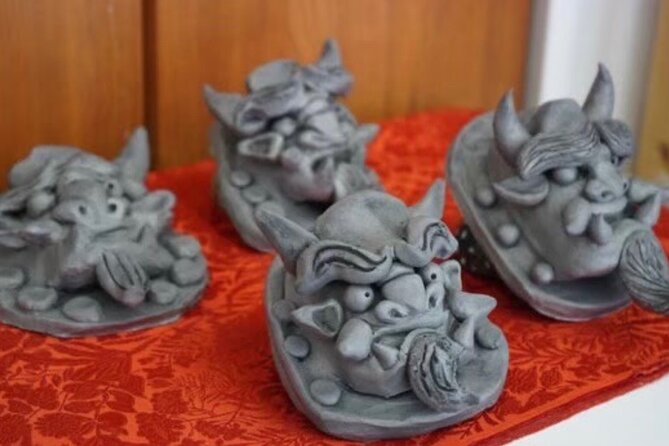
Onigawara are the carved, demon-faced roof tiles you see at the ends of the main ridge on many Japanese buildings, especially temples. Their famous ogre and gargoyle expressions are not just decoration. They’re used as protective roof ornaments, traditionally associated with keeping evil away and helping guard the roof from weather and water.
It’s the kind of cultural detail that makes you look up while you walk. After you make one yourself, you’ll spot the real tiles around Kyoto with different eyes. You start thinking about the building as a whole system: shape, water flow, and symbolic protection.
And yes, it’s also a great souvenir premise. Buying a mass-produced magnet is fine. Making a roof guardian with your own hands is the more interesting flex.
Make something by hand in a Kyoto workshop

The Workshop Studio (瓦工房You家): Small Group, Local Feel
Your start point is 瓦工房 You家 (kawarakoubouyouya), in Higashiyama Ward, Kyoto. The experience is designed for a maximum of five travelers, which matters because clay work punishes overconfidence. When you’re close to the instructor, you correct mistakes before they become permanent.
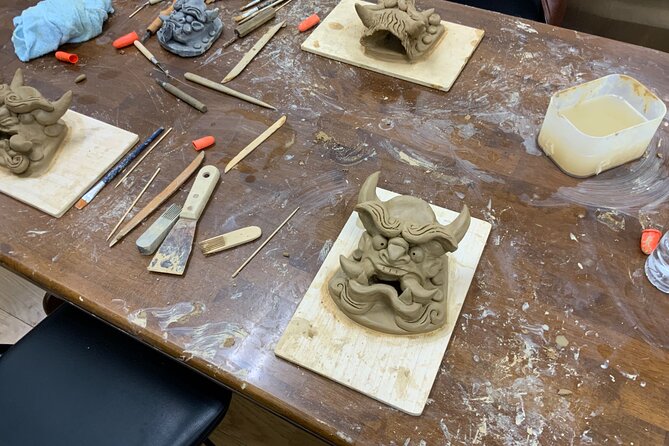
I also like the practical vibe here. The workshop doesn’t try to turn this into a performance. It’s a real studio setting where you get water, tools, and the steps you need to build a small tile that looks like an oni.
Language is another strength. The instructor is comfortable giving instructions in English, enough for you to follow the sequence without guessing. Casual conversation might be limited, but the core guidance is clear.
From Clay to Ogre Face: Your Step-by-Step Build
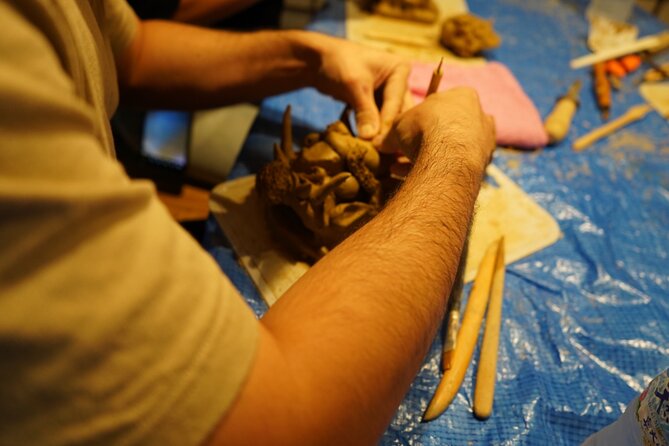
The class goal is simple: make a small onigawara tile from scratch with a fearsome demon face. You start with soil/clay and build the piece using a step-by-step structure. The method is designed so even first-timers can finish something that looks like the real thing.
One thing I appreciate is that the workshop doesn’t pretend the process is instant. Clay needs shaping, and shaping needs patience. The instructor uses a procedure that makes the work manageable, which is why beginners keep ending up with satisfying results.
Expect a hands-on session with some repetition. You’ll form parts, refine edges, and assemble the face. Many people finish feeling surprised at their own ability. Even in mixed-skill groups, the instructor keeps guiding you so you can add your own variation.
You also get a built-in personalization trick: you can twist the design a bit. So you don’t just make a generic tile. You leave with a one-of-a-kind oni face.
Time, Temperature, and the Kiln Step You Don’t Control
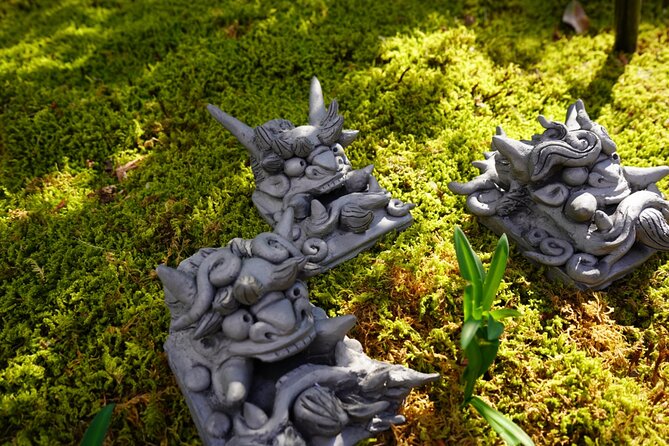
Here’s where Japanese craft realism shows up. You don’t fire your piece yourself at a DIY station. The instructor fires the onigawara tile in a kiln at the factory after you finish sculpting.
That separation between making and firing is useful. Your job is shaping. Their job is heat, timing, and finishing the ceramic. It also explains why shipping exists at all. A fired ceramic tile is sturdier, and they handle the post-work process so it arrives safely.
You should also think about the schedule in a more flexible way. The experience is listed at about two hours, but clay work can run longer depending on how your hands cooperate and how many questions you ask. Plan for a couple of focused hours, not a quick coffee stop.
Waiting for Delivery: The Long Part of the Craft
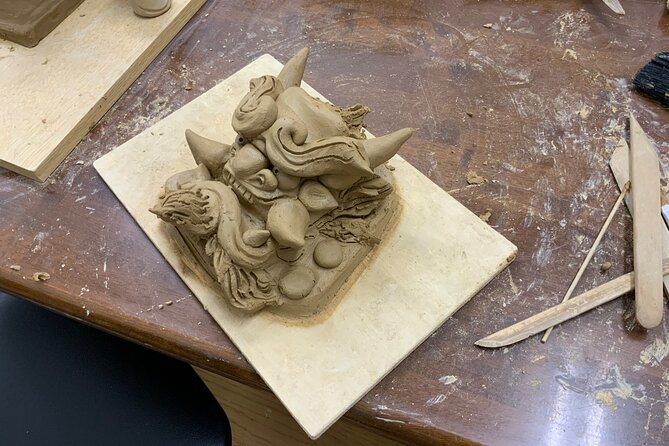
You’ll make the tile in Kyoto, but the physical souvenir comes later. The clay has to dry, then it gets fired, then it’s shipped to your home after that.
One review detail that really matters for expectations: drying takes about a month. After that, you receive the finished onigawara in the mail. That means this isn’t a same-day souvenir. It’s a slow-burn gift to yourself, arriving when you’re already back home and unpacking.
Shipping costs are not included in the experience fee. They also aren’t a mysterious online calculation you can do ahead of time. You pay shipping separately at the end of class, and it’s typically handled with cash. The amount can vary, so bring enough cash to cover it without stress.
If you hate waiting, this might feel like an annoying twist. If you like the idea of a delayed, meaningful package, it becomes part of the charm.






Price and Value: Why $89.17 Can Make Sense
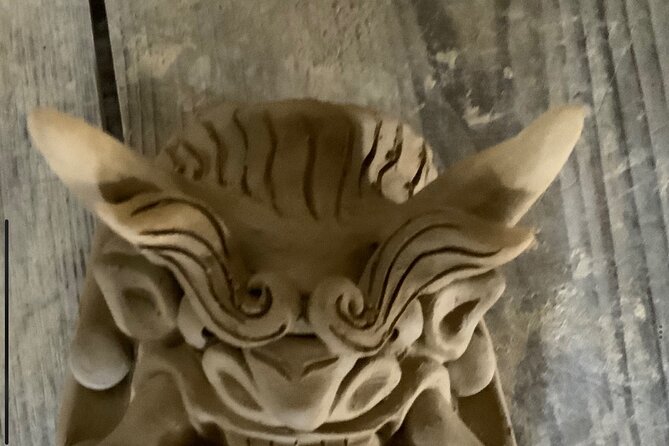
At $89.17 per person, this is not the cheapest activity in Kyoto. But you’re paying for more than a lesson. You’re paying for clay time, instructor guidance, kiln firing by the workshop, and home delivery after the ceramic stage.
A lot of “make a souvenir” experiences stop at the craft moment. This one doesn’t. Your tile becomes real ceramic through firing, and you get it shipped instead of carrying something fragile around Kyoto streets.
What I’d treat as the real total cost is: workshop fee plus shipping. The workshop is the core value. Shipping is the variable add-on.
There’s also a discount at the moment for the workshop opening, plus group discounts. If your dates line up with that offer, your value is even better.
Practical Tips So Your Oni Doesn’t Get Chaotic
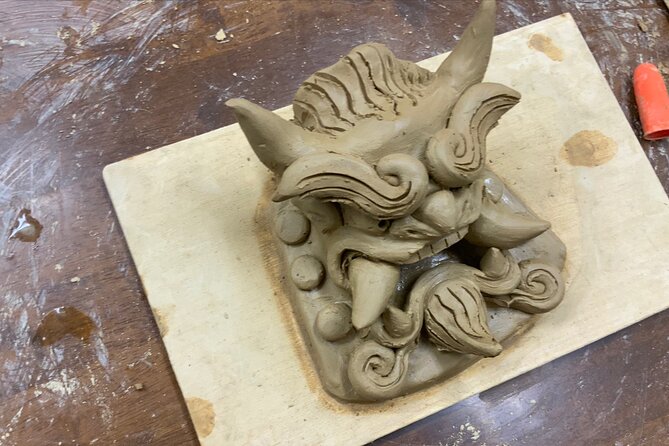
This workshop uses soil/clay, so dress like you’re expecting art stains. You’ll want clothes that can get dirty, and you shouldn’t rely on an apron being provided. If you wear delicate fabrics, you’ll regret it.
Bring a bag you don’t mind getting a little messy. Some people store luggage at the studio, but you still want a plan for where your things go while you sculpt.
Also, plan around cash for shipping. Since shipping is paid separately at the end, having cash ready prevents a last-minute scramble.
For time management, arrive with a little patience. The instructor checks pace so you can complete the project within the allotted time, but clay has its own logic. If you go in relaxed, you’ll enjoy it much more.
Who This Workshop Suits Best in Kyoto
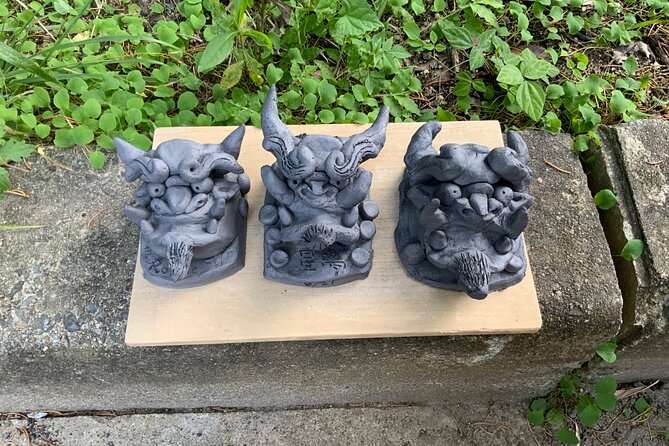
This class is ideal if you want something active that breaks up sightseeing. Sitting down for a hands-on craft is a welcome change when Kyoto has you walking, photographing, and eating on schedule.
It also fits families and teens. The workshop is designed for most travelers to participate, and the instructor can simplify the process so kids and creative beginners can build a recognizable demon face.
If you’re an art person who likes symbolism, this one connects craftsmanship to architecture. If you’re just looking for a fun Kyoto activity, it still delivers because the work is satisfying even if you’ve never touched clay before.
Potential drawback: if you need a souvenir you can hold immediately, you’ll have to wait for delivery. This is not that kind of workshop.
Should You Book the瓦工房You家 Onigawara Class?
If you want a meaningful Kyoto keepsake you can’t buy off a shelf, book it. You’re getting hands-on crafting, real instructor guidance from Yuya-san, and professional firing that turns your clay into ceramic.
Book it especially if you enjoy learning why things exist, not just how to make them. The onigawara concept makes your walking tour around Kyoto feel more connected, because you’ll recognize the rooftop guardians in real life.
Skip it if you strongly dislike waiting for delivery or you hate paying extra on the day of the workshop. The shipping add-on is part of the deal here, and it’s paid separately.
FAQ
How long does the Kyoto onigawara workshop take?
The workshop is listed at about 2 hours (approx.), though your pace can affect how long you spend building.
What’s the price, and what does it include?
The price is $89.17 per person. Bottled water is included. The workshop fee includes the process of making your onigawara and having it fired, but shipping costs are not included.
How big is the group?
This experience has a maximum of five travelers, which helps keep the class hands-on and personal.
Do I need an apron or special clothing?
An apron is not included. Since the workshop uses soil/clay, wear clothes that may get dirty.
Will my onigawara be fired and sent to my home?
Yes. After you make your tile, it is fired in a kiln, and the onigawara is delivered to your home.
Is shipping included in the workshop fee?
No. Shipping costs are not included in the experience fee, and you should plan to pay for shipping separately at the end of class.
Where is the meeting point in Kyoto?
The start location is 瓦工房 You家 (kawarakoubouyouya) at 373-2 Yamazakichō, Higashiyama Ward, Kyoto, 605-0841, Japan. The activity ends back at the meeting point.
Is this class suitable for beginners?
Most travelers can participate, and the workshop is structured so even people without clay experience can make an oni-faced tile.
What’s the cancellation policy?
Free cancellation is available up to 24 hours in advance of the experience start time for a full refund. If you cancel less than 24 hours before, the amount paid is not refunded.
More Tour Reviews in Kyoto
More Kyoto Workshops to Try

Just added: more Kyoto tours to browse








Kyoto Craft & Calligraphy Workshops, compared.
 ★ 5.0Chopsticks Making Workshop in Gion with Engraving OptionFrom $15958 reviews
 ★ 4.8Authentic knife making experience at a blacksmith in KyotoFrom $154350 reviews
 ★ 5.01-Hour Japanese Archery Experience in KyotoFrom $46176 reviews
 ★ 5.0Calligraphy class at Buddhist temple in city centerFrom $55167 reviews
 ★ 5.0Roketsu dyeing experience: M course Roketsu Dyeing ExperienceFrom $25163 reviews
 ★ 4.9Japanese Archery Workshop with Experienced InstructorFrom $38132 reviews
 ★ 4.8Japanese Calligraphy ClassFrom $5189 reviews
 ★ 5.0TAIKO, Japanese Drum Experience from KyotoFrom $11586 reviews
Browse the lists this tour appears in