
Reviewed · KYOTO CRAFT & CALLIGRAPHY WORKSHOPS
Learn Japanese guitar “Shamisen”
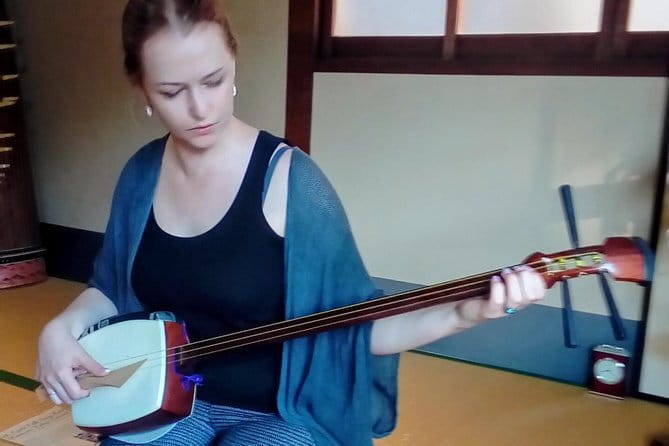
Kyoto can be noisy outside, but inside this lesson feels focused and calm. You’ll learn shamisen in a real traditional Kyoto residence, right by Nijo Castle, then wind down with green tea and sweets. My favorite part is the pairing of music instruction with the quiet, lived-in setting of a house you usually wouldn’t enter.
I also like that the lesson starts from the basics, so even if your fingers have never learned a Japanese instrument, you’re not starting behind the eight ball. The main caution is that the lesson takes place on a tatami room, and it’s not recommended if your knees hurt—tatami seating can be tough.
The sound is the other big reason this works. The shamisen’s three strings give a sharp, cool tone that feels more tangible when you’re close and the room is designed for listening. The drawback to plan around: it’s a 1-hour experience, and while it’s beginner-friendly, shamisen still requires practice—so you’ll leave with progress, not mastery.
In This Review
- Key Highlights to Know Before You Go
- A Shamisen Lesson Inside a Private Kyoto House
- Timing: How You’ll Use the 1-Hour Slot
- The Shamisen Itself: What You’re Learning to Do
- Professional Musicians and a Room That Lets Sound Through
- Tatami Etiquette: Shoes Off, Sit Stable, Mind Your Knees
- The Best Part After You Play: Green Tea and Seasonal Sweets
- Price and Value: What $92.96 Really Covers
- Where You Meet: Kyoto 筝 花洛 (koto karaku) Near Nijo Castle
- Who This Experience Is For (and Who Should Skip It)
- Should You Book Kyoto 筝 花洛 Shamisen Lesson?
- FAQ
- Where is the meeting point?
- What time does the experience start?
- How long is the lesson?
- How many people can join?
- What’s included in the price?
- Is this lesson suitable for beginners?
- Do I need to take off my shoes?
- Is it okay if my knees hurt?
- What is the cancellation policy?
Key Highlights to Know Before You Go
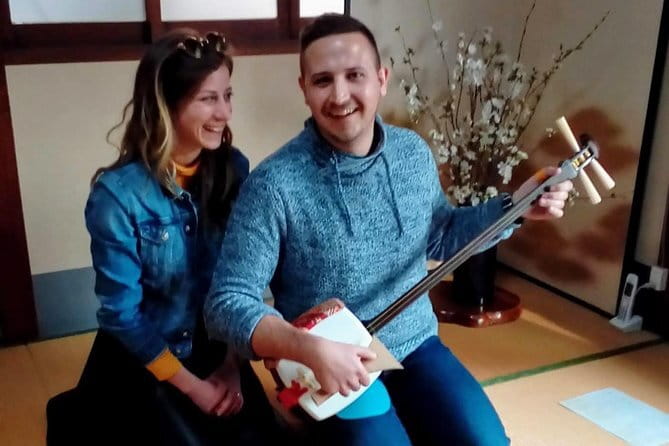
- Private Kyoto residence access: you can enter a home that’s usually off-limits to the public.
- Beginner-first teaching: the instruction starts from basics, not from advanced technique.
- Tatami setting: traditional seating and shoe-off etiquette are part of the experience.
- Hands-on practice: you’ll practice a traditional Japanese song, not just listen.
- Tea time included: green tea and seasonal Japanese confectionery come after your playing.
A Shamisen Lesson Inside a Private Kyoto House
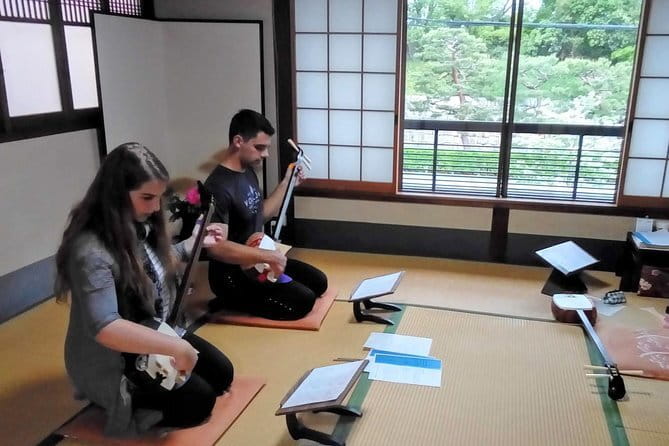
This experience is built around one special idea: learning Japanese music in a Kyoto home that still feels like Kyoto. You’re not just sitting in a classroom. You’re in a traditional architectural residence where the sound can carry clearly, and where you get to see how much the space itself matters.
The location also helps. The venue is close to Nijo Castle, which makes this a good add-on if you’re already planning a castle-area afternoon. It also means you’re not far from public transit, so you’re not forced into complicated detours just to reach the lesson.
What I like most is the sense of access. Because it’s a private residence, travelers can’t normally wander in and look around. Only experience guests get entry. That turns the time from a quick activity into something that feels more respectful of place.
Make something by hand in a Kyoto workshop

Timing: How You’ll Use the 1-Hour Slot
The session starts at 3:00 pm and runs about 1 hour. That schedule is useful if you want something cultural that doesn’t swallow your whole day. It also sets up the rest of your afternoon nicely: you’re free to roam afterward, instead of being trapped in a long workshop.
Within that hour, you can expect a simple flow: you’ll be taught shamisen basics, then you’ll practice a traditional Japanese song. The lesson is hands-on from the start, so even if you’re a first-timer, you won’t spend the whole time watching from the sidelines.
A practical note: shamisen can feel a bit difficult at first. That’s normal. The tempo of instruction matters more than speed. If you go in expecting to just sound good immediately, you’ll feel frustrated. If you go in expecting to learn how your hands and instrument work together, the hour feels like a solid start.
The Shamisen Itself: What You’re Learning to Do
Shamisen may look like a guitar at a quick glance, but the feel is different. You’ll be working with the instrument’s three strings and learning how to produce the tones the way they’re meant to sound in Japanese traditional music.
Since the lesson starts from the basics, you don’t need prior musical experience to participate. The teaching is aimed at beginners, with instruction that walks you through the fundamentals first. That’s a major value point: you’re paying for guided progress, not just time with an instrument.
Also, you’re not only listening for style. You’ll practice as part of the experience. Practicing a traditional Japanese song gives you a clear goal for the lesson. It turns the hour into a story you can remember: I learned the basics, then I played this song.
Professional Musicians and a Room That Lets Sound Through
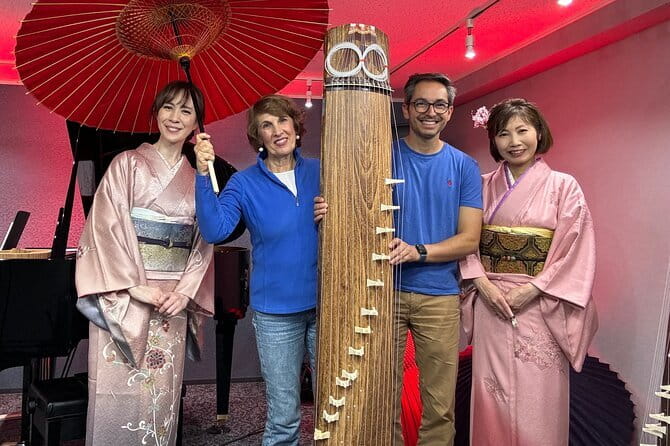
This experience isn’t a casual “try it and go.” It’s taught with professional musicians. That matters because shamisen tone is specific. Your hand position, string contact, and timing all affect the sound, and an expert can correct small details before bad habits set in.
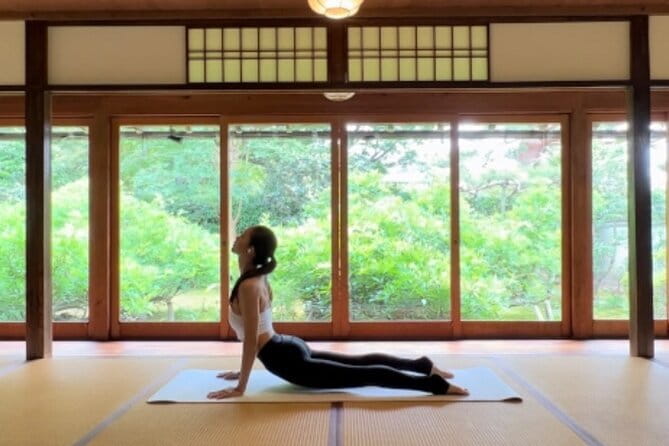
The room helps, too. The venue is a traditional tatami space in a Kyoto architectural residence. In a setting like this, you tend to hear clearly how the shamisen actually sounds when someone is playing properly. That makes it easier to understand what the teacher is aiming for.
If you’re the type who likes learning by ear—really listening to what changes when technique changes—this setup is a plus. You’ll likely notice how tone and rhythm feel different right away, especially during practice.
Tatami Etiquette: Shoes Off, Sit Stable, Mind Your Knees
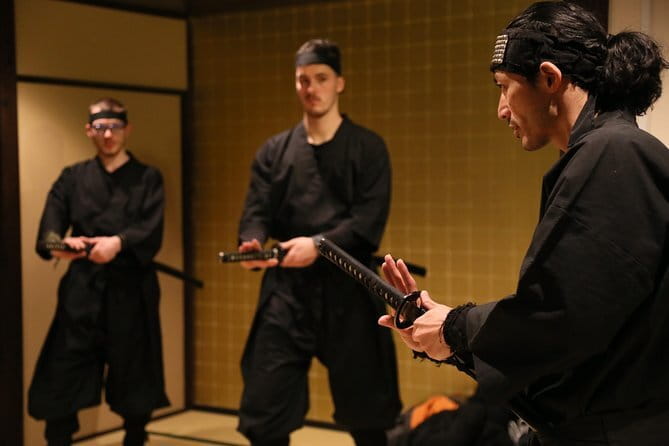
The venue is a traditional Japanese tatami room, and you take off your shoes. This is standard in many Japanese cultural spaces, but it’s worth highlighting because your comfort affects your learning. If you’re comfortable sitting on tatami, you’ll be able to focus on the music instead of shifting every few minutes.
Here’s the key consideration: it’s not recommended that your knees hurt. Tatami seating can be a challenge even for people who are generally mobile. If knee discomfort is already part of your day, you should think carefully before booking.
If you do go, plan to arrive with that in mind. Being able to sit comfortably for the duration—roughly an hour including instruction and transition to tea—will make the experience much more enjoyable.


The Best Part After You Play: Green Tea and Seasonal Sweets
After you play, you get tea time with green tea and traditional sweets. This isn’t just a snack stop. It’s part of the cultural pacing of the experience.
Tea time also includes traditional Japanese manners. That means you’re getting small lessons in etiquette as you relax after playing. For me, this is where the experience feels complete. You learn the music, then you shift into the slower social rhythm that goes with tea in Japan.
It’s also a practical reset. If shamisen feels like a lot in one hour—new posture, new sounds, new rhythm—tea helps you come down from the mental workout. And since the sweets are seasonal Japanese confectionery, you get a small taste of what’s appropriate for the time you’re there.
Price and Value: What $92.96 Really Covers
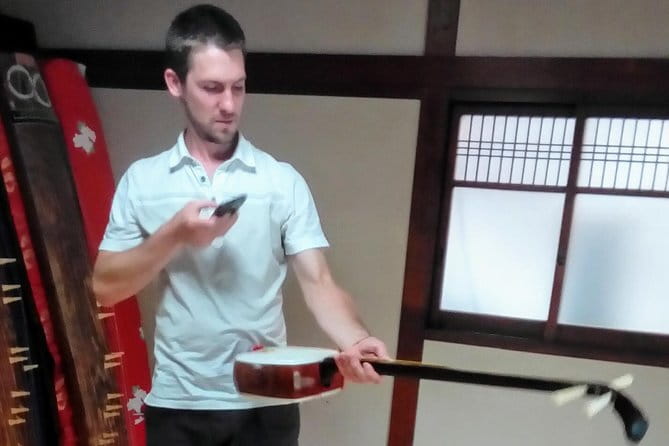
The price is $92.96 per person for an experience that runs about an hour. At face value, that can sound like “just a lesson,” but the value is bigger than it first appears.
You’re paying for:
- guided shamisen instruction from basics
- time with professional musicians
- shamisen included (so you’re not dealing with instrument rental details)
- green tea plus seasonal Japanese confectionery
- access to a private Kyoto residence, which is the kind of thing many cultural experiences can’t offer
It’s also limited in scale: only one group a day and a maximum of 2 travelers. That suggests you’re not fighting for attention in a large crowd. Smaller group sizes often mean more chances to get corrected and feel comfortable asking questions through the instruction process.
When I look at the overall package—music lesson + a special venue + tea—it reads as a fair trade, especially if you’re already in Kyoto and want something more personal than a typical show.
Where You Meet: Kyoto 筝 花洛 (koto karaku) Near Nijo Castle
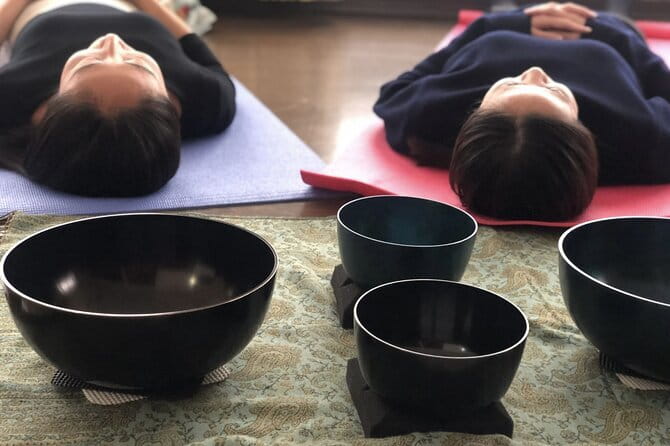
Your meeting point is 京都箏花洛 (koto karaku), 535-21 Warayachō, Kamigyo Ward, Kyoto, 602-8144, Japan. Start time is 3:00 pm, and you return to the same meeting point at the end.
This matters for planning. When a cultural activity includes a private residence and shoe-off tatami seating, you don’t want to waste time with long transfers. Being near public transportation helps you arrive without stress, and it keeps the day from feeling like constant logistics.
You’ll also receive a confirmation at booking, and the experience uses a mobile ticket. That’s one less thing to print or carry, especially helpful if you’re using your phone for transit and maps.
Who This Experience Is For (and Who Should Skip It)
This is ideal if you want a hands-on cultural activity that goes beyond photos. I’d point it toward you if you like:
- learning a specific instrument, even briefly
- traditional music and Japanese etiquette
- small-group experiences
- environments that feel like real Kyoto homes, not staged venues
It may not be the best fit if:
- your knees don’t handle tatami seating well
- you want a long, deep instruction program (this is about an hour)
- you’re expecting a performance style experience rather than practice
Also, shamisen is described as a bit difficult. That doesn’t mean you can’t do it. It means you should give yourself permission to learn slowly. If you go with a patient mindset, the difficulty becomes part of the fun.
Should You Book Kyoto 筝 花洛 Shamisen Lesson?
If you’re in Kyoto and you want a small, guided, respectful experience in a private home, I think this is worth booking. The combination of beginner-friendly instruction, a traditional tatami residence near Nijo Castle, and included tea time with green tea and seasonal sweets makes it feel like more than a simple activity.
Book it if you:
- want authentic Kyoto atmosphere in an accessible location
- like learning by doing (not only listening)
- appreciate a small-group setting
Skip or rethink it if:
- tatami seating and knee discomfort are a problem for you
- you don’t enjoy structured practice, even at beginner level
One more practical tip: plan ahead. The average booking timing is 27 days in advance, so waiting until the last week can squeeze your options for that 3:00 pm slot and the maximum of 2 travelers per group.
FAQ
Where is the meeting point?
The meeting point is 京都箏花洛 (koto karaku), 535-21 Warayachō, Kamigyo Ward, Kyoto, 602-8144, Japan.
What time does the experience start?
It starts at 3:00 pm.
How long is the lesson?
The duration is about 1 hour.
How many people can join?
The experience has a maximum of 2 travelers.
What’s included in the price?
You get the shamisen, plus coffee and/or tea, and green tea with seasonal Japanese confectionery.
Is this lesson suitable for beginners?
Yes. The teaching starts from the basics, so even a beginner can participate.
Do I need to take off my shoes?
Yes. The venue is a traditional tatami room where you take off your shoes.
Is it okay if my knees hurt?
It is not recommended if your knees hurt, since you’ll be in a tatami room setting.
What is the cancellation policy?
You can cancel for a full refund if you cancel up to 24 hours in advance of the experience start time.
More Tour Reviews in Kyoto
More Kyoto Workshops to Try


Just added: more Kyoto tours to browse






Kyoto Craft & Calligraphy Workshops, compared.
 ★ 5.0Chopsticks Making Workshop in Gion with Engraving OptionFrom $15958 reviews
 ★ 4.8Authentic knife making experience at a blacksmith in KyotoFrom $154350 reviews
 ★ 5.01-Hour Japanese Archery Experience in KyotoFrom $46176 reviews
 ★ 5.0Calligraphy class at Buddhist temple in city centerFrom $55167 reviews
 ★ 5.0Roketsu dyeing experience: M course Roketsu Dyeing ExperienceFrom $25163 reviews
 ★ 4.9Japanese Archery Workshop with Experienced InstructorFrom $38132 reviews
 ★ 4.8Japanese Calligraphy ClassFrom $5189 reviews
 ★ 5.0TAIKO, Japanese Drum Experience from KyotoFrom $11586 reviews
Browse the lists this tour appears in