
Reviewed · WORKSHOPS
Kyoto: Traditional Mini Umbrella Making Workshop
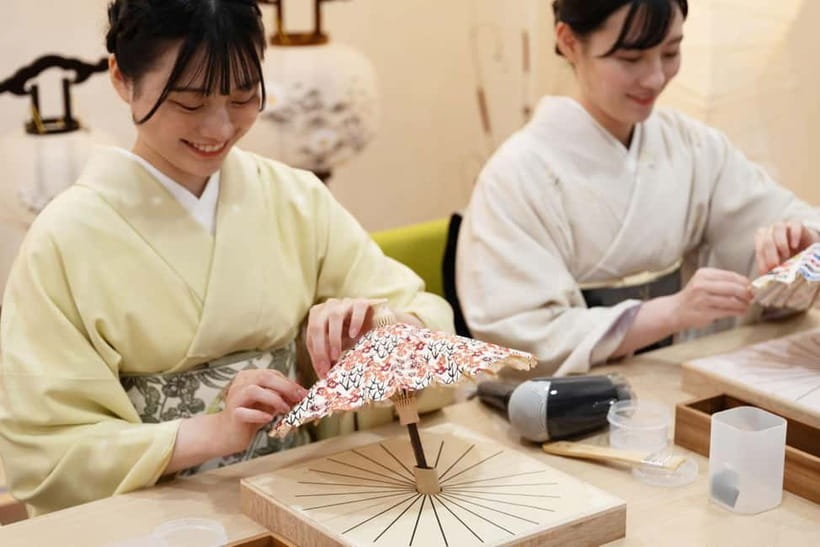
Mini umbrellas, serious craft, calm room. I love the chance to learn traditional wagasa techniques at Japan’s oldest umbrella shop, and I especially liked how friendly, patient help made the fine details feel doable, from Ai Takenaka to other instructors you’ll be guided by. You also get to craft a mini umbrella that looks elegant, not like a souvenir toy.
The only real drawback is that this is detail work. If you’re expecting a hands-off craft or you’re bringing very young kids, plan ahead—this workshop isn’t suitable for children under 6, and it asks you to slow down and concentrate.
In This Review
- Key Highlights Worth Your Time
- A Quiet Workshop Near Shijo Kawaramachi
- Meet Your Instructor: Japanese + English, Real Patience
- Your Mini Wagasa: What You Actually Make
- What Makes This Craft Worth It (Not Just Cute)
- Taking It Home: Stand, Box, and Carry Bag
- Price and Value: Is $70 Fair for 90 Minutes?
- Who Should Book This Workshop—and Who Might Skip It
- Small Rules That Help the Room Stay Calm
- Should You Book Kyoto Traditional Mini Umbrella Making?
- FAQ
- Where is the meeting point in Kyoto?
- How long is the mini umbrella workshop?
- How much does it cost?
- What will I make and what is included?
- What language is the instruction offered in?
- Is there an age limit?
- Can I cancel and pay later?
Key Highlights Worth Your Time
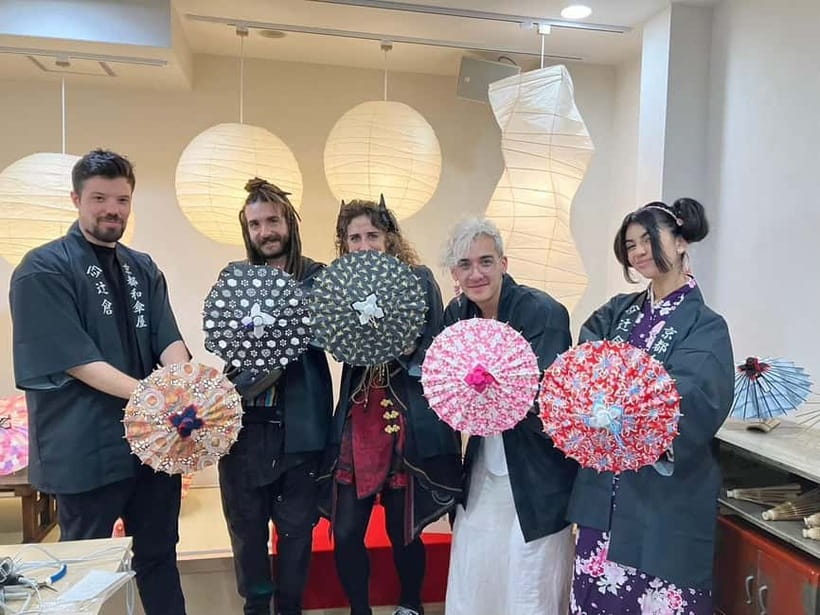
- Learn at Japan’s oldest umbrella shop and work with genuine Japanese materials
- Create your own Hime Wagasa (a traditional mini Japanese umbrella)
- Design it your way, so your finished umbrella feels personal
- Patient instruction in Japanese and English, including named examples like Ai Takenaka
- Take home a bamboo umbrella stand, plus a decorative box and carry bag
A Quiet Workshop Near Shijo Kawaramachi
This is one of those Kyoto activities that feels like a mini escape from the city buzz. You meet in central Kyoto, just a 2-minute walk north from Shijo Kawaramachi, which matters because you can slot it into a shopping day without stress.
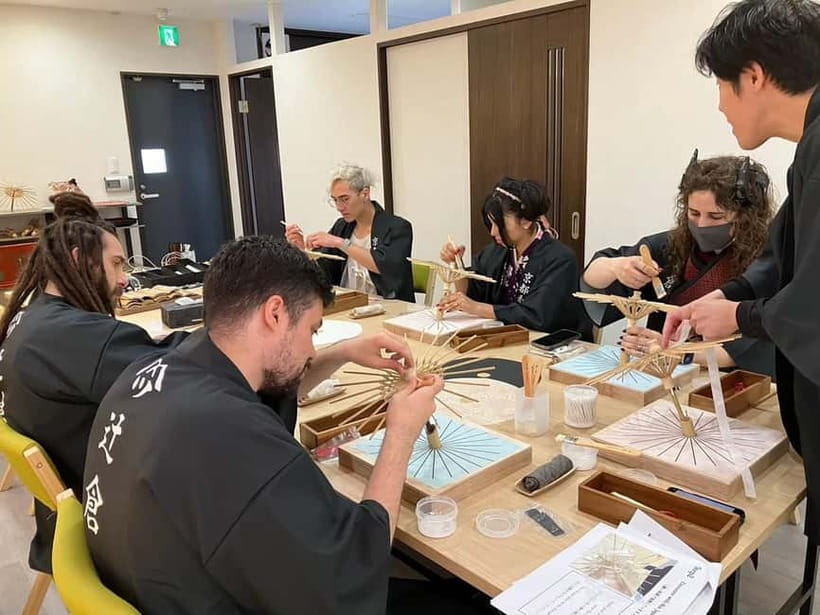
The workshop setting is part of the appeal. Expect a calm room with traditional lighting and plenty of Japanese umbrellas around you. It makes the craft feel less like a rushed lesson and more like stepping into the world that created these objects in the first place.
Other Kyoto tours and experiences to compare



Meet Your Instructor: Japanese + English, Real Patience
You’re not left to figure things out alone. The class is taught by an instructor who speaks Japanese and English, and the teaching style is repeatedly described as patient and helpful.
One reviewer specifically called out Ai Takenaka for being friendly and supportive, and that theme shows up again and again: clear guidance, the right pace, and help when your hands get a little clumsy (totally normal). If you’ve ever worried that your craft skills are too basic, you can relax here. The process is structured for people learning from scratch.
Your Mini Wagasa: What You Actually Make
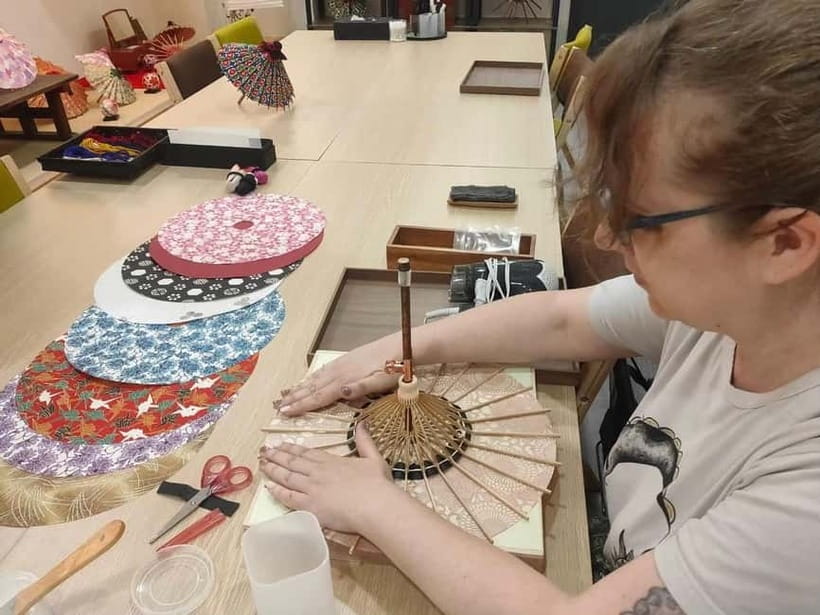
This workshop centers on making a mini Japanese umbrella, called a Hime Wagasa. Your goal is a finished umbrella that reflects tradition and your own choices, not just a generic pattern.
In the 90 minutes, you’ll go from raw materials to a assembled umbrella, working carefully so each part fits correctly. The experience is built around the idea that wagasa craftsmanship isn’t just assembly—it’s attention. That’s why the class feels engaging: your progress is visible, and you’re constantly working with your hands rather than watching from a chair.
You also learn the story behind the craft, including ancient techniques that have been passed along for generations. Even if you don’t memorize every detail, you’ll understand why makers take their time and why these umbrellas are meant to last.
What Makes This Craft Worth It (Not Just Cute)
Kyoto sells lots of lovely things. This is different because you’re making the object yourself.
I like that you’re not simply decorating a pre-made item. Instead, the workshop focuses on assembling components and shaping the umbrella with care. That means you leave with something that feels earned. Several people describe it as fun because it’s concentrated work. You can almost feel your mind shift into a slower mode—less planning, more focus on the next step.
You also learn something deeper than technique. The umbrella workshop frames the finished mini umbrella as a symbol of happiness. That’s not just marketing fluff. It gives your craft a meaning beyond decoration, which helps the whole experience land with more impact.
Taking It Home: Stand, Box, and Carry Bag
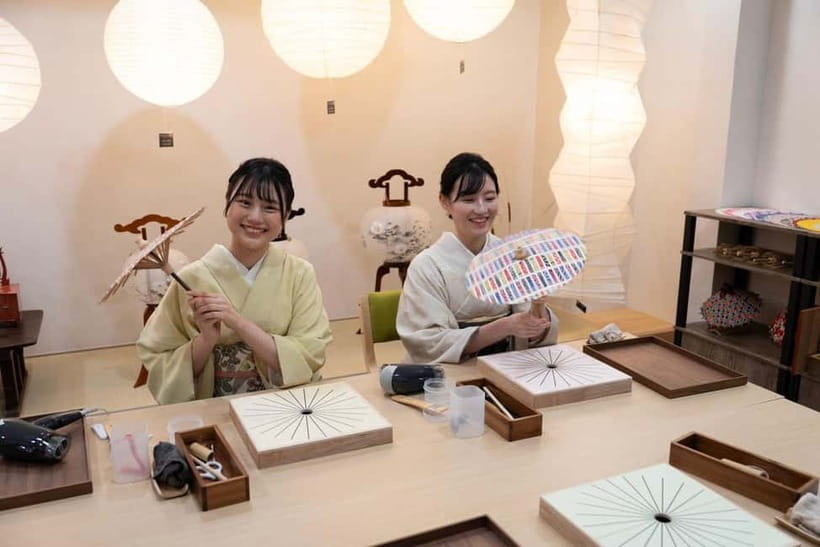
Here’s where the workshop becomes practical. Your class includes what you need to transport and display your creation: a bamboo umbrella stand to take home, plus a decorative box and carry bag.
That matters for two reasons:
First, you can protect your umbrella right away. A finished handcraft deserves a safe home, and the included packaging takes that worry off your plate.
Second, the stand changes how you’ll display it. This isn’t just a thing you put in a suitcase. It’s a piece you can set up—like a desk or shelf ornament—with a bit of ceremony to it.
And yes, the “happiness” theme is designed to be giftable too. If you want a meaningful present for someone back home, a mini wagasa is a great choice because it’s both beautiful and personal.



Price and Value: Is $70 Fair for 90 Minutes?
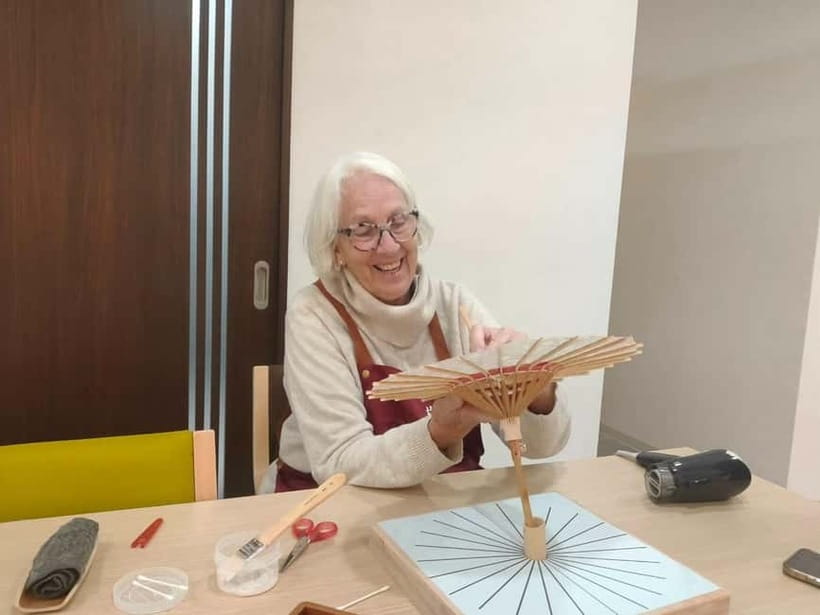
At $70 per person for a 90-minute workshop, it can sound like a “paying for a class” price at first glance. But in this case, the value mostly holds up.
Why? The price covers the materials for crafting your own Hime Wagasa, and it also includes the take-home items that help you keep and display it: the bamboo stand, plus the box and carry bag. You’re also paying for instruction by artisans who work with these materials all the time—so you’re not just buying time in a room.
If you compare this to the cost of buying a decorative umbrella already finished, the math shifts. Handmaking is slower and more work, but that’s exactly why the end result feels special. You’re leaving with a handmade keepsake that comes from your own hands and your own attention to detail.
Who Should Book This Workshop—and Who Might Skip It
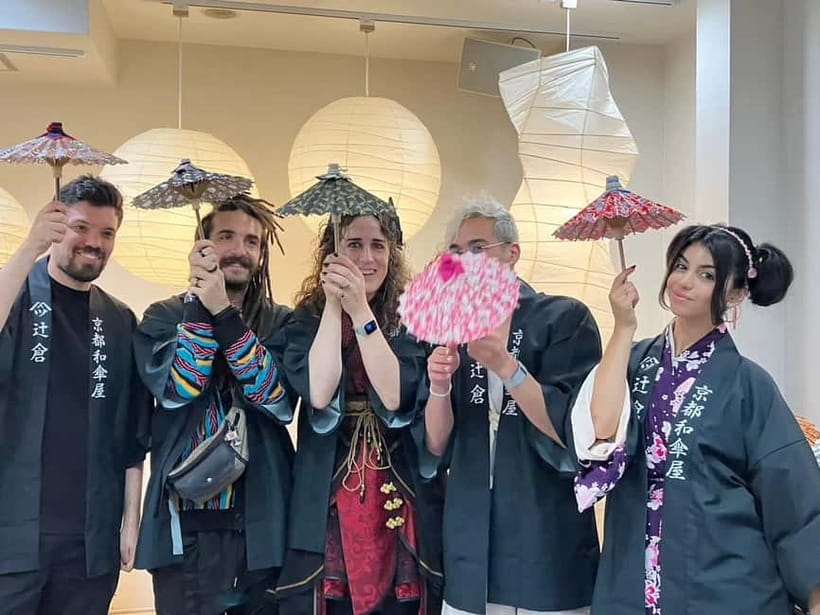
This workshop fits best if you like crafts, appreciate Japanese traditions, and don’t mind a focused hands-on activity.
It’s a particularly good match for:
- People who enjoy learning by doing, not just sightseeing
- Couples or solo travelers who want a calm, creative hour
- Anyone looking for a Kyoto memory that’s more personal than a shopping bag
It might not be ideal if:
- You’re bringing kids who are under 6 (not suitable)
- You want something that feels quick and effortless with zero concentration
Also, one practical note: there’s an option to have a craftsman add finishing touches for an additional fee. If you’re a perfectionist or want an extra-polished result, that’s worth keeping in mind. If you’re happy with your own work, you can skip it.
Small Rules That Help the Room Stay Calm
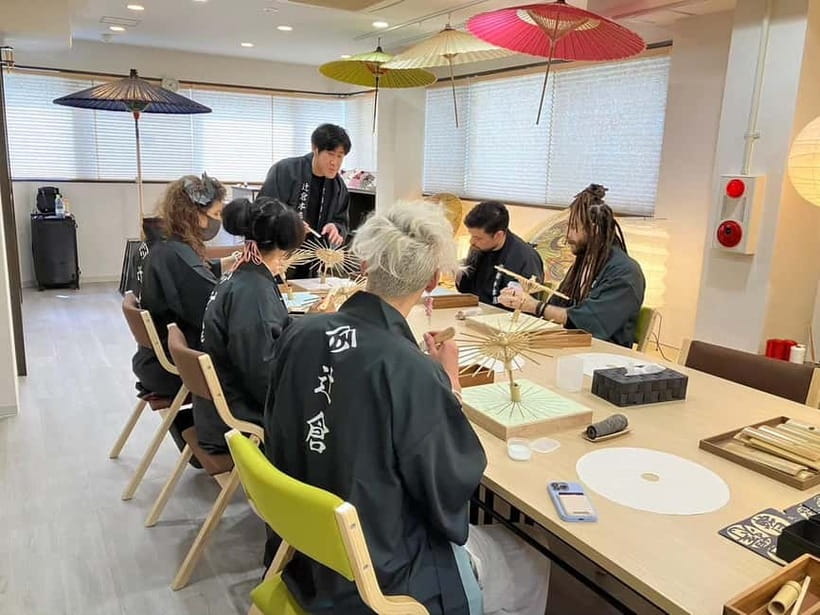
The workshop has the usual “keep it respectful” limits: no smoking, no alcohol or drugs, and no explosive substances. These rules matter because they help the room stay focused and calm—exactly the vibe you want when you’re handling delicate components.
If you’re sensitive to strong smells or crowded spaces, you’ll likely appreciate the quiet atmosphere. It’s not a party. It’s work you do carefully, in a serene setting.
Should You Book Kyoto Traditional Mini Umbrella Making?
I’d book it if you want a Kyoto activity that’s hands-on, meaningful, and not just another photo stop. The biggest wins are patient instruction, a clear 90-minute structure, and the fact that you finish with a real object you can display on a bamboo stand.
Skip it if you’re traveling with very young kids under 6 or if you’re looking for something low-effort and casual. This workshop rewards focus.
If you fall anywhere in the middle—curious, a little crafty, and willing to slow down—this is a smart choice. You’ll leave with a mini wagasa that looks like Japan, feels like practice, and carries a little symbol of happiness you can actually give away.
FAQ
Where is the meeting point in Kyoto?
The workshop is in central Kyoto, about a 2-minute walk north from the Shijo Kawaramachi intersection.
How long is the mini umbrella workshop?
The experience lasts 90 minutes.
How much does it cost?
It costs $70 per person.
What will I make and what is included?
You’ll craft your own Hime Wagasa (a mini Japanese umbrella). Included materials are provided, and you also receive a bamboo umbrella stand, a decorative box, and a carry bag.
What language is the instruction offered in?
The instructor speaks Japanese and English.
Is there an age limit?
Yes. It is not suitable for children under 6 years.
Can I cancel and pay later?
Yes. You can cancel up to 24 hours in advance for a full refund, and you can reserve now and pay later (pay nothing today).
More Workshops in Kyoto


More Tour Reviews in Kyoto
Just added: more Kyoto tours to browse







Workshops, compared.
 ★ 4.345-Minute Tea Ceremony Lesson ExperienceFrom $222,378 reviews
 ★ 5.0Ramen Cooking Class at Ramen Factory in KyotoFrom $1311,937 reviews
 ★ 5.0Chopsticks Making Workshop in Gion with Engraving OptionFrom $15958 reviews
 ★ 4.9Samurai Sword Class by Experts in Traditional ArtsFrom $64657 reviews
 ★ 4.9Ramen Cooking Class at a Ramen Factory with SouvenirFrom $127532 reviews
 ★ 5.0Ninja 1-hour Hands-on Lesson by Japanese master in Kyoto -EntryFrom $80489 reviews
 ★ 5.0Ramen, Gyoza, and Onigiri Cooking ClassFrom $90445 reviews
 ★ 5.0The Original Small-Group Sushi Making Class in KyotoFrom $69436 reviews
Browse the lists this tour appears in