
Reviewed · KINKAKU-JI & GOLDEN PAVILION TOURS
Kyoto: Kinkaku-ji Temple & Serene Garden Guided Tour with Tickets
Kinkaku-ji hits you fast. This 3-hour Kyoto guided tour pairs the dazzling Golden Pavilion with the quieter Ninna-ji Temple, and it’s not just sightseeing: you get ticketed access, guided interpretation, and a rare moment with a monk during a chanting session and Q&A. I especially like the way the guide connects the temples to themes of power and devotion, and I also like the small group size (max 7), which keeps the experience personal. The main thing to consider is that parts of the Ninna-ji visit can shift due to temple circumstances.
You’ll walk a focused route inside Kinkaku-ji, hitting key spots like the Shariden and Karamon Gate, then move on to Ninna-ji for the temple’s indoor moments: the Main Hall, the Sutra Hall, and time around the monk before finishing in the Imperial Residence area. This is value-minded: admission is included at both UNESCO sites, and the schedule packs two major temples into one calm outing. If you’re hoping for long free time at each site, you’ll have to be flexible.
In This Review
- Quick hits: why this Kyoto tour works
- Kinkaku-ji in 60 minutes: the Golden Pavilion, step by step
- Ninna-ji Temple: Main Hall chanting, Sutra Hall ritual, and the Imperial Residence
- What you learn from the guide (and why it makes the temples easier)
- Itinerary flow, timing, and getting there without wasting your day
- Price and value: what $48.86 gets you in real terms
- Who should book this Kyoto Golden Pavilion and Ninna-ji tour
- Should you book this Kinkaku-ji and Ninna-ji guided tour?
- FAQ
- FAQ
- What is the duration of this Kyoto tour?
- Where does the tour start and end?
- Which temples are included?
- Are admission tickets included?
- Does the tour include a monk session at Ninna-ji?
- Is there interaction or a ritual moment at Ninna-ji?
- What’s the group size?
- Is the ticket mobile?
- Can I cancel and get a full refund?
- When should I book if I want good availability?
Quick hits: why this Kyoto tour works
- Two UNESCO temples in about 3 hours without feeling rushed through the facts
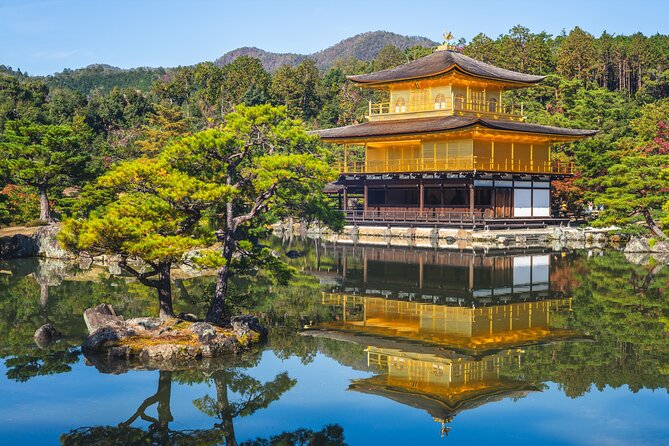
- Kinkaku-ji highlights like Shariden and Karamon Gate, with the gold-leaf story tied to its origins
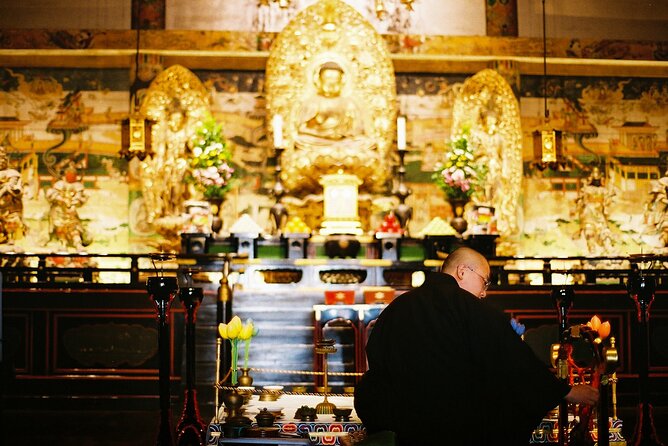
- Rare Ninna-ji access to the Main Hall for a sacred chanting session led by a monk
- Sutra Hall ritual moment with the rotating sutra shelf and guided meaning
- Monk interaction plus photo before you head to the Imperial Residence area
- Small group (max 7) and mobile tickets for an easier day
Kinkaku-ji in 60 minutes: the Golden Pavilion, step by step
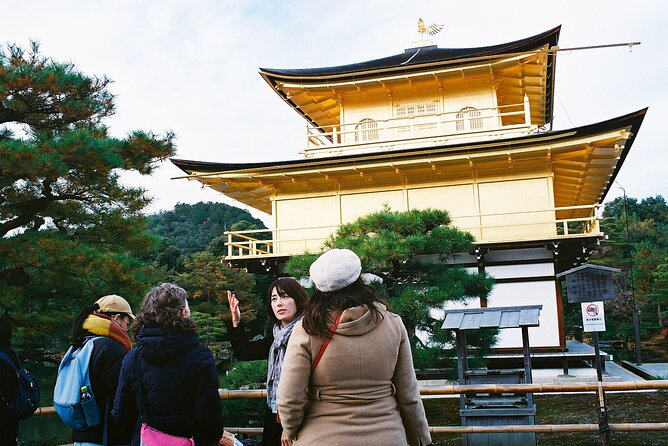
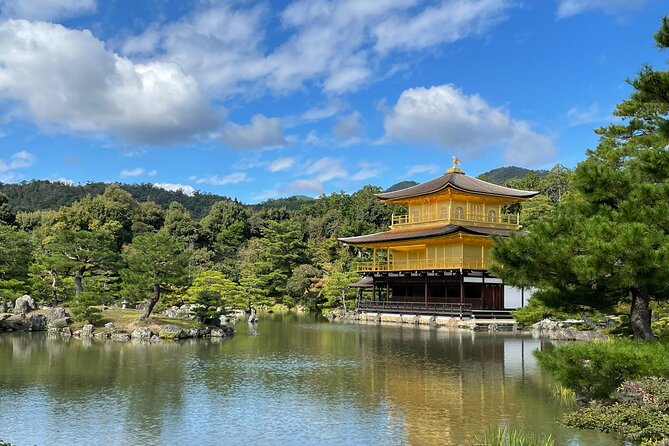
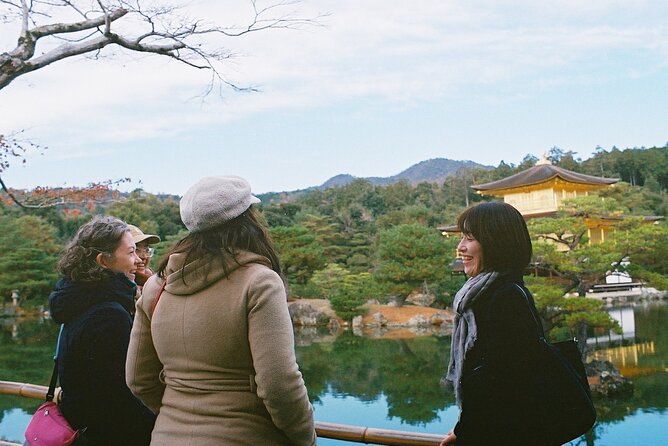
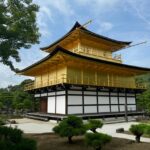
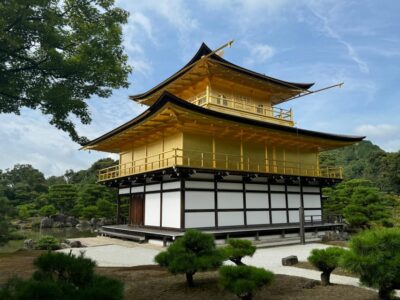
Kinkaku-ji, the Golden Pavilion, is Kyoto at full volume. The temple is a Zen Buddhist site, built originally as a retirement villa for Shogun Ashikaga Yoshimitsu and later turned into a temple. What you’re really seeing is symbolism made physical: the top floors are covered with gold leaf, and the building’s reflection shimmers in the surrounding pond.
Your time here is guided and structured, not just a wander. You’ll visit the main shrine area (Shariden) plus the Karamon Gate, and you’ll also move through several named points that help you understand how the complex is laid out. Expect stops connected to the temple’s devotional and aesthetic design, including Rikushu-no-taki, Anmintaku, Hakujanotsuka, Yukatei Teahouse, and Fudo Hall. Even if you’ve seen photos before, this kind of guided sequence helps you notice details you’d likely miss on your own.
What I like about doing Kinkaku-ji first: it sets the tone. Starting with the showpiece makes the later quiet of Ninna-ji feel intentional, not like you skipped the fun part. It also matters for timing—Kinkaku-ji is the easier win early in the outing, while you still have energy for indoor access at Ninna-ji.
A practical consideration: Kinkaku-ji can be visually overwhelming. The gold is the headline, but the best experience is when you slow down just enough to connect what you see to what the temple is for. If you tend to race through “must-see” spots, build in a moment to look beyond the gold leaf—your guide’s explanations are meant to steer you there.
More gilded pavilions and raked gardens around Kyoto

Ninna-ji Temple: Main Hall chanting, Sutra Hall ritual, and the Imperial Residence
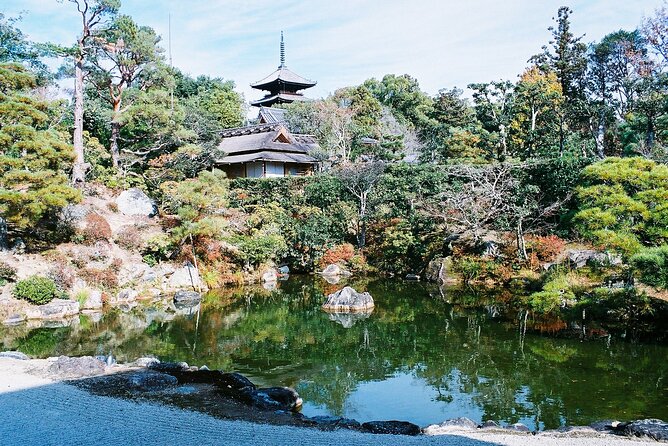
Ninna-ji is where the mood cools. Founded in 888 by Emperor Uda, it’s another UNESCO World Heritage site and known for its gardens, pagoda, and Omuro cherry trees. It’s also the head of the Omuro school of Shingon Buddhism, so your guide can frame what you’re seeing as more than architecture and scenery—it’s part of a spiritual lineage.
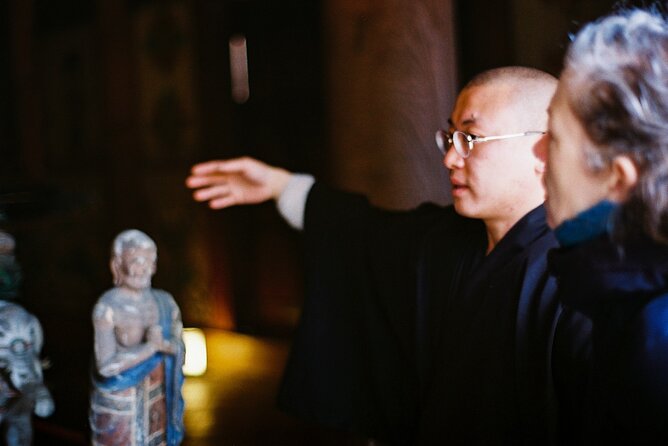
The standout here is the indoor access. The tour includes stepping inside the rarely opened Main Hall for a sacred chanting session led by a monk. That’s not typical “look from the outside” temple tourism. You get to hear the ritual in the space where it belongs, and then you’ll have time for a Q&A with the monk. If you’re curious about how Buddhism works in everyday practice—ritual, meaning, devotion—this is the part that turns the trip from pretty to personal.
After that, you’ll visit the Sutra Hall. Here’s a specific, hands-on ritual moment: you can see and interact with the rotating sutra shelf. Your guide will explain what makes that movement meaningful in tradition. Even if you’re not a religion scholar, you’ll come away understanding that details like this aren’t decoration; they’re actions with a purpose.
Then there’s a memorable finish inside the Imperial Residence area. Before you move on, you’ll capture a photo with the monk. After that, the tour concludes in the tranquil setting of the Imperial Residence zone, which gives you a softer landing after the chanting and the ritual focus.
One heads-up: the details of the Ninna-ji portion may be subject to change due to temple circumstances. Plan to stay flexible with timing and remember the meaning matters more than any single photo moment.
What you learn from the guide (and why it makes the temples easier)
This tour is built around guided interpretation, and the payoff shows in how clearly the temples connect to Kyoto’s deeper stories. The contrast is deliberate: Kinkaku-ji brings in power and prestige through its samurai-era origins and golden visual language, while Ninna-ji leans into imperial heritage and living ritual.
The tour includes time to ask questions during the monk-led portion, which is a big deal. A lot of temple visits give you facts but not context. Here, you’re guided toward understanding how Buddhist practice can be both formal and approachable: chanting, Q&A, the idea behind the rotating sutra shelf, and the way spaces like the Main Hall shape the experience.
Guide quality matters on a short tour like this, and past tours mention strong English and a warm, prepared style. Names that have come up include Ellie and Eriko (also referenced as Eri). That matters because you’re not just translating signage—you’re listening to how the guide connects history, ritual, and the reason you’re standing where you are.
My practical advice: listen especially hard during the transitions. The tour moves from Kinkaku-ji’s showpiece to Ninna-ji’s ritual spaces quickly, and the guide’s explanations help you avoid turning it into a checklist. If you want the most out of the time, keep your phone ready for pictures but keep your attention on the meaning.
Itinerary flow, timing, and getting there without wasting your day
This outing runs about 3 hours and is built as two clean blocks: about 1 hour at Kinkaku-ji and about 1 hour 45 minutes at Ninna-ji. You also get admission tickets included, which helps you avoid the typical Kyoto trap: standing around sorting tickets while other groups move on.
The tour uses a mobile ticket, which is convenient if your phone is your travel organizer. It’s also described as near public transportation, so you’re not forced into a car-dependent day to make it work.
Meeting point is at Yamazaki-an25 Kinugasa Babachō, Kita Ward, Kyoto, 603-8362, Japan, and the tour ends at Ninna-ji Temple, 33 Omuroōuchi, Ukyo Ward, Kyoto, 616-8092, Japan. Ending at Ninna-ji is useful because you’re finishing in the same temple complex area rather than backtracking.
Why timing is a value point here: 3 hours is short enough to fit into a packed Kyoto itinerary, but long enough to include the rare inside moments at Ninna-ji. That combo is exactly what you want when you’re trying to see Kyoto’s “big name” temples while still getting something beyond photos.
Practical tip for the day: wear shoes that handle temple paths and garden walkways. The tour is paced for walking between named areas at Kinkaku-ji and moving through indoor/outdoor sections at Ninna-ji.
Price and value: what $48.86 gets you in real terms
At $48.86 per person, this tour doesn’t aim to be the cheapest option in Kyoto. But it’s priced in line with a very specific kind of value: guided access to two UNESCO temples plus ticketed entry, all wrapped in a short schedule that also includes monk-led chanting, Q&A, and the Sutra Hall rotating shelf experience.
Here’s how I’d think about value for your money:
- You get admission included at both sites, so you’re paying for a guided day rather than piecing together tickets and timing.
- You’re getting access that many people can’t replicate easily on their own—especially the rare Main Hall element and the monk interaction.
- You’re not spending your whole time in logistics. With a small group and mobile ticket, the energy goes to seeing and understanding.
If your Kyoto plan is temple-heavy and you want fewer hours “figuring things out,” this is the kind of tour that can be worth it. If you’re the type who enjoys long unscheduled time at one site, you might feel the 3-hour structure is tight.
More temples and shrines to slow down in across Kyoto



Who should book this Kyoto Golden Pavilion and Ninna-ji tour
This guided tour is a strong fit if you want a guided, meaningful temple day rather than a self-guided sightseeing sprint.
It’s especially good for you if:
- you enjoy understanding history and ritual, not only taking photos
- you want a quiet contrast after Kinkaku-ji’s gold spectacle
- you like small groups (max 7), where your questions can actually land
- you’re interested in Buddhism’s lived practice through chanting and Q&A
It may be less ideal if:
- you want lots of downtime and slow wandering at each temple
- you don’t like guided pacing and prefer total freedom
Also, the tour notes that most people can participate, which is a nice signal if you’re looking for a day that’s not built around extreme physical demands.
Should you book this Kinkaku-ji and Ninna-ji guided tour?
If you want Kyoto’s two UNESCO “faces” in one outing—gold-leaf Zen icon and imperial Shingon temple with rare inside access—then yes, this is a smart booking. The price makes sense when you factor in included tickets, the short time window, and the chance to experience the Main Hall chanting and monk Q&A rather than just looking at buildings.
I’d book it now if:
- you’re scheduling a tight Kyoto itinerary and want a guided structure
- you care about the meaning behind what you’re seeing
- you like the idea of interaction, especially around the monk and the Sutra Hall ritual
I’d think twice if you strongly prefer unguided time at temples or you’re looking for long stays rather than a focused 3-hour experience.
FAQ
FAQ
What is the duration of this Kyoto tour?
It runs for about 3 hours.
Where does the tour start and end?
It starts at Yamazaki-an25 Kinugasa Babachō, Kita Ward, Kyoto, 603-8362, Japan, and it ends at Ninna-ji Temple, 33 Omuroōuchi, Ukyo Ward, Kyoto, 616-8092, Japan.
Which temples are included?
You visit Kinkaku-ji (the Golden Pavilion) and Ninna-ji Temple.
Are admission tickets included?
Yes. Admission tickets are included for both Kinkaku-ji and Ninna-ji.
Does the tour include a monk session at Ninna-ji?
Yes. You enter the rarely opened Main Hall for a sacred chanting session led by a monk, and there is also a Q&A with the monk.
Is there interaction or a ritual moment at Ninna-ji?
Yes. You’ll visit the Sutra Hall and see and interact with the rotating sutra shelf.
What’s the group size?
The tour has a maximum of 7 people.
Is the ticket mobile?
Yes. You receive a mobile ticket.
Can I cancel and get a full refund?
Yes. You can cancel for a full refund if you cancel at least 24 hours before the experience start time.
When should I book if I want good availability?
On average, this tour is booked about 60 days in advance.
More Gardens and Quiet Corners

More Kyoto Temples and Shrines
More Golden Pavilion and Temple Tours

Just added: more Kyoto tours to browse








Kinkaku-ji & Golden Pavilion Tours, compared.
 ★ 4.8Fushimi Inari, Kinkakuji, Bamboo Grove 1 Day Bus TourFrom $1224,316 reviews
 ★ 4.1Osaka/Kyoto:Kinkakuji,Arashiyama,FushimiInariShrine,NaraParkFrom $661,596 reviews
 ★ 5.0Nijo, Kinkaku-ji, Arashiyama, Kiyomizu & Fushimi InariFrom $51699 reviews
 ★ 4.9Best of Kyoto: Ginkakuji & Path of Philosophy E-Bike TourFrom $6979 reviews
 ★ 4.7Kinkakuji, Golden Pavilion Guided TourFrom $6471 reviews
 ★ 5.0Kyoto top must-see Golden pavilion and Bamboo forest half-day Private tourFrom $12252 reviews
 ★ 5.0Kyoto Bamboo Forest & Golden Pavilion E-Bike TourFrom $9950 reviews
 ★ 4.6Osaka/Kyoto: Katsuoji, Kinkakuji, Arashiyama 1-Day Bus TourFrom $5633 reviews
Browse the lists this tour appears in