
Reviewed · GION & GEISHA DISTRICT TOURS
Kyoto: Gion Night Tour Stories of Geisha and Maiko
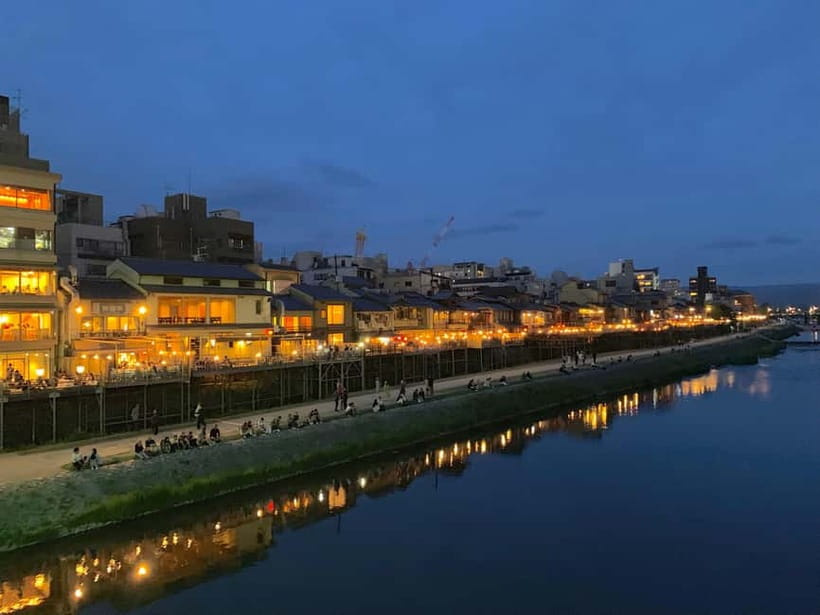
Gion looks like a movie set at dusk. This 2-hour small-group walk helps you understand geisha and maiko culture, not just pose for photos. I love the relaxed timing when the streets calm down, and I love the practical way the guide shows you what to notice, including teahouses and hidden signs. One consideration: it’s a fast-paced evening walk, so you won’t have long time to linger at any single spot.
You’ll move through Gion with a local expert in Spanish, keeping the group to a maximum of 15 people. That small size matters here. It means more questions, more context, and fewer people blocking your line of sight when something interesting appears down an alley.
The tour starts at Ben’s Cookies Kyoto Shijo and ends at Yasaka Shrine, with guided stops like the Statue of Izumo-no-Okuni, Shirakawa Canal, Gion Corner, and multiple photo moments. Even better, you’re set up for those brief, stunning glimpses of geisha heading out for their evening appointments, and the guide’s storytelling makes those moments feel earned, not random.
In This Review
- Key points before you head out
- Why a Gion dusk tour beats daytime sightseeing
- Meeting at Ben’s Cookies Kyoto Shijo and getting oriented fast
- Statue of Izumo-no-Okuni: the first stop sets the tone
- Shirakawa Canal: calm water, sharper details
- Photo stops at Gion Corner: learning what to look for
- Yasaka Shrine at the finish: a clean ending point
- Geisha and maiko culture: what you actually take home
- Price and value: is $22 for 2 hours worth it?
- Pace, group size, and who this tour suits best
- Should you book this Gion night tour?
- FAQ
- Where does the tour start?
- How long is the Kyoto Gion Night Tour?
- What price is it?
- What group size should I expect?
- What language is the guide?
- What are the main stops on the route?
- Is it suitable for children?
Key points before you head out
- Dusk timing in Gion: you see the district when it calms down and the mood shifts.
- Teahouse-sign spotting lesson: learn what traditional symbols and clues mean.
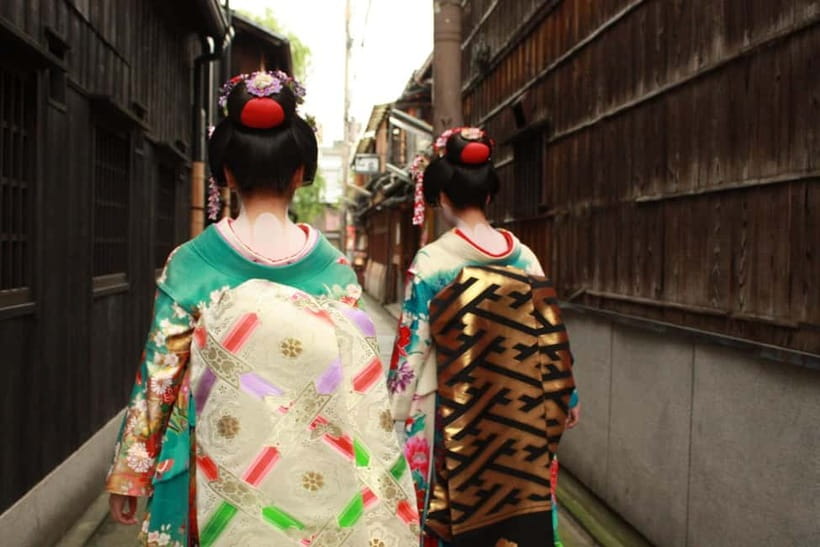
- Geisha and maiko culture, explained clearly: history and culture guided in an easy, story-driven way.
- Small group size (max 15): you get more attention than you would in bigger crowds.
- More than sightseeing: photo stops are paired with cultural context, so your pictures come with meaning.
Why a Gion dusk tour beats daytime sightseeing
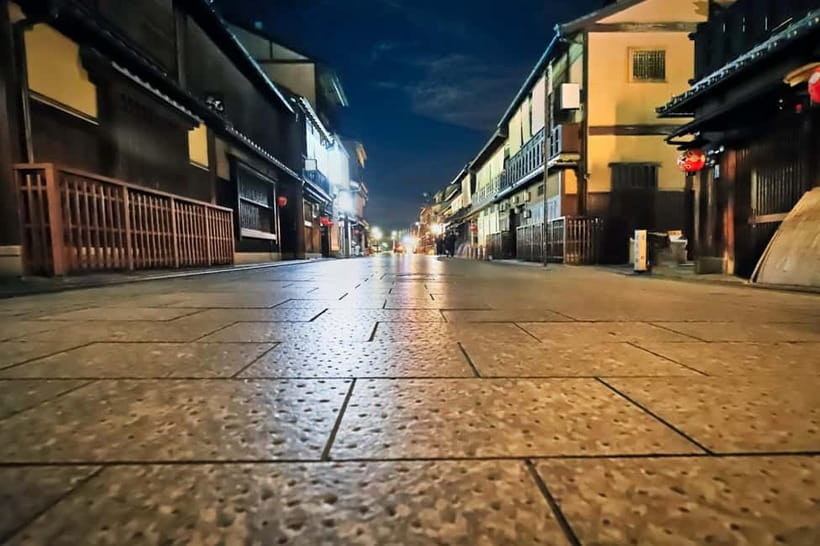
Kyoto can be noisy, and Gion can be even louder. This tour leans into the opposite: sunset-to-evening light and streets that feel more “local” than “theme-park.” The whole rhythm of the walk is designed around when people start moving toward evening plans, so you’re in the right place at the right time.
What makes the experience click is that it isn’t just visual. Your guide connects what you’re seeing to how geisha and maiko culture fits into everyday Gion life. You learn to look at alleys, not just main roads—especially when it comes to teahouses and the signs that hint at what’s happening behind the facades.
You should also know what this kind of tour does well: it gives you quick, useful interpretation. Then you can take that understanding and use it the rest of your time in Kyoto—when you walk past Gion Corner again, when you notice canal views, or when you spot a traditional marker and suddenly it makes sense.
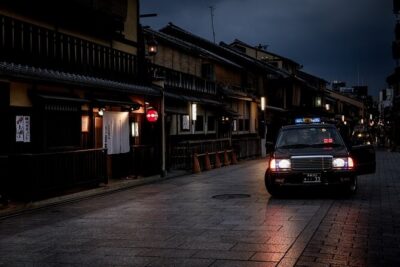
More evenings along the lantern-lit lanes of Gion


Meeting at Ben’s Cookies Kyoto Shijo and getting oriented fast
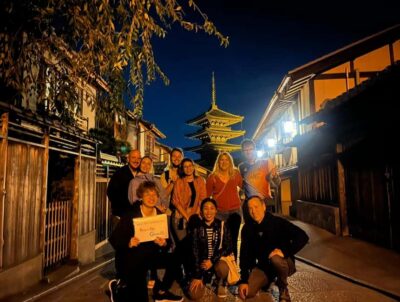
Your first checkpoint is straightforward: you meet at Ben’s Cookies Kyoto Shijo. The guide will be holding a sign with the tour name, so you’re not left wandering the block guessing.
This start matters more than it sounds. Gion is full of turns, narrow lanes, and small visual details that mean a lot once someone points them out. A solid beginning helps you keep track of where you are, what’s coming next, and how to pace yourself for the evening.
Also, plan to be ready for a true walking tour. With a total duration of 2 hours, you’ll be covering several stops without long detours. That’s great if you like momentum. It can feel tiring if you prefer slow, long museum-style hangs at every stop.
Statue of Izumo-no-Okuni: the first stop sets the tone
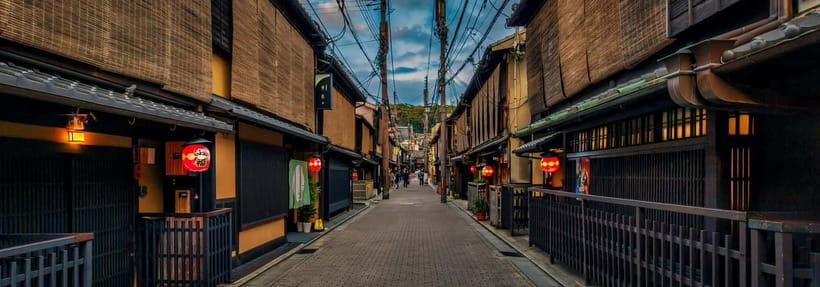
The walk opens with a guided stop at the Statue of Izumo-no-Okuni. Even before you get into the classic Gion lanes, this first moment helps you understand that the district’s traditional culture didn’t appear out of nowhere.
Your guide uses this early stop to frame what you’ll be learning about—geisha and maiko history and culture—so the rest of the evening doesn’t feel like random scenery. Think of it like a good preface: it’s not the main chapter, but it makes the story readable.
One practical tip: use this stop to get your bearings. If you’ve never walked Gion before, the streets can look similar at first glance. When you learn the area’s “logic” early, the canal views and teahouse alleys later feel easier to navigate.
Shirakawa Canal: calm water, sharper details
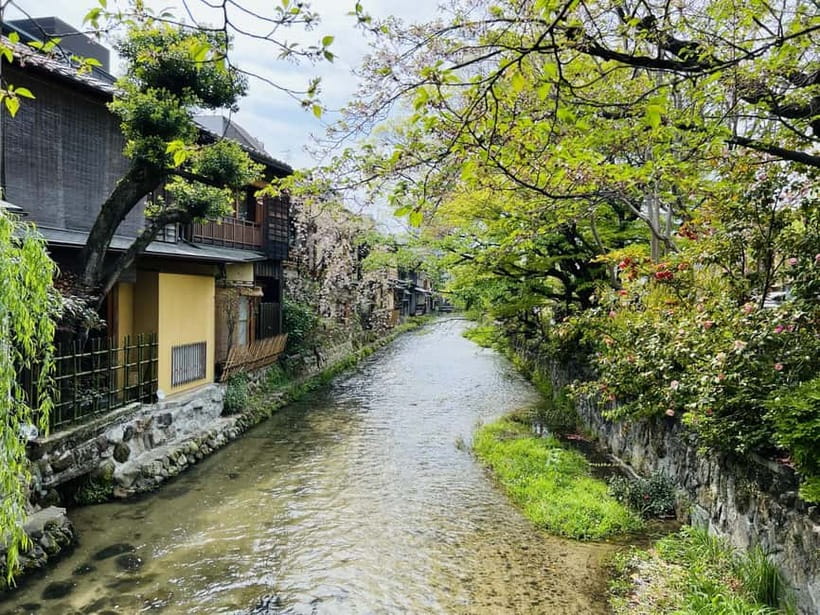
Next up is Shirakawa Canal, another guided stop built around atmosphere. At this hour, the canal area can feel more reflective, and you’ll be in the middle of the district’s traditional sightlines.
This is also where your guide’s explanations start paying off in a very concrete way. You’re not just staring at pretty views—you’re learning how to identify teahouses and recognize traditional signs that show you where cultural life is happening.
The key value here is attention. Gion is filled with small cues. If you walk through without help, you may notice the “big postcard stuff” and miss the rest. With a guide, you start catching those clues. That’s how you go from sightseeing to understanding.
Photo stops at Gion Corner: learning what to look for
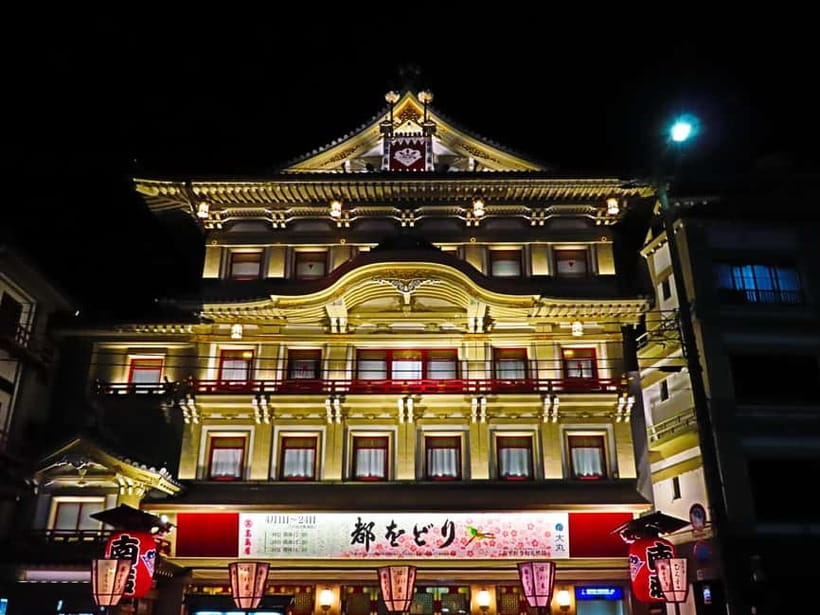
The tour includes a Gion Corner stop with both a photo moment and a guided visit. This is where the evening becomes more interactive. Your guide doesn’t treat photos as the goal. The goal is learning how Gion’s traditional entertainment culture shows up in the everyday street scene.
You’ll also get more practice at reading the district the way locals do. The tour is specifically built to teach you tips for identifying teahouses and understanding the cultural significance of signs in the alleys. That means when you see a traditional marker later on your own, you’re more likely to recognize what it signals.
If you care about photography, this stop can be rewarding. The best photos in Gion aren’t just wide shots. They’re the small, respectful ones—street corners, doorways, and the quiet rhythm of evening life. Your guide helps you spot those angles without turning the walk into constant stopping.
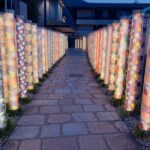
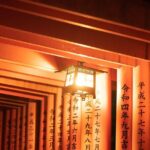
See how Kyoto shifts after dark


Yasaka Shrine at the finish: a clean ending point
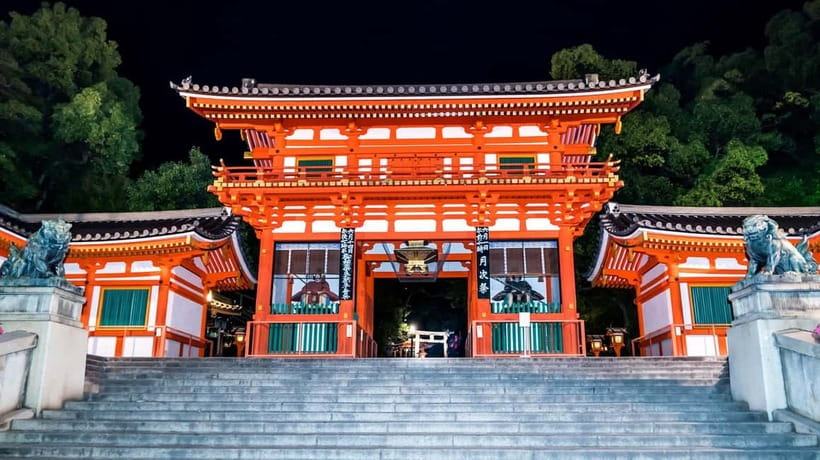
You’ll end the tour at Yasaka Shrine, with a photo stop and guided visit along the way. Finishing here is useful because it gives you a clear geographic “exit” from the maze of Gion lanes. Instead of feeling like the tour evaporates into crowds, you get a solid landing spot.
This final stretch is also a good moment to let everything sink in. By now you’ve learned the culture basics and practiced noticing traditional clues. When you reach Yasaka Shrine, the district feels like a story that has an ending, not just a collection of stops.
It’s also a convenient time to plan your next move. One of the best practical parts of this kind of tour is what the guide can offer after the last stop—especially in terms of where to eat nearby. A guide can share real suggestions based on what you’ve seen and what kind of evening you’re aiming for.
Geisha and maiko culture: what you actually take home
This is the core of the tour: an expert-led walking experience focused on the history and culture of geisha and maiko. The point isn’t to hand you a trivia sheet. It’s to help you interpret what you see in Gion without turning it into a guessing game.
The tour includes cultural and historical explanations, plus practical guidance for spotting teahouses and understanding the meaning of signs. That’s a big deal because it changes how you experience the district. You stop treating every alley like a mystery and start seeing patterns.
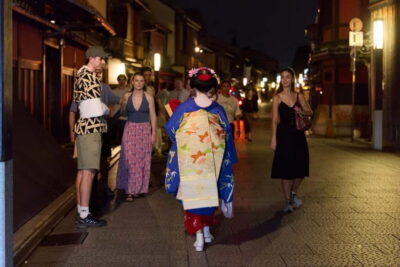
And yes, there’s the possibility of real-life sightings. The tour is designed for dusk timing when geisha may be on their way to evening appointments. On top of that, you might catch fleeting glimpses of geisha during the walk—exactly the kind of moment that feels special because you’re not rushing past everything.
A final note on the “so what” for your trip: once you know how to look, Gion becomes easier and more satisfying to explore on your own afterward. You’ll likely find yourself noticing traditional symbols and street clues even when you’re just returning to your hotel.
Price and value: is $22 for 2 hours worth it?
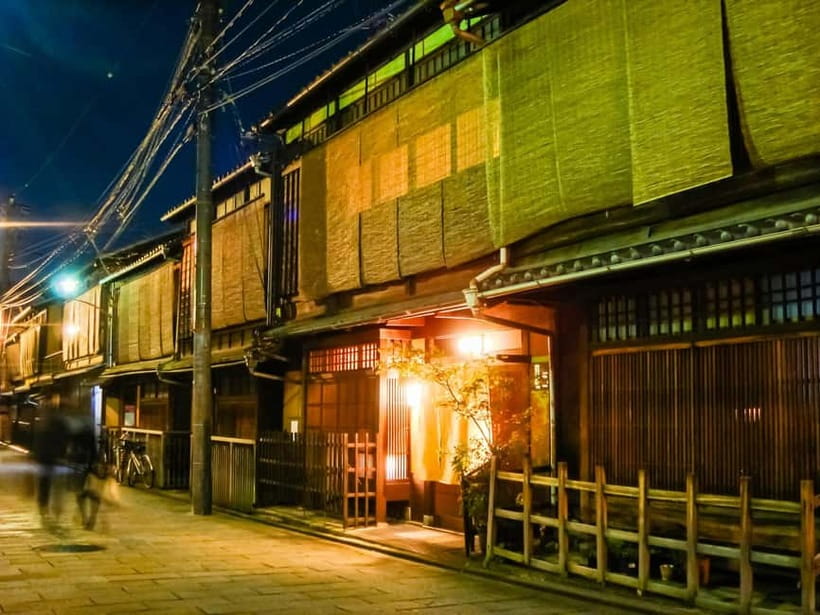
At $22 per person for a 2-hour guided walk with a local expert and small-group size, this is priced as a practical cultural experience rather than a premium, all-day production. You’re paying for interpretation, not just movement.
Here’s why that value can be strong: Gion has lots of visual detail, but most of it needs context. A good guide turns “I saw streets” into “I understood what I saw.” Add that the group stays small (up to 15), and the experience tends to feel more personal than big-bus-style sightseeing.
The other value point is timing. Dusk is when the atmosphere works best, but it’s also when you need someone who knows how to route you through the district. That’s hard to replicate solo without spending extra time figuring out where crowds thin out.
If you’re the type who enjoys learning quickly, asking questions, and walking rather than waiting, the price-to-time ratio makes sense. If you prefer long, slow self-guided wandering with no structure, you may feel the schedule is too tight.
Pace, group size, and who this tour suits best
This is a walking tour, and it moves. With multiple guided stops and photo moments packed into two hours, you’ll want comfortable shoes and the patience to walk through short stretches between viewpoints.
The group size is a major plus: a maximum of 15 participants. That keeps the guide-to-guest ratio reasonable, which matters when your main goal is learning how to identify teahouses and read the signs in the alleys.
This tour is not suitable for children under 12, so plan accordingly if you’re traveling with kids. It also tends to fit adults and older teens who enjoy cultural explanations and want to experience Gion in a more thoughtful way than a quick photo sweep.
Best match: you want an evening plan in Kyoto that feels grounded in culture, not just crowds. You like local storytelling. You want to know what you’re looking at while you’re looking at it.
Should you book this Gion night tour?
I’d book this tour if you want to understand Gion rather than just photograph it. The combination of dusk timing, a small group, and specific instruction on teahouses and traditional signs is the real selling point. Plus, the tour is designed so the story and the street scene reinforce each other, which makes the walk feel purposeful.
Skip it if you hate guided walks or you’re looking for a long, unhurried evening with lots of free time to wander without structure. Also consider the language factor. The live guide is Spanish, so if you need another language, check what’s available on your exact departure.
If you’re in Kyoto and you want Gion at its most atmospheric—plus the know-how to spot what matters—the tour is a solid, efficient choice.
FAQ
Where does the tour start?
The tour starts at Ben’s Cookies Kyoto Shijo. The guide will be holding a sign with the name of the tour.
How long is the Kyoto Gion Night Tour?
The tour lasts 2 hours.
What price is it?
It costs $22 per person.
What group size should I expect?
The experience is a small group, with a maximum of 15 participants.
What language is the guide?
The live tour guide is in Spanish.
What are the main stops on the route?
You’ll visit and/or stop for photos at places including the Statue of Izumo-no-Okuni, Shirakawa Canal, Gion Corner, and Yasaka Shrine.
Is it suitable for children?
It is not suitable for children under 12.
More Tour Reviews in Kyoto



More of Kyoto After Dark
Still in Gion? Keep Going

Just added: more Kyoto tours to browse








Gion & Geisha District Tours, compared.
 ★ 4.7Kyoto Geisha Walking Tour: Gion District & Hidden GemsFrom $253,273 reviews
 ★ 4.9Gion Magical Night Walking Tour with Geisha TriviaFrom $242,393 reviews
 ★ 4.7Gion Geisha District Walking Tour – Stories of GeishaFrom $202,187 reviews
 ★ 4.9Best of Kyoto: Gion, Geisha, Pagodas & CobblestonesFrom $242,058 reviews
 ★ 4.5Night Walk in Gion: Kyoto’s Geisha DistrictFrom $212,003 reviews
 ★ 5.0Kyoto Night Foodie Tour in Gion (9+ dishes + 6 Sake tastings)From $1631,762 reviews
 ★ 5.0Kyoto Gion Geisha District Walking Tour – The Stories of GeishaFrom $251,441 reviews
 ★ 5.0Kyoto Gion: 2-Hour Geisha Culture & History Walking TourFrom $231,186 reviews
Browse the lists this tour appears in