
Reviewed · GION & GEISHA DISTRICT TOURS
Kyoto Gion Night Tour: Discover Geisha District and Hidden Gems
Night in Gion feels like a movie set. This Kyoto night tour takes you through lantern-lit streets and a tight mix of cultural stops, so you see the after-dark side of Higashiyama instead of only the daytime postcard version.
I love how the pacing stays easy to follow for a 1 hour 30 minutes walk, with a local English-speaking guide who makes the stories practical. One recent group even shared that guide Ikki was very easy to talk with while they got lucky and spotted geishas, so the experience can feel personal and a bit spontaneous. The main thing to consider is that this is still a walking tour, so you’ll want comfortable shoes and arrive on time, because late arrivals can’t join.
In This Review
- Key things to know before you go
- Why Gion Looks Different After Dark
- Meeting Point and Timing: The 6:30pm Foot-Traffic Window
- Hanamikoji Street: Where Geisha Stories Feel Close
- Gion District Stroll: Machiya Houses and Old Kyoto Mood
- Yasui-Konpiragu: Praying for the End of Bad Relationships
- Yasaka Pagoda (Hokanji): A Wooden Structure With a Famous Claim
- Sannenzaka and Ninenzaka: Old Stone Lanes and Photo Opportunities
- Yasaka Shrine Finish: Prosperity Wishes and a Huge Network of Shrines
- Price and What You Actually Get for $26.06
- Who This Tour Suits Best (and Who Might Skip It)
- Should You Book the Kyoto Gion Night Tour?
- FAQ
- How long is the Kyoto Gion Night Tour?
- What time does the tour start?
- Where does the tour meet?
- Is this tour a walking experience?
- Is the entrance fees to temples and shrines included?
- Are professional photos included?
- Does the tour include food or drinks?
- Is there a group size limit?
- What ticket type is used?
- What is the cancellation policy?
Key things to know before you go
- Gion at night, with real street time in Hanamikoji and the wider Gion district
- A chance to spot geisha or maiko, especially around Hanamikoji Street
- Shrine stops with specific meanings, like cutting bad relationships at Yasui-Konpiragu
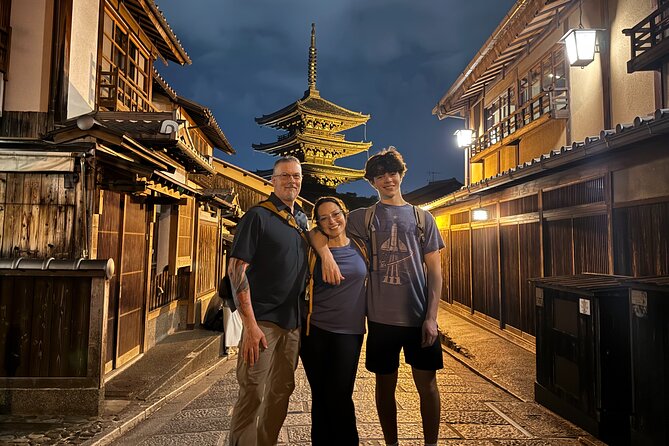
- Yasaka Pagoda at Hokanji and its famous wooden construction legend
- Sannenzaka and Ninenzaka for old-stone lanes and classic photo angles
- Included entrance fees and professional photos, so your budget stays simple
Why Gion Looks Different After Dark
Gion is one of those parts of Kyoto that changes its mood fast. In the evening, the streets feel calmer, the lighting is softer, and the details you normally race past during the day suddenly matter. That matters on a tour like this, because you’re not just moving between landmarks. You’re learning how the district is meant to be experienced.
You’ll also appreciate that the route is designed for walking. You get to linger in the right places long enough to notice wooden machiya facades, traditional storefront shapes, and the way lanterns frame street corners. It’s also a nice way to get oriented in Higashiyama. Even if you’re planning to wander on your own afterward, you’ll come away with a clearer sense of where things sit.
The real payoff, though, is cultural context. The stops aren’t random. They connect the geisha district atmosphere with nearby shrines that locals treat as meaningful, not just decorative.
More evenings along the lantern-lit lanes of Gion


Meeting Point and Timing: The 6:30pm Foot-Traffic Window
This tour starts at 6:30pm at the statue of Izumo-no-Okuni in Kawabatacho, Higashiyama Ward. Ending back at the meeting point keeps the loop simple. You’re done without having to solve transit logistics at night.
The duration is about 1 hour 30 minutes, which is just long enough to feel like you did something real, but short enough not to steal an entire evening. With a max group size of 20 travelers, you’re less likely to feel swallowed by a huge crowd, and you’ll have better odds of hearing your guide over the street noise.
If you’re the type who hates being rushed, this is still a walk on public streets. Build in a little buffer time so you’re not stressed. Late arrivals can’t join and won’t get a refund, so this is one tour where punctual feels extra important.
Hanamikoji Street: Where Geisha Stories Feel Close
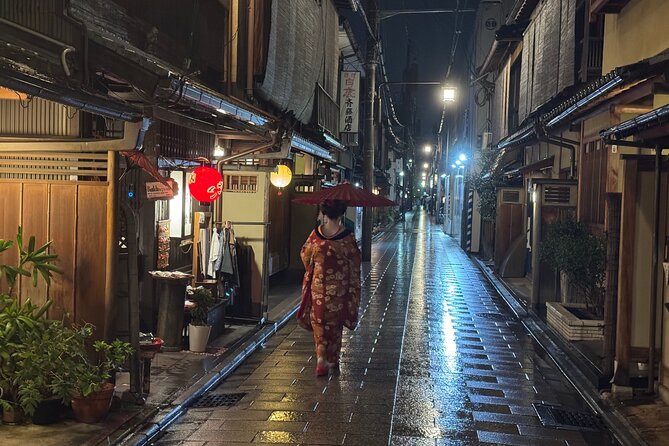
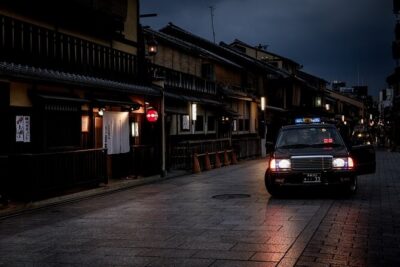
Your first real taste of Gion is Hanamikoji Street, one of the district’s most famous lanes. This is the place where traditional teahouses and historic machiya houses set the tone. On an evening walk, that matters even more, because the lighting helps you see the street as locals once did: narrow, intimate, and meant for slow attention.
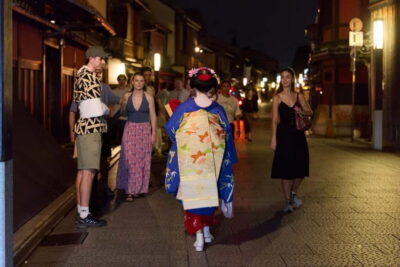
You may also get a geisha or maiko sighting here. The tour is built around that possibility, but you should treat it like weather, not a promise. Some nights are quiet. Some nights you get lucky. The value is that your guide helps you understand what you’re seeing, rather than just hoping for a photo.
Tip: if you’re trying to capture night photos, plan for a steady pace and avoid blocking the flow. Hanamikoji is narrow, and you’ll get better shots by keeping it respectful and letting the scene come to you.
Gion District Stroll: Machiya Houses and Old Kyoto Mood
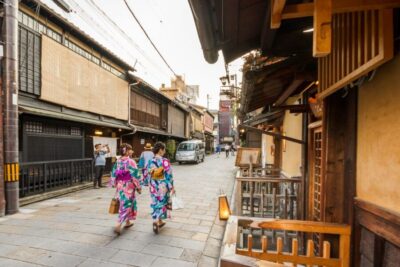
After Hanamikoji, you’ll spend time in Gion, the larger geisha district area people come to Kyoto for. This part of the walk is useful because it expands the view beyond a single iconic street. You start to recognize the shape of the district: the way machiya houses line the lanes, and how teahouse-lined streets create a distinct atmosphere even when the signs and storefronts are modern.
What I like about this segment is that it gives you a sense of geography. In Kyoto, streets can feel confusing until you see how neighborhoods connect. This stroll helps you map Gion in your head, so if you later wander on your own, you’ll know what you’re approaching instead of only reading it off a screen.
Also, having a guide matters here. Without context, it’s easy to treat Gion like a theme park. With context, it becomes a living district with ongoing traditions and local rhythm.
Yasui-Konpiragu: Praying for the End of Bad Relationships
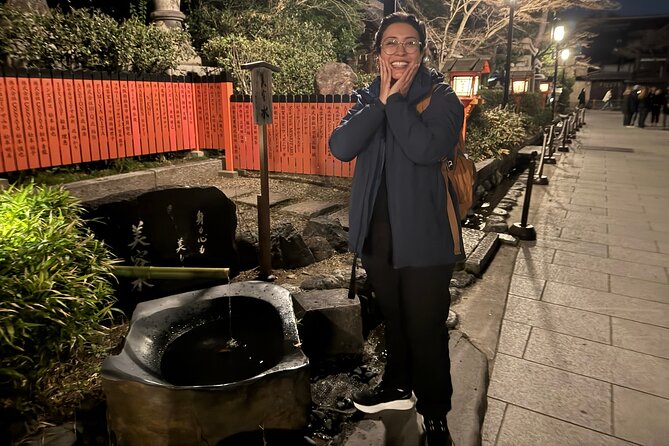
Next comes a different mood: Yasui-Konpiragu, a shrine known for a very specific wish. People visit to pray for ending negative relationships and turning toward better connections.
This stop is valuable because it shows you Kyoto isn’t only about aesthetics. It’s also about practiced belief. When you understand the shrine’s theme, the visit feels more grounded. You’re not just ticking off a sight. You’re stepping into a tradition with a purpose that locals and visitors share.
This is also a good breather in the tour. After walking through Gion’s streets, you get a quieter moment near the shrine grounds. It’s one of those transitions that makes the evening feel balanced rather than nonstop street sightseeing.
See how Kyoto shifts after dark


Yasaka Pagoda (Hokanji): A Wooden Structure With a Famous Claim
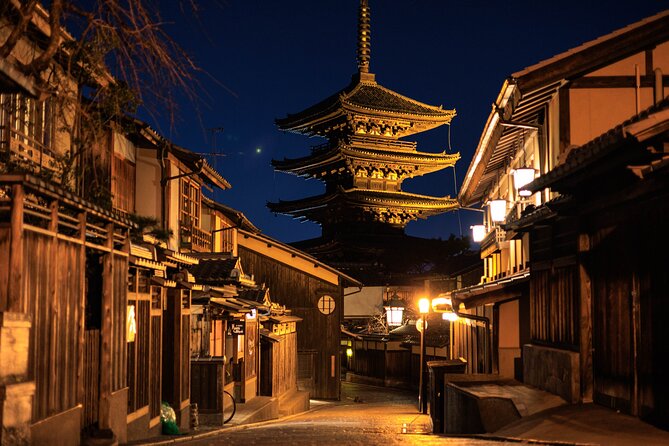
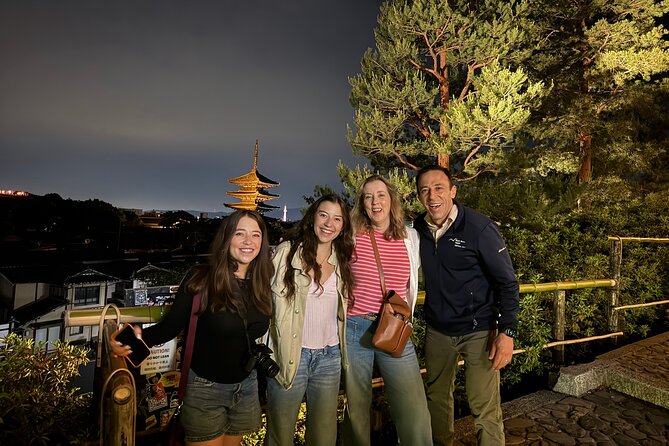
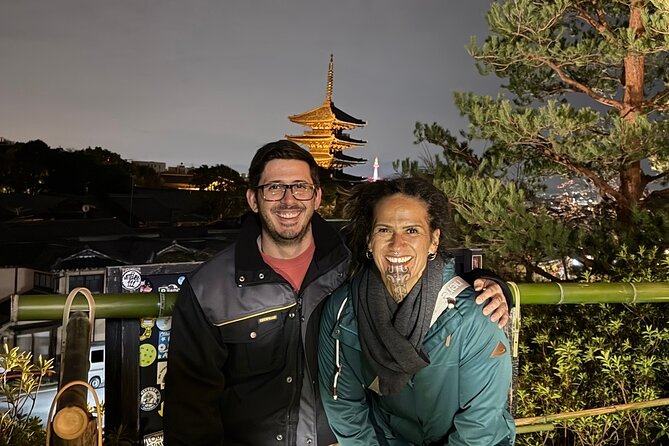
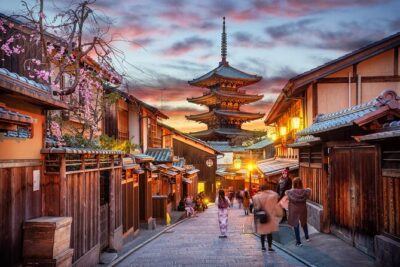
You’ll then head to Yasaka Pagoda at Hokanji (Yasaka-no-tou), a Kyoto icon because of both its scale and a famous story about how it was built. It’s described as one of the oldest wooden structures in Japan, and there’s a well-known claim that it was made without using nails.
That kind of detail changes the way you look at a building. From a distance, it’s just impressive. Up close, you start thinking about craftsmanship and how long-term preservation works in a city that expects structures to survive. Even if you don’t know the engineering, the legend adds meaning to the moment.
If you like architecture, this is a highlight. It’s also a good spot to pause and let the rest of the street world fade for a second. At night, the pagoda’s presence feels extra strong because you’re not surrounded by daylight background distractions.
Sannenzaka and Ninenzaka: Old Stone Lanes and Photo Opportunities
After the shrine stop, the walk turns into pure atmosphere: Sannenzaka and Ninenzaka, the stone-paved lanes famous for traditional architecture and a line of souvenir shops and restaurants.
These streets are fun because they’re built for wandering. Even on a guided route, you’ll have a chance to slow down and soak in the feel of old Kyoto. The stone steps and lane curves also make night photos easier. You can frame buildings and street lights without needing a complicated setup.
One practical note: these lanes can be busy. If you’re serious about photos, keep your group movement smooth and avoid stopping in the middle of the flow. You’ll get better results by watching how light and street angles line up while you walk, then pausing at wider spots.
And since food and drinks are not included, this is where you’ll be tempted by snacks. If you want to keep dinner plans flexible, you can treat this area as a browse-and-choose zone.
Yasaka Shrine Finish: Prosperity Wishes and a Huge Network of Shrines
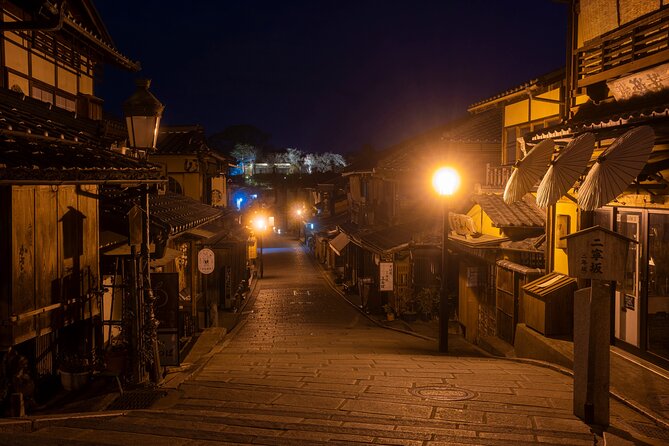
Your final stop is Yasaka Shrine, a major Kyoto shrine dedicated to gods of prosperity and protection. What makes this stop especially interesting is its reach: it’s described as the headquarters for 2,300 related shrines across Japan.
That scale gives the visit a bigger feeling than you might expect from walking through a single area. You start to see Yasaka Shrine as a central hub, not an isolated landmark. At night, that sense of importance holds steady because the atmosphere remains focused.
It’s also a satisfying ending point. After geisha district streets, you close with a shrine that locals treat as meaningful. You’ll feel like you experienced multiple sides of Kyoto in one evening: culture, belief, and the everyday rhythm of neighborhoods.
Price and What You Actually Get for $26.06
At $26.06 per person, this tour is priced for one clear reason: it keeps your evening simple. You get a local English-speaking guide, entrance fees for the temples and shrines, and professional photos taken during the tour.
That combination is where the value shows. Entrance fees and guided interpretation can add up fast if you do it on your own with multiple stops. Here, you’re paying for direction and context, not just movement through a map.
It also helps that it’s a small-group style walk with a limit of 20 travelers. That doesn’t mean it’s private, but it does mean your guide can keep the pace manageable and the storytelling readable.
What you should plan for: food and drinks are not included, and you’ll likely want to buy something if you’re hungry. Personal expenses are also on you, like souvenirs. So I’d treat the $26.06 as the cost of the structured evening, then budget a little extra for snacks if you want them.
Who This Tour Suits Best (and Who Might Skip It)
You’ll like this tour if you want a guided night plan that hits the highlights without feeling like a sprint. It’s especially good for first-time visitors who want to understand Gion’s geisha district atmosphere and connect it to nearby shrine culture.
It’s also a smart choice if you care about photos but don’t want to chase perfect angles alone. The tour includes professional photos, which is useful if you’d rather spend your energy walking and learning instead of fiddling with settings.
You might hesitate if you’re not comfortable with evening walking. This experience is designed as a walk, and the meeting time matters. Also, if you’re booking mainly for a guaranteed geisha sighting, you may feel disappointed. The tour includes the right streets and timing, but sightings aren’t controlled.
Should You Book the Kyoto Gion Night Tour?
If you want a well-paced Kyoto evening that mixes Gion night streets, shrine meaning, and easy logistics, I think this is a strong booking. The price is reasonable because admissions and guide time are built in, and the included professional photos can make the night feel more rewarding than a DIY loop.
Book it if you’re curious about how Kyoto traditions connect across neighborhoods and you want someone local helping you notice the details. I’d skip it only if walking at night doesn’t sound fun to you, or if your schedule can’t reliably get you to the meeting point on time.
FAQ
How long is the Kyoto Gion Night Tour?
It lasts about 1 hour 30 minutes.
What time does the tour start?
The start time is 6:30pm.
Where does the tour meet?
You meet at the statue of Izumo-no-Okuni in Kawabatacho, Higashiyama Ward, Kyoto.
Is this tour a walking experience?
Yes. It’s designed as a WALKING experience, with plenty of time on foot.
Is the entrance fees to temples and shrines included?
Yes. Admission Fees for All Temples and Shrines are included.
Are professional photos included?
Yes. Professional Photos will be taken during the tour.
Does the tour include food or drinks?
No. Food and drinks are not included.
Is there a group size limit?
Yes. The tour has a maximum of 20 travelers.
What ticket type is used?
You’ll receive a mobile ticket.
What is the cancellation policy?
You can cancel for a full refund if you cancel at least 24 hours before the experience’s start time. If you cancel less than 24 hours before, the amount paid is not refunded.
More Tour Reviews in Kyoto




More of Kyoto After Dark
Still in Gion? Keep Going

Just added: more Kyoto tours to browse








Gion & Geisha District Tours, compared.
 ★ 4.7Kyoto Geisha Walking Tour: Gion District & Hidden GemsFrom $253,273 reviews
 ★ 4.9Gion Magical Night Walking Tour with Geisha TriviaFrom $242,393 reviews
 ★ 4.7Gion Geisha District Walking Tour – Stories of GeishaFrom $202,187 reviews
 ★ 4.9Best of Kyoto: Gion, Geisha, Pagodas & CobblestonesFrom $242,058 reviews
 ★ 4.5Night Walk in Gion: Kyoto’s Geisha DistrictFrom $212,003 reviews
 ★ 5.0Kyoto Night Foodie Tour in Gion (9+ dishes + 6 Sake tastings)From $1631,762 reviews
 ★ 5.0Kyoto Gion Geisha District Walking Tour – The Stories of GeishaFrom $251,441 reviews
 ★ 5.0Kyoto Gion: 2-Hour Geisha Culture & History Walking TourFrom $231,186 reviews
Browse the lists this tour appears in