
Reviewed · GION & GEISHA DISTRICT TOURS
Kyoto: Gion Magical Night Walking Tour
Gion changes when the lights come on. This 1 hour 40 minute Kyoto night walk takes you through Gion landmarks and quieter lanes before the daytime crush, with real talk about geisha culture and etiquette. It also helps you see why the district feels so different after sunset.
I love two things about this tour: you get there early enough that streets feel calmer, and the guide’s focus on geisha life makes the scenery mean something. You might even catch sight of a Maiko/Geiko, and the guide shares the simple, respectful way to greet them—Konnichiwa with a smile.
One thing to plan for: this is a walking route with slopes and stairs, so it’s not a great fit if you’re not comfortable with that kind of movement.
In This Review
- Key highlights to look for
- Why a Gion night walk feels calmer than daytime
- What you get for $29.60 and why it’s good value
- Meeting at Minamiza Theater and planning your route
- Gionmachi Minamigawa: spotting maiko and geiko politely
- Yasui-Konpiragu shrine: matchmaking prayers with a moral edge
- Sannenzaka Ninenzaka lanes to Yasaka Pagoda views
- The WWII Kannon memorial and the 400-year-old tea-and-bamboo stop
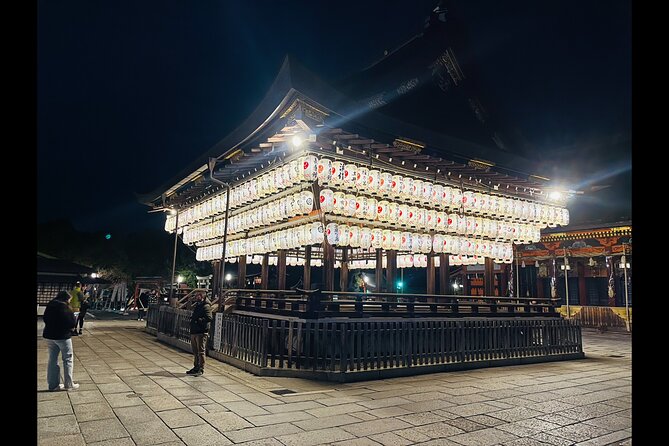
- Yasaka Shrine at night: Gion-san blessings in a lantern-lit hub
- How small-group etiquette makes the stories stick
- Walking comfort, shoes, and weather realities
- Should you book Kyoto: Gion Magical Night Walking Tour?
- FAQ
- How long is the Kyoto Gion Magical Night Walking Tour?
- What group size is this tour?
- Where do we meet and where does the tour end?
- Is admission included for the stops?
- Is the tour suitable if I have trouble with stairs or hills?
- Do I get a mobile ticket?
- What is the cancellation policy?
Key highlights to look for
- Early evening pacing: a calmer Gion vibe while the lanterns start to glow
- Small-group feel: a cap listed as up to eight (and a stated maximum of 10), so the guide can actually talk to you
- Geisha etiquette, not just sightseeing: how to behave if you spot maiko or geiko
- Free admission stops: multiple shrines and scenic lanes without paying for entry tickets
- Night photography-friendly route: plenty of stops that look great under streetlights
Why a Gion night walk feels calmer than daytime
If you’ve toured Kyoto’s famous neighborhoods in daylight, you know the story: the buildings are beautiful, but the sidewalks can feel like moving crowds. This tour flips the timing so you’re out in Gion after the bulk of the daytime visitors fade. The result is that you can actually look at details—doorways, small lanterns, shrine gates—without constantly dodging groups.
I also like that this isn’t just a “follow the leader” route. The walk is built around geisha culture and how people behave in public spaces there. That matters in Kyoto, where etiquette isn’t a museum rule. It’s part of how the neighborhood works.
Finally, the pace is short-and-focused. At 1 hour 40 minutes (and often closer to two hours at a relaxed photo stop pace), you get multiple viewpoints and shrines without feeling like you’re stuck in one long transfer.
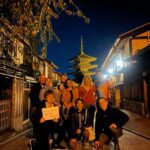
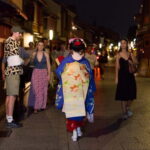
More evenings along the lantern-lit lanes of Gion
What you get for $29.60 and why it’s good value
At $29.60 per person, this tour sits in the “small splurge, big context” category. The best part for value is that several of the key stops have admission listed as free—so you’re paying mainly for the guide and the route logic, not for entry fees.
You’re also buying something you can’t easily DIY in half an evening: guidance on what you’re seeing and how to act. For example, the tour includes specific street-and-shrine stops tied to Gion’s identity, plus a lesson-style approach to geisha history and etiquette. That’s the difference between taking photos of pretty streets and understanding why they’re there.
You do need to show up ready to walk. This isn’t a sit-down class in a café. But if you like walking Kyoto at night, the ticket price makes sense.
Meeting at Minamiza Theater and planning your route
You start at Minamiza Theater (松竹南座 2F西ロビ Kyoto市東山区四条大橋東詰 area). The end point is in Gionmachi Kitagawa (625 Gionmachi Kitagawa, Higashiyama Ward).
The practical upside: the meeting point is on a major route in Higashiyama, and the experience is marked as near public transportation. That helps a lot because Kyoto’s districts are spread out. You’re not stuck trying to piece together a complicated self-guided night route.
You’ll also use a mobile ticket. That’s handy when you’re moving fast in the evening. Just make sure your phone battery is healthy before you head out.
One more planning note: the tour requires good weather. If conditions are rough, the operator can cancel and offer a different date or a full refund. So bring your common sense too—if rain is coming, consider light rain gear.
Gionmachi Minamigawa: spotting maiko and geiko politely
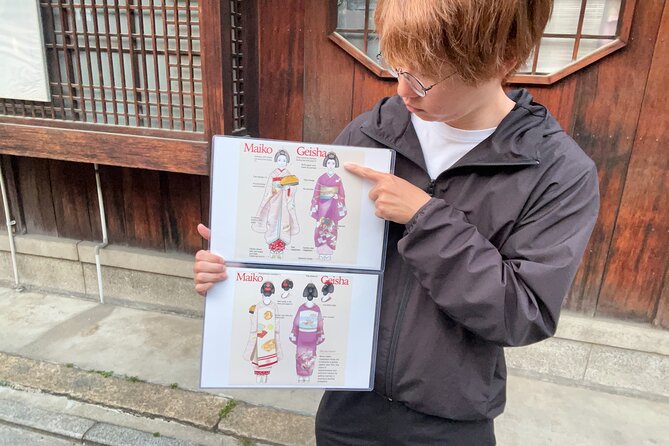
The first street stop is Gionmachi Minamigawa. This is one of the best-known streets in the district, and it’s the kind of place where you might spot a maiko or geiko if you’re lucky.
What I like here is that the tour doesn’t treat the moment as a grab-it-and-run spectacle. The guide gives a simple etiquette cue: if you see a maiko or geiko, greet them with a smile and say Konnichiwa. That’s both polite and low-pressure—exactly what you want when you’re standing in a real neighborhood, not a theme park.
Practical tip: keep your greeting brief and respectful. Don’t block foot traffic, and don’t crowd the moment. In Gion, space and quiet matter.
Yasui-Konpiragu shrine: matchmaking prayers with a moral edge
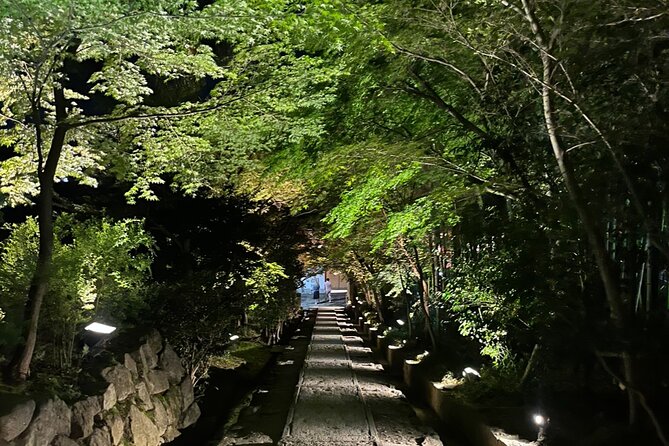
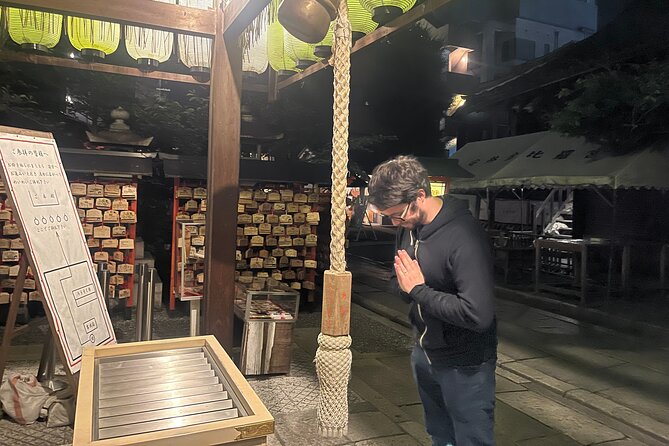
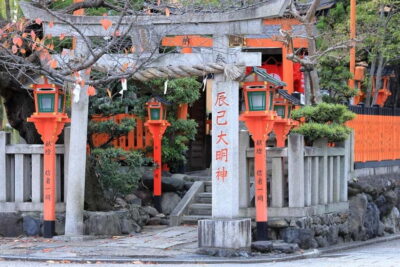
Next up is Yasui-Konpiragu, a shrine tied to relationships and spiritual cleanup. The tour explains it as a place that helps men and women meet each other, and it’s also connected to cutting off bad relationships. If you’re traveling with a partner, it can also be framed as a prayer for stronger bonds for married couples.
This is a good stop because it shows that shrines in Kyoto aren’t only about sightseeing. They’re part of daily belief systems—places where people go to ask for specific help.
At night, shrine spaces also feel different. The lighting makes the entrance and pathways feel more intimate, and you’re not looking at a shrine through the glare of a busy daytime crowd. It’s calmer, so you can take in how the space is arranged.
See how Kyoto shifts after dark
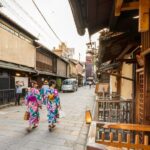
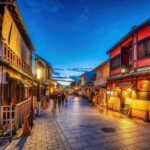


Sannenzaka Ninenzaka lanes to Yasaka Pagoda views
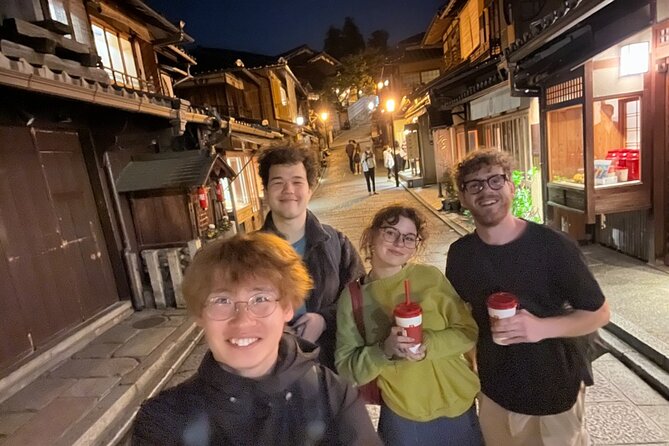
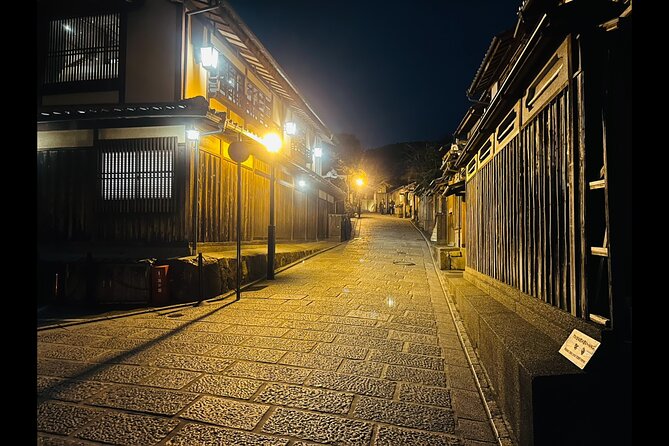
From there, the walk shifts to Sannenzaka and Ninenzaka, lanes known for their traditional Kyoto townscape. This road area also links you toward the Kiyomizu-dera neighborhood, which is why it’s so popular.
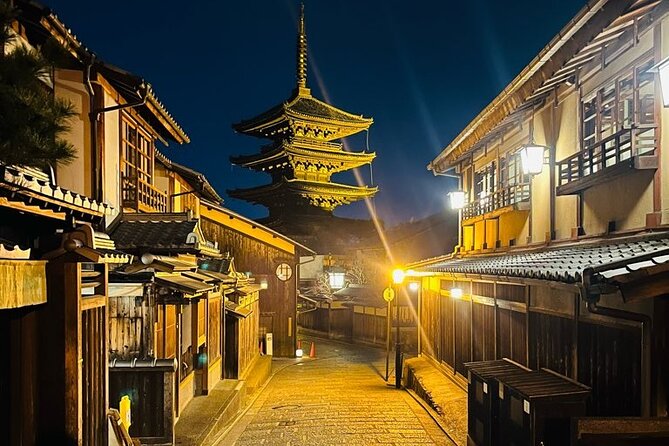
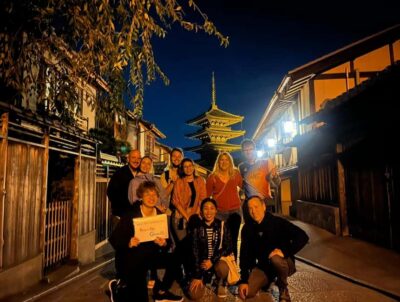
One big plus: even when you already know Kiyomizu-dera is nearby, this stop gives you the “in-between” streets that make the whole area feel historic. The tour also highlights Yasaka-no-to (Yasaka Pagoda), which is one of those skyline markers you’ll keep seeing as you move around Kyoto.
A small drawback: these lanes can feel busy in general, even at night, because the streets are naturally attractive. But the tour’s timing and guide direction usually keep you from fighting the worst of it.
If you like photos, bring your eye for detail. Look up at rooflines and lantern placement. The beauty isn’t only at street level.
The WWII Kannon memorial and the 400-year-old tea-and-bamboo stop
Two stops add a quieter, more reflective tone to the walk.
First is a site built in 1955 to pray for the repose of the souls of World War II victims, featuring a very large Kannon statue. This is not a “quick photo and move on” kind of stop. The evening lighting helps it feel contemplative, and the memorial context grounds the rest of the tour in something bigger than sightseeing.
Then you’ll visit another special area built about 400 years ago by the wife of a shogun to mourn the death of her husband. Here, the tour points out what you can actually enjoy: a beautiful garden, a 400-year-old tea ceremony house, and a bamboo grove.
This is where I think the tour surprises people. You come for geisha culture, then you get Kyoto’s softer side: gardens and tea spaces tied to grief, memory, and tradition. It’s one of the reasons a guided night walk can feel more meaningful than a self-guided route.
If you want one photo to remember: aim for a shot that includes the bamboo or tea house setting rather than just random lanterns.
Yasaka Shrine at night: Gion-san blessings in a lantern-lit hub
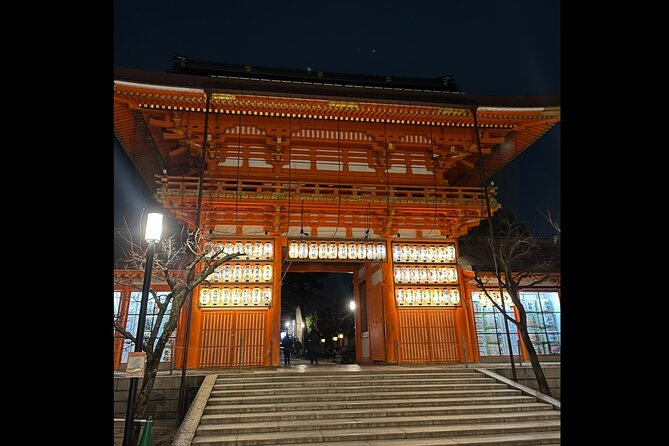
The final shrine stop is Yasaka Shrine. The tour explains it as the head shrine of approximately 2,300 related shrines across Japan—so you’re not just seeing a local spot. You’re seeing a major node in a much wider network.
Yasaka Shrine is also known as Gion-san, connected to blessings like warding off bad luck, bringing good luck, and promoting beauty. That framing fits nicely with what you’ve learned earlier about Gion’s identity.
At night, this stop often feels like the neighborhood’s emotional center. Streetlights and lanterns help the shrine’s entrances and edges look softer. It’s a good place to pause, reset, and let the stories land before you wrap up.
How small-group etiquette makes the stories stick
A big selling point is the small-group size. The overview calls out a maximum of eight, while the broader tour info states a maximum of 10. Either way, you’re not stuck in a giant crowd where the guide can barely be heard.
This format also changes how you experience geisha culture. You get explanations about etiquette and history at a human pace. The guide can answer questions without shutting down the group. And when the tour includes tips like greeting a maiko or geiko with Konnichiwa, you’re more likely to remember how to apply it respectfully in the moment.
I’ve seen multiple guides named as highlights for this kind of tour—Karen, Ricky, Hina, Pam, and Sho—and the theme across the names is consistent: friendly storytelling, and lots of attention to questions.
Walking comfort, shoes, and weather realities
The tour is marked as not recommended for people who aren’t comfortable with slopes and stairs. That’s important. Even if the distance isn’t huge, Kyoto’s streets can rise and fall without warning.
So here’s my practical advice: wear comfortable shoes with good grip. Plan to take your time at the steeper sections, especially when sidewalks are uneven and you’re also trying to look at lantern-lit details.
Also, because this is dependent on good weather, you should be ready for a weather pivot. The tour can be canceled due to poor conditions, with an alternative date or full refund offered. If you’re traveling during a rainy stretch, it’s smart to keep flexible evening plans.
Should you book Kyoto: Gion Magical Night Walking Tour?
If you want Kyoto street photos plus cultural context, this is a strong match. I’d book it if you care about geisha history and etiquette, and you want a route timed for a calmer Gion atmosphere. The fact that multiple stops list free admission adds extra value—your money goes to the guide and the walking route, not tickets.
I’d skip (or at least think twice) if you dislike stairs or steep sections. This tour is built for people who can walk comfortably and stay balanced on uneven sidewalks.
If you’re on the fence, ask yourself one question: do you want to understand what you’re seeing tonight, or just capture images? This tour leans hard toward the first option.
FAQ
How long is the Kyoto Gion Magical Night Walking Tour?
It runs about 1 hour 40 minutes (approx.).
What group size is this tour?
It’s designed as a small-group walk, with a cap listed as up to eight, and a maximum of 10 travelers in the tour details.
Where do we meet and where does the tour end?
You meet at Minamiza Theater in Higashiyama Ward. The tour ends at 625 Gionmachi Kitagawa, Higashiyama Ward.
Is admission included for the stops?
Admission is listed as free for the stops described in the experience details.
Is the tour suitable if I have trouble with stairs or hills?
No. The tour notes that due to slopes and stairs, it is not recommended for those who are not comfortable with walking.
Do I get a mobile ticket?
Yes. The experience is listed as having a mobile ticket.
What is the cancellation policy?
You can cancel for free up to 24 hours in advance for a full refund. If you cancel within 24 hours of the start time, the amount paid is not refunded.
More Tour Reviews in Kyoto

More of Kyoto After Dark
Still in Gion? Keep Going

Just added: more Kyoto tours to browse





Gion & Geisha District Tours, compared.
 ★ 4.7Kyoto Geisha Walking Tour: Gion District & Hidden GemsFrom $253,273 reviews
 ★ 4.9Gion Magical Night Walking Tour with Geisha TriviaFrom $242,393 reviews
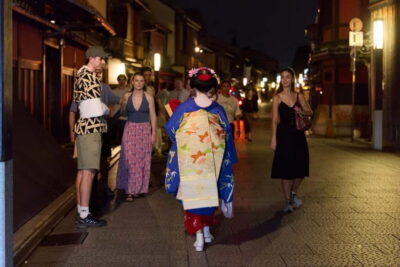 ★ 4.7Gion Geisha District Walking Tour – Stories of GeishaFrom $202,187 reviews
 ★ 4.9Best of Kyoto: Gion, Geisha, Pagodas & CobblestonesFrom $242,058 reviews
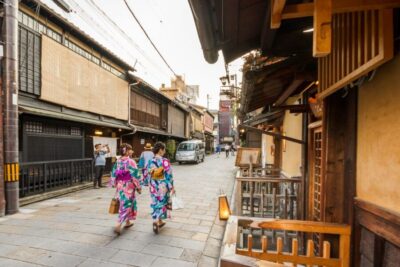 ★ 4.5Night Walk in Gion: Kyoto’s Geisha DistrictFrom $212,003 reviews
 ★ 5.0Kyoto Night Foodie Tour in Gion (9+ dishes + 6 Sake tastings)From $1631,762 reviews
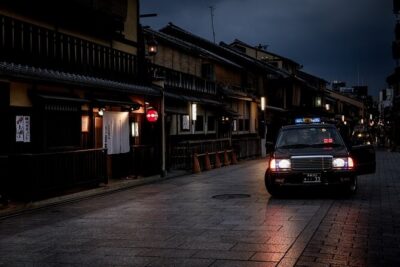 ★ 5.0Kyoto Gion Geisha District Walking Tour – The Stories of GeishaFrom $251,441 reviews
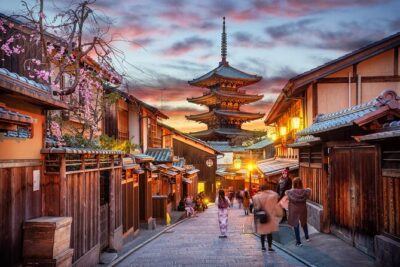 ★ 5.0Kyoto Gion: 2-Hour Geisha Culture & History Walking TourFrom $231,186 reviews
Browse the lists this tour appears in