
Reviewed · GION & GEISHA DISTRICT TOURS
Kyoto: Gion & Geisha district evening tour
Kyoto at night feels like a different show. This evening geisha and maiko walk uses the streets of Gion, Hanamikoji, and Miyagawacho to turn legend into everyday context. I especially like how you get real explanations for what you’re seeing—teahouses, street rhythms, and the roles of geiko and maiko—without treating the district like a theme park.
I also like the route’s balance: it’s not just pretty lanes, it includes meaningful stops like Yasui Konpiragu Shrine and ends with a scenic stroll toward Yasaka Shrine. One drawback to weigh: it’s an observation tour, not a guaranteed sit-down for performances or a food-and-drink experience, and photography rules may limit what you can capture in some spots.
In This Review
- Key Points You’ll Care About
- Why a Kyoto Geisha Tour Works Best After Dark
- Finding Your Guide: Izumo-no-Okuni at Shijo Ohashi
- Gion Shirakawa and Hanamikoji Street: Where the Explanations Make the Streets Click
- Miyagawacho: A Quieter Geisha District Break
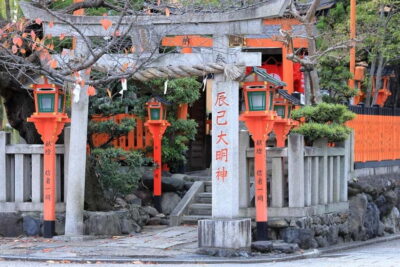
- Yasui Konpiragu Shrine: Relationships, Not Just Sights
- The Scenic Finish: Yasaka Pagoda, Ninenzaka, Ishibe Alley, Yasaka Shrine
- Price, Pacing, and Value: Is $64 Worth It?
- Etiquette and Photo Sense: How to Respect the District
- Who This Tour Fits Best
- Should You Book This Kyoto Gion and Geisha Evening Tour?
- FAQ
- Where is the meeting point?
- How long is the tour?
- What’s included in the price?
- Is food included?
- What languages do the guides speak?
- Is this a private group tour?
- Are there any photography restrictions?
- Is there free cancellation?
Key Points You’ll Care About
- A night-focused route that’s quieter and easier to experience at walking pace
- Geiko and maiko background from a live guide in Japanese or English
- Yasui Konpiragu Shrine for a relationship-themed stop that adds meaning
- Miyagawacho as a calmer, lesser-frequented geisha district break
- A scenic end near Yasaka Pagoda and Ninenzaka, then to Ishibe Alley and Yasaka Shrine
- Comfortable shoes matter—this is a 150-minute walk
Why a Kyoto Geisha Tour Works Best After Dark
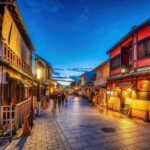
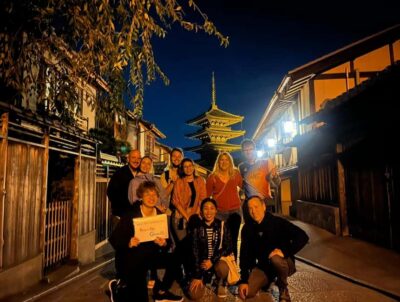
If you’ve only seen Gion in daytime, you’ll miss half the mood. Going in the evening helps the districts feel more lived-in: less glare, more shadow, and a slower street tempo that makes guide stories land better. It also means you’re less likely to be stuck in a crush—so you can actually look, listen, and absorb.
This tour is designed to show you the geisha world as something people continue to practice and protect, not a stage you can force open. You’ll hear about the difference between roles you might hear referenced—like geiko and maiko—and what you’re likely to notice when you walk past traditional teahouses.
That said, manage expectations. Evening can still be unpredictable. You might catch glimpses of what you came for, but the main value here is understanding the culture and the neighborhoods where it continues, not chasing a guaranteed sighting.
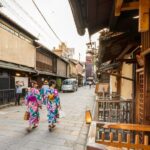
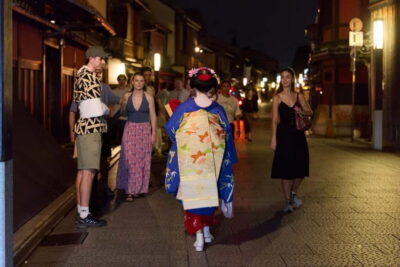
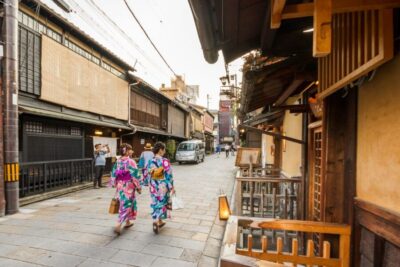
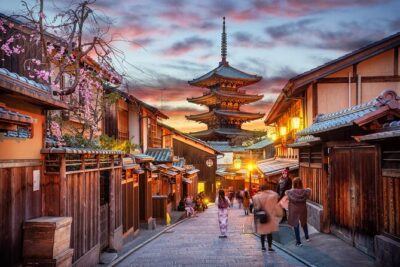
More evenings along the lantern-lit lanes of Gion
Finding Your Guide: Izumo-no-Okuni at Shijo Ohashi
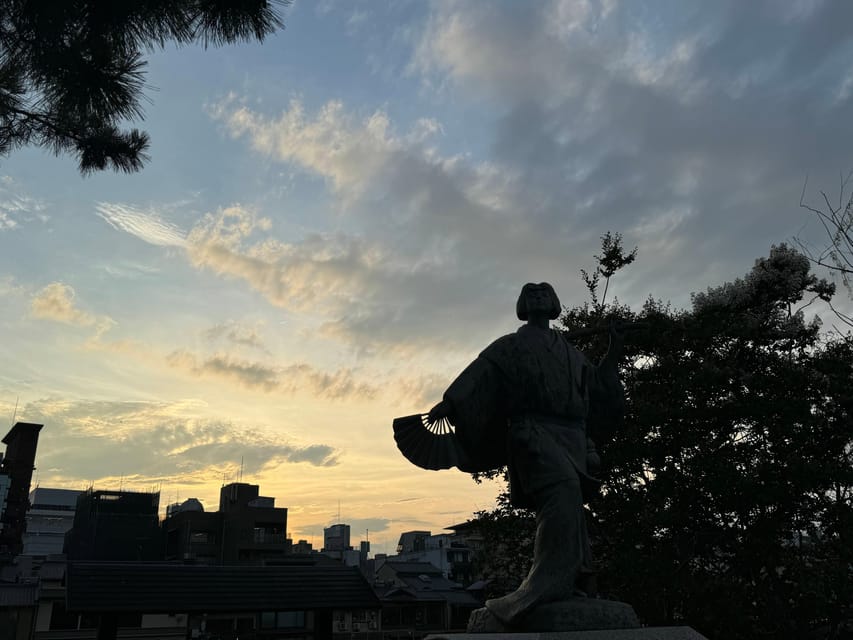
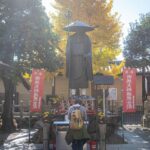
Your meeting point is the Statue of Izumo-no-Okuni. The guide will be holding a yellow sign with the DeepExperience logo, so you can spot them fast. This matters more than it sounds—Kyoto intersections can be confusing, and you don’t want to spend your first minutes hunting.
Once you start, the walking portion sets the tone right away. You begin from the Shijo Ohashi area (the tour references the Izumo-no-Okuni statue at that crossing point), then work your way through the geisha districts. Plan to arrive a little early so you can settle your footing and get ready for uneven sidewalks and lots of stops.
Also, remember this is a private group. That usually helps with pacing: the guide can keep your group together while still allowing you a moment to look and take in the details.
Gion Shirakawa and Hanamikoji Street: Where the Explanations Make the Streets Click
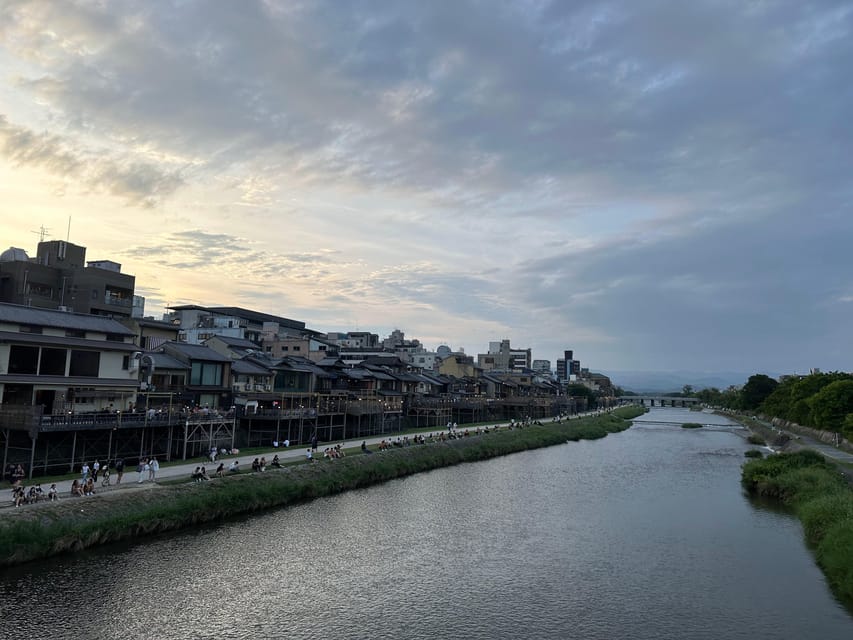
The core of the experience starts in Gion, with a guided segment that focuses on the traditional side of the area. One stop that stands out is Gion Shirakawa, known for its older-style streetscape and teahouse atmosphere. This is where the guide’s talk becomes your “decoder ring.” Instead of seeing uniforms and lantern-lit storefronts as just scenery, you’ll start to understand what different terms and customs point to.
After that, you move to Hanamikoji Street, the artery that many people connect with the traditional geisha world. In practical terms, this is where the lanes start to feel like a storybook—narrow, pedestrian-friendly, and packed with visual cues. The value of having a guide here is that they can connect those cues to how the districts function, why certain areas feel more formal, and what to notice without staring.
A useful tip: keep your attention on your guide’s pacing. If you rush forward for the best photo angle, you’ll miss the spoken context that makes the street scene make sense. This tour works best when you slow down enough to hear the “why” behind what you’re seeing.
Miyagawacho: A Quieter Geisha District Break
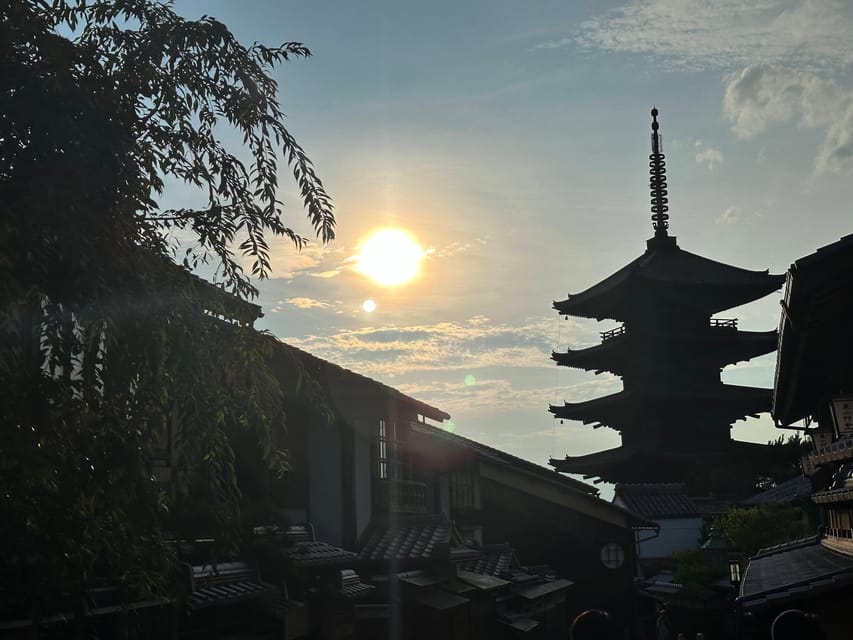
Not every geisha district gets the same spotlight. The tour includes Miyagawacho, which adds a calmer counterpoint to the more famous streets. This is a smart inclusion because it helps you see that geisha districts aren’t one single postcard. Different areas can feel more reserved, more local, and less choreographed.
The guide uses this stop to help you read the neighborhood texture: the street layout, the feeling of distance from the busiest lanes, and the way the district preserves its identity. For me, this is one of the best “value” moments of the tour—because it’s where your understanding broadens beyond the most obvious names.
If you tend to get overwhelmed in crowded central Kyoto, Miyagawacho is the kind of stop that helps you reset. You still learn, but you’re not constantly dodging people to keep moving.
Yasui Konpiragu Shrine: Relationships, Not Just Sights
Then comes a stop that’s different from the usual “photo-then-go” rhythm. You’ll visit Yasui Konpiragu Shrine, described as a special place tied to relationships. That framing is important: it gives the shrine stop a theme that you can carry with you as you walk through districts where tradition and social roles are closely linked.
In a 150-minute tour, this kind of cultural pause is more than a break. It adds depth. You start to connect why specific areas and institutions matter in Kyoto—not as isolated landmarks, but as pieces of a larger social world.
Timing here can also help your experience. Instead of going from street-to-street fatigue, you get a moment that tends to slow the group down naturally. You’ll also get a guided explanation that makes the stop feel intentional rather than tacked on.
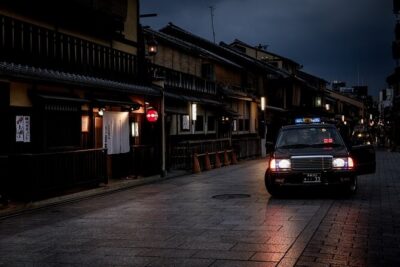
See how Kyoto shifts after dark


The Scenic Finish: Yasaka Pagoda, Ninenzaka, Ishibe Alley, Yasaka Shrine
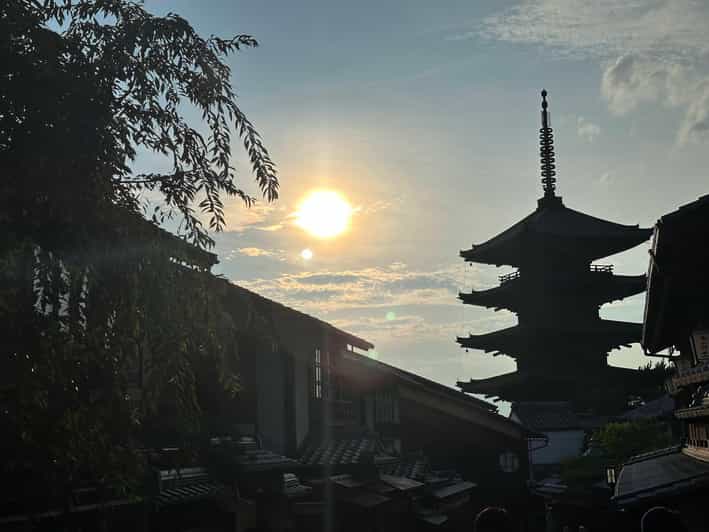
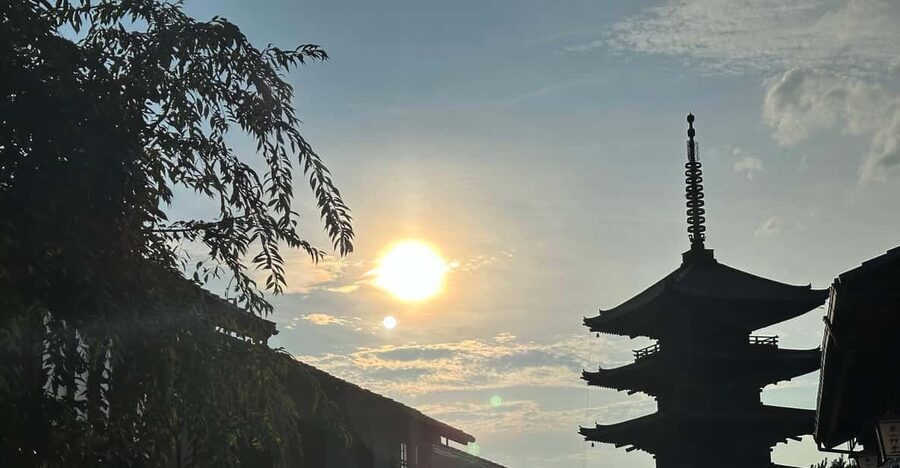
The tour doesn’t end inside the densest geisha streets. It finishes with a scenic walk past Yasaka Pagoda, then through Ninenzaka and Ishibe Alley, ending at Yasaka Shrine. This is a great design because it lets your last stretch feel like Kyoto at street level—layers of old-town lanes, foot traffic, and views that shift as you turn corners.
Ninenzaka is one of those areas where the street shape does half the storytelling. Ishibe Alley brings you into a tighter, more intimate lane feel—useful if you want your final photos to look more like walking through Kyoto than standing in front of it.
Finally, Yasaka Shrine brings the whole walk home. Even if your main interest is the geisha districts, ending at a major cultural site helps the experience feel grounded. It’s a nice transition from the quieter context of the districts to a place many visitors recognize.
Price, Pacing, and Value: Is $64 Worth It?
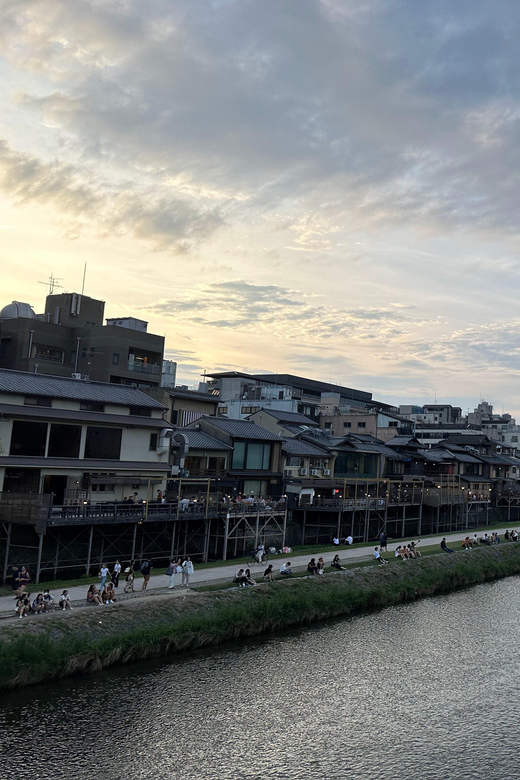
At $64 per person for about 150 minutes, the biggest question is what you value: shortcuts or context.
This tour gives context. You’re paying for a guide to interpret what you’re seeing—especially the geisha and maiko world, plus meaningful stops like Yasui Konpiragu Shrine. That interpretation is where the money tends to justify itself, because Kyoto’s older districts can look obvious on a map but confusing on foot. If you just walk around, you might see beauty. With this tour, you get language, structure, and “what does this mean?” answers.
The other side of the equation: there’s no food or beverages included. So if you’re hoping to combine geisha sightseeing with dinner, you’ll need a plan for afterward. Also, photography may not be allowed in certain areas, so don’t build your day around getting lots of shots.
Pacing-wise, the walking time is reasonable for an evening. Still, it’s a lot of ground in two and a half hours. Bring comfortable shoes and treat the tour as a slow-walk night, not a sprint.
Etiquette and Photo Sense: How to Respect the District
This tour is built around respectful viewing. The basics you should follow:
- Wear comfortable shoes and keep your steps steady so you’re not constantly stopping people mid-sidewalk.
- Be respectful of geishas and their privacy. That means your group stays calm, your attention stays mindful, and you avoid crowding.
- Photography may not be allowed in certain areas. If your guide says hold off, listen—these rules protect privacy and help the district stay livable.
One more practical point: at night, street behavior matters more. People often assume “less daylight = less scrutiny,” but that’s exactly when privacy feels most important. If you want a smooth experience, keep your camera away until your guide gives the green light.
Who This Tour Fits Best
This is a strong fit if you want:
- A guide-led explanation of the geisha world (geiko and maiko) rather than just wandering
- An evening plan that feels calmer and more atmospheric than daytime sightseeing
- A route that mixes famous streets with a quieter district like Miyagawacho
- A meaningful stop at Yasui Konpiragu Shrine, not only street scenery
It may be less satisfying if you’re mainly hunting for one specific moment—like a public performance—because this is an evening walk built around education and respectful observation.
If you’re traveling with kids, the tone can work well. One guide named Yurie is noted for being patient and engaging, including with tweens and teens. That’s the kind of guide style that can turn a “boring history walk” into a story walk.
Should You Book This Kyoto Gion and Geisha Evening Tour?
If you’re coming to Kyoto for more than Instagram lanes, I think booking this tour is a smart move. The price isn’t low, but it buys interpretation: you’ll walk through the names you’ve heard—Gion Shirakawa, Hanamikoji Street, Miyagawacho—and you’ll leave with a clearer idea of what the districts represent and how the geisha world fits into Kyoto’s social fabric.
Skip it only if your goal is simply to walk the streets independently and you’re comfortable reading the scene without a guide, or if you really want a food-inclusive evening.
If you want a thoughtful, night-time Kyoto walk that respects privacy and gives you the context to enjoy what you see, this is an easy yes.
FAQ
Where is the meeting point?
Meet your guide in front of the Statue of Izumo-no-Okuni. The guide will be holding a yellow sign with the DeepExperience logo.
How long is the tour?
The tour lasts 150 minutes (about 2.5 hours).
What’s included in the price?
You get a guided evening walk through Kyoto’s historic districts, visits to Gion Shirakawa, Hanamikoji Street, and Miyagawacho, a stop at Yasui Konpiragu Shrine, and a scenic walk past Yasaka Pagoda through Ninenzaka and Ishibe Alley, ending at Yasaka Shrine. The guide also shares insights into the world of geisha.
Is food included?
No. Food and beverages are not included.
What languages do the guides speak?
The tour is offered with a live guide in Japanese and English.
Is this a private group tour?
Yes, it’s a private group.
Are there any photography restrictions?
Photography may not be allowed in certain areas, so follow your guide’s instructions.
Is there free cancellation?
Yes. Free cancellation is available up to 24 hours in advance for a full refund.
More Tour Reviews in Kyoto
More of Kyoto After Dark
Still in Gion? Keep Going

Just added: more Kyoto tours to browse




Gion & Geisha District Tours, compared.
 ★ 4.7Kyoto Geisha Walking Tour: Gion District & Hidden GemsFrom $253,273 reviews
 ★ 4.9Gion Magical Night Walking Tour with Geisha TriviaFrom $242,393 reviews
 ★ 4.7Gion Geisha District Walking Tour – Stories of GeishaFrom $202,187 reviews
 ★ 4.9Best of Kyoto: Gion, Geisha, Pagodas & CobblestonesFrom $242,058 reviews
 ★ 4.5Night Walk in Gion: Kyoto’s Geisha DistrictFrom $212,003 reviews
 ★ 5.0Kyoto Night Foodie Tour in Gion (9+ dishes + 6 Sake tastings)From $1631,762 reviews
 ★ 5.0Kyoto Gion Geisha District Walking Tour – The Stories of GeishaFrom $251,441 reviews
 ★ 5.0Kyoto Gion: 2-Hour Geisha Culture & History Walking TourFrom $231,186 reviews
Browse the lists this tour appears in