
Reviewed · FUSHIMI INARI SHRINE TOURS
Kyoto Early Morning E Biking Tour Fushimi Inari Kiyomizu Temple
Red gates look better before sunrise. This early e-bike tour is built for a simple goal: see Kyoto’s headline temples with less time in lines and fewer people blocking your view. I like that the tour tackles two big headaches at once—temple admission included and e-bike rental handled for you—so you spend your morning riding and sightseeing instead of hunting tickets and bikes.
The one thing to keep in mind is that temple pricing details can be confusing in the wild. One rider reported being charged for multiple entries even though the page said free admission, so I’d make a quick screenshot check of what’s included before you go, just to protect your budget.
With an English-speaking guide and a small group (max 8), the pacing stays relaxed enough to take photos and ask questions—without turning the ride into a sprint. The tour starts at Kyoto Station (JR-Central Ticket Office, Shinkansen Hachijo Entrance) and loops back to the same meeting point at the end, which makes your logistics easy when you’re juggling a tight Kyoto itinerary.
In This Review
- Key highlights you’ll care about
- Why an early morning e-bike tour actually works in Kyoto
- Where the tour starts (and why it’s convenient)
- Stop 1: Fushimi Inari-taisha and the Senbon Torii path
- Stop 2: Sanjusangendo Temple and the 1,000 Kannon statues
- Stop 3: Kiyomizu-dera Temple and the hillside views
- The guide experience: stories, pacing, and better photos
- E-bike reality check: what moderate fitness really means
- Price and value: what you get for $67.41
- Who this tour fits best
- Quick tips to make the most of your morning
- Should you book this Kyoto early morning e-bike tour?
- FAQ
- How long is the Kyoto early morning e-bike tour?
- Where does the tour start?
- Is the e-bike included?
- Is temple admission included?
- How many people are in the group?
- Are food and drinks included?
Key highlights you’ll care about
- Early start to dodge the biggest crowds at Fushimi Inari and the main temple areas
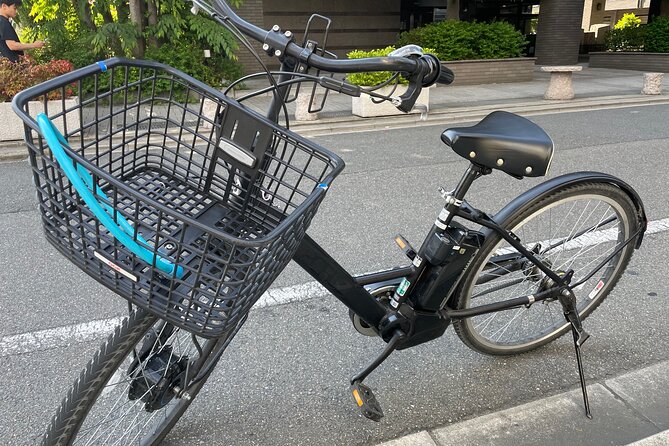
- E-bikes provided so hills feel manageable and you don’t waste time booking rentals
- Temple admission included for Fushimi Inari, Sanjusangendo, and Kiyomizu-dera
- Small group size (up to 8) for better guide attention and less waiting around
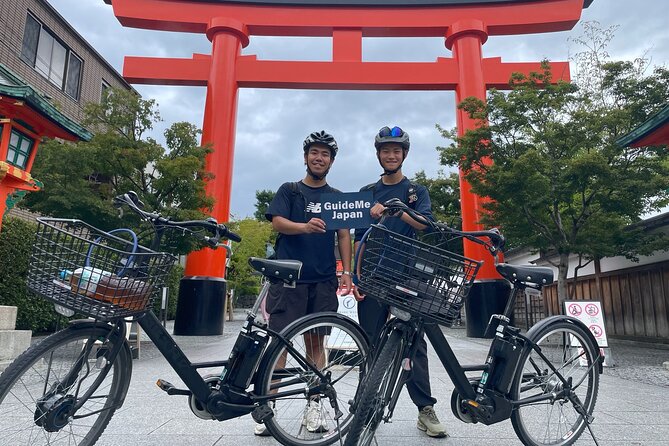
- Guides who know the stories—and in past tours, guides have even helped with great photo angles
Why an early morning e-bike tour actually works in Kyoto
Kyoto’s famous sights have a rhythm. The big lines and packed walkways usually build as the day goes on, especially around the most photographed spots. This is why I love the logic behind an early morning ride: you get the same landmarks, but with more breathing room—and mornings tend to feel calmer and cooler too.
The e-bike part matters for a city like this. Kyoto has plenty of slopes and stretches where you could spend energy you’d rather save for actually walking around temples. With an e-bike, you’re not fighting the terrain the whole time, so your day stays more about the places and less about the workout. You still have to ride and steer, but it’s a much friendlier way to connect distant stops in only about 5 hours.
The other smart move is built-in temple time. You’re not just rolling past sights. You get set stops with roughly one hour at each major location, which is a realistic window for sightseeing, photos, and a bit of wandering.
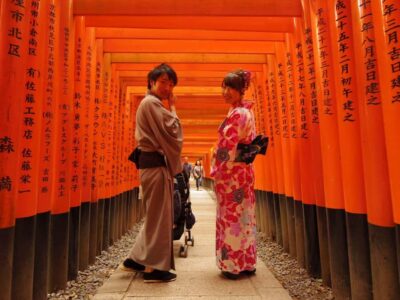
More walks up through the vermilion torii of Fushimi Inari

Where the tour starts (and why it’s convenient)
You meet right at Kyoto Station—specifically at the JR-Central Ticket Office, Kyoto Station Shinkansen Hachijo Entrance. That’s a huge quality-of-life detail if you’re staying near the station, taking the Shinkansen, or bouncing between neighborhoods by train.
Starting at Kyoto Station also means you can organize your morning without extra transfers. You don’t need to figure out where an e-bike shop is or coordinate a separate pickup. The tour ends back at the same meeting point, so you’re not stuck navigating an unfamiliar end-location after a long morning.
You’ll also get a mobile ticket, so you don’t have to worry about printed vouchers.
Stop 1: Fushimi Inari-taisha and the Senbon Torii path
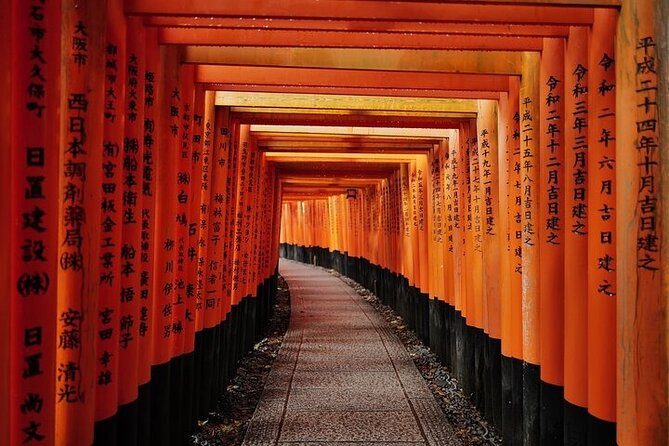
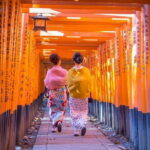
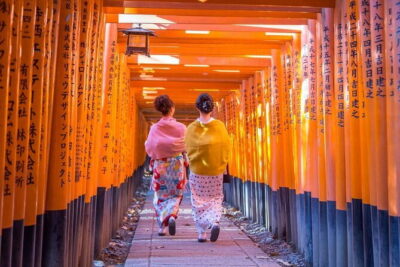
Fushimi Inari-taisha is one of Japan’s most recognizable shrine experiences, and you’ll see exactly why: thousands of red torii gates create a long walking tunnel effect. The trick is how early you arrive. Even with an early start, this place is popular—but mornings usually give you a better chance to photograph the gates without having to constantly wait for a clear view.
You’ll spend about an hour here, which is enough time to:
- Walk into the gate-lined passage at a comfortable pace
- Pause for photos from different angles
- Take in the scale without feeling rushed
What I like about this stop on an e-bike tour is that you’re not arriving frazzled. You’re already warm and oriented, and you’ve got a guide who can point out what to look for, plus stories that make the shrine feel less like a photo backdrop and more like a living place.
A small consideration: there are lots of steps and uneven ground in places. It’s not a problem with an e-bike (you won’t ride through the most interior walking areas), but you should be ready to do real walking once you park the bike and enter the shrine path.
Stop 2: Sanjusangendo Temple and the 1,000 Kannon statues
Sanjusangendo is quieter in vibe than Fushimi Inari, but it can hit hard visually. The big draw is the interior: 1,000 statues of Kannon, the goddess of mercy, lined up in perfect formation. You don’t just look at one statue—you face a whole structured wall of figures, and that scale is the point.
You’ll have around an hour here. That sounds like a lot of time until you realize how long it takes to fully register what you’re seeing. You can spend part of your time just standing and letting your eyes adjust, then use the rest for walking around to find different viewpoints.
Two reasons this stop fits so well into an e-bike tour:
- It breaks up the outdoor gate-walk vibe with an indoor, focused experience.
- It gives you something memorable that doesn’t depend entirely on crowds or weather.
One practical tip: because you’re indoors, you’ll want to keep your phone handling simple. If you plan to take photos, be ready that lighting and rules can vary inside temple halls, and you may need to rely more on observation than picture-perfect shots.
Stop 3: Kiyomizu-dera Temple and the hillside views
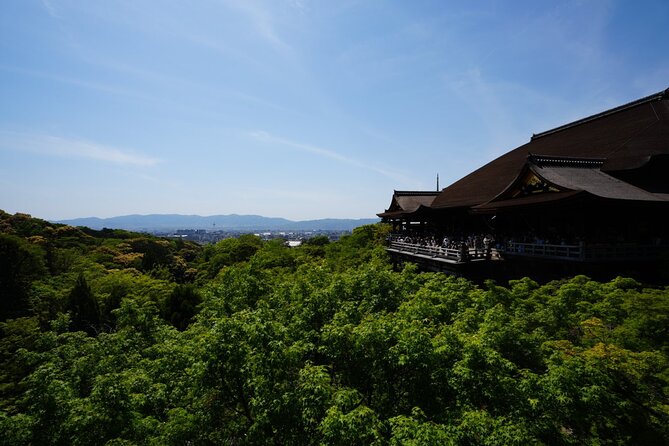
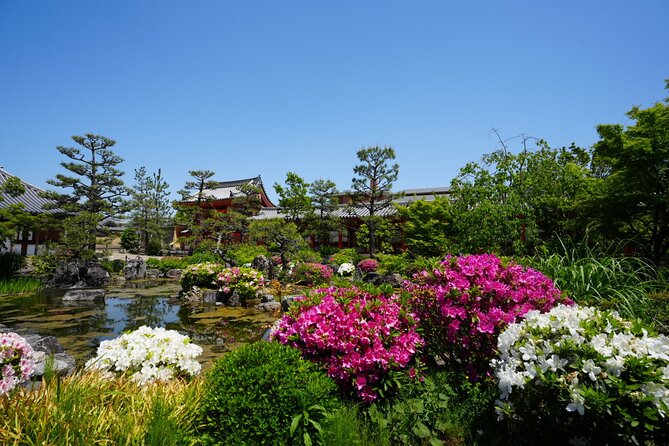
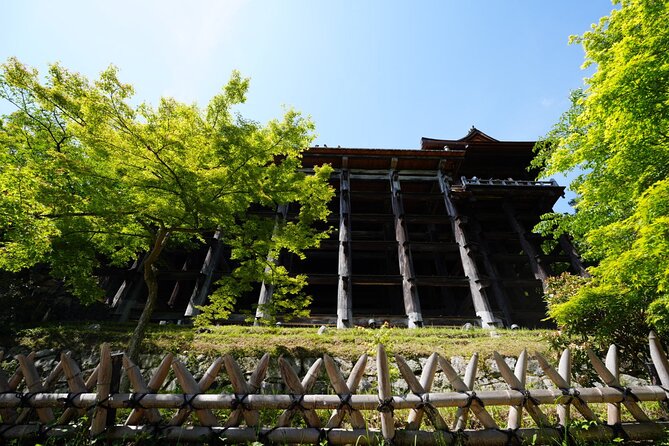
Kiyomizu-dera is famous for a reason. It’s perched on a hillside in eastern Kyoto, and it combines impressive temple architecture with wide views over the area. That combination is why it’s often packed later in the day, and why early timing is helpful—you’ll get a better shot at moving through the site without getting pushed along.
You’ll spend about an hour at Kiyomizu-dera as well, which works nicely because this place has multiple layers:
- Look at the main structures and details
- Wander and refocus your viewpoint as the terrain changes
- Take in the city views from where you can get perspective
A note on expectations: Kiyomizu-dera isn’t a “sit and watch” temple. It’s built for walking and standing at different points. Even on an e-bike tour, you’ll do enough walking here to feel like you visited the real site—not just the entrance.
If you want the best experience, I’d suggest you treat Kiyomizu-dera as your finale for the day’s big landmark moments. By the time you arrive, you’ve already seen the gate tunnel at Fushimi and the statue wall at Sanjusangendo, so Kiyomizu-dera lands as the expansive, scenic close.
Keep climbing the Higashiyama slopes toward Kiyomizu-dera



The guide experience: stories, pacing, and better photos
This tour is led by an English-speaking guide, and that matters more than you might think. Kyoto rewards curiosity. When someone can explain what you’re looking at—whether it’s shrine traditions, the meaning of what you’re seeing, or why certain spaces are arranged the way they are—the same sites feel more personal.
In past tours, guides like Rin have been praised not only for history, but also for photography support—getting people positioned for strong shots at the right times. Another guide, Hiro, has been described as personable and informative. Even if your guide isn’t a dedicated photographer, you can still expect helpful storytelling and smooth pacing.
Here’s the practical upside: with a guide managing timing between stops, you won’t waste your morning arguing about where to go next or how long you should spend. The tour’s about moving efficiently and seeing key landmarks without losing your whole day in logistics.
E-bike reality check: what moderate fitness really means
The tour calls for moderate physical fitness. That doesn’t mean you need to be an athlete. It does mean you should be comfortable riding an e-bike and doing temple walking once you arrive.
Think of the effort like this:
- Riding the e-bike: mostly comfortable, and the e-bike helps with hills
- Temple zones: you’ll walk, pause, and navigate steps or uneven surfaces in key areas
If you’re planning for accessibility needs, I’d take that moderate fitness note seriously. You’re not doing a full marathon, but you are doing real walking across multi-stop sightseeing.
Also, good weather is required. Kyoto mornings can be unpredictable, and rain can make walking surfaces more slippery. If weather forces a change, you’ll be offered another date or a full refund.
Price and value: what you get for $67.41
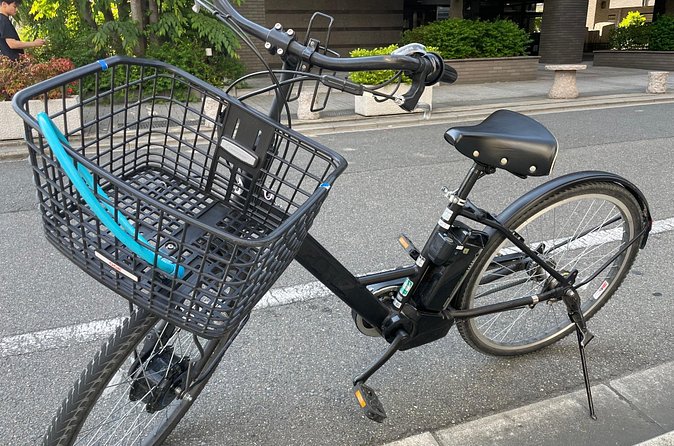
At $67.41 per person for about 5 hours, the best way to judge value here is to look at what’s included versus what you’d otherwise have to arrange yourself.
Included:
- E-bike rental
- English-speaking guide
- Admission fees for the temples you visit
Not included:
- Food and drinks
Now, compare that to doing this DIY. In Kyoto, e-bikes can add up fast if you’re booking rentals close to your travel dates. Temple entry fees add up across multiple sites too. Add in the cost of your time spent figuring out where to start, where to park, and which tickets you need for each place, and the bundled price starts to make sense.
Is it the cheapest way? Probably not. But it’s one of the easier ways to get a tight, high-impact sightseeing loop without the usual administrative headaches. For many visitors, that’s the real value: you buy convenience, time, and a guided explanation of what you’re seeing.
One more value note: the tour is described as having a smaller group size (max 8). For Kyoto, that can be the difference between feeling like a number and actually getting attention from your guide.
Who this tour fits best
I’d put this tour at the top of the list if you:
- Have limited time in Kyoto and want three major landmarks in one morning
- Don’t want to deal with separate e-bike rental logistics
- Want to reduce crowds at the most popular sites
- Enjoy guided context and want help making sense of what you’re looking at
It’s also a strong pick for first-time Kyoto visitors, because it hits major icons: Fushimi Inari, Sanjusangendo, and Kiyomizu-dera. And it’s a good fit for people who want a “great hits” itinerary without spending the entire day in transit.
If you’re the type who hates walking—even short distances between viewpoints—this might not be your ideal format. You’re not stuck in a chair the whole time. The e-bike helps, but the temples still require walking.
Quick tips to make the most of your morning
- Wear comfortable shoes. You’ll walk at every stop.
- Keep your plans simple after the tour. You’ll likely want a late brunch or snack since food isn’t included.
- Bring your patience for crowds even early. Popular sites are popular.
- If you care about cost details, double-check what the included admission covers before you go—especially if you’re comparing against any online text that says free entry.
Should you book this Kyoto early morning e-bike tour?
If you want a smart Kyoto morning with less crowd friction, guided stories, and major temples grouped into one efficient loop, I think this is a strong yes. The combination of an early start, e-bikes provided, and temple admissions handled is exactly the kind of practical value that makes sightseeing enjoyable instead of stressful.
I’d only hesitate if you’re sensitive to walking on uneven temple grounds or if you’re extremely price-check obsessive without verifying inclusion details first. But for most visitors looking for an efficient, high-impact morning, this tour does what it promises.
FAQ
How long is the Kyoto early morning e-bike tour?
The tour lasts about 5 hours.
Where does the tour start?
It starts at the JR-Central Ticket Office, Kyoto Station Shinkansen Hachijo Entrance.
Is the e-bike included?
Yes, the e-bike is included.
Is temple admission included?
Yes. Admission fees for the temples are included.
How many people are in the group?
The tour has a maximum of 8 travelers.
Are food and drinks included?
No, food and drinks are not included.
More Kyoto Temples and Shrines




More Along the Higashiyama Slopes
Fushimi Inari, a Few More Ways
Just added: more Kyoto tours to browse






Fushimi Inari Shrine Tours, compared.
 ★ 4.8Fushimi Inari, Kinkakuji, Bamboo Grove 1 Day Bus TourFrom $1224,316 reviews
 ★ 5.0Fushimi Inari Hidden Hiking Tour (Private Option Available)From $631,750 reviews
 ★ 4.7Kyoto/Osaka: Nara, Fushimi Inari Taisha, Arashiyama Bus TourFrom $521,275 reviews
 ★ 4.4Osaka/Kyoto: Arashiyama, Nara & Fushimi Inari Shrine w/LunchFrom $61754 reviews
 ★ 4.7Nijo Castle, Kiyomizu & Fushimi Inari Guided TourFrom $54700 reviews
 ★ 5.0Nijo, Kinkaku-ji, Arashiyama, Kiyomizu & Fushimi InariFrom $51699 reviews
 ★ 5.0Kyoto Fushimi-Inari Night Walking TourFrom $43320 reviews
 ★ 4.93-Hour Fushimi Inari Shrine Hidden Hiking TourFrom $72270 reviews
Browse the lists this tour appears in