
Reviewed · KYOTO CRAFT & CALLIGRAPHY WORKSHOPS
Kyoto Cultural IKEBANA Experience@SEKKA FLOWERS
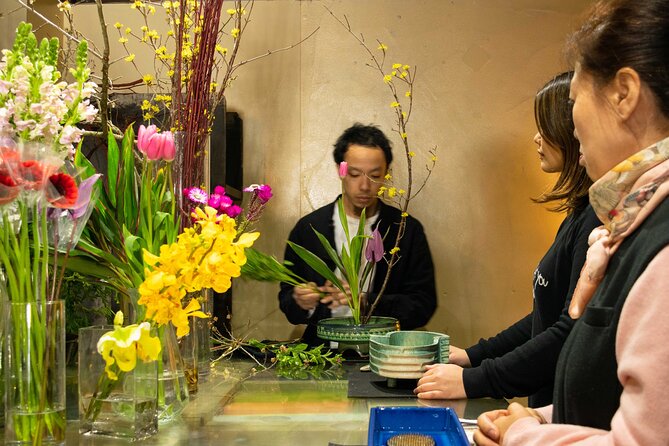
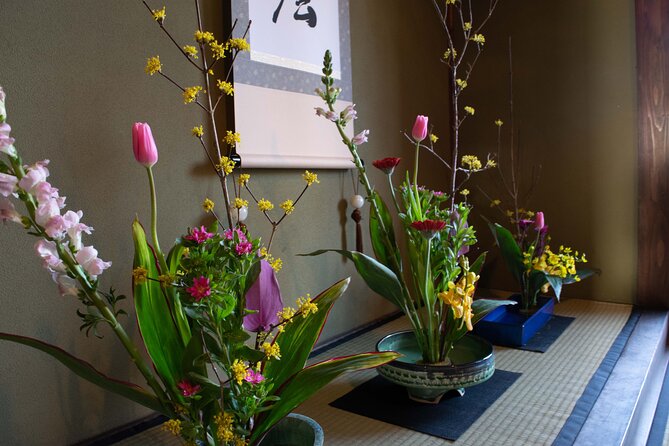
Silence, flowers, and a calmer Kyoto. In Kyoto Cultural IKEBANA at SEKKA FLOWERS, I love how the lesson uses a wabi-sabi approach, respecting the natural shape of stems, while still teaching classical ikebana forms in a clear, doable way. I also like that your finished arrangement is placed in a traditional tokonoma, so it feels like you’re participating in Japanese room culture, not just making a craft.
The setting is a renovated, about 100-year-old townhouse near Kinkaku-ji and Daitoku-ji, and the experience runs about 40 minutes, which keeps it focused and relaxing. One thing to consider: you’re mostly creating one arrangement in that time, so you’ll want to treat it as an intro masterclass rather than a long, hands-on study session.
In This Review
- Key highlights you’ll care about
- A Kyoto flower shop inside a 100-year-old townhouse
- Why wabi-sabi changes how you arrange flowers
- Your 40-minute flow: from stems to tokonoma presentation
- Meet the instructors: friendly guidance without pressure
- What you really get: a souvenir that feels personal
- Price and value: is $65.15 worth it?
- Where it fits in your Kyoto day
- Who this experience suits best
- Practical tips so you leave with a great arrangement
- Should you book this ikebana class?
- FAQ
- How long is the ikebana workshop?
- Is this ikebana experience suitable for beginners?
- How many people are in the group?
- Where is the meeting point?
- Do I receive a mobile ticket?
- Can I cancel for a full refund?
Key highlights you’ll care about
- A wabi-sabi-centered lesson that teaches you to work with how flowers actually grow, not against them
- Tokonoma display at the end so your arrangement gets a proper, traditional presentation
- 100-year-old townhouse setting close to major temple areas, but with a quieter feel inside
- Small group size (max 6) for questions, pace, and real instructor attention
- Delivery to your accommodation afterward reported by guests as part of the follow-through
- Beginners are welcome with guidance that encourages your own choices
A Kyoto flower shop inside a 100-year-old townhouse
This is an ikebana workshop in a real neighborhood setting, not a factory-like studio. You meet at 44-4 Murasakino Kamimonzenchō in Kyoto’s Kita Ward, and you’ll be heading to a flower shop housed in a renovated traditional townhouse that’s about a century old. The location matters because it keeps the experience grounded. You’re in Kyoto, but you’re also stepping into a calmer pocket where flowers and quiet attention take over.
It’s near Kinkaku-ji Temple and Daitoku-ji Temple, which is handy if you’re doing temple days and want something cultural that doesn’t require extra tickets or travel time. Getting there is also straightforward since it’s near public transportation. Once you’re inside, the traditional room atmosphere sets the tone fast: you’re learning an art form that’s tied to how a room is meant to look and feel.
Make something by hand in a Kyoto workshop

Why wabi-sabi changes how you arrange flowers
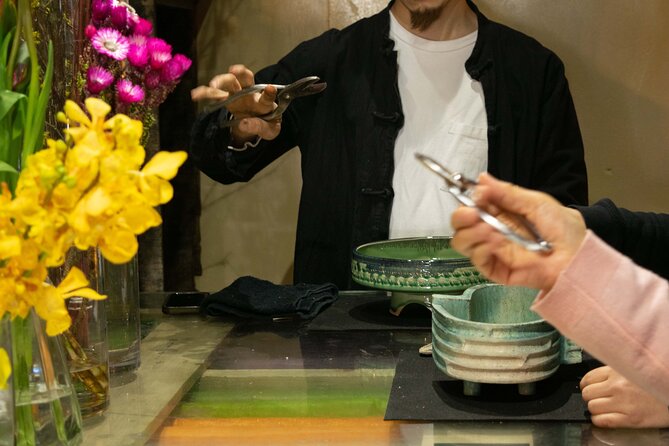
Most people expect ikebana to be about perfection. This class nudges you in a different direction. The workshop style is based on classical forms, but it explicitly focuses on bringing out the beauty of branches and flowers while respecting their natural state. That’s where wabi-sabi comes in: the idea that something can be quietly beautiful even with imperfections, asymmetry, and age.
Practically, that mindset helps you make decisions when you don’t know what to do. Instead of forcing everything into a matchy-matchy shape, you’re encouraged to notice what the stems already want to be. You’ll work with the material you’re given and aim for balance through movement, line, and spacing. Even if you’re brand new, the approach makes the process less intimidating because you’re not chasing a single right look.
Another detail I appreciate is that the workshop is described as a sensory awakening session with the instructor. I read that as a reminder to slow down: handle stems gently, watch how flowers sit, and use the natural angles you see rather than fighting them. That’s the kind of lesson you’ll actually remember when you try again at home.
Your 40-minute flow: from stems to tokonoma presentation
The workshop is about 40 minutes (approx.), and the pacing reflects that. You’re not meant to spend hours experimenting. You’re meant to learn the core principles, create a complete arrangement, and experience the traditional end moment.
Here’s how the session typically feels, step by step:
1) Arrival and orientation in a traditional room
You’re guided inside a setup that includes a Japanese room concept, including the tokonoma alcove. Even before you arrange anything, the room helps you understand what ikebana is for: not just decoration, but a kind of visual pause in daily life.
2) Learning the history and art behind ikebana
You’ll hear about ikebana’s background and what makes it more than floral design. The course is designed for beginners, so you’re not expected to already know terms or styles. If you’ve only seen ikebana photos online, this is the point where the art form becomes understandable.
3) Building your arrangement with classical form guidance
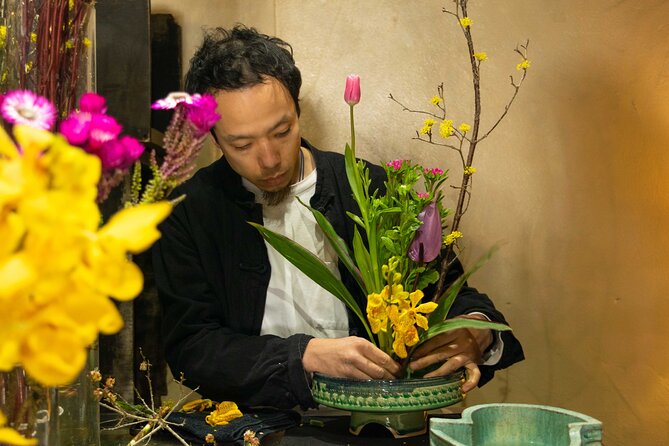
You’ll create your own masterpiece with instructor support. The class emphasizes classical forms and guiding structure, but it still keeps room for you to make choices. In other words, you get a framework, not a rigid script.
4) Wabi-sabi adjustments: working with natural shape
As you build, the instructor helps you adjust so the arrangement doesn’t look forced. This is where the “respect the natural state” idea turns from philosophy into technique. You’re likely to adjust stem angles, refine spacing, and focus on the overall line rather than chasing uniformity.
5) Final placement in the tokonoma
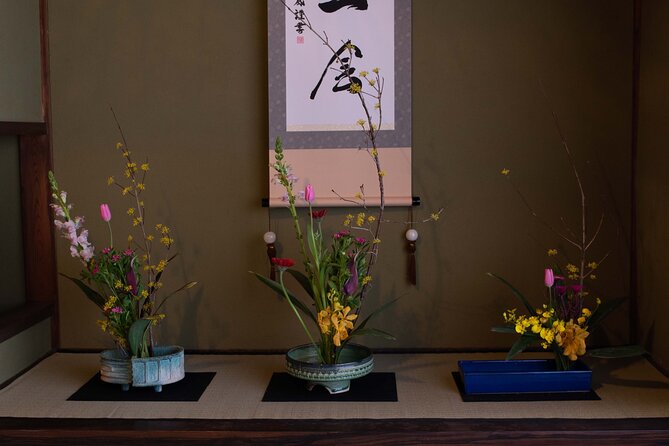
Then comes the special part: your artwork is displayed in the tokonoma. That matters more than you’d think. A tokonoma is where Japan traditionally places one meaningful item that sets the mood of the room. Putting your arrangement there gives it ceremonial weight, which makes the whole workshop feel complete.
Because the session loops back to the meeting point, it’s also easy to place into a day of temple sightseeing. You get a cultural activity that doesn’t drag on, and you still walk away with something you can keep.
Meet the instructors: friendly guidance without pressure
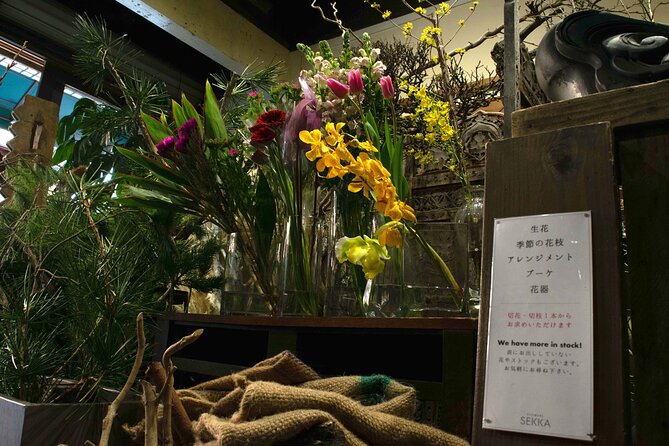
A big reason people rate this highly is the teaching vibe. The instructors are described as welcoming and encouraging. I’m especially glad it includes feedback that reassures you there’s no right or wrong answer.
In one guest experience, the instructors named Taro-san and Chiaki-san were noted for being warm, knowledgeable, and genuinely supportive. The practical takeaway for you: you can ask questions without feeling like you’ll be judged for choosing a stem angle differently than the next person. That’s important in ikebana, because the whole point is interpretation within form.
Also, the teaching style sounds like a helpful blend of guiding and stepping back. In other words, you’ll get direction when you need it, but you won’t feel micromanaged. That balance is how you leave with confidence to try again later, not just a one-time finished product.
What you really get: a souvenir that feels personal
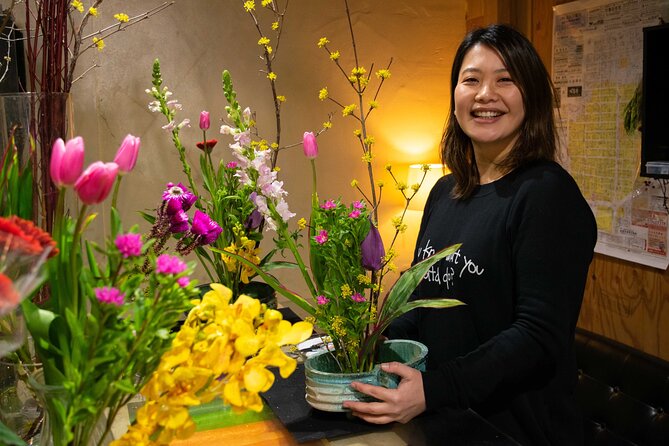
Some flower classes hand you supplies and hope for the best. Here, you’re building an arrangement that’s meant to be displayed in a Japanese room context. That means you’re not just collecting flowers in a box. You’re learning how ikebana expresses something through structure, line, and restraint.
Two things make the finished result feel valuable:
First, the class is season-aware. You’ll experience flowers that adorn Japan’s seasons, which means your arrangement isn’t generic. Even if you can’t identify every plant, the idea that the workshop reflects what’s growing now is part of the authenticity.
Second, the end moment in the tokonoma transforms your work from craft to art. It’s one thing to say I made ikebana. It’s another to see it placed where ikebana is traditionally meant to be appreciated.
And yes, there’s a practical bonus: guests report that the arrangement can be delivered to their accommodation afterward, and that it arrives safely. If you’re doing temple hopping or packing for travel, that kind of follow-through is huge. You don’t have to worry about carrying something delicate around Kyoto all afternoon.






Price and value: is $65.15 worth it?
At $65.15 per person, this isn’t a budget craft workshop, but it also isn’t a splurge that feels out of reach for a one-time cultural class.
Here’s why I think it’s good value for the money:
- You get a guided session focused on classical ikebana principles, not just free-form cutting and arranging.
- The setting is distinctive: a traditional townhouse environment and a tokonoma display angle.
- Group size is limited to up to 6 travelers, which usually means more attention and less waiting.
- The course supports beginners, so you’re less likely to leave confused and disappointed.
- Delivery to your accommodation is a real convenience factor, especially during a busy sightseeing day.
The main reason it might not be worth it for everyone is your personal preference for how much time you want. With about 40 minutes, you’ll leave with one polished arrangement and the fundamentals, but not a long practice session. If you want hours of experimenting, you might feel you should have more time. For a first ikebana experience, though, the structure is a strength.
Where it fits in your Kyoto day
Because the workshop ends back at the meeting point and is about 40 minutes, it works best as a break between temple visits. You can pair it with time in the Kinkaku-ji and Daitoku-ji area without it becoming a full itinerary shift.
I’d also consider booking this on a day when you want something calmer after walking around Kyoto streets. Ikebana is quiet work. It’s the kind of activity that lowers the volume of your day, especially if you’ve been on foot most of the morning.
If you’re staying near a main transit line, it’s convenient that it’s near public transportation. That helps you keep your day flexible. Also, since it’s a small group, you’re less likely to feel rushed by a big crowd schedule.
Who this experience suits best
This workshop is especially well matched for:
- Beginners who want real instruction and reassurance
- People who enjoy quiet, hands-on cultural activities
- Travelers who want a meaningful takeaway they can display at home
- Families, since guests have shared that adults and kids can enjoy it together
It may be less ideal if you’re chasing a high-energy, entertainment-style activity. This is about careful attention and aesthetics. You’ll enjoy it most if you’re open to slowing down and working at a thoughtful pace.
There’s also practical compatibility: the workshop allows service animals, and it says most travelers can participate. So it’s broadly accessible for many visitors.
Practical tips so you leave with a great arrangement
A few tips help you get the most from the session, even if you’re brand new:
- Think in lines, not only flowers. Look at how stems create direction and balance.
- Don’t over-correct. If the branch angle feels right, refine slowly rather than flipping everything.
- Ask questions early. The best time to clarify a principle is before you commit the stems.
- If you plan to have it delivered, confirm what you need for safe drop-off when you’re there. Guests have reported successful delivery, so it can be part of your plan.
And one mindset tip: try to enjoy the decision-making. Ikeabana is not only the finished product. The choices you make—within the classical structure—are the point.
Should you book this ikebana class?
I’d book it if you want a real ikebana experience with classical guidance, a wabi-sabi mindset, and a traditional presentation moment in a tokonoma. It’s priced fairly for what you get: small-group attention, a structured approach for beginners, and the chance to have your arrangement handled afterward.
I would hesitate only if you’re expecting a long multi-session course or a super-flexible “do anything” workshop. This is focused by design. With about 40 minutes, you’re here to learn the essentials, make one arrangement, and leave with confidence.
One more booking tip: it’s commonly booked about 35 days in advance on average. If your Kyoto trip is fixed, lock in your slot early so you’re not juggling schedules.
FAQ
How long is the ikebana workshop?
The workshop runs about 40 minutes (approx.).
Is this ikebana experience suitable for beginners?
Yes. The course is designed for beginners and most travelers can participate.
How many people are in the group?
The class has a maximum of 6 travelers.
Where is the meeting point?
You’ll meet at 44-4 Murasakino Kamimonzenchō, Kita Ward, Kyoto, 603-8217, Japan. The activity ends back at the meeting point.
Do I receive a mobile ticket?
Yes. You’ll get a mobile ticket.
Can I cancel for a full refund?
Yes. Free cancellation is available up to 24 hours in advance of the experience for a full refund.
More Tour Reviews in Kyoto
More Kyoto Workshops to Try


Just added: more Kyoto tours to browse








Kyoto Craft & Calligraphy Workshops, compared.
 ★ 5.0Chopsticks Making Workshop in Gion with Engraving OptionFrom $15958 reviews
 ★ 4.8Authentic knife making experience at a blacksmith in KyotoFrom $154350 reviews
 ★ 5.01-Hour Japanese Archery Experience in KyotoFrom $46176 reviews
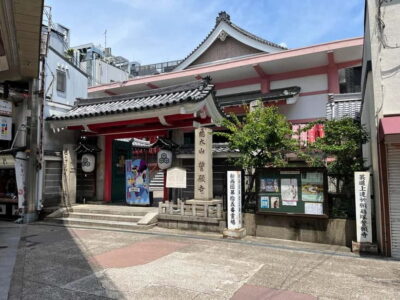 ★ 5.0Calligraphy class at Buddhist temple in city centerFrom $55167 reviews
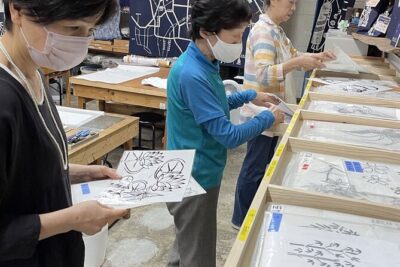 ★ 5.0Roketsu dyeing experience: M course Roketsu Dyeing ExperienceFrom $25163 reviews
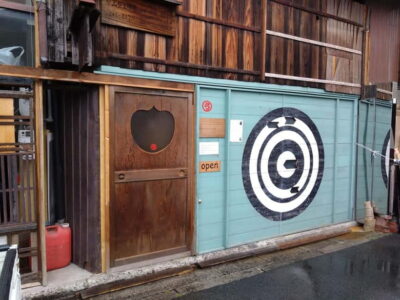 ★ 4.9Japanese Archery Workshop with Experienced InstructorFrom $38132 reviews
 ★ 4.8Japanese Calligraphy ClassFrom $5189 reviews
 ★ 5.0TAIKO, Japanese Drum Experience from KyotoFrom $11586 reviews
Browse the lists this tour appears in