
Reviewed · GION & GEISHA DISTRICT TOURS
Kyoto 5-Star Geisha Night Walk: Small-Group Authentic Experience
Gion changes after dark, fast. This small-group Kyoto geisha night walk takes you through lantern-lit streets and shrines while you dodge the worst daytime crowd flow, with a guide who explains what you’re actually seeing along the way.
I especially like the max-8 group size and the clear, native English storytelling by Richard, which makes the whole evening feel personal instead of rushed. I also like that the tour includes an included Kyoto snack break, so you’re not just sightseeing on empty. One drawback to plan for: it’s a 3.5-hour walking tour with some uneven paths and steps, so it’s not a great match if you have walking issues.
In This Review
- Key things to know before you go
- Gion After Dark Beats the Daytime Crowd Problem
- What the Max-8 Group Size Does for Your Experience
- Start at Kyoto Shijo-Kawaramachi, End in Pontocho
- Kabuki Theater Pause: The Arts Connection Before Gion
- Hanamikoji Street and Geisha Training Stops
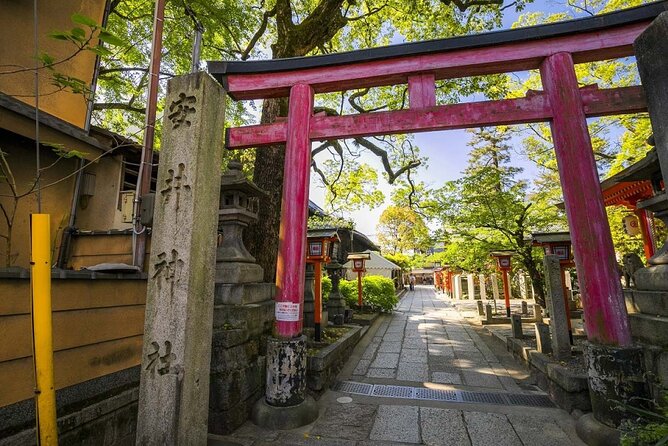
- Yasui-Konpiragu Shrine: Shinto Traditions at Human Scale
- Hōkan-ji Temple and Yasaka Pagoda: Night Photos You’ll Actually Keep
- Ninenzaka and the Snack Break That Makes Walking Worth It
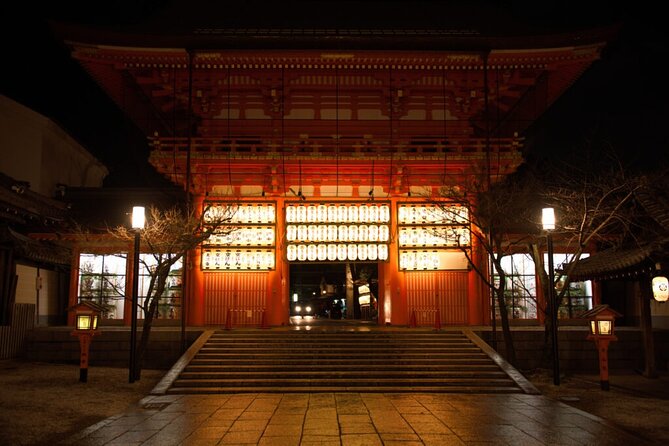
- Yasaka Shrine: Big, Important, and Easy to Understand at Night
- Lesser-Known Geisha Streets and the Pontocho Finale
- Price and Value: Is $98 Worth It?
- Practical Tips: What to Bring and How to Have an Easy Night
- Who Should Book This Geisha Night Walk?
- Should You Book It?
- FAQ
- How long is the Kyoto geisha night walk?
- What time does the tour start?
- How many people are in the group?
- Where do I meet the guide?
- Where does the tour end?
- Is the tour admission included for the stops?
- Is there a snack included?
- What’s included in the price?
- Is this tour suitable for strollers or walking difficulties?
- Can I get a refund if I cancel?
Key things to know before you go
- Small group of 8 means more questions and a steadier pace on foot
- Richard’s geisha-to-Shinto explanations connect the street scenes to real culture
- Classic night photo stops around Yasaka Pagoda and Ninenzaka
- Kabuki and Gion Corner context helps you understand the arts beyond the photos
- Snack break included so you can keep energy up during the evening walk
- Pontocho at night adds a lively, local-feeling finale beyond Gion
Gion After Dark Beats the Daytime Crowd Problem
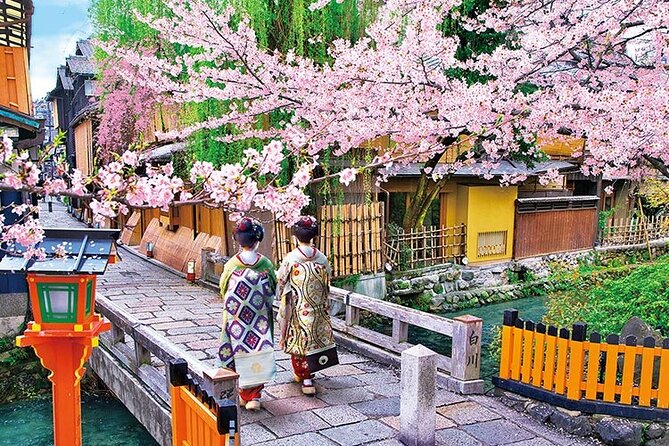
If you’ve tried walking Gion at noon, you already know the vibe: too many tour groups, too much herding, and not enough time to notice details. This tour starts at 5:20 pm, when streetlight glow kicks in and the district starts to feel more human. You get to experience the geisha world in the setting it was designed for: quiet lanes, temple silhouettes, and the kind of atmosphere that doesn’t happen in daylight.
The guide’s job here is key. Instead of just pointing out famous streets, Richard helps you read them. You’ll learn what you’re looking at—like the traditions behind geisha training, and the religious themes tied to shrines you pass along the way. That context makes even the short stops feel worth it.
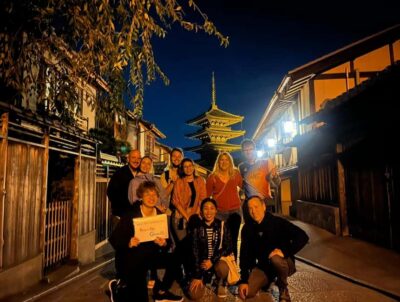
Also, the evening timing helps with photos. Hōkan-ji (Yasaka Pagoda) and Ninenzaka are particularly photogenic after dark, and the crowd density tends to be more manageable than during peak hours.
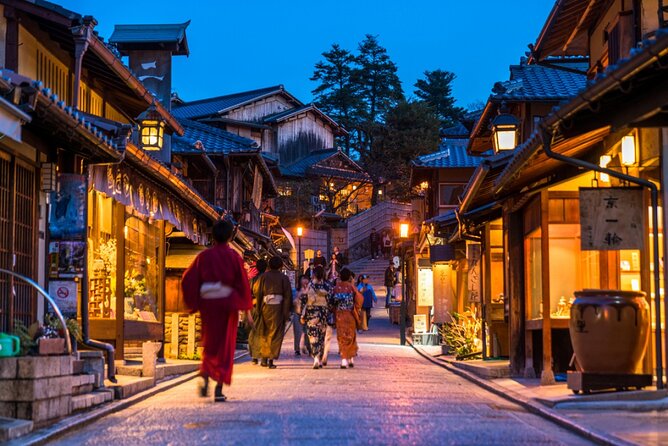
More evenings along the lantern-lit lanes of Gion
What the Max-8 Group Size Does for Your Experience
There’s a reason this is a small-group tour. With up to 8 travelers, you’re not swallowed by a line of strangers. You can ask questions and actually get answers that fit what you’re curious about—something people really value on this tour. Richard also adjusts to the group’s pace, which matters when you’re walking through narrow lanes where everyone needs to keep moving smoothly.
This group size also changes how “street watching” works. Geisha areas can be visually busy even on calm nights. In a larger group, you tend to rush past details. In a small group, you slow down naturally. You’ll also have an easier time getting near key viewpoints without feeling like you’re shoulder-to-shoulder the whole time.
If you like tours that feel like a conversation with a local guide, this format is a good fit. If you prefer a silent checklist, you might find yourself talking more than you expected.
Start at Kyoto Shijo-Kawaramachi, End in Pontocho
The meetup point is at the Disney Store Kyoto Shijo-Kawaramachi (in the コトクロス阪急河原町 building, 1&2F area) at 600-8001 Kyoto, Shimogyo Ward, and the tour ends at Sanjo Ōhashi Bridge, at the northern end of Pontocho alley. The end location is a smart touch: you finish in a district that’s fun to keep exploring right away, especially if you want food afterward.
A practical tip: show up a little early. Starting on time keeps the flow smoother for everyone, and you’ll also have a moment to confirm the group. The tour includes a mobile ticket, which is convenient because you’re not hunting for paper in a busy shopping street.
Because you’re walking through multiple neighborhoods, having the end point in your plan helps. You can treat this tour like your “evening backbone,” then use Pontocho as your dinner-and-drink zone after.
Kabuki Theater Pause: The Arts Connection Before Gion
One of the more interesting moments happens early, when you make a stop by the Kabuki theater. The guide explains details about this traditional Japanese entertainment and ties it into the broader story of performance culture in Kyoto.
Why this matters: when you only think of geisha as a visual culture (kimono, hairstyles, lanterns), you miss the deeper point—that this is a long-running arts tradition. Kabuki represents one of Japan’s best-known performance forms, and hearing how it fits into the cultural ecosystem helps you understand why Gion exists the way it does.
This early context also helps you enjoy later stops more. When you reach places associated with training and study, you’ll recognize how performance, discipline, and heritage connect rather than treating each location as a random photo stop.
Hanamikoji Street and Geisha Training Stops
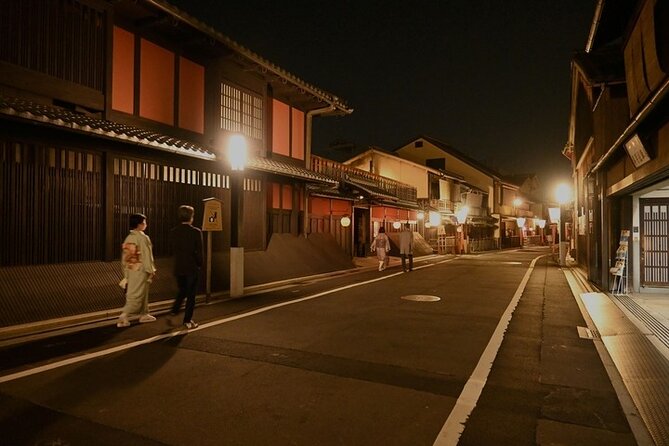
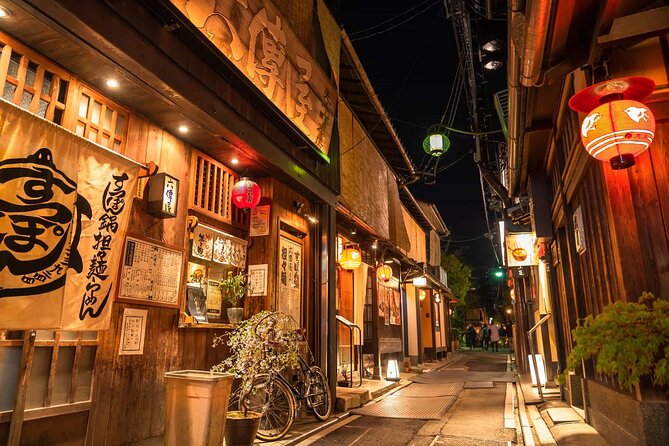
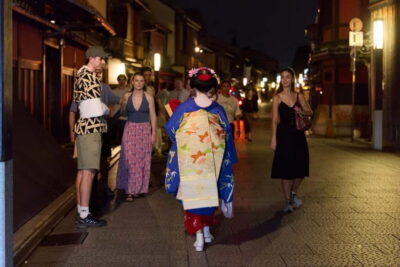
After the arts intro, you’ll spend time walking Hanamikoji Street and the surrounding alleys in Gion, where the guide explains geisha arts and traditions in detail. This is where you get the classic “Kyoto night” feel: quiet lanes, old wooden architecture, and the sense that you’re moving through a living neighborhood rather than a theme park.
You’ll also pass by places associated with geisha life—like geisha living quarters and working geisha houses—and you may notice how the street layout shapes privacy and daily rhythm. The tour also includes a stop by Gion Corner, described as a place where geisha study and train.
Two practical notes here:
- The best experience comes when you keep your eyes up as well as on the ground. Kyoto’s details are often on facades, doorway signs, and narrow street geometry.
- If you’re hoping to spot a geisha or maiko, the tour route increases your chances, but nothing is guaranteed. The guide can help you understand what you’re seeing when it happens.
This section is often where people feel the tour becomes more than sightseeing, because the guide turns background knowledge into a street-level story.
See how Kyoto shifts after dark


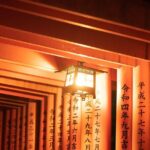
Yasui-Konpiragu Shrine: Shinto Traditions at Human Scale
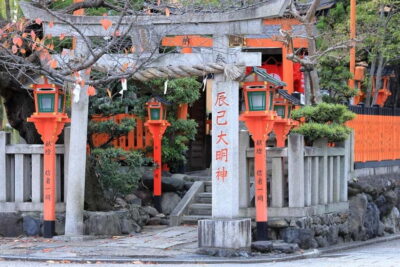
Next you visit Yasui-Konpiragu, a shrine stop focused on Shinto traditions. The time here is short, but it’s timed well—so you’re not rushing past religious sites just to hit the next landmark.
This stop gives you a different lens on Kyoto. Gion is often discussed in terms of geisha culture, but Kyoto’s identity is also deeply connected to shrines, rituals, and everyday spirituality. Even if you don’t consider yourself a “temple person,” these short shrine moments help you see why the city feels so layered.
Pay attention to how the guide explains what the shrine represents. It’s the kind of storytelling that makes you look around instead of just taking a photo from one angle.
Hōkan-ji Temple and Yasaka Pagoda: Night Photos You’ll Actually Keep
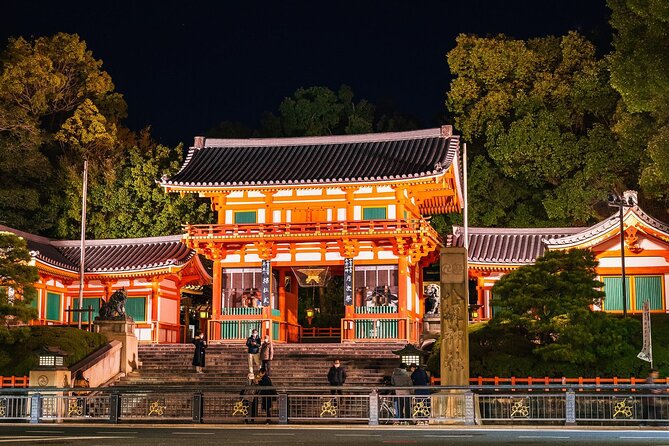
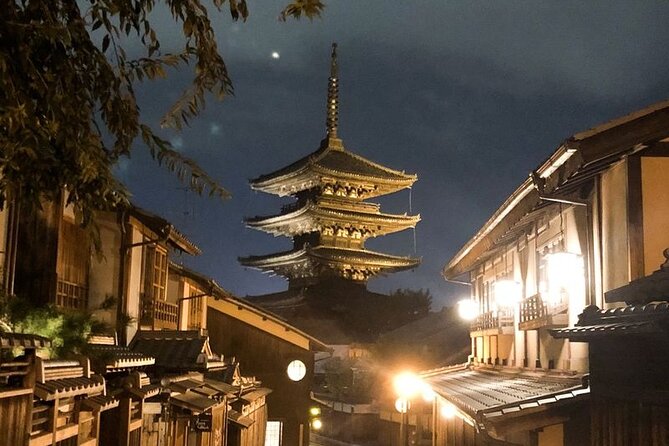
One of the most memorable segments is the visit to Hōkan-ji Temple (Yasaka Pagoda). This stop is brief, but it’s framed as a top night photography spot, and you get to see the area with guide commentary that brings in ideas tied to Zen.
Even on a busy Kyoto trip, this is the part you’ll likely feel again later when you look at your photos. The pagoda view at night has that classic Kyoto contrast: dark sky, warm light, and architecture that looks composed even when everything around it is moving.
Timing matters. The tour schedules this so you can catch the atmosphere without it becoming a long wait. Bring your camera plan (or at least your phone ready), but also take a few seconds to look without the lens. The guide’s context helps you frame what you’re seeing.
Ninenzaka and the Snack Break That Makes Walking Worth It
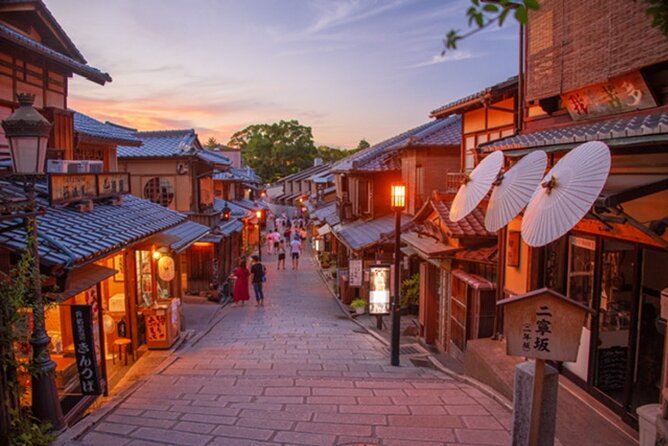
After the temple stop, you walk through Ninenzaka, described as especially magical at night. This alley is known for its old-street feeling, and night lighting turns it into something you can feel in your feet—slow, careful steps, and small glimpses down the lane.
Then there’s a break at Nene-no-Michi, where you enjoy a refreshing Kyoto snack included in the tour. This is a smart inclusion. Walking three-plus hours in Kyoto can quietly drain you, and the snack break keeps your energy up without turning the evening into a restaurant hunt.
A small practical thought: you don’t need to treat the snack like a full meal. Use it as fuel for the second half of the walk—especially if you plan to keep eating afterward in Pontocho.
Yasaka Shrine: Big, Important, and Easy to Understand at Night
You finish this religious-cultural stretch at Yasaka Shrine. The guide explains important features of the shrine and connects what you see to the bigger cultural meaning behind it. This is where a guided walk shines: shrines can feel overwhelming if you don’t know what to look for, but you’re not left guessing.
The timing also helps. Kyoto shrines feel different after dark. The space around you feels calmer, and the lantern-lit environment makes architectural details easier to notice.
If you care about photography, this is a good stop to slow down. If you care more about learning, it’s a good moment to ask questions—this tour is structured for that kind of engagement.
Lesser-Known Geisha Streets and the Pontocho Finale
The later part of the walk includes a picturesque geisha-district spot that you can’t miss, plus a lesser-known geisha street that most visitors don’t wander through on their own. That’s a big part of why this tour feels different from just following the main tourist flow.
Then the tour moves to Pontocho District, a narrow, lively geisha-area neighborhood with a mixture of geisha houses, bars, and nightlife. You get about 30 minutes here, which is enough time to get oriented and decide where you want to linger after the tour ends.
Even if you don’t plan to stay out late, Pontocho works as a fun “last chapter.” You’ll leave with a sense of how the evenings in Kyoto actually move from cultural quiet to lively streets.
Price and Value: Is $98 Worth It?
At $98 per person for about 3 hours 30 minutes, this isn’t a budget stroll. But the value comes from what’s bundled and how it’s delivered.
Here’s what you’re paying for, in practical terms:
- Up to 8 people, so the guide can manage pace and questions
- A guide speaking clear, native English
- Multiple major cultural stops spread across geisha streets, shrines, and temple photography points
- An included local snack
- Admission is listed as free for the stops, which matters because Kyoto attractions can add up fast
- The guide also offers context that helps you understand Kyoto beyond surface details
Compared to doing this on your own, you’re buying time and translation—plus the benefit of someone showing you where to look. Compared to a generic group bus tour, you’re buying walking focus and a smaller, more human scale.
If you want a guided evening that makes sense, not just an evening where you follow a route, this price can feel fair.
Practical Tips: What to Bring and How to Have an Easy Night
This is a walking tour, so plan like one. You’re on foot for about 3.5 hours, and the route includes some steps and unpaved rocky paths, which means it’s not suitable for anyone with walking issues. For strollers, those same details can be a problem.
What I’d bring:
- Comfortable shoes with good grip (Kyoto stones can be slick at night)
- A light layer for evening temperature changes
- Your phone for photos, but also a moment of no-phone attention so you don’t miss what the guide points out
- If you’re the type to ask for food tips, Richard is known to provide restaurant suggestions on request
Also remember: the experience requires good weather. If it’s canceled due to poor conditions, you’ll be offered a different date or a refund.
Who Should Book This Geisha Night Walk?
This tour fits best if you:
- Want Gion after dark with a guide who helps you read what you’re seeing
- Enjoy cultural context—geisha traditions, shrine ideas, and Kyoto’s old street atmosphere
- Like walking tours and don’t mind a steady pace for about 3.5 hours
- Are visiting Kyoto for the first time and want your bearings fast
It may be a poor fit if:
- You have walking limitations or need fully flat, easy terrain
- You hate guided explanations and prefer to wander without stopping
- You’re looking for a full museum-style indoor experience (this is very much a street-and-shrine evening)
From the reviews, it’s also clear this works well for groups like families, since the guide can keep the stories engaging while still staying respectful of the topic.
Should You Book It?
Yes, if you want a Kyoto evening that feels structured but not stiff, and you care about understanding geisha culture in context instead of treating it like a costume show. The combination of small group size, Richard’s storytelling, and the mix of Gion streets plus shrines/temples creates a night that’s both pretty and meaningful.
I’d book early in your Kyoto stay if possible. You’ll come away with a stronger sense of where everything sits and why the city looks the way it does, which makes the rest of your trip easier.
If walking is an issue, or you’d rather spend evenings on your own schedule without stops, consider a lighter option. But for the right traveler, this is one of the best ways to experience Kyoto at night with real cultural interpretation.
FAQ
How long is the Kyoto geisha night walk?
It runs for about 3 hours 30 minutes.
What time does the tour start?
The start time is 5:20 pm.
How many people are in the group?
The tour has a maximum group size of 8 travelers.
Where do I meet the guide?
You meet at the Disney Store – Kyoto Shijo-Kawaramachi at the specified address near 四条通河原町.
Where does the tour end?
It ends at Sanjō Ōhashi Bridge, at the northern end of Pontocho alley.
Is the tour admission included for the stops?
Yes, the tour lists admission tickets as free for the included stops.
Is there a snack included?
Yes. You’ll have a refreshing Kyoto snack during a break included in the tour.
What’s included in the price?
The price includes the walking tour, an expert guide speaking clear native English, and the included snack.
Is this tour suitable for strollers or walking difficulties?
It includes some steps and unpaved rocky paths, and it is not suitable for anyone having walking issues.
Can I get a refund if I cancel?
Yes, you can cancel for a full refund if you cancel up to 24 hours in advance. If you cancel less than 24 hours before the start time, the amount paid is not refunded.
More Tour Reviews in Kyoto
More of Kyoto After Dark
Still in Gion? Keep Going

Just added: more Kyoto tours to browse




Gion & Geisha District Tours, compared.
 ★ 4.7Kyoto Geisha Walking Tour: Gion District & Hidden GemsFrom $253,273 reviews
 ★ 4.9Gion Magical Night Walking Tour with Geisha TriviaFrom $242,393 reviews
 ★ 4.7Gion Geisha District Walking Tour – Stories of GeishaFrom $202,187 reviews
 ★ 4.9Best of Kyoto: Gion, Geisha, Pagodas & CobblestonesFrom $242,058 reviews
 ★ 4.5Night Walk in Gion: Kyoto’s Geisha DistrictFrom $212,003 reviews
 ★ 5.0Kyoto Night Foodie Tour in Gion (9+ dishes + 6 Sake tastings)From $1631,762 reviews
 ★ 5.0Kyoto Gion Geisha District Walking Tour – The Stories of GeishaFrom $251,441 reviews
 ★ 5.0Kyoto Gion: 2-Hour Geisha Culture & History Walking TourFrom $231,186 reviews
Browse the lists this tour appears in