
Reviewed · KYOTO CRAFT & CALLIGRAPHY WORKSHOPS
Ikebana Traditional Japanese Art of Flower Arranging
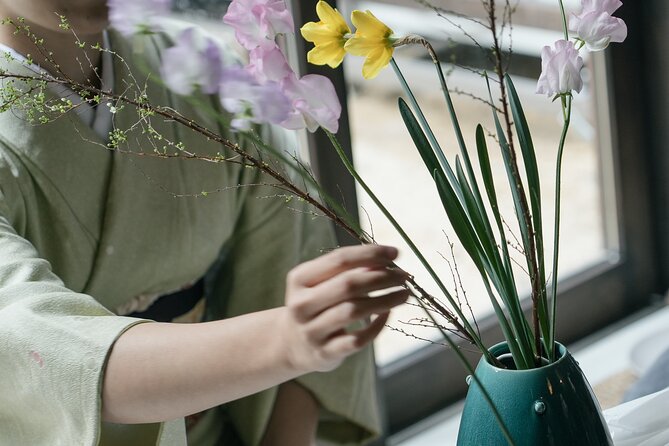
Ikebana turns fresh flowers into quiet focus. This Kyoto class is a hands-on way to practice mindfulness while you learn traditional Ikebana technique with seasonal stems and simple, real-world rules. You’re not just watching. You’re actively shaping an arrangement that reflects balance and the idea of giving flowers a second life.
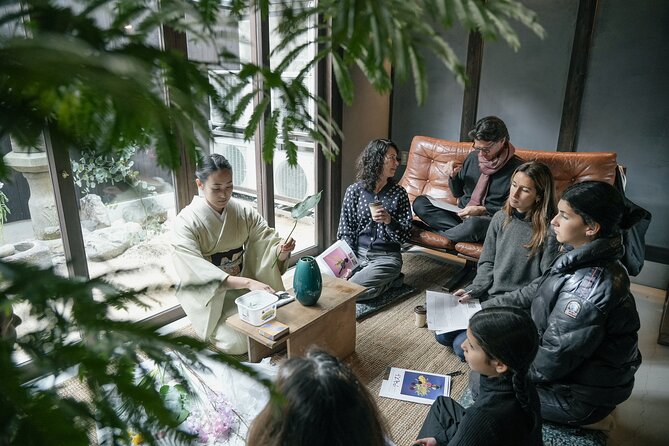
What I like most is the combination of gentle philosophy and practical instruction. The lesson is taught by Mana, an English-speaking expert who explains what the lines and shapes mean, then shows exactly what to do. The second big plus is the small group size (max 6), which gives you enough time to ask questions and adjust your arrangement as you work.
One consideration: the whole session is about 1 hour 30 minutes, so you’ll learn the essentials, not a full deep-dive into every ikebana school or long historical tour. If you crave lots of background detail, you may wish for more class time.
In This Review
- Key highlights
- Where You Start: Finding the Class Spot in Kamigyo
- What Ikebana Means in Real Life (Not Just a Definition)
- Your Lesson Flow: Demo First, Then You Create
- Nageire and Moribana: Two Styles You’ll Actually Feel
- Seasonal Flowers: Why Your Materials Matter
- Keeping Flowers Fresh: The Two-Week Care Lesson
- Price and Value: Is $72.26 for 90 Minutes Fair?
- Who Should Book This (and Who Might Want More)
- Practical Planning Tips So You Enjoy the Class
- Should You Book Ikebana in Kyoto?
- FAQ
- Where is the meeting point for the ikebana class in Kyoto?
- How long is the experience?
- What is the group size?
- Is the instructor available in English?
- What ikebana styles will I learn?
- Will the class use seasonal flowers?
- Do I get tips to help flowers last longer?
- How much does it cost?
- Is a mobile ticket used?
Key highlights
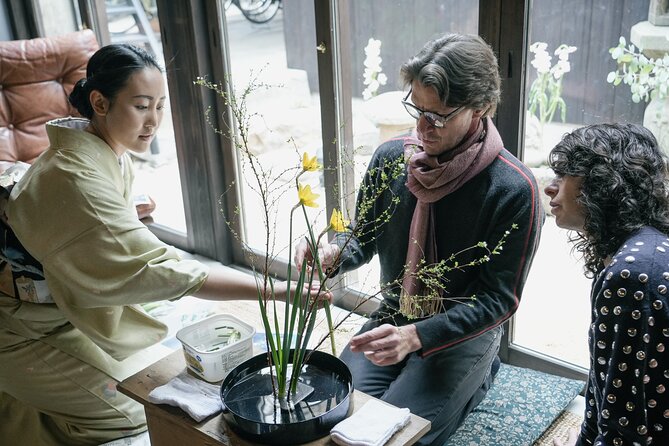
- English-led instruction by Mana: clear guidance plus room to ask questions as you build
- Two beginner-friendly styles: you work on both Nageire and Moribana
- Seasonal flowers for an authentic feel: your materials match what’s in season
- Mindfulness through making: the class uses ikebana as a way to slow down and focus
- Care tips for freshness: you learn how to help flowers last up to two weeks
Where You Start: Finding the Class Spot in Kamigyo
This ikebana experience is based in Kyoto’s Kamigyo Ward, at a specific meeting point on Tanbayachō (Shinfonie Kitano Higashi). The good news is that it’s described as near public transportation, which matters in Kyoto where time can evaporate if you misjudge walking distance.
You’ll start there and the activity ends back at the same point. That keeps things simple: no long taxi ride, no transfer to another neighborhood, no “just follow the group” confusion. A mobile ticket is used, so you’ll want your phone handy at check-in.
If you’re planning this around other Kyoto sights, I’d treat this like a fixed appointment rather than a flexible stop. At 90 minutes, it’s short enough to fit into a packed day, but long enough that getting lost on the way will mess up your rhythm.
Make something by hand in a Kyoto workshop
What Ikebana Means in Real Life (Not Just a Definition)
Ikebana translates into living flowers, and the class frames it that way on purpose. The central idea is simple but powerful: you use each stem’s natural form—its angle, height, thickness, and even its quirks—to create harmony and balance with other flowers.
In practice, this changes how you look at flowers. Instead of forcing everything into the same shape, you start working with what’s already there. That’s one of the reasons ikebana fits so well with wabi-sabi-leaning aesthetics: restraint, asymmetry, and the beauty of what’s imperfect or transient.
The class also treats arranging as a mindfulness tool. You’re not expected to clear your mind completely. You’re expected to pay attention—slow down while you choose placement, and then refine it. Even if you’ve never done anything artsy, the lesson aims to get you comfortable with focus through making.
One more detail that’s worth knowing: ikebana has been around for about 300 years, and the class uses that depth to anchor the techniques you’ll practice. You’ll see how Japanese artists build balance inside one arrangement, almost like creating a small ecosystem.
Your Lesson Flow: Demo First, Then You Create
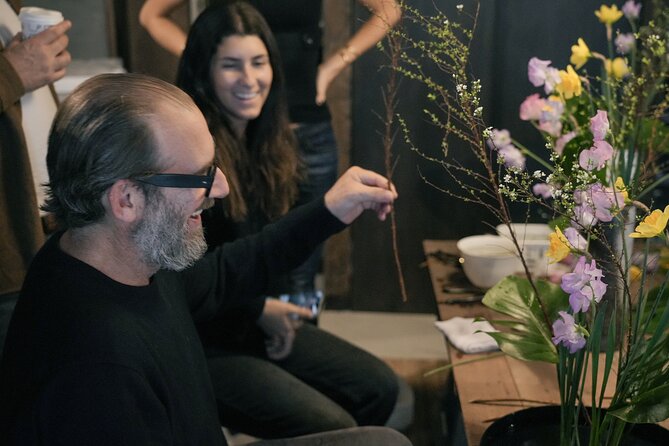
The structure is straightforward, and that’s a big part of why this works for beginners. Mana demonstrates two arrangements before you get fully hands-on. That’s key because ikebana has a few counterintuitive ideas—like trusting height and line rather than trying to fill everything in.
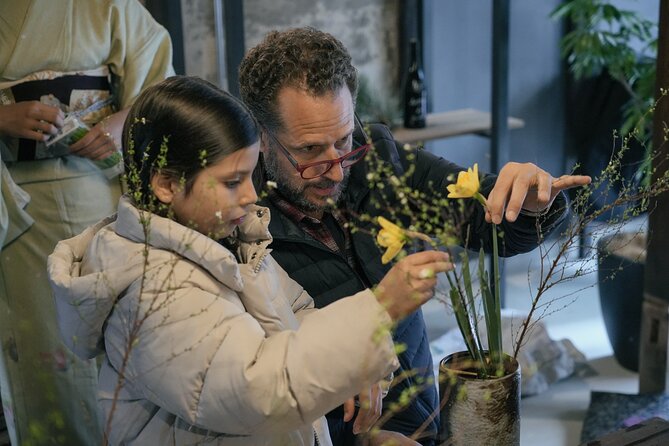
Once the demos are done, you’re let loose to make your own arrangements. Since the group is capped at six, you’re not stuck watching someone else forever. Mana can guide you while you’re working, which is especially helpful if you get stuck halfway through placing stems.
The demos aren’t just about looking pretty. Based on what you’ll hear during the explanation, the lesson connects the physical arrangement to meaning: why certain lines feel steady, why negative space matters, and how balance can be achieved without symmetry.
If you like classes that mix “show me” with “now try,” this format is a good match.
Nageire and Moribana: Two Styles You’ll Actually Feel
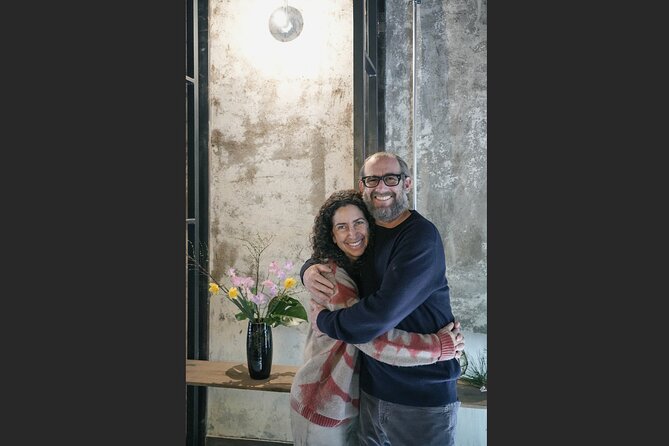
You’ll learn two ikebana styles during the session: Nageire and Moribana. That’s a lot to pack into 90 minutes, but it’s also a strong value because it gives you a wider view of how ikebana can look and behave.
Here’s what to expect conceptually:
- Nageire tends to emphasize an organic, flowing feel—placement guided by natural angles and a more relaxed sense of movement.
- Moribana is built around a more structured approach, where you’re balancing forms in a way that reads clearly from the front.
In other words, you’re not just making one arrangement twice. You’re comparing two different ways of organizing stems—so you start to understand what changes when you switch styles.
Also, Mana’s instruction is geared to beginners. The class is designed so most people can participate, and the focus is on the fundamental technique you can reuse later. One review feedback asked for more history and more talk about the different schools; Mana’s response highlights that she teaches these two quintessential beginner styles (Nageire and Moribana) and explains them with demonstrations and technique rather than trying to cover every branch of ikebana theory in a short slot.
Seasonal Flowers: Why Your Materials Matter
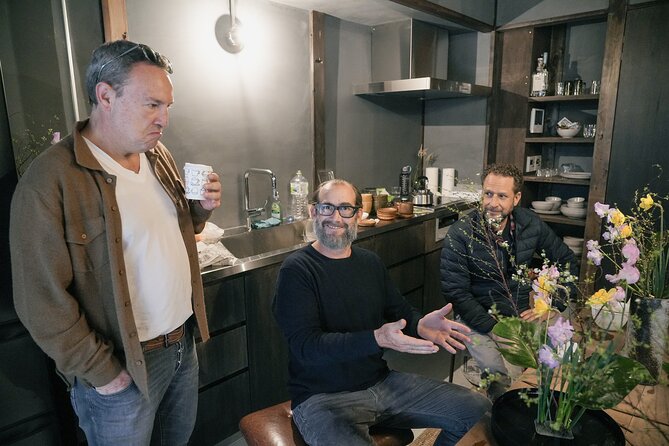
Your lesson includes seasonal flowers. That detail isn’t just marketing fluff. In ikebana, seasonality changes the “personality” of what you’re arranging. Different stems and textures show up depending on the time of year, and those natural qualities influence how the arrangement wants to be shaped.
When your flowers match the season, the arrangement feels more connected to place and time. It also makes the class more authentic: you’re practicing ikebana with materials that fit Kyoto’s current rhythm, not generic flowers that could be anywhere.
And because you’re working hands-on, the seasonal aspect becomes practical. You’ll learn how to work with what’s in front of you—how to adjust when a stem isn’t cooperating, or when the natural curve pushes your design in a particular direction.

Keeping Flowers Fresh: The Two-Week Care Lesson
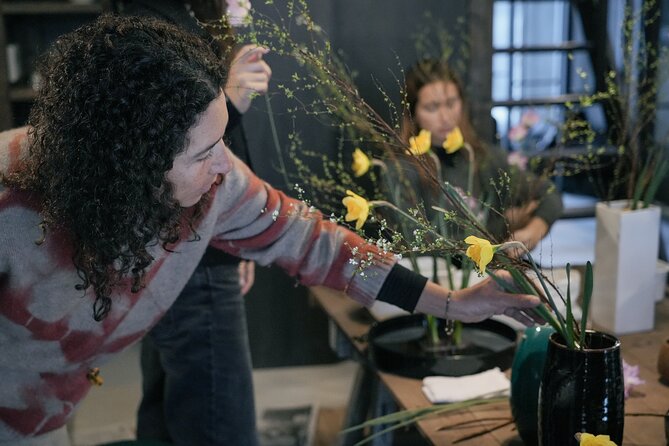
One of the promises in the class description is that you’ll learn tips to help your flowers last up to two weeks. While the exact outcome depends on room conditions and care after the class, the intent is clear: you’re not just making something for a photo. You’re learning how to treat the arrangement like living material.
What makes this valuable is that it turns ikebana from a one-time craft into a skill you can use at home. You’ll leave with practical know-how about freshness and upkeep, which is often what people wish they had after taking any floral workshop.
This also loops back to the underlying philosophy: flowers are living beings. You’re learning how to work with that reality rather than fight it.
Price and Value: Is $72.26 for 90 Minutes Fair?
Let’s talk straight. At $72.26 per person for about 1 hour 30 minutes, this isn’t a budget activity. But it can be good value if you care about the quality of instruction and the fact that you’re working hands-on.
Here’s why it can be worth it:
- You get an English-speaking ikebana expert (Mana).
- You learn two styles (Nageire and Moribana), not just one.
- The group size is small (max 6), which supports real guidance.
- You practice with seasonal flowers and get care tips intended to keep flowers fresh for up to two weeks.
Compare that to a bigger, more generic workshop where you watch more than you do, or where the instruction is harder to customize. For this class, the small group matters. And the two-style format matters too.
It’s also booked about 30 days in advance on average, which usually signals demand. If you’re traveling in peak seasons, plan ahead so you don’t end up with a “maybe another day” situation.
Who Should Book This (and Who Might Want More)
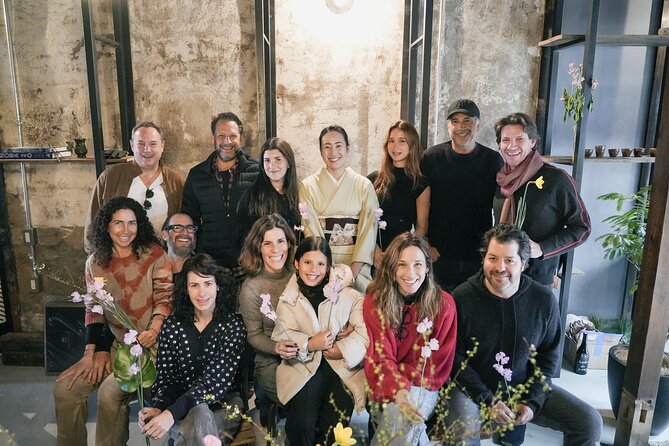
This class is a great fit if you:
- want a traditional Kyoto activity that’s hands-on, calm, and focused
- like learning through guided demos, then immediate practice
- want both mindfulness and practical floral technique
- appreciate wabi-sabi ideas like restraint and natural balance
- enjoy having a small class where the instructor can respond to you
It may feel less ideal if you:
- specifically want a long, detailed talk about ikebana history and the different schools beyond the two core beginner styles taught here
- prefer very free-form art projects without structure
- only want general sightseeing and don’t want any “learning component” during your trip
Also, if you’re coming as a couple, the small group format is a plus. Mana’s instruction is described as thorough and flexible, so you and your partner can focus on your own arrangements without feeling rushed.
Practical Planning Tips So You Enjoy the Class
Because the duration is set (about 90 minutes), do yourself a favor and plan around it. Don’t treat it like a last-minute add-on you can “wing.” Kyoto days are full of walking, and even a short delay can throw off the flow.
A mobile ticket is used, so keep your booking info accessible on your phone. The meeting point is near public transportation, but you’ll still want to arrive with enough buffer time to settle in before the lesson begins.
Finally, if you have any flexibility constraints, keep an eye on the time you book. The class is structured and timed, and with such a short session, arriving late can mean you miss part of the demonstrations and setup.
Should You Book Ikebana in Kyoto?
I’d book this if you want a meaningful Kyoto experience that’s not just looking, not just shopping, and not just a quick photo stop. You’ll get real technique, an English-speaking instructor, small-group attention, and two styles (Nageire and Moribana) in one short session.
If you’re the kind of person who wants a heavy history lecture or a survey of every ikebana school, you might feel the class is focused rather than wide-ranging. But if you’re looking to learn the essentials and leave with technique you can use later, this hits the mark.
FAQ
Where is the meeting point for the ikebana class in Kyoto?
The class meets at Japan, 602-8287 Kyoto, Kamigyo Ward, Tanbayachō 3481, Shinfonie Kitano Higashi.
How long is the experience?
It runs for about 1 hour 30 minutes.
What is the group size?
The activity has a maximum of 6 travelers.
Is the instructor available in English?
Yes. The class is described as being taught by an English-speaking ikebana expert.
What ikebana styles will I learn?
You will learn the two traditional beginner styles Nageire and Moribana.
Will the class use seasonal flowers?
Yes, the class includes seasonal flowers.
Do I get tips to help flowers last longer?
Yes. You’ll learn tips for maintaining fresh flowers that can last up to two weeks.
How much does it cost?
The price is $72.26 per person.
Is a mobile ticket used?
Yes. The experience uses a mobile ticket.
More Tour Reviews in Kyoto
More Kyoto Workshops to Try

Just added: more Kyoto tours to browse


Kyoto Craft & Calligraphy Workshops, compared.
 ★ 5.0Chopsticks Making Workshop in Gion with Engraving OptionFrom $15958 reviews
 ★ 4.8Authentic knife making experience at a blacksmith in KyotoFrom $154350 reviews
 ★ 5.01-Hour Japanese Archery Experience in KyotoFrom $46176 reviews
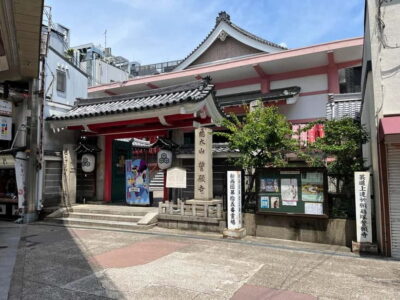 ★ 5.0Calligraphy class at Buddhist temple in city centerFrom $55167 reviews
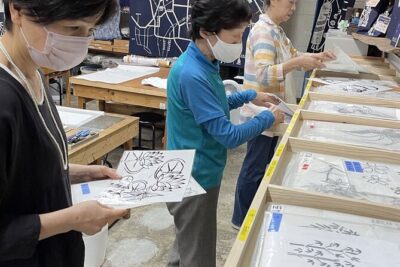 ★ 5.0Roketsu dyeing experience: M course Roketsu Dyeing ExperienceFrom $25163 reviews
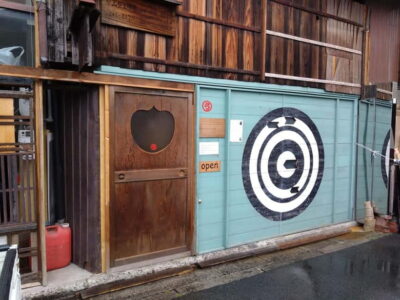 ★ 4.9Japanese Archery Workshop with Experienced InstructorFrom $38132 reviews
 ★ 4.8Japanese Calligraphy ClassFrom $5189 reviews
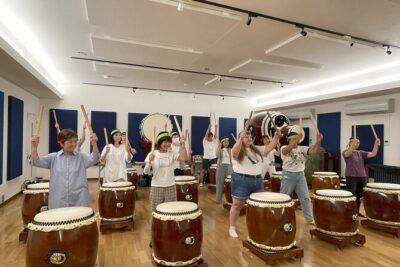 ★ 5.0TAIKO, Japanese Drum Experience from KyotoFrom $11586 reviews
Browse the lists this tour appears in