
Reviewed · WORKSHOPS
Hanakoushi cotton Scarf Class
Make dye patterns in Kyoto, not just photos. A private scarf-dyeing class at Kyoto Shibori Museum is a great way to learn sekka shibori techniques in a short, hands-on session, and you leave with a finished souvenir you made yourself. I especially like that it feels personal, not rushed, and that the result is a wearable keepsake for your trip. One thing to consider: the session is only about 30 minutes (sometimes up to 60), so if you want a long, full-day culture program, this won’t be it.
This class centers on dyeing a long cotton scarf (175cm x 50cm) with the hanakoushi shibori folding method using the sekka shibori approach. You’ll pick a color, fold the fabric in the required style, dye it, then spend the waiting time learning shibori from displays and samples. When I look at the feedback, the common thread is how friendly the instructors are, from Sensei to guides like Nina and Yokahama-san, and how easy they make the steps for visitors.
In This Review
- Key Highlights You’ll Care About
- Kyoto Scarf Dyeing That Actually Becomes a Souvenir
- The Kyoto Shibori Museum Experience: Small, Focused, Worth It
- What You’ll Make: A 175cm x 50cm Hanakoushi Cotton Scarf
- Choosing Color and Folding With Hanakoushi Shibori
- Dyeing Time: The Part That Feels Like Magic
- The Drying Wait Becomes Museum Time (Usually 30 Minutes)
- Learn More Shibori: Patterns, Techniques, and Context You Can Use
- Shopping Smart After Your Scarf Is Finished
- Timing and Duration: Plan Around a Short, Focused Session
- Price and Value: What You’re Paying For
- Who This Class Fits Best
- Before You Go: Simple Practical Tips
- Should You Book the Hanakoushi Cotton Scarf Class?
- FAQ
- How long is the Hanakoushi cotton scarf class?
- Do I need previous experience with shibori?
- Is this class private?
- What will I make?
- Where do I meet for the activity?
- Is there mobile ticketing?
- What happens while my scarf is drying?
- What’s the cancellation policy?
- Is the museum easy to reach with public transportation?
Key Highlights You’ll Care About
- Private class for your group so the pace and attention match you
- Sekka shibori + hanakoushi folding applied to a full-size scarf souvenir
- Pick your own color, then watch how folding changes the pattern
- 30 minutes of drying turns into museum time, tools, and sample viewing
- On-site shop with shibori items you can buy while you’re there
Kyoto Scarf Dyeing That Actually Becomes a Souvenir
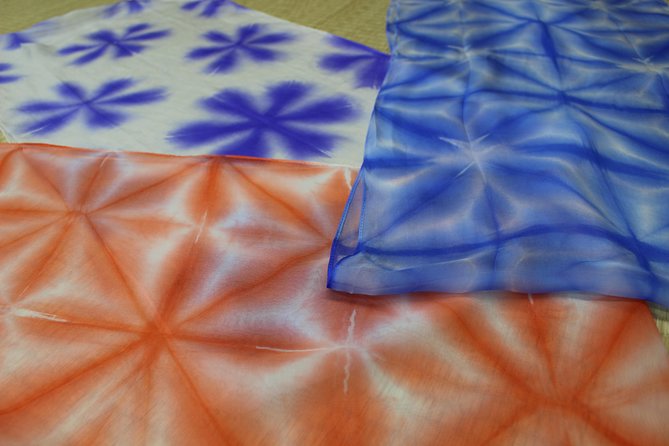
Kyoto is full of craft shops. This is different because you make the craft, not just browse it. The payoff is straightforward: you dye a scarf designed to be long and easy to wear or gift. The class format is simple to follow, and the finished textile is the kind of thing you’ll remember every time you reach for it.
What I like most is the blend of doing and learning. You are not standing around listening for most of the time. You choose a color, fold the scarf in the correct way, and dye it. Then you get time inside the museum to see shibori examples and understand where these folding-and-dye patterns fit in.
Other Kyoto tours and experiences to compare

The Kyoto Shibori Museum Experience: Small, Focused, Worth It
Kyoto Shibori Museum is the type of place where the scale fits the craft. It may feel small, but that’s part of the point: you get concentrated attention on textiles, tools, and finished works. During the dyeing process, you can also move through the museum displays at a natural pace while you wait for your fabric to dry.
Another practical plus: it’s near public transportation. That matters in Kyoto, where getting across town can turn into extra effort. The session ends right back at the starting point, so you’re not left navigating the city right after your workshop.
What You’ll Make: A 175cm x 50cm Hanakoushi Cotton Scarf
Your hands-on project is centered on a long scarf sized about 70 inches by 17 inches (175cm x 50cm). That dimension is great for real-life use. It’s big enough for wrapping, draping, or styling like a traditional accessory, not just a tiny souvenir you feel guilty for unrolling.
The class description points to cotton, and the hanakoushi shibori method is the key technique for the folding and dye outcome. A few participants mention silk scarves in their write-ups, so if you’re picky about fiber type, it’s smart to confirm what material you’ll be working with when you book. Either way, the focus stays the same: folding creates the resist pattern, and dye makes it visible.
Choosing Color and Folding With Hanakoushi Shibori
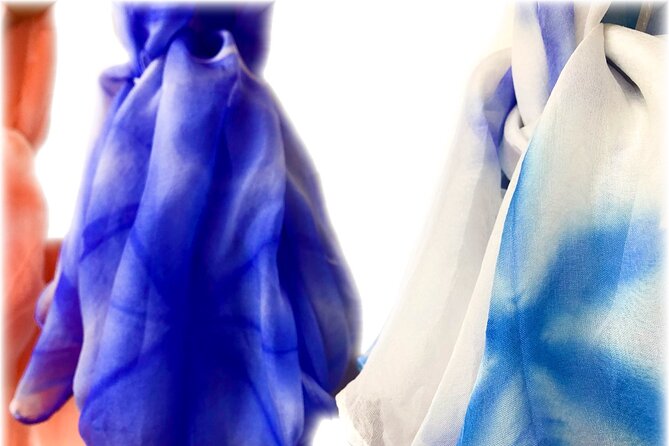
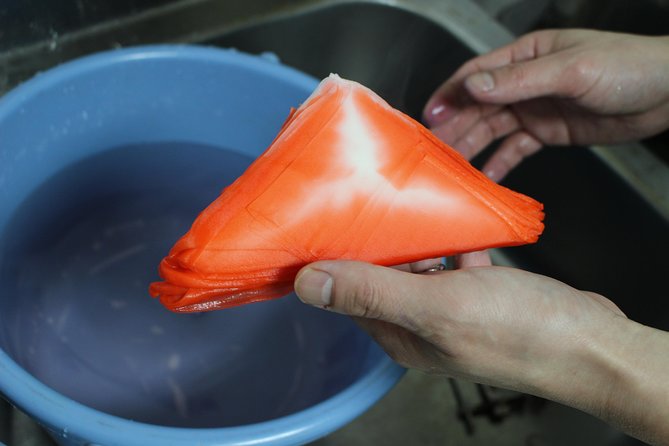
The class starts with two decisions that steer everything after: what color you want and how you fold. You’ll learn how to fold your fabric in a specific way for the hanakoushi shibori method. Once your folds are in place, dyeing becomes almost like a controlled science experiment.
I found this kind of instruction especially satisfying for first-timers. You’re not expected to already know Japanese craft terminology. The guides are described as kind, patient, and easy to understand, and more than one person noted solid English support. That means you can focus on the mechanics of folding, not on translating instructions in your head.
Even better, this isn’t portrayed as a complicated all-day traditional ritual. Several people highlight that the process is simplified for tourists, so you still learn the craft while spending your energy on producing a real scarf instead of tying countless tiny elements for hours.
Dyeing Time: The Part That Feels Like Magic
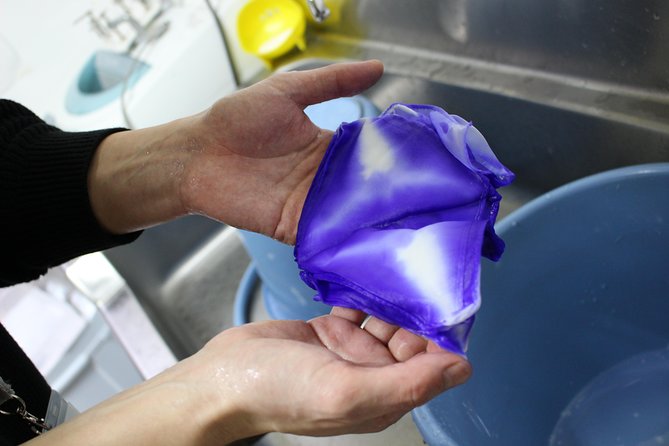
Once the fabric is folded, the dye step turns your pattern from invisible to obvious. The method is traditional, but the workshop is designed so you can complete your project within a short session. Your job is to follow the steps at the right time and keep your folding intact so the dye creates the intended look.
After dyeing, you’ll shift into waiting mode while your scarf dries. Plan for that transition. It’s not wasted time. It’s when you get to see shibori as an art form beyond your own piece.





The Drying Wait Becomes Museum Time (Usually 30 Minutes)
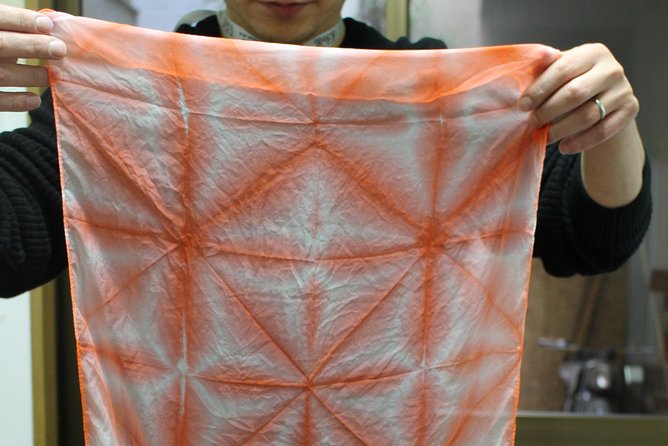
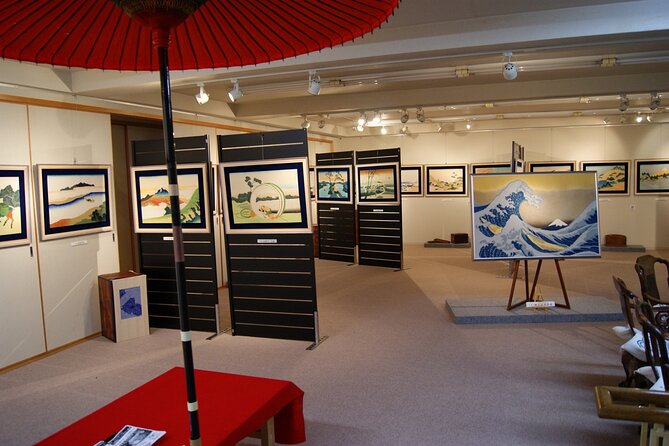
Expect about 30 minutes for drying, and during that time you’ll be guided to museum resources. This is where you stop treating the class like a one-off and start understanding what you made and why it looks the way it does.
In the museum you can browse shibori art pieces, tools, and sample textiles. People also mention videos and show-and-tell-style explanations, which is a smart format because it gives structure while you wait. If you’re the type who likes to ask questions, this is also the best moment. Staff are there, and you’re not trying to learn while holding wet fabric.
If you’re short on time in Kyoto, the drying window helps you “get more value” out of the ticket. You’re still doing something related to shibori while your scarf sets.
Learn More Shibori: Patterns, Techniques, and Context You Can Use
This workshop doesn’t just teach steps. It helps you connect folding patterns to the final visual result. That makes your scarf feel earned rather than accidental. If you leave thinking, I understand why it looks like that, the class did its job.
The museum setting also helps you appreciate the bigger craft world. Even during a short visit, you can see high-quality examples and examples at different scales. Some write-ups specifically call out how the museum helps you understand the careful craftsmanship behind shibori, not just the final dyed pattern.
You’ll also likely hear from instructors in a way that makes the art feel approachable. Several participants name guides directly, like Sensei, Nina, and Yokahama-san, which is a good sign: this seems like a family-run, hands-on operation where the staff explain clearly and stay involved throughout the process.
Shopping Smart After Your Scarf Is Finished
The museum shop is part of the experience, especially because you’re already thinking about textiles and patterns. You can shop for shibori items, souvenirs, fabrics, and other craft goods while your session winds down.
This is also where visitors tend to make practical gift choices. One person bought a purse for their mom and samue clothing for their dad after class. That’s a good reminder: if you don’t want to overthink gifts, a craft shop connected to the technique you just learned is often the easiest way to pick something personal and well-matched to your trip.
A quick tip: if you’re tempted to buy right away, do it after your class. You’ll have a much better sense of what styles you actually like once you’ve seen patterns close up and made one yourself.
Timing and Duration: Plan Around a Short, Focused Session
The class runs about 30 minutes, approximately, and sessions are also described as often individual and taking 30 to 60 minutes. That timing matters in Kyoto. It’s easy to fit into a half day, especially if you’re using public transportation and want something predictable.
Because the session includes drying time for your scarf, you’ll feel like you’re doing the whole arc: start folding and dyeing, then learn in the museum, then take home the result. It’s not just a quick “try it and go” stop.
Price and Value: What You’re Paying For
At $43.35 per person, this class is priced like an activity, not like a high-end boutique workshop. The value comes from three things you get together:
- You make a full-size scarf (175cm x 50cm), not a tiny sample
- You get a private session tailored to your party
- You spend time in a museum where you can connect your finished scarf to real shibori examples
If you were trying to buy a similar shibori scarf in a shop, the cost of materials and the skill involved often makes handmade crafts feel expensive. Here, you’re paying for the instructor guidance plus the use of a proper dye-and-fold process. For a single afternoon in Kyoto, that’s strong value.
One more value angle: it’s a “buy once, remember forever” souvenir. You’re not carrying around a paper shopping bag you forget about after your flight.
Who This Class Fits Best
This experience is a great fit if you:
- want a hands-on Kyoto craft activity with a clear end product
- like museums, but don’t want to spend hours only looking
- enjoy learning how traditional techniques become wearable art
- want a private class, so your group gets attention and a comfortable pace
It may be less ideal if you:
- want a very long lesson with lots of history lecture time
- expect a full-day program with multiple crafts or locations
- prefer activities that are more energetic than hands-on and methodical
Most people can participate, and English support seems to be a real strength. That lowers the friction for first-timers.
Before You Go: Simple Practical Tips
Here are the practical points that will keep your class smooth:
- Be ready to choose a color at the start, since that’s part of how your pattern takes shape
- Plan for a drying window and use it to explore the museum displays and tools
- Take time in the shop afterward if you want gifts connected to what you made
- Bring your confirmation details on your mobile ticket, since the activity uses a mobile ticket
Also, because the session ends back at the meeting point, you can plan your next stop without guessing where you’ll be dropped off.
Should You Book the Hanakoushi Cotton Scarf Class?
I think you should book this if you want one memorable, hands-on Kyoto experience that ends with something you can actually use. The private format, the chance to learn sekka shibori through the hanakoushi folding method, and the museum time during drying make it feel like more than a single craft step.
Skip it only if your schedule needs something longer and more wide-ranging. Otherwise, it’s a smart choice for travelers who want authenticity with a clear payoff: you learn the process, then you walk away with a scarf that looks like it came from Kyoto, because you made it here.
FAQ
How long is the Hanakoushi cotton scarf class?
It’s about 30 minutes on average, and classes are usually described as taking 30 to 60 minutes per session.
Do I need previous experience with shibori?
No. Most travelers can participate, and the instructions are set up to be easy for visitors to follow.
Is this class private?
Yes. It’s a private tour/activity, and only your group participates.
What will I make?
You’ll learn to dye a scarf using the hanakoushi shibori method with the sekka shibori approach. The scarf is described as 70 inches by 17 inches (175cm x 50cm).
Where do I meet for the activity?
You’ll meet at Kyoto Shibori Museum, 135-5 Shikiamichō, Nakagyo Ward, Kyoto, 604-8261, Japan.
Is there mobile ticketing?
Yes. The activity uses a mobile ticket.
What happens while my scarf is drying?
As your fabric dries (about 30 minutes), you’ll learn more about shibori by browsing the museum’s art pieces, tools, and samples.
What’s the cancellation policy?
Free cancellation is available. You can cancel up to 24 hours in advance for a full refund. Canceling less than 24 hours before the start time won’t be refunded.
Is the museum easy to reach with public transportation?
Yes. The meeting location is noted as being near public transportation.
More Workshops in Kyoto


More Tour Reviews in Kyoto
Just added: more Kyoto tours to browse








Workshops, compared.
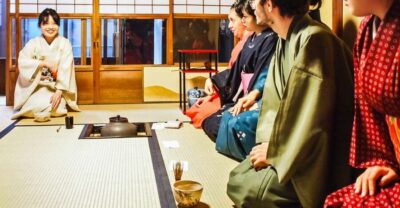 ★ 4.345-Minute Tea Ceremony Lesson ExperienceFrom $222,378 reviews
 ★ 5.0Ramen Cooking Class at Ramen Factory in KyotoFrom $1311,937 reviews
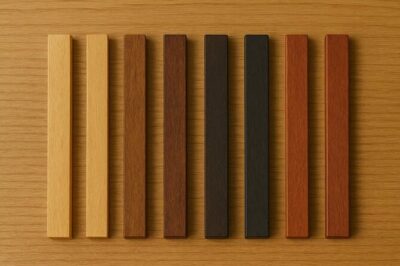 ★ 5.0Chopsticks Making Workshop in Gion with Engraving OptionFrom $15958 reviews
 ★ 4.9Samurai Sword Class by Experts in Traditional ArtsFrom $64657 reviews
 ★ 4.9Ramen Cooking Class at a Ramen Factory with SouvenirFrom $127532 reviews
 ★ 5.0Ninja 1-hour Hands-on Lesson by Japanese master in Kyoto -EntryFrom $80489 reviews
 ★ 5.0Ramen, Gyoza, and Onigiri Cooking ClassFrom $90445 reviews
 ★ 5.0The Original Small-Group Sushi Making Class in KyotoFrom $69436 reviews
Browse the lists this tour appears in