
Reviewed · GION & GEISHA DISTRICT TOURS
Gion Night Walking Tour
Geisha lights on Kyoto cobblestones at night. This small-group Gion night walk is built around learning the real context behind geisha life, while you move through the alleys when they look their best. I like the way the guide ties stories to what you can actually see, plus the payoff of possible real sightings in the neighborhood. One thing to keep in mind: this is a walk, so you’ll want sensible shoes and you shouldn’t expect every moment to include a geisha in sight.
I also like the pacing: you get about 2 hours to cover four meaningful stops, and you’re back near where you started. The meeting is at Tsuruha Drug Yasaka Shrine Store, and you’ll use a mobile ticket. If you’re tight on time in Kyoto, this is a simple, focused evening plan that doesn’t eat your whole night.
In This Review
- Key Things to Know Before You Go
- Why a Gion Night Walk Beats Doing Gion on Your Own
- Small Group, Easy Evening Timing, and a Route You Can Actually Follow
- Price and Value: What $33.03 Buys You in Real Terms
- Getting Set Up: Where to Meet and How the Tour Starts
- Miyagawacho Kaburenjo: The Geisha Quarter at Human Scale
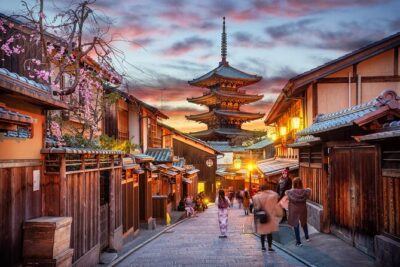
- Yasakanoto and the Night Photo Moment That Makes the Walk Worth It
- The Preserved Streets Interlude: Slow Down and See the Details
- Yasaka Shrine Lantern Light: Shinto Context and a Quick Pause
- Gion Shirakawa Lanes: Clubs, High-End Dining, and the Real Street Mix
- What You Might See: Geiko, Maiko, and the Fun of Not Forcing It
- How to Act Like a Good Listener (and a Low-Key Observer)
- Guides, Pace, and Why Names Keep Coming Up
- Weather, Comfort, and What to Wear for a Night Walk in Gion
- Who This Tour Is Best For (and Who Might Skip It)
- Should You Book the Gion Night Walking Tour?
- FAQ
- FAQ
- How long is the Gion night walking tour?
- How many people are in each group?
- Where do I meet for the tour?
- Will I need an admission ticket for the stops?
- Is this tour suitable for kids or older adults?
- Do I get a mobile ticket?
- Is service for people with service animals available?
- What happens if the weather is poor or the tour is canceled?
- Is cancellation free if my plans change?
Key Things to Know Before You Go
- Max 10 people keeps the tour personal and questions easy to ask
- 2 hours on foot fits neatly between dinner plans in Higashiyama
- Lantern-light photo stops at Yasaka Shrine and the Yasakanoto area
- Four major areas covered: Miyagawacho Kaburenjo, Yasakanoto, Yasaka Shrine, Gion Shirakawa
- Admissions listed as free for the stops on the schedule
- Guides get praised by name in past groups (Kevin, Karim, Niall, Nile, Philippe, Cha cha, Shanda)
Why a Gion Night Walk Beats Doing Gion on Your Own
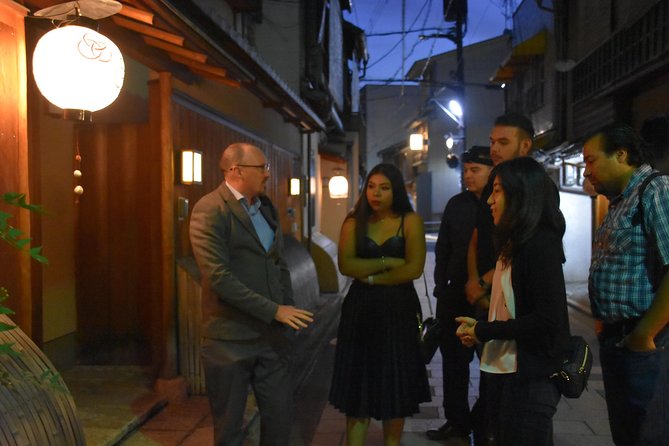
Gion is one of those places where the details matter. At night, you’re not just looking at buildings—you’re seeing the lanes, the angles, and the little rhythms that daytime sightseeing often misses.
This tour is interesting because it’s not a checklist. You’ll walk through the geisha quarters while your guide explains how the arts and traditions fit into Kyoto life, then you stop at spots designed for night photos and storytelling. That combo—walk + context + timing—is the magic.
I also appreciate the small size. With a group capped at 10, you don’t feel like you’re being rushed through Gion like a human photo line. It’s easier to keep up, easier to ask questions, and easier to move at a pace that feels natural.
More evenings along the lantern-lit lanes of Gion


Small Group, Easy Evening Timing, and a Route You Can Actually Follow
You’re planning around 2 hours total, and that matters more than it sounds. Kyoto evenings can get complicated fast—lines for trains, crowded sidewalks, and the temptation to “just wing it.” A guided evening route takes the mental math off your plate.
The tour is built for a wide age range (10–77), which usually means the pace is reasonable. And since it’s described as near public transportation, you can slot it into your day without needing a dedicated taxi plan.
You’ll also be walking back to the meeting point, so you don’t end up stranded across town at night. The whole thing is designed to feel self-contained.
Price and Value: What $33.03 Buys You in Real Terms
At $33.03 per person, this isn’t a “budget tour” in the airline sense—it’s more like a well-priced evening experience. Here’s what you’re paying for, in practical terms:
- A guide who can connect places to meaning (not just recite facts while you stroll)
- Night-focused stops where the lighting and atmosphere change the experience
- Time-saving direction: you don’t have to figure out the best lanes, temples, and viewpoints on your own
- Free admission listed for the schedule’s main stops (so you aren’t stacking extra costs)
Compared to trying to do Gion solo, you’re basically buying a shortcut to the best angles and the cultural context that makes those angles click. That’s a solid trade in Kyoto, where getting it “right” the first time saves you time and energy.
Getting Set Up: Where to Meet and How the Tour Starts
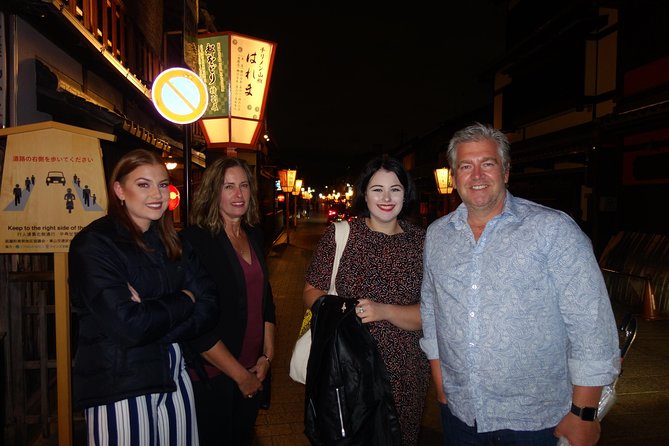
The start point is Tsuruha Drug Yasaka Shrine Store (543番地 Gionmachi Minamigawa, Higashiyama Ward, Kyoto, 605-0074, Japan). Past tour notes also point out an easy landmark around Miyagawasuji with a 7-11 nearby, which can help if you navigate by street-level anchors.
You’ll receive confirmation at booking time, and the tour uses a mobile ticket—handy in a city where you’ll walk more than you think. In case you’re wondering about animal companions, service animals are allowed.
If you like being prepared, I’d treat this as an evening “meet, listen, walk, photograph” event. The route moves in a way that makes sense once you’re there—especially in the dark when street details disappear fast.
Miyagawacho Kaburenjo: The Geisha Quarter at Human Scale
Stop 1 is Miyagawacho Kaburenjo, where you walk through the geisha quarters and get the stories behind the “mysterious” reputation. The schedule gives you about 30 minutes, and admission is listed as free.
This is a key stop because it sets expectations for the whole night. You’ll hear about the lives of masters of the arts and why so much of geiko/geisha culture centers on discipline, performance, and respect for tradition. That matters because Gion can feel like a movie set if you don’t know what you’re actually seeing.
Practical note: even with the storytelling, this part is still a walk through an actual neighborhood. You’ll get a sense of real life here—quiet, narrow lanes, and the feeling that you’re watching something that continues long after the tourists leave.
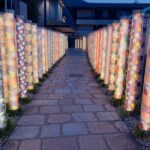
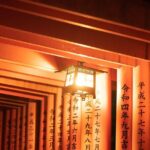
See how Kyoto shifts after dark


Yasakanoto and the Night Photo Moment That Makes the Walk Worth It
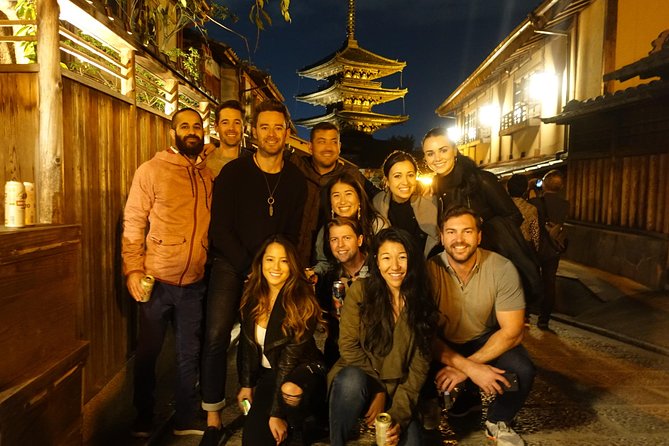
Stop 2 is Yasakanoto. You get around 15 minutes, again with free admission listed. This is one of the “hold still and look up” parts of Gion at night.
The goal here is simple: the view is described as remarkable and magical at nightfall, and you’ll have time to get a photo that you’ll actually want to keep. If you’ve ever tried to photograph Kyoto streets at dusk and felt like everything turned into a blur, this stop is designed to prevent that.
What I like is that the schedule gives you a short, focused window. You can take the shot, listen, and move on—no wandering for 45 minutes trying to find the perfect angle.
The Preserved Streets Interlude: Slow Down and See the Details
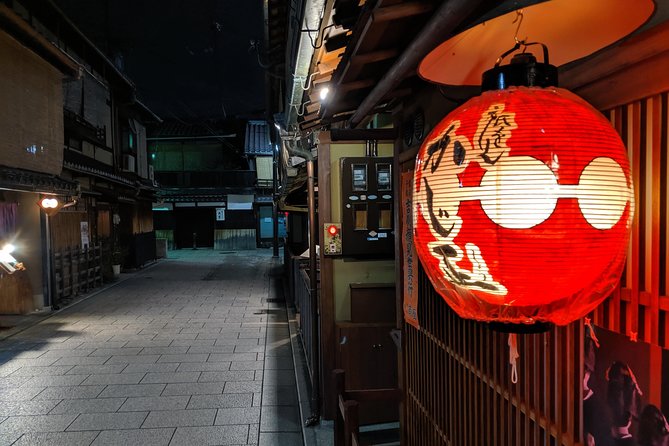
Between the viewpoint and the shrine, you’ll wander through the beautiful streets of a preserved district of Kyoto. The schedule doesn’t label this as an admission stop, but it fits the rhythm of a good night walk: you slow your pace, you pay attention to materials and spacing, and the stories make more sense because you’re surrounded by the real setting.
This is the part where the guide’s timing can make or break your experience. When the group is small, it’s easier for the guide to adjust—waiting for a good moment, pointing out an alley detail, or re-framing what you’re looking at.
If you’re someone who likes architecture, street-level design, or old-town textures, this interlude is where those interests usually click. Even if you aren’t a detail person, it still helps you stop treating Gion as a single photo backdrop.
Yasaka Shrine Lantern Light: Shinto Context and a Quick Pause
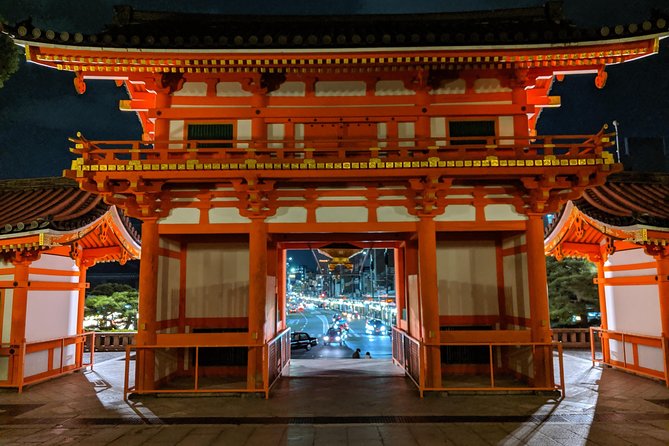
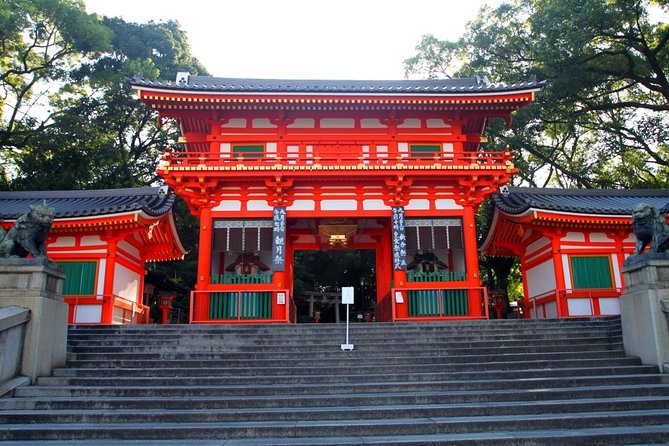
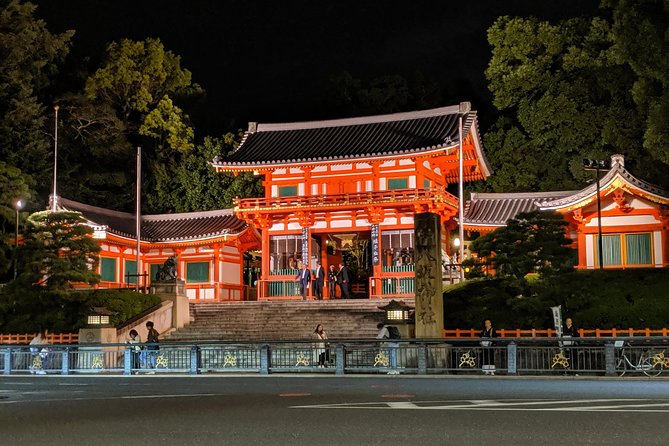
Stop 3 is Yasaka Shrine, with about 20 minutes and lantern light making it especially photogenic at night. You’ll learn about Shinto faith and make a prayer for good fortune.
This stop changes the tone in a helpful way. Up to now, you’ve been focused on geisha quarters and preserved lanes. Yasaka Shrine adds a wider Kyoto lens: why these neighborhoods are connected to religious spaces, seasonal rituals, and daily life.
It’s also a good mental break. After walking through narrow streets, it helps to reset your body and your eyes in a larger shrine setting. And yes, you’ll have a chance to take photos without feeling like you’re sprinting.
Gion Shirakawa Lanes: Clubs, High-End Dining, and the Real Street Mix
Stop 4 is Gion Shirakawa, about 15 minutes. This is described as one of the most beautiful parts of Gion, and the route takes you past modern clubs and high-end restaurants along the way.
That contrast is the point. Gion isn’t frozen in time—it’s a living district that carries tradition while also hosting the modern side of Kyoto. Watching those two worlds sit side-by-side is part of what makes the area feel honest instead of staged.
Because the group is small, you’re more likely to notice how people move through the streets and how the neighborhood functions at night. If you’ve only seen Gion in daytime, this stop often feels like the difference between reading about a place and experiencing it.
What You Might See: Geiko, Maiko, and the Fun of Not Forcing It
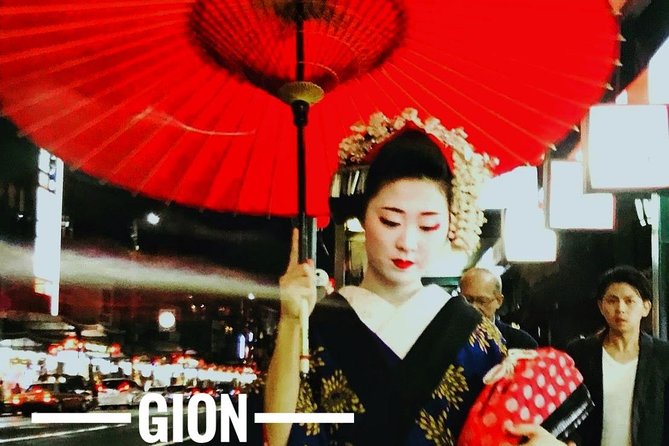
The big promise of this tour is that you’ll learn about geisha culture and see real-life geisha walking along the alleyways. In past tour experiences, guides have led groups to actual sightings—some people report spotting maiko and geiko, and even multiple individuals in one evening.
Still, don’t treat sightings as a guarantee you can control. The most realistic mindset is: you’re going to the right places at the right time, with a guide who understands the rhythm of the district. If you see them, it’s a bonus. If you don’t catch someone at that exact moment, you’ll still leave with stronger context and better understanding of what you’re looking at.
The small-group setup helps here too. You’re not packed shoulder-to-shoulder, so you can notice movement without turning the street into chaos.
How to Act Like a Good Listener (and a Low-Key Observer)
This is Kyoto. People value privacy and restraint, especially around geiko and maiko culture. So keep your behavior calm and respectful, even when you think you see something exciting.
Here’s what I’d do:
- Keep your voice low on the narrow lanes.
- Don’t block doorways or shuffle across someone’s path to get a better angle.
- Use your phone when you’re ready, then put it away so you can actually hear the guide.
One reason people rave about these tours is that the guide can point things out without turning the moment into a circus. If you follow that tone, you’re more likely to enjoy the experience instead of feeling like you’re interrupting it.
Guides, Pace, and Why Names Keep Coming Up
The most praised aspect of this tour is the guide. Past groups highlight guides such as Kevin and Karim for English skills and neighborhood know-how, and names like Niall, Nile, Philippe, Cha cha, and Shanda also show up with comments about enthusiasm and the right amount of information.
What that tells me (and what you should care about) is that this isn’t a generic “walk and read” tour. It’s built around a guide who can:
- answer questions,
- adjust to what you’re curious about,
- and keep the group moving at a comfortable pace.
Even when weather turns, the experience is described as still informative and scenic. That’s a big plus, since evening walking in Kyoto can mean sudden rain.
Weather, Comfort, and What to Wear for a Night Walk in Gion
This tour requires good weather. That doesn’t mean you’ll never go if the forecast looks iffy, but it does mean you should plan for rain as a possibility on an evening walking tour.
Your comfort choices matter more than usual here:
- Wear shoes with grip (cobblestones can be slick).
- Bring a light layer if evenings feel cool.
- Keep your pace steady so you don’t trip while stopping for photos.
If you hate “tight schedule stress,” this tour still works because it’s short. You’re not committed to a half-day. You’re committed to a manageable, guided evening that ends back at the start.
Who This Tour Is Best For (and Who Might Skip It)
This is a great pick if you want:
- a night-focused Gion experience,
- geisha culture context tied to real locations,
- a small group so you can actually interact,
- and photo stops that make sense at night.
It also fits families and mixed ages since it’s noted as suitable from 10 to 77.
I’d maybe skip it if you already know Kyoto’s geisha district well and you’re mostly there for self-guided wandering. If you’re the type who hates listening tours, you might find the storytelling-heavy style less fun than a pure photo walk.
Should You Book the Gion Night Walking Tour?
If you want a structured, culturally grounded night in Gion without the guesswork, I think you should book it. The pricing is fair for a guided evening that includes multiple meaningful stops—Kaburenjo, Yasakanoto, Yasaka Shrine, and Gion Shirakawa—plus the strong chance of geisha sightings in the neighborhood.
Book it especially if you value a small group and you want an English-speaking guide with real enthusiasm for the area. And if you’re visiting Kyoto for the first time, this is one of the easiest ways to turn Gion from a pretty place into a place with explanations you’ll remember.
FAQ
FAQ
How long is the Gion night walking tour?
It’s about 2 hours (approx.).
How many people are in each group?
The tour has a maximum of 10 travelers.
Where do I meet for the tour?
Meet at Tsuruha Drug Yasaka Shrine Store, 543番地 Gionmachi Minamigawa, Higashiyama Ward, Kyoto, 605-0074, Japan.
Will I need an admission ticket for the stops?
Admission is listed as free for the stops on the schedule.
Is this tour suitable for kids or older adults?
It’s described as suitable for ages 10 to 77.
Do I get a mobile ticket?
Yes, it uses a mobile ticket.
Is service for people with service animals available?
Service animals are allowed.
What happens if the weather is poor or the tour is canceled?
The tour requires good weather. If it’s canceled due to poor weather, you’ll be offered a different date or a full refund.
Is cancellation free if my plans change?
Yes. You can cancel up to 24 hours in advance for a full refund.
More Tour Reviews in Kyoto




More of Kyoto After Dark
Still in Gion? Keep Going

Just added: more Kyoto tours to browse








Gion & Geisha District Tours, compared.
 ★ 4.7Kyoto Geisha Walking Tour: Gion District & Hidden GemsFrom $253,273 reviews
 ★ 4.9Gion Magical Night Walking Tour with Geisha TriviaFrom $242,393 reviews
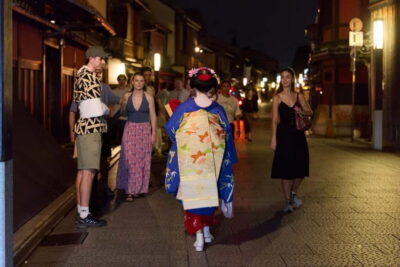 ★ 4.7Gion Geisha District Walking Tour – Stories of GeishaFrom $202,187 reviews
 ★ 4.9Best of Kyoto: Gion, Geisha, Pagodas & CobblestonesFrom $242,058 reviews
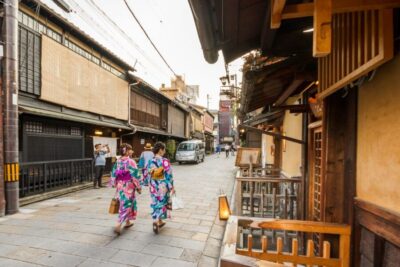 ★ 4.5Night Walk in Gion: Kyoto’s Geisha DistrictFrom $212,003 reviews
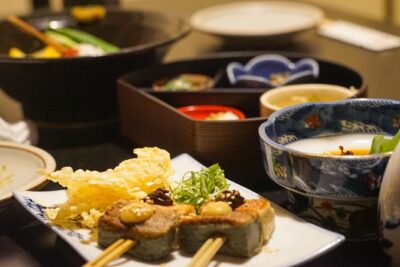 ★ 5.0Kyoto Night Foodie Tour in Gion (9+ dishes + 6 Sake tastings)From $1631,762 reviews
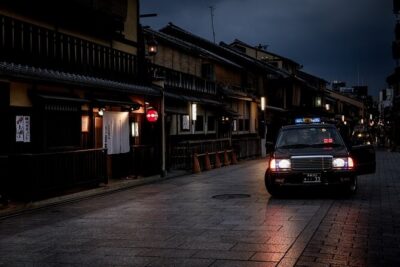 ★ 5.0Kyoto Gion Geisha District Walking Tour – The Stories of GeishaFrom $251,441 reviews
 ★ 5.0Kyoto Gion: 2-Hour Geisha Culture & History Walking TourFrom $231,186 reviews
Browse the lists this tour appears in