
Reviewed · WORKSHOPS
Fukusa Shibori Class
A shibori class in Kyoto turns craft into something you can hold. This one pairs a hands-on kasamaki and nuishime wrapping and dyeing session with time to look at museum displays, so you get context, not just a quick make-and-go project.
What I like most is the way the process is taught step by step, including an info video and clear help from Roy during the hands-on work. I also love that you leave with a real finished piece: a silk wrapping cloth measuring 38cm x 38cm, made using traditional tools and fabrics you actually work with.
One thing to consider is that the class focuses on just two techniques (kasamaki and nuishime). If you’re hoping for a wider menu of shibori styles in a single visit, this 60- to 90-minute session may feel narrow.
In This Review
- Key things to know before you try Kyoto shibori wrapping
- Kyoto Shibori Museum: where the craft feels real
- Kasamaki and Nuishime shibori: the two methods you’ll practice
- The 60–90 minute class flow: wrapping, stitching, dyeing
- Your finished souvenir: a 38cm x 38cm silk wrapping cloth
- Group size, pace, and who will enjoy it most
- Price and value: is $71.67 for shibori worth it?
- Logistics that matter in Kyoto: meeting point, transit, and timing
- Practical tips so your shibori goes smoothly
- Should you book the Fukusa Shibori Class?
- FAQ
- How long is the Fukusa Shibori Class?
- What does the class include?
- What will I take home?
- Where does the class take place?
- What is the price per person?
- Is there a minimum age requirement?
- How big is the group?
- Do I need a paper ticket?
- Is there parking available?
- What’s the cancellation policy?
Key things to know before you try Kyoto shibori wrapping

- Kasamaki + Nuishime are the two techniques you’ll practice, both applied to the cloth you take home
- Roy’s teaching style and an info video help you understand what you’re doing, not just copy steps
- Museum time is built in, so you can see prime examples before (and after) you make yours
- You make a 38cm x 38cm silk cloth, a satisfying Kyoto souvenir that isn’t mass-produced
- Group size stays small (max 15), which makes it easier to get help when your fingers get confused
Kyoto Shibori Museum: where the craft feels real
Kyoto is full of places that sell shibori. This experience adds something different: you learn at the Kyoto Shibori Museum, where you can see the techniques in finished form before you start wrapping and stitching yourself.
I like that the museum context changes the class from a standalone activity into part of a bigger story. When you later form your own patterns, you understand what you’re aiming for: the way tight stitches and controlled folding create resist lines and shapes that show up after dyeing.
You’ll also get time to explore displays and the museum shop area. That matters because shibori can look complicated from the outside. Seeing examples up close helps you connect your hands-on steps to what the finished cloth is supposed to reveal.
Other Kyoto tours and experiences to compare

Kasamaki and Nuishime shibori: the two methods you’ll practice
This class teaches you two classic resist-dye techniques: Kasamaki and Nuishime. The difference is simple to describe, and it shows in the pattern.
Kasamaki is built around shaping and wrapping. You stitch around the outline or shape you want, pull the thread tight, and then wrap the threads around the cone of fabric several times. The tension and the winding create the resist areas that dye can’t fully reach.
Nuishime is more linear. You stitch along a line, then pull the thread tight. Think of it as gathering and holding a line so dye gets blocked in predictable zones.
In the workshop, you’re applying both methods to a silk wrapping cloth. That’s a clever choice for a short class because you get two distinct pattern-building approaches in one take-home piece.
The 60–90 minute class flow: wrapping, stitching, dyeing
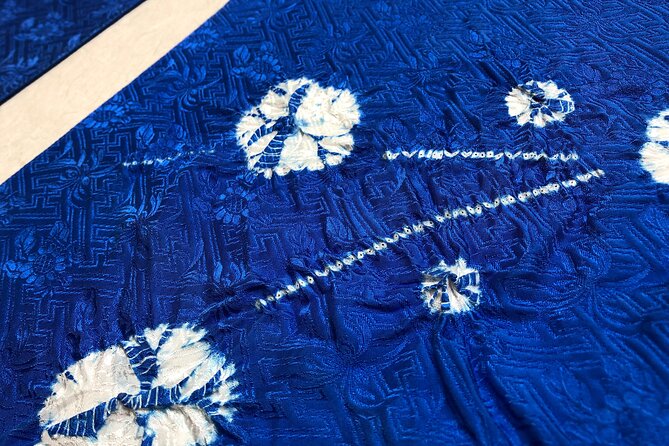
The class is built for a focused 1 hour to 1 hour 30 minutes. You’ll work on your cloth using traditional shibori tools and fabrics, and you’ll also get guidance while you figure out the physical steps.
The teaching approach stands out. Roy’s instruction is careful, and an info video helps you get the big picture before your hands start doing the work. That combo is practical: you don’t have to guess what your teacher expects at each stage, and you can pay attention to the small choices that affect the outcome.
What you do in the work itself is hands-on and a little fiddly. Kasamaki requires you to manage stitching tension and winding without overthinking it. Nuishime asks you to keep your line steady and pull tight in a controlled way. It’s the kind of activity where your first attempt might not look perfect, and that’s okay. The point is learning how the resist method works and finishing with a cloth you can be proud of.
As you work, you’ll see other makers and staff around you. The vibe is encouraging rather than strict. It feels like a craft space, not a factory line, and you can ask questions without feeling rushed.
Your finished souvenir: a 38cm x 38cm silk wrapping cloth
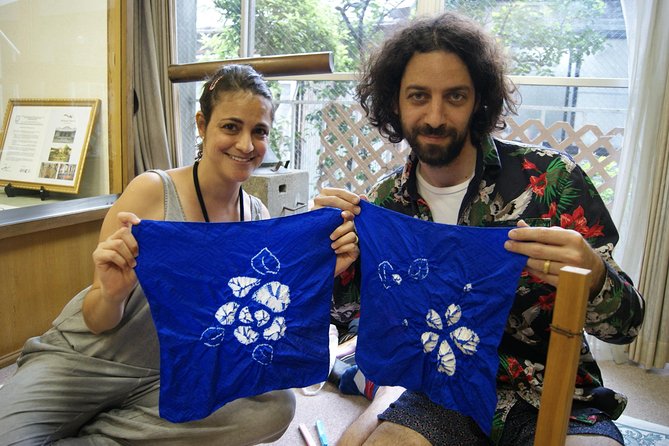
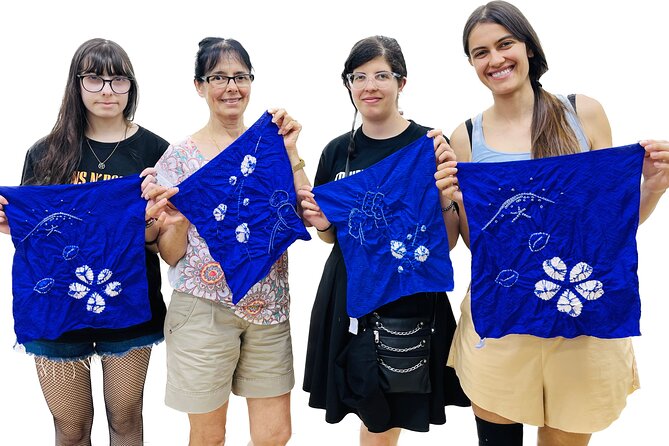
Your final result is a silk wrapping cloth measuring 38cm x 38cm. That’s a real size for a keepsake, and it’s big enough that the pattern doesn’t just look like a tiny swatch.
This is where the value really clicks. You’re not just learning a process. You’re creating an object that carries the logic of shibori: you can see where the dye was resisted by the stitching and wrapping.
For me, the best part of a class like this is that it turns Kyoto into something personal. You’re leaving with an item that tells a story you understand. And because it’s silk, it also feels like a proper Kyoto craft material, not a generic souvenir.
Group size, pace, and who will enjoy it most
The group maximum is 15, which makes a difference in a practical way. In smaller classes, you’re less likely to get lost in the shuffle when your hands need help figuring out tension or setup. You can also watch what others are doing and learn from their questions.
Age-wise, the minimum age is 8, and adult pricing applies to any age. If you’re traveling with kids, this class can work well for families who enjoy crafts that involve careful steps. The activity is hands-on, and it’s structured enough that older kids can usually follow along without being totally dependent on an adult.
Also, most people can participate. That’s useful if you’re on the fence because you’re not sure you can handle a technique that involves stitching and wrapping. The format doesn’t require special artistic skills up front. You mainly need focus and patience for a short, guided session.
The pace is short on purpose. You’re not signing up for a multi-session project. Instead, you get a satisfying learning arc in one go, which is great if your Kyoto days are packed.






Price and value: is $71.67 for shibori worth it?
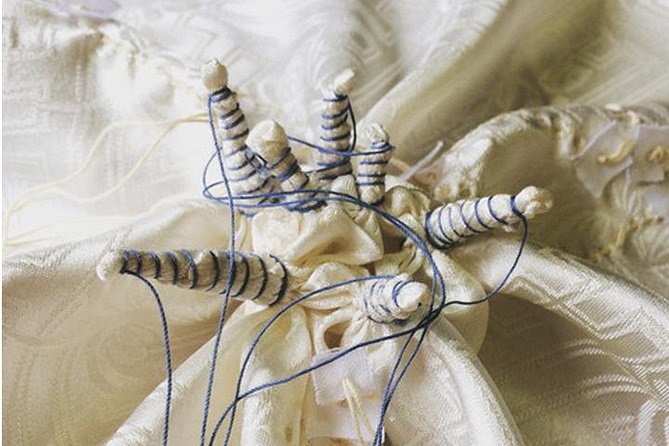
At $71.67 per person, the price sounds like a craft-tour splurge at first glance. But in practice, you’re paying for three things that add up:
First, you’re getting teacher guidance for a process that can be tricky to learn alone. Shibori involves resisting dye, and the way you wrap and stitch directly affects the result. Second, you’re using traditional shibori tools and fabrics, including silk for the cloth you take home. Third, the museum setting adds value because you can see prime examples and understand what your technique is meant to produce.
You’re also getting a session that lasts 60 to 90 minutes. Short classes can be a better use of time in Kyoto than activities that take half a day, especially if you want time for other neighborhoods, temples, or just walking.
If your goal is to buy a finished shibori item without any understanding of how it’s made, you’ll often pay more for a specific quality level and you won’t have the learning experience. This class is a chance to trade money for skill and a personal object. For many people, that’s the better bargain.
Logistics that matter in Kyoto: meeting point, transit, and timing
The class meets at the Kyoto Shibori Museum at 135-5 Shikiamichō, Nakagyo Ward, Kyoto, 604-8261, Japan. It ends back at the meeting point.
That matters because Kyoto can be walk-and-transit friendly, but you still want to avoid zigzagging around too much. Being anchored at one museum spot helps you build a clean plan for the rest of your day.
It’s near public transportation, and there’s parking for two cars plus bicycle parking spaces. If you’re driving or biking, you’ll have a place to set up. If you’re coming by train or bus, you won’t feel totally stuck either.
Since the session is 1–1.5 hours, I’d plan it like an “appointment block.” Do it when your brain still works well for close-up, hand-based tasks. Afterward, you’ll probably enjoy a slower walk or a café stop so you can process what you made.
Practical tips so your shibori goes smoothly
You’ll be working with cloth, stitching, and dye-related processes during the class time. That’s reason enough to show up ready for something tactile.
Wear comfortable clothes that you don’t mind getting slightly messy during the wrapping and handling steps. If you’re sensitive to heat, schedule this earlier in the day when possible, because Kyoto can get warm and craft sessions are active in a small space.
Most importantly: don’t stress over perfection. Your goal is learning how the resist method works through kasamaki and nuishime. If your first attempt looks uneven, that’s still useful feedback. You’ll leave with a finished cloth and a clear understanding of what you controlled and what you learned.
Should you book the Fukusa Shibori Class?
Book it if you want a hands-on Kyoto craft with real context, not just a tourist demo. I’d especially recommend it if you like the idea of learning a specific technique you can explain later, and if you want a take-home silk item sized for actual use as well as display.
You might skip it if you want a bigger range of shibori patterns than two techniques in one short session. And if you’re traveling with someone younger than 8, the minimum age may rule it out.
If your schedule allows a 60–90 minute class at the Kyoto Shibori Museum, this is one of those activities that turns into a memorable story because you made the object, not just watched it happen.
FAQ
How long is the Fukusa Shibori Class?
It lasts about 1 hour to 1 hour 30 minutes.
What does the class include?
You’ll learn two shibori cloth-wrapping methods: Kasamaki and Nuishime. You also get to explore the museum displays and use traditional shibori tools and fabrics.
What will I take home?
You’ll make a silk wrapping cloth that is 38cm x 38cm.
Where does the class take place?
At the Kyoto Shibori Museum, located at 135-5 Shikiamichō, Nakagyo Ward, Kyoto, 604-8261, Japan.
What is the price per person?
The price is $71.67 per person.
Is there a minimum age requirement?
Yes. The minimum age is 8 years, and adult pricing applies to any age.
How big is the group?
The class has a maximum of 15 travelers.
Do I need a paper ticket?
No. It uses a mobile ticket.
Is there parking available?
There are parking spaces for two cars and bicycle parking spaces.
What’s the cancellation policy?
Free cancellation is available. You can cancel up to 24 hours in advance for a full refund, and cancellations within 24 hours of the start time aren’t refunded.
More Workshops in Kyoto
More Tour Reviews in Kyoto
Just added: more Kyoto tours to browse








Workshops, compared.
 ★ 4.345-Minute Tea Ceremony Lesson ExperienceFrom $222,378 reviews
 ★ 5.0Ramen Cooking Class at Ramen Factory in KyotoFrom $1311,937 reviews
 ★ 5.0Chopsticks Making Workshop in Gion with Engraving OptionFrom $15958 reviews
 ★ 4.9Samurai Sword Class by Experts in Traditional ArtsFrom $64657 reviews
 ★ 4.9Ramen Cooking Class at a Ramen Factory with SouvenirFrom $127532 reviews
 ★ 5.0Ninja 1-hour Hands-on Lesson by Japanese master in Kyoto -EntryFrom $80489 reviews
 ★ 5.0Ramen, Gyoza, and Onigiri Cooking ClassFrom $90445 reviews
 ★ 5.0The Original Small-Group Sushi Making Class in KyotoFrom $69436 reviews
Browse the lists this tour appears in