
Reviewed · FUSHIMI INARI SHRINE TOURS
Discover the Secrets of Fushimi Inari and Gion with a Local Guide
Kyoto feels less overwhelming when someone shows your path. This small-group half-day tour strings together Gion, classic shrines, and the famous Fushimi Inari red gates, plus a few stops that keep the story going beyond the postcards. What I like most is the efficient route in about 4 hours and the way the guide adjusts the pace so you’re not sprinting between landmarks. The only real catch: it’s still a walking tour, so expect steady movement and stairs around the temple areas.
You get a guided experience designed for the historic east side—Shinto shrine to Zen temple to Higashiyama views—without needing to plan every turn. Kodai-ji and Kiyomizu-dera admission are included, and the rest of the major stops are listed as free entry. The tour also finishes near Fushimi-Inari Station, which makes your next move easy.
One more thing I appreciate: the guide isn’t just listing dates. In a past run led by Tomoki, the tour style leaned into how old Kyoto and everyday life connect—things like what visitors taste and how neighborhoods evolved—so the stops feel like culture, not a checklist.
In This Review
- Key things that make this tour worth your time
- Why this Gion-to-Fushimi Inari route works in 4 hours
- Starting point at Minamiza Theater and how to not waste time
- Gion: where Kyoto’s traditions live on the street level
- Yasaka Shrine: the Shinto anchor at the edge of Gion
- Kodai-ji Temple: Zen Buddhism with historical weight
- Yasaka Pagoda (Hokan-ji): five stories that frame the Higashiyama look
- Kiyomizu-dera: one of Kyoto’s big names, handled at walking pace
- Fushimi Inari Taisha: your hour among the torii gates
- What you’re really paying for: $78.04 value check
- Timing, pacing, and group size: the comfort factor
- Who this tour fits best
- After the tour: where the day naturally continues
- Should you book this half-day Kyoto experience?
- FAQ
- What is the price of the tour?
- How long is the experience?
- How many people are in the group?
- Where does the tour start and where does it end?
- What admissions are included?
- Are there any places where admission is free?
- Is transportation included?
- Do I need a mobile ticket or is there confirmation after booking?
Key things that make this tour worth your time
- Small group size (max 8): easier conversation and less crowd friction while you walk.
- A focused east-side route: Gion to Yasaka area to Higashiyama to Fushimi, so you don’t crisscross the city.
- Temple admissions handled for you: you pay less upfront and spend more time actually looking.
- Flexible pacing: the guide slows down or speeds up to fit your group’s comfort level.
- Ends at Fushimi-Inari Station: you’re not stuck guessing how to get out after the last stop.
- Stories that connect past and present: guides like Tomoki bring in modern observations alongside historic sites.
Why this Gion-to-Fushimi Inari route works in 4 hours
Kyoto can swallow a day whole. One day, you blink and suddenly it’s late afternoon with only half your list checked. This tour is built to prevent that common problem by packing a clear sequence of places into a manageable half-day.
The route makes sense geographically. You start in the Gion/Yasaka area, then move through eastern Higashiyama with classic temple stops, and finish at Fushimi Inari on the Kyoto side of town. That order helps you keep momentum instead of wasting time backtracking.
You’ll also get a better feel for how neighborhoods blend. Gion is its own atmosphere—old streets, wooden structures, and the feeling of a carefully preserved district. Yasaka Shrine and the nearby temples bring you into the broader religious landscape, and Fushimi Inari shifts the mood with a long, iconic walk up the mountain.
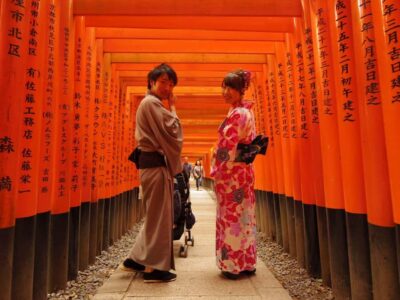
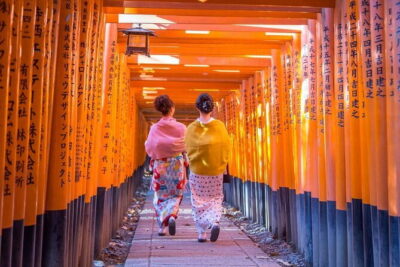
More walks up through the vermilion torii of Fushimi Inari


Starting point at Minamiza Theater and how to not waste time
The tour begins at Minamiza Theater in Higashiyama (near the Shijo Bridge area). Meeting here is practical because it’s close to where you’ll already want to be if you’re exploring Gion and Yasaka.
One logistics point matters: transportation to the area isn’t included. The tour lists a train cost of ¥220 per person that you’ll handle on your own. That’s normal for Kyoto day plans, but it’s worth budgeting so the $78.04 base price doesn’t surprise you.
You’ll also want to wear shoes you trust. Even when a stop is “only” 20 to 30 minutes, you still have walking time, small crowd delays, and occasional steps around entrances and viewing spots. Comfortable footwear turns the whole half-day from stressful to enjoyable.
Gion: where Kyoto’s traditions live on the street level
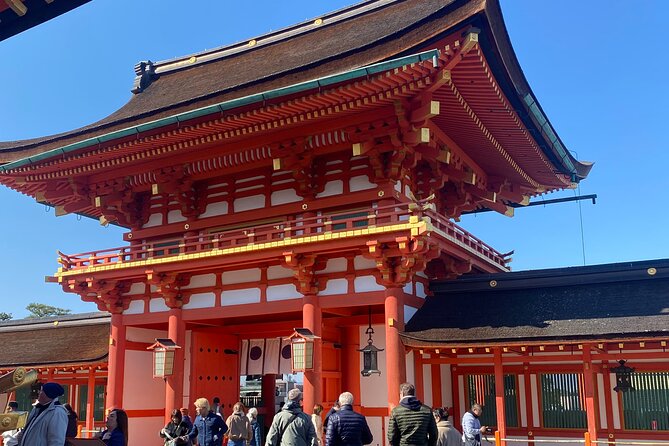
Your first stop is Gion, one of Kyoto’s most recognized historic districts. You’ll get a short, focused look around Shijo Avenue and the surrounding area where traditional machiya houses, teahouses, and cobblestone streets shape the vibe.
Gion can feel like a movie set if you only glance at it. With a guide, you’re more likely to understand what you’re seeing at street level: why the area matters, what kinds of buildings define it, and how the district’s identity stays visible even as the city modernizes.
The time here is short (about 20 minutes). That’s a feature, not a flaw. In Kyoto, long stays at a single spot can create decision fatigue, especially if you’re also trying to cover temples and shrines. This tour uses Gion as the atmosphere opener.
Yasaka Shrine: the Shinto anchor at the edge of Gion
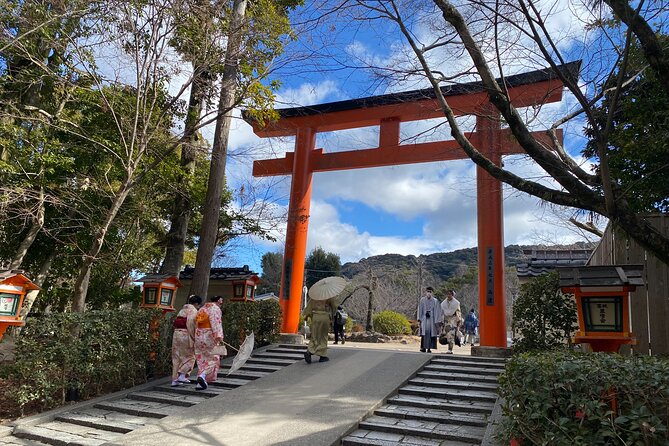
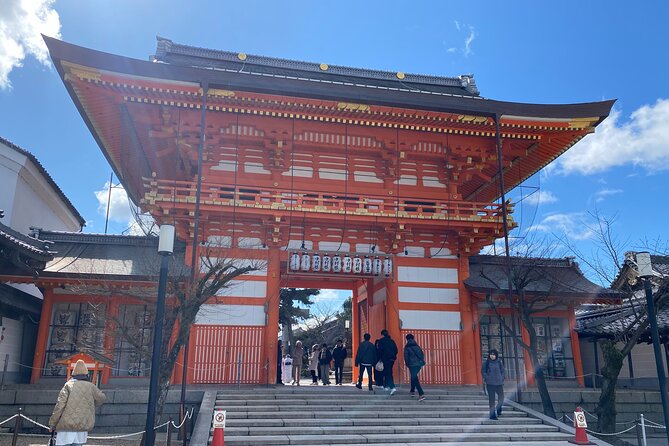
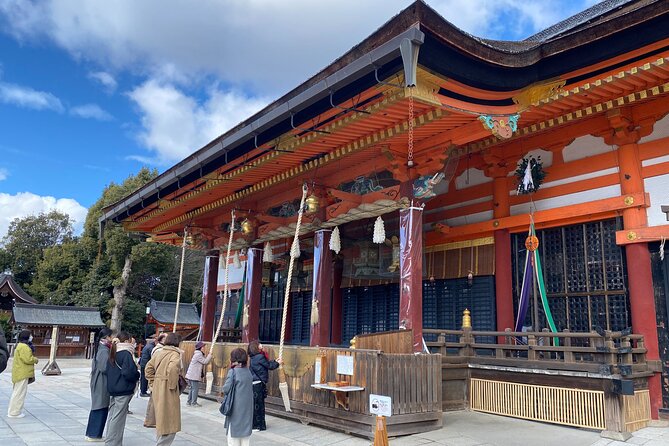
Next up is Yasaka Shrine, located at the eastern end of the Gion district. The shrine is dedicated to Susanoo-no-Mikoto and traces its origins to more than 1,350 years ago.
This stop gives you context. Once you’ve walked Gion’s streets, Yasaka Shrine helps explain the deeper spiritual layer underneath the neighborhood’s surface charm. It also helps you shift from “pretty streets” to “place with meaning.”
You’ll spend about 30 minutes here, and the entry is listed as free. That makes it an easy win: you can focus on the atmosphere, major sights, and the guide’s explanation without feeling like you’re paying for a quick photo stop.
Kodai-ji Temple: Zen Buddhism with historical weight
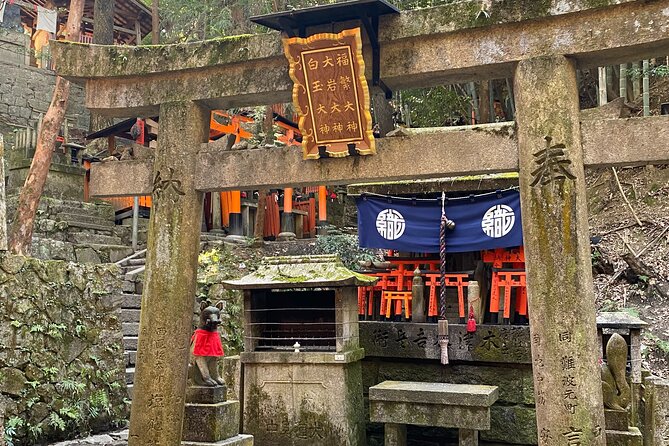
Then you move to Kōdaiji Temple, a Zen Buddhist temple near Gion. The tour description notes it was founded in 1606 by the wife of Toyotomi Hideyoshi, which gives this stop a clear historical anchor.
You’ll get about 30 minutes here, and admission is included. That included cost matters in Kyoto because some of the most important temples don’t feel cheap after you add up entry fees across multiple stops.
Kōdaiji also serves a pacing role. After a busy shrine and a district like Gion, this is where the day slows a little. Even if you’re not a hardcore temple person, Zen spaces tend to reward quiet attention—shapes, viewpoints, and gardens that you can actually notice instead of only passing by.
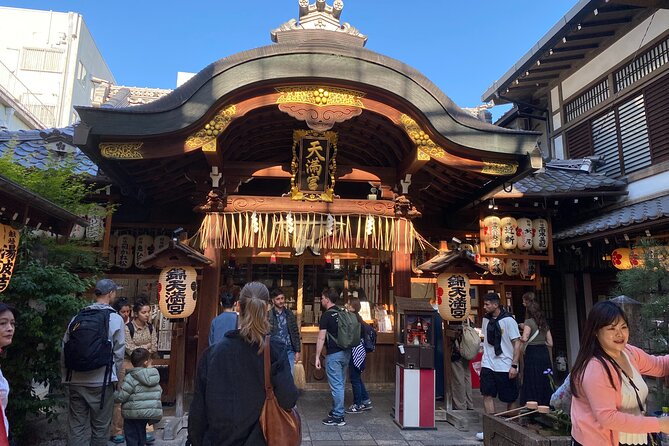
More evenings along the lantern-lit lanes of Gion





Yasaka Pagoda (Hokan-ji): five stories that frame the Higashiyama look
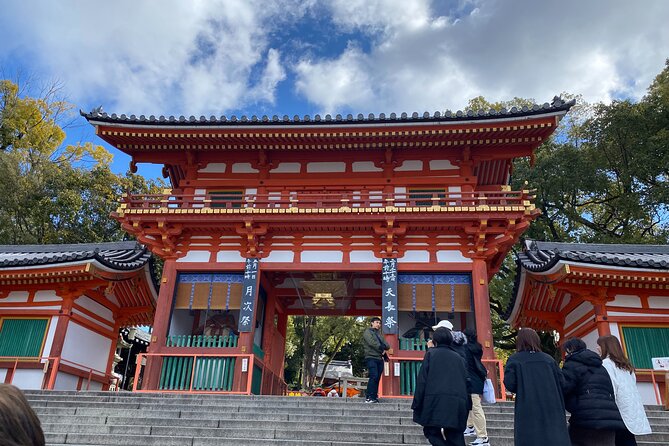
Your next highlight is Yasaka Pagoda, officially Hōkan-ji Temple. It’s one of the area’s iconic landmarks: a five-story pagoda originally built in the 6th century (with the complex story of Japanese reconstruction over time, which your guide can help you understand).
This stop is listed as about 30 minutes, and entry is free. What makes it valuable is that it’s a visual payoff. After you’ve walked through streets and shrine grounds, the pagoda gives you a strong skyline moment—something you can frame in your mind as the “classic Higashiyama” view.
If you’re the kind of traveler who likes photos but also wants to know what you’re photographing, this stop is a good match. You’ll learn why the pagoda stands where it does and how it fits into the wider temple grouping in the area.
Kiyomizu-dera: one of Kyoto’s big names, handled at walking pace
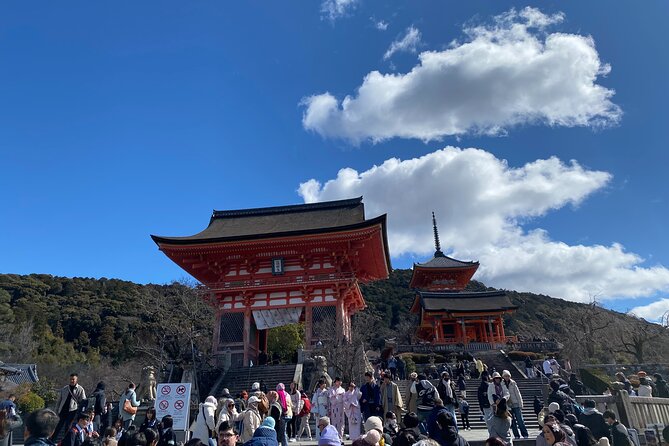
The tour continues to Kiyomizu-dera, one of Kyoto’s most famous Buddhist temples, founded in 778. It’s especially known for its impressive wooden stage and a dramatic setting on the slope of Mount Otowa.
You’ll spend about 30 minutes here, with admission included. This is another moment where the “included” part matters, because Kiyomizu-dera is the kind of place that can swallow time in queues if you’re unprepared.
A guide helps you approach it smarter. Even within a limited timeframe, you can learn where to look, what to notice, and how to avoid turning this stop into pure crowd navigation. If you like understanding context—how the temple was set up, what traditions shaped it—Kiyomizu-dera is a strong payoff.
Fushimi Inari Taisha: your hour among the torii gates
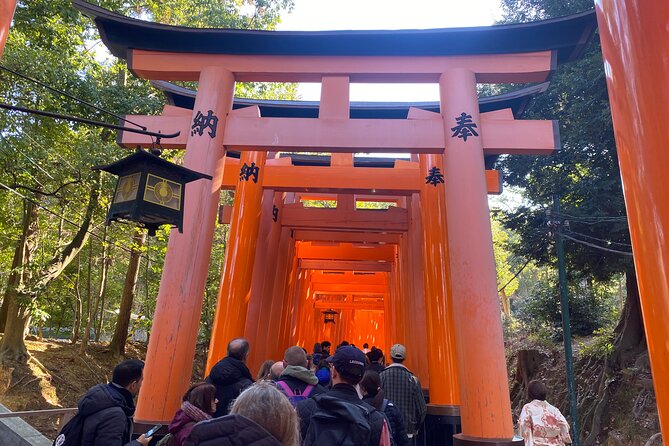
Finally, you get to Fushimi Inari Taisha, the shrine most people picture when they think of Kyoto. It’s famous for thousands of red torii gates forming winding paths up Mount Inari, and the shrine is described as established in the early 8th century.
You’ll spend about 1 hour here, and admission is listed as free. That hour is enough for a real walk, not just a quick snapshot—especially if you’re moving at a steady, not-too-fast pace with a guide keeping you moving through the site’s flow.
Here’s what to watch for during the torii walk:
- The pattern of gates changes as you climb, so your view shifts even in a short time.
- The shrine atmosphere can feel surprisingly quiet in pockets, even when you’re near the main areas.
- The route is the point, so aim to enjoy the slow movement rather than trying to reach every far-off corner.
One practical advantage: the tour ends at Fushimi-Inari Station, which is just a short walk from the shrine. After the climb-and-walk feeling, having an obvious exit point saves mental energy.
What you’re really paying for: $78.04 value check
The price is $78.04 per person for an approximately 4-hour small-group half-day. On paper, that’s not “cheap,” but Kyoto tours often become expensive fast once you add guide time, multiple temple admissions, and the hassle of planning.
What’s included is meaningful:
- All guide costs
- A personal guide
- Admissions for Kodai-ji and Kiyomizu-dera
Other notable stops are listed as free, including Gion (district walking) and major shrine/landmark entries like Yasaka Shrine and Yasaka Pagoda. That mix keeps your cost more predictable.
What’s not included:
- Train transport (listed as ¥220 per person)
- Meals and drinks
So the value equation is simple. If you would have paid for at least those two temple entries anyway, and if you don’t want to spend time building a route yourself, the guided format becomes a bargain in comfort. You’re paying for time-saving logistics plus someone to translate what you’re seeing into understandable culture.
Timing, pacing, and group size: the comfort factor
This is a maximum of 8 travelers tour. That small cap changes the feel immediately. Big-bus Kyoto tours can force you into a rigid procession where your photos look like a chore. Here, the guide has enough flexibility to slow down or speed up, which shows up in the way the day flows.
You’ll also notice that stops are time-boxed: 20 to 30 minutes for most places and 1 hour for Fushimi Inari. This structure helps you hit key sights without sacrificing your energy.
If you’re sensitive to crowds, go into this with realistic expectations. Kyoto’s east side and Fushimi Inari are popular. The goal here isn’t to make crowds disappear; it’s to keep you from wasting hours stuck, lost, or bored between sights.
Who this tour fits best
This tour is a great match if you want a focused Kyoto hit without trying to become a full-time planner. It works especially well for:
- First-time visitors who need a clear route through major east-side sights
- People who prefer a guided explanation over self-guided guesswork
- Travelers who like photo-worthy landmarks but also want the meaning behind them
- Groups and couples who want a more relaxed pace than a high-speed highlights tour
It also seems friendly enough for most travelers since the description says most travelers can participate. The one group it might not suit is anyone who struggles with walking. Even with short stop durations, the day involves enough movement and stairs around temple terrain that comfortable shoes are non-negotiable.
After the tour: where the day naturally continues
One nice thing about finishing near Fushimi-Inari Station is that your end-of-day options are straightforward. You can head back toward your hotel or keep exploring at your own pace without feeling stranded.
Also, this kind of guided day often makes it easy to extend the conversation afterward—especially if your group shares interests. In a past run, the vibe turned social after the walk, and it’s easy to imagine doing the same at a nearby café.
Should you book this half-day Kyoto experience?
Book it if you want the best mix of famous Kyoto and a guided path that keeps your head straight. This tour gives you Gion + Yasaka + key Higashiyama temples + Fushimi Inari in about 4 hours, with the guide covering admissions for two big stops.
Skip it (or rethink) if you’re hoping for a super quiet, low-traffic experience. This is a “see a lot, see it well” plan, not a secret solitude tour. And if you dislike walking, you may feel the strain during the Fushimi Inari climb.
FAQ
What is the price of the tour?
The tour costs $78.04 per person.
How long is the experience?
It runs for about 4 hours (approx.).
How many people are in the group?
The tour has a maximum group size of 8 travelers.
Where does the tour start and where does it end?
It starts at Minamiza Theater in Higashiyama and ends at Fushimi-Inari Station.
What admissions are included?
Admission is included for Kodai-ji and Kiyomizu-dera.
Are there any places where admission is free?
The tour lists Gion, Yasaka Shrine, and Yasaka Pagoda (Hokan-ji Temple) as free-entry stops.
Is transportation included?
No. Train transportation is listed as ¥220 per person and meals are not included.
Do I need a mobile ticket or is there confirmation after booking?
You’ll receive confirmation at the time of booking, and the tour mentions a mobile ticket.
More Tour Reviews in Kyoto



Still in Gion? Keep Going
Fushimi Inari, a Few More Ways
Just added: more Kyoto tours to browse








Fushimi Inari Shrine Tours, compared.
 ★ 4.8Fushimi Inari, Kinkakuji, Bamboo Grove 1 Day Bus TourFrom $1224,316 reviews
 ★ 5.0Fushimi Inari Hidden Hiking Tour (Private Option Available)From $631,750 reviews
 ★ 4.7Kyoto/Osaka: Nara, Fushimi Inari Taisha, Arashiyama Bus TourFrom $521,275 reviews
 ★ 4.4Osaka/Kyoto: Arashiyama, Nara & Fushimi Inari Shrine w/LunchFrom $61754 reviews
 ★ 4.7Nijo Castle, Kiyomizu & Fushimi Inari Guided TourFrom $54700 reviews
 ★ 5.0Nijo, Kinkaku-ji, Arashiyama, Kiyomizu & Fushimi InariFrom $51699 reviews
 ★ 5.0Kyoto Fushimi-Inari Night Walking TourFrom $43320 reviews
 ★ 4.93-Hour Fushimi Inari Shrine Hidden Hiking TourFrom $72270 reviews
Browse the lists this tour appears in