
Reviewed · KYOTO CRAFT & CALLIGRAPHY WORKSHOPS
Calligraphy Experience in Kyoto Townhouse
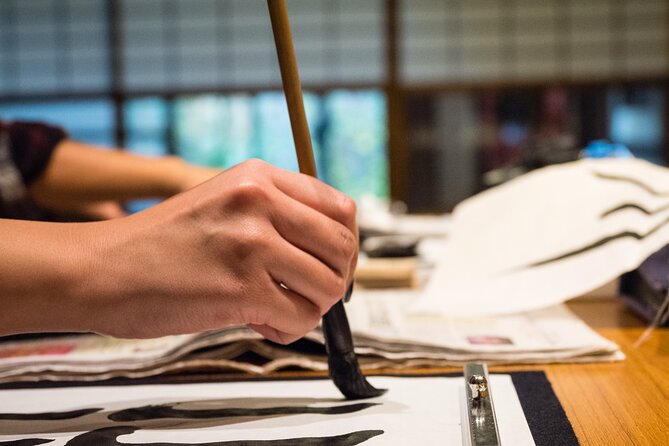
A brush in my hand, Kyoto quiet around me. This Japanese calligraphy experience in a traditional wooden townhouse adds something you won’t get in a standard classroom: a calm setting where the process feels almost like a mini Zen pause, not just a lesson. I especially liked the way Zen roots and calligraphy history show up early, so you’re not just copying strokes.
Two things I really enjoyed: the chance to leave with a take-home kanji artwork, and the teaching style from Toshiko—friendly, clear, and encouraging. One thing to think about first: there’s no hotel pickup, so you’ll want to plan how you get to 605 Nishidachō, Shimogyo Ward, on your own.
In This Review
- Key Highlights Worth Your Time
- Why This Kyoto Townhouse Makes the Lesson Feel Different
- The “Why” Part: Zen Roots and Calligraphy History First
- Watching Toshiko Demonstrate the Basics
- Hands-On: Creating Your Own Kanji Artwork
- Inside the Lesson: What the 1.5 Hours Usually Feels Like
- Practical Notes: Location, Transit, and What’s Included
- Price and Value: Is $58.64 Worth It?
- Who This Kyoto Calligraphy Workshop Suits Best
- Should You Book This Calligraphy Experience?
- FAQ
- What is the duration of the calligraphy workshop?
- How much does it cost per person?
- What supplies are included?
- Can I take something home from the class?
- Where does the experience take place?
- Is hotel pickup included?
- Is the group size limited?
- What about children or teens participating?
- How does cancellation work?
Key Highlights Worth Your Time
- Kyoto townhouse setting gives you a rare look inside an 80-year-old traditional wooden home
- Zen-rooted calligraphy context helps you understand what you’re doing and why
- Small group limit (max 5) keeps the feedback personal
- Hands-on kanji practice with guided technique and corrections as you work
- All supplies included (ink, paper, and utensil rental), so you can focus on writing
- Take home your finished piece, turning the workshop into a real souvenir
Why This Kyoto Townhouse Makes the Lesson Feel Different
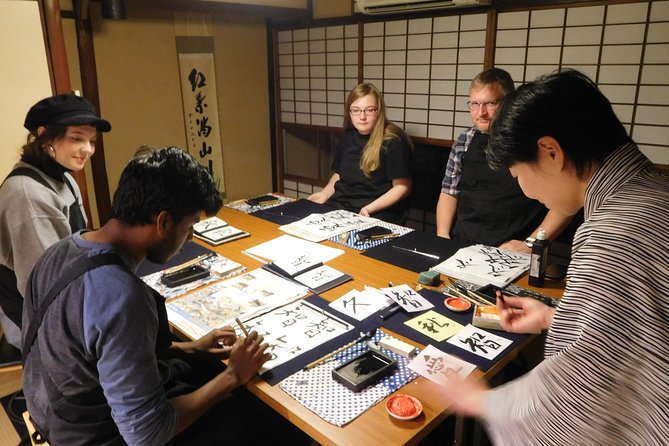
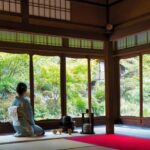
Japanese calligraphy workshops can be fun, but this one has a specific advantage: it happens in an old Kyoto townhouse you likely would not access on your own. The space matters. When you’re in a traditional wooden home, the whole experience slows down. You notice small details more—how ink looks after it sits, how paper absorbs, and how your hand moves when you focus.
The workshop is also built for beginners. That’s important. You might assume kanji is too hard, especially if you’ve only seen Chinese-style characters on signs. Here, you’re taught to approach the characters in a way that feels more like drawing than memorizing. The practical framing is: you’re making pictograph-like strokes with ink on white paper.
Timing helps too. The session runs about 1 hour 30 minutes. That’s long enough to learn basics and finish a piece, but short enough that you won’t feel trapped in a long activity that drains you on a travel day.
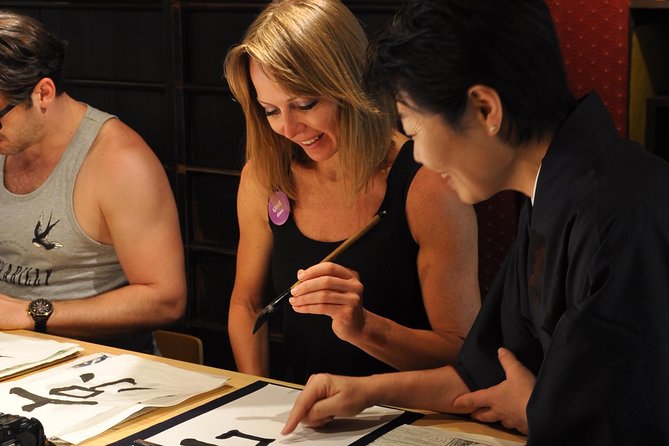
One more practical point: the group is kept small—up to five people. With fewer students, feedback isn’t generic. You’re more likely to get corrections on how you’re holding your brush or where your lines start to drift.
Make something by hand in a Kyoto workshop
The “Why” Part: Zen Roots and Calligraphy History First
Before you touch the brush, you get a structured introduction: calligraphy’s essential background, including its Zen roots. This isn’t just trivia. It changes how you approach the writing. When you understand that calligraphy is tied to discipline, calm attention, and form, you stop treating it like a quick craft project.
You’ll also learn how calligraphy “works” as an art form. The core idea is simple: black ink on white paper, but the outcome varies by the person. That’s liberating. If you worry your strokes won’t look perfect, this context helps you see the value in your own hand and your own rhythm.
The workshop frames kanji in a beginner-friendly way too. You might think “painting kanji” means copying complex shapes from memory. Instead, you’re encouraged to look at characters as something closer to pictographs—built from strokes with logic you can learn. That explanation helps your brain stop freezing.
In other words, the history and background are not fluff. They prepare you to relax into the technique.
Watching Toshiko Demonstrate the Basics
After the intro, you move to demonstration. This is where the workshop earns its keep. Watching how your instructor sets up the brush, positions the paper, and guides your attention matters more than it sounds.
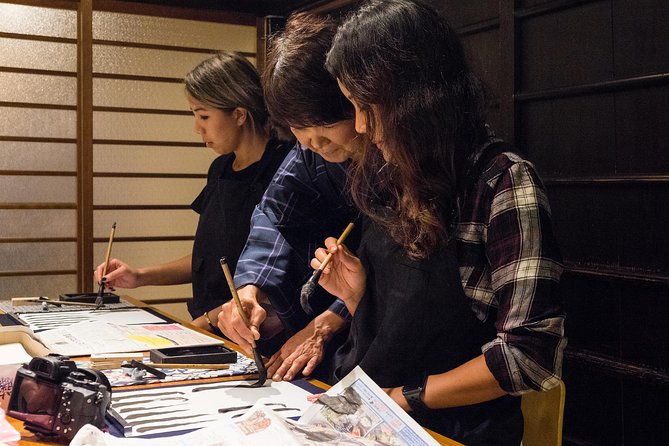
Toshiko’s teaching comes through in the way students describe the session: she’s not just passing along steps—she guides you and keeps you from getting frustrated. The vibe is small and cozy, and the instruction is clear enough that the class moves quickly.
Even if you’re brand-new, you’ll start picking up practical things like:
- How to start a stroke cleanly
- How to control the brush rather than force the result
- How to think about the character as a set of parts, not one scary shape
This demo phase also gives you a preview of what success looks like. You’re not aiming for a museum-worthy masterpiece. You’re aiming for a character with correct feel and balance—something you can proudly take home.
Hands-On: Creating Your Own Kanji Artwork
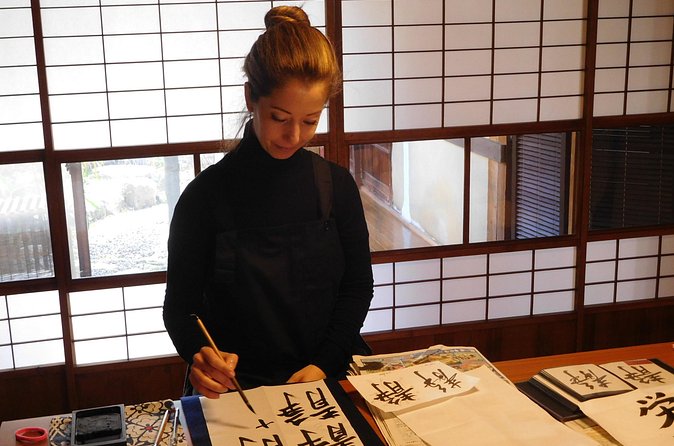
The main event is the hands-on part: you create your calligraphy piece while receiving instructive feedback. This is where you’ll feel the “meditative qualities” the workshop promises. Not in a mystical way—more like a focus trick. When you’re concentrating on a single line, the rest of the world fades.
The supplies are included, which makes the experience smoother:
- ink
- paper
- calligraphy utensils rental fee
So you’re not hunting for materials or figuring out what to buy. You can just show up, listen, and write.
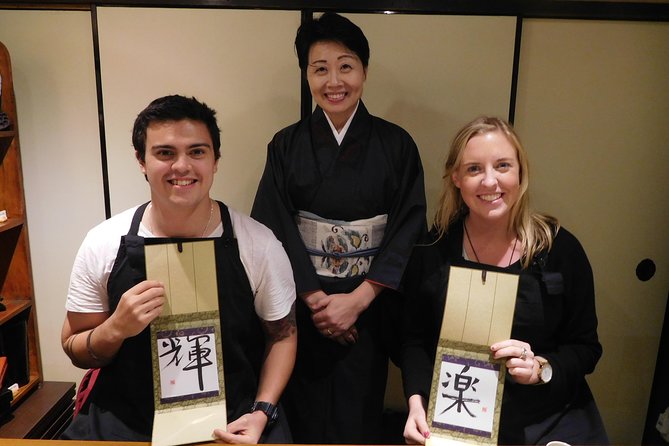
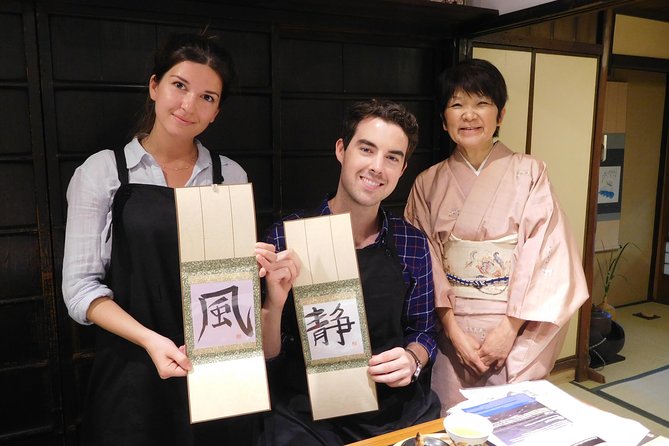
Here’s what I think is the smartest part of the process: you learn basics and then apply them right away. That turns the time into progress instead of watching only. By the end, you’re not leaving empty-handed—you take home your completed kanji artwork.
That take-home piece is more than a souvenir. It’s proof you learned a skill step-by-step. When you hang it later (or even just keep it in a drawer), it’s a travel memory with your own handwriting. I find those souvenirs last longer than photos.
Inside the Lesson: What the 1.5 Hours Usually Feels Like
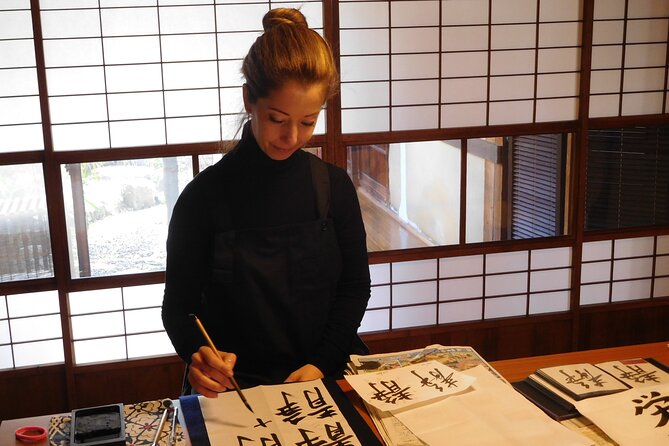
Even though the workshop is structured (intro, demo, practice), what matters is how it feels. In a short 1 hour 30 minutes, you typically get:
1) Context so you understand what calligraphy is doing
2) A demonstration that shows you technique and pacing
3) Guided writing time so you finish a piece
Because the group size stays small, you’re not stuck waiting your turn. And since the session ends back where it starts, you’re not juggling a long route or moving between stops.
The townhouse setting helps your brain switch from sightseeing mode to doing mode. Instead of collecting sights, you’re creating something. That’s why people who come specifically for a challenge often leave happy—even if their first attempts are imperfect.




Practical Notes: Location, Transit, and What’s Included
The meeting point is 605 Nishidachō, Shimogyo Ward, Kyoto. The good news: it’s listed as near public transportation, so you should be able to get there without a complicated plan. The less-good news is simple—there’s no hotel pickup or drop-off. If you’re staying far from central areas, give yourself a buffer and travel time.
What you do get included is the stuff that matters during the lesson. You don’t need to show up with supplies. You also don’t pay extra for utensils rental. That makes the price easier to justify because you’re not adding hidden costs for materials.
The workshop also doesn’t feel like a rushed “assembly line.” The small max group helps the pace feel supportive, not chaotic.
Price and Value: Is $58.64 Worth It?
At $58.64 per person for an approximately 1.5-hour small-group workshop, the value depends on what you want from your day in Kyoto.
If you want a cultural activity that gives you:
- a finished product to take home, and
- guided instruction with feedback, and
- a setting tied to old Kyoto rather than a generic studio
…then the price starts to make sense fast. You’re paying for the teaching and the materials, not just sitting in a room while someone talks.
If you’re mainly hoping for a quick photo opportunity or a passive show, you’d probably get less value. But if you like hands-on learning—even a little clumsy at first—this kind of workshop is exactly where your money goes to something you’ll keep.
Also, the experience is typically booked about 8 days in advance on average. That’s a hint that demand is steady, especially for small-group classes. If you’re traveling during peak periods, you’ll likely want to lock it in sooner rather than later.
Who This Kyoto Calligraphy Workshop Suits Best
This workshop fits best if you:
- want a beginner-friendly introduction to kanji calligraphy
- like calm, focused activities that break up sightseeing
- enjoy taking home a real craft made with your own hands
- prefer small groups where you can ask questions and receive feedback
It also works well for travelers pairing this with other Kyoto classics. The timeline is short enough to fit into a day with temples and neighborhoods, without swallowing your whole schedule.
One note for families: participants under 18 must be accompanied by an adult. And if the adult does not participate, a viewing fee is listed. So plan together, not just drop off.
Should You Book This Calligraphy Experience?
I’d book it if you want a Kyoto memory that’s personal, not just observed. The townhouse setting, the Zen-rooted context, the small group, and the fact that you leave with your own kanji artwork all combine into a high-satisfaction format.
I would hesitate only if you strongly dislike instructional activities or you need a fully guided logistics experience with pickup from your hotel. Here, you’re responsible for getting yourself to the meeting point—once you’re there, the class is hands-on and supportive.
If you’re curious about Japanese calligraphy and you want to do more than read about it, this is a smart way to spend 1.5 hours in Kyoto.
FAQ
What is the duration of the calligraphy workshop?
The experience lasts about 1 hour 30 minutes.
How much does it cost per person?
The price is $58.64 per person.
What supplies are included?
The workshop includes materials such as ink and paper, plus the calligraphy utensils rental fee.
Can I take something home from the class?
Yes. You’ll take home your Japanese kanji calligraphy artwork.
Where does the experience take place?
It meets at 605 Nishidachō, Shimogyo Ward, Kyoto, 600-8397, Japan, and the activity ends back at the meeting point.
Is hotel pickup included?
No, hotel pickup and drop-off are not included.
Is the group size limited?
Yes. The class has a maximum of 5 travelers.
What about children or teens participating?
Participants under 18 must be accompanied by an adult. If the adult does not participate, a viewing fee of 3,500 yen per person is charged.
How does cancellation work?
You can cancel for free up to 24 hours in advance of the experience’s start time for a full refund.
More Tour Reviews in Kyoto
More Kyoto Workshops to Try


Just added: more Kyoto tours to browse








Kyoto Craft & Calligraphy Workshops, compared.
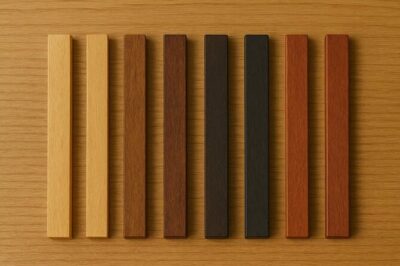 ★ 5.0Chopsticks Making Workshop in Gion with Engraving OptionFrom $15958 reviews
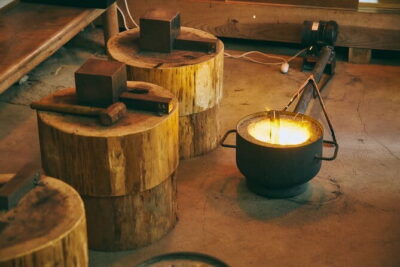 ★ 4.8Authentic knife making experience at a blacksmith in KyotoFrom $154350 reviews
 ★ 5.01-Hour Japanese Archery Experience in KyotoFrom $46176 reviews
 ★ 5.0Calligraphy class at Buddhist temple in city centerFrom $55167 reviews
 ★ 5.0Roketsu dyeing experience: M course Roketsu Dyeing ExperienceFrom $25163 reviews
 ★ 4.9Japanese Archery Workshop with Experienced InstructorFrom $38132 reviews
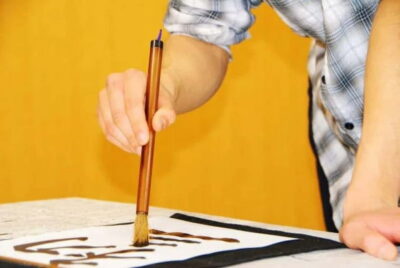 ★ 4.8Japanese Calligraphy ClassFrom $5189 reviews
 ★ 5.0TAIKO, Japanese Drum Experience from KyotoFrom $11586 reviews
Browse the lists this tour appears in