
Reviewed · KYOTO CRAFT & CALLIGRAPHY WORKSHOPS
Calligraphy and Make your own Kanji T-shirt in Kyoto
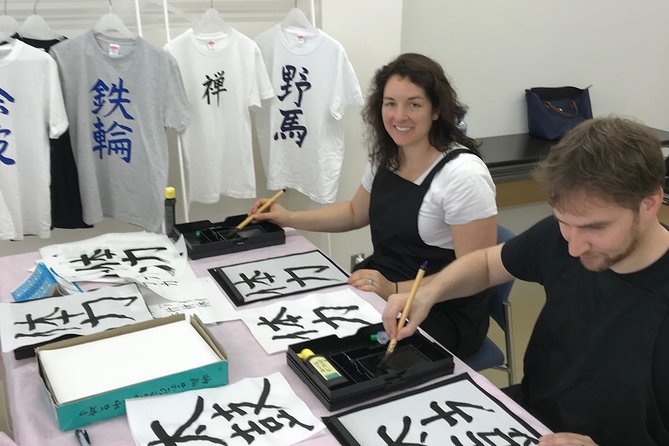
Kanji on fabric feels more personal than another souvenir. This private calligraphy workshop helps you make a silkscreen-printed kanji T-shirt in Kyoto, with an instructor guiding your hands from first strokes to the final wearable print. You also learn what kanji is doing in Japanese culture, not just how to copy it.
What I like most is the hands-on pacing. The teaching is step-by-step, and the class doesn’t shove you through so you feel rushed. I also love that you choose your own shirt color and ink, so the result looks like something you’d actually wear at home, not just something you framed and forgot.
One thing to keep in mind: you’re committing about 2 hours to make it properly. If your day is packed tight with temple hops and you mainly want quick sightseeing photos, this is a different kind of experience.
In This Review
- Key Highlights You’ll Appreciate
- Why a Kanji T-Shirt Workshop in Kyoto Is More Than a Souvenir
- Meeting In Front of the Museum of Kyoto: Getting There and What to Expect
- Crafting Your Kanji: Brief History and Basic Calligraphy Tools
- Choosing Your T-Shirt Color and Ink for the Silkscreen Print
- What You Take Home: Paper Practice, a Finished Shirt, and the Booklet
- Price and Value: Is $43 Reasonable for 2 Hours?
- Who This Class Fits Best in Kyoto
- Practical Tips So Your Kanji Looks Good
- Should You Book This Kyoto Kanji T-Shirt Workshop?
- FAQ
- How long is the calligraphy and kanji T-shirt workshop?
- Where does the workshop meet in Kyoto?
- Is this a private workshop?
- What do I take home at the end?
- Are materials and traditional calligraphy tools included?
- Do I get a mobile ticket?
- What is the cancellation policy?
Key Highlights You’ll Appreciate
- Private instruction in Kyoto with only your group participating
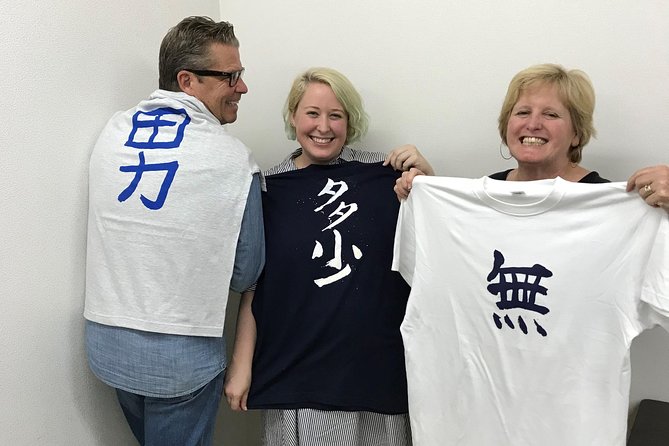
- Silkscreen-printed kanji T-shirt that you get to take home
- Traditional calligraphy tools included, so you’re not improvising
- Choose your own t-shirt color and ink, for a result that feels personal
- Free booklet on kanji and Japanese calligraphy, for learning beyond the session
Why a Kanji T-Shirt Workshop in Kyoto Is More Than a Souvenir
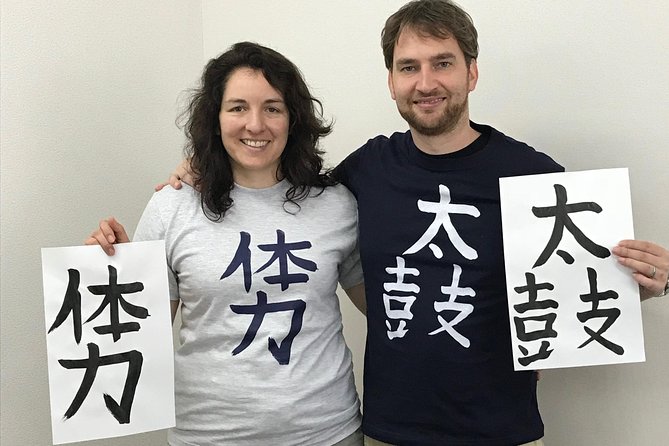
Kyoto is famous for crafts, but most souvenirs are finished before you arrive. This one flips the script. Instead of buying a ready-made shirt, you make the kanji with real calligraphy tools and then transfer it into a shirt format using silkscreen printing.
That matters because you’re not just collecting an object. You’re building a small skill, even if you start as a total beginner. You learn how the strokes fit together, how pressure and direction change the look, and how kanji characters aren’t random shapes. The result is wearable, and it has your fingerprints in it.
I also like that this class is designed around making something you’ll actually keep. You’re not leaving with only practice paper. You leave with the finished kanji T-shirt, plus a booklet to keep the story going after you go back to your hotel.
Make something by hand in a Kyoto workshop

Meeting In Front of the Museum of Kyoto: Getting There and What to Expect
The session starts at Hishiyacho, Nakagyo Ward, Kyoto (604-8131), with the meeting point in front of the Museum of Kyoto. That’s useful because it’s a clear landmark. If you’re using public transport, the area is described as near public transportation, which helps if you don’t want to fight complicated last-mile directions.
It’s also a private experience, meaning only your group participates. That’s a big deal for crafts. You’ll spend less time waiting your turn and more time getting direct help on your strokes and your print.
The workshop ends back at the meeting point. So you don’t have to plan a separate pickup or scramble to find your way home at the end of class. Plan on the full session as a mini-block in your day: arrive, create, and then head back out.
Crafting Your Kanji: Brief History and Basic Calligraphy Tools
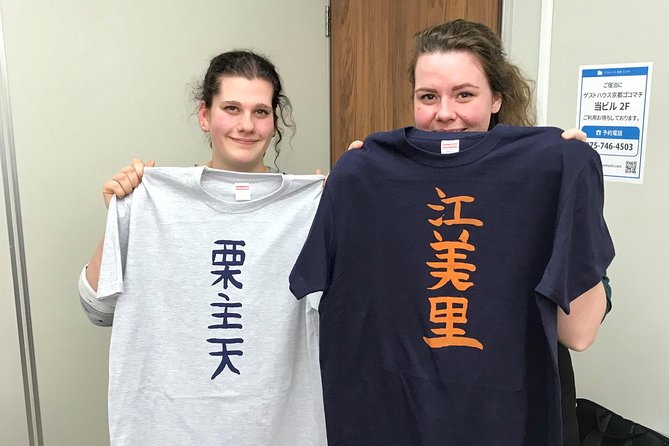
The class uses traditional calligraphy tools, and it begins with learning. You’ll get a brief history of kanji, then you move into hands-on practice.
That flow is practical. The history part helps you understand why kanji is treated as more than decoration in Japan. Then the instruction turns that meaning into technique. You’re guided on basic calligraphy, so even if you’ve never held a brush before, you’re not guessing.
One detail worth your attention is how the teaching is paced. The instructor is described as going through each step thoroughly, without rushing. That means you can ask questions and correct mistakes early, which is when calligraphy gets easier fast. It’s also easier to relax when the session has breathing room.
If you worry you’ll struggle with legibility, don’t. The structure is built for learning. You’re not thrown into a “do this perfectly in 10 minutes” situation. You’re taught the steps, then you practice them with support.
Choosing Your T-Shirt Color and Ink for the Silkscreen Print
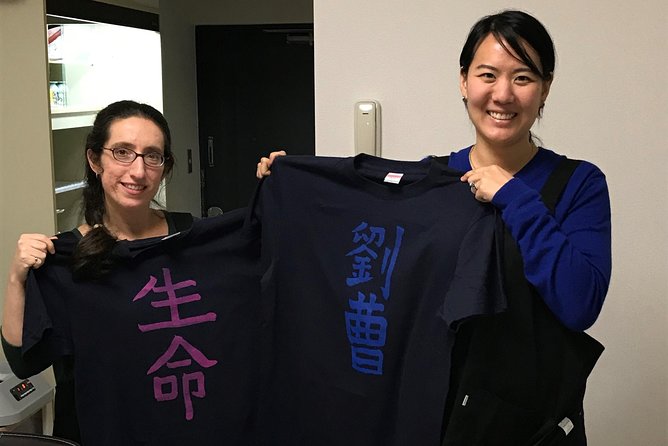
Once you move from practice into making, the workshop shifts from calligraphy technique to product design.
You get to choose the color of your t-shirt and the ink. That choice does more than personalize the look. It also helps you control the final contrast of your kanji strokes. Dark ink on a light shirt tends to read clearly from a distance, while lighter ink on a darker shirt can look more subtle and moody. Either way, you’re making decisions that affect the final result.
From there, the workshop guides you through turning your calligraphy into a silkscreen-printed T-shirt. Silkscreen has a specific advantage for beginners: it’s a reliable way to transfer a design so you get a wearable version rather than a single sheet of practice.
You don’t need to understand the printing mechanics to benefit from it. What you need is focus on the character you’re creating and following the instructor’s guidance step-by-step.
What You Take Home: Paper Practice, a Finished Shirt, and the Booklet
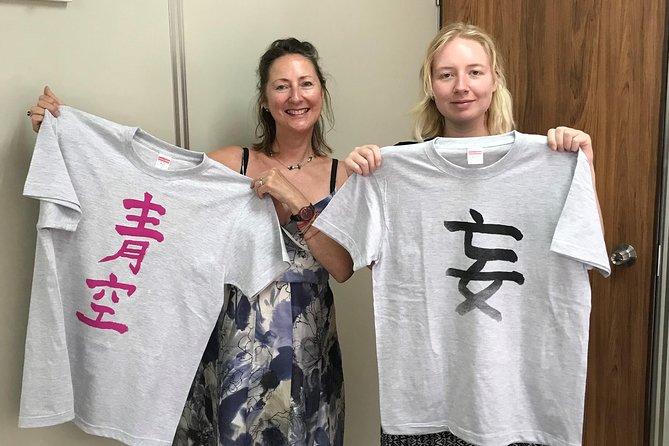
The top value of this experience is what you can physically leave with.
You end up with a finished kanji T-shirt, which is the whole point of the class. In addition, you also come away with your paper practice—useful because it shows your process. Even if your shirt is the main memory, your practice sheets give you something to compare against later: how your strokes look before transfer, and how they evolve in the final print.
You also receive a complimentary booklet about kanji and Japanese calligraphy. That’s handy on two levels:
- It helps you remember what you learned right after the class, while the strokes are fresh.
- It gives you something to study later if you want to try another character on your own.
If you’re the type who enjoys turning “one-time experiences” into something you can continue, this booklet is a real bonus.






Price and Value: Is $43 Reasonable for 2 Hours?
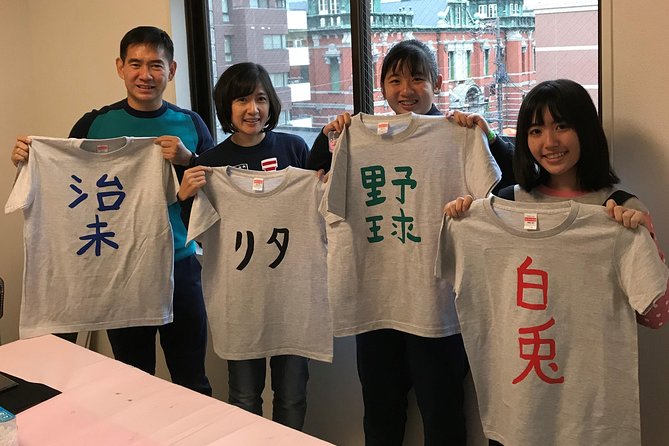
At $43 for about 2 hours, this sits in the category of activities that feel worth it when you leave with a usable product.
Here’s why the price makes sense based on what’s included:
- You’re not just watching a demonstration. You’re making a silkscreen-printed T-shirt.
- The session includes materials and the use of traditional calligraphy tools.
- You get a private experience for your group.
- You receive a free booklet, which extends the learning after class.
If you’ve ever paid for workshops that end with a small craft item, you’ll feel the difference here. The final output is wearable. That’s why people describe the experience as worth the time: it isn’t just paper practice. It’s a final item you’re likely to keep and actually wear with pride.
The one trade-off is time. You’re paying for instruction and materials, and you’re giving up a couple hours of free-form wandering. If you value hands-on time more than another stop on a checklist, the value holds up.
Who This Class Fits Best in Kyoto
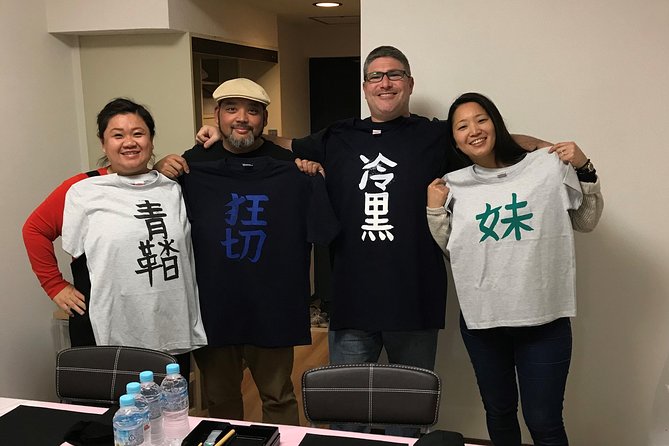
This workshop is a strong match if you:
- Want a creative, hands-on Kyoto experience instead of only photo stops
- Like workshops where you leave with something you can use (not just look at)
- Enjoy learning a cultural detail, like what kanji represents, alongside the technique
- Prefer a private setting so you can ask questions and move at a comfortable pace
It’s also suitable for beginners. The format says most travelers can participate, and the instruction is built around teaching basic calligraphy steps rather than assuming prior skill.
If you’re traveling with someone and want a shared activity that isn’t another crowded attraction, this kind of class can be a nice change of pace. You’re both creating, not just observing.
Practical Tips So Your Kanji Looks Good
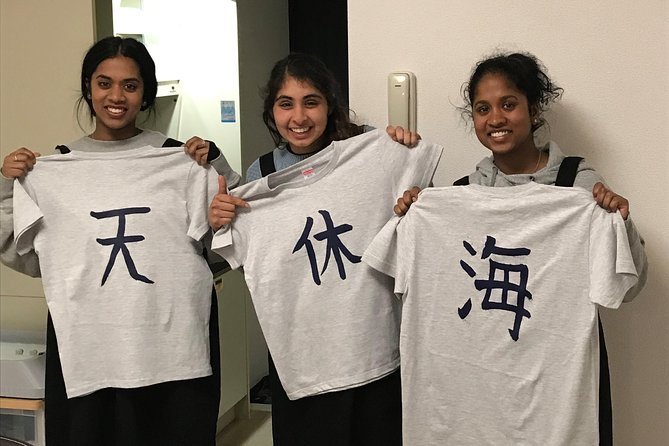
A few small habits will help you get better results without stress:
- Arrive a bit early and use the Museum of Kyoto landmark to orient yourself.
- Take your time with the early strokes. The instructor’s step-by-step approach works best when you slow down just enough to follow directions.
- When you pick a shirt color and ink, think about contrast. You want the kanji to read clearly in the final print.
- Wearable souvenir rules apply: if you plan to pack lightly, use this class as a “last clean purchase” and plan where the shirt will go.
Also, since it’s a private workshop, you can ask questions during the session if anything feels unclear. That’s part of the value—less guessing, more guidance.
Should You Book This Kyoto Kanji T-Shirt Workshop?
If you want a Kyoto memory you can wear, I’d book it. This experience hits the sweet spot of guided craft, personal choice, and a real take-home result. The best sign is the pacing: clear steps, no rush, and support that helps you actually finish something you’re proud of.
Book it especially if you’re trying to balance your trip with at least one creative activity. Kyoto can be all shrines and streets, and this gives you a different kind of connection to the culture.
If you’re short on time or you only want quick, low-effort activities, then the 2-hour commitment may feel like too much. In that case, consider it only if you can carve out a calm block in your schedule.
FAQ
How long is the calligraphy and kanji T-shirt workshop?
It lasts about 2 hours.
Where does the workshop meet in Kyoto?
Meet at Hishiyacho, Nakagyo Ward, Kyoto 604-8131, Japan, in front of the Museum of Kyoto.
Is this a private workshop?
Yes. It’s described as a private tour/activity, so only your group participates.
What do I take home at the end?
You take home a silkscreen-printed kanji T-shirt you make yourself, and you also receive a complimentary booklet about kanji and Japanese calligraphy.
Are materials and traditional calligraphy tools included?
Yes. The workshop includes t-shirt making materials and the use of traditional calligraphy tools.
Do I get a mobile ticket?
Yes. You’ll receive a mobile ticket.
What is the cancellation policy?
You can cancel for a full refund up to 24 hours before the experience’s start time. If you cancel within 24 hours, the amount paid is not refunded.
More Tour Reviews in Kyoto
More Kyoto Workshops to Try

Just added: more Kyoto tours to browse








Kyoto Craft & Calligraphy Workshops, compared.
 ★ 5.0Chopsticks Making Workshop in Gion with Engraving OptionFrom $15958 reviews
 ★ 4.8Authentic knife making experience at a blacksmith in KyotoFrom $154350 reviews
 ★ 5.01-Hour Japanese Archery Experience in KyotoFrom $46176 reviews
 ★ 5.0Calligraphy class at Buddhist temple in city centerFrom $55167 reviews
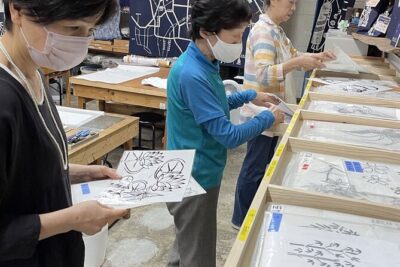 ★ 5.0Roketsu dyeing experience: M course Roketsu Dyeing ExperienceFrom $25163 reviews
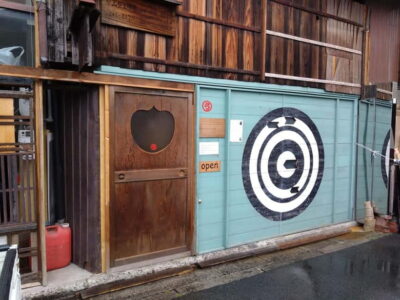 ★ 4.9Japanese Archery Workshop with Experienced InstructorFrom $38132 reviews
 ★ 4.8Japanese Calligraphy ClassFrom $5189 reviews
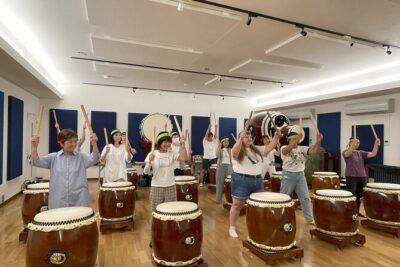 ★ 5.0TAIKO, Japanese Drum Experience from KyotoFrom $11586 reviews
Browse the lists this tour appears in