
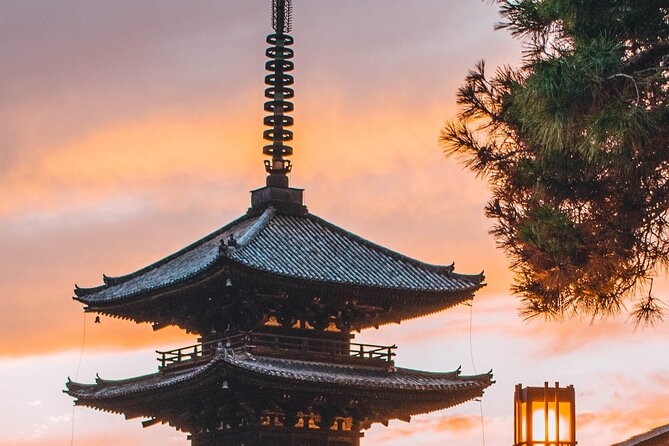
Reviewed · GION & GEISHA DISTRICT TOURS
2 Hour Night Walking Tour Throughout Gion with snack
Geisha glow starts with a short walk. This 2-hour Gion night tour is an easy way to understand how modern Kyoto and traditional geisha culture sit side by side, with a small snack break along the way. I really like that you get real orientation fast—Yasaka Shrine first, then the streets where geiko and maiko stories make sense in the dark.
My second favorite part is the practical human side: your guide (often Simon, praised for humor and answering questions) points out places and habits you’d miss on your own, plus you end with the calming sounds by the Kamogawa River. The main drawback to keep in mind is that Gion gets crowded at night, so the pace can feel quick and staying right next to the guide takes focus.
In This Review
- Key things you should know before you go
- Night in Gion: what this 2-hour walk is really like
- Meeting point at Disney Store Kyoto Shijo-Kawaramachi
- Stop 1: Yasaka Shrine for Kyoto’s anchor landmark
- Stop 2: Hanamikoji Street and how geiko vs maiko makes sense
- Stop 3: Kiyamachi Street for the modern entertainment district
- Stop 4: Kamogawa River for sound, hangouts, and night air
- Food and sweet extras: snack plus geisha chocolate
- Price and value: is $32.58 worth it?
- Group size, pacing, and staying together in crowds
- Who this night walking tour suits best
- Should you book this Gion night walking tour?
- FAQ
- How long is the Gion night walking tour?
- How much does the tour cost?
- Where do I meet for the tour?
- What’s included in the tour?
- Is dinner included?
- How big is the group?
Key things you should know before you go
- Two hours, four stops: Yasaka Shrine, Hanamikoji Street, Kiyamachi Street, then Kamogawa River.
- Food included: a traditional Japanese snack and a sweet geisha chocolate.
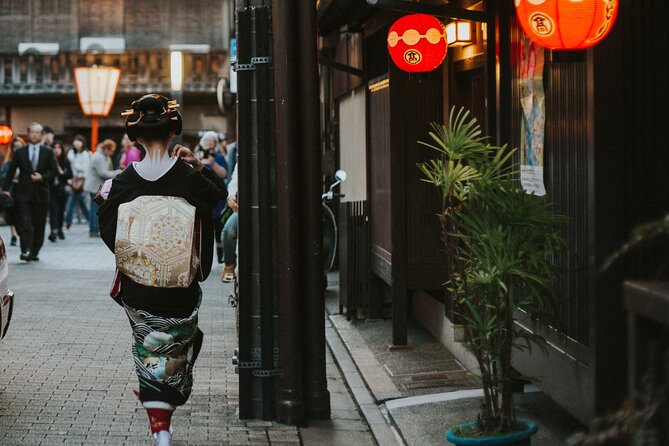
- Geisha district context, not just photos: you’ll learn the difference between geiko and maiko as you walk.
- Small group size: maximum of 10 travelers, which helps on narrow streets (but it’s still busy).
- Back to where you started: the tour returns to the meeting point at the end.
- English-friendly guide: many past departures highlight Simon’s clear explanations and jokes.
Night in Gion: what this 2-hour walk is really like
This isn’t a long sightseeing day. It’s a tight, focused evening stroll built to help you understand Gion, not just check boxes. You’ll start near Shijo-Kawaramachi, head into the shrine area, then move through the geisha streets and into the entertainment-district vibe.
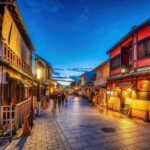
Expect Kyoto at night to feel different in a good way. The streets can look the same in daylight, but the mood changes fast after dusk. Lantern light, quiet side alleys, and the soundscape near the river give you a better sense of why this neighborhood still matters beyond tourism.
The good news: with just four scheduled stops, you get time to pause and look instead of rushing through dozens of photo spots. The tradeoff: when crowds thicken, you’ll need to keep a steady pace to avoid losing the group.
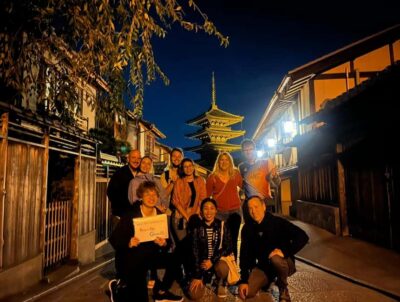
More evenings along the lantern-lit lanes of Gion


Meeting point at Disney Store Kyoto Shijo-Kawaramachi
You meet at the Disney Store – Kyoto Shijo-Kawaramachi, located at 600-8001 Kyoto, Shimogyo Ward, 四条通河原町 北東角 コトクロス阪急河原町 1&2F. The tour ends back at the same meeting point, so you don’t need to figure out your way across town at night.
This location is practical because it sits close to public transportation. That matters on a night tour, when the simplest plan is usually the best plan. It also makes it easier to come straight from dinner plans nearby—just remember dinner isn’t part of this tour.
Stop 1: Yasaka Shrine for Kyoto’s anchor landmark
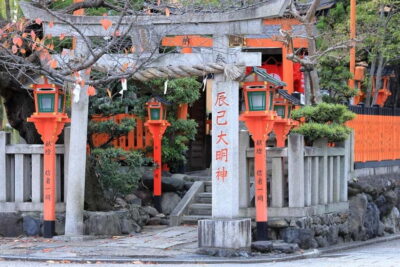
The first stop is Yasaka Shrine, the tour’s “must-see” historical anchor. You’ll spend about 30 minutes here, with admission free, and your guide will explain what makes this shrine so important in Kyoto.
Why this works early in the evening: a shrine gives you a baseline for understanding the neighborhood you’re walking into next. You’re not jumping straight into entertainment streets. Instead, you start with a place that helps you connect the cultural roots behind the area.
What to do with your time at this stop: take a slow look around, pause for photos, and listen to the guide’s context. Even if you’ve seen shrine gates before, Yasaka’s role in Kyoto gives meaning to what you’ll notice later in the geisha districts.
One practical consideration: shrine areas can also be crowded, especially when tour groups overlap. If you want photos without constant head-shots, plan to step slightly aside when your guide speaks.
Stop 2: Hanamikoji Street and how geiko vs maiko makes sense
Next comes Hanamikoji Street, with about 40 minutes to explore. This is where you get the tour’s core cultural lesson: the oldest examples of a hanamachi, the geisha working district.
Your guide will talk about the difference between geiko and maiko. That’s a key moment on this tour because it turns the street from “pretty buildings” into a living social structure with different roles, traditions, and stages of training.
Why walking here is better than reading about it: you can see how the architecture, street width, and pedestrian flow shape daily movement. In a place like this, the details matter—who uses which entrance, how side alleys connect, and why the street feels both public and private at the same time.
A small reality check: you can enjoy the neighborhood without expecting constant performances. The value is the context and the atmosphere, not a guaranteed sighting. If you’re hoping to spot geisha, keep your expectations flexible and focus on what you’re learning as you walk.
Stop 3: Kiyamachi Street for the modern entertainment district
From there you head to Kiyamachi Street, also about 40 minutes. This is described as Kyoto’s modern entertainment district, and your guide will recommend restaurant options off the beaten track—places you might not find easily on your first night.
The standout value here is direction. You’re not just being shown streets; you’re being given practical “what to do next” ideas. One of the recurring strengths in the tour feedback is that guides point out restaurant areas and small details that help you plan the rest of your Kyoto evenings.
What to watch for: signage, crowd patterns, and where people naturally slow down. Even without a reservation strategy in your pocket, the guide’s suggestions can help you avoid time-wasting wandering.
Potential drawback: like many older entertainment areas, Kiyamachi can feel busy. The tour is short, and the crowd density can make it harder to stop abruptly for photos or questions. If you like lots of pause-time, keep your questions brief so the group doesn’t get stretched out.
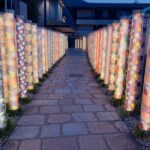
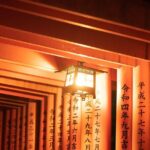
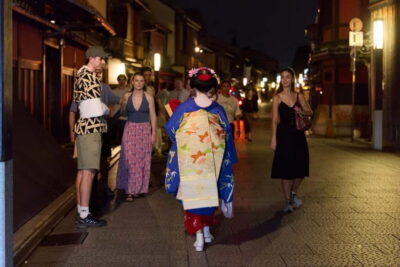
See how Kyoto shifts after dark


Stop 4: Kamogawa River for sound, hangouts, and night air
The final scheduled stop is Kamogawa River, with about 10 minutes. This part shifts the tone. Instead of street-level sightseeing, you get a chance to absorb the soundscape and watch how people gather near the water.
The tour frames the river as the heart and soul of the entertainment district. Even in a short visit, the river gives you a “why” behind the neighborhood’s energy—people come here to linger, meet, and enjoy the night.
The best way to use these minutes is simple: stand still for a moment, listen, and let your eyes catch what’s happening around you. It’s one of those small timeslots that can feel short only on paper. In real life, it helps your entire walk “click” into place.
Food and sweet extras: snack plus geisha chocolate
This tour includes a traditional Japanese snack and a nice geisha chocolate. That’s a welcome break during a night walk, especially on a day when you’ve already had your share of temples and walking.
Two things I like about this kind of inclusion:
- You get energy without needing to stop for a meal you may not have planned.
- The snack is part of the cultural tone of the evening, not a random add-on.
Just note that dinner isn’t included. So think of this as a smart snack stop, not a full replacement for a proper meal.
Price and value: is $32.58 worth it?
At $32.58 per person for about 2 hours, the value depends on what you want from Kyoto at night. If you’re comfortable wandering on your own, you could recreate parts of this route. But the real payoff is the “how to understand what you’re seeing” part.
You’re paying for:
- a guided explanation at key cultural points (especially geiko vs maiko),
- curated restaurant recommendations for later,
- and included treats (snack + geisha chocolate).
The group size cap of 10 travelers also matters. Smaller groups tend to mean more manageable pacing and more chances for your guide to answer questions without the entire crowd losing cohesion.
My bottom-line take: it’s reasonably priced for a short evening tour that saves you mental effort. You get direction plus cultural interpretation in one compact block.
Group size, pacing, and staying together in crowds
This is a maximum of 10 travelers tour, which is a real advantage on narrow streets. Still, Gion can get crowded, and the tour is only two hours long. That means the guide may keep moving to hit each stop on time.
A few practical ways to avoid stress:
- Stay close to the front when the guide speaks.
- Don’t assume there’s time to regroup mid-block if the street is packed.
- If you ask a question, make it quick so you don’t slow everyone down.
One more thing: pacing issues show up in feedback when crowds are at their busiest. If you prefer slow, linger-everywhere sightseeing, consider adding extra time after the tour to return to whichever street you liked most.
Who this night walking tour suits best
This tour is a strong match if you want:
- a first-night orientation to Gion,
- cultural context without homework,
- and a guide who can point you to places for the rest of your Kyoto evenings.
It’s also a good fit for couples and small groups who want structure but not a rigid, long itinerary. If you love learning about traditions through real street settings, you’ll likely enjoy how the tour moves from shrine to geisha district to entertainment area.
If you’re the type who hates crowds or needs a lot of downtime, plan for the busiest parts of Gion and treat the tour like a focused stroll rather than a relaxed amble.
Should you book this Gion night walking tour?
If you’re trying to make the most of your first Kyoto evening, I’d book it. This is the kind of tour that helps you get your bearings fast and gives you usable leads for where to go next. The combo of Yasaka Shrine context, a clear explanation of geiko vs maiko, and the included snack plus geisha chocolate makes the two hours feel worthwhile.
I’d hesitate only if you know you struggle in dense crowds or you want a slow pace with lots of stopping. In that case, you might enjoy a self-guided walk more—but if you can handle busy streets for a short window, this one is a smart start.
FAQ
How long is the Gion night walking tour?
It runs for about 2 hours.
How much does the tour cost?
The price is $32.58 per person.
Where do I meet for the tour?
You meet at the Disney Store – Kyoto Shijo-Kawaramachi (四条通河原町 北東角 コトクロス阪急河原町 1&2F). The tour ends back at the meeting point.
What’s included in the tour?
You’ll get recommendations, plus a traditional Japanese snack and geisha chocolate during the tour.
Is dinner included?
No. Dinner is not included.
How big is the group?
The tour has a maximum of 10 travelers.
More Tour Reviews in Kyoto




More of Kyoto After Dark
Still in Gion? Keep Going

Just added: more Kyoto tours to browse








Gion & Geisha District Tours, compared.
 ★ 4.7Kyoto Geisha Walking Tour: Gion District & Hidden GemsFrom $253,273 reviews
 ★ 4.9Gion Magical Night Walking Tour with Geisha TriviaFrom $242,393 reviews
 ★ 4.7Gion Geisha District Walking Tour – Stories of GeishaFrom $202,187 reviews
 ★ 4.9Best of Kyoto: Gion, Geisha, Pagodas & CobblestonesFrom $242,058 reviews
 ★ 4.5Night Walk in Gion: Kyoto’s Geisha DistrictFrom $212,003 reviews
 ★ 5.0Kyoto Night Foodie Tour in Gion (9+ dishes + 6 Sake tastings)From $1631,762 reviews
 ★ 5.0Kyoto Gion Geisha District Walking Tour – The Stories of GeishaFrom $251,441 reviews
 ★ 5.0Kyoto Gion: 2-Hour Geisha Culture & History Walking TourFrom $231,186 reviews
Browse the lists this tour appears in