
Reviewed · KYOTO TEA CEREMONIES
Traditional Tea Ceremony Experience in Kyoto
Matcha etiquette, minus the stuffiness. This short Kyoto tea ceremony experience gives you the feel of the real thing without a half-day commitment, with single-origin matcha and Japanese sweets waiting at the end. You’ll sit at tables and chairs (not on the floor), and you’ll get guided through the ritual details that make Japanese tea culture more than just drinking something green.
I especially like how calm and practical it feels: you’re taught the order of the ceremony, you watch the matcha preparation, and you learn the do’s and don’ts that keep the whole process respectful. One possible drawback is that the session is brief and can get crowded, so if your main goal is lots of deep history or lots of explanation in English, you may want to set expectations for a quick, focused experience.
In This Review
- Key highlights to know before you go
- A Kyoto tea ceremony with tables and chairs, not floor mats
- Single-origin matcha plus OHIGASHI: the tasting part
- OTE-MAE: how the ceremony actually runs in 30 minutes
- Instruction level and language: what to expect if you want English
- Price and value: is $7 for matcha worth it
- Getting there near Gojo Station (and why stairs matter)
- Who this tea ceremony suits best
- FAQ
- FAQ
- How long is the traditional tea ceremony experience?
- Where is the meeting point?
- What’s included in the experience?
- Do I get a completion certificate?
- What languages are available?
- Is it accessible for wheelchair users?
- What’s the cancellation policy?
- Should you book this Kyoto matcha ceremony?
Key highlights to know before you go
- Single-origin matcha served as the main drink, not a generic blend
- OHIGASHI (dried sweets) included with your tea
- 30 minutes means you get the core ceremony fast
- OTE-MAE style experience taught by an instructor as you follow along
- Tables and chairs seating keeps it accessible and straightforward for most people
- Near Gojo Station for an easy start, even on a packed Kyoto day
A Kyoto tea ceremony with tables and chairs, not floor mats
Kyoto’s tea ceremony tradition can sound intimidating until you see how it works in practice. This experience keeps the heart of the ritual but uses tables and chairs, so you can focus on the tea itself and the hand motions without worrying about floor-sitting comfort.
That matters if you’re sightseeing all day in Kyoto and your body is already tired. In 30 minutes, you want an experience that feels structured, not physically demanding. The ceremony format you’ll be taught is designed as a set sequence (it’s described as an OTE-MAE style experience), so you’re not just watching matcha get made—you’re learning what each step is for.
There’s also a “real Kyoto” angle to this setup. When people visit Kyoto, they often picture tea ceremony rooms that look ultra-formal and out of reach. Sitting at a normal-height table makes the ceremony feel more approachable, while the etiquette and careful movements still give it that respectful tone.
One note to keep in mind: the venue requires stairs and there’s no elevator. That’s not a dealbreaker for most visitors, but it’s worth knowing so you can plan comfortably for the walk up.
Sit for another bowl of matcha in a Kyoto tea house


Single-origin matcha plus OHIGASHI: the tasting part
The ceremony centers on one thing: your cup of matcha. You’ll be served a single-origin matcha, which is a big difference from the everyday green powder you might already have tried. Single-origin matcha is chosen for its character, so your cup is meant to taste distinct rather than anonymous.
You’ll also get OHIGASHI, traditional Japanese dried sweets. This isn’t just a snack thrown in at the end. In tea ceremony culture, sweets usually help balance the matcha’s bitterness and bring sweetness into the moment, making your tea experience feel complete.
What to listen for and look for here is how your instructor frames the drinking moment. You may get guidance on how to approach the cup and what the ritual is trying to communicate—calm, gratitude, and attention. Even if you’re not fluent in Japanese, the sequence is visual and step-based, so you’ll still be able to follow along.
If your goal is a matcha tasting that feels intentional, this format works. You’re not paying just for a beverage; you’re paying to understand why the matcha is prepared a certain way and served at a certain pace.
OTE-MAE: how the ceremony actually runs in 30 minutes
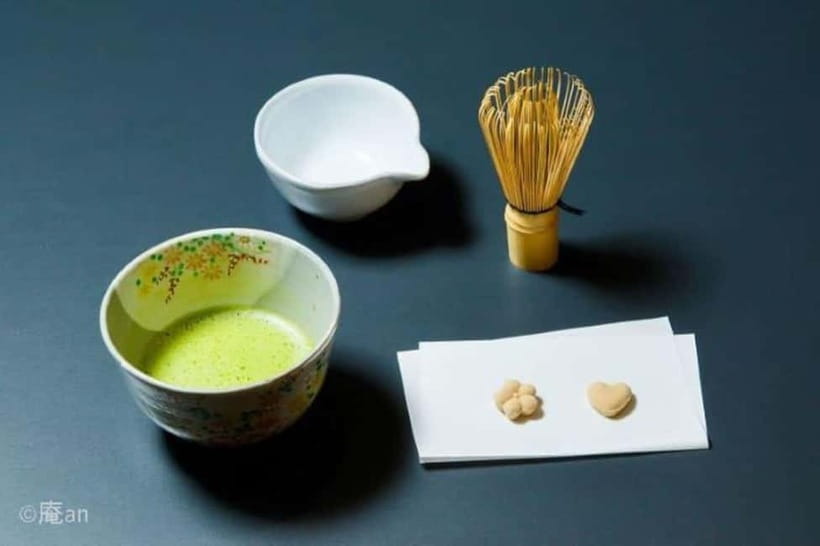
The session is designed to be short and complete: about 30 minutes from start to finish. In that time, you’ll go through the set of steps that make up the ceremony. The experience highlights that you’ll learn the art of the tea ceremony from an instructor who explains the significance of movements, tools, and the philosophy behind each step.
Here’s what that means for you on the ground:
First, you’ll get a guided start so you’re not guessing what you’re supposed to do. The ceremony isn’t just a performance; it’s a method. That makes the learning component feel more useful than a quick photo-op.
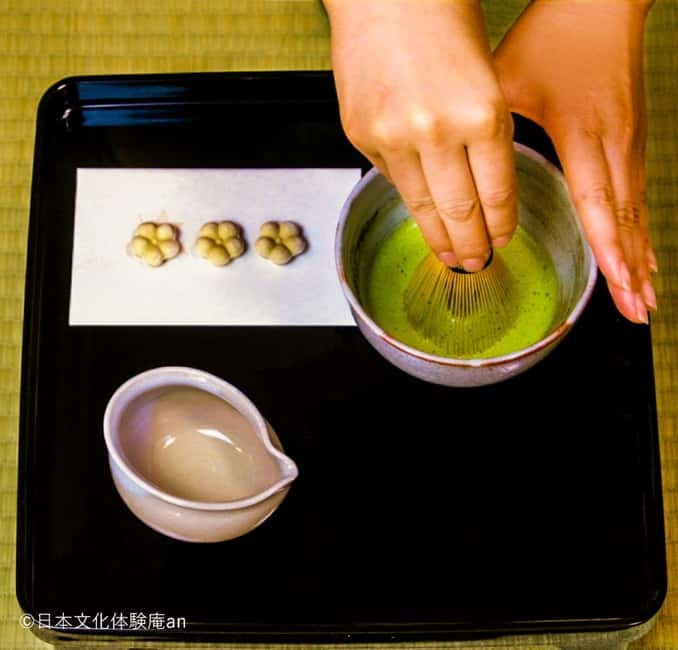
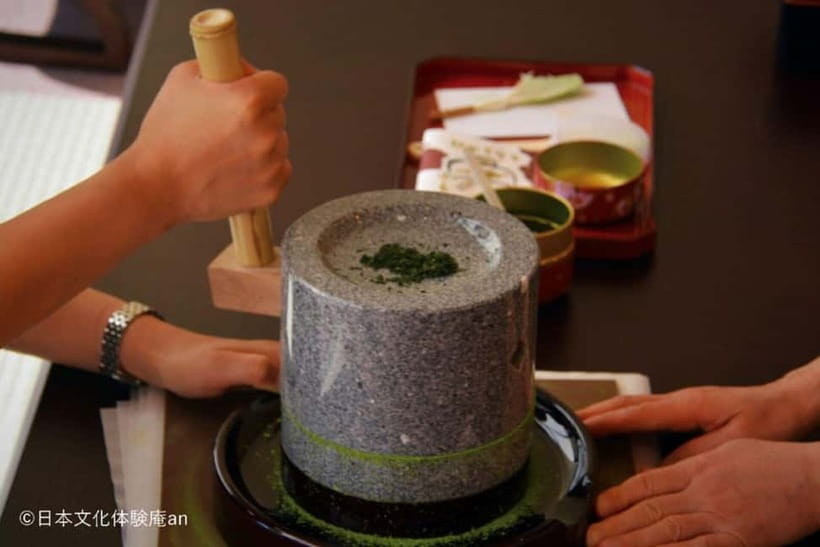
Next, you’ll see a demonstration focused on making matcha into matcha tea. The experience explicitly mentions a demonstration of how the matcha is made and prepared. Watching it matters because the texture and foam quality come from technique, not luck.
Finally, you’ll enjoy the tea you prepared or received during the ceremony, paired with the OHIGASHI sweets. Even when a session is short, the sequence is meant to land. You finish with a cup that matches what you were taught to value.
Because it’s only 30 minutes, it’s best to treat this as the “core ceremony intro,” not a full deep-study. If you want lots of extra cultural background, you might wish there were more time for discussion. On the flip side, many people like that it doesn’t stretch into a long class session.
Instruction level and language: what to expect if you want English
One thing I appreciate about this kind of tea ceremony in Kyoto is that you can learn through observation. Even when language support is limited, the ceremony’s structure gives you something solid to follow.
That said, language expectations are important here. The experience notes that English translation is provided as much as possible, but you may need to contact ahead if you want it added. The experience also states the language is Japanese by default.
So for you, the practical move is this: if English is a must, message in advance and confirm the level of support you can expect. That helps you avoid the disappointment of feeling like you only heard a small portion of the explanation.
There’s also a practical crowd factor. If the room gets busy, it can be harder to hear the guide clearly, even if English support is available. If you’re sensitive to noise, arriving a little early for good positioning can help you catch more of what’s said.
I’d frame it like this: the ceremony is strong even without perfect translation because it’s visual and step-by-step. But if your main goal is detailed matcha history and cultural background in your language, you may find you want more after the ceremony ends.
Price and value: is $7 for matcha worth it
At about $7 per person for a 30-minute guided experience, this is priced like a “try it now” Kyoto activity. It’s not trying to compete with high-end tea rooms that can cost far more for a longer, more formal service.
So what makes it good value?
- What’s included: single-origin matcha, OHIGASHI sweets, and a guided tea ceremony set (OTE-MAE).
- Time efficiency: 30 minutes fits into a busy Kyoto itinerary without stealing your whole afternoon.
- Learning component: you’re not just tasting—you’re being taught the sequence and significance of steps.
What’s not included is also worth knowing. There’s an optional completion certificate that costs 300 JPY, and the experience explicitly says it’s not included. If you don’t care about certificates or “souvenir proof,” that’s fine. If you like collecting little mementos, budget for it.
One more value angle: seating at tables and chairs makes it easier for a wider range of visitors to enjoy the ceremony without physical barriers. That’s not just comfort—it’s also part of why this can feel like an accessible introduction to tea culture rather than an activity only for the very flexible.
All told, if you want a short, respectful taste of Kyoto tea culture and you like hands-on demonstrations, the price-to-experience ratio is strong.
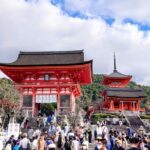



Getting there near Gojo Station (and why stairs matter)
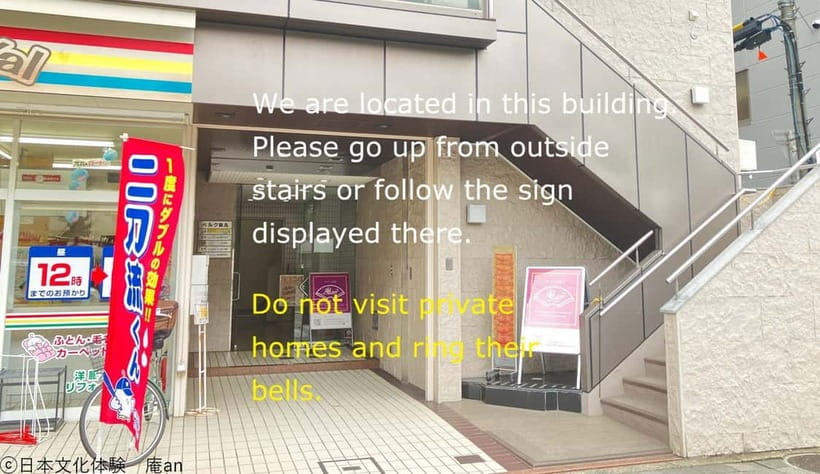
Logistics in Kyoto can make or break an activity. This one is simple: the meeting point is about a 1-minute walk from Exit 1 of Subway Karasuma Line Gojo Station, with the shop entrance facing Gojo-dori.
That’s a big win if your day is already packed. You’re not hunting through side streets for an hour. You can also pair it easily with nearby sightseeing, because the location is transit-friendly.
The one thing to plan for is the building setup. The experience states there’s no elevator, and you’ll need to take stairs to reach each venue. It also says the experience is wheelchair accessible, but the no-elevator note is still something to take seriously. If you’re bringing a wheelchair or have mobility limits, I’d contact the provider ahead of time to ask about the exact route and assistance available.
Timing also matters. Operation hours are from 10:00 to 17:00, and reservations received after 17:00 are processed the next day. And they won’t hold the event for delays, so if you’re coming from another stop, give yourself breathing room.
In a city where trains run well but walking takes time, this is where being early helps you enjoy the ceremony instead of rushing into it.
Who this tea ceremony suits best
This experience is a strong match if you’re:
- New to Japanese tea culture and want a guided introduction in under an hour
- Curious about matcha beyond taste, including basic do’s and don’ts
- Visiting Kyoto with limited time and want something calm instead of another crowded stop
- Comfortable learning through a mix of explanation and demonstration
It may feel less ideal if:
- You’re expecting a long, story-heavy lecture on matcha history in your language
- You’re very sensitive to group-room noise and want lots of interaction time
- You need extra accessibility accommodations and want to avoid stairs
Think of it as a focused “tea ceremony in practice” session. It gives you the basics and a proper cup of matcha, without trying to replace a full cultural seminar.
FAQ
FAQ
How long is the traditional tea ceremony experience?
It lasts about 30 minutes.
Where is the meeting point?
You meet about 1 minute walk from Exit 1 of the Subway Karasuma Line Gojo Station. The entrance faces Gojo-dori, and the coordinates are listed as 34.99642916810299, 135.76176672966227.
What’s included in the experience?
You’ll get the OTE-MAE tea ceremony experience, including a single-origin matcha tea and OHIGASHI (Japanese dried sweets).
Do I get a completion certificate?
A completion certificate is not included. If you want one, it costs 300 JPY.
What languages are available?
The experience language is Japanese. English translation is provided as much as possible; if you want to add English support, you’ll need to contact the provider.
Is it accessible for wheelchair users?
It says wheelchair accessible, but it also notes there is no elevator and you need to take stairs to reach each venue.
What’s the cancellation policy?
Free cancellation is available up to 24 hours in advance for a full refund.
Should you book this Kyoto matcha ceremony?
Yes, if you want a short, respectful intro to Kyoto tea culture and you like structured learning. The value is strong: you get a guided OTE-MAE-style ceremony, single-origin matcha, and OHIGASHI, all in about half an hour, near a major subway stop.
Book it with clear expectations if you need heavy English narration or lots of extra background. It’s practical and calming, but it’s also brief—so treat it like a well-made first chapter, not the whole book.
More Tour Reviews in Kyoto
One More Bowl of Matcha

Just added: more Kyoto tours to browse








Kyoto Tea Ceremonies, compared.
 ★ 4.9Tea Ceremony in a Traditional Tea House in KiyomizuFrom $493,519 reviews
 ★ 4.9Tea Ceremony Ju-An at Jotokuji TempleFrom $293,207 reviews
 ★ 4.345-Minute Tea Ceremony Lesson ExperienceFrom $222,378 reviews
 ★ 4.9Table-Style Tea Ceremony at a Kyo-MachiyaFrom $451,211 reviews
 ★ 5.0Kimono Tea Ceremony at Kyoto Maikoya, NISHIKIFrom $65911 reviews
 ★ 5.0Arashiyama Bamboo Forest, Monkeys, Matcha & Temple TourFrom $53759 reviews
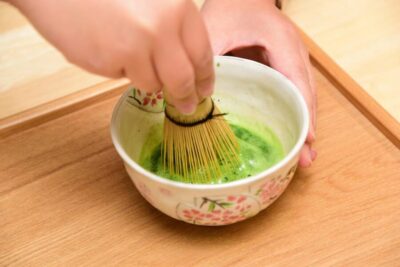 ★ 4.9Tea Museum Tickets and Matcha Grinding ExperienceFrom $23739 reviews
 ★ 4.9Kimono Tea Ceremony at Orizuruya GionFrom $49618 reviews
Browse the lists this tour appears in