
Reviewed · KYOTO TEA CEREMONIES
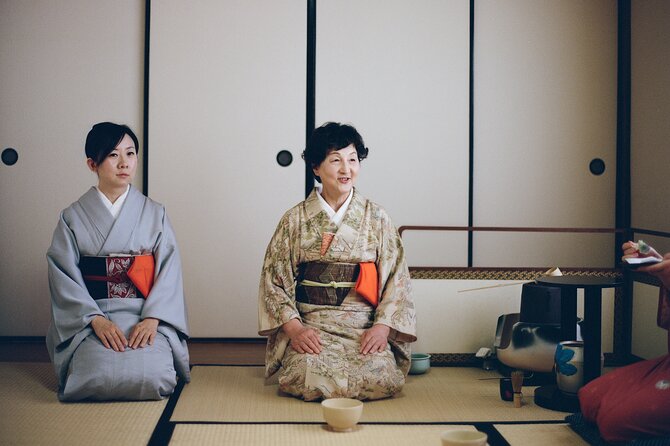
Tea ceremony by the tea master in Kyoto SHIUN AN
A Kyoto tea room feels like a time machine. At SHIUN AN, a tea master with a Tea Name guides you through matcha etiquette step by step in a small setting near Zen culture.
What I like most is that you don’t just watch—you make your own bowl and learn the logic behind each movement.
One heads-up: this is in a quiet residential spot, so finding it can take a little effort and there may be stairs once you arrive.
In This Review
- Key Things That Make SHIUN AN Worth Your Time
- A Kyoto Tea Ceremony Centered on Zen Spaces
- Small-Group Size: What Up to 6 (and Sometimes 8) Changes for You
- Arriving at SHIUN AN: A Quiet Neighborhood, Not a Tourist Corridor
- Inside the Tea Room: Scrolls, Flowers, and Room Layout
- Matcha Tools and Two Bowls of the Real Thing
- The Hands-On Part: Making Your Own Bowl (and Not Messing It Up)
- Getting Comfortable: Tatami Manners and Possible Stairs
- Price and Value: Is $33.03 a Good Deal?
- Timing Your Day: Pair It With Daitoku-ji and Kinkaku-ji
- Who Should Book This Kyoto Tea Ceremony (and Who Might Skip)
- Should You Book SHIUN AN? My Take
- FAQ
- What’s the group size for the tea ceremony at SHIUN AN?
- How long is the experience?
- Where do I meet, and is there pickup or drop-off?
- What’s included in the ticket price?
- Are service animals allowed?
- Can I get a full refund if I cancel?
Key Things That Make SHIUN AN Worth Your Time
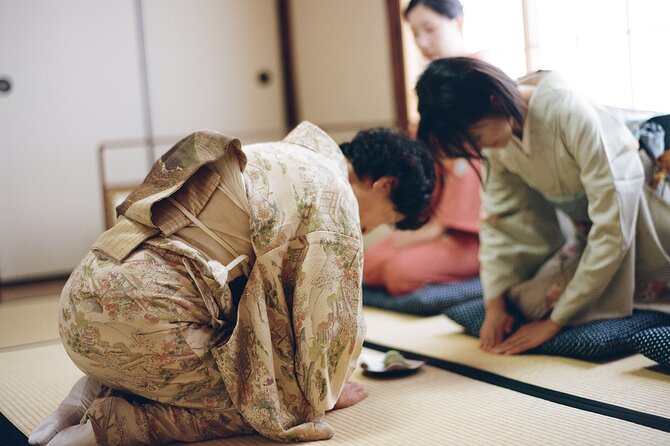
- Tea master with a Tea Name (professor-level qualification): you get instruction rooted in tradition, not a script.
- Small group size (6, sometimes 8 in peak seasons): more attention during the hands-on part.
- You learn the full flow, not just matcha mixing: scrolls, flower arrangements, utensils, and room layout are part of the lesson.
- Two bowls of matcha plus two kinds of Japanese sweets: tasting is built in.
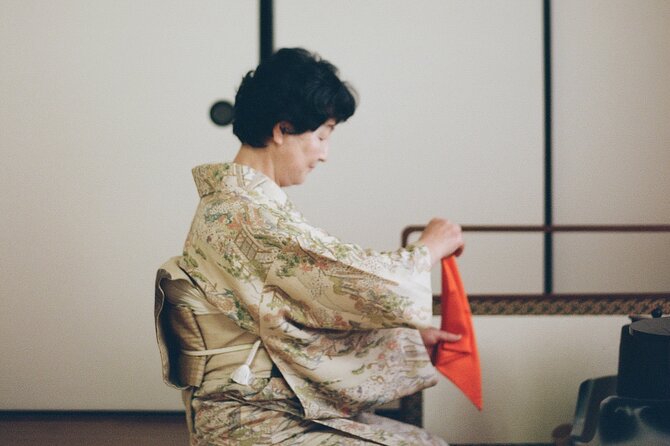
- Tatami-ready comfort items included: white socks and a fold fan help you fit the moment.
- You practice on your own bowl by the end: the ceremony closes with a real do-it-yourself takeaway.
A Kyoto Tea Ceremony Centered on Zen Spaces
Kyoto has lots of tea ceremony options, but SHIUN AN feels intentionally calm. The location matters: you’re in the north Kyoto area near Daitoku-ji Temple, a Zen Buddhist monastery that historically ties into tea culture. That background isn’t just decorative—it shows up in the way the host explains the ceremony as a disciplined, thoughtful practice.
The bonus for planning is convenience. You’re also close to Kinkaku-ji, the Golden Pavilion—about four bus stops away. If you’re building a day around famous sights, this experience gives you something quieter and more personal than another temple photo stop.
Sit for another bowl of matcha in a Kyoto tea house
Small-Group Size: What Up to 6 (and Sometimes 8) Changes for You
This tea ceremony runs in a small group, with a maximum of 6 guests per session. During peak times, the group can stretch to a maximum of 8, but you still won’t feel like you’re in a crowd.
For you, that small size tends to do two things:
- You get clearer guidance on the utensils and steps.
- Your questions land better. People in the room can actually be part of the lesson instead of standing around.
Time is short on purpose—about 45 minutes—so the session stays focused. Think of it as a concentrated “how to” and “why it matters,” not a long lecture.
Arriving at SHIUN AN: A Quiet Neighborhood, Not a Tourist Corridor
The meeting point is 955-1 Idachō, Kamigyo Ward, Kyoto. The area is residential, and that’s part of the charm. It also means you shouldn’t assume it’ll be right next to the busiest train stops.
The good news: you’re near public transportation, and you can use a phone map to guide you. A common tip from past visitors is to leave early enough to reach the spot on time. Another practical reminder: this place may involve stairs when you arrive, so plan for that.
No pickup or drop-off is included, so you’ll be in charge of getting yourself there. If you like structure, pick a bus option that gets you close and then walk the remaining distance without rushing.
Inside the Tea Room: Scrolls, Flowers, and Room Layout
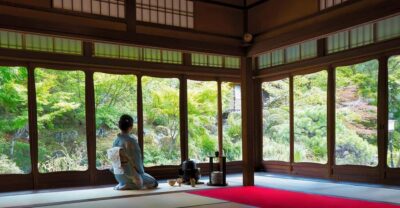
Before matcha ever hits the whisk, the host takes you into the tea room. This is where SHIUN AN does something smart: you’re shown the hanging scrolls and flower arrangements first. They’re not random decorations. They help set the mood and explain how the room’s layout supports the ceremony’s pace.
The host also explains the steps, the utensils, and why the room matters. In many demonstrations, you only learn what to do with your hands. Here, you also learn how the space frames the experience—what you look at, when you look, and how the sequence guides attention.
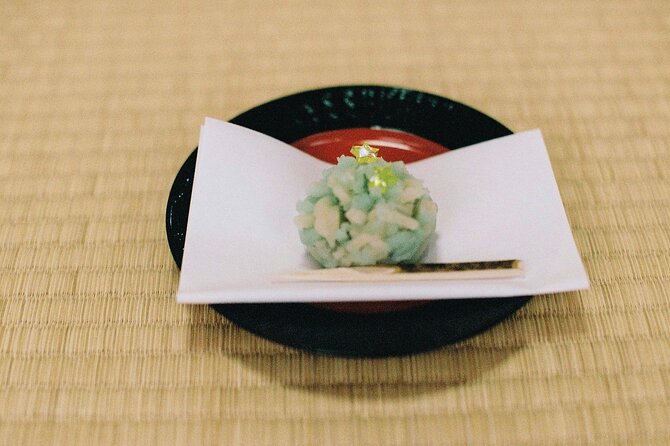
You’ll also start off with a seasonal sweet alongside matcha. It’s paired to the timing of the ceremony, which makes the first taste feel like part of a planned moment instead of an afterthought.
Matcha Tools and Two Bowls of the Real Thing
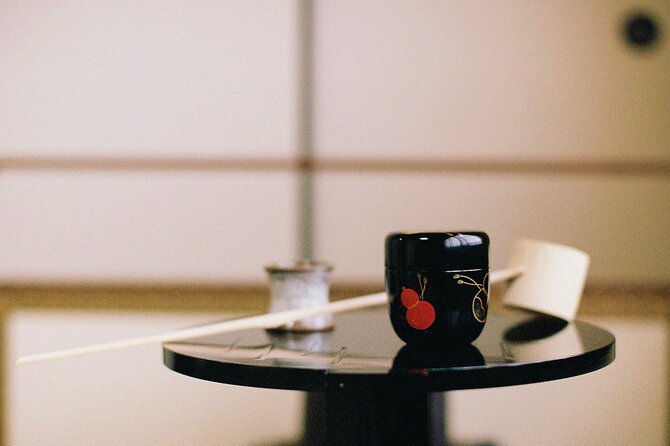
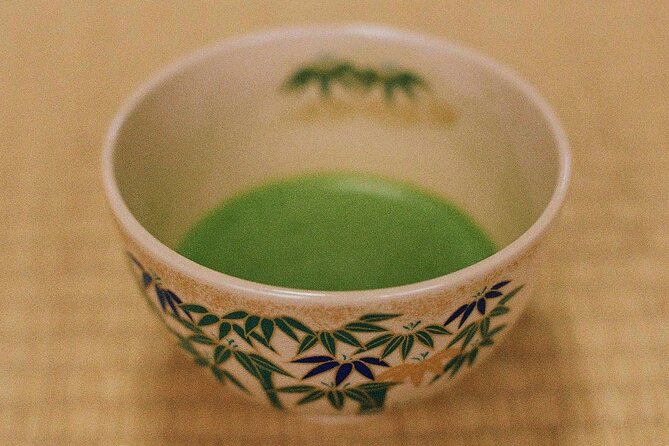
You’ll get the full set of ceremony tools during the learning portion: tea container, tea bowl, tea scoops, and whisks. That’s important because matcha isn’t just a drink recipe—it’s a tactile craft. Learning the tools helps you understand the workflow.
During the ceremony, you’ll enjoy two bowls of matcha. You’ll also have two kinds of Japanese sweets, which gives you contrast in flavors and texture while you watch the serving process. The tasting is one of the most praised parts because it keeps the experience grounded in the sensory side of tea—not only theory.
If you’re a matcha fan, this is the difference between a photo-op and a real food culture lesson. You don’t leave needing to guess what matcha quality should taste like. You taste it as part of the ritual.


The Hands-On Part: Making Your Own Bowl (and Not Messing It Up)
The ceremony ends with you making your own bowl of matcha. This is a big deal. You learn basics of preparing matcha—then you practice the motions with the utensils in front of you.
What I think you’ll appreciate most is that the host doesn’t treat it like a stunt. The guidance is framed as learning the procedure and understanding it as a disciplined sequence. That approach shows up in the “precision” people mention after the session: there’s more to whisking and serving than just stirring green powder in water.
Past visitors also highlight how helpful the English translator/assistant support is for getting context and staying included. That matters because tea ceremony can be full of small terms and etiquette. If you’re not fluent in Japanese (most of us aren’t), translation keeps the whole experience from turning into a silent show.
Practical comfort note: the experience includes white socks, which are for walking on tatami flooring. It’s one of those small things that smooths out the experience. You can focus on learning, not figuring out shoe rules.
Getting Comfortable: Tatami Manners and Possible Stairs
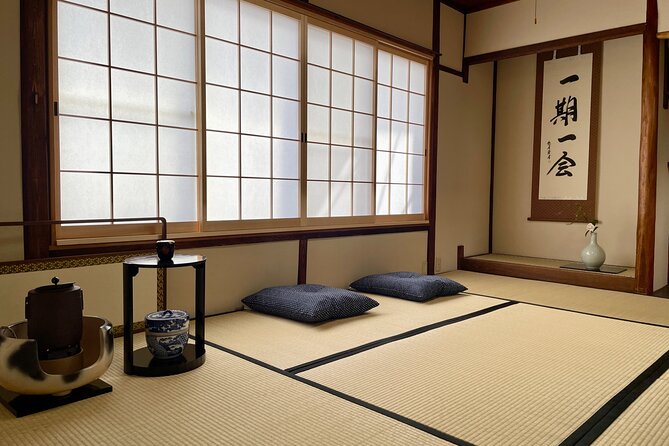
Tea rooms often assume guests can sit low and still. SHIUN AN is traditional, so plan to be prepared for the basic posture expectations. At the same time, there’s evidence that the team tries to accommodate guests who can’t sit on the floor comfortably. So if you have any seating needs, communicate them ahead of time when you book.
Even then, the location itself can be the bigger factor. Some visitors describe it as out of the way and mention stairs as a complication. That doesn’t mean you shouldn’t go—it means you should go prepared, with time to arrive without stress.
Price and Value: Is $33.03 a Good Deal?
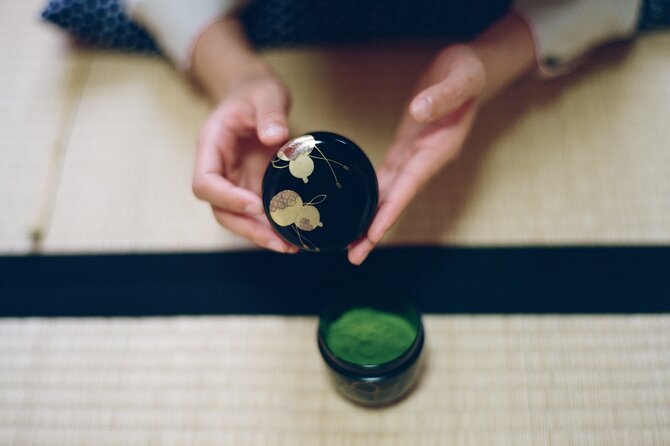
At $33.03 per person for about 45 minutes, the value looks strong for three reasons:
- You’re not paying for a generic “tea talk.” You’re paying for a small-group, structured, hands-on lesson led by a tea master with a Tea Name.
- It’s not a dry demo. You receive two bowls of matcha and two kinds of Japanese sweets, plus the included ceremony items (tea bowl, container, scoops, whisk guidance).
- You get cultural context that helps you understand what you’re seeing if you continue exploring Kyoto. Even one good tea ceremony can make temple design, Zen atmosphere, and Japanese aesthetics click faster.
In short: if your goal is authentic Kyoto culture you can actually participate in, this price tends to make sense.
Timing Your Day: Pair It With Daitoku-ji and Kinkaku-ji
Because SHIUN AN sits near Daitoku-ji and not far from Kinkaku-ji, you can build a day that flows without frantic backtracking. A sensible approach is to treat the tea ceremony as the calm middle of your sightseeing.
- Start with Daitoku-ji area time (or another northern Kyoto stop).
- Use the ceremony as your reset.
- Then finish with Kinkaku-ji if you want the famous highlight later.
Since the ceremony ends back at the meeting point, you’ll be planning your next move right after your 45-minute session.
Who Should Book This Kyoto Tea Ceremony (and Who Might Skip)
Book it if you:
- Want an authentic Kyoto matcha tea ceremony with a true tea master and a professor-level approach.
- Prefer a quiet, intimate experience over crowds.
- Like learning etiquette and process, not only tasting.
You might skip it if:
- You’re unwilling to handle a residential location that can be tricky to find.
- Stairs would be a major problem for you and you need an experience that avoids them entirely.
If you’re flexible and curious, SHIUN AN is one of the best types of Kyoto activities: calm, personal, and hands-on.
Should You Book SHIUN AN? My Take
If you’re in Kyoto and you care about doing at least one thing that feels real—not mass-produced—this is a solid choice. The combination of a small group, Tea Name tea master instruction, two bowls of matcha, and hands-on bowl making is exactly the kind of value that sticks with you longer than a quick show.
My booking advice is simple:
- If you’re happy to plan your route early and handle a bit of walking (and possibly stairs), book it.
- If accessibility or getting there at the last minute is a concern, message the provider with your needs before you commit.
FAQ
What’s the group size for the tea ceremony at SHIUN AN?
The maximum number of travelers is 6 for each session. During peak seasons, it can increase to a maximum of 8.
How long is the experience?
The tea ceremony lasts about 45 minutes.
Where do I meet, and is there pickup or drop-off?
You meet at 955-1 Idachō, Kamigyo Ward, Kyoto, 602-8302, Japan. There is no pickup and no drop-off, and the experience ends back at the meeting point.
What’s included in the ticket price?
Included items are tea bowls, tea containers, tea scoops, and tea whisks, plus white socks and a fold fan, matcha tea, and Japanese sweets (including two bowls of matcha and two kinds of sweets during the experience).
Are service animals allowed?
Yes, service animals are allowed.
Can I get a full refund if I cancel?
You can cancel for a full refund if you cancel at least 24 hours in advance of the experience start time. Free cancellation is available up to 24 hours before.
More Tour Reviews in Kyoto
One More Bowl of Matcha

Just added: more Kyoto tours to browse






Kyoto Tea Ceremonies, compared.
 ★ 4.9Tea Ceremony in a Traditional Tea House in KiyomizuFrom $493,519 reviews
 ★ 4.9Tea Ceremony Ju-An at Jotokuji TempleFrom $293,207 reviews
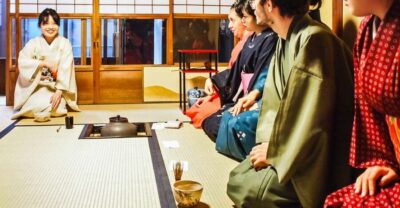 ★ 4.345-Minute Tea Ceremony Lesson ExperienceFrom $222,378 reviews
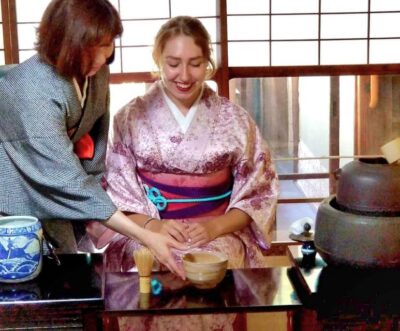 ★ 4.9Table-Style Tea Ceremony at a Kyo-MachiyaFrom $451,211 reviews
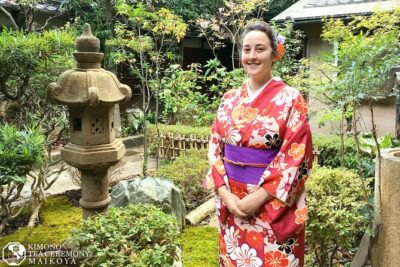 ★ 5.0Kimono Tea Ceremony at Kyoto Maikoya, NISHIKIFrom $65911 reviews
 ★ 5.0Arashiyama Bamboo Forest, Monkeys, Matcha & Temple TourFrom $53759 reviews
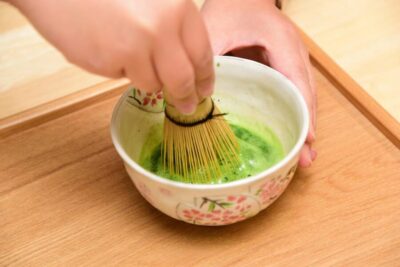 ★ 4.9Tea Museum Tickets and Matcha Grinding ExperienceFrom $23739 reviews
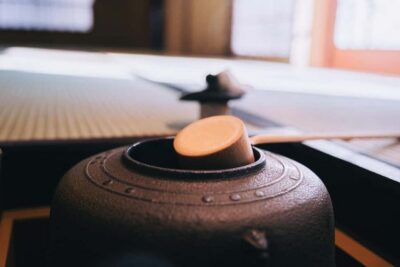 ★ 4.9Kimono Tea Ceremony at Orizuruya GionFrom $49618 reviews
Browse the lists this tour appears in