
Reviewed · KYOTO TEA CEREMONIES
Oboro | Mindful Tea Ceremony in a 100-Year-Old Kyoto Teahouse
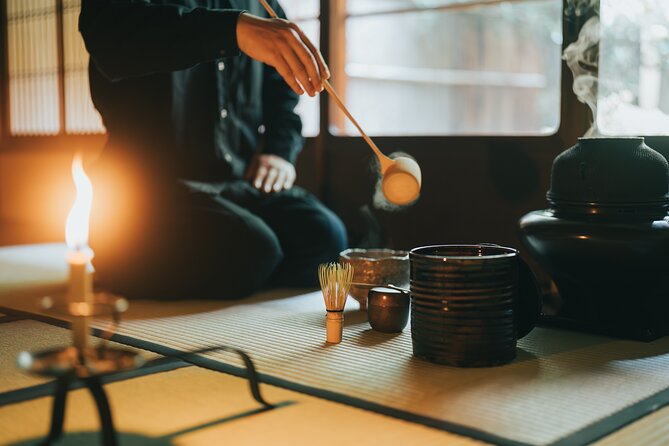
Candlelight makes matcha feel serious. Oboro’s tea ceremony turns Kyoto’s matcha routine into a slow, sensory ritual in a 100-year-old Kyoto teahouse, led with English translation so you actually follow what’s happening. I love the matcha prep you can watch in detail, and I also love the small-group calm that keeps the experience from feeling rushed or performative. One catch: they’re strict about timing, and you can’t join if you arrive 10 minutes late.
The room itself does half the work. Expect minimal décor, gentle sound, and handmade candles that set a meditative mood you just don’t get in a café. Instead of lecturing, the host guides you through each step—sometimes with names you may hear like Taku, Naoki, and Ryoko—and translates so you’re not stuck guessing.
The ceremony runs about 50 minutes and ends with a small, handmade candle token. You’ll typically start with a welcome tea and sweets, then you’ll get served one bowl at a time, invited to notice warmth, flavor, and the quiet focus the ritual asks for.
In This Review
- Key highlights worth making time for
- Why a 100-Year-Old Kyoto Teahouse Changes the Tea Ceremony
- The 50-Minute Flow: What Happens From Arrival to Final Sip
- 1) Arrival and a welcome start
- 2) Utensil prep: the part people usually miss
- 3) Whisking matcha and serving one bowl at a time
- 4) Closing moment with a handmade candle token
- Candlelight, Quiet Space, and Mindfulness That Feels Practical
- Matcha Prep You Can Actually See (Not Just Hear About)
- The English-Speaking Guide Setup That Removes Language Barriers
- Who This Is Best For (And Who Might Want to Skip It)
- Price and Value: What $45.98 Actually Buys You
- Timing Tips So You Don’t Lose Your Spot
- Should You Book Oboro?
- FAQ
- What is the duration of the Oboro tea ceremony?
- Where does the ceremony take place?
- How much does it cost?
- Will I need to speak Japanese?
- What happens during the experience?
- Is this a large group tour?
- What if I arrive late?
- What is included in the price?
- What should I do if the weather is bad?
- Do I need to pay tips?
Key highlights worth making time for
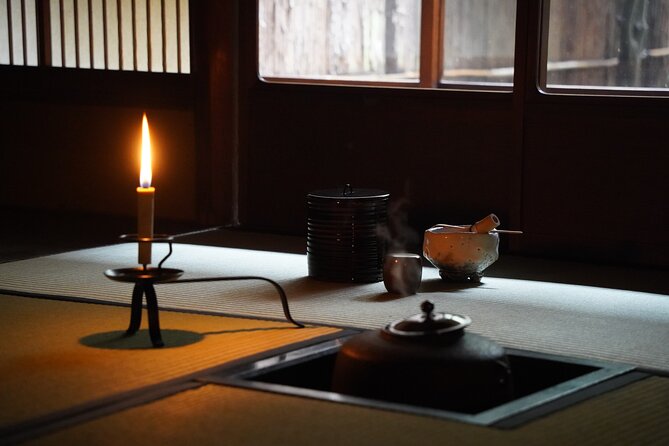
- Matcha whisking in a small Kyoto teahouse: you see the utensils cleaned and the tea made step by step
- English translation that removes the guesswork: the host explains the why behind the how
- Candlelit atmosphere, not café noise: minimal décor and handmade candles help you slow down
- A mindful pace for senses: you taste slowly, not on autopilot
- A handmade token to take home: a small candle meant to extend the mood
Why a 100-Year-Old Kyoto Teahouse Changes the Tea Ceremony
If you’ve ever had matcha “as a drink,” you already know the limits. Matcha can taste great, sure—but tea ceremonies aren’t about caffeine. They’re about attention: the pause, the hand movements, the shared manners, the way you hold a bowl and notice heat and aroma before the first sip.
Oboro takes place in an old Kyoto teahouse, and that matters more than you might expect. Old wood, low lighting, and a room designed for quiet make the ceremony feel like something meant for reflection, not a quick activity between stops. In busy Kyoto, that change in pace is the whole point.
You also get a small-group format, with a maximum of 8 people. That means you’re not squeezed into a line or watching from the side. You can hear the host, see the utensils, and follow the explanations without the typical tourist-swarm blur.
The value angle is simple: for about $45.98, you’re paying for (1) a guided, translated experience and (2) a setting and tempo most tea places don’t offer. If your goal is atmosphere plus instruction, this is the sweet spot.
Sit for another bowl of matcha in a Kyoto tea house


The 50-Minute Flow: What Happens From Arrival to Final Sip
This is a tight, well-paced session—about 50 minutes. You’ll meet at 237 Nakaogawachō in Kamigyo Ward and then return there at the end. It’s near public transportation, so getting there is usually straightforward, even if your day is packed.
Here’s what you should expect during the ceremony itself:
1) Arrival and a welcome start
You’ll be guided into a softly lit space with minimal décor. The host sets the tone with calm direction and small details that signal, in plain terms, how to behave in this environment. Reviews mention a serene, peaceful mood and a sense of being gently welcomed rather than put on display.
Most sessions begin with a welcome tea and sweets. This is practical for two reasons:
- It gives you something warm to settle your senses before the matcha ritual starts.
- It sets expectations for taste and texture, so matcha doesn’t hit like a surprise.
2) Utensil prep: the part people usually miss
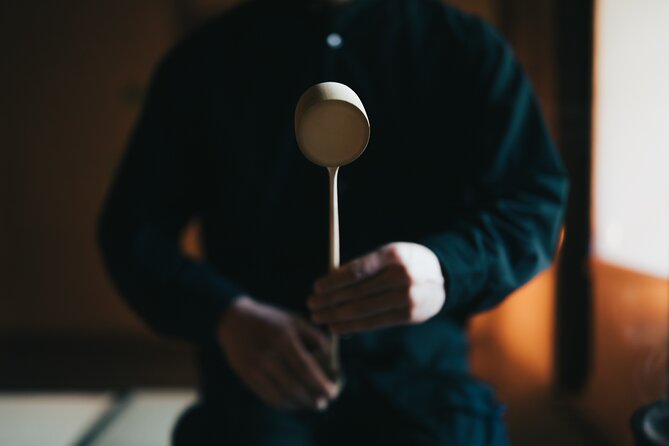
Then comes one of the most valuable moments: the host cleans and prepares the utensils before whisking the tea. It’s not just a hygiene step. Watching the careful preparation helps you understand that the ceremony is a chain of small actions, each with purpose.
You’ll see how the tools are handled, and you’ll get translation about what you’re looking at. That turns matcha-making from a mystery into a series of understandable gestures.
3) Whisking matcha and serving one bowl at a time
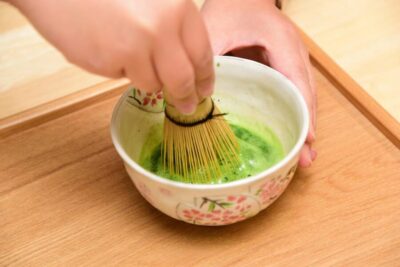
Next, the host whiskes the matcha. The tea is described as a rare organic green tea, and the key detail is pacing: it’s served one bowl at a time. That matters because it prevents the “drink-chug” tempo you might be used to.
Instead, the host invites you to notice:
- subtle flavors as they open up
- the warmth of the tea bowl in your hands
- the calming effect of candlelight and quiet
You also get chances to taste what’s freshly prepared. Some reviews also mention tasting options beyond matcha, like black tea, which can be a helpful choice if you’re not sure you’ll love the intensity of matcha straight away.




4) Closing moment with a handmade candle token
The experience ends with a small, handmade candle token. It’s a simple souvenir, but it reinforces the theme: the ceremony isn’t meant to vanish the moment you leave the room. The token acts like a cue to carry that calm into the rest of your day.
Candlelight, Quiet Space, and Mindfulness That Feels Practical
The best part of this tea ceremony is the atmosphere, and it’s not the gimmicky kind. The lighting is set by handmade candles, and the space is minimally decorated. That combination does two things at once: it lowers mental noise and raises sensory attention.
This is where the “mindful” theme becomes real. You’re not asked to meditate for 30 minutes. Instead, you’re guided to do small, concrete actions:
- look closely at the bowl and utensils
- move at a slower pace
- smell and sip deliberately
- treat the room and host with respect and quiet wonder
Reviews repeatedly highlight the reflective, quiet space—especially because Kyoto can feel loud and rushed. If you’re trying to balance your itinerary, this is one of the more effective ways to do it without adding a complicated class or a long detour.
Also, the ceremony is described as having less strict formality than what some people expect. That’s good for first-timers. You’re still shown respectful ways to participate, but you’re not meant to feel intimidated.
Matcha Prep You Can Actually See (Not Just Hear About)
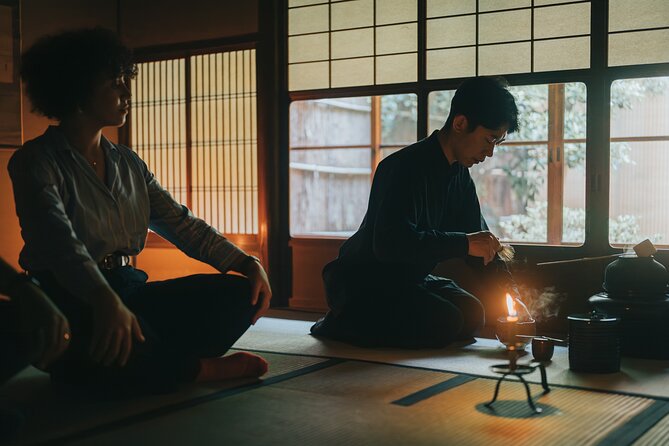
A lot of tea experiences say you’ll learn matcha preparation. The difference here is that the ceremony is built around watching. You’re close enough to observe the process, including utensil cleaning and the whisking step itself.
Why that matters:
- Matcha isn’t just powder. The texture and foam come from technique and timing.
- The way the host handles tools shapes your understanding of how the tea should be treated.
- Watching reduces anxiety for first-timers, because you’re no longer relying on guesswork.
The host translates, so you don’t just watch motions. You learn how to connect the steps to taste and feel. That’s a big deal if you want cultural learning with zero language friction.
And because you’re served one bowl at a time, you can take your first sip slowly enough to notice differences. Matcha can taste “strong” if you drink it like juice. In this format, it has room to unfold.
The English-Speaking Guide Setup That Removes Language Barriers
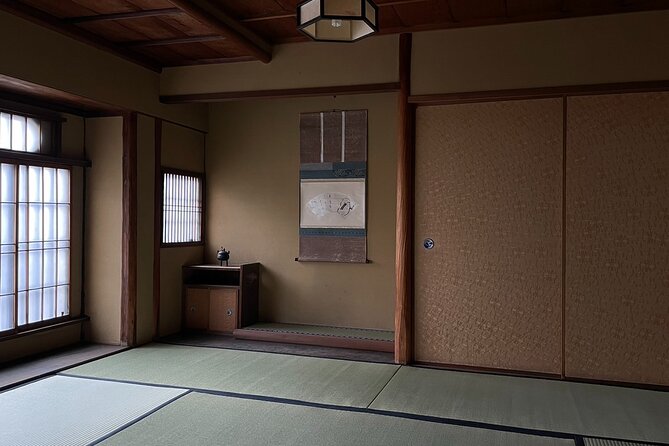
This experience is built around explanation with translation. An English-speaking guide accompanies the session, so you can ask questions and understand what the host is saying.
In review notes, hosts like Taku (listed as Taku Okamoto) are mentioned for excellent English and knowledge. Naoki and Ryoko also appear in participant comments. You shouldn’t assume you’ll get a specific person, but you can assume you’ll get a host who can guide in English clearly and patiently.
For practical travelers, translation does more than help with facts. It helps you:
- follow the purpose behind each step
- understand timing and etiquette
- feel comfortable participating without second-guessing
If your Japanese is basic or non-existent, this is exactly the kind of activity that keeps the cultural value high. You’re not stuck with a silent show; you’re part of a small learning moment.
Who This Is Best For (And Who Might Want to Skip It)
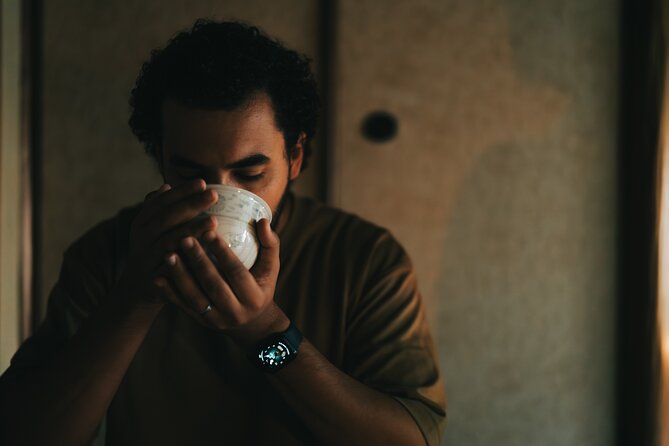
This works especially well if:
- You want a quiet cultural break in Kyoto, away from crowds
- You’re curious about matcha preparation beyond a standard café drink
- You appreciate sensory experiences and don’t mind a slow pace
- You’d like a guided activity that doesn’t require language skills
You might consider skipping or waiting if:
- You’re only interested in fast sightseeing and hate scheduled rituals
- You tend to arrive late and don’t want to worry about timing
- You’re not interested in tea beyond the taste (because the ceremony is as much about ritual as it is about drinking)
The session also suits couples, solo travelers, and small groups because the room stays calm with a max of 8 participants. If you’re traveling with friends, it can feel like a shared, grounded experience rather than a group tour.
Price and Value: What $45.98 Actually Buys You
$45.98 can sound steep if you compare it to grabbing matcha somewhere off the street. But this isn’t a menu purchase. You’re paying for several specific things you can’t replicate easily on your own:
- A guided, translated ceremony (English speaking help throughout)
- A small-group experience (max 8), which protects the atmosphere and your ability to see details
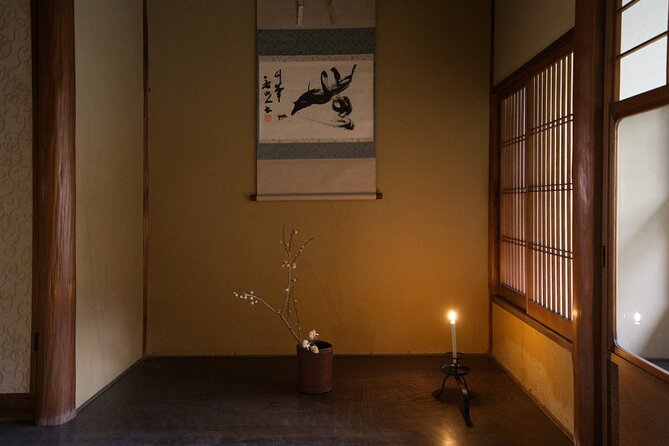
- Candlelit, minimal décor in a 100-year-old teahouse setting
- A structured, teachable process (utensil prep, whisking, one-bowl serving, mindful tasting)
- A final takeaway token (a small handmade candle)
In other words, you’re paying for time, instruction, and setting—not just tea. If you want to understand matcha and tea etiquette without guesswork, the cost starts to feel fair.
One more value point: at this price, you can treat it like a cultural “anchor” for your trip. One hour of calm can reset your entire day of Kyoto walking.
Timing Tips So You Don’t Lose Your Spot
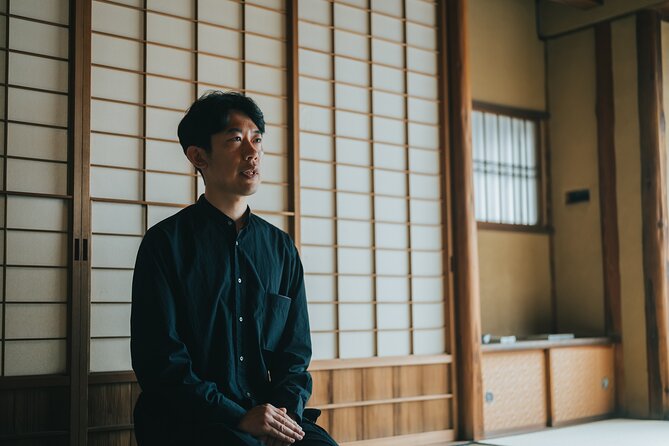
The biggest practical risk is simple: the ceremony has a start-time rule. You must be there on time, because you can’t join if you’re more than 10 minutes late.
So plan your day like this:
- give yourself buffer time to reach 237 Nakaogawachō
- factor in walking and station navigation
- aim to arrive a little early so you’re not rushing through the last street turns
The experience also uses a mobile ticket, so have that ready on your phone. And since it’s near public transportation, you should be able to build this into a flexible route through Kyoto.
Should You Book Oboro?
If you want a matcha experience that feels like Kyoto culture—not just a drink—this is one of the better bets. I’d book it if you care about atmosphere, small-group learning, and actually seeing the matcha process up close.
You should pass or think twice if you’re the type who hates schedules or arrives late. The ceremony is short, and the space is quiet. That’s part of the value. But it also means you need to show up on time.
Also, if you’re traveling with people who only half-care about tea, this can still work. The ritual quality, the candlelit calm, and the English guidance make it more than a beverage-focused stop.
For first-timers in Kyoto, this is a strong way to slow down and leave with a small piece of the mood—along with a better understanding of what matcha preparation actually involves.
FAQ
What is the duration of the Oboro tea ceremony?
It lasts about 50 minutes.
Where does the ceremony take place?
The meeting point is at 237 Nakaogawachō, Kamigyo Ward, Kyoto 602-0053, Japan, and the activity ends back at the meeting point.
How much does it cost?
The price is $45.98 per person.
Will I need to speak Japanese?
No. There is an English-speaking guide who translates during the ceremony.
What happens during the experience?
You’re welcomed into a softly lit room, start with tea and sweets, then watch the host clean utensils and prepare matcha, served one bowl at a time. The session ends with a small handmade candle token.
Is this a large group tour?
No. The experience has a maximum of 8 travelers.
What if I arrive late?
If you pass the 10-minute mark from the start time, you cannot participate.
What is included in the price?
Coffee and/or tea is included, and there is an English-speaking guide.
What should I do if the weather is bad?
The experience requires good weather. If it’s canceled due to poor weather, you’ll be offered a different date or a full refund.
Do I need to pay tips?
Tips and gratuities are not included.
More Tour Reviews in Kyoto
One More Bowl of Matcha

Just added: more Kyoto tours to browse








Kyoto Tea Ceremonies, compared.
 ★ 4.9Tea Ceremony in a Traditional Tea House in KiyomizuFrom $493,519 reviews
 ★ 4.9Tea Ceremony Ju-An at Jotokuji TempleFrom $293,207 reviews
 ★ 4.345-Minute Tea Ceremony Lesson ExperienceFrom $222,378 reviews
 ★ 4.9Table-Style Tea Ceremony at a Kyo-MachiyaFrom $451,211 reviews
 ★ 5.0Kimono Tea Ceremony at Kyoto Maikoya, NISHIKIFrom $65911 reviews
 ★ 5.0Arashiyama Bamboo Forest, Monkeys, Matcha & Temple TourFrom $53759 reviews
 ★ 4.9Tea Museum Tickets and Matcha Grinding ExperienceFrom $23739 reviews
 ★ 4.9Kimono Tea Ceremony at Orizuruya GionFrom $49618 reviews
Browse the lists this tour appears in