
Reviewed · KYOTO COOKING CLASSES
Making Fresh To-fu from soybeans in Kyoto
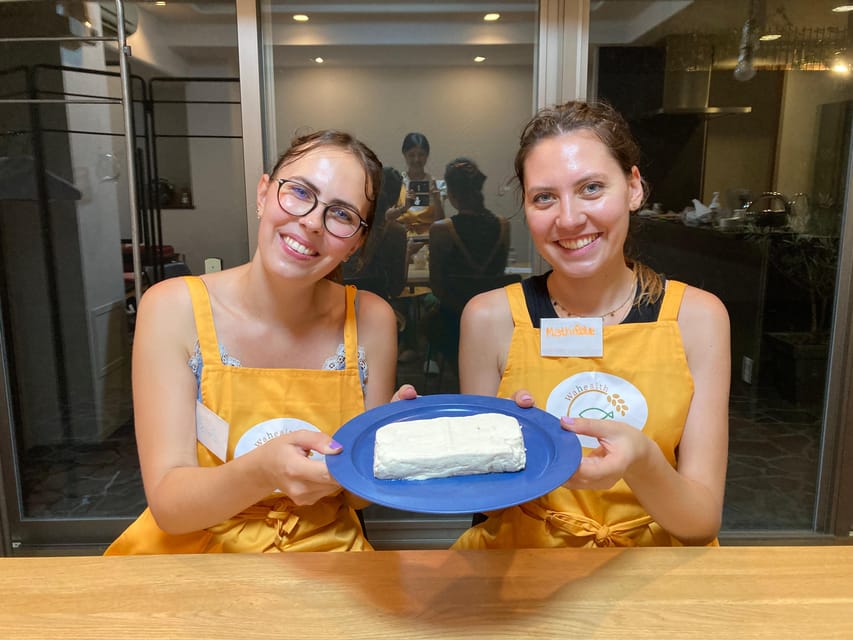
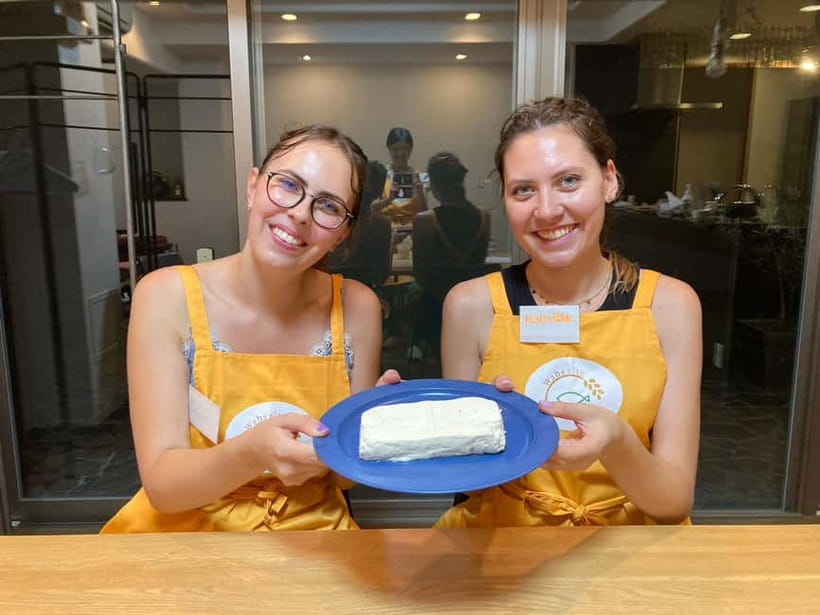
Tofu starts with humble soybeans. This Kyoto workshop is interesting because you go from soybeans to handmade tofu right in front of you, then eat it while it is still fresh. I also love that you get four different tofu dishes using what you make, so you see how Japanese tofu gets used in real life. One possible drawback: it’s short (90 minutes) and you’re not getting a full meal—think tasting-focused.
The class is easy to fit into a day of temples and streets since it’s within about a 10-minute walk of Shijo Station or Karasuma Station. You’ll also get instruction in English and Japanese, and the group is kept small (max 6), which matters a lot when you’re learning a hands-on food skill.
Finally, I like that the experience is built for different diets. They say it’s gluten-free/vegan/Halal-friendly/allergy-free OK, as long as you tell them your needs ahead of time.
In This Review
- Key things I’d prioritize
- Why Making Tofu in Kyoto Beats Buying It
- Finding the Right Mindset: Japanese Tofu Starts Simple
- Learning the Steps from Soybeans to Tofu
- Soymilk and Oboro-dofu Tastings: The Fun Part You Don’t Get Elsewhere
- Turning Curds into Fresh Tofu (And Why Freshness Matters)
- Four Tofu Dishes Using What You Make
- Price and Logistics: Is $56 Worth 90 Minutes?
- Small Group Teaching Makes the Difference
- Who This Kyoto Tofu Workshop Is For
- Practical Tips So You Get More Out of It
- Should You Book This Tour or Skip It?
- FAQ
- How long is the Kyoto tofu-making experience?
- How many people are in each class?
- Is this experience vegetarian, vegan, or Halal-friendly?
- What is included in the price?
- Are meals and drinks included?
- Where do I meet the instructor?
- Do I need to arrange my own transportation?
Key things I’d prioritize
- Hands-on tofu making from soybeans, not just watching
- Fresh tastings during the process, including soymilk and oboro-dofu
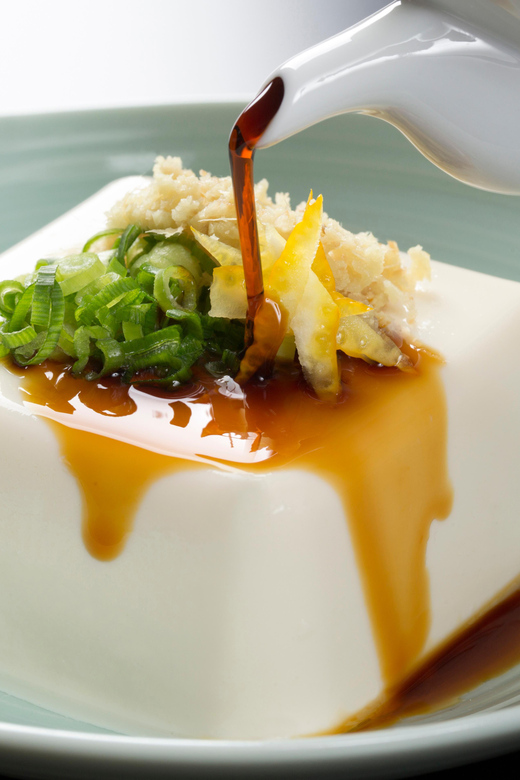
- Four tofu dishes that show how Japanese tofu actually gets eaten
- Small group size (up to 6), so questions don’t get lost
- Dietary flexibility if you share restrictions ahead of time
Why Making Tofu in Kyoto Beats Buying It
If you’ve only tried tofu from overseas, you’re in for a surprise. The tofu you buy in Japan often tastes and feels different—firmer, cleaner in flavor, and usually eaten more simply. Overseas tofu commonly shows up in stir-fries and stews. In Japan, you’ll see it chilled as-is (chilled tofu) or warmed in soups like miso.
That difference is exactly why this workshop works. You don’t just learn a recipe; you learn why Japanese tofu tastes the way it does. Once you make it by hand, you start noticing what machine-made tofu smooths over—texture, freshness, and that subtle soybean flavor that feels more direct.
Roll up your sleeves for another Kyoto cooking class

Finding the Right Mindset: Japanese Tofu Starts Simple
One of the smartest parts of this class is how it reframes what tofu is for. In Japan, the idea is often: start with good tofu, then treat it gently. You’ll taste your tofu first without seasoning, so you can compare it to what you’re used to. That first bite is the whole lesson.
I also like the way they connect food to the everyday Japanese table. The point isn’t just skill for skill’s sake. It’s about improving your Japanese cuisine instincts—how to cook and order tofu so it actually shines rather than getting hidden under heavy sauce.
Learning the Steps from Soybeans to Tofu
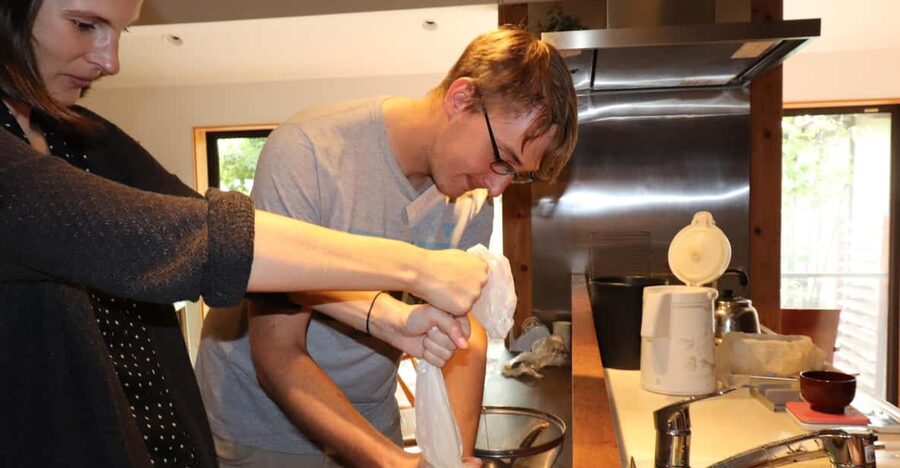
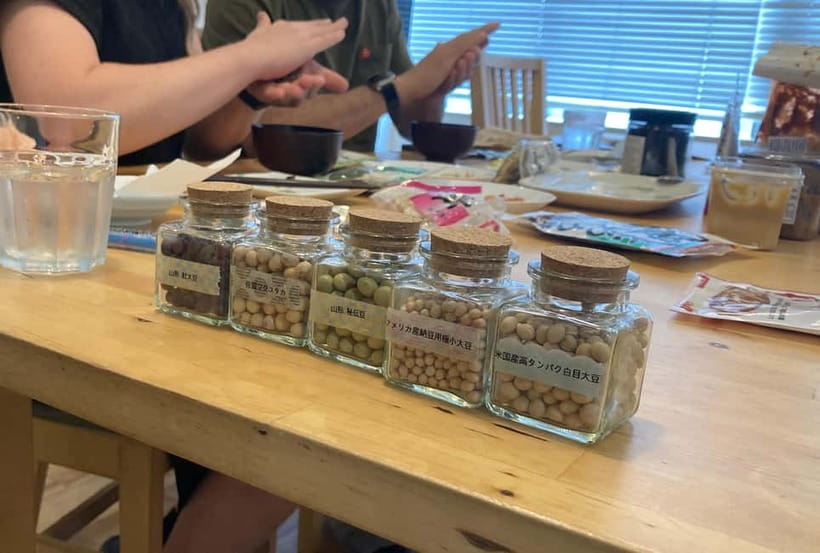
This is a real production lesson. You’ll cover the differences between soybeans and how tofu is made from them. Even if you’ve never cooked tofu before, you’ll leave with a clearer mental map of where tofu flavor comes from.
You can think of the experience as moving through stages that each affect the final bite:
- Soybean choice and prep influence flavor and body
- Heat and extraction affect how much soybean character makes it into the liquid
- Coagulation and pressing shape the texture you feel when you chew
The class is designed so you understand those cause-and-effect links, not just the end result. And because it’s hands-on, it’s hard to “zone out.” Your attention stays on what you’re doing and what you’re tasting.
Soymilk and Oboro-dofu Tastings: The Fun Part You Don’t Get Elsewhere
One of the standout perks here is that you don’t wait until the end to taste. You can enjoy soymilk & oboro-dofu made during the production process. That’s a big deal for two reasons.
First, it shows tofu as a spectrum, not a single product. Soymilk is creamy and straightforward; oboro-dofu is softer and often feels lighter and more delicate. Tasting both helps you understand how texture changes as the process advances.
Second, these mid-process tastings break up the work into something satisfying. You’re not just busy with hands and tools. You’re actively learning with your palate.
If you’re the type who likes to connect food to technique, these tastings are the moment you’ll remember. They also make the class feel more like food crafting than a cooking demo.
Turning Curds into Fresh Tofu (And Why Freshness Matters)
The class leads you through making tofu from soybeans, then tasting what you produce. The biggest takeaway is how different freshly made tofu can taste compared to what sits in packaging.
When tofu is made right there, you get:
- A cleaner, more direct soybean taste
- A texture that feels closer to the stage it was made at
- Better contrast between tofu and the way Japanese food treats it
You’ll also see how handmade tofu can be thicker and tastier than tofu made by machine, even when eaten simply. That matters if your goal is to cook Japanese-style meals at home. You need to know what “good tofu” tastes like on its own—then you’ll know how little seasoning you actually need.




Four Tofu Dishes Using What You Make
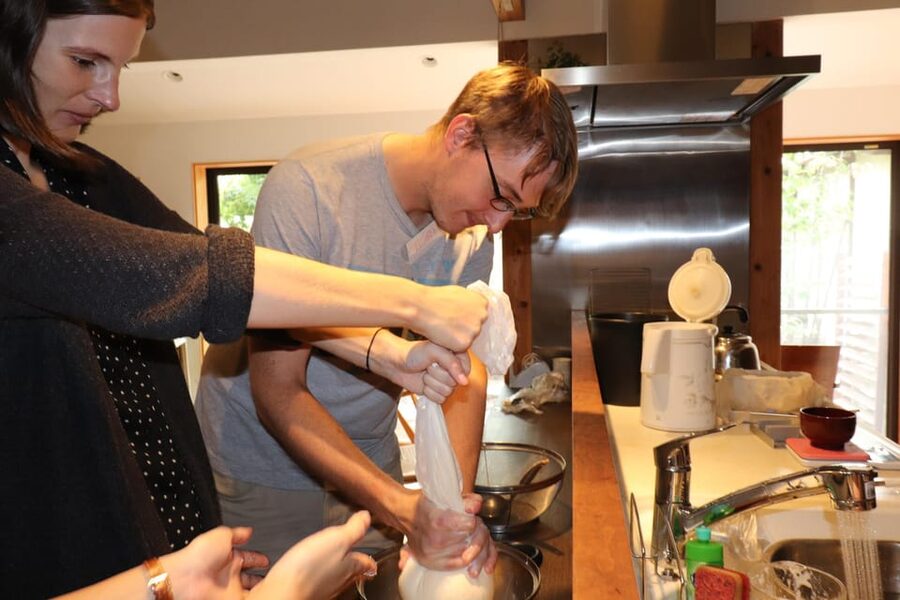
After the tofu is formed, the class doesn’t just hand you a plate and call it a day. You get four different tofu dishes made with the tofu you made. The amount is described as tasting-size, not full-course portions, but the variety is the point.
Here’s how I’d expect these dishes to help you, based on how the workshop is framed:
- One dish likely shows tofu eaten with minimal interference, so you can taste the base quality.
- Others probably demonstrate how Japanese cuisine treats tofu as an ingredient rather than a side afterthought.
- Together, they teach you how to pair tofu with flavors that complement instead of overpower.
The value here isn’t only the food. It’s the learning pattern. You’re able to compare how the same tofu behaves in different formats. When you’re back home, that makes it easier to choose recipes you’ll actually like—especially if you’ve been disappointed by tofu that tastes bland or rubbery.
Price and Logistics: Is $56 Worth 90 Minutes?
At $56 per person for 90 minutes, the price lands in the “worth it if you want technique” category. You’re paying for:
- Instruction in English/Japanese
- Small-group learning (max 6)
- Ingredient work plus tastings
- Four tofu dish tastings
- A guided understanding of soybeans, process, and Japanese eating habits
You’re not paying for a big restaurant meal. Meals and drinks (other than tofu tasting) aren’t included, so you should plan to eat elsewhere before or after. If you’re hungry, treat this as a food education stop that ends with enjoyable tastings—not your dinner plan.
The logistics are also straightforward. The meeting point is an apartment setting: take the elevator to the third floor, then press the doorbell for 302. And because it’s within easy walking distance of Shijo or Karasuma, you won’t lose half your day getting there. Still, do give yourself a little buffer—Kyoto side streets are easy to mix up when you’re focused on finding a small doorbell.
Small Group Teaching Makes the Difference
A workshop like this succeeds or fails based on whether you can ask questions. That’s why the small group size is a big deal. With a max of 6 participants, you’re more likely to get individual guidance when you’re learning the steps and handling the process.
From the class vibe people describe, it also sounds like the instructor experience is a major strength. In one account, the teacher was Marie, and the class took place in a tiny apartment, which made it feel more authentic rather than less. The process was described as hands-on and easy to follow, with plenty of friendly answers to questions.
Even if your Japanese is limited, having English instruction helps. And if you want to practice listening for food terms, the presence of Japanese can be useful too.
Who This Kyoto Tofu Workshop Is For
This is ideal if you fall into any of these buckets:
- You want to understand Japanese tofu beyond what you see on menus.
- You enjoy hands-on cooking and want a technique you can repeat.
- You’ve tried tofu elsewhere and want to compare why Japan tastes different.
- You like food education that ends with actual eating (not just a sample and a goodbye).
- You need diet-friendly options (gluten-free/vegan/Halal-friendly/allergy-free OK), as long as you share restrictions.
It might be less ideal if you want a long sit-down meal, or if you’re only looking for a quick foodie photo moment. This class is built around making and tasting—so come with curiosity and leave time for a snack or proper meal after.
Practical Tips So You Get More Out of It
A few things help you get the most value from a short, hands-on session like this:
- Go in ready to taste plain tofu first. That’s where the learning happens.
- Share dietary needs clearly up front so they can prepare ingredients accordingly.
- Wear comfortable clothes. Food workshops can get a bit active.
- Plan your next stop with time. You’ll leave with flavor memories, but you’ll also still be in Kyoto mode.
Also, if you care about finding the right tofu texture and not just the flavor, pay attention to mouthfeel during each tasting stage. That’s the quiet lesson most people miss.
Should You Book This Tour or Skip It?
I’d book it if your goal is a genuine food skill plus Japanese context in a short window. The combination of making tofu from soybeans, tasting soymilk and oboro-dofu during production, and finishing with four tofu dishes is a strong learning-to-enjoyment ratio for $56. It’s not a filler activity; it’s focused, practical, and built for small-group attention.
Skip it if you mainly want a full dinner experience, or if you’re sensitive to the idea that this takes place in a compact apartment setting (easily authentic, but not a big open venue). And if you don’t like hands-on learning at all, you may find it more work than pleasure.
If you want a Kyoto experience that teaches you something you can actually use at home—about Japanese tofu taste, texture, and eating style—this is a smart choice.
FAQ
How long is the Kyoto tofu-making experience?
It lasts 90 minutes.
How many people are in each class?
The group is small, limited to 6 participants.
Is this experience vegetarian, vegan, or Halal-friendly?
The activity is listed as gluten-free/vegan/Halal-friendly/allergy-free OK, and they ask you to let them know about dietary restrictions so ingredients can be prepared accordingly.
What is included in the price?
You get an introduction to tofu and the process, tastings of freshly made tofu (including soymilk and oboro-dofu made during production), and four different tofu dishes made with the tofu you create.
Are meals and drinks included?
No. Meals and drinks are not included other than the tofu tastings.
Where do I meet the instructor?
Meet at the location where you take the elevator to the third floor and press the doorbell for 302.
Do I need to arrange my own transportation?
Yes. Transportation to and from the activity location is not included. The workshop is within about a 10-minute walk from Shijo Station or Karasuma Station.
More Tour Reviews in Kyoto
More Kyoto Cooking Classes

Just added: more Kyoto tours to browse








Kyoto Cooking Classes, compared.
 ★ 5.0Ramen Cooking Class at Ramen Factory in KyotoFrom $1311,937 reviews
 ★ 5.0Sushi Making in Kyoto! Same-day bookings welcome!From $53713 reviews
 ★ 4.9Ramen Cooking Class at a Ramen Factory with SouvenirFrom $127532 reviews
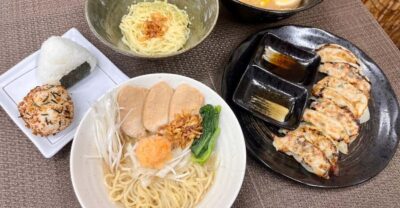 ★ 5.0Ramen, Gyoza, and Onigiri Cooking ClassFrom $90445 reviews
 ★ 5.0The Original Small-Group Sushi Making Class in KyotoFrom $69436 reviews
 ★ 5.0Japanese Washoku Bento Small Group Cooking ClassFrom $58380 reviews
 ★ 5.0Kyoto Ramen and Gyoza Cooking Class with Professional ChefsFrom $86282 reviews
 ★ 4.9Afternoon Japanese Izakaya Cooking ClassFrom $67241 reviews
Browse the lists this tour appears in