
Reviewed · GION & GEISHA DISTRICT TOURS
Kyoto: Try Nishijin Weaving in the Oldest Geisha District
Wearable Kyoto heritage starts with yarn. This tour pairs Kitano Tenmangū Shrine with a hands-on Nishijin weaving workshop inside the city’s oldest Hanamachi area, Kamishichiken. I really like that you get both the cultural setting and the craft itself in one smooth 3-hour loop.
Two things I especially love: the chance to work with traditional techniques in a real workshop, and the guided walk through a preserved street with latticework townhouses. One possible drawback: it’s a hands-on class, so if you want only sightseeing photos and no making-time, this may feel a bit practical versus leisurely.
You’ll start at the shrine gates, pay your respects, learn how the district formed, then shift gears into weaving instruction. After that, you slow-walk Kamishichiken with an expert guide so the lanes and buildings make sense instead of just looking pretty.
In This Review
- Key highlights at a glance
- Kitano Tenmangū Shrine: a calm beginning at the first torii
- Nishijin weaving class: Tsuzure-ori basics you can actually use
- Choosing your piece: one-of-a-kind, not factory-simple
- Kamishichiken walk: a 400-meter street where details matter
- How Kitano Tenmangū connects to Kamishichiken’s identity
- Guides and teaching style: warmth, humor, and real explanations
- Price and value: is $131 worth a 3-hour culture-and-craft bundle?
- Who this tour fits best (and who might want something else)
- Should you book this Nishijin weaving tour in Kamishichiken?
- FAQ
- Where does the tour start?
- How long is the experience?
- What’s included in the price?
- What languages are offered?
- Is there free cancellation?
- Is dango tasting part of the tour?
Key highlights at a glance
- A start at the first torii at Kitano Tenmangū, with a guided visit to major shrine features
- Tsuzure-ori weaving basics in a hands-on class tied to Nishijin craft traditions
- A real workshop setting, where you create a one-of-a-kind piece you choose from offered options
- A guided stroll through Kamishichiken, including spots connected to geiko and maiko
- Seasonal shrine scenery plus quiet walking time, away from the densest crowd pockets
Kitano Tenmangū Shrine: a calm beginning at the first torii
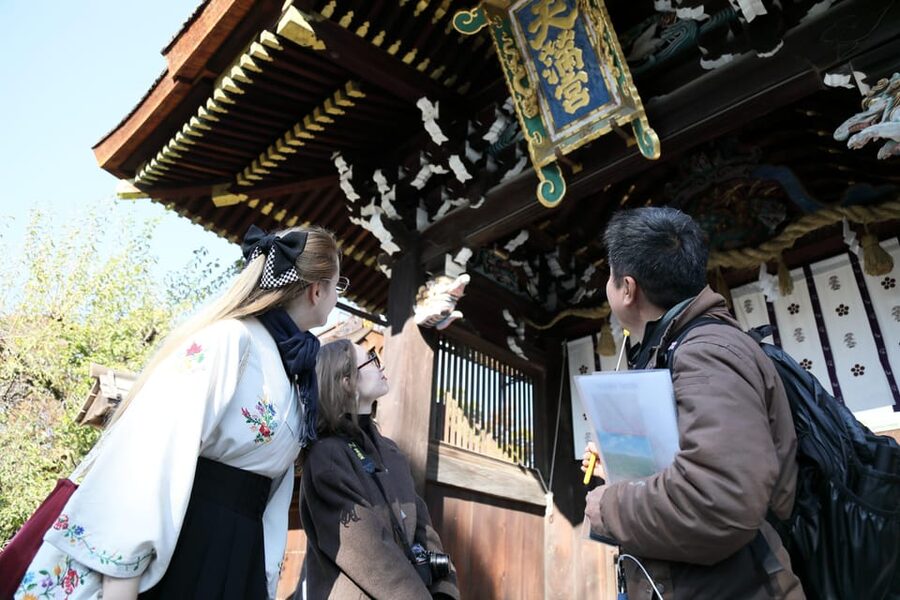
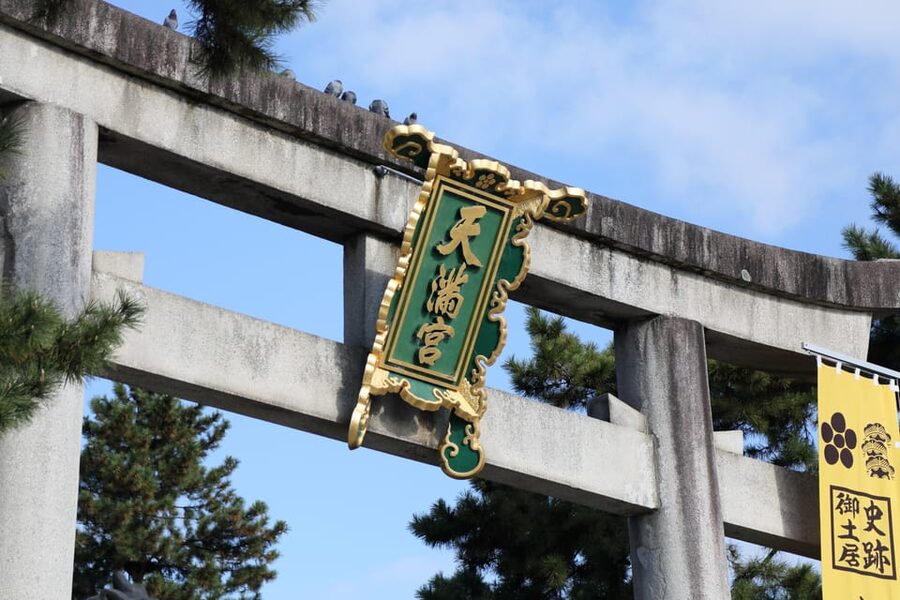
The experience begins where it should—right at Kitano Tenmangū, in front of the first grand torii gate. That matters because the shrine isn’t just a backdrop. It plays a role in shaping the spirit and identity of the Kamishichiken area you’ll walk through afterward.
Your guide brings you into the shrine grounds for a guided visit that focuses on important cultural assets, including the main worship hall listed as a national treasure. You’ll also get a sense of how the place changes through the seasons, so even if you’ve seen Kyoto shrines before, this one lands with a slightly different mood because your next stop is the geisha district it helped influence.
A practical note: shrine mornings or cold afternoons can feel sharper than you expect. In one shared experience, rain and chilly weather added charm to the scenery, but it still made warmth and layers worth packing.
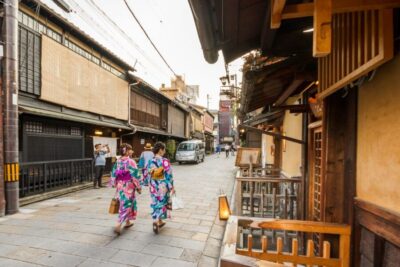
More evenings along the lantern-lit lanes of Gion



Nishijin weaving class: Tsuzure-ori basics you can actually use
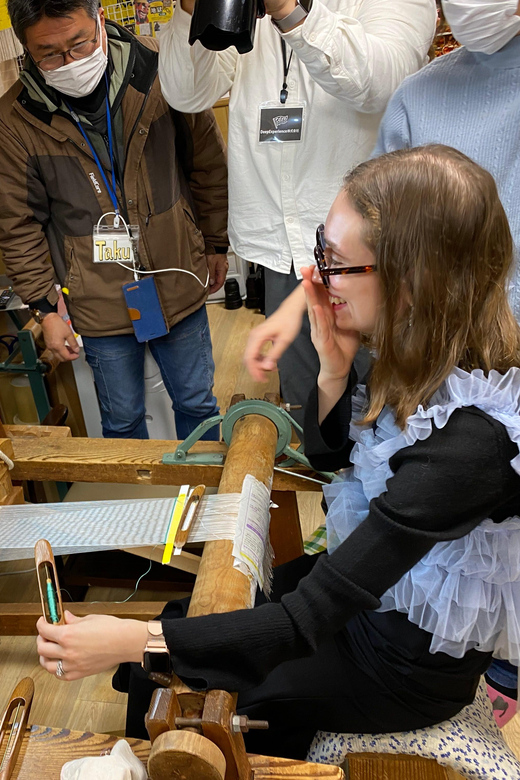
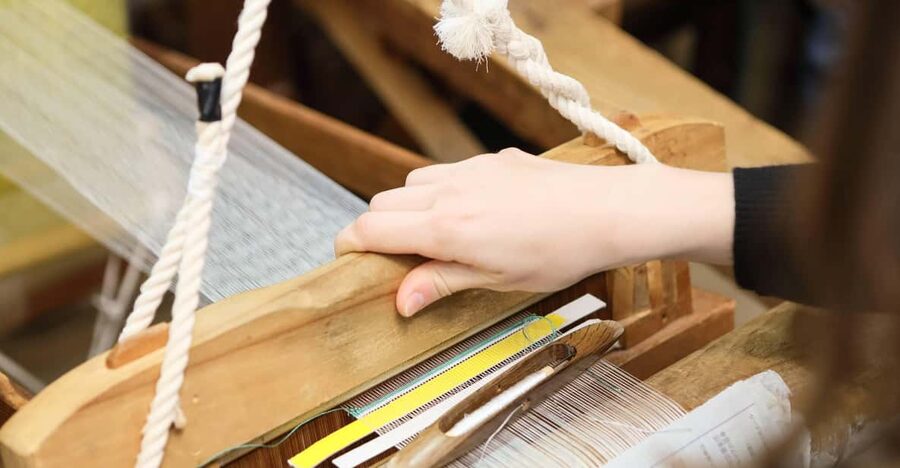
Then the tour shifts from temple to thread. You’ll get to learn the foundations of Tsuzure-ori weaving, described as a patterned technique with a very long timeline—often noted as the world’s oldest patterned textile and also the oldest Nishijin textile technique. Even if you don’t know the terms, you’ll understand the craft faster once your hands are doing the work.
The class runs about 1.5 hours, which is a good length. Long enough to learn the idea, short enough that you’re not stuck for hours feeling like you’re waiting for your turn. You’ll choose an item from the available selection, then make your own work using traditional techniques under the direction of a craftsman.
From past participants’ comments, the teaching style can really make or break this part. I love that this experience is led by people who take patience seriously. You might work with a master weaver such as Hirano sensei, who’s described as warm, funny in a gentle way, and deeply knowledgeable. Even if you move slowly at first, that kind of guidance helps you leave with something you feel proud of, not just something you finished.
If you’re the type who keeps sketchbooks, takes notes in museums, or loves to buy usable crafts, this class fits perfectly. You’re not only watching tradition—you’re reproducing a small piece of it, with all the hand-level mistakes that make it human.
Choosing your piece: one-of-a-kind, not factory-simple
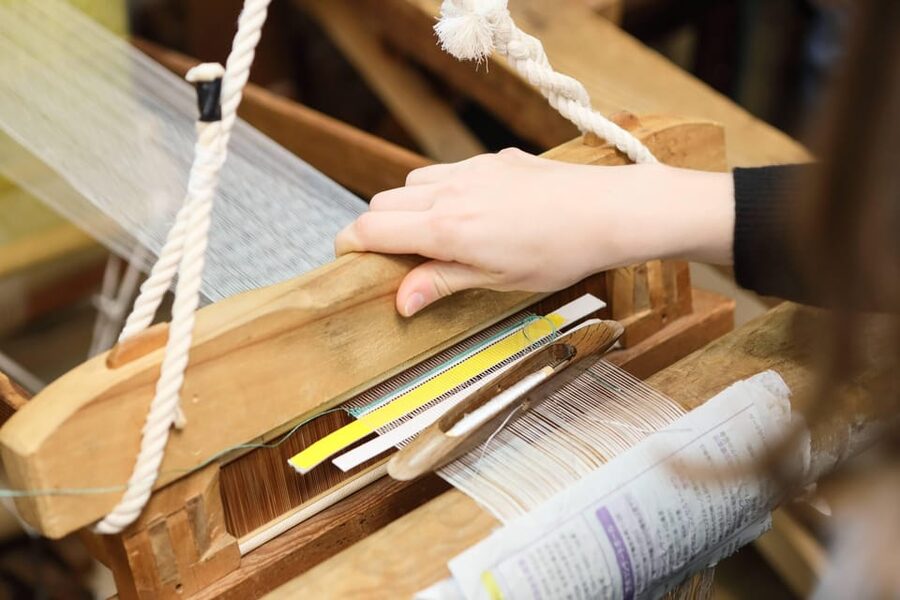
You won’t just press go on a pre-made souvenir. The process is guided, but the result is meant to be one-of-a-kind. You’ll create a piece based on the selection they provide, using the traditional methods taught in the workshop.
That’s a real value point for me. In Kyoto, it’s easy to end up with objects that feel like they could have been made anywhere. Here, the object is tied to a specific craft lineage—Nishijin and the Tsuzure-ori technique—and that connection is what turns a purchase into a memory.
Also, because the tour is time-boxed into a 3-hour experience, you get a structured way to create without dragging your day into “I guess we’ll be done when we’re done” territory. It’s a balanced pace: learn, make, then walk the district.
Kamishichiken walk: a 400-meter street where details matter
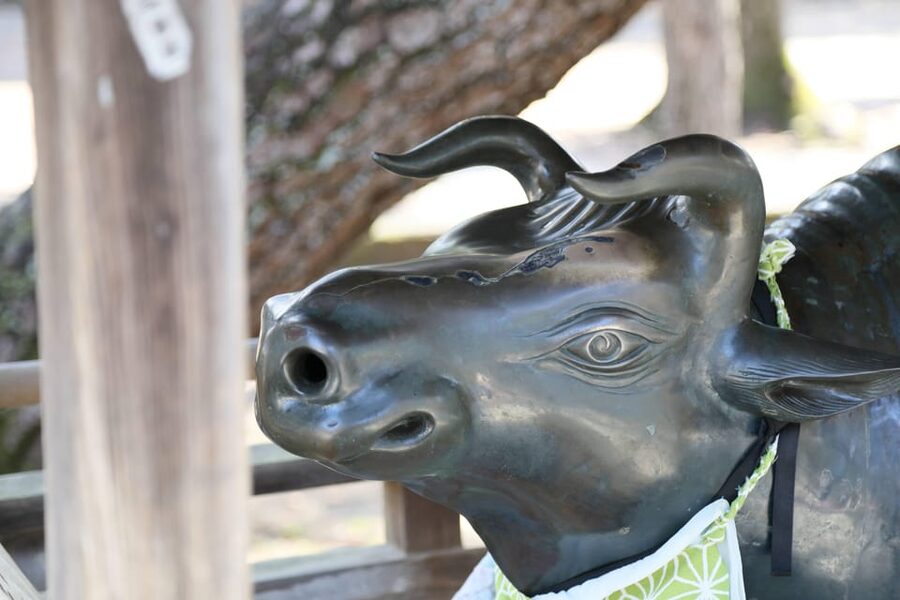
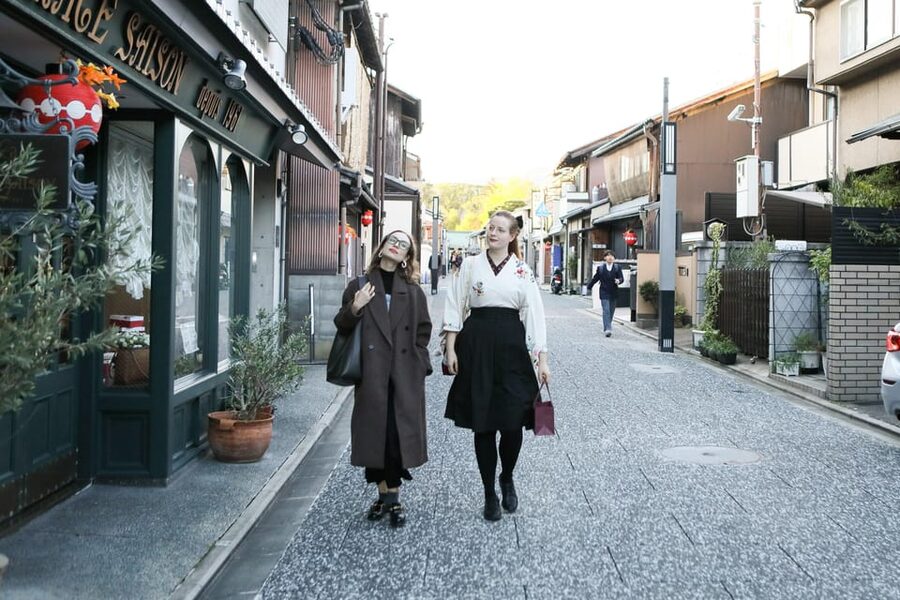
After weaving, you switch from studio rhythm back to Kyoto street rhythm. The Kamishichiken stroll is described as a 400-meter stretch lined with townhouses featuring traditional latticework. That’s the kind of distance that sounds small until you’re standing there noticing how the buildings pull your eyes along.
This is where your guide becomes more than a translator. They point out features you’d likely miss on your own—places linked to local geiko and maiko life, and corners where the townscape still feels preserved rather than rebuilt for a theme park effect.
One of the most helpful parts of the walking time is that you’re not left with just a map and a hope. You follow your guide to specific spots tied to the district’s culture, so the district feels like a living system instead of a photo backdrop.
And yes, weather affects this part too. A rainy day can mean slippery sidewalks and colder hands, but it can also make the shrine and old streets feel quieter and more atmospheric. If you’re willing to dress for it, you’ll likely enjoy the mood.
How Kitano Tenmangū connects to Kamishichiken’s identity
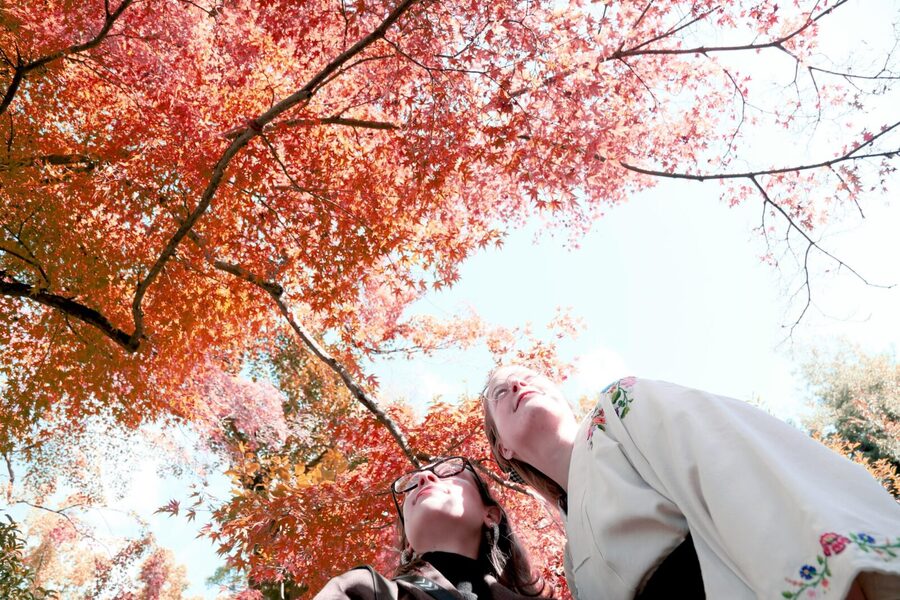
This isn’t just a “see shrine, then see geisha district” route. The connection between the shrine and the oldest Hanamachi district is part of what makes the tour worth your time.
You’ll learn the role of Kitano Tenmangu Shrine in the creation of Kamishichiken. In practice, this means your guide helps you connect cause and place. You start by understanding what the shrine represents, then you walk streets that keep the district’s character alive. The result is a more complete picture: not only where things are, but why the area became what it is.
It also helps you move beyond stereotypes. If your mental picture of geiko and maiko is only costumes and nightlife, this kind of guided context makes the culture feel more grounded. You’re seeing the spatial logic—where people gather, where activity concentrates, and how the district’s architecture supports the tradition.




Guides and teaching style: warmth, humor, and real explanations
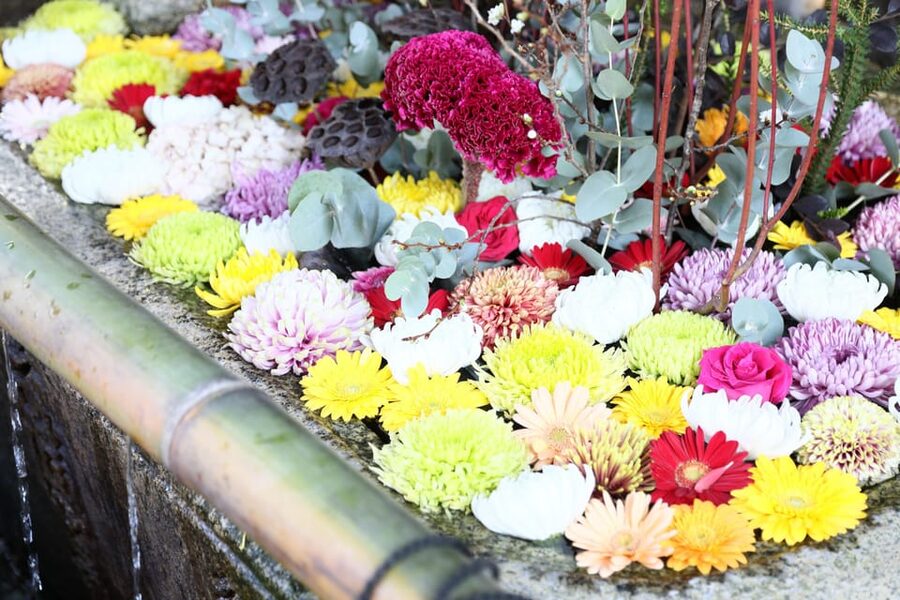
This tour lives or dies on the human side: the guide who explains, and the craftsman who teaches. Based on reported experiences, the instruction tends to be friendly and supportive, with a natural, warm presence.
Some guides you might encounter include Kanako San and Yayoi-san. In one account, Kanako San stood out for a natural, warm way of interacting, and for making the whole experience feel comfortable rather than formal. Another participant highlighted Yayoi-san as very informative, which matters because weaving can feel like a mystery if nobody names what you’re doing and why.
On the crafting side, some experiences mention a master weaver like Hirano sensei, described as humorous and patient. If you’ve ever tried a manual craft and felt embarrassed by mistakes, this kind of teaching style is a big deal. It turns the workshop into a skill-building moment, not a performance.
And if you’re with an interpreter such as Juraj, you can also expect clear cultural framing alongside the step-by-step craft guidance. That pairing is what turns “I made something” into “I understand what I made and where it comes from.”
Price and value: is $131 worth a 3-hour culture-and-craft bundle?
At $131 per person, the biggest value question is simple: are you paying for a real craft experience, or just for a guided walk plus a quick demo?
Here, the structure suggests you’re paying for three distinct ingredients:
- a guided Kitano Tenmangū visit focused on major features and cultural assets
- a hands-on Nishijin weaving class using traditional techniques
- a guided Kamishichiken walk tied to geiko and maiko connections
You also get expert explanations while you’re working, not just a pass-through. That’s what usually justifies workshop pricing. A weaving class isn’t only entertainment—it’s time from a craft specialist, plus materials and the setup to guide you through.
Is it the cheapest way to spend a half-morning? No. But if you like Kyoto for depth—food, textiles, architecture, and the stories that bind them—you’ll likely feel this is a fair trade. You’re leaving with a tangible piece, plus a clearer understanding of how Kamishichiken developed and how the craft connects to that world.
Who this tour fits best (and who might want something else)
This is a great match if you’re the type who:
- loves handicrafts and wants to try making something instead of only shopping
- enjoys historical neighborhoods when there’s a guide explaining what to look for
- wants a break from long temple lines, with a calmer pace and focused stops
- would rather spend 3 hours doing one meaningful thing than rushing through five highlights
It might be less satisfying if you mainly want:
- long free time for photos, shopping, and wandering on your own
- a purely scenic route with minimal structure
- a tour where the craft part is optional or you only want to watch
Also consider the season and weather. The shrine and streets are outdoors, and cold or rain can add comfort challenges. But in return, the atmosphere can be nicer than you’d expect if you’re dressed right.
Should you book this Nishijin weaving tour in Kamishichiken?
If you care about authentic Kyoto beyond the postcard loop, I think this is a strong pick. You’re not only learning about Kamishichiken, you’re also making a Nishijin-style textile with a structured, guided class. That combination is what makes the time feel worth it.
Book it if you want a hands-on craft tied to Kyoto’s oldest geisha district, plus context that helps you read the streets as history rather than scenery. Skip it if you prefer pure wandering with no workshop, or if the idea of weaving feels like a chore instead of a treat.
If you do book, come with a mindset of learning. You’ll get better results, and you’ll enjoy the whole experience more—especially the part where your hands make something real and you can actually take it home.
FAQ
Where does the tour start?
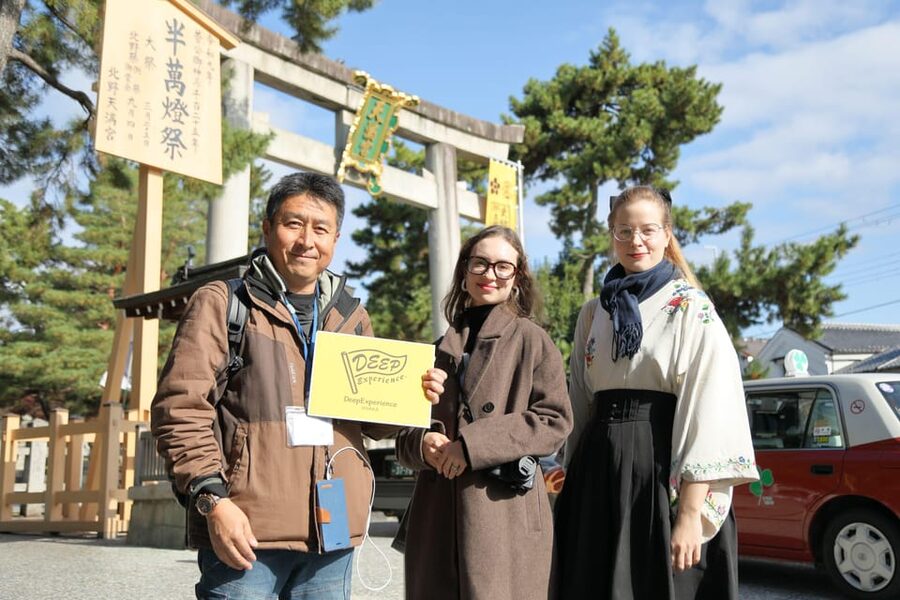
The tour starts at Kitano Tenmangū Shrine, in front of the first grand torii gate. Your guide will be holding a yellow sign with the DeepExperience logo.
How long is the experience?
The tour duration is 3 hours.
What’s included in the price?
It includes an expert guide, a visit to Kitano Tenmangū Shrine, and the Nishijin weaving experience.
What languages are offered?
The live tour guide is available in English and Japanese.
Is there free cancellation?
Yes. You can cancel up to 24 hours in advance for a full refund.
Is dango tasting part of the tour?
Dango tasting is mentioned as an optional extra, but it depends on store availability.
More Tour Reviews in Kyoto
Still in Gion? Keep Going



Just added: more Kyoto tours to browse








Gion & Geisha District Tours, compared.
 ★ 4.7Kyoto Geisha Walking Tour: Gion District & Hidden GemsFrom $253,273 reviews
 ★ 4.9Gion Magical Night Walking Tour with Geisha TriviaFrom $242,393 reviews
 ★ 4.7Gion Geisha District Walking Tour – Stories of GeishaFrom $202,187 reviews
 ★ 4.9Best of Kyoto: Gion, Geisha, Pagodas & CobblestonesFrom $242,058 reviews
 ★ 4.5Night Walk in Gion: Kyoto’s Geisha DistrictFrom $212,003 reviews
 ★ 5.0Kyoto Night Foodie Tour in Gion (9+ dishes + 6 Sake tastings)From $1631,762 reviews
 ★ 5.0Kyoto Gion Geisha District Walking Tour – The Stories of GeishaFrom $251,441 reviews
 ★ 5.0Kyoto Gion: 2-Hour Geisha Culture & History Walking TourFrom $231,186 reviews
Browse the lists this tour appears in