
Reviewed · WALKING TOURS
Kyoto Run & Walk Tour with Locals
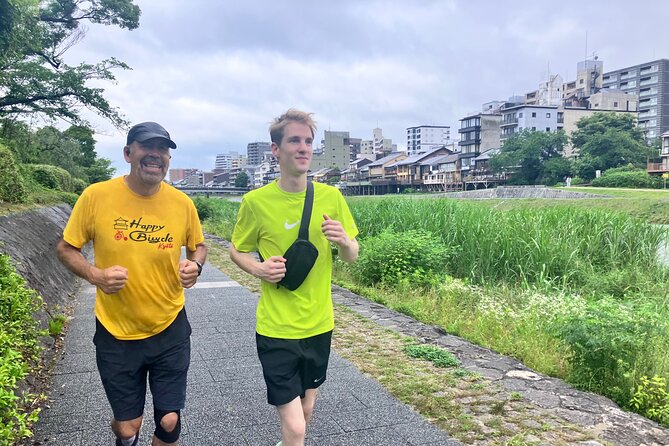
Run Kyoto before it wakes up. This is an early-morning Kyoto run & walk tour with locals that trades tour buses for quiet streets, temple calm, and riverside air, guided in English by local Soyo. You cover famous landmarks too, but the real value is how the morning helps you see everyday Kyoto rather than just what crowds force into your camera roll.
I especially like the relaxed pace (about 7–9 minutes per kilometer) that works for first-time runners, plus the small group limit of 4 travelers, which makes it easier to ask questions and actually talk. And because Soyo has lived in Kyoto for over 30 years, explanations feel local instead of scripted.
One thing to consider: this is not a casual stroll. You’ll be running and walking at an easy jog pace, and the tour does not include running shoes or gear, so come ready to move.
In This Review
- Key highlights you’ll feel immediately
- Early morning in Kyoto: why your feet beat your bus
- Meet Soyo: the local-guide advantage in a tiny group
- Pace and fitness: what 7–9 min/km means for real people
- Route walkthrough: from Higashi Hongan-ji to Hanamikoji Street
- What’s included, what isn’t, and what to bring
- Rain plan: light rain becomes walking
- Price and value: $19.51 for a guided Kyoto morning workout
- Who should book this tour (and who might not)
- Should you book the Kyoto Run & Walk with Locals?
- FAQ
- How long is the Kyoto Run & Walk tour?
- What’s the running pace like?
- Is this tour good for first-time runners?
- What happens if it rains?
- Where do I meet and where do I end?
- What’s included in the price?
- What should I bring since running shoes and lockers aren’t provided?
Key highlights you’ll feel immediately
- Early start to dodge crowds while the city is still calm
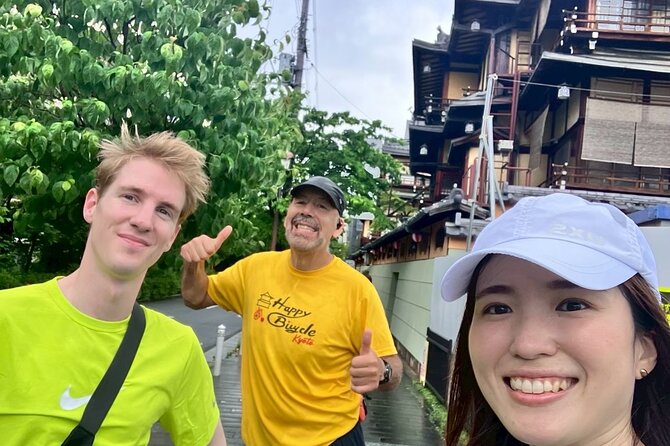
- English guidance from Soyo, a long-time Kyoto local
- Slow-jog friendly pace for beginners and mixed fitness levels
- World Heritage stops plus quieter routes through local neighborhoods
- Bottled water included and frequent short explanation breaks
Early morning in Kyoto: why your feet beat your bus
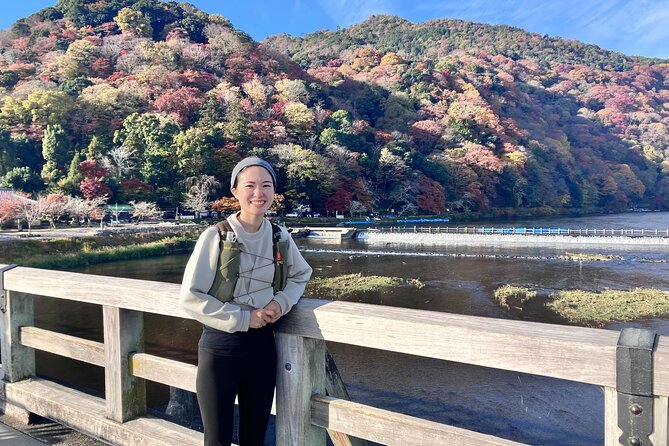
Kyoto is at its best when it’s still half-asleep. This tour runs early so you get that rare combo: big sights without the crush, plus breathing room to notice smaller details you’d miss later. You’re not just moving for exercise. The timing changes how the city feels.
The pace is intentionally gentle. You’re doing a jog at around 7–8 minutes per kilometer (sometimes described as 8–9 minutes per kilometer), and the group keeps it relaxed. That matters because Kyoto walking can be deceptive. After a day of temple steps, a “slow” day can still feel like a lot. Here, the jogging pace is set so you can keep going without feeling punished.
Also, you’ll get periodic stops for explanations, so you’re not in a nonstop treadmill of sightseeing. Those breaks help you connect what you’re seeing with why it matters, instead of just ticking boxes.
Other Kyoto tours and experiences to compare
Meet Soyo: the local-guide advantage in a tiny group
This is an English-language tour led by Soyo, a local who has lived in Kyoto for over 30 years. That longevity comes through in the way the walk connects: you’re not only seeing major monuments, but also slipping past residential streets and quieter corners locals use as daily routes.
The group size is small, with a maximum of 4 travelers. In practice, that means fewer awkward gaps where you’re trying to keep up alone. It also means you can ask real questions, like how neighborhoods fit together or what you should pay attention to when you’re back on your own later.
If you want Kyoto that feels lived-in, this format helps. A large group can rush you from one postcard to the next. A small group makes it easier to slow down and actually look.
Pace and fitness: what 7–9 min/km means for real people
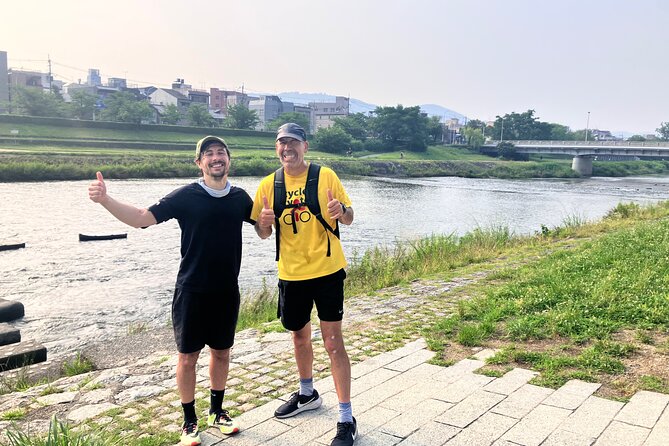
The tour is built for mixed levels, including first-time runners. But you should still be honest with yourself about one point: you’re doing running, not just walking. The pace is slow, so it should feel more like an easy jog or a brisk trot with control, not a sprint.
The tour also asks for a moderate physical fitness level. If you’re used to regular walking and you can manage a steady jog in short stretches, you’ll likely be fine. If you’re returning from a long break or dealing with injury, you may want to evaluate carefully before choosing a running-focused experience.
When you plan the rest of your day, remember that you’ll likely have a wake-up workout. It’s the kind of morning that can make the rest of Kyoto feel easier because your body is already warmed up and you’ve seen the city in a different light.
Route walkthrough: from Higashi Hongan-ji to Hanamikoji Street
Here’s what the morning looks like in sequence, and what each stop adds to the experience.
Stop 1: Higashi Hongan-ji Temple
You start with a major temple landmark, which gives the tour a strong cultural anchor right away. It’s also a smart way to begin early: you get the monument’s atmosphere before the day ramps up. Expect explanations during stops so you can understand what you’re looking at, not just pass by it.
A practical note: temples often mean open space, lots of walking paths, and steady ground. That’s helpful at the beginning because it’s easier to settle into the jog rhythm before you move toward more varied streets.
Stop 2: Takasegawa
This is where the scenery starts to shift toward water and calmer lanes. Takasegawa feels like a change of pace in your brain: fewer big-sight crowds, more “I’m actually in Kyoto” noticing. It’s a good segment for keeping your jog smooth because the area encourages a steady rhythm.
You’ll also get a clearer sense of how Kyoto’s geography shapes everyday movement—water channels and rivers matter here, not just for scenery.
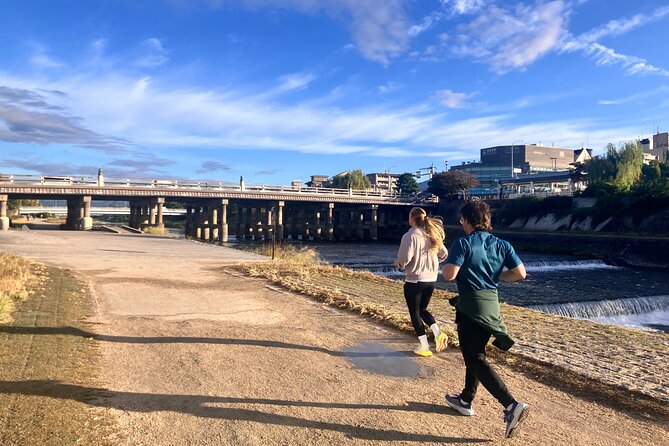
Stop 3: Kamogawa River
Kamogawa is the big breathing moment. After temple walls and streets, you get a wider-feeling riverside vibe, which can make your legs feel better too. This part is especially nice if you like your sightseeing with less “tour route pressure” and more open space.
This isn’t framed as a workout-only detour. The idea is to pair motion with observation, so you’re still learning while you’re moving.
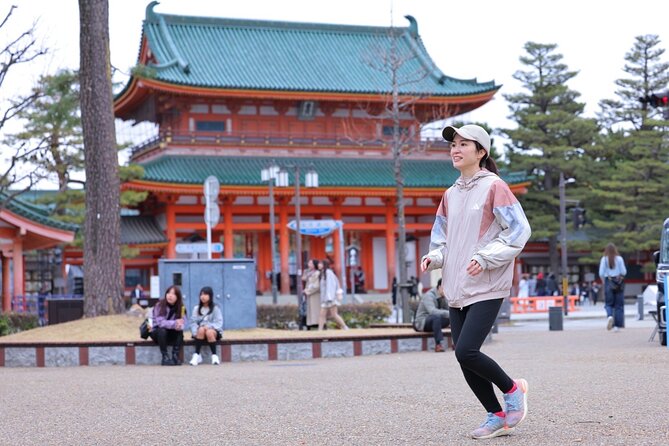
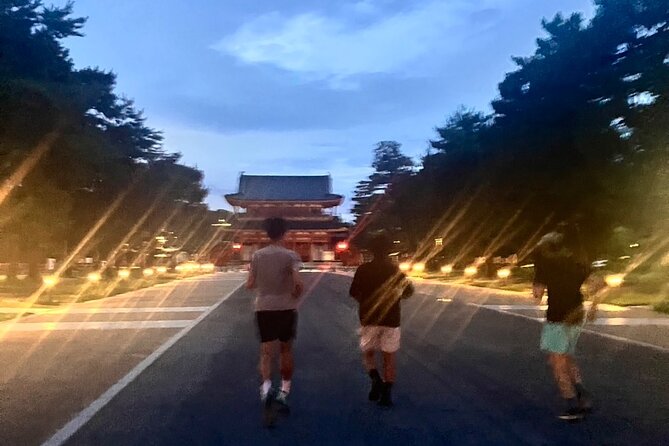
Stop 4: Heian Shrine
Heian Shrine brings you into a classic Kyoto landmark zone. It’s another major stop that keeps the tour from feeling like only a neighborhood stroll. The guide’s explanations help you connect the shrine setting to what you’re seeing around it, so it doesn’t feel like you’re standing in front of something impressive without context.
Because you’re already warmed up from the earlier segments, you’ll likely find this stop easier than it would be at the end of a long day.
Stop 5: Yasaka Shrine
Yasaka Shrine adds a second big shrine experience, which is great if you want variety without needing to plan separate trips. This is also a moment where the tour blends the famous with the local feel: you’re going to places that visitors recognize, but you’re seeing them as part of a morning walk with stops and pacing.
If you’re sensitive to crowds, the early timing helps you arrive before the worst rush.
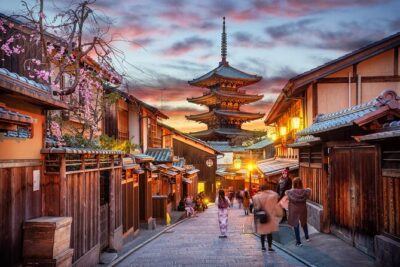
Stop 6: Hanamikoji Street
The morning wraps with Hanamikoji Street, which gives you a sense of Kyoto’s historic street atmosphere right as you’re finishing. By this point, you’ve already covered temples and rivers, so the street feels like the cultural punctuation mark.
You end back where you started at Starbucks Coffee – Kyoto Tower Sando, which is convenient because it keeps the day simple after the run.
What’s included, what isn’t, and what to bring
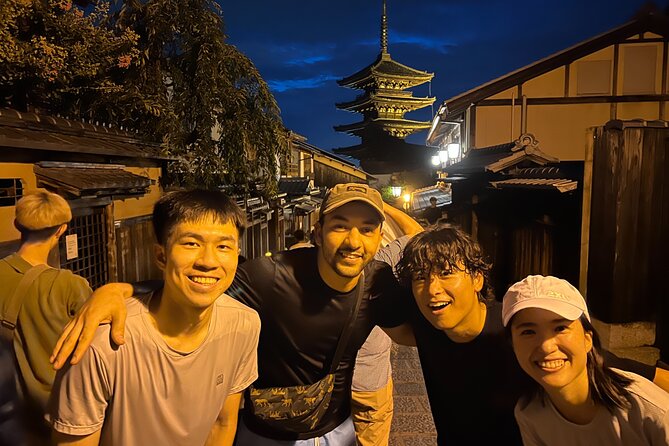
This tour includes bottled water, which is a small thing that matters on a morning run. Everything else is on you.
Not included:
- Locker
- running wear and shoes
So plan to wear shoes you can actually run in, even if you’re doing a slow jog. If you show up in worn-out sandals or stiff shoes not meant for moving, the tour will feel harder than it needs to be.
If you’re thinking about rain: the tour is held in the event of light rain, but it becomes a walking tour. You’ll still want your own rain gear, since the tour does not provide it.
Rain plan: light rain becomes walking
Kyoto mornings can surprise you. If it’s light rain, the activity continues as a walking tour. If weather gets bad enough (heavy rain, wind, snow, heat wave, typhoon, and similar issues), the decision is made by 12:00 p.m. the day before, and you’ll be notified if the tour is cancelled.
That weather approach is practical. You’re not stuck in a vague maybe. You either go with a modified format (walk instead of run) or you get a cancellation decision in time to adjust your plans.
Price and value: $19.51 for a guided Kyoto morning workout
At $19.51 per person, this is priced like a budget-friendly local experience, not a full-on private guide extravaganza. The biggest reason it feels like value is that you’re paying for a guide plus structure plus timing.
Consider what you get for that cost:
- A local English guide (Soyo, living in Kyoto for 30+ years)
- Early-morning timing that helps you avoid the worst crowd flow
- A full route with major stops plus quieter segments
- Bottled water included
- A very small group (max 4), which increases the “you’re not lost” factor
The main tradeoff is that you’re not getting extras like lockers or rental gear. You’ll need to bring your own running setup. If you already have decent running shoes and light rain protection, the cost-to-benefit ratio looks even better.
Who should book this tour (and who might not)
This is a good fit if you:
- Want a Kyoto running tour that’s friendly for beginners
- Like the idea of seeing temples and shrines without arriving after the crowd crush
- Enjoy learning from an English-speaking local guide who knows Kyoto long-term
- Prefer small groups over big-bus energy
It may not be ideal if you:
- Want a purely walking experience. This is designed around running at an easy jog pace.
- Are not comfortable with moderate physical activity.
- Don’t have your own running shoes or rain gear and don’t want to improvise.
Should you book the Kyoto Run & Walk with Locals?
Yes, if your goal is Kyoto with movement and context. The early start, the small group size, and Soyo’s local perspective are a strong combo, especially if you’re tired of only seeing famous spots after they’ve been packed all morning.
Book it if you can handle an easy jog and you’re willing to bring your own shoes. Skip it if you want a laid-back walking-only sightseeing day, or if moderate fitness is a stretch right now.
In short: it’s a smart way to get exercise and see Kyoto in a quieter, more everyday way, without paying big-tour private-guide money.
FAQ
How long is the Kyoto Run & Walk tour?
It’s listed as about 2 hours, and the course can run about 2.5 hours because there are stops for explanations.
What’s the running pace like?
The tour is a relaxed pace, described as roughly 7–8 minutes per kilometer and also as 8–9 minutes per kilometer.
Is this tour good for first-time runners?
Yes. The pace is slow and the tour welcomes all running levels, including first-time runners.
What happens if it rains?
In case of light rain, the tour still runs but becomes a walking tour. You should bring your own rain gear.
Where do I meet and where do I end?
You meet at Starbucks Coffee – Kyoto Tower Sando and the tour ends back at the same meeting point.
What’s included in the price?
Bottled water is included.
What should I bring since running shoes and lockers aren’t provided?
Bring your own running wear and shoes. A locker is not included, and the tour also advises bringing rain gear if it’s light rain.
More Walking Tours in Kyoto
More Tours in Kyoto
More Tour Reviews in Kyoto
Just added: more Kyoto tours to browse



Walking Tours, compared.
 ★ 4.7Kyoto Geisha Walking Tour: Gion District & Hidden GemsFrom $253,273 reviews
 ★ 4.9Gion Magical Night Walking Tour with Geisha TriviaFrom $242,393 reviews
 ★ 4.7Gion Geisha District Walking Tour – Stories of GeishaFrom $202,187 reviews
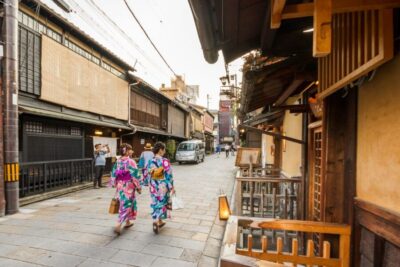 ★ 4.5Night Walk in Gion: Kyoto’s Geisha DistrictFrom $212,003 reviews
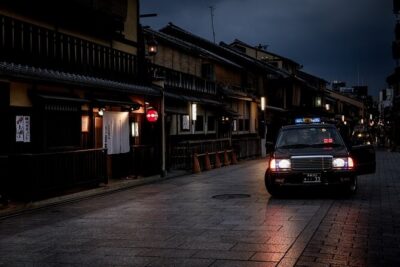 ★ 5.0Kyoto Gion Geisha District Walking Tour – The Stories of GeishaFrom $251,441 reviews
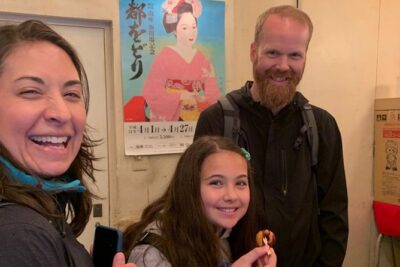 ★ 5.0Nishiki Market Brunch Walking Tour (7 Tastings + Brunch)From $681,355 reviews
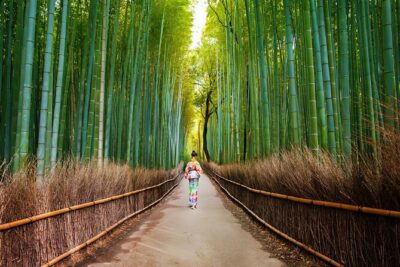 ★ 5.0Kyoto Arashiyama Walking Tour: Bamboo, Monkeys, Gardens & SecretsFrom $651,216 reviews
 ★ 5.0Kyoto Gion: 2-Hour Geisha Culture & History Walking TourFrom $231,186 reviews
Browse the lists this tour appears in