
Reviewed · FUSHIMI INARI SHRINE TOURS
Kyoto Night Walking Guided Tour at Fushimi Inari Shrine
Night views at Fushimi Inari hit differently. I like the peaceful nighttime atmosphere and how the guide explains Shinto vs Buddhism clearly, not just point-and-shoot sightseeing. The main drawback: you’ll likely do a decent amount of walking up steps during the hour.
This is a short, focused Kyoto night walking tour designed to help you see the area when the crowds thin out. With a small max group of 10 and a mobile ticket, it’s also easy to plan—just show up ready to walk and ask questions.
In This Review
- Key highlights you’ll care about
- Why this 7:00 pm Kyoto night walk makes sense
- Getting there at Inari Station: simple start, simple finish
- Fushimi Inari-taisha at night: what the guide helps you notice
- The Shinto vs Buddhism part (and why it’s worth the price)
- Walking comfort: the steps are real, so plan like a pro
- Tour pacing and group size: why max 10 is a big deal
- Mobile ticket + 1-hour duration: a value-friendly setup
- What you’ll leave with: a clearer picture of what you saw
- Who should book this Kyoto night tour (and who should skip it)
- Should you book this Kyoto Night Walking Guided Tour at Fushimi Inari?
- FAQ
- How long is the Kyoto Night Walking Guided Tour at Fushimi Inari Shrine?
- What time does the tour start?
- Where do I meet the guide?
- Is the admission ticket included?
- Is the tour in English, and how many people are in a group?
- Can I cancel for a full refund?
- Is insurance included in the price?
Key highlights you’ll care about
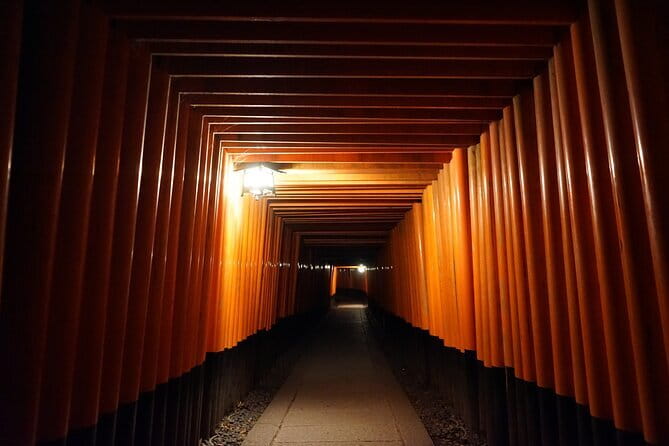
- Go at 7:00 pm to enjoy a calmer visit to Fushimi Inari
- English-speaking guide who connects Japanese culture with what you’re seeing
- Shinto and Buddhism explained in plain language, including how they differ
- Small group (max 10) keeps the pace comfortable for asking questions
- Free admission ticket for the shrine helps the value math
Why this 7:00 pm Kyoto night walk makes sense
Fushimi Inari is the kind of place people build their Kyoto plans around. So going at night isn’t just a nice option—it can be the difference between feeling rushed and actually taking in what’s around you. The tour is set for 7:00 pm, when you can often experience the area with a calmer mood than daytime peak hours.
I also like that the experience is built around meaning, not just motion. The guide is there to explain the cultural background of what you’re seeing at Fushimi Inari-taisha Shrine, including the differences between Shintoism and Buddhism. That matters because most first-time visitors see plenty of signs and scenery but don’t always know what they’re looking at—or why different traditions show up in the same general spiritual landscape.
One more practical upside: the tour is only about 1 hour. That’s long enough to get oriented and hear a solid explanation, but short enough that you’re not stuck making a whole evening route out of one stop.
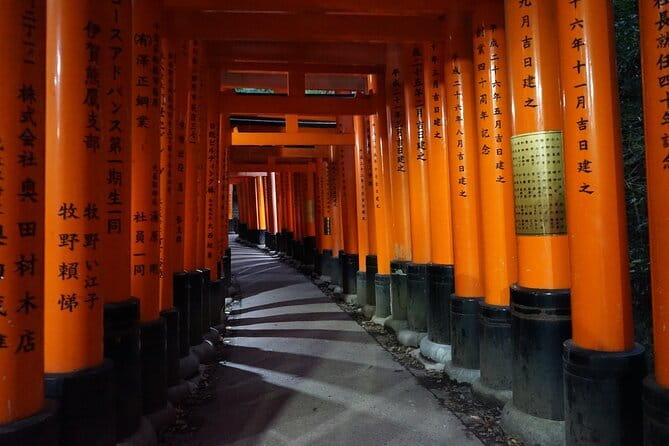
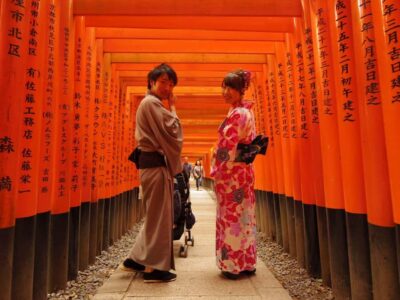
More walks up through the vermilion torii of Fushimi Inari



Getting there at Inari Station: simple start, simple finish
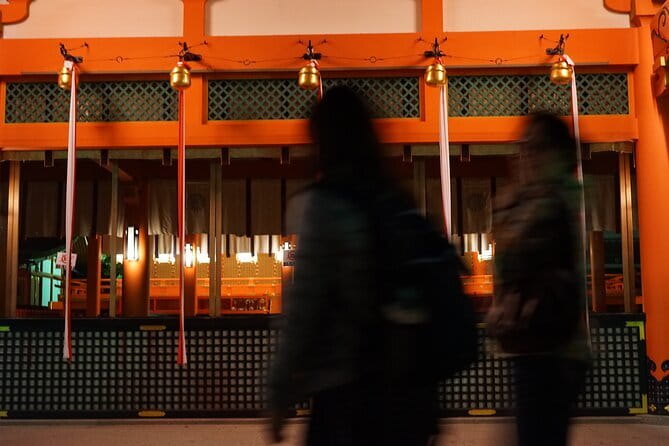
Meeting is at Inari Station, near the entrance area at Fushimi Ward (Fukakusa Inarionmaecho). The tour notes that you’ll be near public transportation, which is huge in Kyoto where moving between neighborhoods can eat time.
The walk ends back at the meeting point. That sounds small, but it helps you plan the rest of your night. You don’t have to worry about sorting out a complicated route after the tour—just step out and keep going in whichever direction looks good.
Also, one of the most useful practical details from review feedback is that the JR stop is right across the street from the entrance. If you’re using JR to connect around Kyoto, that kind of “close enough to be easy” setup reduces the usual pre-dinner stress.
Fushimi Inari-taisha at night: what the guide helps you notice
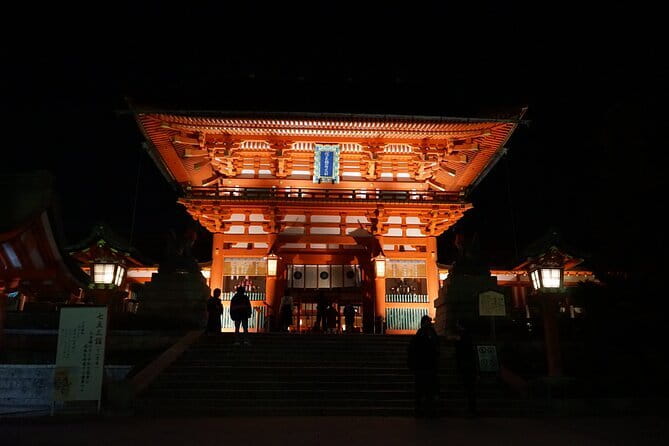
The tour’s core time is spent at Fushimi Inari-taisha Shrine. Since this is the star location, the main value is having someone translate the place for you as you move through it. You’re not just staring at a postcard scene; you’re hearing explanations about what the shrine is and how the tradition behind it works.
Night changes your perception. I find that at night you slow down automatically. The lighting, the cooler air, and the quieter feel make it easier to focus on details you’d miss earlier. The reviews also highlight that the views at night are beautiful, which lines up with this idea that the evening gives you a different kind of experience.
The Shinto vs Buddhism part (and why it’s worth the price)
A standout feature is that your guide specifically covers differences between Shintoism and Buddhism. This is the kind of topic that can feel confusing if you only rely on apps or random signage. Having it guided while you’re physically at the shrine makes the concepts easier to hold onto.
Even if you’re not trying to become a religion scholar, this kind of framing helps you avoid the common problem: watching ceremonies or symbols without understanding why they exist or what they’re pointing to. The tour’s goal is practical—help you connect Japanese culture to the place you’re standing in.
If you want to ask questions, this tour is set up for it. One of the guide-style points that comes up in feedback is that Junko (mentioned by name in reviews) answers questions patiently and thoughtfully. That’s a great sign if you enjoy learning on the spot rather than passively following along.
Walking comfort: the steps are real, so plan like a pro

This is a night walk, and it’s at a shrine area where stairs are part of the experience. Reviews specifically warn to be ready for a decent amount of walking up steps. That doesn’t mean it’s extreme, but it does mean comfortable shoes matter more than usual.
Here’s how you can handle it smartly:
- Wear supportive footwear with good grip.
- Bring a light layer. Even in Kyoto, nighttime can feel cooler than you expect.
- Go at your own pace. The tour is short, but it’s still a walk, not a ride.
If you’re the kind of person who gets annoyed by stair-heavy stops, this is the only serious consideration. Otherwise, the tour notes that most travelers can participate, and the group size is small enough that you’re less likely to feel bounced around by a large crowd.
More temples and shrines to slow down in across Kyoto





Tour pacing and group size: why max 10 is a big deal
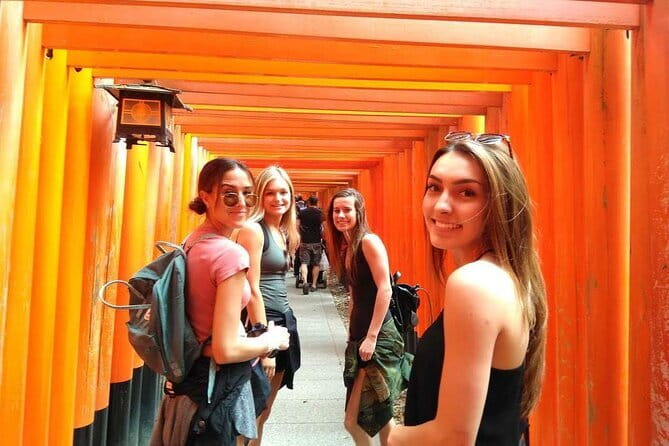
The group limit is 10 travelers. That’s not just a number—it affects the whole feel. In a small group, the guide can slow down when people have questions, and you’re less likely to get separated in a way that makes it hard to hear the explanation.
The tour also runs for about 1 hour, with time concentrated on the shrine area and the cultural talk. Short tours can sometimes feel rushed, but here the structure seems designed to keep you moving while still giving you time to learn what you’re seeing. That’s the main reason people like experiences like this: you get context without spending your whole evening in transit.
If you’re traveling with friends, this setup can also work well. You’ll still share the experience together, but you’re not stuck in a rigid, long, one-size-fits-all group program.
Mobile ticket + 1-hour duration: a value-friendly setup

The ticket is mobile, which helps you avoid paper scrambling and makes check-in smoother. It also fits the reality of travel: you’ve got enough logistics already, especially at night.
Price is $39.19 per person for the guided service. On its face, it might look like a lot for what’s “only” an hour. But the value comes from three things:
- You’re paying for an English-speaking guide who explains cultural differences on the spot.
- The shrine admission ticket is free as part of the activity.
- The tour is timed for nighttime, so you’re buying convenience and a quieter atmosphere, not just walking through the same place you’d visit on your own.
It’s also worth knowing the booking trend. This one is typically booked about 60 days in advance. If you’re traveling during a busy season or you want the exact 7:00 pm slot, don’t wait until the last minute.
What you’ll leave with: a clearer picture of what you saw
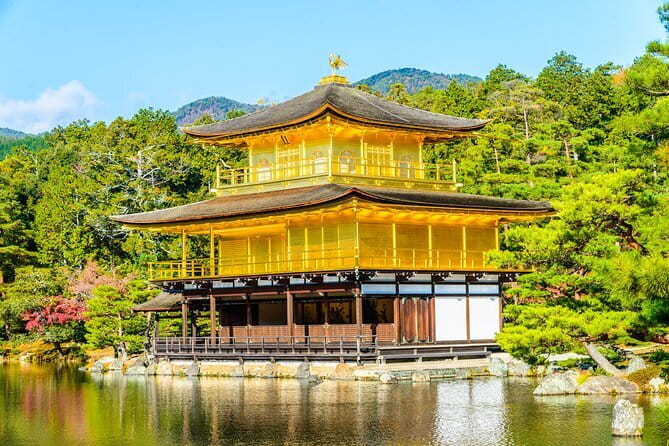
By the end of the tour, you should have something more useful than photos. You’ll have a better sense of what Fushimi Inari-taisha Shrine means within Japanese spiritual life, and you’ll understand the guide’s explanation of how Shintoism and Buddhism differ.
That’s the practical payoff. Kyoto has plenty of famous sights, but the magic is in understanding them well enough that your next visit feels sharper. When you can connect the cultural ideas to the specific place, you stop thinking of it as just a popular stop and start seeing it as a living part of the city’s identity.
Who should book this Kyoto night tour (and who should skip it)
This tour is a strong fit if you:
- Want Fushimi Inari at night with less pressure from daytime crowds
- Like history and culture explanations that happen while you’re walking
- Prefer English guidance over trying to piece everything together yourself
- Want a short activity that doesn’t steal your whole evening
I’d consider skipping or being cautious if you:
- Struggle with stairs and uphill walking
- Are looking for a long, multi-stop tour with lots of different locations (this is intentionally focused on Fushimi Inari)
If you’re on a tight schedule, this is the kind of booking that can make your Kyoto itinerary feel more intentional without adding complexity.
Should you book this Kyoto Night Walking Guided Tour at Fushimi Inari?
My take: yes, if you want a guided, English-language explanation in the calmest part of the day. The combination of a 1-hour format, a small group of up to 10, and cultural context on Shintoism vs Buddhism makes it feel like more than just a stroll.
Book it sooner rather than later since it’s commonly reserved about 60 days in advance, and plan around comfortable shoes because the steps are part of the deal. If you’re ready for that one physical reality, you’ll likely come away with a clearer understanding of what makes Fushimi Inari special after dark—and not just a folder full of night photos.
FAQ
How long is the Kyoto Night Walking Guided Tour at Fushimi Inari Shrine?
The tour lasts about 1 hour.
What time does the tour start?
The start time is 7:00 pm.
Where do I meet the guide?
You meet at Inari Station (Fukakusa Inarionmaecho, Fushimi Ward, Kyoto).
Is the admission ticket included?
Yes. The admission ticket for Fushimi Inari-taisha Shrine is free as part of the activity.
Is the tour in English, and how many people are in a group?
The tour is described as having an English-speaking guide. The maximum group size is 10 travelers.
Can I cancel for a full refund?
Yes. You can cancel up to 24 hours in advance for a full refund.
Is insurance included in the price?
No. Insurance is not included.
More of Kyoto After Dark






More Kyoto Temples and Shrines
Fushimi Inari, a Few More Ways

Just added: more Kyoto tours to browse






Fushimi Inari Shrine Tours, compared.
 ★ 4.8Fushimi Inari, Kinkakuji, Bamboo Grove 1 Day Bus TourFrom $1224,316 reviews
 ★ 5.0Fushimi Inari Hidden Hiking Tour (Private Option Available)From $631,750 reviews
 ★ 4.7Kyoto/Osaka: Nara, Fushimi Inari Taisha, Arashiyama Bus TourFrom $521,275 reviews
 ★ 4.4Osaka/Kyoto: Arashiyama, Nara & Fushimi Inari Shrine w/LunchFrom $61754 reviews
 ★ 4.7Nijo Castle, Kiyomizu & Fushimi Inari Guided TourFrom $54700 reviews
 ★ 5.0Nijo, Kinkaku-ji, Arashiyama, Kiyomizu & Fushimi InariFrom $51699 reviews
 ★ 5.0Kyoto Fushimi-Inari Night Walking TourFrom $43320 reviews
 ★ 4.93-Hour Fushimi Inari Shrine Hidden Hiking TourFrom $72270 reviews
Browse the lists this tour appears in