
Reviewed · KYOTO TEA CEREMONIES
Kyoto: Matcha & Traditional Japanese Music Immersive Experience
A concert you can touch makes Kyoto special. In a calm indoor setting, you hear koto and violin trade melodies that range from traditional songs to anime and game favorites, plus original arrangements. My favorite part is the way the music feels personal: after the performance, you get time with the artists, and you can even try the koto yourself.
Two things I particularly like are the chance to play the instrument (not just watch) and the serene Japanese tea-room vibe of the venue. The one drawback to keep in mind is the price: at $850 per person for about 1 to 1.5 hours, it’s a splurge you’ll want to justify with how much you value interactive music and meeting the performers.
In This Review
- Key highlights to know before you go
- What this Kyoto experience is really about
- Suzaku Garden inside Tea House Labo: the setting matters
- The koto and violin performance: from tradition to anime and games
- Your hands-on koto moment (guided, not awkward)
- Exploring tea rooms and traditional spaces
- Meeting the artists after the concert
- Matcha snacks: the included little comfort
- Price and time: is $850 per person worth it?
- Mobile ticket and practical logistics in Kyoto
- Who should book this, and who might pass
- Should you book this Kyoto koto and matcha experience?
- FAQ
- FAQ
- How long does the experience last?
- Where does the concert take place?
- What kind of music will I hear?
- Can I actually play the koto?
- Are matcha snacks included?
- Are meals included?
- How do I get my ticket?
- Is the venue easy to reach using public transportation?
- What is the cancellation policy?
Key highlights to know before you go
- Koto + Western violin blend: You’ll hear a true cross-over sound, not just one style at a time.
- Music range: Expect traditional melodies plus anime and game music.
- Hands-on koto time: Guided by the musicians, you can play the instrument.
- Tea-room atmosphere: Explore Japanese-style spaces inside the venue before or after.
- Meet the artists afterward: You’ll get insight into their dedication and the meaning of the music.
- Matcha snack included: Green tea snacks are part of the experience.
What this Kyoto experience is really about
This isn’t a big sightseeing show where you sit quietly and forget it later. It’s a focused indoor performance built around Japanese traditional sound—then it brings in modern melodies you already know, like anime and game themes. That mix helps the instruments feel friendly, even if you’re new to koto music.
What makes it special is the blend of listening and participation. You don’t just hear the koto—you get a guided moment to play it, which changes how you experience the music right away.
Yes, it’s short—about 1 hour to 1 hour 20 minutes. But it’s the kind of time that feels “high intent,” where each segment (music, koto try-out, tea-room exploring, artist chat) has a clear purpose.
Sit for another bowl of matcha in a Kyoto tea house


Suzaku Garden inside Tea House Labo: the setting matters
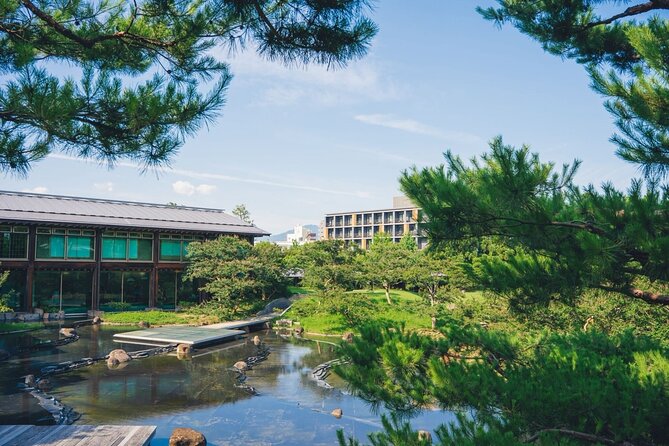
The performance takes place at Tea House Labo in Kyoto, in a space called Suzaku Garden. Before or around the music, you can explore Japanese-style areas, including tea rooms and traditional Japanese spaces inside the venue.
That matters more than you might think. When the room is calm and designed for quiet appreciation, the koto’s delicate tones land better, and the whole experience feels less rushed.
The venue is also described as near public transportation, which is practical in Kyoto. If you’re planning a day of temples and neighborhoods, you won’t be forced into a complicated transit plan just to get here.
The koto and violin performance: from tradition to anime and games
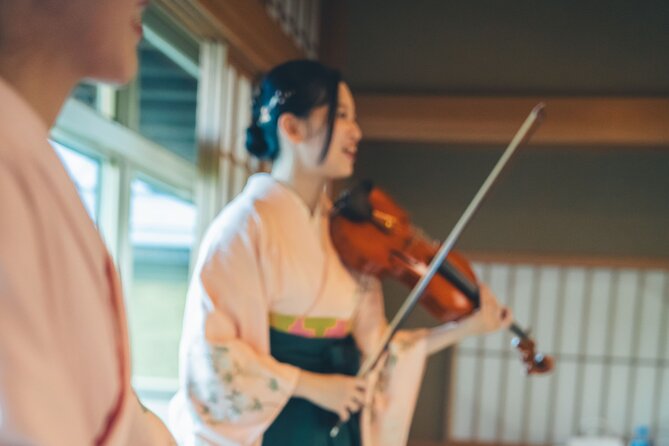
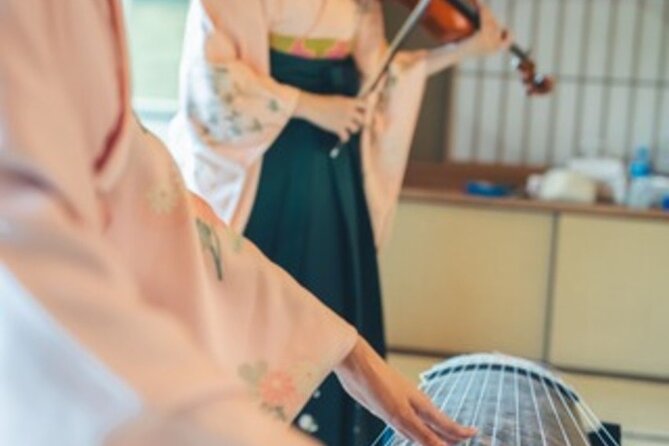
The core program centers on live music featuring koto and violin together. The arrangement includes traditional Japanese melodies, plus anime and game music, along with original pieces.
I love this format because it respects the instrument while meeting you where your ears already are. If you only knew the koto from old recordings, the anime and game tunes make the timbre feel current without diluting the craft.
The musicians you’ll hear are described as young and passionate, dedicated to sharing the charm of traditional instruments. In other words, you’re not just consuming music—you’re watching people actively carry it forward.
Your hands-on koto moment (guided, not awkward)
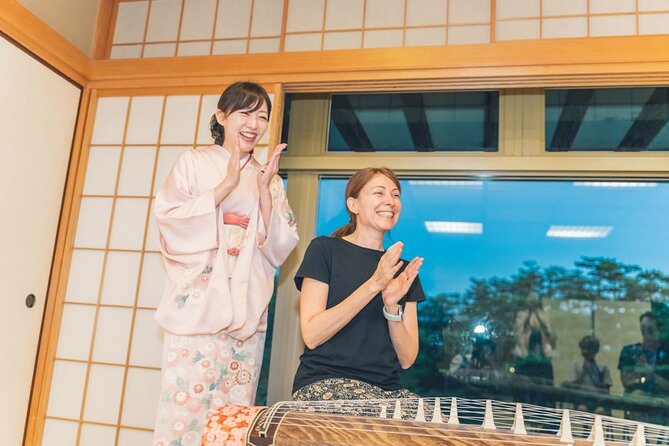
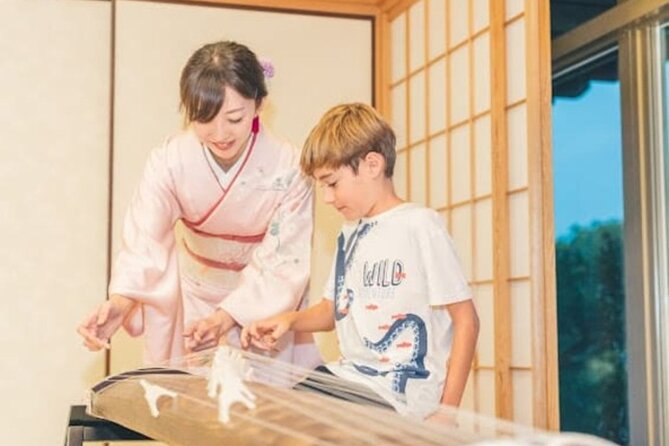
A big reason this experience gets strong marks is that it gives you a chance to play the koto yourself. During the koto experience, you get hands-on access to the instrument, guided by the musicians.
This is the part where “watching” turns into something you can remember with your body. Even if you don’t become a player, you’ll likely start understanding why the instrument sounds the way it does—how careful plucking and controlled technique create that signature glide and sparkle.
Also, because you’re guided, you’re not left figuring it out alone. That lowers the stress factor and turns the try-out into a genuine cultural moment rather than a photo opportunity.
Exploring tea rooms and traditional spaces
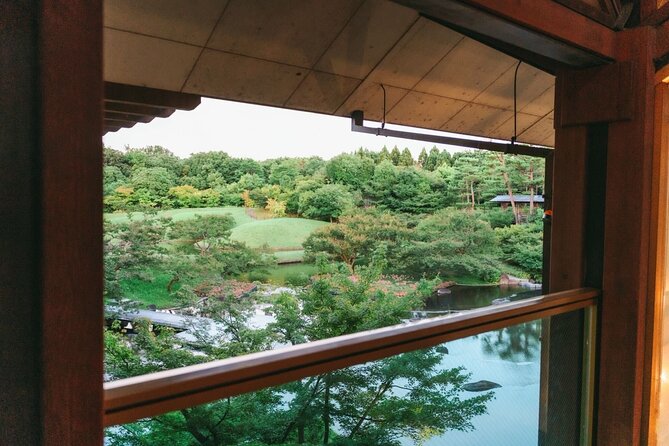
Another pleasant surprise is the time you can spend in Japanese-style areas within the venue. You’ll be able to explore serene tea rooms and traditional spaces as part of the experience flow.
This gives you a break between the music segments. It also helps you shift from outside Kyoto energy (streets, crowds, walking pace) into something quieter—where the performance feels like it belongs.
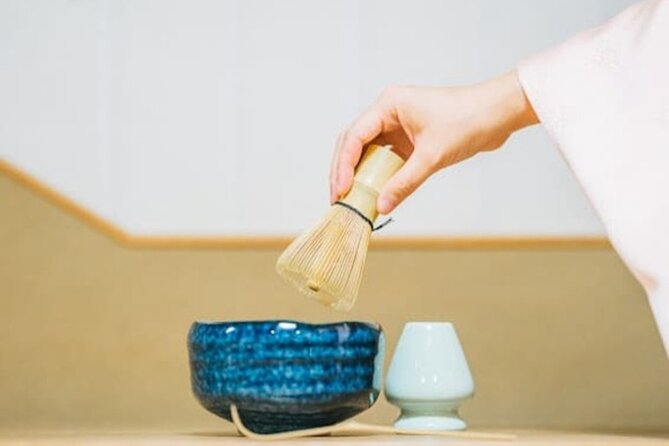
One of the reviews also points to a tea ceremony-style moment shared with family. While you shouldn’t expect a full scripted ceremony in every visit unless it’s explicitly offered during your session, it’s a good sign that tea culture is taken seriously in the atmosphere here.




Meeting the artists after the concert
After the live performance, you get time to interact with the musicians. The focus is on insight—how they train, what they feel about the instruments, and why this music matters culturally.
I find these conversations change the whole experience. You’ll start hearing the details you might miss at first: the discipline it takes to shape tone, the care behind repertoire choices, and the way tradition can coexist with modern pop themes.
One of the most praised aspects in the feedback is the artists’ commitment to their craft, including the idea that they’ve been training since childhood. If you care about skill and dedication, this meet-and-greet is where that shows up.
Matcha snacks: the included little comfort
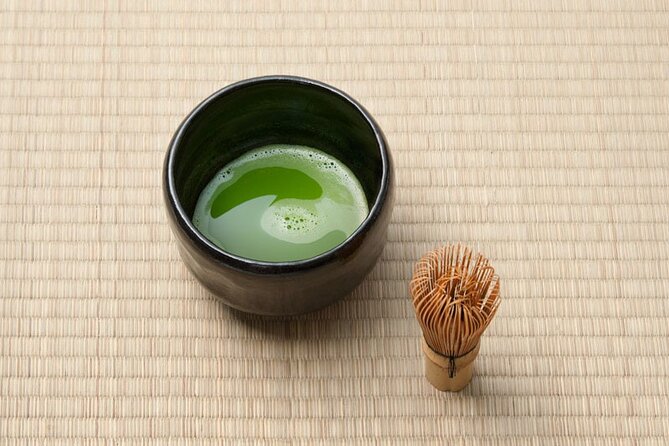
The experience includes snacks made with matcha (green tea). It’s a small inclusion, but it fits the theme in a way that feels intentional rather than tacked on.
You’ll also find that the venue has a café and restaurant on the first floor. So if you want more than the matcha snack, you have a place to get food before or after your session.
That said, meals are not included in the experience itself. If you’re coming straight from sightseeing, plan around that so you don’t end up hungry during the show.
Price and time: is $850 per person worth it?
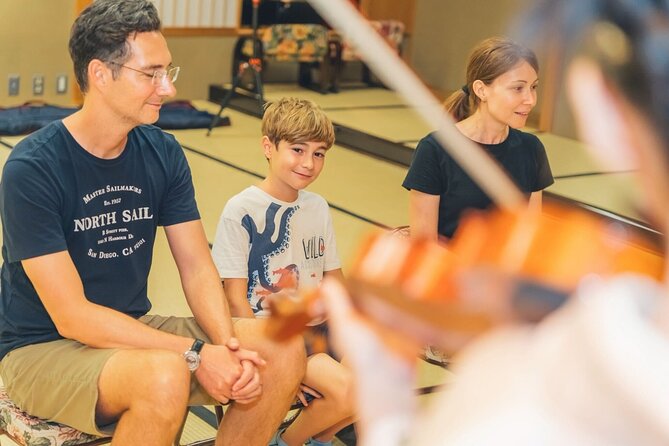
At $850 per person for about 1 hour to 1 hour 20 minutes, this is not a casual budget stop. But it isn’t just a ticket to sit and listen, either.
You’re paying for multiple things that normally cost extra or never happen in one package:
- live koto and violin performance with a broad music range
- guided time to play the koto yourself
- access to Japanese-style tea-room spaces inside the venue
- time to meet and interact with the artists afterward
- matcha snacks included
That mix is the value. If you’re the type who loves learning through participation—especially with an instrument—it can feel like a concentrated cultural workshop disguised as a concert.
If you’re only looking for a passive show, the price might feel steep for the short duration. The best way to judge it for yourself is to ask: will you enjoy talking to musicians and trying the instrument, not just watching the performance?
Mobile ticket and practical logistics in Kyoto
You get a mobile ticket, which is convenient in a city where you’ll likely keep everything on your phone. The tour is described as near public transportation, which is a big deal in Kyoto where traffic and parking can eat time.
Also, there’s a restroom included (the listing wording says restroom on board, but the practical point is that facilities are available). That small detail matters when your schedule is tight and you don’t want to guess where the nearest bathroom is mid-day.
Duration is approximate—about 1 hour to 1 hour 20 minutes. I’d plan a little buffer before and after, especially if you’re switching between transit, walking, and another appointment.
Who should book this, and who might pass
This experience is a great match for you if you:
- want Japanese traditional music but don’t want it to feel stuck in the past
- enjoy interactive cultural activities, like trying an instrument
- like meeting performers and hearing what drives their training
- appreciate tea-room atmosphere and calm indoor experiences
It’s also a good option if weather is unpredictable. Since it’s an indoor concert, you’re less affected by Kyoto rain or sudden cold than you would be with outdoor performances.
You might hesitate if you want a full-day Kyoto itinerary with lots of walking and sight hubs. This is focused and contained, centered on music and the venue itself—not a broad tour of multiple neighborhoods.
Should you book this Kyoto koto and matcha experience?
If your ideal Kyoto moment includes live music you can participate in, plus a chance to meet young artists who take their craft seriously, I think it’s a strong choice. The koto playing opportunity and the post-concert interaction are not “extra”—they’re the main point.
If you’re chasing big outdoor views, long temple wandering, or a meal-inclusive tour, you may feel under-served. But if you want a high-impact cultural hour—music, instrument time, and matcha snacks—the value can click quickly.
FAQ
FAQ
How long does the experience last?
It runs about 1 hour to 1 hour 20 minutes (approx.).
Where does the concert take place?
It’s in Kyoto at Tea House Labo, in an area called Suzaku Garden.
What kind of music will I hear?
You’ll hear koto and violin performed with traditional Japanese melodies, plus anime and game music and original arrangements.
Can I actually play the koto?
Yes. You’ll have hands-on access to the koto with guidance from the musicians.
Are matcha snacks included?
Yes. Snacks with matcha (green tea) are included.
Are meals included?
No. Meals are not included, though there is a café and restaurant on the first floor of the venue.
How do I get my ticket?
You receive a mobile ticket.
Is the venue easy to reach using public transportation?
Yes. The venue is described as near public transportation.
What is the cancellation policy?
Free cancellation is available. You can cancel up to 24 hours before the experience’s start time for a full refund.
If you tell me your travel month and what other Kyoto stops you’re pairing with this, I can help you place it into a sensible day plan.
More Tour Reviews in Kyoto
One More Bowl of Matcha


Just added: more Kyoto tours to browse








Kyoto Tea Ceremonies, compared.
 ★ 4.9Tea Ceremony in a Traditional Tea House in KiyomizuFrom $493,519 reviews
 ★ 4.9Tea Ceremony Ju-An at Jotokuji TempleFrom $293,207 reviews
 ★ 4.345-Minute Tea Ceremony Lesson ExperienceFrom $222,378 reviews
 ★ 4.9Table-Style Tea Ceremony at a Kyo-MachiyaFrom $451,211 reviews
 ★ 5.0Kimono Tea Ceremony at Kyoto Maikoya, NISHIKIFrom $65911 reviews
 ★ 5.0Arashiyama Bamboo Forest, Monkeys, Matcha & Temple TourFrom $53759 reviews
 ★ 4.9Tea Museum Tickets and Matcha Grinding ExperienceFrom $23739 reviews
 ★ 4.9Kimono Tea Ceremony at Orizuruya GionFrom $49618 reviews
Browse the lists this tour appears in