
Reviewed · WALKING TOURS
Kyoto Late Bird Walking Tour
Torii gates at 2 pm, minus the stress. This Kyoto Late Bird Walking Tour is a smart way to pack in major sights in one afternoon, with an expert guide keeping you oriented as you move from Fushimi Inari-taisha to Gion. I love that it’s set up as a private-style experience for just your group, and I also love the hands-on commentary that helps the places click instead of feeling like a checklist.
You’ll get clear guidance at each stop, and the route tends to flow well enough that you’re not constantly searching for the next turn. One possible drawback: you’ll still need to budget for public transportation (¥850 per person) on top of the tour price, and it depends on weather (good weather is required).
In This Review
- Key things to know before you go
- The 2 pm start: why this afternoon Kyoto plan feels calmer
- Fushimi Inari-taisha: the torii tunnel, explained for real-world wandering
- Yasakanoto and Yasaka Shrine: pagoda views plus the meaning behind the names
- Gion after 2 pm: geisha spotting with the right expectations
- Guides matter: how Kaz, Saori, Mitsue, and Meg shaped the vibe
- Price and value: what you’re paying for, and what you still need to cover
- The logistics that can make or break your afternoon
- Who should book this Kyoto Late Bird Walking Tour?
- Should you book?
- FAQ
- What time does the Kyoto Late Bird Walking Tour start?
- How long is the tour?
- Where do we meet, and where does the tour end?
- Is this a private tour?
- Are temple or shrine admissions included?
- What should I budget for transportation, and what if the weather is bad?
Key things to know before you go
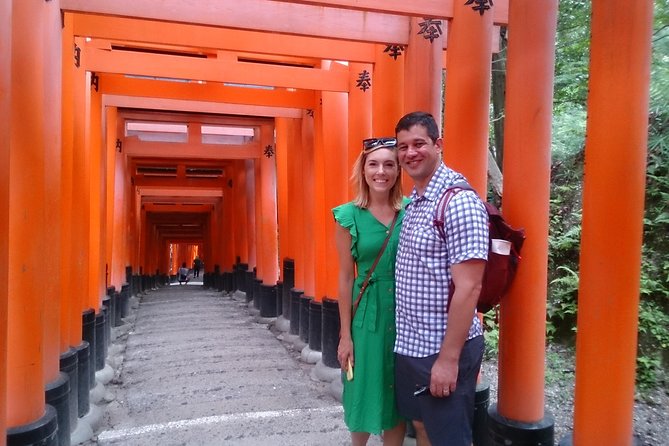
- Private group energy: only your group joins, so you can ask questions and move at a pace that fits you
- Fushimi Inari’s torii tunnel: a full hour here so you can actually experience the famous tunnel of gates
- Evening-photo timing: you’ll spend time near the Yasaka area where photographers gather as light changes
- Gion with context: you stroll the historic streets with real explanations, and geisha or maiko sightings are a luck bonus
- Train-friendly planning: you’ll use public transport, so having a loaded IC card helps a lot
The 2 pm start: why this afternoon Kyoto plan feels calmer
Afternoon tours in Kyoto can be a sweet spot. You miss some of the early-day rush at the biggest sights, and you also get a softer feel as the day shifts toward evening, especially in areas like Gion. This one starts at 2:00 pm and runs about 4 hours, which is just enough time to cover the big-name highlights without draining your whole day.
Meeting at Kyoto Station is practical. It’s easy to find, and you can start your day with less stress about where to begin. The end point brings you right back to the start area too, so you don’t have to worry about arranging a second plan afterward.
Other Kyoto tours and experiences to compare
Fushimi Inari-taisha: the torii tunnel, explained for real-world wandering
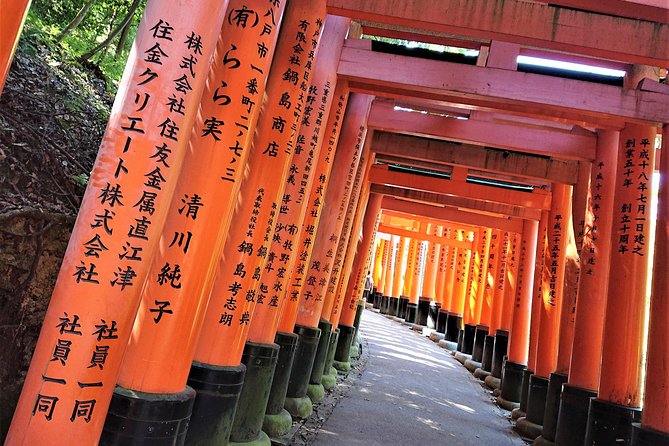
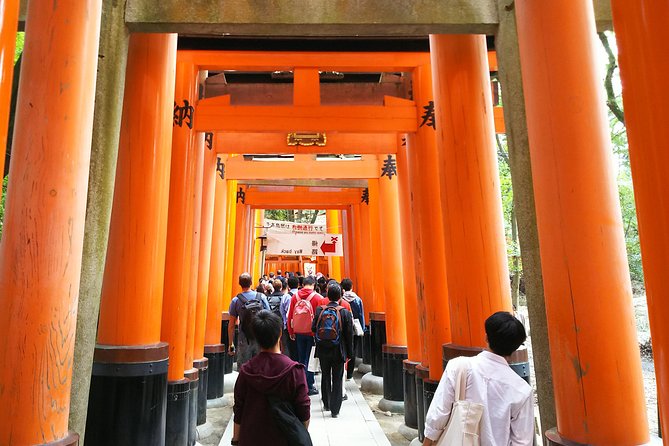
Fushimi Inari-taisha is famous for a reason. You’re looking at a tunnel of thousands of vermilion torii gates, and that visual impact hits even if you’ve seen photos before. The tour gives you a full 1 hour at this stop, which matters, because the best way to enjoy this place is slowly—turn your head, notice details, and let the gate tunnel unfold.
What makes having a guide useful here is context. The gates aren’t random decorations; they’re tied to offerings connected to the deity enshrined at the shrine. A good guide helps you connect what you’re seeing to why people come and what the traditions mean, so you’re not just collecting pictures.
One practical note: this is still a shrine walk with stairs and crowded sections. If you have mobility limits, the tour does mention accessibility for limited mobility, but it’s still wise to plan for uneven ground. Wear shoes that won’t make you resent the route by the halfway mark.
Yasakanoto and Yasaka Shrine: pagoda views plus the meaning behind the names
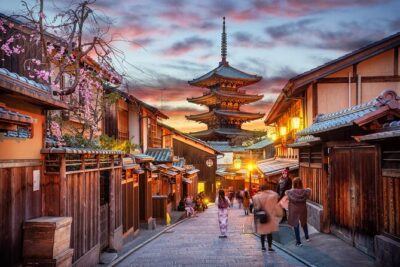
After the huge wow-factor of Fushimi Inari, the day shifts into something more intimate. You’ll spend 30 minutes at Yasakanoto, a pagoda area originally built in 592 and rebuilt in 1440. Even in a short time, it’s the kind of stop where explanations help. You’re also near viewpoints people use for photos, and as the evening approaches, it can get busier with photographers trying to catch the right light.
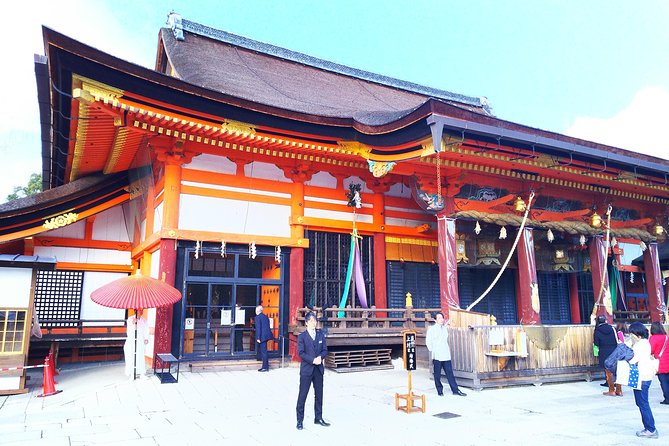
Then you move to Yasaka Shrine for about 20 minutes. This shrine is tied directly to the word Gion—it was once called Gion Shrine, and the current name of Gion came from this. That’s a neat detail because suddenly the place names you’ve heard all over Kyoto start making sense, instead of sounding like memorized labels.
Yasaka Shrine also includes a god of beauty, so the theme isn’t purely religious power. It’s part of why this area has long attracted people looking for both spiritual and cultural meaning. A guide helps you read the setting, spot what matters, and understand why locals keep returning to these spots.
If you’re someone who likes a “why” with your photos, this sequence works well: big gates first, then history and meaning in smaller doses.
Gion after 2 pm: geisha spotting with the right expectations
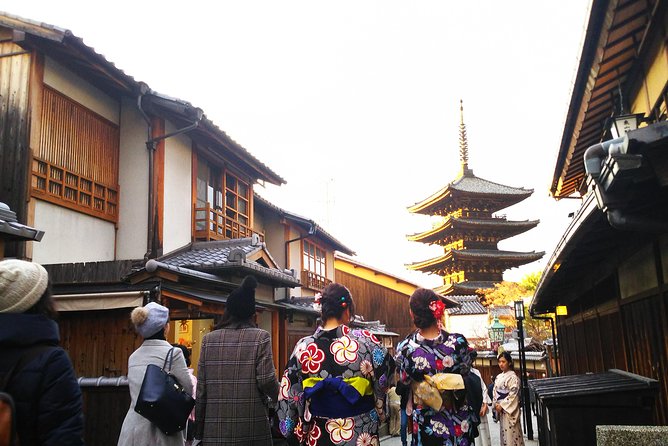
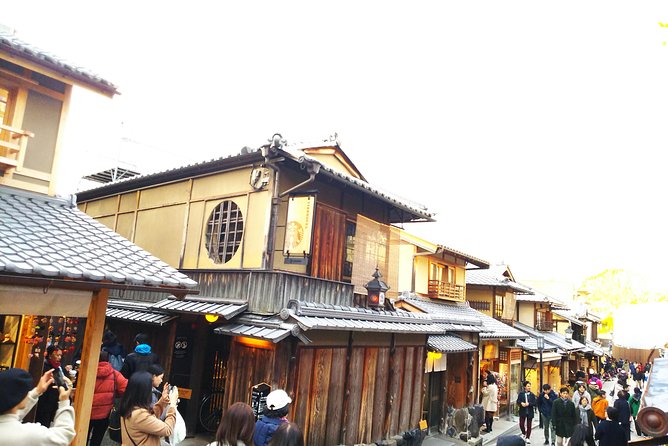
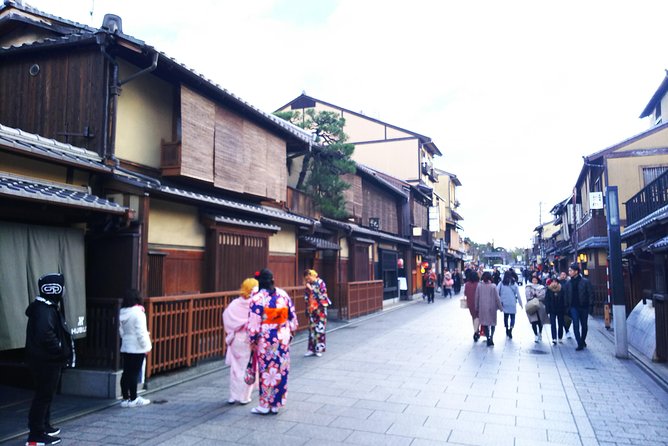
Gion is where Kyoto turns into a mood. You’re walking through the district where old-style houses remain, and you’ll hear how geisha and maiko fit into traditional culture. The stop here is about 50 minutes, which is enough time to enjoy the streets without feeling like you’re sprinting between photo points.
Now, geisha spotting is a real-life “maybe.” This tour gives you the chance to look out for geisha and maiko apprentices as you stroll, but it’s still luck and timing. The value isn’t only spotting someone in motion—it’s understanding what you’re seeing when you do notice details like traditional attire and the rhythms of the neighborhood.
What I like about doing Gion with commentary is that it helps you notice more than faces. You start seeing the architecture cues, the street layout, and the way people behave in the area. It feels less like you’re watching a show and more like you’re learning how the district works.
Guides matter: how Kaz, Saori, Mitsue, and Meg shaped the vibe
A tour like this lives or dies on the guide. And here, the guides really seem to bring both knowledge and personality to the walk.
Kaz is one example of how a tour can stay smooth even if plans slip. When someone arrived later than expected, Kaz waited patiently and then guided the group via trains to places like Fushimi Inari and the Gion area, with extra stops showing up naturally along the way. That kind of calm handling makes a big difference when you’re dealing with train connections.
Saori stands out for energy and conversation. She’s described as enthusiastic, with strong English and Japanese, and the kind of guide who can connect the dots with personal storytelling. That makes the tour feel less like a lecture and more like a guided stroll with context.
Mitsue is noted for an easy pace and clear pointing-out of points of interest. If you don’t want to feel rushed, that matters. Meg is described as very professional, on time, and full of knowledge—exactly the combination you want when you’re trying to understand Kyoto quickly without missing important details.
Bottom line: you’re paying for the guide fee, and you want that guide to feel like a partner in the experience. This tour’s reviews and guide styles line up with that idea.




Price and value: what you’re paying for, and what you still need to cover
At $86.49 per person, this is positioned as a mid-price afternoon tour. The included piece is the guide fee, which is what most of your money is buying: interpretation, routing help, and local know-how. When you compare that to doing everything on your own, the biggest value is not the walking—it’s not getting lost and getting the meaning behind the sights in the time you have.
Two extra costs are important to plan for:
- Public transportation fare: ¥850 per person (not included)
- Food and drink (not included)
Also note that admission tickets at each listed stop are free. That reduces the usual Kyoto headache where you’d need separate ticketing decisions for every attraction. You still have to handle transport and your own snacks, but the admissions load is light.
The tour is listed as private for your group. That’s not just a comfort perk—it also makes the guide’s attention feel more targeted. If you’re traveling as a small group and you’d rather not merge with strangers, this format can be a real value.
One practical tip from the experience: bring a loaded IC card. Since you’ll use trains, you don’t want to scramble at the ticket machines mid-walk.
The logistics that can make or break your afternoon
This tour is mobile-ticket friendly and runs near public transportation, with the meeting point at Kyoto Station. That’s convenient, especially if your hotel is elsewhere in Kyoto or you’re managing other plans before 2 pm.
Weather matters here. The experience requires good weather, and if it’s canceled due to poor weather, you’ll be offered a different date or a full refund. That’s a normal rule for Kyoto walks, but it’s worth taking seriously—afternoon plans are easy to disrupt, and you’ll feel it if you’re stuck indoors.
Accessibility details are also worth noting:
- It’s described as accessible for limited eye sight and limited mobility
- Animals or pets allowed
- Not stroller accessible
If you’re traveling with a stroller, you’ll want to think about alternatives, because the tour won’t be set up for that. If you’re traveling with mobility needs, it’s still a walking route, so it’s smart to consider shoes, pace, and breaks.
Who should book this Kyoto Late Bird Walking Tour?
This is a strong fit if you want:
- A focused afternoon plan that covers multiple Kyoto landmarks in one go
- Guide-led context so Fushimi Inari and Gion don’t feel like two random stops
- A private setup for your group rather than a larger mixed crowd
- A relaxed length of time (about 4 hours), not an all-day marathon
It’s less ideal if you want total freedom to wander without structure. The tour moves you between key sights, so you won’t have endless detours. Also, if you’re chasing geisha sightings as a guaranteed outcome, you may feel frustrated. It’s best to treat geisha/maiko sightings as a bonus, not the main goal.
If you’re traveling solo and you’re okay paying for guide time, it can still be worth it. But the private-group factor usually shines for couples, friends, and families who can travel together and ask questions as you go.
Should you book?
I’d book this tour if you’re aiming to see Fushimi Inari, get your head around the meaning behind Yasaka Shrine, and walk through Gion with explanations instead of just walking past photo spots. The afternoon timing works well, and the private-group style makes the guide’s attention feel personal.
I’d hesitate only if you don’t want to deal with trains or you’re not comfortable planning for the extra transport fare. Also, if the weather is iffy, have a backup mindset.
If you want a Kyoto afternoon that feels organized but still human, this is a solid choice.
FAQ
What time does the Kyoto Late Bird Walking Tour start?
It starts at 2:00 pm.
How long is the tour?
The duration is approximately 4 hours.
Where do we meet, and where does the tour end?
You meet at Kyoto Station and the tour ends back at the same meeting point.
Is this a private tour?
Yes. It’s listed as a private tour/activity, so only your group participates.
Are temple or shrine admissions included?
Admission tickets at the listed stops are free. What’s not included is food and drink.
What should I budget for transportation, and what if the weather is bad?
Public transportation fare is ¥850 per person and food/drink are not included. The experience requires good weather; if it’s canceled due to poor weather, you’ll be offered a different date or a full refund. You can also cancel for free up to 24 hours in advance for a full refund.
More Walking Tours in Kyoto

More Tours in Kyoto
More Tour Reviews in Kyoto
Just added: more Kyoto tours to browse








Walking Tours, compared.
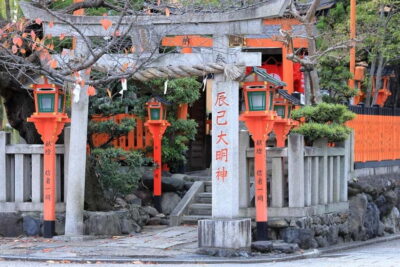 ★ 4.7Kyoto Geisha Walking Tour: Gion District & Hidden GemsFrom $253,273 reviews
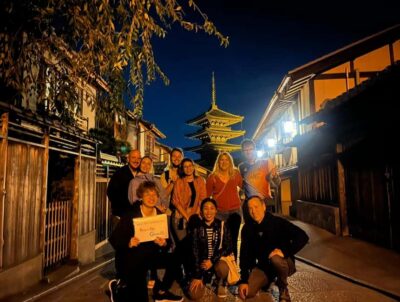 ★ 4.9Gion Magical Night Walking Tour with Geisha TriviaFrom $242,393 reviews
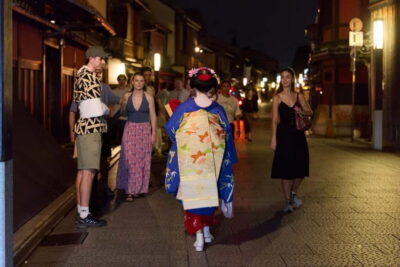 ★ 4.7Gion Geisha District Walking Tour – Stories of GeishaFrom $202,187 reviews
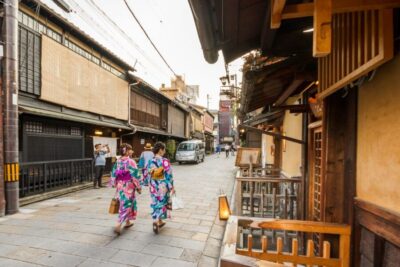 ★ 4.5Night Walk in Gion: Kyoto’s Geisha DistrictFrom $212,003 reviews
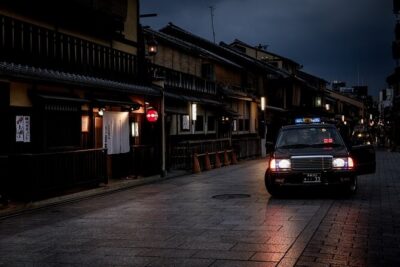 ★ 5.0Kyoto Gion Geisha District Walking Tour – The Stories of GeishaFrom $251,441 reviews
 ★ 5.0Nishiki Market Brunch Walking Tour (7 Tastings + Brunch)From $681,355 reviews
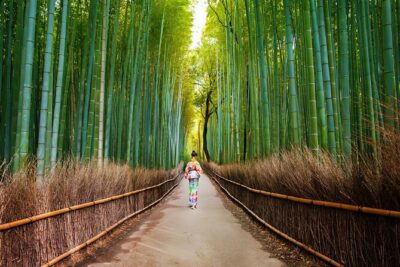 ★ 5.0Kyoto Arashiyama Walking Tour: Bamboo, Monkeys, Gardens & SecretsFrom $651,216 reviews
 ★ 5.0Kyoto Gion: 2-Hour Geisha Culture & History Walking TourFrom $231,186 reviews
Browse the lists this tour appears in