
Reviewed · KIYOMIZU-DERA & HIGASHIYAMA TOURS
Kyoto: Kiyomizudera, Higashiyama and Yasaka Discovery Tour
Kyoto in three hours, without the guesswork. Kiyomizudera is the big draw for me: the guided focus on Kannon, the deity of peace and mercy, plus the story of the sacred blue dragon (seiryuu). I also like the way the route uses the classic hillside lanes of Sannenzaka and Ninenzaka, so you’re not just looking at sights—you’re walking through the Kyoto that makes those sights feel real. One possible drawback: it’s a walking tour with no hotel pickup, and some parts of the route can be tough if you don’t do stairs or uneven stone well.
This tour has a good rhythm. You start with a full hit at Kiyomizudera (about 1 hour), then keep moving with shorter, focused stops: Sannenzaka (30 minutes), Kodaiji (30 minutes), and Yasaka Shrine (30 minutes), finishing near Gion-Shijo Station. Guides like CC and Miyake are known for keeping the pace relaxed and for adjusting with quick breaks when the group wants a matcha stop or a bit of shopping—without losing the main temples.
In This Review
- Key points to know before you go
- The 3-hour Higashiyama route: short, focused, and walkable
- Kiyomizu-dera: UNESCO, Kannon, and the seiryuu blue dragon
- Strolling Sannenzaka and Ninenzaka (plus Nene no Michi)
- Kōdaiji Temple: a memorial built for Toyotomi Hideyoshi’s wife
- Yasaka Shrine and Maruyama Park: Shinto stories you can feel
- Where the tour ends: Gion-Shijo and your next easy move
- Price and what $54 really buys you
- Small group comfort: how guides like CC and Miyake change the feel
- What to bring and wear for a smooth 3 hours
- Who should book, and who should skip
- Should you book this Kiyomizudera, Higashiyama and Yasaka Discovery Tour?
- FAQ
- How long is the Kyoto Kiyomizudera, Higashiyama and Yasaka Discovery Tour?
- Where do I meet the tour guide?
- Which key places does the tour include?
- What is included in the price?
- How big is the group?
- Can I cancel and get a full refund?
Key points to know before you go
- Kiyomizudera first: the UNESCO site comes early, when you’re most energized for it
- Blue dragon + Kannon context: religion and symbols are explained, not assumed
- Traditional streets as a feature: Sannenzaka and Ninenzaka are part of the sightseeing, not just transit
- Kodaiji’s personal story: built in memory of Toyotomi Hideyoshi’s wife, plus zen gardens and lavish interiors
- Shinto stories at Yasaka: you get cultural context right where it matters
- Small group size: limited to 9 participants, so questions stay easy
The 3-hour Higashiyama route: short, focused, and walkable
At 3 hours, this is a “hit the essentials” tour. You’re not trying to cover all of Kyoto in one morning. Instead, you’re guided through one compact pocket of eastern Kyoto—temples, shrines, and the old-street lanes that connect them.
The small group size (up to 9 people) is a real practical plus. Kyoto can get crowded, and in a bigger group it’s harder to hear explanations or spot photo pointers. Here, you can usually keep up with the guide and still pause when something catches your eye.
The other practical thing to know is the pace. The time blocks are short at each stop after Kiyomizudera, which means you’ll move a lot in a limited window. If you’re the type who likes long garden sits or deep museum-style reading, you may want to add extra time on your own after the tour ends near Gion-Shijo.
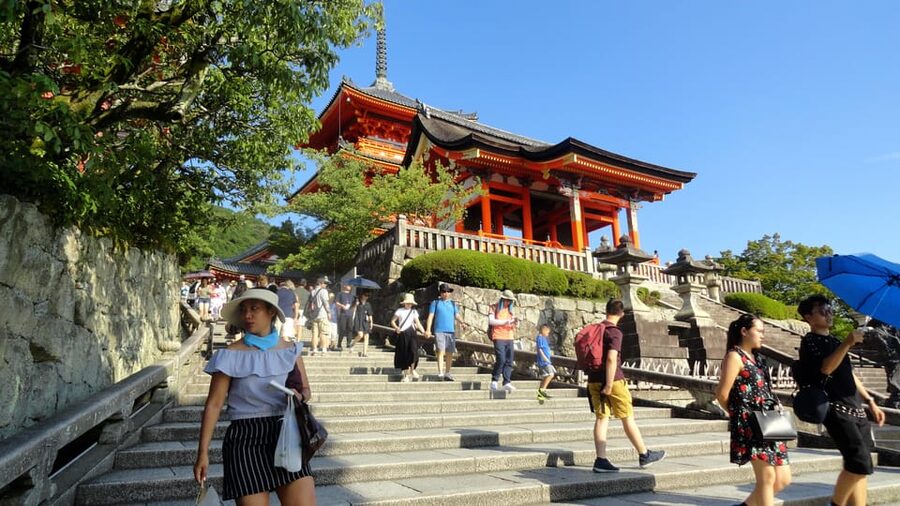
Keep climbing the Higashiyama slopes toward Kiyomizu-dera
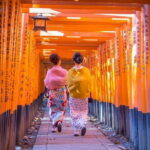
Kiyomizu-dera: UNESCO, Kannon, and the seiryuu blue dragon
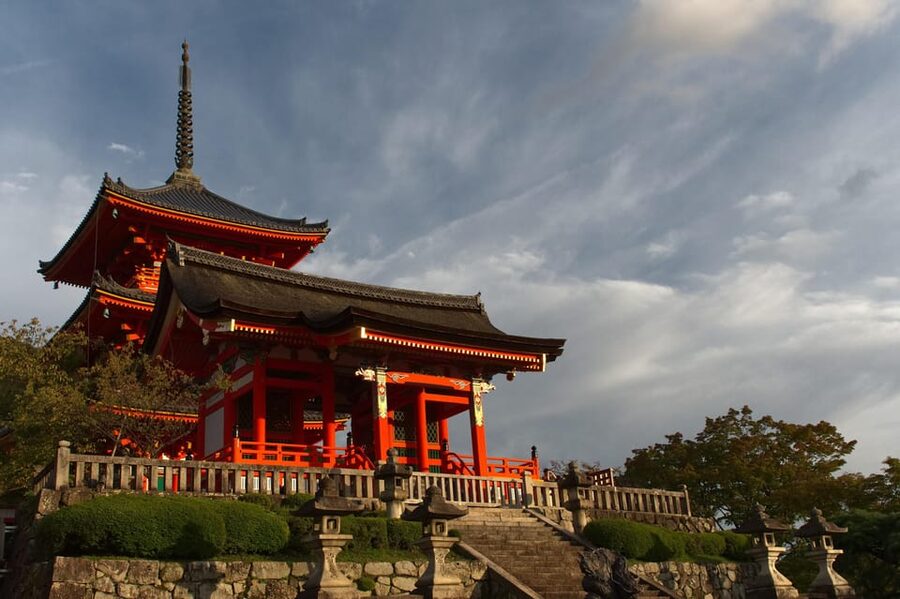
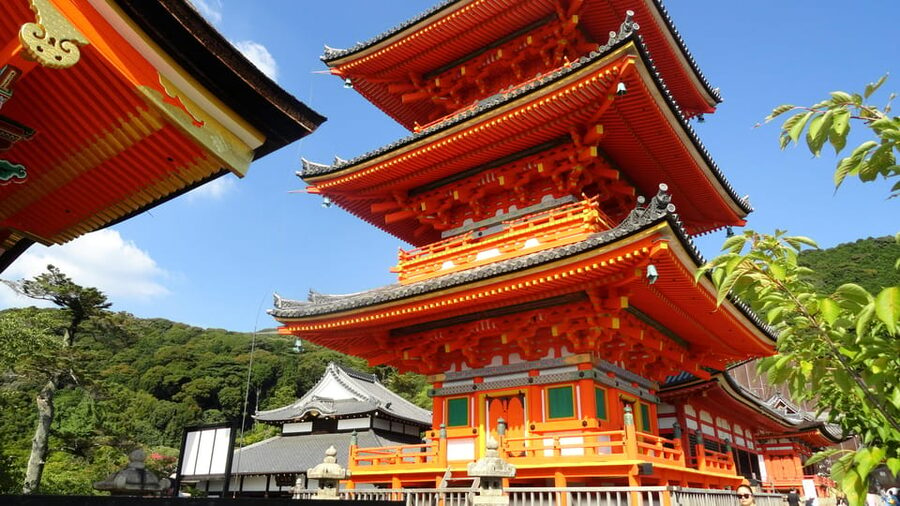
Kiyomizudera is the moment where the tour earns its reputation. You’ll spend about 1 hour here, and the guide puts the spotlight on the ideas and symbols behind what you’re seeing.
You’ll learn about Kannon, associated with peace and mercy. That matters because otherwise you’re just touring a famous complex. With the religious context, carvings, images, and the tone of the space start to feel less random.
Then there’s the story of the sacred blue dragon (seiryuu). Even if you’re not a big myth-buff, you’ll appreciate this because it helps explain why certain elements feel tied to nature, protection, and sacred power. The tour also includes time for panoramic views, so you get a sense of how this temple looks in relation to Kyoto’s hills.
Photo tip in plain terms: plan to take photos, but don’t just shoot. Step back and let the guide’s explanation land first. That order makes your pictures more meaningful later, because you’ll know what you captured.
Strolling Sannenzaka and Ninenzaka (plus Nene no Michi)
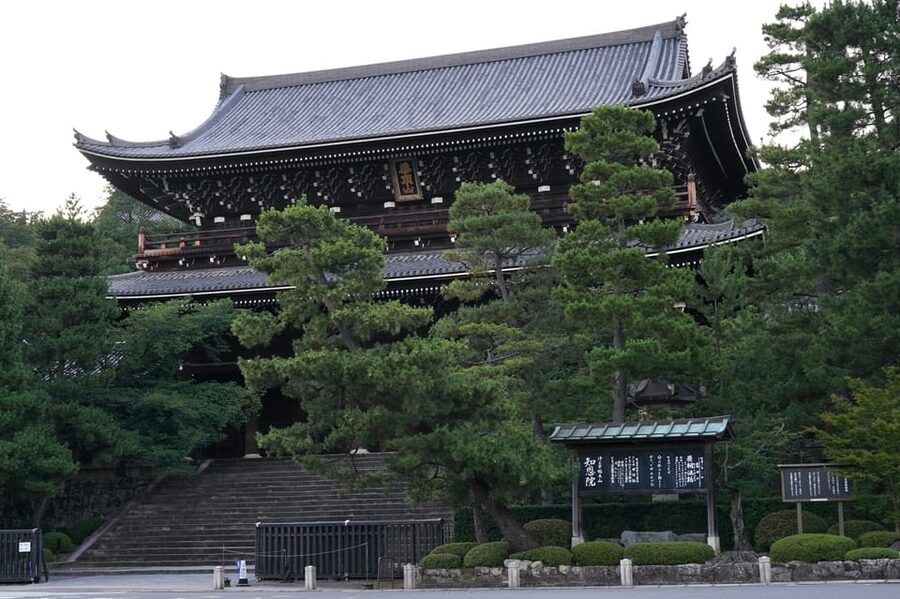
The street portion is one of the smartest uses of time in the whole experience. Sannenzaka and Ninenzaka aren’t treated as “just walking.” You get about 30 minutes here with guidance, so you’re moving with purpose.
These lanes are known for the classic traditional streetscape—old shophouses and a Kyoto street vibe that feels like it belongs to Higashiyama specifically. With a guide, you’re less likely to wander in circles, and more likely to notice the details that make the area photograph well.
What I like here is the balance. You’re not forced to stay in one spot for a full half hour. You can stroll, pause, and get that slow-travel feeling. And in groups led by guides such as Jasmine and Alex, the energy tends to stay upbeat, with humor and cultural context that makes the walk feel like part of the story.
One consideration: this is still an outdoor, foot-paced section. If you’re sensitive to heat or cold, dress for the weather. Also bring comfortable shoes—you’ll thank yourself later.
Kōdaiji Temple: a memorial built for Toyotomi Hideyoshi’s wife
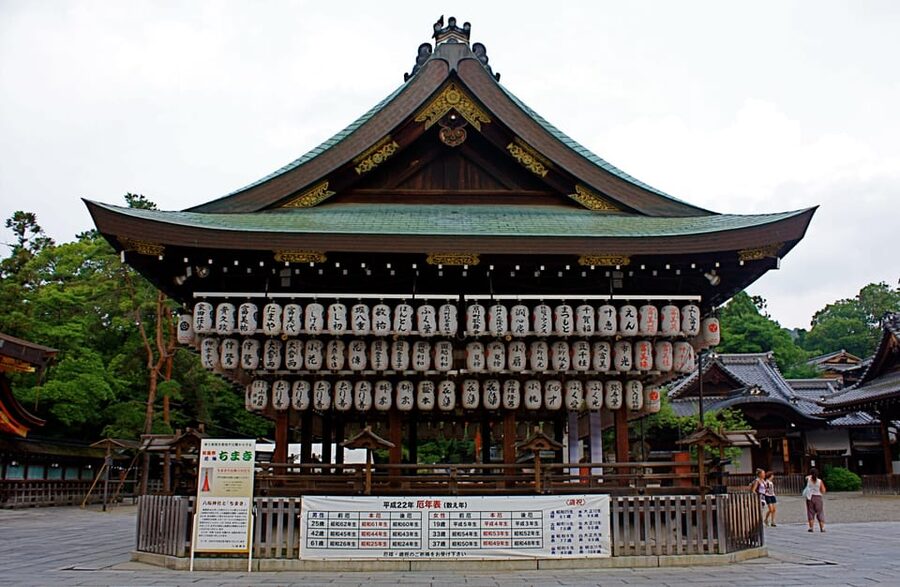
Kodaiji Temple is where the tour adds depth without adding length. You’ll spend around 30 minutes here, which is enough time to understand the temple’s main draw and enjoy what you see.
The key detail is personal and very specific: Kōdaiji was built in memory of Toyotomi Hideyoshi’s wife. That matters because it reframes the space from “another temple” into a memorial with an emotional center. When you know the why, the gardens and interiors feel more intentional.
The tour highlights two sides of the temple experience:
- Zen gardens, which give you a quieter pause after busier streets
- Lavish interiors, which keep the experience from feeling purely serene or purely traditional
In short, you get variety in a short window: calm outside, detail inside, and a sense that Kyoto’s different styles can exist in the same stop.
Practical note: interiors can involve walking through areas with different lighting. If you’re photographing, your camera settings may need a quick adjustment. A guide can help you find good viewing angles so you’re not just guessing.
Yasaka Shrine and Maruyama Park: Shinto stories you can feel
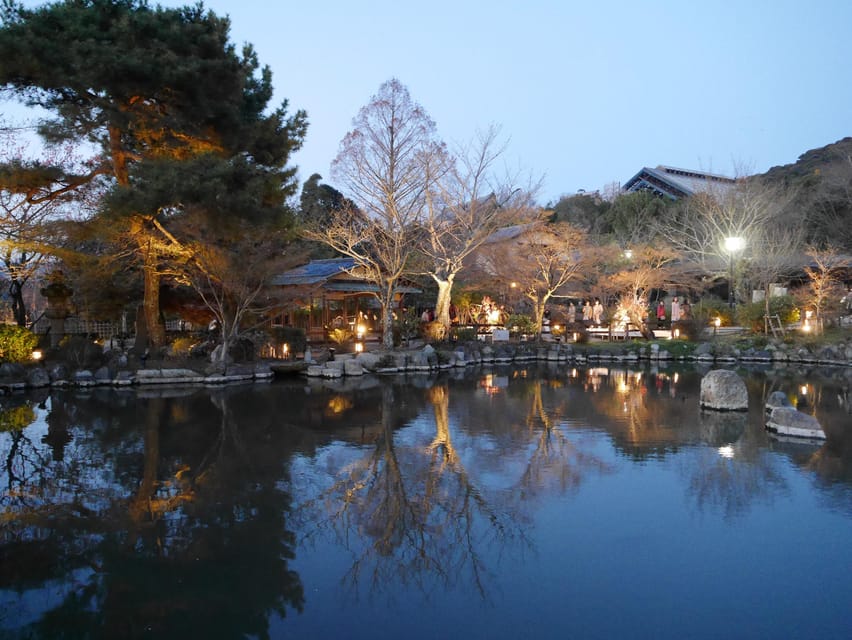
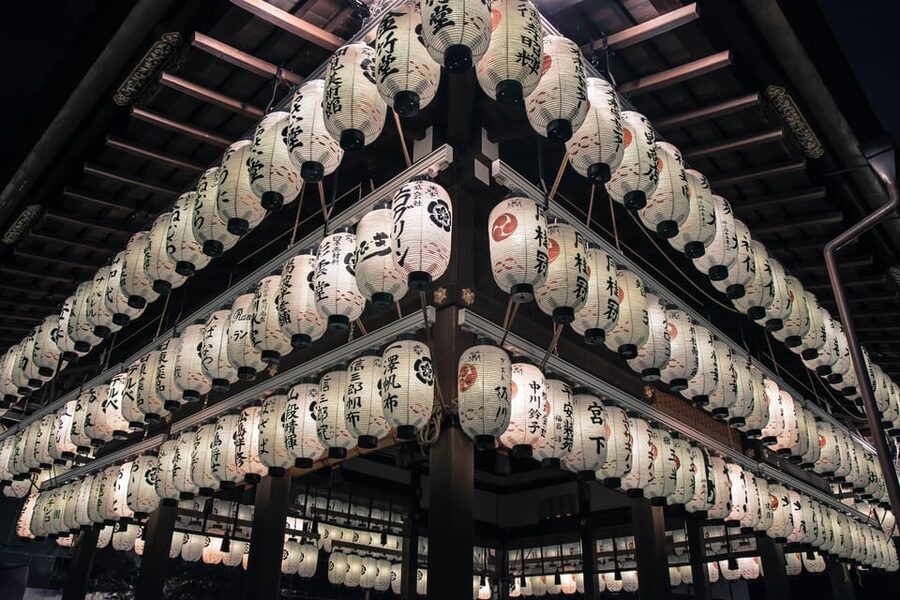
After Kōdaiji, you move into the Yasaka Shrine area, then onward toward Maruyama Park. You’ll spend about 30 minutes at Yasaka Shrine with a guide who focuses on Shinto history, culture, and practices.
Why that’s valuable: shrines are often easier to respect when you understand what you’re seeing and why certain actions matter. With guidance, you’ll pick up the meaning behind the atmosphere—things like the overall role of shrines in everyday cultural life and how traditions shape the experience.
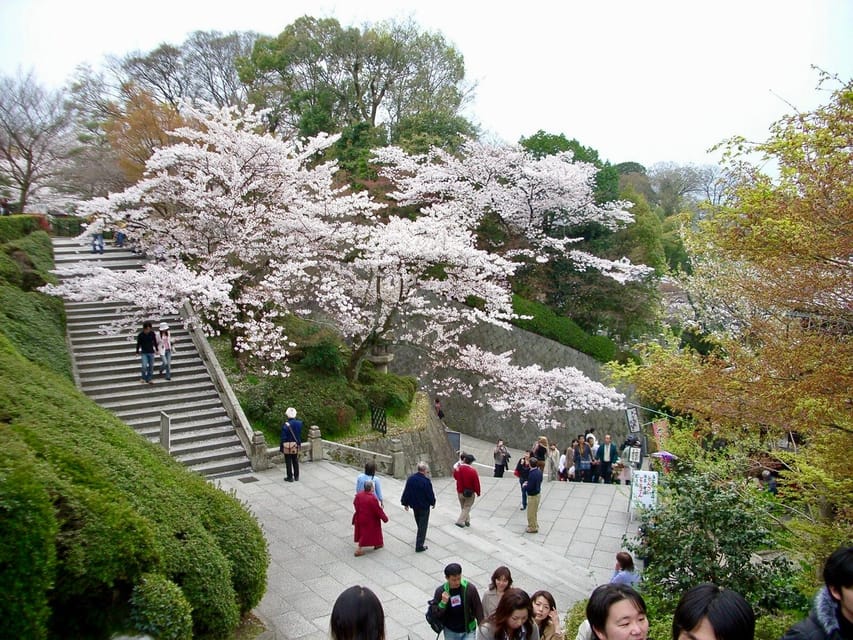
Then there’s Maruyama Park. The tour exits through the east, and you’ll end up in a place that many people associate with cherry blossom season. Even if your trip isn’t timed for blossoms, the park is a good “breather” after temple and shrine intensity. It gives you a place to regroup, stretch your legs, and decide what you want to do next in Gion.





Where the tour ends: Gion-Shijo and your next easy move
Finishing near Gion-Shijo Station is a smart design choice. You can transition from guided sightseeing into your own Kyoto time with less hassle.
This matters because Gion and the surrounding neighborhoods can take time to explore. When you end in a transit-friendly spot, you can hop to dinner plans, an evening stroll, or a quick hop to another neighborhood without scrambling to retrace your steps.
If you’re the kind of person who likes to keep momentum, this setup helps. You don’t feel stuck far from where you want to be later.
Price and what $54 really buys you
The price is $54 per person for a 3-hour experience. Here’s why it can feel like good value if you want structure.
You’re not paying only for walking. The ticket includes:
- An English-speaking tour guide
- Entrance fees for Kiyomizudera and Kodaiji Temple
- Snacks
- A small group capped at 9 participants
Those entrance fees alone matter because you’re hitting two major temple stops. Add a guided explanation of Kannon and the sacred blue dragon, plus Shinto context at Yasaka, and you’re buying time savings and understanding—not just access.
What’s not included is also clear: meals and other drinks are on your own. So think of this as a guided “morning/early afternoon” plan, then budget for food after.
If you like flexibility, you also have free cancellation up to 24 hours in advance for a full refund, and a reserve-now option with pay later. That helps if your Kyoto schedule is still settling.
Small group comfort: how guides like CC and Miyake change the feel
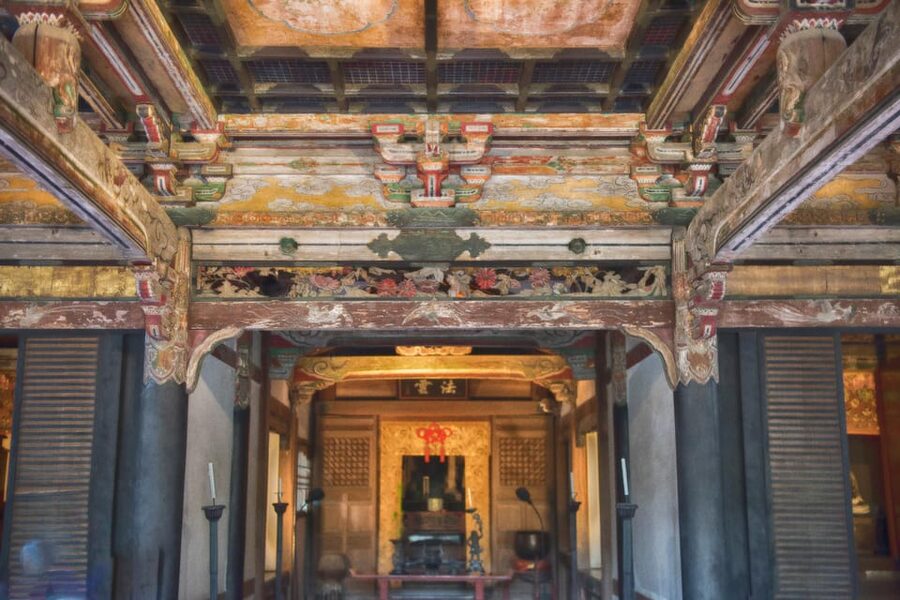
Small groups are one thing on paper. In Kyoto, they change the lived experience.
With a cap of 9 participants, the guide can pace the group around what people ask, and you can hear explanations without craning your neck. In past sessions, guides have shown a consistent style: relaxed, funny, and quick to customize within reason. CC has been described as relaxed and engaging, and Miyake has been praised for friendly, detailed temple storytelling and photo guidance. Jasmine and Yuko also come up in the pattern—energetic, humorous, and helpful with extra local suggestions.
You can use that to your advantage. If there’s a part of Kyoto you care about most—religious symbolism, temple architecture, or where to take photos—say something early in the walk. In a small group, that request usually lands.
What to bring and wear for a smooth 3 hours
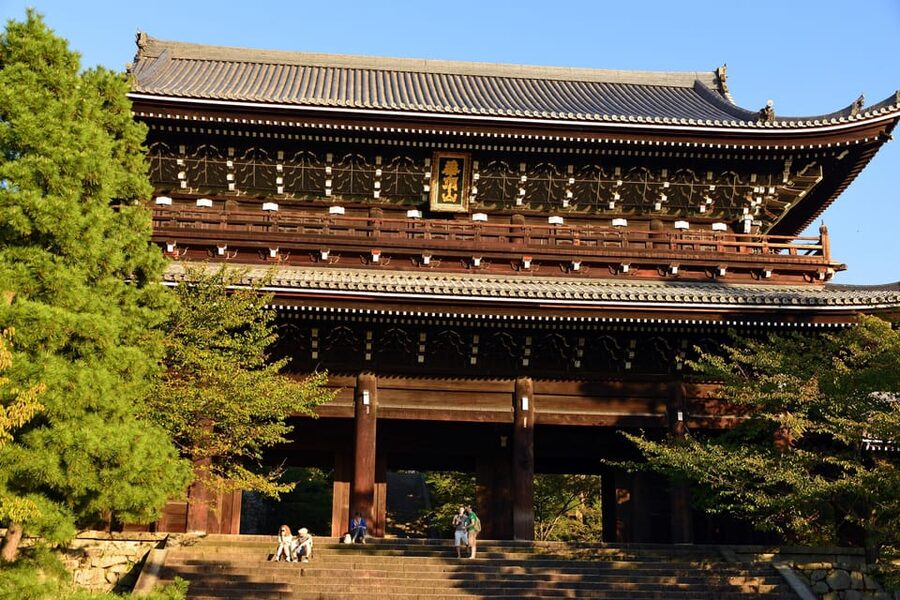
This tour is short, but your feet still do the work. Bring comfortable shoes first. The route connects temple areas and old-street lanes, and you’ll likely encounter stairs or uneven paving.
Pack your essentials:
- Camera (if you like photos)
- Cash (useful for small purchases along the way)
- Any water or small comfort item you personally prefer
The tour includes snacks, so you’re not forced into an empty-stomach situation. Still, it’s smart to think about your appetite and plan a meal after, since meals and drinks aren’t included.
Who should book, and who should skip
This experience is a good match if you want:
- A guided walk through Kiyomizudera, Kōdaiji, and Yasaka Shrine
- Context for what you’re seeing, including Kannon and seiryuu at Kiyomizudera
- A classic Higashiyama street stroll in a controlled, time-smart way
- A small group that makes questions easy
It may not be a good fit if you have mobility limitations, since the tour is not suitable for people with mobility impairments. It’s also listed as not suitable for pregnant women, people with heart problems, and people with respiratory issues. That’s a clear warning label for a reason: you’ll be outside and walking for the duration.
If any of those apply to you, it’s worth looking for a less strenuous option or a different route style with fewer steps.
Should you book this Kiyomizudera, Higashiyama and Yasaka Discovery Tour?
I’d book it if you’re short on time and you want the Higashiyama highlights in one clean 3-hour package, with entrance fees included and a guide who can explain what’s meaningful, not just what’s famous.
Skip it if you want a slow, all-day temple experience or if you’re concerned about the walking and uneven surfaces. Also skip it if you prefer complete freedom over structure—because this is built around a tight schedule and set stops.
For most first-time Kyoto visitors who enjoy walking and want context, this is a strong value pick. You’ll finish near Gion-Shijo with a better sense of what you just saw, plus an easy starting point for the rest of your day.
FAQ
How long is the Kyoto Kiyomizudera, Higashiyama and Yasaka Discovery Tour?
The tour lasts 3 hours.
Where do I meet the tour guide?
Meet at the 7-Eleven at the given location, and look for a guide wearing a TripGuru shirt or holding a TripGuru sign.
Which key places does the tour include?
You visit Kiyomizudera Temple, Sannenzaka, Kodaiji Temple, Yasaka Shrine, and you finish near Maruyama Park/with access toward the Gion area.
What is included in the price?
The tour includes an English-speaking guide, entrance fees for Kiyomizudera and Kodaiji Temple, and snacks.
How big is the group?
The group is limited to 9 participants.
Can I cancel and get a full refund?
Yes. You can cancel up to 24 hours in advance for a full refund.
More Tours in Kyoto
More Tour Reviews in Kyoto
More Along the Higashiyama Slopes

Just added: more Kyoto tours to browse








Kiyomizu-dera & Higashiyama Tours, compared.
 ★ 4.9Tea Ceremony in a Traditional Tea House in KiyomizuFrom $493,519 reviews
 ★ 4.7Nijo Castle, Kiyomizu & Fushimi Inari Guided TourFrom $54700 reviews
 ★ 5.0Nijo, Kinkaku-ji, Arashiyama, Kiyomizu & Fushimi InariFrom $51699 reviews
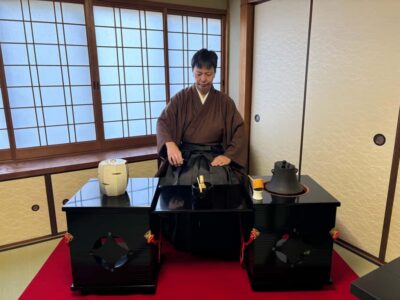 ★ 4.8Kyoto Ninenzaka: Tea Ceremony in Old Townhouse with ChairsFrom $21215 reviews
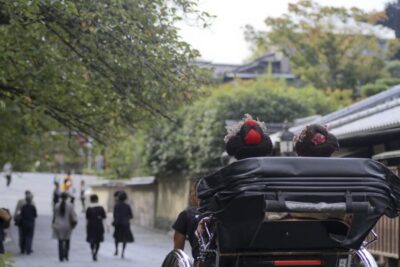 ★ 5.0Private Rickshaw Tour of Gion and Higashiyama AreaFrom $51144 reviews
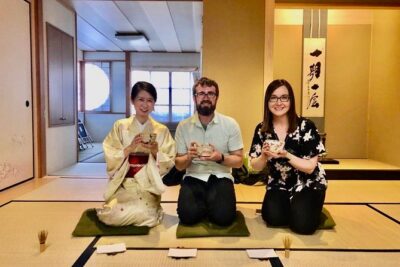 ★ 5.0Kyoto Tea Ceremony & Kiyomizu-dera Temple Walking TourFrom $109115 reviews
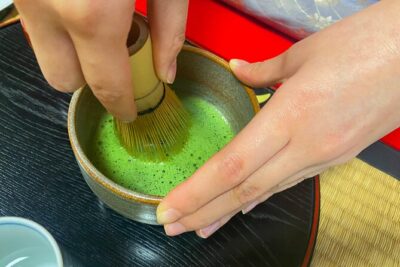 ★ 5.0Kyoto Kiyomizu Tea Ceremony with Scenic Garden ViewsFrom $50101 reviews
 ★ 4.7Kimono/Yukata Rental 5 Minute from Kiyomizu-deraFrom $1989 reviews
Browse the lists this tour appears in