
Reviewed · HISTORICAL TOURS
Kyoto Heritage Run – Venture through historical Kyoto landmarks
You can hit Kyoto’s biggest sights on sore legs. This city jogging tour turns about 10 kilometers of running with short Tabata-style workouts into a fast, fun way to cover key spots like the Imperial Palace area and the riverside stretch along Shirakawa. I also like how the pace stays tied to storytelling, with guides Francis and Areo guiding you to better-than-average viewpoints instead of just marching past monuments.
One thing to consider: this is for people with moderate fitness, and it depends on good weather—plus there’s no lunch or bottled water included, so you’ll want to plan your own fuel.
In This Review
- Key Things to Know Before You Go
- City Jogging in Kyoto: Why This Format Works
- The Meeting Point: Nijojo-mae Station and the Nijo Castle Start
- Imperial Palace Park: The Jog East and the Tabata-Style Workout
- Cross the Kamogawa, Then Heian Shrine for a Cultural Reset
- Shirakawa River: The Torii Moment and the Weeping Willows Effect
- Maruyama Park and Yasaka Shrine: Wind Down in the Right Place
- Gion District and the Kamogawa Finish Near Gion-Shijo Station
- Price and Value: Is $97.55 Worth It?
- Who This Tour Fits Best (and Who Should Skip It)
- Tips to Get More Out of the Experience
- Should You Book Kyoto Heritage Run?
- FAQ
- FAQ
- What is the duration of the Kyoto Heritage Run?
- Where do you meet, and what time does it start?
- How far do you cover during the tour?
- What major stops are included?
- What does the price include?
- What is not included?
- Is it suitable for someone with limited fitness?
Key Things to Know Before You Go
- Small group (up to 12 people), so you’re less likely to get swallowed by crowd chaos
- A clear 8:30 am start at Nijojo-mae Station, opposite Nijo Castle
- About 10 kilometers in roughly 3 hours, mixing steady jogging with brief workout drills
- Riverside highlights along Shirakawa (weeping willows and small stone bridges) and a finish by Kamogawa
- Landmark sequence you can’t easily mash together on foot at a tourist pace: Imperial Palace Park → Heian Shrine → Yasaka Shrine/Maruyama Park → Gion area
- Mobile ticket for a straightforward check-in flow
City Jogging in Kyoto: Why This Format Works
Kyoto has a way of making walking feel endless. Long slogs add up fast, and once you’re tired, sightseeing gets cranky. This tour solves that by turning motion into the plan. You’re moving for a good chunk of the experience, so the day doesn’t just sit on a checklist—it turns into momentum.
The other thing I like: it’s not only about speed. You get short history framing at the start, then you get physical work in manageable bursts. That combination—mind engaged plus body doing something—keeps the tour feeling purposeful without turning into a boot camp.
And because the group stays small, the guide can actually steer you toward quieter moments. One piece of feedback I really took seriously is how Francis and Areo helped people see both major landmarks and lesser-known stops they likely would have missed if they were wandering on their own. In a city like Kyoto, that’s where value shows up.
Other Kyoto tours and experiences to compare
The Meeting Point: Nijojo-mae Station and the Nijo Castle Start
You start at Nijojo-mae Station, right by the area connected with Nijo Castle (outside viewing). It’s a smart kickoff because you’re anchoring the experience in the city center, with an immediate sense of place. Nijo Castle is presented as a former residence of the Tokugawa shoguns from the 1603–1868 period, which gives you a time jump right before you start moving.
Before you break into jogging, there’s a warm-up plus a brief orientation to Kyoto City. This matters more than it sounds. If you’re not used to running in a new place, you want your body to feel ready before you commit to pace. The warm-up helps you avoid that first-jog wobble, especially because the route keeps you on your feet for about 3 hours.
Practical note: you’re near public transportation, and the start is easy to find. Still, show up a few minutes early so you can settle your shoes, grab your phone for the mobile ticket, and get oriented without rushing.
Imperial Palace Park: The Jog East and the Tabata-Style Workout
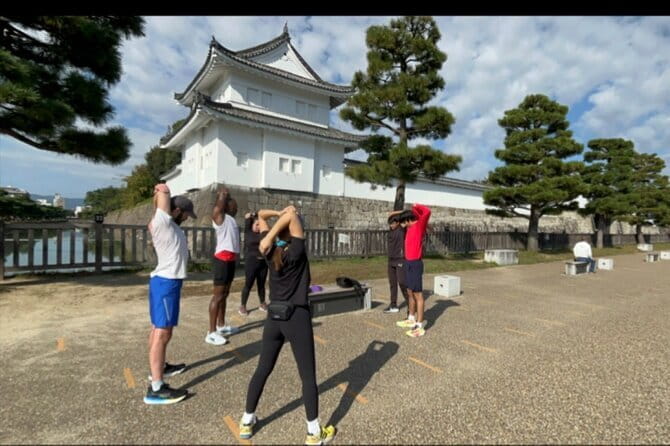
From the station, you head east toward the Imperial Palace area. The tour positions this as more than a scenic detour: it’s where you get one of the key workout moments. After arriving, you’ll take part in Tabata-style exercises as part of the experience.
Here’s why that’s a good design choice for sightseeing days. Tabata is short, intense bursts rather than long, steady grinding. That means you still get to see the space around you, but you also get that endorphin boost that can make the rest of the route feel lighter. It’s also a natural break after the initial jogging segment—so you’re not just running until you feel wrecked.
You’ll also get time for lesser-known, off-the-main-path viewpoints around this area. The tour frames this as a way to see more than you’d manage on a traditional sightseeing walk. If you’ve ever felt that Kyoto tours either move too fast or stop too much, this structure sits in the middle: it’s active, but it’s also guided.
Possible downside: if you’re the type who only wants a gentle stroll, Tabata-style work will feel like the opposite of chill. On the flip side, if you like fitness with a destination attached, this is one of the best parts of the itinerary.
Cross the Kamogawa, Then Heian Shrine for a Cultural Reset
After the Imperial Palace grounds segment, you cross the Kamogawa. The tour describes the river as echoing past battles—an interesting framing that turns a normal crossing into a quick historical pause.
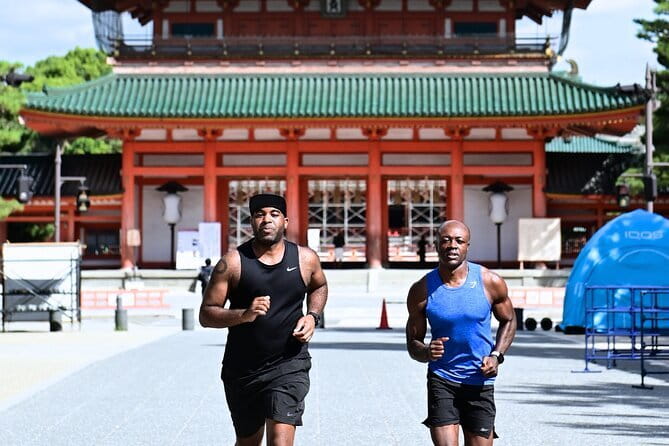
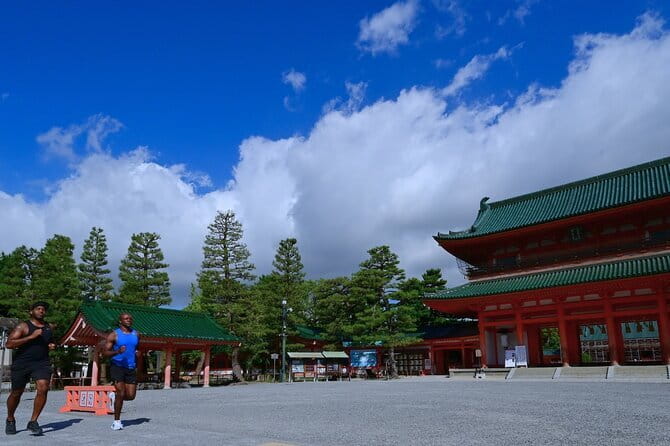
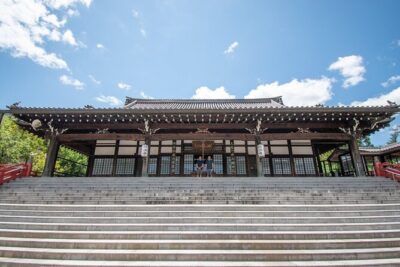
Next up: Heian Shrine, with a brief stop. The stop is short, but the point is to give you a cultural anchor mid-route. Heian Shrine is described as a majestic architectural marvel steeped in Kyoto’s cultural heritage. In practice, that means you get a meaningful visual break while the guide keeps the route moving.
This is also a good moment if you’re pacing yourself. The running is steady enough to cover ground, but the stops prevent the day from feeling like one long loop of effort. You’ll likely appreciate the balance if you’re traveling with mixed fitness levels—though the tour does expect moderate fitness overall.
Shirakawa River: The Torii Moment and the Weeping Willows Effect
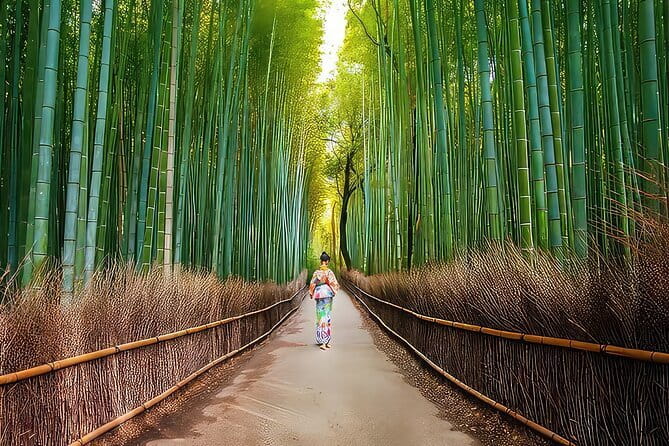
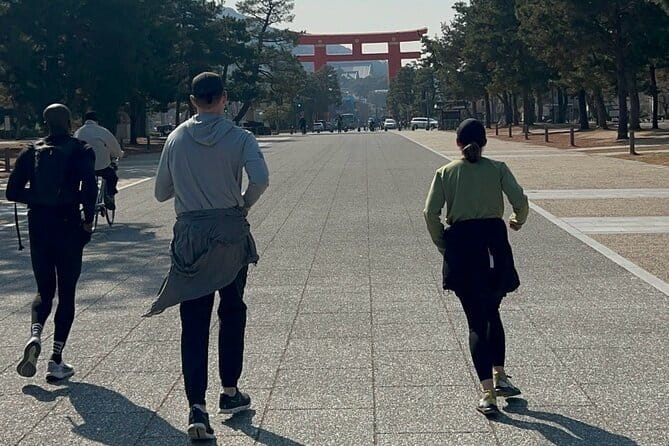
As you continue, you pass through an immense torii gate and then jog along the Shirakawa River. This is one of those Kyoto route stretches that works because it’s scenic in a practical way, not just pretty on a postcard.
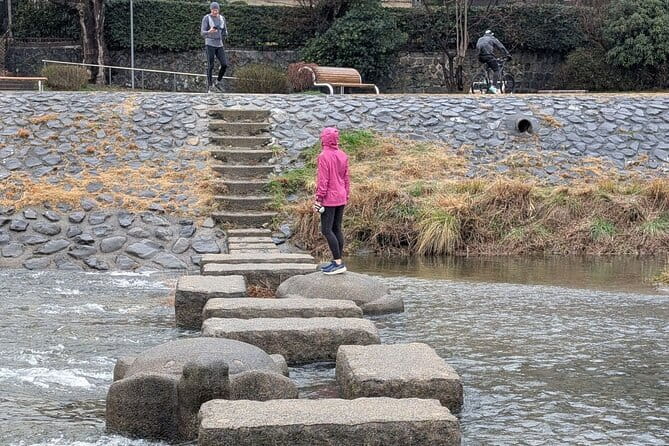
The tour highlights weeping willows and small stone bridges along the riverbank. That matters because it turns your jogging corridor into a series of visual stops. Even if you’re focused on your stride, your eyes keep collecting details, so it doesn’t feel like monotonous exercise.
And since this section is described as part of the route leading toward Maruyama Park and Yasaka Shrine, the pacing feels intentional. The river gives you a moving “breather,” and it helps set up the next zone emotionally—more spiritual and more people-focused.
Small caution: river paths can mean uneven footing depending on the section. The itinerary doesn’t spell out surfaces, so wear shoes you trust for running, not just walking shoes that feel fine on flat pavement.




Maruyama Park and Yasaka Shrine: Wind Down in the Right Place
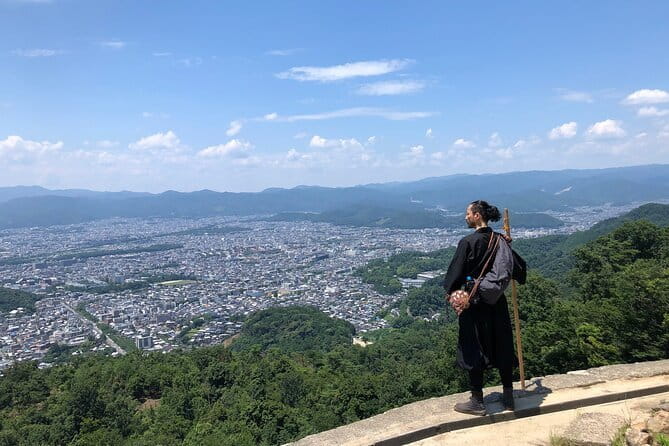
You reach Maruyama Park, described as serene beauty, and then Yasaka Shrine. The tour ties this area directly to the finish-phase mood, where you’re not only arriving at sights—you’re also shifting gears.
Yasaka Shrine is part of the Maruyama Park area in this route flow, and this stop is where the tour starts to slow into its final stretch. That’s a big deal because it changes how you experience the last leg. Instead of feeling like you’re running to exhaustion and then hoping you remember to stretch, you get a structured wind-down.
This is also where the route connects to the broader Kyoto experience. You’re moving through areas that feel unmistakably Kyoto, then closing the loop toward the east side where the day’s energy naturally builds around the Gion zone.
If you care about photo stops, this phase tends to reward you. The tour doesn’t promise long lingering time, but the park-and-shrine combination is the kind of setting where even a short stop feels worth it.
Gion District and the Kamogawa Finish Near Gion-Shijo Station
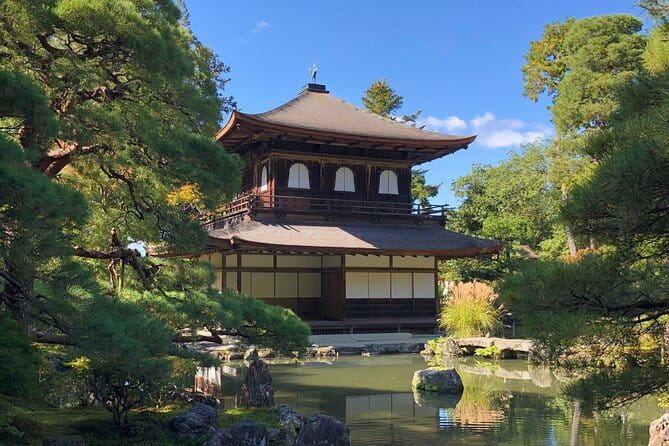
On the way, you pass through Gion District, where the tour notes the ancient art of geisha endures. Gion can feel like Kyoto at full volume—quiet beauty blended with real street life. By placing it in the middle-to-late part of the tour, the guide gives you a sense of how the city’s cultural areas connect, rather than treating each landmark like a disconnected stop.
Finally, the tour ends on the eastern bank of the Kamogawa with stretches. Finishing with stretching is not a small detail. After a run (even a guided run), a quick set of stretches helps you transition from tourist mode back to regular day walking without feeling stiff for the rest of your trip.
The end point is not the same as the start. The tour places the conclusion around Gion-Shijo Station, which is useful to know because it changes your departure planning. If you want to keep traveling that day, plan your next stop in the east-side area rather than assuming you’ll end right back where you started.
Price and Value: Is $97.55 Worth It?
At $97.55 per person for roughly 3 hours and about 10 kilometers of guided running, the price feels fair when you consider what you’re buying: organization, route planning, and active sightseeing in one package.
Here’s where the value is really hiding:
- You’re not just paying for access to places. You’re paying for a specific sequence that covers major Kyoto landmarks and a few quieter corridors in one run.
- The tour bundles a warm-up, short history context, and workout segments (including Tabata-style intervals) so you don’t have to figure out how to pace yourself while also reading signs and searching for routes.
- The small group size (max 12 people) means you’re less likely to feel lost in the shuffle.
Things that reduce the value a bit: lunch and bottled water are not included. That’s normal for active tours, but it’s still a real budget factor. If you’re the type who needs snacks or hydration breaks, bring a plan for it before you join.
Also, it requires good weather. If rain hits, you might be offered a different date or a refund. That uncertainty is worth factoring into your schedule.
Who This Tour Fits Best (and Who Should Skip It)
This is ideal if you want Kyoto, but you also want to feel like you did something that day—not just walked in circles.
It’s a great fit if you:
- like fitness and want it paired with a sightseeing route
- prefer fewer crowds and a more structured way to see central Kyoto
- enjoy guided history, even if it’s delivered in short bursts
- want a day plan that feels efficient but not rushed
It might not be the best fit if you:
- dislike running or intense intervals like Tabata-style work
- want a slow, sit-down sightseeing pace
- don’t feel comfortable with moderate fitness demands
- need a guaranteed long, relaxed time at each stop
Tips to Get More Out of the Experience
You’ll enjoy this more if you treat it like an active day, not a casual stroll.
- Wear running shoes you can trust. The route includes riverside stretches and you’ll be moving for about 3 hours.
- Bring your own hydration strategy since bottled water isn’t included.
- If you’re planning lunch afterward, eat after the stretches. Don’t plan a heavy meal immediately at the end.
- Arrive early so you can warm up mentally and physically before the guide calls you into motion.
- If you’re sensitive to weather, watch the forecast. The tour is described as requiring good weather for operation.
Should You Book Kyoto Heritage Run?
If you’re trying to see central Kyoto without turning your day into a slow grind, I think this is a strong choice. The combination of landmarks, riverside route sections, and built-in workout breaks makes it a memorable way to cover ground. The best praise tied to the experience is the way Francis and Areo help you reach both well-known sites and lesser-seen areas without you needing to be a map expert.
I’d book it when:
- you want an efficient morning plan
- you’re comfortable with moderate fitness and brief high-energy drills
- you’d rather move through Kyoto with guidance than wander aimlessly
I’d skip it when:
- you want a fully relaxed sightseeing day
- you don’t want any running or exercise components
- you’re traveling with a schedule that can’t flex if weather changes
FAQ
FAQ
What is the duration of the Kyoto Heritage Run?
The tour lasts about 3 hours.
Where do you meet, and what time does it start?
You meet at Nijojo-mae Station (opposite Nijo Castle), with a start time of 8:30 am.
How far do you cover during the tour?
The experience describes an approximately 10-kilometer route.
What major stops are included?
The tour includes Kyoto Imperial Palace Park, Heian Shrine, Yasaka Shrine (via Maruyama Park), the Gion area, and the Kamogawa River, plus route jogging along Shirakawa River.
What does the price include?
It includes all fees and taxes.
What is not included?
Lunch and bottled water are not included.
Is it suitable for someone with limited fitness?
The tour is designed for people with moderate physical fitness, since it’s a city jogging format with workout segments.
More Historical Tours in Kyoto
More Tour Reviews in Kyoto
Just added: more Kyoto tours to browse








Historical Tours, compared.
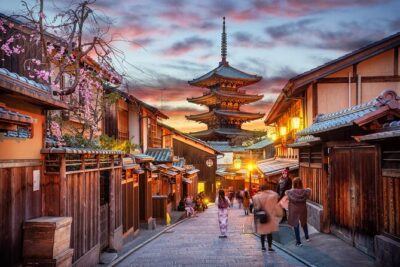 ★ 5.0Kyoto Gion: 2-Hour Geisha Culture & History Walking TourFrom $231,186 reviews
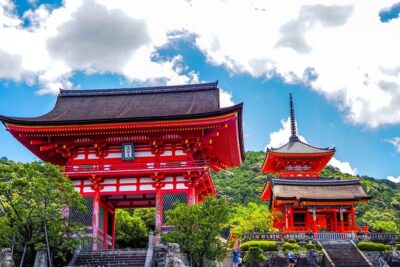 ★ 5.0Kyoto Gion Historical Walking TourFrom $40188 reviews
 ★ 5.0Historical Kyoto E-Bike TourFrom $99181 reviews
 ★ 5.0Nijo Castle World Heritage Guided Tour with AdmissionFrom $39128 reviews
 ★ 4.9Private 2.5 Hour Historical Walking TourFrom $80121 reviews
 ★ 4.8From Kyoto: Nara History Guided Half Day Bus Tour with LunchFrom $77114 reviews
 ★ 4.6Uji: UNESCO Heritage & Tea Ceremony Walking TourFrom $6654 reviews
 ★ 5.0Private car tour Let’s uncover secrets of majestic Kyoto historyFrom $10845 reviews
Browse the lists this tour appears in