
Reviewed · WALKING TOURS
Kyoto Early Bird Walking Tour
Start early, see Kyoto before it swells. This half-day plan strings together Fushimi Inari, Kinkaku-ji, and Arashiyama before the big crowds lock in.
I especially love getting a quiet first look at the Golden Pavilion area and pond, and I like that the tour finishes before midday so you keep your afternoon free.
One thing to plan for: it’s a lot of walking, and you’ll have extra costs for Kinkaku-ji admission plus public transport.
Key highlights worth waking up for
- Torii gates at Fushimi Inari before the lines grow
- Kinkaku-ji right at opening for calmer viewing
- Arashiyama bamboo in cool morning light
- Guides who help you move efficiently between Kyoto neighborhoods
- A half-day schedule that protects your afternoon plans
In This Review
- Why the early timing matters more than you think
- Kyoto Station meeting point and mobile ticket basics
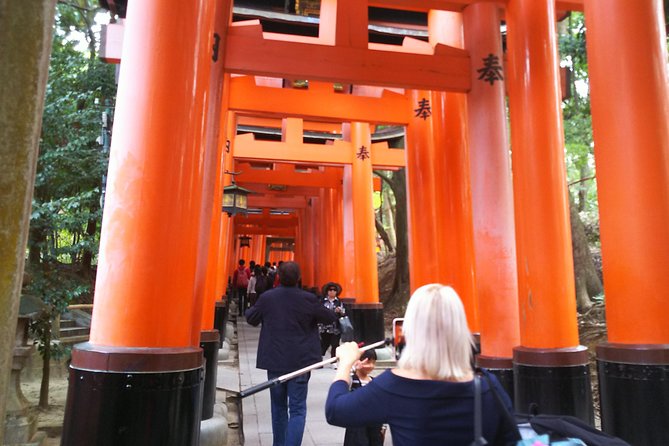
- Stop 1: Fushimi Inari-taisha torii gates before the crowds
- Stop 2: Kinkaku-ji at opening for calm views of the Golden Pavilion
- Stop 3: Arashiyama bamboo forest while the air is cool
- Price and what you really pay for (guide + timing + logistics)
- What the guides do for you (beyond pointing out buildings)
- Walking stamina, what to pack, and how to avoid the morning crash
- Getting your afternoon free: how to keep the momentum
- Who should book this tour, and who might want a different plan
- Should you book the Kyoto Early Bird Walking Tour?
- FAQ
- How long is the Kyoto Early Bird Walking Tour?
- Where is the meeting point, and do we return there?
- What is included in the tour price?
- What’s not included in the price?
- Which attractions are visited on the tour?
- Is Kinkaku-ji admission included?
- Is this a private tour?
- Is the tour suitable for limited mobility or limited eye sight?
- What should I bring or prepare for?
- What happens if the weather is poor?
- Can I cancel for a full refund?
Why the early timing matters more than you think
Kyoto gets crowded in a hurry. The classic mistake is going when the city is most photogenic. Great photos, sure. But you also get slow-moving lines, packed sidewalks, and a mood that turns from sightseeing to survival.
This tour’s whole trick is timing: you start in the early morning and you’re done by noon (about 5 hours 15 minutes total). That means you get the same headline sights, but with breathing room. One guide group of reviews even makes the point crystal clear: going early turned sparse crowd moments into the best part of the day, especially at Fushimi Inari and the Golden Pavilion.
You’re also not stuck in a full-day itinerary that forces you to like everything equally. You’ll hit three major stops, then you can spend the afternoon exactly how you want—shopping, more temples, a café crawl, or just wandering the neighborhoods that grabbed your attention.
Kyoto Station meeting point and mobile ticket basics
You meet at Kyoto Station (building address: 901 Higashishiokōjichō, Shimogyo Ward). It’s a solid choice because Kyoto Station is where most first-timers orient themselves, and it keeps the start simple.
The tour uses a mobile ticket, and you’ll receive confirmation at booking. In practice, that matters because you’re not hunting for paper vouchers at the busiest transportation hub in Japan.
You’ll also end back at the meeting point. So you’re not charting a complicated return through different stations after a morning that already includes walking and transit.
Other Kyoto tours and experiences to compare


Stop 1: Fushimi Inari-taisha torii gates before the crowds
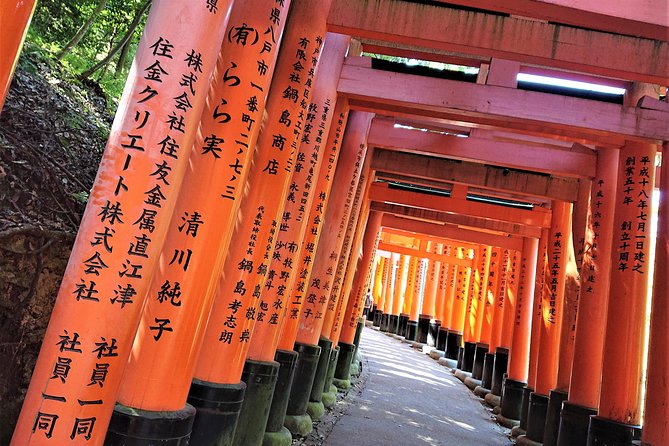
Fushimi Inari-taisha is the one Kyoto stop most people instantly recognize, even if they can’t place it on a map. You’re walking through a famous tunnel of thousands of vermilion torii gates—and in the morning, the scene feels more like a pilgrimage than a theme-park queue.
Why this stop works best here:
- You arrive before the big wave of visitors tightens the paths.
- The gates create a natural flow through the shrine grounds, so the walking feels productive instead of random.
- You get that early-morning sense of quiet that’s hard to manufacture later in the day.
What to consider:
- Even though this is one of the main “wow” moments, it’s also one of the more vertical-feeling areas depending on how far you wander on your own. This tour is timed and guided, but you’ll still be on your feet a fair amount.
Good planning tip: wear shoes you trust. Multiple guide reviews stress that walking adds up, and this stop is a big part of that.
Stop 2: Kinkaku-ji at opening for calm views of the Golden Pavilion
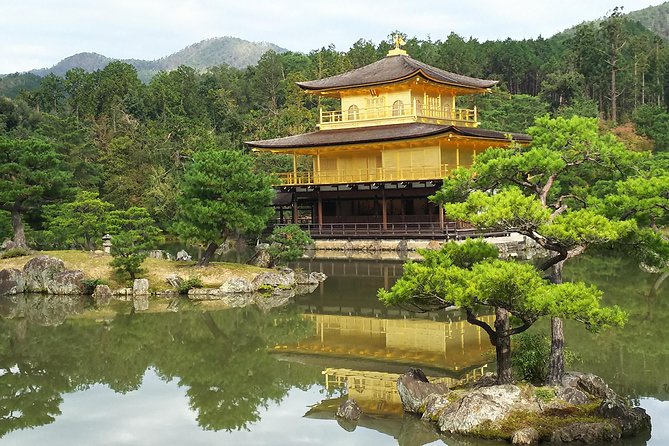
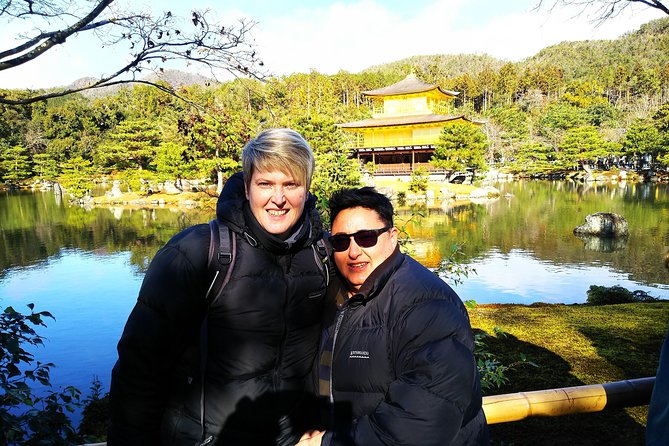
If Fushimi Inari is the iconic entrance, Kinkaku-ji is the iconic centerpiece. This Zen temple is known as the Golden Pavilion, and the experience is built around that gilded building and its surrounding pond.
The big win on this tour is that you enter right after it opens in the morning. That timing is what turns Kinkaku-ji from crowded-and-noisy into calm-and-noticed. You can actually slow down enough to appreciate details like:
- the reflective look of the pavilion surface
- the pond area and morning quiet around it
- the overall atmosphere before tour groups pile in
Cost note (important):
- Kinkaku-ji admission is not included.
- You’ll pay ¥500 per person for the temple admission ticket.
Another practical note from the tour details: expect about 1 hour at this stop. That’s enough to see the signature views without feeling rushed, especially because the rest of the day is also scheduled.
Stop 3: Arashiyama bamboo forest while the air is cool
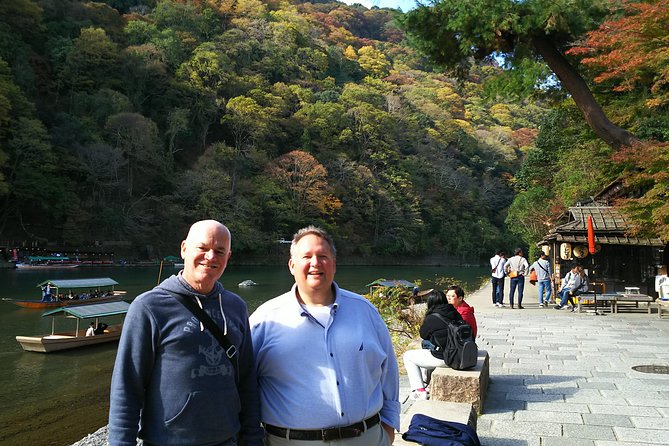
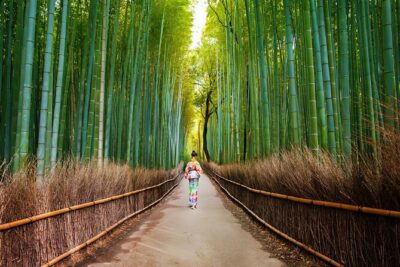
After Kinkaku-ji, the tour heads to Arashiyama, where the main star is the bamboo forest. In the early morning, the grove feels cooler and more spacious, and the sound of breeze through bamboo is the kind of sensory detail you’ll remember longer than yet another landmark photo.
Why Arashiyama in the morning hits different:
- the light filters in more gently
- it’s easier to move at a walking pace without shoulder-to-shoulder crowding
- the atmosphere is less frantic, so you can actually look up and around
Time on site is about 1 hour. And unlike Kinkaku-ji, Arashiyama is listed as free for admission.
What to watch:
- You’re not just standing in one place. You’ll be walking through the bamboo area and moving between viewpoints, so your feet will notice this stop, especially if you’ve also explored on your own earlier in the day.
Price and what you really pay for (guide + timing + logistics)
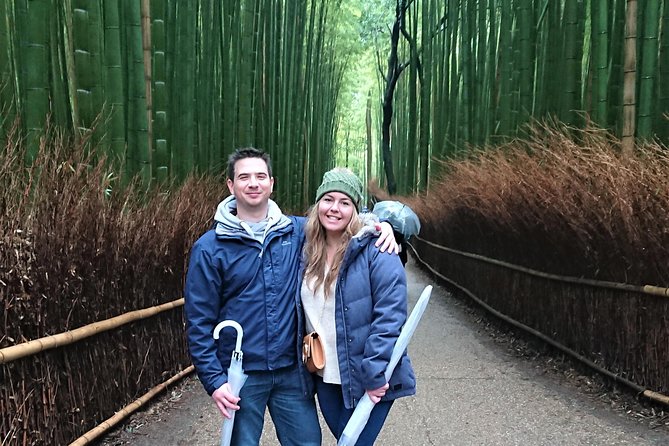
The tour price is $105.45 per person. That figure is the baseline for the guided experience (the guide fee).
Then you add the costs that are specifically not included:
- Public transportation fare: ¥1,220 per person
- Kinkaku-ji admission: ¥500 per person
- Food and drinks are not included
So is it good value? For this specific route, I think it can be. Here’s why:
- You’re getting three top-tier sights in one morning without spending your time figuring out transit between Kyoto’s most popular areas.
- You’re paying for timing—the most expensive commodity in Kyoto is your patience during peak crowds. Starting early and finishing by noon is a real, practical benefit, not marketing fluff.
- The tour is set up like a guided flow: you’re not stuck bouncing between stations and trying to guess routes while everyone else is doing the same.
Also, the tour is noted as private, meaning only your group participates. That can matter for families and small groups because you’re not squeezed into a large mixed crowd.




What the guides do for you (beyond pointing out buildings)
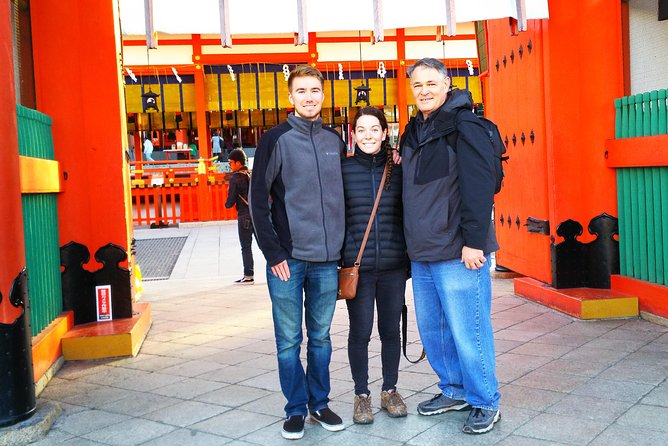
The most consistent praise in the reviews is about guides doing real work, not just giving surface facts. Names that show up often include Akiko, Kaz, Tomoko, Hiro, Emiko, Makoto-san, and Sumiko—and the common theme is that guides help you feel organized and informed.
From those experiences, you can expect things like:
- clear navigation help between Kyoto Station and the different neighborhoods
- explanations of what you’re seeing and why it matters in Japanese culture
- attention to your group’s pace, including photo stops
- quick practical check-ins such as restroom timing and comfort
One review even calls out a guide helping locate a pharmacy, which is exactly the kind of low-drama support you’ll appreciate when you’re moving fast and it’s early.
And if you’re a photo person, you’ll likely get pointed toward better angles. Some guides are specifically mentioned for knowing photo spots. Even if you don’t care about Instagram, it helps you avoid the most obvious “everyone stands there” view.
Walking stamina, what to pack, and how to avoid the morning crash
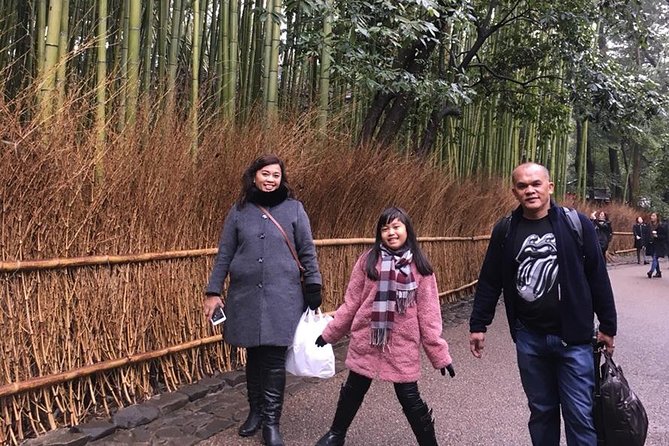
This tour is straightforward: guided visits, a set walking route, and a schedule that expects you to keep moving. The details say it requires comfortable shoes and that there’s quite a bit of walking.
Here’s what I’d pack based on the tour info and the practical tips shared in reviews:
- Comfortable walking shoes (non-negotiable)
- Water (reviews specifically recommend bringing it)
- Weather protection: a sun umbrella is suggested for summer by one guide’s advice, and rain plans are a reality in Japan
One more thing: the tour isn’t recommended for people with heart conditions. That doesn’t mean you must skip Kyoto—just that you should be careful with early starts and sustained walking. If that applies to you, ask your booking provider what adjustments are possible.
Getting your afternoon free: how to keep the momentum
The tour ends by noon and returns you to the meeting point area, which gives you options.
Here are high-value ways to spend the afternoon without wasting your morning effort:
- Pick one theme and go deeper: temples, gardens, or neighborhood wandering
- Do a second “just one more” stop you missed earlier, but keep it close to where you’ll be after the tour
- Use the afternoon to slow down. The whole point of the early bird plan is that you’ve already handled the crowd magnets.
If you’re arriving in Kyoto for the first time, this structure is especially nice: you get an overview of the city’s must-see styles (shrine gates, Zen pavilion, bamboo grove) and then you can decide what you want more of later.
Who should book this tour, and who might want a different plan
This tour is a strong fit if you:
- want Kyoto’s biggest highlights in one morning
- hate crowd stress and prefer starting early
- like having a guide handle transit and timing
- are traveling with family and want a plan that keeps everyone on track (reviews mention guides being great with young kids)
It may be less ideal if you:
- don’t like walking and standing for multiple hours
- have heart conditions (not recommended)
- want a slower, spend-all-day temple experience with lots of free roaming and long café breaks
Because it’s marked accessible for limited eye sight and limited mobility, it’s worth asking questions if you fall into those categories. Just keep in mind the tour still lists a moderate physical fitness requirement.
Should you book the Kyoto Early Bird Walking Tour?
If your main goal is to see Fushimi Inari, Kinkaku-ji, and Arashiyama bamboo with less crowd hassle, I’d book it. The early start plus the half-day finish is the core value: you spend your energy on the sights, not on lines and logistics.
I’d especially recommend it to first-timers who want a smart first morning and then freedom afterward. For returning travelers, it can still work if you’re chasing a calmer pace at the most popular spots—though you may already know your way around and could plan a cheaper self-guided route.
My practical bottom line: pay for the guide if you want time savings and stress control. Budget the extras for Kinkaku-ji admission and transit, and bring shoes that can handle Kyoto mornings.
FAQ
How long is the Kyoto Early Bird Walking Tour?
The tour duration is about 5 hours 15 minutes.
Where is the meeting point, and do we return there?
You meet at Kyoto Station (building address: 901 Higashishiokōjichō, Shimogyo Ward). The tour ends back at the meeting point.
What is included in the tour price?
The tour includes the guide fee. A mobile ticket is used for the experience.
What’s not included in the price?
Food and drink are not included. Public transportation fare (¥1,220 per person) and Kinkaku-ji Temple admission (¥500 per person) are also not included.
Which attractions are visited on the tour?
The tour covers Fushimi Inari-taisha, Kinkaku-ji Temple, and Arashiyama.
Is Kinkaku-ji admission included?
No. Kinkaku-ji admission is not included and costs ¥500 per person.
Is this a private tour?
Yes. It’s listed as a private tour/activity, and only your group participates.
Is the tour suitable for limited mobility or limited eye sight?
It is marked as accessible for those with limited eye sight and limited mobility, but it also notes a moderate physical fitness level requirement. It is not recommended for people with heart conditions.
What should I bring or prepare for?
The tour advises comfortable shoes since it involves quite a bit of walking. It also requires good weather, so having weather protection ready is a smart idea.
What happens if the weather is poor?
The experience requires good weather. If it’s canceled due to poor weather, you’ll be offered a different date or a full refund.
Can I cancel for a full refund?
Yes. You can cancel up to 24 hours in advance for a full refund. If you cancel less than 24 hours before the experience starts, the amount paid won’t be refunded.
More Walking Tours in Kyoto

More Tours in Kyoto
More Tour Reviews in Kyoto
Just added: more Kyoto tours to browse








Walking Tours, compared.
 ★ 4.7Kyoto Geisha Walking Tour: Gion District & Hidden GemsFrom $253,273 reviews
 ★ 4.9Gion Magical Night Walking Tour with Geisha TriviaFrom $242,393 reviews
 ★ 4.7Gion Geisha District Walking Tour – Stories of GeishaFrom $202,187 reviews
 ★ 4.5Night Walk in Gion: Kyoto’s Geisha DistrictFrom $212,003 reviews
 ★ 5.0Kyoto Gion Geisha District Walking Tour – The Stories of GeishaFrom $251,441 reviews
 ★ 5.0Nishiki Market Brunch Walking Tour (7 Tastings + Brunch)From $681,355 reviews
 ★ 5.0Kyoto Arashiyama Walking Tour: Bamboo, Monkeys, Gardens & SecretsFrom $651,216 reviews
 ★ 5.0Kyoto Gion: 2-Hour Geisha Culture & History Walking TourFrom $231,186 reviews
Browse the lists this tour appears in