
Reviewed · ARASHIYAMA & BAMBOO GROVE TOURS
Kyoto: Avoid the Crowds at the Hidden Gems of Arashiyama
Arashiyama can feel like a theme park. This 4-hour walk is a smarter way in, focusing on the iconic spots plus the quieter back lanes that make the area feel real. I especially like the mix of Togetsukyo Bridge views and the offbeat temple stops, like the 8,000 stone images at Adashino Nenbutsuji. The route also gives you an organized way to enjoy Arashiyama without spending your time doing crowd math.
Two things I like a lot: you get that classic bamboo-forest photo moment without only being stuck in the busiest lanes, and your guide connects the sights to what’s behind the place—Okusaga and Arashiyama’s story as you walk. It’s not just sightseeing; it’s context, in plain language.
One consideration: you will walk a moderate amount, so plan on steady shoes and a bit of stamina. And if you need wheelchair access, this one isn’t set up for it.
In This Review
- Key things you’ll notice on this Arashiyama route
- Why Arashiyama feels different when you leave the main flow
- Starting at Saga Arashiyama Station: get your bearings fast
- Togetsukyo Bridge and the Arashiyama Park observatory: views that set the tone
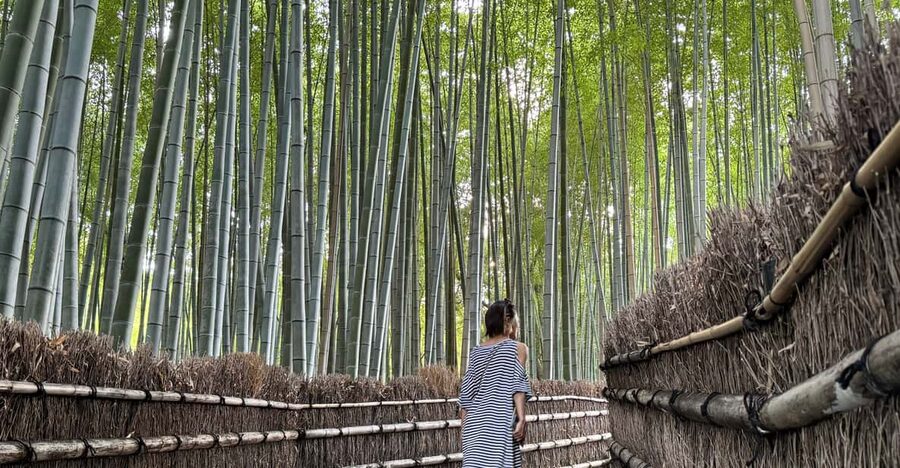
- Bamboo forest photo stop: how to get the shot you came for
- Otagi Nenbutsuji: 1,200 whimsical statues that reward slow looking
- Adashino Nenbutsuji: 8,000 stone images and pagodas
- Saga Toriimoto preserved street and local shop time
- Seiryoji Temple: a calmer finish with Okusaga context
- Price and value: what $83 buys you in Arashiyama
- Group size and pace: the upside of a smaller format
- What to bring (and what to skip)
- Who this tour is best for
- Should you book this Arashiyama tour?
- FAQ
- How long is the Kyoto: Avoid the Crowds at the Hidden Gems of Arashiyama tour?
- Where do I meet the guide?
- What languages are available for the tour?
- What is included in the tour price?
- What is not included?
- What sights will we see during the tour?
- Is there a moderate amount of walking?
- Is the tour suitable for wheelchair users or mobility impairments?
- What should I bring?
- Can I cancel and get a refund, and can I reserve without paying today?
Key things you’ll notice on this Arashiyama route
- Togetsukyo Bridge first, so you get the river-and-bridge views before the day gets too loud
- Arashiyama Park observatory stops your momentum for scenic looks and photos
- Bamboo forest picture stop designed for results, not standing in the densest flow
- Otagi Nenbutsuji’s 1,200 playful statues—small details that feel like a scavenger hunt
- Adashino Nenbutsuji’s 8,000 stone images and pagodas for a genuinely strange, moving atmosphere
- Saga Toriimoto preserved street + local shops to slow down and shop like a resident
Why Arashiyama feels different when you leave the main flow
Arashiyama’s well-known parts get busy fast. The practical advantage of this tour is that it helps you avoid wasting energy in the center while still hitting the places most people come for. You start at Saga Arashiyama Station and build outward, so you’re not constantly backtracking.
The vibe you’re chasing is quieter and more human-scale. That matters here because Arashiyama isn’t only about one postcard scene; it’s about stepping through changing neighborhoods—bridge, park overlooks, temple paths, and preserved-street lanes—so the area gradually makes sense as a whole.
And yes, you still get the headline moments: the bridge, the bamboo area for photos, and major temple visits. But the route keeps pulling you into the side streets and temple grounds where the day feels less staged.
Deeper into Arashiyama, past the bamboo and the Hozu river

Starting at Saga Arashiyama Station: get your bearings fast
Your meeting point is simple: meet your guide at the ticket gate at Saga Arashiyama Station. The guide holds a yellow sign with the DeepExperience logo, so you don’t need to play guess-the-representative.
This is the right style of start for Kyoto. You avoid a complicated first-transport scramble, and you can arrive, find your guide, and get moving while the light is good. From there, the day stays structured: scenic stops, then temple visits, then preserved street and a final temple before you circle back.
If you want to make the day smoother, arrive a little early to settle your shoes and camera settings. This tour includes multiple short walking segments that add up.
Togetsukyo Bridge and the Arashiyama Park observatory: views that set the tone
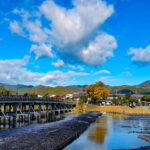
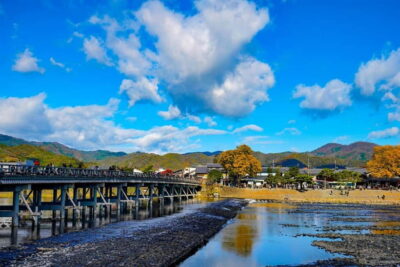
The tour heads straight for Togetsukyo Bridge, and that’s a smart move. The bridge is the anchor view everyone remembers, and starting here helps you capture that river-and-bridge perspective before your attention gets pulled into the rest of the area.
You then move on to Arashiyama Park’s observatory. Even if you think you already know what Arashiyama looks like, an overlook changes your sense of distance and layout. From higher ground, you can better spot where the bamboo grove sits, how the river corridor runs, and how the temple areas connect.
Practical tip: bring your camera and take a quick panorama early. Once you’re deep into the temples and side streets, it’s harder to stop for wide shots.
Bamboo forest photo stop: how to get the shot you came for
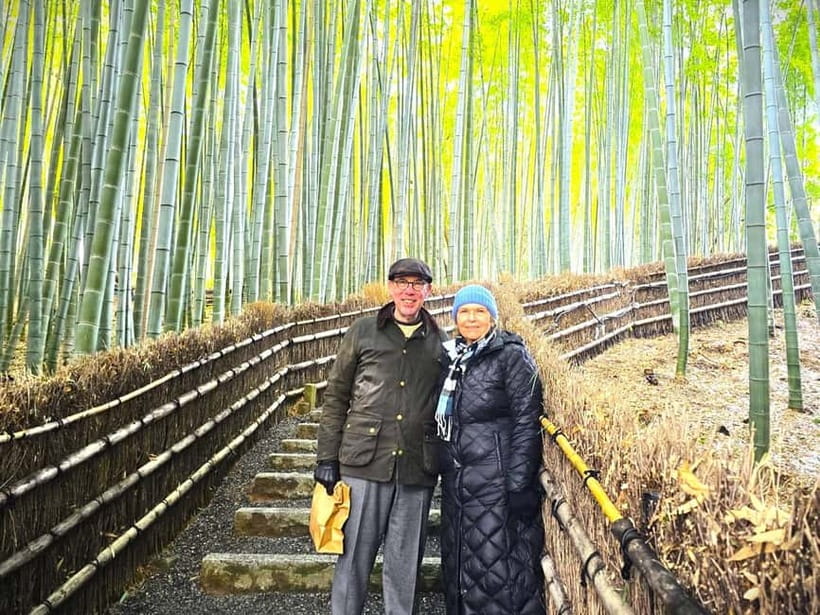
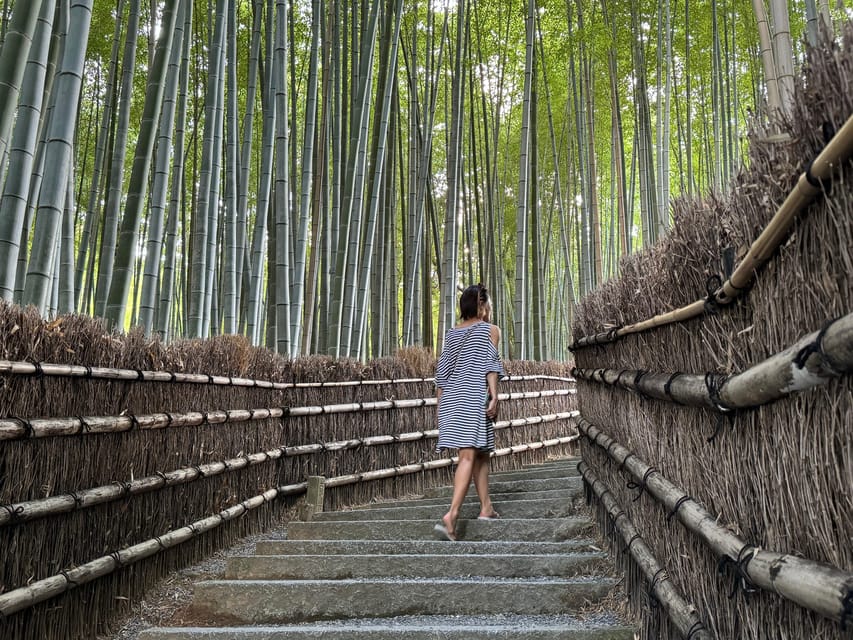
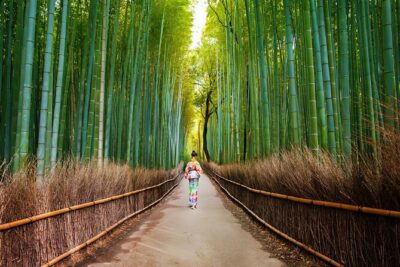
You’ll get a photo stop in front of the bamboo forest after the park segment. The listing calls it a short stop (just a few minutes), so don’t expect a long wandering free-for-all. But that’s part of why it works: you’ll have time to step into the best position, take pictures, and keep the day moving.
Look for shade and angle. Bamboo groves photograph best when you manage strong overhead light. If it’s bright, you may find the darker recesses of the grove frame better than the sunlit edges.
And remember: this is a tour stop, not a photo class. Wear comfortable shoes, and keep your camera ready so you’re not slowing the group as you figure out where to stand.
Otagi Nenbutsuji: 1,200 whimsical statues that reward slow looking
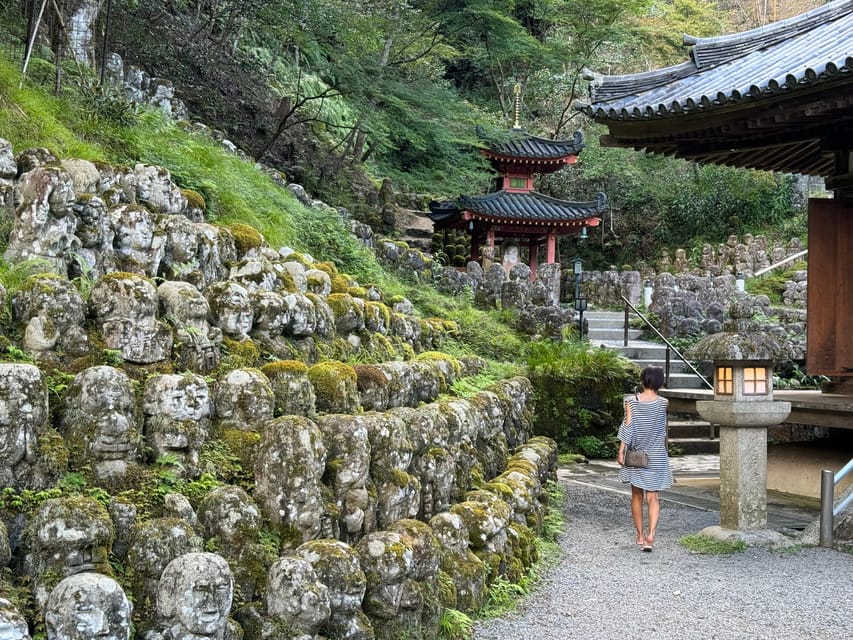
Next comes Otagi Nenbutsu-ji Temple, with time to actually enjoy the place (not just pass through). This is one of those temple experiences where you’ll keep noticing new details long after you first arrive.
The signature here is the collection of around 1,200 unique, whimsical statues. They’re playful and strange in a way that makes the site memorable. Some people rush because they think it’s only a novelty stop. Don’t do that. Give yourself time to circle, compare faces and poses, and read the mood of the carvings.
Good to know: admission is included, so you’re not spending your mental energy on tickets during the most fun part of the day.
If you’re the kind of traveler who loves “character” art—things that feel handmade and a little eccentric—this stop is a win.





Adashino Nenbutsuji: 8,000 stone images and pagodas
Then the tour turns more mysterious at Adashino Nenbutsu-ji Temple. This is where the day stops being simply scenic and becomes a little more atmospheric.
You’ll encounter 8,000 stone images and pagodas, which gives the grounds a powerful density. It’s not the kind of place where you feel like you’re taking a quick Instagram photo and leaving. The mass of stone shapes creates a feeling you need a few minutes to absorb.
Admission is included here too, which helps keep the pace smooth. If you’re sensitive to quiet spaces, this stop can be especially meaningful. Even if you’re not a temple expert, your guide’s explanations help you understand what you’re looking at and why it’s arranged the way it is.
Saga Toriimoto preserved street and local shop time
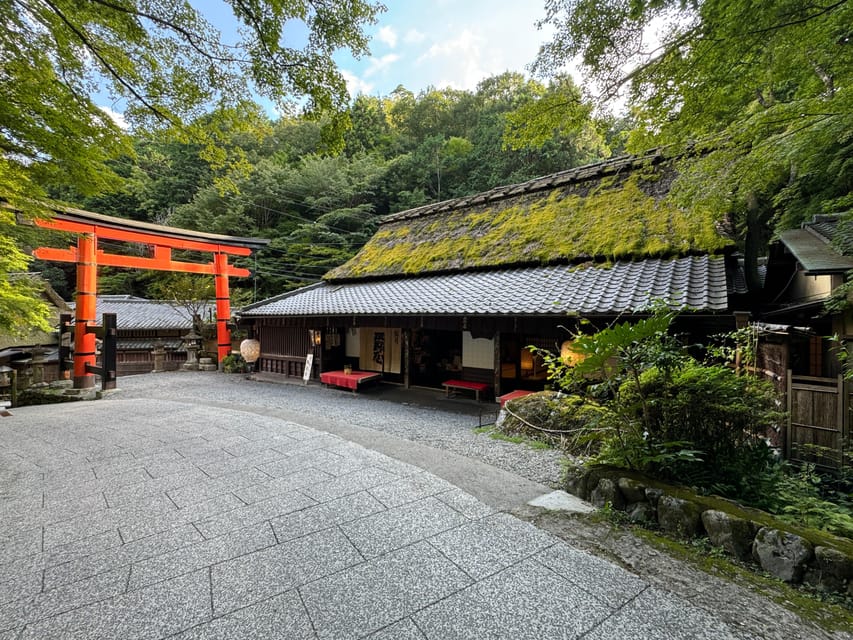
On the way toward Seiryoji Temple, you pass through Saga Toriimoto preserved street, a traditional street view filled with older Japanese houses. This isn’t just a photo corridor; it’s an easy place to slow down and look at daily life style and storefront rhythm.
What I like about this portion is the built-in chance to step away from temple crowds without needing to go hunting for side streets alone. Your guide also mentions local shops—there’s even time to stop for specialty items like:
- a cocoon dolls shop
- a washi paper shop
Because food and drinks aren’t included, this street can be your cue to browse for small snacks or decide what you’ll do after the tour. You can also pick up a souvenir here more easily than trying to do it at the end of a long day.
Seiryoji Temple: a calmer finish with Okusaga context
The last temple stop is Seiryoji Temple. The time is shorter here (about 15 minutes), so treat it as a closing chapter rather than a full deep visit. Still, finishing at another temple site gives the day a cohesive arc: bridge and bamboo visuals, then heavier temple atmospheres, then a final look that ties it together.
What makes this ending stronger is the running thread your guide brings—history and context about Okusaga and Arashiyama as you walk. The value isn’t just that you hear dates and names. It’s that you start recognizing how these places connect: landscape, religion, and the way communities shaped travel routes and sacred sites.
If you enjoy conversation, this is the part where your questions can get answered naturally. It’s hard to ask good questions when you’re stuck in a long queue. Here, you’re moving through the day with built-in pauses.
Price and value: what $83 buys you in Arashiyama
At $83 per person for 4 hours, you’re paying for four main things:
- a local guide who explains what you’re seeing
- admissions to Otagi Nenbutsuji Temple and Adashino Nenbutsuji Temple
- a route that balances iconic sights with quieter corners
- a small-group or private format (you can choose small groups or private options)
If you were doing this alone, you’d likely spend time figuring out order, transit, and ticket logistics, and you might miss the nuance that makes temple visits click. Here, you’re buying time and clarity, plus the ability to focus on photos and walking rather than constantly checking maps.
Food and souvenirs are not included, so you’ll want a small plan for water and a light meal decision. Luckily, the tour includes water as a suggested bring, and the preserved street segment gives you a place to browse if you’re hungry.
Group size and pace: the upside of a smaller format
The tour is offered as private or small groups. That matters in Arashiyama. A small group keeps you from feeling swallowed by the crowd wave, and it makes the guide’s explanations actually land.
Pace is moderate. The itinerary is made of short stops—bridge, park observatory, bamboo photo time, temple visits, preserved street walk—and then you end where you started at Saga Arashiyama Station. You get structure without being rushed like a conveyor belt.
In short: if you like a walking tour that’s easy to follow and still leaves room for questions, this format fits.
And from what guides on this route have been recognized for, they tend to go beyond a simple script—sharing culture and everyday life context, plus temple context in a conversational way. That can be especially helpful when you see odd-looking statues and wonder what you’re actually looking at.
What to bring (and what to skip)
This tour asks for a few basics:
- comfortable shoes (moderate walking)
- camera (you’ll want photos at the bamboo area and bridge views)
- water (you’ll appreciate it)
A couple of practical notes:
- No smoking
- If you want souvenirs, plan to shop during the preserved street time or on your own after the tour, since souvenirs are not included.
Who this tour is best for
This works especially well if you:
- want Arashiyama without spending most of your time trapped in the busiest lanes
- enjoy temple visits with clear explanations
- like photo stops, but you also want the day to have substance
- prefer a small-group experience rather than a large-scale bus tour
It’s not a great match if you:
- need wheelchair access or mobility accommodations, since it isn’t suitable for wheelchair users
- want a mostly seated experience, since there’s moderate walking
Should you book this Arashiyama tour?
Yes, if you want the classic Arashiyama hits—Togetsukyo Bridge, the bamboo photo moment, and two temple experiences—while keeping the day calmer and easier to manage. The best value comes from the combination of guide context plus included temple admissions, with just enough time at each stop to enjoy it.
Book it if you’re the type who likes real Kyoto details: unusual temple art, preserved streets, and learning how Okusaga ties into Arashiyama’s wider story. If walking is an issue for you, or if you need full accessibility support, you’ll likely want a different plan.
FAQ
How long is the Kyoto: Avoid the Crowds at the Hidden Gems of Arashiyama tour?
The tour lasts 4 hours.
Where do I meet the guide?
Meet your guide in front of the ticket gate at Saga Arashiyama Station. The guide will be holding a yellow sign with the DeepExperience logo.
What languages are available for the tour?
The live guide is available in English and Japanese.
What is included in the tour price?
Included are a local guide, admission to Otagi Nenbutsuji Temple, and admission to Adashino Nenbutsuji Temple.
What is not included?
Food and drinks are not included, and souvenirs are not included.
What sights will we see during the tour?
You’ll visit Togetsukyo Bridge, Arashiyama Park (observatory), the bamboo forest photo stop, Otagi Nenbutsuji Temple, Adashino Nenbutsuji Temple, Saga Toriimoto preserved street, and Seiryoji Temple.
Is there a moderate amount of walking?
Yes. You’ll need comfortable walking shoes because there is a moderate amount of walking involved.
Is the tour suitable for wheelchair users or mobility impairments?
No. It is not suitable for people with mobility impairments and it is not for wheelchair users.
What should I bring?
Bring comfortable shoes, a camera, and water.
Can I cancel and get a refund, and can I reserve without paying today?
Yes. You can cancel up to 24 hours in advance for a full refund, and you can reserve now and pay later.
More Tour Reviews in Kyoto
More of Arashiyama and Sagano

Just added: more Kyoto tours to browse








Arashiyama & Bamboo Grove Tours, compared.
 ★ 4.8Fushimi Inari, Kinkakuji, Bamboo Grove 1 Day Bus TourFrom $1224,316 reviews
 ★ 4.1Osaka/Kyoto:Kinkakuji,Arashiyama,FushimiInariShrine,NaraParkFrom $661,596 reviews
 ★ 4.7Kyoto/Osaka: Nara, Fushimi Inari Taisha, Arashiyama Bus TourFrom $521,275 reviews
 ★ 5.0Kyoto Arashiyama Walking Tour: Bamboo, Monkeys, Gardens & SecretsFrom $651,216 reviews
 ★ 4.8Arashiyama Bamboo, Temple, Monkeys, or Secret Sake BreweryFrom $87886 reviews
 ★ 5.0Arashiyama Bamboo Forest, Monkeys, Matcha & Temple TourFrom $53759 reviews
 ★ 4.4Osaka/Kyoto: Arashiyama, Nara & Fushimi Inari Shrine w/LunchFrom $61754 reviews
 ★ 5.0Nijo, Kinkaku-ji, Arashiyama, Kiyomizu & Fushimi InariFrom $51699 reviews
Browse the lists this tour appears in