
Reviewed · FUSHIMI INARI SHRINE TOURS
Kyoto: 1.5-Hour Guided Tour of Fushimi Inari Shrine
Torii gates have a pull. This Kyoto tour turns Fushimi Inari into a story you can follow, from the main shrine to the quieter back area. I like having an English-speaking local guide who explains what you’re looking at, not just where to walk.
I also like the stop at Okusha Back Shrine and the chance to take part in the Omokaruishi stone-lifting ritual to test your fortune. One possible drawback: at 90 minutes, the pacing is tight, and if you need a bathroom break you may feel the squeeze.
If you want a guided hit of Fushimi Inari without spending half a day hiking, this one works. Just go in knowing it’s more “focus and meaning” than “do-it-at-your-own-pace wandering.”
In This Review
- Key things to know before you go
- Where the tour starts: Inari Station and a bright sign
- Fushimi Inari Taisha: red torii gates, explained as you walk
- The rhythm of the route: what 90 minutes really buys you
- Okusha Back Shrine: the quieter side of the same sacred complex
- Omokaruishi stone-lifting ritual: a hands-on fortune test
- How the guide experience can change everything (Yoshi’s example)
- Price and value: $32 for a guided 90-minute circuit
- Best for: who should book this Fushimi Inari tour
- What you’ll do after: keep exploring with a plan
- Should you book this Kyoto Fushimi Inari guided tour?
- FAQ
- How long is the Kyoto: 1.5-Hour Guided Tour of Fushimi Inari Shrine?
- Where do I meet the guide?
- What will I see during the tour?
- Is the tour available in English?
- Is this tour private or small group?
- How much does it cost?
- Is there free cancellation?
- Can I reserve without paying right away?
Key things to know before you go
- Start at Inari Station so you’re not guessing how to get moving fast.
- Fushimi Inari Taisha first, then the famous red torii gate path with context from your guide.
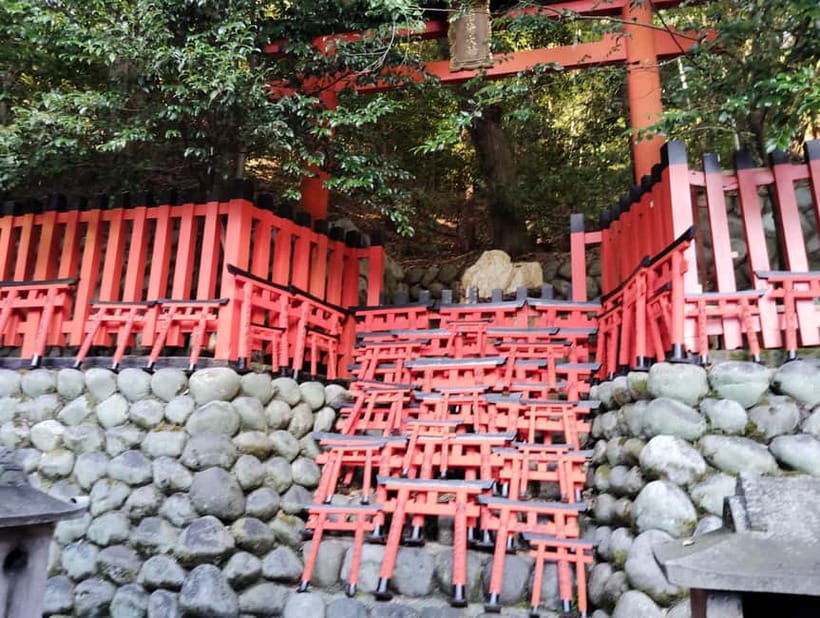
- Okusha Back Shrine gives you a calmer, more personal-feeling stop.
- Omokaruishi stone lifting is built into the experience, so you’re not hunting for the ritual on your own.
- You get a small-group feel, including private options, which helps questions stay easy.
Where the tour starts: Inari Station and a bright sign
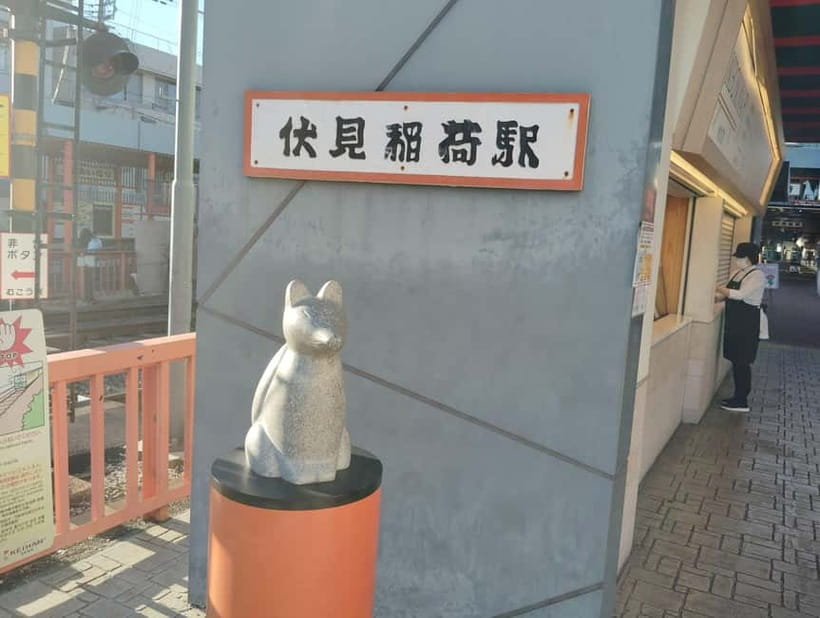
You meet at Inari Station, right by the JR entrance area. Your guide will be waiting outside, across the main entrance to JR Inari Station, holding a bright yellow DeepExperience signboard.
That detail matters more than people think. Fushimi Inari is one of those places where getting “almost there” still means you’re wandering in the wrong direction with a crowd. Starting at the station keeps the first 10 minutes from turning into a mini scavenger hunt.
If you’re arriving by train, I’d plan to be there a bit early. Even the best meeting points can get crowded with other tour groups and people snapping photos.
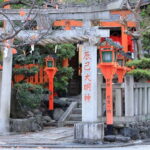
More walks up through the vermilion torii of Fushimi Inari



Fushimi Inari Taisha: red torii gates, explained as you walk
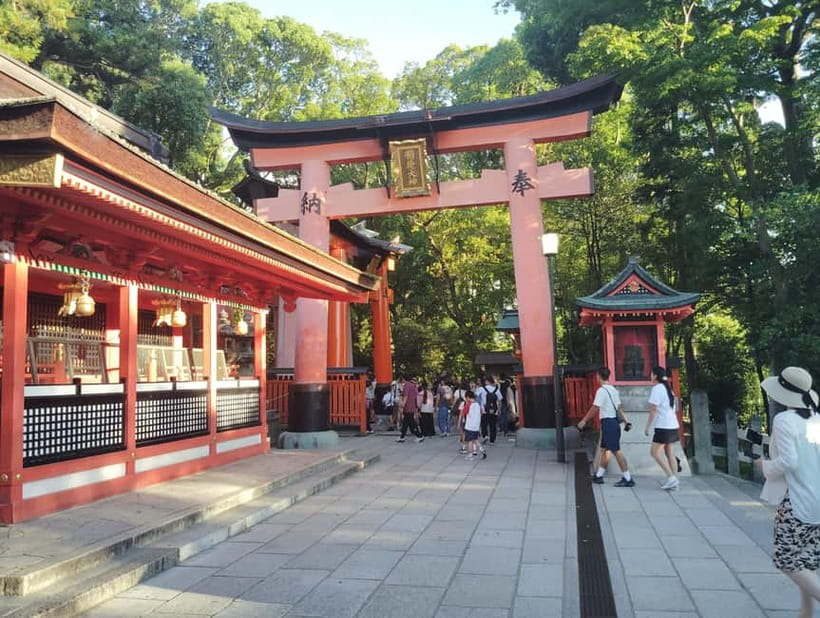
Your main shrine visit comes first, at Fushimi Inari Taisha. You’re guided through the area, with your local expert sharing the meanings behind what you’re seeing.
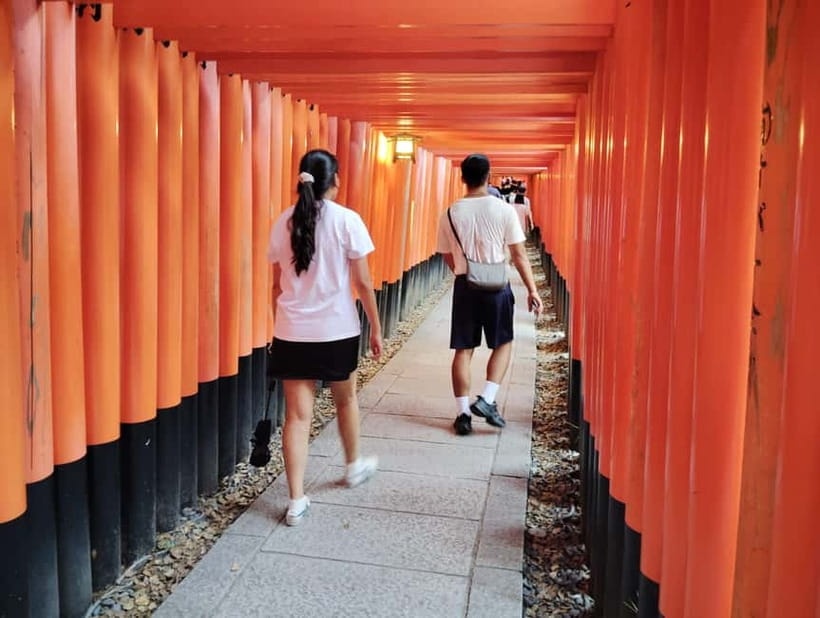
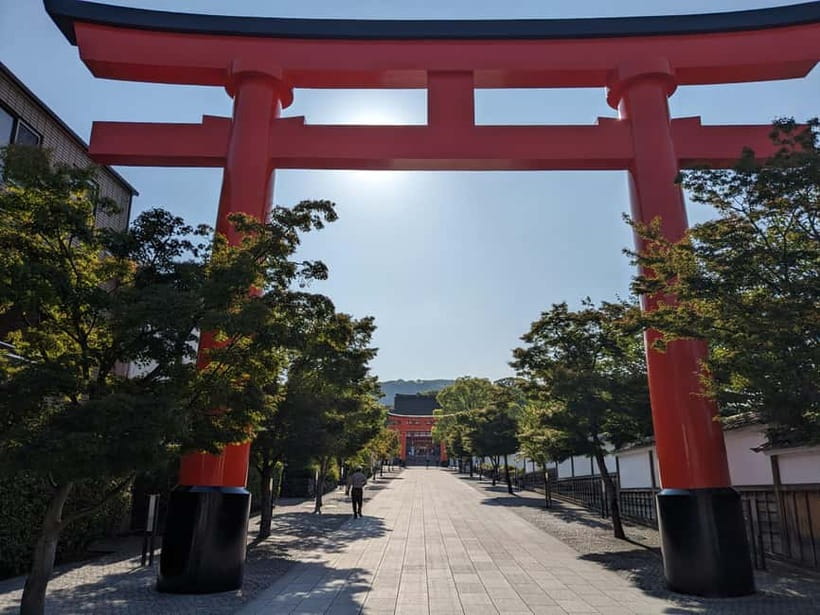
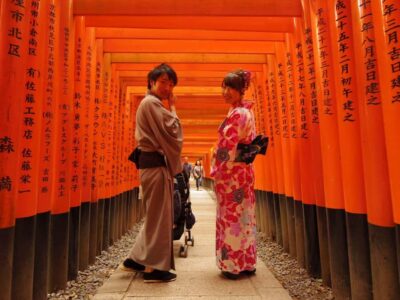
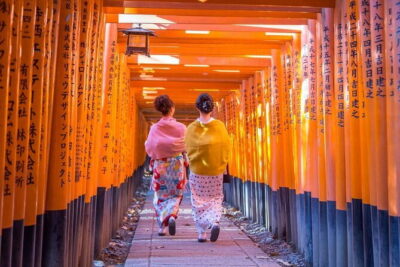
The big visual here is the long pathway lined with thousands of red torii gates. On your own, you can enjoy the scenery and move at your own speed. With a guide, you also get the historical significance of the gates and a clearer sense of how this place fits Kyoto’s spiritual culture.
Here’s what I think makes the guide-led approach valuable: Fushimi Inari can feel like a visual maze. A short run of time plus a clear plan helps you avoid the common issue of walking in loops without realizing what you missed.
Your guide also helps you notice the stuff that’s easy to overlook when you’re just trying to get good photos. That’s especially helpful if you’re on a tight Kyoto schedule and don’t want to lose time re-tracing your steps.
The rhythm of the route: what 90 minutes really buys you
This is a 90-minute tour, which is perfect for visitors who want a guided experience but still need freedom later. It’s long enough to cover the main shrine, a meaningful walk through the torii-gate path, and then reach the back shrine area.
It’s also short enough that you should treat it like a “guided highlight circuit,” not a full self-guided deep exploration. If you’re the type who likes to linger at every viewpoint, you may end up thinking there should be more time after the tour ends.
One review pointed out that the tour can feel shorter than expected, and that a bathroom break can throw off the pacing. That’s the trade-off with a compact tour format: the plan is efficient, but it doesn’t bend much around unscheduled stops.
My practical advice: go before you meet your guide, and if you’re sensitive to timing, plan to take your first longer break after you return to Inari Station.
Okusha Back Shrine: the quieter side of the same sacred complex
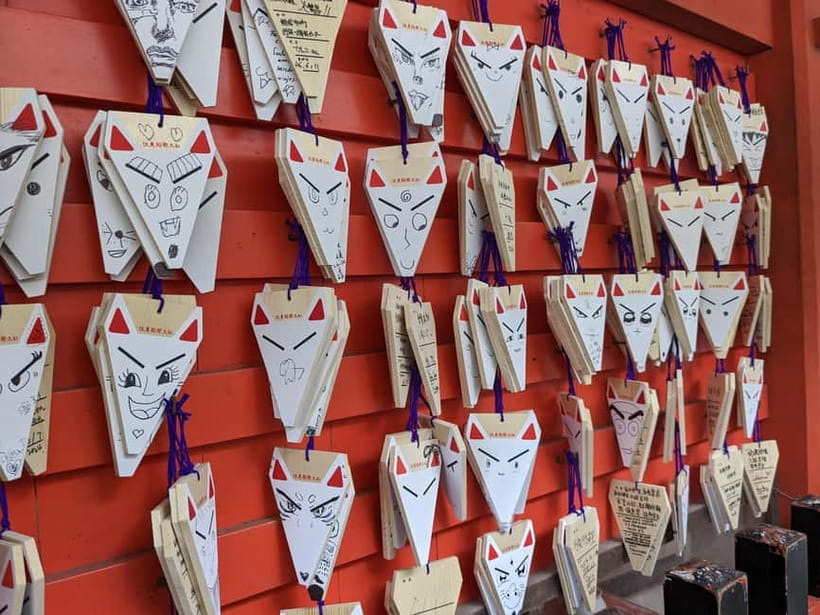
After the main shrine area and the torii-gate path, you reach Okusha Back Shrine. This is the part of the tour that tends to feel more intimate because you’re moving away from the most crowded moments.
The setting matters, but so does the guide’s framing. You’re not just walking uphill for scenery. You’re arriving at a specific sacred stop with a reason, tied into the spiritual culture of Kyoto.
This is also where the tour feels most different from doing it solo. On your own, you might reach the back areas, but you might not fully understand why that section exists or what to pay attention to when you get there.
If you like experiences with a bit of meaning attached, Okusha Back Shrine is the best reason to book a guide rather than rely only on your own research.
Omokaruishi stone-lifting ritual: a hands-on fortune test
The highlight for many people is the chance to participate in the Omokaruishi stone-lifting ritual. The idea is straightforward: you lift the stone to test your fortune and your inner strength.
What’s valuable here is that the ritual is included as a planned moment in the tour, not something you have to figure out on your own while reading signs or searching for the exact spot. With a guide, you get the context so the ritual feels intentional, not random.
Also, this is where the experience turns from “sightseeing” into “doing.” Even if you’re not sure what your outcome means, taking part is the point. It gives you a memory that’s different from a thousand red-gate photos.
If you’re traveling with family, this can be a nice “we’re all participating” stop. Just remember: it still fits inside a 90-minute schedule, so keep an eye on timing as you go.
More temples and shrines to slow down in across Kyoto





How the guide experience can change everything (Yoshi’s example)
One reason I trust guided tours here is how much the guide can connect the dots. A standout example from the experience description and guide feedback: Yoshi is known for explaining not only history, but also Japanese culture, and for being easy to work with during the walk.
That kind of guiding can make a real difference at Fushimi Inari, where it’s easy to see gates and forget to ask what they mean. When a guide can translate the cultural context into simple language, you get more satisfaction from the time you spend.
You may also get practical help for photos. One person highlighted incredible photos connected to the guiding style, which suggests your guide pays attention to where people should stand and how to frame things while walking.
If you’re hoping for a tour that feels like conversation rather than a lecture, keep an eye on the guide assignment when you book. In a short tour, the guide’s tone matters a lot.
Price and value: $32 for a guided 90-minute circuit
At $32 per person for a 90-minute guided tour, this sits in the mid-range for Kyoto activities. The value comes from three things you don’t easily replace with self-wandering:
- A human guide to explain the historical significance of the torii gates.
- A guided route that gets you from the main shrine toward Okusha Back Shrine within a limited time window.
- Inclusion of the Omokaruishi ritual as part of the plan.
If you’re the kind of traveler who enjoys reading on your phone and figuring out routes, you might feel it’s something you can piece together on your own. But if you want meaning without doing homework, $32 is less about transportation and more about interpretation.
The math is simple: if the guide helps you enjoy the experience more than you would solo, you’re getting your money’s worth. If you only care about walking among the gates and taking photos, you may feel the tour is too short to justify paying.
Best for: who should book this Fushimi Inari tour
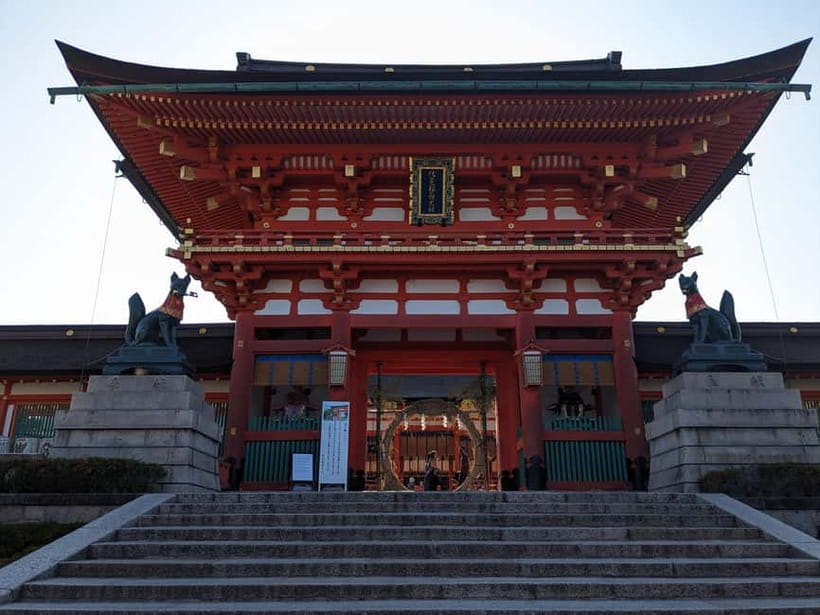
I think this tour is a smart match if you:
- Have a limited amount of time in Kyoto and want the core Fushimi Inari experience.
- Want a guided explanation of what you’re seeing, especially around the torii gates.
- Prefer small groups or private options where questions are easier to ask.
- Are interested in Kyoto spiritual culture and want a hands-on moment with the stone ritual.
It may be less ideal if you:
- Love slow wandering and don’t want anyone to steer your pace.
- Need flexibility for frequent breaks during the walk.
Either way, you’ll still leave with that iconic red-gate memory. The question is whether you want the added layer of context during the walk.
What you’ll do after: keep exploring with a plan
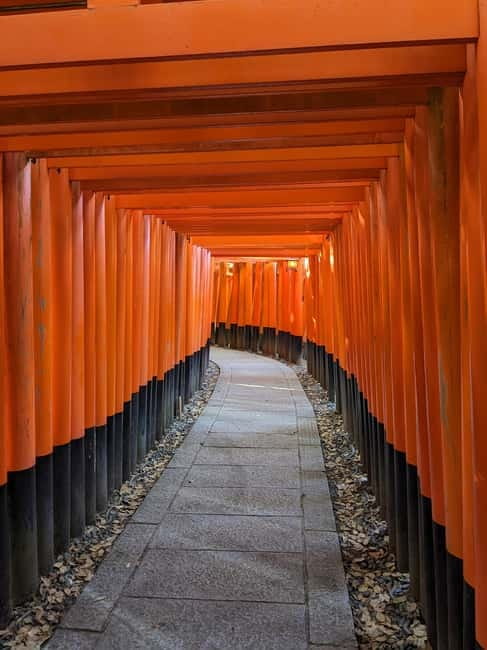
When you finish, you return to Inari Station. That’s a practical ending point because you’re already positioned to continue your day around Kyoto.
If you want to see more, you can extend your time on your own before moving on. If you’d rather rest, you have an easy transit anchor nearby.
My tip: don’t schedule your next major activity immediately at the moment you expect to be done. Group tours move efficiently, but crowds at the shrine are real. A little buffer helps keep your day feeling smooth.
Should you book this Kyoto Fushimi Inari guided tour?
I’d book it if you want a tight, guided circuit that includes the main shrine, the famous torii gate path with explanations, Okusha Back Shrine, and the Omokaruishi stone ritual in just 90 minutes. For most first-timers, that combination is exactly what turns Fushimi Inari from a pretty place into a memorable experience with meaning.
I wouldn’t book it if you’re already planning to spend a lot of time wandering slowly on your own, or if you know you’ll need extra flexibility during the walk. In that case, save your money and build your own schedule.
FAQ
How long is the Kyoto: 1.5-Hour Guided Tour of Fushimi Inari Shrine?
The tour lasts 90 minutes.
Where do I meet the guide?
Meet outside across the main entrance to JR Inari Station, with your guide holding a bright yellow DeepExperience signboard.
What will I see during the tour?
You’ll visit Fushimi Inari Taisha, walk through the iconic red torii gates, go to Okusha Back Shrine, and participate in the Omokaruishi stone-lifting ritual.
Is the tour available in English?
Yes. The live tour guide is offered in English (and also Japanese).
Is this tour private or small group?
Private or small groups are available.
How much does it cost?
It costs $32 per person.
Is there free cancellation?
Yes. You can cancel up to 24 hours in advance for a full refund.
Can I reserve without paying right away?
Yes. The option is reserve now & pay later (pay nothing today).
More Tour Reviews in Kyoto

More Kyoto Temples and Shrines
Fushimi Inari, a Few More Ways

Just added: more Kyoto tours to browse






Fushimi Inari Shrine Tours, compared.
 ★ 4.8Fushimi Inari, Kinkakuji, Bamboo Grove 1 Day Bus TourFrom $1224,316 reviews
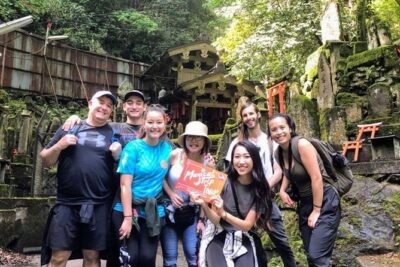 ★ 5.0Fushimi Inari Hidden Hiking Tour (Private Option Available)From $631,750 reviews
 ★ 4.7Kyoto/Osaka: Nara, Fushimi Inari Taisha, Arashiyama Bus TourFrom $521,275 reviews
 ★ 4.4Osaka/Kyoto: Arashiyama, Nara & Fushimi Inari Shrine w/LunchFrom $61754 reviews
 ★ 4.7Nijo Castle, Kiyomizu & Fushimi Inari Guided TourFrom $54700 reviews
 ★ 5.0Nijo, Kinkaku-ji, Arashiyama, Kiyomizu & Fushimi InariFrom $51699 reviews
 ★ 5.0Kyoto Fushimi-Inari Night Walking TourFrom $43320 reviews
 ★ 4.93-Hour Fushimi Inari Shrine Hidden Hiking TourFrom $72270 reviews
Browse the lists this tour appears in