
Reviewed · KYOTO SAKE TASTING TOURS
Japanese Sake Breweries Tour in Kyoto Fushimi
Kyoto’s sake district tastes like a lesson. This Kyoto Fushimi sake walking tour blends brewery visits with guided tastings, so you get a feel for what makes each bottle different. I really liked the pairing of history and tasting, especially the guided stops built around Fushimi’s major names like Gekkeikan. One thing to consider: the pace is mostly walking and fixed-time tastings, so if you want lots of extra beer or a slow, optional wander, plan to add time on your own.
The highlight for me is how much you learn through your own palate, not just facts. In about 3 hours, you’ll cover several well-chosen spots and finish with a focused tasting set and sweets. Still, this is a people-in-a-line format, so if you end up with a quieter guide, you may need to ask more questions to get your money’s worth.
In This Review
- Key moments you’ll remember in Fushimi
- Why Kyoto Fushimi works so well for a sake tour
- Getting there: Nakashojima Station and the 888 meeting sign
- Stop by stop: what each part adds to your tasting education
- Gekkeikan Ōkura Sake Museum: start with the big baseline
- Kizakura Kappa Country: a quick stop that widens the context
- Fushimi Saka Gura Kouji: the brewery-alley feel (and the koji connection)
- Fushimi Yume Hyakushu Café: a former Gekkeikan office tied to old water trade
- Ginjo Shubo Aburacho: the tasting that teaches your tongue
- How you taste better on this tour (without being a perfectionist)
- Price and value: what $80 buys (and what it doesn’t)
- The guide factor: when it really clicks (and what to do)
- Small practical tips for an easy Kyoto afternoon
- Who this tour suits best (and who should skip it)
- Should you book this Kyoto Fushimi sake breweries tour?
- FAQ
- What is the duration of the Japanese Sake Breweries Tour in Kyoto Fushimi?
- Where do we meet for the tour?
- What tasting and food items are included?
- Is the boat ride included?
- Can people under 20 join the tour?
- What languages are offered for the live guide?
Key moments you’ll remember in Fushimi
- Gekkeikan’s brewery story (since 1637) and what it means for modern sake
- Multiple tasting sets that train your tongue to spot differences
- A real walk through the Fushimi sake district tied to the Edo and Bakumatsu eras
- Fushimi’s brewery alley concept, supported by 17 breweries in the area
- A former Gekkeikan office turned cultural stop, linked to old logistics on the water
- An easy starting point at Nakashojima Station, with a clear sign at meeting time
Why Kyoto Fushimi works so well for a sake tour
Fushimi is one of those Kyoto neighborhoods where sake isn’t a themed activity. It’s part of the streets. The area grew into a major production and trading zone, and that shows up in the way the tour is organized: you move between landmarks tied to brewing and distribution, then you taste what that tradition produced.
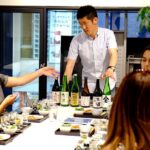
What I like about this tour’s approach is that it doesn’t treat sake like a single product. You’re pushed to notice differences in flavor and style as you go, with tastings at separate stops. That matters because sake is not one flavor. Think aroma, smoothness, dryness, and the way alcohol warmth shows up or disappears depending on style.
Follow the sake trail through Fushimi and beyond
Getting there: Nakashojima Station and the 888 meeting sign
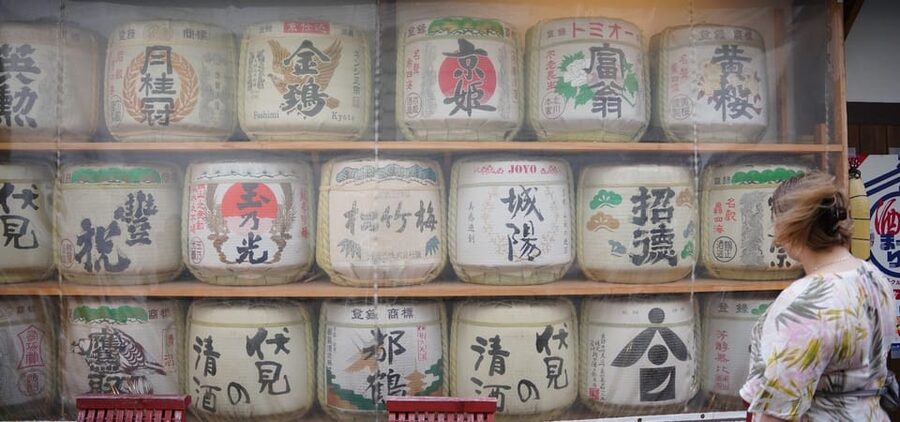
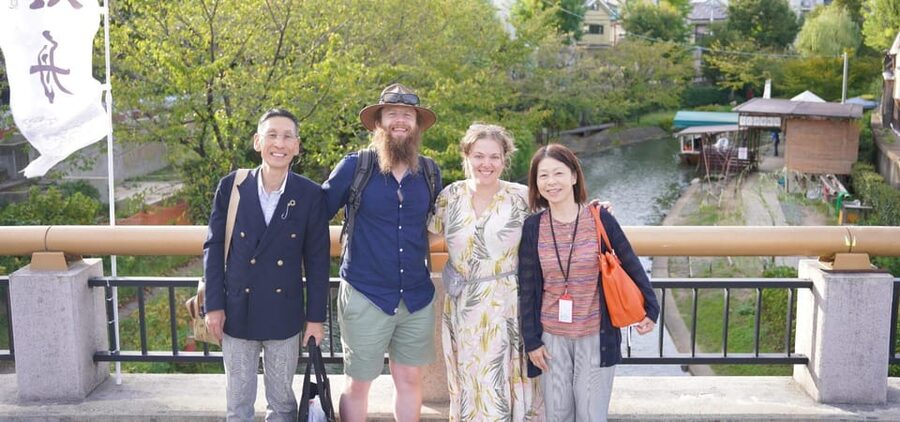
You start at 中書島駅 (Nakashojima Station). The meeting point is outside the north exit ticket gate at the sake barrel object. Your guide holds a sign with 888.
One practical tip: there’s a similarly named JR area you’ll want to ignore. If you’re unsure, take a quick photo of the meeting barrel and check you’re at the correct station before the group tightens up.
Stop by stop: what each part adds to your tasting education
Gekkeikan Ōkura Sake Museum: start with the big baseline
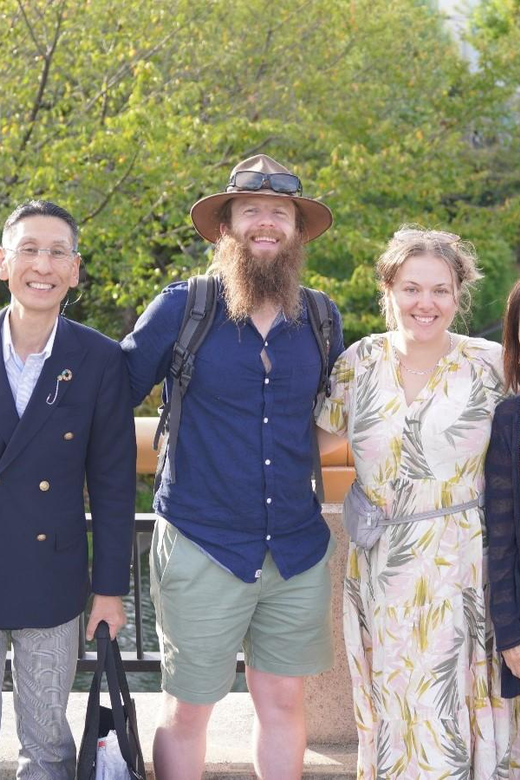
The tour begins with a guided visit at Gekkeikan Ōkura Sake Museum for about 35 minutes. This is where the tour gives you the foundation. You’re not just looking at old tools in a hallway. You’re building context for what you’ll taste later, including the role of Gekkeikan as a brewery established in 1637.
I like this start because museums can go two ways: either they’re pure display, or they connect to what you drink. Here, the museum sets you up for the difference-in-the-glass part of the tour, which is the whole point. You’ll also receive a commemorative sake cup tied to the Gekkeikan visit, which makes it feel like a real takeaway, not just a photo stop.
How much do you get out of it? Enough that when you later see other Fushimi breweries and fermentation-related spaces, you’ll recognize the theme: sake-making isn’t only about the bottle. It’s about process and decisions.
Kizakura Kappa Country: a quick stop that widens the context
Next is Kizakura Kappa Country, a very short guided stop (about 5 minutes). Even with the short timing, it has value because Kizakura isn’t framed here as only a sake producer. The tour description connects the stop to local brewing roots, including the idea of Kizakura making the first local beer in the area and tasting both sake and beer themes in Fushimi.
Also, this is where you get your one glass of Kyoto Beer included. That’s a smart move. If you’re new to sake, a beer glass gives your palate a reference point. It helps you understand what you’re tasting when sake shows up later.
Other Kyoto tours and experiences to compare


Fushimi Saka Gura Kouji: the brewery-alley feel (and the koji connection)
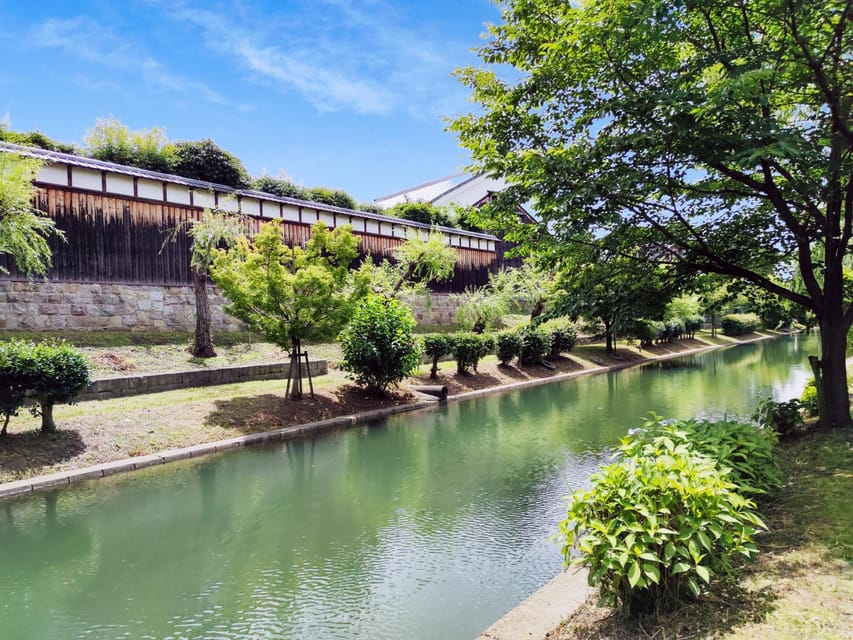
After a brief walk, you reach Fushimi Saka Gura Kouji for about 25 minutes. This is a guided stop tied to the Fushimi sake district and the wider idea of Fushimi Sake Brewery Alley, created with support from breweries in the Fushimi Sake Brewers Association.
The key word embedded in the stop name is kouji. Even if you’re not a fermentation nerd, this matters. Koji is central to sake production, and the tour’s structure hints that the flavors you taste later come from what happens before brewing is even a word you’d use.
What I look for in stops like this is sensory variety and atmosphere. If you enjoy walking in older commercial streets and seeing how production culture shaped the neighborhood, this stop delivers more than a checklist.
Fushimi Yume Hyakushu Café: a former Gekkeikan office tied to old water trade
Then you head to Fushimi Yume Hyakushu Café for about 35 minutes. The setting is the kind of thing that turns sake into a place, not just a drink. The tour connects this spot to the former head office of Gekkeikan, built in the Taisho period.
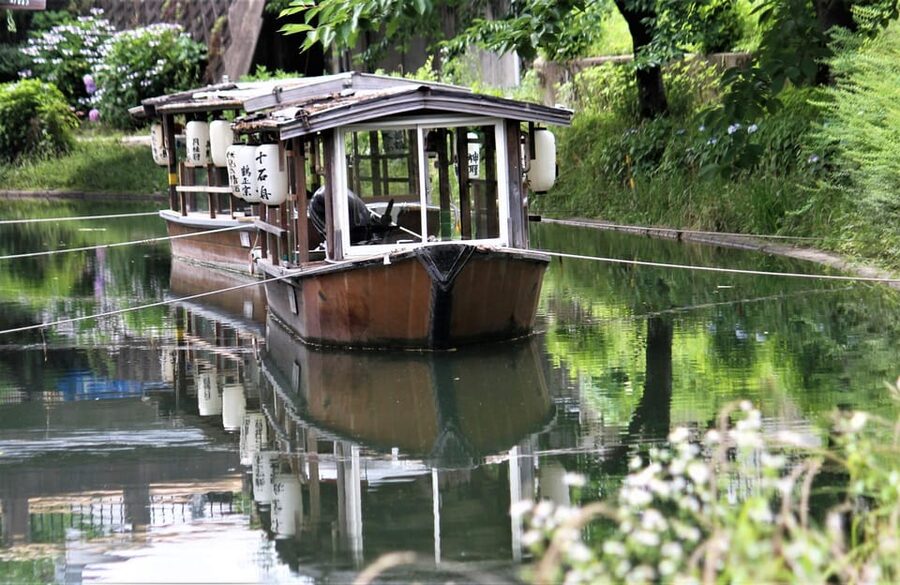
But the real story thread is logistics: from the Edo period to the end of the Meiji era, the area’s water routes helped move people, sake, and rice between Fushimi and Osaka. That idea makes Fushimi feel less like a museum district and more like an old supply chain. You can almost taste why the region mattered: if sake can travel, it can build a reputation.
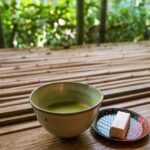
You also get sake ice cream here (included). It’s an easy way to keep things from getting too alcohol-heavy in the middle of the day, and it adds a sweet, creamy counterpoint to the later tastings.
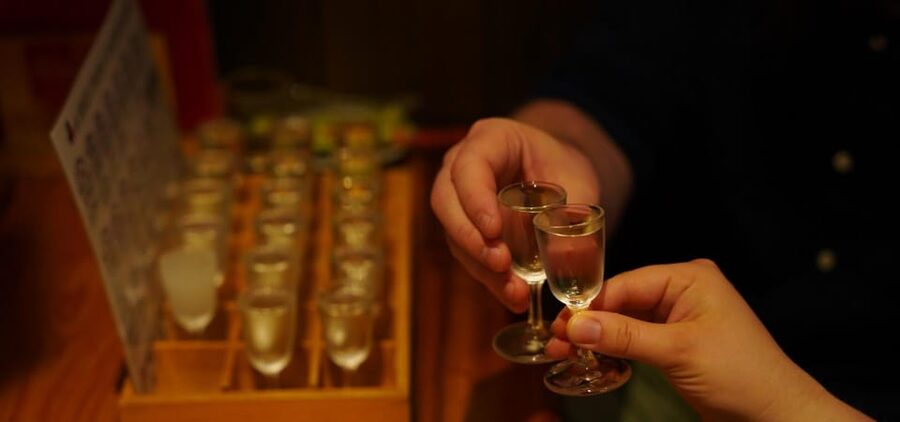
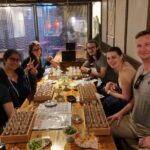
One note: the tour description mentions a chance to enjoy a set of 17 kinds of drinks that matches a famous photo look people share online. The exact format may vary by stop timing, but the presence of that idea is a clue that the café stop is set up for variety beyond just one tasting flight.
Ginjo Shubo Aburacho: the tasting that teaches your tongue
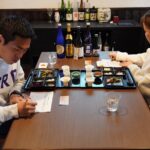
The final tasting-focused stop is Ginjo Shubo Aburacho for about 40 minutes, and you finish at 吟醸酒房 油長. This is one of the most useful parts of the tour because the included tasting set here is specific: you get three types of Japanese sake poured for tasting.
Ginjo is where many newcomers start noticing differences that aren’t just “sweet vs dry.” You may begin to separate impressions like fruity aroma versus clean finish, or more mellow body versus sharper edges. The goal isn’t to become a sommelier in three hours. It’s to leave with working intuition: if a sake tastes light and fragrant, you’ll remember why.
And because you’re also tasting at Gekkeikan earlier in the tour, your final stop can work like a comparison. You’re not starting from zero.
How you taste better on this tour (without being a perfectionist)
Since this experience is built around tasting sets, your experience depends a lot on how you handle those pours. Here’s what works in practice:
- Take a tiny sip first, then wait a few seconds before you decide what you like.
- Use simple notes in your head: aroma (fruity, grainy, floral), body (thin, medium, round), finish (dry, lingering, crisp).
- If your guide is talkative, ask one focused question per stop. For example: what makes this style different, or what should you notice first?
- If you end up with a quieter guide, you’ll still get the tastings; you just have to do a bit more self-guided comparison.
One thing I appreciate is that the tour explicitly frames tasting as learning by tongue. That’s the right mindset. Don’t think of it as a test. Think of it as calibration.
Price and value: what $80 buys (and what it doesn’t)
At about $80 per person for roughly three hours, this tour isn’t only paying for walking and a guide. Your included value has several tangible pieces:
Included in the ticket:
- Admission to the Gekkeikan Ōkura Sake Museum
- Commemorative sake cup
- One glass of Kyoto Beer
- Sake ice cream
- Tasting set of three Japanese sakes at Aburacho
- Tasting set of three Japanese sakes at Gekkeikan
Not included:
- Any boat segment boarding fee (jukkokubune) if offered; the stated fee is 1500 yen paid on site at the boat dock
- Additional meals or drinks at stops
Is $80 a deal or a splurge? It’s a fair price if you like structured tastings and want someone to explain what you’re drinking as you go. If you’re the type who prefers to wander freely and do unguided tasting at your own pace, you might feel the cost more strongly, because the tour time is tight.
The guide factor: when it really clicks (and what to do)
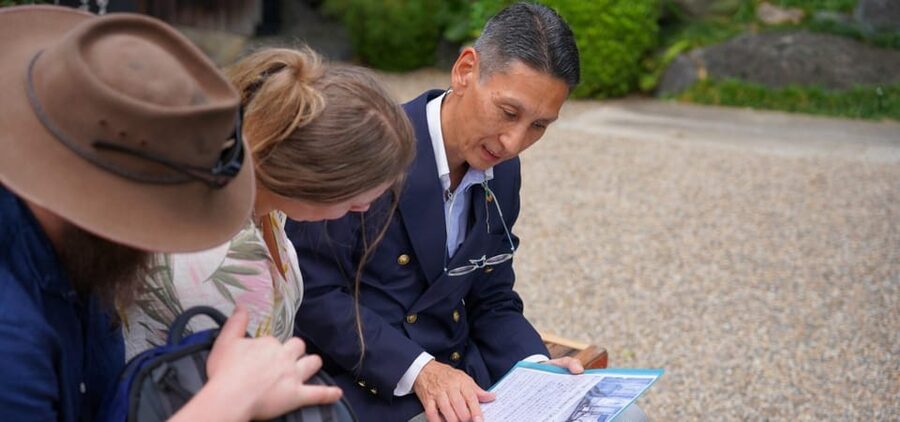
The experience lives or dies with the guide. In the best cases, you get a guide with real brewing background and a knack for making sake understandable in plain talk.
One guide mentioned by name, Musaki (Bob), has brewing experience and a personal background that includes time at Kaiser High School in East Oahu near Hawaii. That kind of background tends to show up in how confidently they can explain what you’re smelling and tasting.
That said, not every outing will match your expectations. There has been at least one reported instance where a guide didn’t show up. To protect your time, arrive early, double-check the meeting point at Nakashojima Station north exit, and keep your eyes on the 888 sign. If something feels off, address it immediately rather than waiting.
If you want to maximize your odds of a great tour, treat it like a conversation:
- Ask what style you’re tasting right now and what to notice first.
- Ask how that style differs from the previous one in the flight.
Small practical tips for an easy Kyoto afternoon
- Wear shoes you can walk in. The route includes multiple short transfers on foot, so comfortable soles matter.
- Bring a layer. Kyoto weather can swing, and you’ll spend time outside.
- Pace your tastings. You’ll have multiple pours plus a beer glass and ice cream. Sip slowly.
And if the day turns rainy, don’t assume the plan collapses. The tour mixes museum and guided indoor stops with short outdoor segments, so you can still keep moving and keep tasting.
Who this tour suits best (and who should skip it)
This is a strong choice if you’re:
- New to sake and want an organized way to taste different styles
- Interested in Kyoto’s neighborhood history tied to brewing and trading
- Traveling with friends who enjoy food-and-drink experiences with a structure
It’s not the best choice if you:
- Want a long, unguided wandering day
- Are sensitive to alcohol culture, since sake tastings are part of the experience
Good to know on the policy side: participants under 20 can join, but alcohol is illegal under Japanese law. The tour notes that non-alcoholic options and juices are available, so you won’t be forced into drinking.
Also: people over 80 are listed as not suitable for this activity.
Should you book this Kyoto Fushimi sake breweries tour?
Book it if you want a clean, guided path through the Fushimi sake district with multiple tasting sets and an explanation that helps you taste with intention. The included stops hit the big names like Gekkeikan, plus you get variety through the Kizakura connection and the Aburacho tasting finale.
Skip it or add extra planning time if you’re the DIY type who wants to control timing and do your own tasting circuit without paying for fixed stops. And if you’re picky about guide personality, show up early, confirm the meeting point, and ask questions so you get your money’s worth.
If you come with a curious palate and a little patience for walking, you’ll leave with more than souvenirs. You’ll leave with a working sense of how sake styles differ in the glass.
FAQ
What is the duration of the Japanese Sake Breweries Tour in Kyoto Fushimi?
The tour lasts about 3 hours.
Where do we meet for the tour?
Meet at the sake barrel object just outside the north exit ticket gate at 中書島駅. The guide will be waiting with a sign that says 888.
What tasting and food items are included?
You get a tasting set of three Japanese sakes at ABURACYO, and a tasting set of three Japanese sakes at Gekkeikan. You also receive one glass of Kyoto Beer, sake ice cream, and a commemorative sake cup from Gekkeikan.
Is the boat ride included?
No. The jukkokubune boarding fee is not included. You should pay 1500 yen on the boat dock if you take it.
Can people under 20 join the tour?
Yes. Under Japanese law, drinking alcohol is illegal under age 20, but the tour notes non-alcoholic options and juices are available.
What languages are offered for the live guide?
The live tour guide is available in English, Chinese, and Japanese.
More Tours in Kyoto
More Tour Reviews in Kyoto
The Fushimi Sake Trail, Continued
Just added: more Kyoto tours to browse


Kyoto Sake Tasting Tours, compared.
 ★ 5.0Kyoto Night Foodie Tour in Gion (9+ dishes + 6 Sake tastings)From $1631,762 reviews
 ★ 5.03-Hour Kyoto Insider Sake Brewery Tour with Tastings & PairingsFrom $84917 reviews
 ★ 4.8Arashiyama Bamboo, Temple, Monkeys, or Secret Sake BreweryFrom $87886 reviews
 ★ 5.0Insider Sake Brewery Tour with Sake and Food PairingFrom $87704 reviews
 ★ 5.0Kyoto Sake Brewery & Tasting Walking TourFrom $98623 reviews
 ★ 5.01.5-Hour Kyoto Insider Sake Experience with 7 Tastings & PairingsFrom $68297 reviews
 ★ 5.0Insider Sake Experience with 7 Tastings and SnacksFrom $66266 reviews
 ★ 5.0Private Tea Ceremony and Sake Tasting in Kyoto Samurai HouseFrom $99163 reviews
Browse the lists this tour appears in