
Reviewed · FUSHIMI INARI SHRINE TOURS
Fushimi Inari Shrine: Explore the 1,000 Torii Gates on an audio walking tour
1,000 gates, one quiet storyline. This self-guided audio walk through Fushimi Inari Shrine turns the famous photo spot into a meaningful stroll, with Shinto context you won’t get from just following the crowd and snapping pictures. You’ll move at an easy pace through forest paths, past the fox statues, and into the long tunnel of red gates powered by offline audio.
What I like most is that you get real breathing room. The audio walking tour keeps you moving without rushing, so you can pause, look closely, and still finish in about 45 minutes to 1 hour. I also love the way the story is built around specific moments—like the ritual learning at Hand Water and the short stop by the main hall—so you understand what you’re seeing, not just what it looks like.
One thing to consider: it’s self-guided, so you’ll need your own phone and headphones, plus you should download everything ahead of time. If you show up and forget to prep, the whole experience loses its magic—because you can’t really “wing it” when the audio cues are tied to the walk.
In This Review
- Key highlights you’ll feel on the ground
- Why Fushimi Inari’s 1,000 Torii Gates Feel Different With Audio
- Finding the Fox Statue Start by Inari Station (and Getting Your Bearings Fast)
- The First Stops: Fox Statues, Shrine Significance, and a Calm Start
- Hand Water: The Ritual Moment That Makes the Place Feel Alive
- Wabi-Sabi Lesson at the Main Hall Stop
- Walking Through Senbon Torii: 1,000 Gates, One Steady Rhythm
- Okusha Shrine and the Root-Up Pine Tree: Where the Story Gets Specific
- Ending at Kumataka Shrine’s Pond Area (and What to Do Next)
- Price and Value: Why $5.99 Can Make This Shrine Feel “Worth More”
- Timing and Practical Logistics That Actually Matter
- What to Bring (and the One Prep Step That Saves Your Day)
- Who This Tour Fits Best
- Should You Book This Fushimi Inari Audio Walk?
- FAQ
- FAQ
- How long does the Fushimi Inari Shrine audio tour take?
- Where do I start the tour?
- Where does the tour end?
- Is the audio tour available offline?
- What language is the tour in, and do I keep access after?
- What do I need to bring with me?
- Is this tour private?
Key highlights you’ll feel on the ground

- Start point made easy: Find the fox statue entrance near Inari Station and follow the audio from there
- Offline maps and audio: Download in advance so the route works even without signal
- Focused stops, not random wandering: Hand Water, the main hall, and Wabi-Sabi concepts are built into the walk
- The Senbon Torii pacing: You go through the 1,000 torii gates on a steady, self-directed route
- More than gates: Okusha shrine and a Root-up Pine Tree lesson add meaning beyond the red tunnel
- Finish in a calmer corner: The tour ends at Kumataka Shrine’s pond area, with an option to keep going
Why Fushimi Inari’s 1,000 Torii Gates Feel Different With Audio
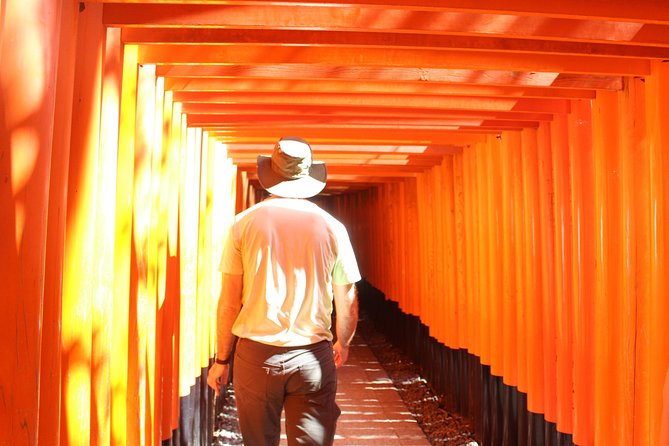
Fushimi Inari is famous for a reason. The Senbon Torii—the long run of red gates—creates that “I can’t believe I’m here” feeling even if you’ve seen the pictures a hundred times.
With an audio tour, the vibe shifts from sightseeing to understanding. The narration ties the shrine to Shinto rituals and beliefs, so you’re not only walking under gates—you’re learning why this place matters, and how people have related to it for many generations.
And the best part is pacing. Outdoors and free to roam, this shrine can be either peaceful or chaotic depending on how you handle it. Audio helps you set your own rhythm.
More walks up through the vermilion torii of Fushimi Inari



Finding the Fox Statue Start by Inari Station (and Getting Your Bearings Fast)
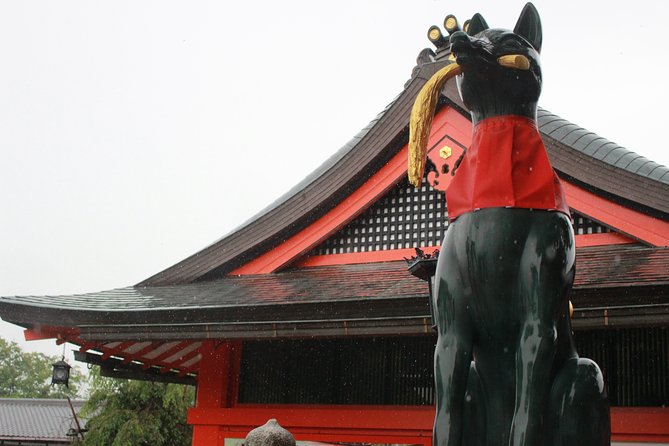
The tour starts at the fox statue at the entrance to Fushimi Inari Taisha Shrine, right by the Inari Station area. That matters because you’re not guessing where to begin. You can stand there, get oriented, press play, and start walking.
Inari Shrine is visually busy—red gates, stone paths, people stopping often, and fox statues appearing in multiple spots. Starting at a clear landmark (a fox statue near the entrance) keeps you from doing the classic Kyoto move: circling around while your phone slowly dies.
My practical tip: once you’re there, take one minute to check that your audio is loaded offline and that your map markers update properly. Then you can relax into the walk.
The First Stops: Fox Statues, Shrine Significance, and a Calm Start
The early portion of the walk is designed to get you in the right mindset. You begin by the entrance fox statue, then move to the second stop where you’ll start learning about the significance of the shrine.
This is where the audio changes the whole experience. Instead of thinking of Inari as a single attraction, you start seeing it as a shrine complex with rituals, symbols, and meanings. The fox statues aren’t just cute decorations anymore—they become part of how the place communicates.
If you’re the kind of person who likes understanding what you’re standing in front of, this early setup is a big win. It helps you enjoy the later moments—especially the long gate tunnel—because you’re already tuned in.
Hand Water: The Ritual Moment That Makes the Place Feel Alive
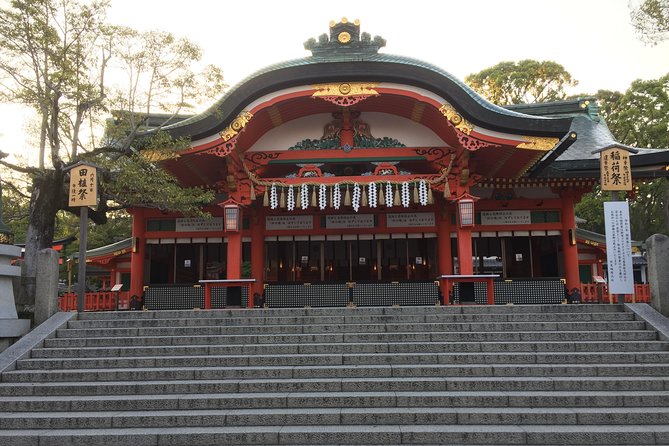
One of the tour’s key teaches is Hand Water, which you’ll hear about as you move along the route. This is a small, practical ritual in many shrine contexts, and the audio helps explain what you’re seeing and why it’s done.
Even if you don’t plan to take part, understanding the purpose changes how you look around. You stop thinking only about aesthetics and start noticing behavior: people pause with intention, follow simple steps, and treat the moment as a quiet reset.
This stop is also a good “breather” in the flow. You’re not locked into only walking. The audio builds in moments where you can stand still, watch, and then continue.
Wabi-Sabi Lesson at the Main Hall Stop
After Hand Water, you’ll have a short stop at the beautiful main hall. Then the tour adds a lesson called Wabisabi.
Wabi-sabi is a concept people often mention when talking about Japanese aesthetics, but here it’s used to help you notice what’s right in front of you—materials, age, weathering, and that lived-in feel that modern buildings rarely have. Instead of judging things as “old,” you begin to see why that aging can be part of the beauty.
This part works especially well if you’re arriving tired or jet-lagged. Kyoto can be a visual assault in the best way, but audio narration gives your brain something to process besides crowds and camera shots.
More temples and shrines to slow down in across Kyoto






Walking Through Senbon Torii: 1,000 Gates, One Steady Rhythm
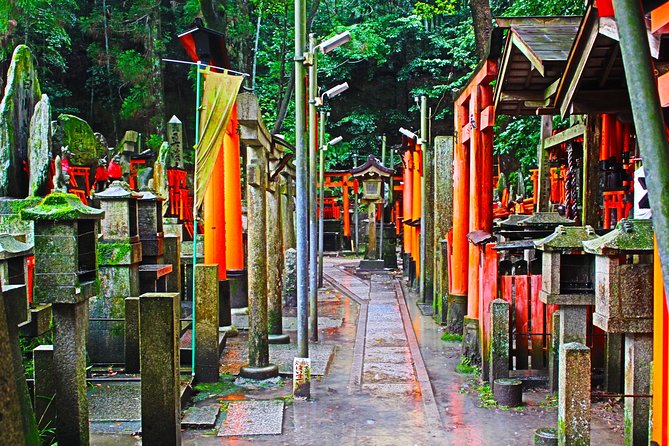
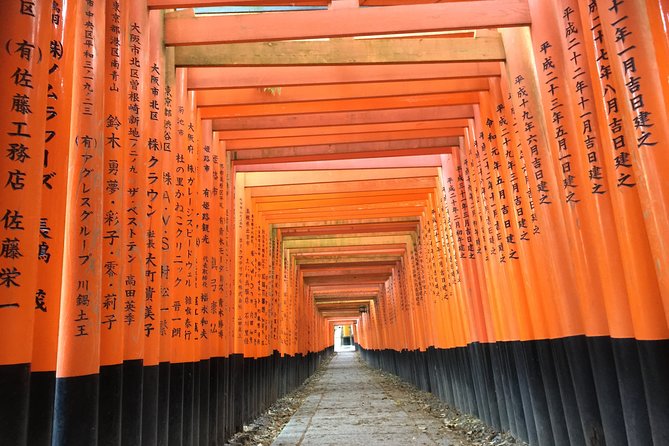
Now comes the highlight. You’ll make your way through the Senbon Torii, described as the 1,000 gates area, and you’ll do it on your own schedule.
Here’s what I like about audio in this segment: it prevents the race. Many people rush through the gates because they’re trying to “see it all.” But that tunnel effect works better when you slow down just a little, let your eyes follow the repetition, and stop at the points where the narration tells you to look.
You’ll keep moving through the red gates while the audio maintains context. That means you’re not just counting gates. You’re understanding how the shrine’s symbolism runs through the experience.
If you want your photos to look less chaotic, treat this as a slow walk, not a sprint. Pick one or two spots where the sightlines are clean and wait a minute for a clear frame.
Okusha Shrine and the Root-Up Pine Tree: Where the Story Gets Specific
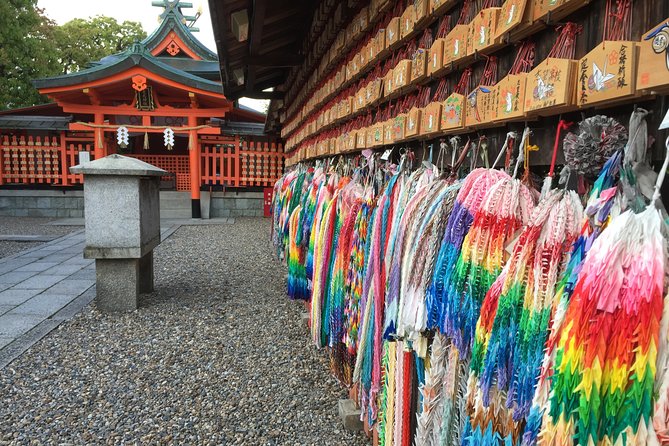
As you continue, the tour takes you to the Okusha shrine. This stop is useful because it signals that Inari isn’t only about the iconic gate tunnel. The complex has layers, and the audio helps you connect the dots.
Next you’ll have a brief stop by the Root up Pine Tree, where you’ll learn more about it. This is the type of detail that’s easy to overlook when you’re focused only on the big red gates. Audio is doing the job of a good guide here: pointing you to a specific feature and giving it meaning.
I also like that these stops aren’t long interruptions. You still get that steady walking flow, but with small “pause and notice” moments.
Ending at Kumataka Shrine’s Pond Area (and What to Do Next)
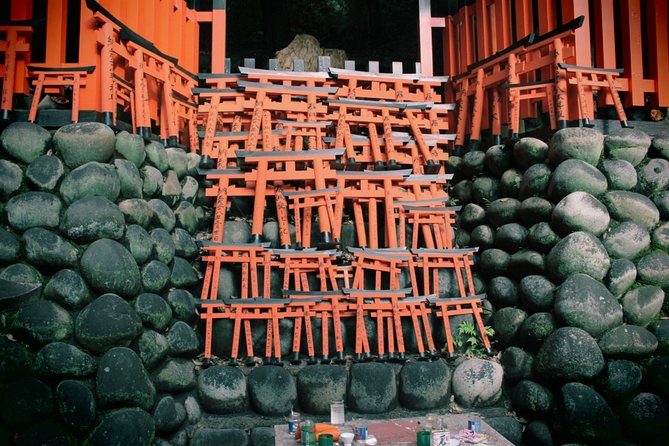
The tour ends at a pond deep in the shrine’s complex, around Kumataka Shrine. That’s a smart ending because it feels calmer than the entrances and the busiest photo zones.
You also get a practical option: you can keep going or take a quick break before returning to where you started. That matters because Fushimi Inari is easy to turn into a half-day if you don’t plan. Finishing in a quieter pocket makes it easier to decide what comes next.
If you want to reduce backtracking, end-of-tour decompression here is a nice payoff. You’re not forced into an immediate departure rush.
Price and Value: Why $5.99 Can Make This Shrine Feel “Worth More”
At $5.99 per person, this is one of the lower-cost ways to transform a top-tier Kyoto sight into a more meaningful experience. The pricing makes sense because what you’re really buying is structure: a guided walk with audio context, not just entertainment.
What supports the value:
- Lifetime access to the tour in English
- VoiceMap app for Android and iOS
- Offline access to audio, maps, and geodata
- A route built around meaningful stops, so you don’t waste time guessing
The big tradeoff is also clear: you provide the phone and headphones. Transportation and food aren’t included either. So you’ll want to budget those basics as usual for Kyoto.
Still, for the cost, it’s a great “see more with less stress” option. You’re not paying for a crowded group schedule. You’re paying for a self-paced story.
Timing and Practical Logistics That Actually Matter
The walk is estimated at about 45 minutes to 1 hour. That range is ideal for a popular shrine because you can fit it between other Kyoto plans without losing your whole day.
The experience is marked as private in the sense that only your group participates, which is helpful if you want space and quiet rather than merging into a larger moving pack.
Opening hours shown are 12:00 AM to 11:59 PM, Monday through Sunday. In real life, the atmosphere will vary by time of day, but those hours give you flexibility.
Also note: it’s near public transportation. Starting by Inari Station is a convenient anchor, especially if you’re planning a full Kyoto route that day.
What to Bring (and the One Prep Step That Saves Your Day)
You’ll need:
- a smartphone
- headphones
- and ideally enough battery to handle maps and audio
The most important prep step: download the audio and maps before you reach the shrine area. One practical tip I’ve seen emphasized is to download everything before you arrive. That’s not just convenience. It’s what makes the offline route work smoothly.
Once you start, you can move at your own pace. The audio includes built-in stops, so you’re not forced to keep up with anyone. If you want extra time for photos, you can slow down at the Senbon Torii segment and still stay within a reasonable window.
Who This Tour Fits Best
This audio walk is a strong match if:
- you want to see the 1,000 torii gates but also understand the meaning behind them
- you prefer self-guided travel over group logistics
- you like short lessons built into a walk—Hand Water, Wabi-Sabi, Okusha shrine, and the Root-up Pine Tree moment
- you want offline reliability so you’re not dependent on signal
It’s also a good “first Kyoto shrine” activity because it gives you context for Shinto symbolism without requiring museum-level time.
If you’re only interested in a fast photo stop with no learning, you might feel it’s more than you need. But if you want your visit to stick in your brain past the pictures, the audio adds real value.
Should You Book This Fushimi Inari Audio Walk?
I’d book it if you want the shrine experience to feel guided but still relaxed. For $5.99, you’re getting a structured route, offline support, and a story that explains why the fox statues, rituals, and quiet details matter.
Skip it only if you already plan to spend lots of time reading signs and you don’t want any audio layers at all. Also, don’t underestimate the importance of headphones and downloading offline content beforehand. This experience works best when you treat that prep step as part of the trip.
FAQ
FAQ
How long does the Fushimi Inari Shrine audio tour take?
It’s estimated at about 45 minutes to 1 hour.
Where do I start the tour?
Start at the fox statue at the entrance to Fushimi Inari Taisha Shrine, near Inari Station (the address is listed at 612-0881 Kyoto, Fushimi Ward, Fukakusa Inarionmaechō).
Where does the tour end?
It ends at Kumataka Shrine, at a pond deep in the complex.
Is the audio tour available offline?
Yes. The download includes offline access to audio, maps, and geodata.
What language is the tour in, and do I keep access after?
The tour is in English, and you get lifetime access.
What do I need to bring with me?
You’ll need your own smartphone and headphones. Food, drink, and transportation are not included.
Is this tour private?
Yes. It’s listed as private, meaning only your group will participate.
More Tour Reviews in Kyoto



More Kyoto Temples and Shrines
Fushimi Inari, a Few More Ways


Just added: more Kyoto tours to browse








Fushimi Inari Shrine Tours, compared.
 ★ 4.8Fushimi Inari, Kinkakuji, Bamboo Grove 1 Day Bus TourFrom $1224,316 reviews
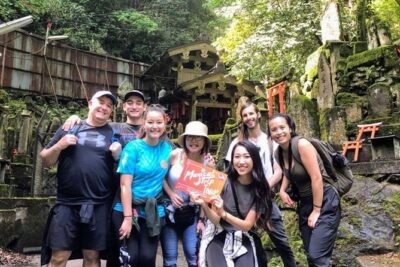 ★ 5.0Fushimi Inari Hidden Hiking Tour (Private Option Available)From $631,750 reviews
 ★ 4.7Kyoto/Osaka: Nara, Fushimi Inari Taisha, Arashiyama Bus TourFrom $521,275 reviews
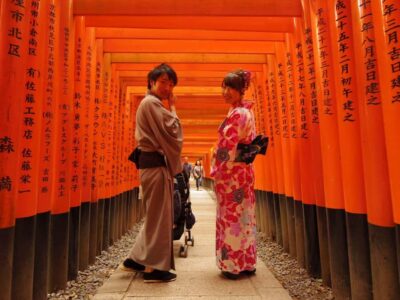 ★ 4.4Osaka/Kyoto: Arashiyama, Nara & Fushimi Inari Shrine w/LunchFrom $61754 reviews
 ★ 4.7Nijo Castle, Kiyomizu & Fushimi Inari Guided TourFrom $54700 reviews
 ★ 5.0Nijo, Kinkaku-ji, Arashiyama, Kiyomizu & Fushimi InariFrom $51699 reviews
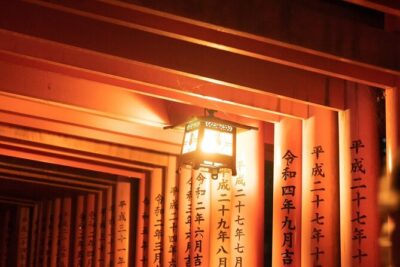 ★ 5.0Kyoto Fushimi-Inari Night Walking TourFrom $43320 reviews
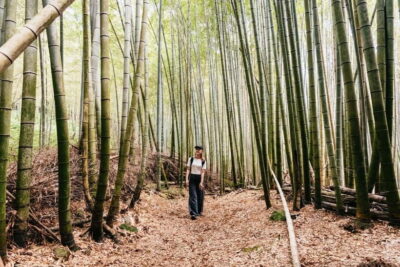 ★ 4.93-Hour Fushimi Inari Shrine Hidden Hiking TourFrom $72270 reviews
Browse the lists this tour appears in